
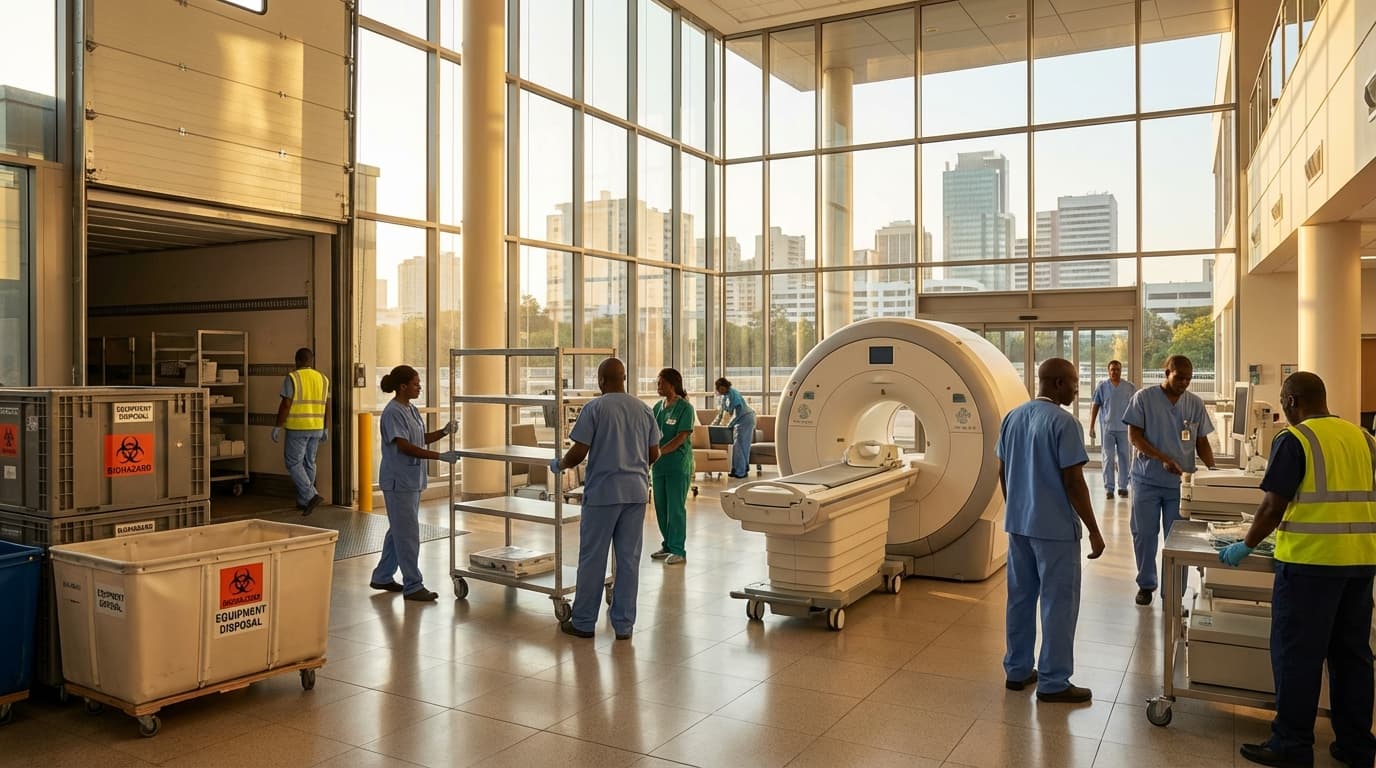
Heavy Medical Equipment De-Installation Service (MRI/CT/Cath Lab) in Central African Republic
Engineering Excellence & Technical Support
Heavy Medical Equipment De-Installation Service (MRI/CT/Cath Lab) High-standard technical execution following OEM protocols and local regulatory frameworks.
Specialized De-Installation Expertise
Our certified technicians possess in-depth knowledge and experience in safely and meticulously de-installing complex medical imaging equipment like MRI, CT, and Cath Labs. We adhere to strict safety protocols, minimizing risks associated with high-voltage, magnetic fields, and hazardous materials.
Logistics & Transport Management
Navigating the unique logistical challenges of Central African Republic, we provide end-to-end management for the transport of heavy medical equipment. This includes secure packing, customs clearance assistance, and the coordination of specialized transportation to ensure equipment arrives at its destination intact and on schedule.
Precision & Compliance for Sensitive Equipment
We understand the critical nature of these medical devices. Our de-installation process prioritizes precision to prevent damage to delicate components and ensures all procedures comply with international standards and manufacturer specifications, safeguarding the integrity of your valuable assets.
What Is Heavy Medical Equipment De-installation Service (Mri/ct/cath Lab) In Central African Republic?
Heavy Medical Equipment De-Installation Service (MRI/CT/Cath Lab) in the Central African Republic refers to the professional process of safely and systematically dismantling, preparing for transport, and removing large, complex medical imaging and interventional systems, such as Magnetic Resonance Imaging (MRI) scanners, Computed Tomography (CT) scanners, and Cardiac Catheterization (Cath Lab) suites, from their operational sites. This specialized service is critical when these high-value assets need to be relocated, upgraded, replaced, or decommissioned. The process requires a deep understanding of the equipment's intricate construction, sensitive components, power requirements, and structural integration within the facility. It involves meticulous planning, specialized tools and lifting equipment, experienced technical personnel, and adherence to strict safety protocols and environmental regulations pertinent to the Central African Republic. The goal is to minimize risk of damage to the equipment, prevent harm to personnel and the facility, and ensure the equipment is properly documented and packaged for subsequent re-installation or storage.
| Who Needs This Service? | Typical Use Cases | |||||
|---|---|---|---|---|---|---|
| Hospitals and Medical Centers: Public and private healthcare facilities in the Central African Republic that operate or are planning to install/replace MRI, CT, or Cath Lab equipment. | Medical Equipment Manufacturers and Distributors: Companies involved in the sale, relocation, or upgrade of these systems within the country. | Government Health Ministries and Agencies: Overseeing the deployment and maintenance of critical medical infrastructure. | International Aid Organizations and NGOs: Involved in establishing or upgrading healthcare capabilities in the Central African Republic, often involving donated or procured medical equipment. | Third-Party Service Providers: Companies specializing in medical equipment maintenance and relocation that may subcontract de-installation services. | Research Institutions: Facilities utilizing advanced imaging for medical research purposes. | |
| Facility Relocation: Moving a hospital or clinic to a new location, requiring the transport of existing imaging equipment. | Equipment Upgrade or Replacement: De-installing older models to make way for newer, more advanced systems. | Renovation or Reconstruction: Temporary or permanent removal of equipment to allow for structural modifications or upgrades to the imaging suite. | Decommissioning of Obsolete Equipment: Safely removing and disposing of or preparing for sale/scrapping outdated or non-functional imaging systems. | Asset Management and Resale: Preparing equipment for sale on the secondary market. | Inter-Facility Transfer: Moving equipment from one healthcare facility to another within the Central African Republic or for export. | Disaster Recovery and Business Continuity: Temporarily or permanently relocating essential diagnostic equipment in response to emergencies or facility damage. |
Key Components of Heavy Medical Equipment De-Installation Service:
- Site Assessment and Planning: Detailed survey of the equipment's location, facility access routes, structural load-bearing capacities, power and cooling infrastructure, and potential obstacles. Development of a comprehensive de-installation plan.
- Disconnection and Isolation: Safely disconnecting all power, data, cooling, and ancillary systems. Proper grounding and discharge of any residual energy.
- Component Dismantling: Systematic disassembly of the equipment into manageable transport modules, adhering to manufacturer specifications and sequence. This includes gantry removal, magnet containment, patient table disassembly, and console separation.
- Shielding and Containment: Managing and safely removing radiation shielding (for CT and Cath Labs) and cryogen containment (for MRI).
- Packaging and Protection: Utilizing specialized crates, padding, and environmental protection materials to safeguard sensitive components during transit.
- Logistics and Transportation Coordination: Planning and managing the secure movement of de-installed modules from the facility to the designated transport vehicle or storage location, considering local infrastructure and regulations.
- Documentation and Certification: Comprehensive record-keeping of the de-installation process, including photographs, component lists, and condition reports. Issuance of de-installation certificates.
- Safety and Compliance: Strict adherence to international safety standards (e.g., OSHA) and any applicable local regulations in the Central African Republic concerning heavy lifting, electrical safety, and hazardous materials.
Who Needs Heavy Medical Equipment De-installation Service (Mri/ct/cath Lab) In Central African Republic?
The Central African Republic (CAR), despite its current challenges, possesses a healthcare infrastructure that necessitates specialized services for the de-installation of heavy medical equipment like MRI, CT scanners, and Cath Labs. This is not a service for everyday needs but rather for specific, critical situations within the country's medical facilities. The demand is driven by several key factors: equipment upgrades, facility renovations or closures, relocation of advanced medical technology, and the need for safe and compliant decommissioning. These situations are most likely to arise in established hospitals and specialized medical centers that have, or are in the process of acquiring, advanced diagnostic and interventional imaging technologies.
| Target Customer Type | Primary Departments Involved | Key Needs Driving De-installation |
|---|---|---|
| Major Public Hospitals (e.g., Hôpital Général de Kinshasa - though this is in DRC, it's an example of the type of institution) | Radiology Department, Cardiology Department, Imaging Services, Engineering/Facilities Management | Equipment upgrades, replacement of outdated systems, facility renovations/expansions, decommissioning of defunct units. |
| Private Hospitals & Clinics (e.g., in Bangui) | Radiology, Cardiology, Interventional Radiology, Biomedical Engineering | Relocation of equipment within the facility or to a new site, lease terminations, facility upgrades, sale of used equipment requiring removal. |
| International NGOs/Aid Organizations' Medical Facilities | Clinical Departments, Logistics, Facilities Management, Project Management | Project closure, equipment repatriation, facility closure or handover, upgrades funded by international grants. |
| Specialized Medical Centers (if present or developing) | Cardiology, Neurology, Oncology (for advanced imaging needs) | Technology upgrades, specialization changes, relocation of specialized units. |
| Government Ministries of Health (as facilitators) | Planning & Infrastructure Departments, Public Health Divisions | Overseeing the modernization of national healthcare assets, ensuring compliance with decommissioning standards for public facilities. |
Target Customers and Departments for Heavy Medical Equipment De-Installation in CAR
- Hospitals with existing or recently acquired advanced imaging and interventional suites.
- Government-funded healthcare institutions aiming to modernize or reconfigure their facilities.
- Private healthcare providers investing in high-tech medical equipment.
- International NGOs and aid organizations operating and managing medical facilities.
- Research institutions or medical training centers that utilize advanced diagnostic equipment.
Heavy Medical Equipment De-installation Service (Mri/ct/cath Lab) Process In Central African Republic
This document outlines the comprehensive workflow for our Heavy Medical Equipment De-Installation Service (MRI/CT/Cath Lab) in the Central African Republic (CAR). We manage the entire process from the initial inquiry to the safe and efficient removal of complex medical imaging and interventional cardiology equipment. Our expertise ensures minimal disruption and adherence to all relevant safety and logistical protocols specific to the CAR.
| Stage | Description | Key Activities | Deliverables/Outcomes |
|---|---|---|---|
| Inquiry & Initial Consultation | The first point of contact to understand client needs and equipment details. | Receive client request, gather initial equipment information (type, model, age, location), discuss reasons for de-installation, understand desired timeline. | Understanding of client's requirements, preliminary assessment of project scope. |
| Site Assessment & Planning | Detailed on-site evaluation to determine the feasibility and methodology of de-installation. | Physical inspection of the equipment, assessment of access routes (internal and external), identification of potential hazards, verification of power and cooling requirements (for dismantling), consultation with on-site technical staff, creation of a detailed de-installation plan. | Comprehensive site survey report, detailed de-installation plan, risk assessment report, preliminary equipment disassembly strategy. |
| Proposal & Agreement | Formal presentation of the project plan, costs, and timeline to the client. | Develop a detailed proposal including scope of work, methodology, timeline, cost breakdown, and payment terms. Negotiate and finalize contract/agreement. | Formal proposal document, signed contract/service agreement. |
| Logistics & Permissions | Securing all necessary resources and authorizations for safe and legal operation in CAR. | Arranging transportation for specialized tools and personnel, obtaining necessary import/export permits for equipment (if applicable), coordinating with local authorities and security agencies, arranging temporary site security if required, booking accommodation and travel for the de-installation team. | Secured logistics for personnel and equipment, obtained all required permits and authorizations, confirmed site security arrangements. |
| De-Installation Execution | The core phase involving the physical dismantling of the heavy medical equipment. | Mobilization of the skilled de-installation team and specialized equipment, systematic disassembly of the MRI/CT/Cath Lab system according to the approved plan, safe disconnection of all power, cooling, and data lines, packaging and crating of dismantled components for transport, adherence to strict safety protocols at all times. | Fully de-installed and safely packaged medical equipment, adherence to de-installation plan and safety standards. |
| Equipment Handover & Documentation | Formal transfer of responsibility and provision of comprehensive records. | Verification of all components against the inventory list, handover of de-installed equipment to the client or designated logistics provider, provision of detailed de-installation report (including photos, serial numbers, and condition upon removal), final sign-off by the client. | Signed handover documentation, comprehensive de-installation report, confirmation of equipment condition. |
| Post-De-Installation Support | Ensuring continued client satisfaction and addressing any follow-up needs. | Answering any queries regarding the de-installation process, providing advice on storage or transportation of components, addressing any unforeseen issues that may arise post-execution. | Client satisfaction, resolution of any post-execution queries. |
Key Stages of the De-Installation Process
- Inquiry & Initial Consultation
- Site Assessment & Planning
- Proposal & Agreement
- Logistics & Permissions
- De-Installation Execution
- Equipment Handover & Documentation
- Post-De-Installation Support
Heavy Medical Equipment De-installation Service (Mri/ct/cath Lab) Cost In Central African Republic
De-installing heavy medical equipment like MRI, CT scanners, and Cath Labs in the Central African Republic (CAR) is a complex and specialized service. The cost is influenced by numerous factors, making it crucial for healthcare facilities to obtain detailed quotes. These systems are not just large; they involve intricate electrical, cooling, and structural requirements, as well as radiation safety considerations. The CAR's unique logistical and infrastructural challenges further contribute to the pricing. Local currency, the Central African CFA franc (XAF), is used for these services, but international components or specialized expertise might be priced in USD or EUR before conversion.
| Equipment Type | Estimated Cost Range (XAF) | Notes |
|---|---|---|
| CT Scanner | 15,000,000 - 40,000,000 | Includes disassembly, basic site prep, and local transport. May vary significantly with scanner model and site accessibility. |
| Cath Lab (Imaging components) | 25,000,000 - 70,000,000 | Covers imaging equipment, control consoles, and associated infrastructure. Radiation safety considerations are paramount. |
| MRI Scanner (low field to mid-field) | 30,000,000 - 80,000,000 | Excludes magnet coolant disposal. Complex magnetic field management and heavy lifting are key cost drivers. |
| MRI Scanner (High-field) | 50,000,000 - 150,000,000+ | Significant costs due to sophisticated cryogen management, specialized transport, and potentially international expert involvement. |
Key Pricing Factors for Heavy Medical Equipment De-Installation in CAR:
- {"title":"Equipment Type and Complexity","description":"MRI scanners are generally the most complex and expensive to de-install due to their superconducting magnets requiring careful handling and venting. CT scanners are less complex but still require significant disassembly and specialized knowledge. Cath Labs involve a mix of imaging equipment, radiation shielding, and complex plumbing, also contributing to costs."}
- {"title":"Site Assessment and Preparation","description":"An initial site visit is essential to assess the equipment's location, access routes, structural integrity of the building, and any potential hazards. Costs will increase if extensive preparation, such as temporary structural reinforcement or specialized lifting equipment procurement, is needed."}
- {"title":"Logistics and Transportation","description":"Moving heavy and sensitive equipment out of a facility, especially within the CAR's developing infrastructure, is a major cost driver. This includes specialized transport vehicles, potential road repairs, permits, and security for transit. Remote locations will significantly increase these expenses."}
- {"title":"Specialized Labor and Expertise","description":"De-installation requires certified technicians with experience in these specific modalities. The availability of such skilled labor within the CAR might be limited, potentially necessitating the engagement of international specialists, which adds substantial costs for travel, accommodation, and per diems."}
- {"title":"Decommissioning and Disposal/Relocation","description":"Costs associated with safely decommissioning the equipment (e.g., venting refrigerants, disabling power) and whether the equipment is being relocated, sold, or disposed of will impact the overall service fee. Disposal of hazardous materials requires adherence to specific regulations."}
- {"title":"Time and Urgency","description":"Projects requiring expedited de-installation will typically incur higher costs due to the need for rapid mobilization of resources and personnel, potentially involving overtime and premium rates."}
- {"title":"Permits and Regulatory Compliance","description":"Depending on local regulations and the specific equipment, permits for dismantling, transportation, or handling of radioactive materials (for CT/Cath Labs) might be required, adding to the overall expense."}
- {"title":"Insurance","description":"Comprehensive insurance coverage for the de-installation process and transportation of high-value equipment is essential and will be factored into the cost."}
Affordable Heavy Medical Equipment De-installation Service (Mri/ct/cath Lab) Options
De-installing heavy medical equipment like MRI, CT scanners, and Cath Labs can be a complex and costly undertaking. Our service offers affordable, specialized solutions designed to minimize disruption and maximize cost savings for healthcare facilities. We understand the unique challenges associated with these high-value assets and provide expert de-installation tailored to your specific needs. Our approach emphasizes careful planning, precision execution, and a commitment to preserving the integrity of your equipment throughout the process.
| Service Component | Standard Cost | Value Bundle Advantage | Cost-Saving Strategy |
|---|---|---|---|
| On-site Assessment & Planning | $300 - $700 | Included in bundles, often with a discounted rate for planning sessions. | Early identification of potential issues prevents costly delays and rework. |
| Disconnection & De-energizing | $500 - $1,200 | Bundled with comprehensive de-installation packages. | Experienced technicians work efficiently, reducing labor hours. |
| Dismantling & Component Segregation | $1,000 - $3,000+ | Tiered pricing within bundles based on equipment complexity. | Proper segregation facilitates efficient transport and potential resale of components. |
| Rigging & Heavy Lifting | $1,500 - $5,000+ | Discounted rates for specialized rigging services within premium bundles. | Utilizing appropriate equipment and techniques minimizes risk of damage and injury. |
| Packaging & Crating | $500 - $2,000+ | Customized packaging solutions as part of a full-service bundle. | Protects equipment during transit, preventing costly repairs or replacement. |
| Transportation Coordination (External) | Variable | Referral to trusted logistics partners with potential bundled discounts. | Leveraging established relationships for competitive shipping rates. |
| Waste Disposal & Recycling | $200 - $800 | Included in full-service bundles, with eco-friendly options. | Responsible disposal can sometimes yield credits or reduce landfill fees. |
Key Considerations for Affordable Heavy Medical Equipment De-Installation
- Specialized Expertise: Our technicians are trained and certified in handling large, intricate medical imaging and interventional equipment.
- Safety First: We adhere to stringent safety protocols to protect personnel, the facility, and the equipment.
- Efficient Logistics: We manage the entire de-installation process, from initial assessment to final removal, ensuring minimal downtime.
- Compliance: We ensure all de-installation activities comply with relevant industry regulations and manufacturer guidelines.
- Equipment Preservation: Our methods are designed to prevent damage and prepare equipment for relocation, storage, or resale.
Verified Providers In Central African Republic
In the Central African Republic (CAR), access to reliable and trustworthy healthcare providers is paramount. When seeking medical services, it's crucial to identify verified providers who adhere to high standards of care and ethical practice. Franance Health stands out as a leading organization committed to ensuring the quality and accessibility of healthcare within the CAR. Their rigorous credentialing process, combined with a deep understanding of the local healthcare landscape, makes them the best choice for both patients and partners looking for assured medical expertise.
| Benefit for Patients | Benefit for Healthcare Professionals | Benefit for the CAR Healthcare System |
|---|---|---|
| Access to safe, effective, and ethical medical care from trusted professionals. | Recognition and validation of expertise, leading to increased patient trust and referrals. | Improved overall quality of healthcare services and enhanced public health outcomes. |
| Reduced risk of encountering unqualified or unethical practitioners. | Opportunities for professional development and collaboration within a network of vetted providers. | Strengthened regulatory oversight and accountability within the medical sector. |
| Increased confidence in seeking medical attention, leading to earlier diagnosis and treatment. | Streamlined processes for practice and access to a supportive professional community. | Attraction of investment and resources for healthcare development due to demonstrated reliability. |
Key Aspects of Franance Health's Credentialing and Value Proposition:
- Rigorous Verification Process: Franance Health employs a multi-faceted approach to verify the credentials of healthcare professionals and facilities. This includes thorough background checks, verification of licenses and certifications, and assessment of clinical experience and training.
- Commitment to Quality Standards: They align with international best practices in healthcare delivery, ensuring that verified providers meet stringent quality benchmarks for patient safety, treatment efficacy, and ethical conduct.
- Local Expertise and Network: Franance Health possesses an in-depth understanding of the healthcare challenges and opportunities within the CAR. This enables them to build a robust network of trusted providers who are well-equipped to address the specific needs of the population.
- Patient-Centric Approach: The organization prioritizes patient well-being, ensuring that verified providers offer compassionate care and transparent communication, fostering trust and confidence in the healthcare system.
- Facilitating Access to Care: By identifying and promoting verified providers, Franance Health plays a vital role in improving access to quality healthcare services for communities across the Central African Republic.
- Partnership and Sustainability: Franance Health actively collaborates with local authorities, NGOs, and international organizations to strengthen the healthcare infrastructure and promote sustainable health outcomes in the CAR.
Scope Of Work For Heavy Medical Equipment De-installation Service (Mri/ct/cath Lab)
This Scope of Work (SOW) outlines the requirements for the professional de-installation of heavy medical imaging equipment, specifically Magnetic Resonance Imaging (MRI), Computed Tomography (CT) scanners, and Cardiac Catheterization (Cath Lab) systems. The service encompasses all necessary technical procedures, safety protocols, and logistical considerations to ensure the safe and efficient dismantling of these complex systems at the client's facility.
| Activity | Description | Technical Deliverables | Standard Specifications/Notes |
|---|---|---|---|
| Site Assessment & Planning | Pre-de-installation survey of the equipment and surrounding facility. Develop a detailed de-installation plan. | Detailed site assessment report, including equipment dimensions, power requirements, ventilation, access routes, and potential hazards. De-installation plan document. | Assessment to be conducted at least 2 weeks prior to de-installation. Plan to be reviewed and approved by client. |
| Pre-De-installation Preparation | Isolate and disconnect power, cooling, and data lines. Secure loose components. Drain any fluids (e.g., helium from MRI). | Confirmation of power disconnection (lockout/tagout procedures). Verified fluid drainage and disposal logs. Secured components documentation. | Strict adherence to manufacturer's procedures for draining and handling cryogens (MRI). Compliance with all environmental regulations for fluid disposal. |
| System De-installation & Dismantling | Systematic disassembly of the equipment by qualified technicians. Careful labeling and packing of all components and sub-assemblies. | De-installed equipment, categorized and clearly labeled components. Inventory list of all parts removed. Photographic and video documentation of the dismantling process. | Technicians must be certified and experienced with the specific equipment models. Use of appropriate tools and lifting equipment. Maintain a clean and organized work area. |
| Shielding Removal (MRI/CT) | Disassembly and removal of any RF shielding (MRI) or lead shielding (CT). | Removed shielding materials, properly packaged and labeled for disposal or transport. | Compliance with radiation safety regulations for lead shielding removal. Proper handling and disposal of materials. |
| Coil/Gantry/Table Removal | Careful removal and packaging of sensitive components such as MRI coils, CT gantry, and Cath Lab table. | Packaged and protected coils, gantry, and table. Inventory list of these critical components. | Use of specialized packaging to prevent damage during handling and transport. Manufacturer's recommended handling procedures to be followed. |
| De-installation Verification & Cleaning | Final inspection of the installation site to ensure it is clean and free of debris. Verification that all specified components have been removed. | Site sign-off document, confirming completion and cleanliness. List of any remaining items (if applicable). | Site to be returned to a safe and usable condition. All waste materials to be disposed of according to local regulations. |
| Documentation & Handover | Provide a comprehensive report detailing the de-installation process, including photos, inventory lists, and any encountered issues or deviations. | Final de-installation report. Certificate of De-installation. All relevant handover documents. | Report to be submitted within 5 business days of de-installation completion. Client sign-off on all documentation. |
Key Objectives:
- Safely and systematically de-install the specified heavy medical equipment.
- Ensure adherence to all manufacturer guidelines, industry best practices, and regulatory requirements.
- Minimize downtime and disruption to the client's operations.
- Prepare equipment for transportation and storage.
- Provide comprehensive documentation of the de-installation process.
Service Level Agreement For Heavy Medical Equipment De-installation Service (Mri/ct/cath Lab)
This Service Level Agreement (SLA) outlines the terms and conditions for the de-installation of heavy medical equipment, specifically MRI, CT, and Cath Lab systems. It defines response times for service requests and uptime guarantees for critical systems during the de-installation process, where applicable. This SLA aims to ensure a smooth and efficient transition, minimizing disruption to the healthcare facility's operations.
| Service Category | Service Level | Response Time Target | Uptime Guarantee | Notes |
|---|---|---|---|---|
| Critical Equipment De-installation (MRI, CT, Cath Lab) | Priority 1 Service Request (e.g., scheduled relocation, facility closure) | On-site arrival within 4 business hours of confirmed request. | N/A (De-installation is a planned downtime, not an uptime guarantee scenario.) | This applies to the start of the de-installation process. Uptime refers to the operational availability of the equipment prior to the scheduled de-installation commencement. The provider is responsible for minimizing the duration of the de-installation process. |
| Critical Equipment De-installation (MRI, CT, Cath Lab) | Priority 2 Service Request (e.g., planned upgrade, decommissioning) | On-site arrival within 8 business hours of confirmed request. | N/A | Same as Priority 1 regarding uptime. |
| Ancillary Equipment De-installation (e.g., related cooling systems, patient monitoring) | Standard Service Request | On-site arrival within 24 business hours of confirmed request. | N/A | Same as Priority 1 regarding uptime. |
| Emergency Service Request (e.g., unforeseen safety hazard requiring immediate removal) | Priority 0 Service Request | On-site arrival within 2 business hours of confirmed request. | N/A | This is for immediate safety concerns only and is subject to technician availability and travel conditions. |
Scope of Service
- De-installation of MRI, CT, and Cath Lab equipment.
- Safe and compliant disconnection of all power, data, and ancillary connections.
- Dismantling of major components according to manufacturer specifications and industry best practices.
- Packaging of components for transportation.
- Site cleanup and restoration to a safe, pre-de-installation state.
Frequently Asked Questions

Ready when you are
Let's scope your Heavy Medical Equipment De-Installation Service (MRI/CT/Cath Lab) in Central African Republic project in Central African Republic.

Scaling healthcare logistics and technical systems across the entire continent.