
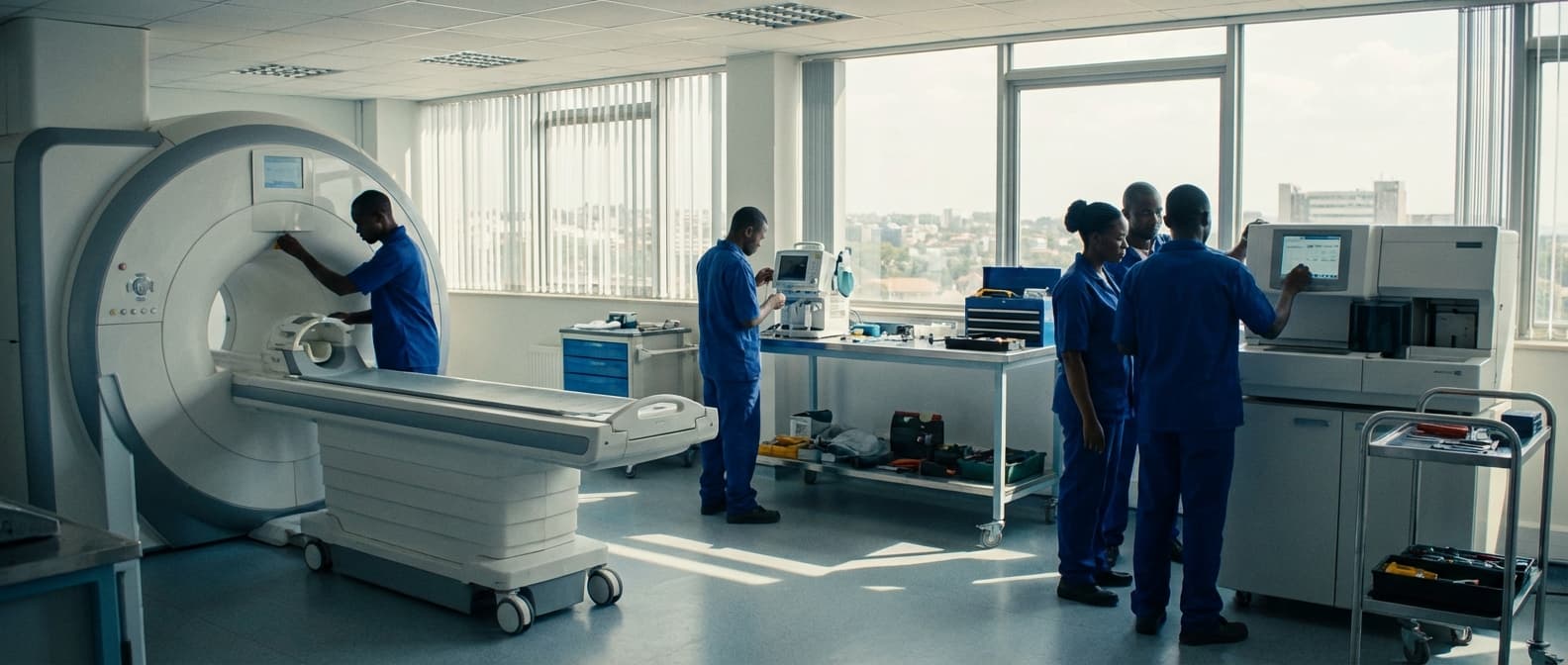
Planned Shutdown Coordination Service for Critical Equipment in Central African Republic
Engineering Excellence & Technical Support
Planned Shutdown Coordination Service for Critical Equipment High-standard technical execution following OEM protocols and local regulatory frameworks.
Optimized Uptime, Maximized Reliability
Our service meticulously plans and executes critical equipment shutdowns, minimizing downtime by employing advanced scheduling algorithms and predictive maintenance integration. This ensures that essential infrastructure in the Central African Republic operates at peak performance for longer periods, directly supporting vital services and economic activities.
Proactive Risk Mitigation & Safety Assurance
We prioritize safety and operational integrity through comprehensive risk assessments and the implementation of robust safety protocols during all shutdown coordination. Our meticulous planning identifies potential hazards before they arise, protecting personnel, valuable assets, and preventing catastrophic failures within the challenging Central African Republic environment.
Logistical Mastery in Remote Environments
Leveraging our deep understanding of the Central African Republic's unique logistical landscape, we excel at coordinating the timely delivery of specialized parts, skilled technicians, and necessary equipment to even the most remote operational sites. This ensures efficient and on-schedule completion of critical maintenance, overcoming geographical and infrastructure challenges.
What Is Planned Shutdown Coordination Service For Critical Equipment In Central African Republic?
Planned Shutdown Coordination Service for Critical Equipment in the Central African Republic (CAR) is a specialized operational support function designed to manage, optimize, and execute the temporary cessation of operation for essential infrastructure and high-value industrial assets. Its primary objective is to minimize operational disruption, mitigate risks, and ensure the safe and efficient execution of maintenance, repair, upgrade, or decommissioning activities on critical equipment within the CAR's unique operational context. This service is crucial due to factors such as limited local specialized expertise, potential logistical challenges, and the high economic and social impact of prolonged downtime on vital sectors.
| Who Needs It? | Typical Use Cases | |||||||||||||||
|---|---|---|---|---|---|---|---|---|---|---|---|---|---|---|---|---|
| Government Agencies and Parastatals: Responsible for managing and maintaining national critical infrastructure (e.g., power generation and distribution, water treatment plants, telecommunications networks, transportation hubs). | Mining and Extractive Industries: Companies operating in sectors like diamond and gold mining, requiring planned downtime for heavy machinery, processing equipment, and power infrastructure. | Energy Sector Operators: Companies involved in oil and gas exploration, production, refining, or power generation and distribution (including renewable energy sources). | Telecommunications Providers: Organizations responsible for maintaining and upgrading vital network infrastructure, including base stations and central switching facilities. | Major Industrial Manufacturers: Large-scale processing plants or factories that rely on complex machinery and integrated systems. | International Aid and Development Organizations: Involved in infrastructure rehabilitation and operational support for critical facilities in the CAR. | Large-Scale Agricultural Operations: Utilizing advanced machinery and processing facilities requiring periodic maintenance. | Healthcare Infrastructure Providers: Managing critical medical equipment and facility maintenance in hospitals and clinics. | Logistics and Transportation Infrastructure Managers: Operating ports, large depots, or fleet maintenance facilities. | Power Generation Unit Overhauls: Comprehensive maintenance and refurbishment of turbine generators, boilers, or other core power generation components. | Major Equipment Replacements: Installation of new, upgraded, or life-extended critical machinery (e.g., transformers, pumps, compressors, heavy mining equipment). | Routine and Preventive Maintenance Programs: Execution of scheduled maintenance to prevent failures and extend asset lifespan for essential equipment. | Software/Firmware Upgrades for Control Systems: Planned downtime required for updating critical operational technology (OT) and industrial control systems (ICS). | Asset Decommissioning and Site Remediation: Managed shutdown and dismantling of obsolete or retired critical infrastructure. | Infrastructure Refurbishment Projects: Undertaking significant repairs or upgrades to existing critical assets, such as power substations or water pumping stations. | Compliance Audits and Certification Preparations: Shutdowns may be required to bring equipment into compliance with new safety or operational standards. | Emergency Repair Planning and Execution: While primarily for planned events, the service framework can be adapted for managing critical emergency shutdowns with pre-defined protocols. |
Key Components of the Service
- Risk Assessment and Mitigation: Comprehensive identification and analysis of potential risks associated with planned shutdowns, including safety hazards, environmental impacts, supply chain disruptions, and socio-economic consequences. Development and implementation of robust mitigation strategies.
- Scope Definition and Planning: Detailed definition of the shutdown's objectives, scope of work (e.g., preventive maintenance, major overhauls, component replacements, technology upgrades), and required resources (personnel, materials, equipment, specialized tools).
- Scheduling and Sequencing: Development of a detailed, multi-phase shutdown schedule, including pre-shutdown activities, the shutdown execution window, and post-shutdown recommissioning. Optimization of task sequencing to minimize downtime.
- Resource Management and Logistics: Coordination of all necessary human resources (internal and external specialists, technicians, support staff), procurement and delivery of critical spare parts, consumables, and specialized equipment to remote or challenging locations within the CAR.
- Permitting and Regulatory Compliance: Facilitation of necessary permits, licenses, and adherence to local regulations, environmental standards, and safety protocols relevant to industrial operations and shutdown procedures in the CAR.
- Execution Oversight and Control: Real-time monitoring of shutdown progress against the established schedule and plan. Management of deviations, troubleshooting, and decision-making to ensure adherence to safety and quality standards.
- Communication and Stakeholder Management: Establishment of clear communication channels with all relevant stakeholders, including operational teams, maintenance departments, senior management, regulatory bodies, and local communities. Regular reporting on progress and any encountered issues.
- Safety Management: Implementation and strict enforcement of comprehensive safety protocols, hazard identification, risk mitigation, and emergency response procedures throughout the shutdown period, adhering to international best practices.
- Quality Assurance and Control: Verification that all maintenance and repair activities are performed to specified standards and that equipment is returned to operational readiness with documented quality assurance.
- Post-Shutdown Recommissioning and Handover: Controlled and systematic recommissioning of equipment, including functional testing, performance validation, and formal handover back to operational teams with comprehensive documentation.
Who Needs Planned Shutdown Coordination Service For Critical Equipment In Central African Republic?
Planned shutdown coordination services are essential for organizations in the Central African Republic that operate critical equipment. These services ensure that planned outages for maintenance, upgrades, or repairs are executed safely, efficiently, and with minimal disruption to operations and the surrounding community. The focus is on preventing unplanned downtime, which can be extremely costly and impactful in a region with potentially limited resources and infrastructure.
| Target Customer/Organization Type | Key Departments Involved | Specific Needs Addressed by Coordination Service |
|---|---|---|
| Energy Sector (Power Generation & Distribution) | Operations, Maintenance, Engineering, Safety, Transmission & Distribution | Minimizing power outages to the public, coordinating maintenance schedules across multiple power plants and grid sections, ensuring safety during high-voltage work. |
| Water and Wastewater Management | Operations, Maintenance, Treatment Plant Management, Public Health | Preventing interruptions in clean water supply, managing wastewater treatment plant shutdowns for essential maintenance, coordinating repairs on pipelines. |
| Telecommunications Providers | Network Operations, Engineering, Field Maintenance, Customer Service | Minimizing service disruption to mobile and internet users, coordinating upgrades to network infrastructure, ensuring seamless transition between old and new systems. |
| Mining and Resource Extraction | Mine Operations, Plant Maintenance, Engineering, Safety, Logistics | Scheduling downtime for heavy machinery maintenance, coordinating process plant shutdowns for repairs, ensuring safety protocols are met during complex operations. |
| Healthcare Facilities (Hospitals, Clinics) | Facility Management, Biomedical Engineering, Operations, Clinical Staff | Minimizing disruption to patient care, coordinating maintenance of critical medical equipment (MRI, CT scanners, life support), ensuring backup systems are operational. |
| Government Infrastructure Projects | Ministry of Public Works, Project Management Offices, Technical Departments | Coordinating shutdowns for road, bridge, or public building construction/renovation, managing traffic diversions, ensuring minimal impact on public access. |
| Large Industrial Manufacturing Plants | Production, Maintenance, Engineering, Quality Control, Supply Chain | Scheduling downtime for production line maintenance, coordinating equipment upgrades without halting entire operations, managing spare parts inventory for critical components. |
| Transportation Hubs (Airports, Major Stations) | Airport/Station Operations, Air Traffic Control, Maintenance, Security | Coordinating runway maintenance, managing scheduled downtime for critical infrastructure (baggage systems, control towers), minimizing delays for passengers and cargo. |
Target Customers and Departments for Planned Shutdown Coordination Service
- Organizations with critical infrastructure: Companies and government bodies responsible for essential services that rely on continuous operation.
- Industries with high uptime requirements: Sectors where even short periods of downtime can lead to significant financial losses, safety risks, or service interruptions.
- Government agencies overseeing public services: Entities responsible for the uninterrupted delivery of vital services.
- Companies undertaking significant upgrades or new installations: Projects requiring scheduled shutdowns to integrate new systems or replace old ones.
- Organizations with complex operational processes: Businesses where the interdependencies of various equipment necessitate meticulous planning for any shutdown.
Planned Shutdown Coordination Service For Critical Equipment Process In Central African Republic
The Planned Shutdown Coordination Service for Critical Equipment Process in the Central African Republic (CAR) is a comprehensive workflow designed to ensure the safe, efficient, and timely execution of planned shutdowns for essential infrastructure and industrial equipment. This service minimizes operational disruptions, enhances safety, and optimizes resource allocation during critical maintenance, upgrade, or replacement activities. The process is meticulously managed from initial inquiry to post-execution review, ensuring all stakeholders are informed and coordinated.
| Stage | Description | Key Activities | Responsible Parties | Deliverables |
|---|---|---|---|---|
| Inquiry & Initial Assessment | The process begins with a formal request or inquiry from the client regarding a planned shutdown for specific critical equipment. | Receive and acknowledge inquiry, preliminary discussion of shutdown needs, initial site visit (if required), gather preliminary information on equipment, expected duration, and criticality. | Client (requester), Service Provider (Coordinator) | Inquiry acknowledgment, preliminary needs assessment report |
| Planning & Scope Definition | Detailed planning to define the exact scope of work, objectives, timeline, and required resources for the shutdown. | Develop detailed shutdown plan, define scope of work (maintenance, upgrade, replacement), identify all critical equipment involved, establish clear objectives and KPIs, determine shutdown duration, risk assessment, preliminary budget estimation. | Service Provider (Coordinator), Client (Operations, Maintenance, Safety) | Detailed Shutdown Plan (including timeline, scope, objectives, KPIs), preliminary risk assessment |
| Resource Mobilization & Procurement | Securing all necessary personnel, materials, equipment, and specialized services for the shutdown. | Identify and contract skilled labor (internal/external), procure necessary spare parts and materials, arrange for specialized tools and equipment, coordinate with third-party service providers, ensure all permits and licenses are obtained. | Service Provider (Procurement, Logistics), Client (Procurement, Human Resources) | Resource allocation plan, procurement orders, contractor agreements, permit documentation |
| Pre-Shutdown Preparations | On-site preparations and final checks before the actual shutdown commences. | Site mobilization, safety briefings and training for all personnel, equipment isolation and lockout/tagout procedures, final confirmation of all resources, communication plan activation, establishment of command center/coordination hub. | Service Provider (On-site Management, Safety Officers), Client (Operations, Safety) | Mobilized workforce and equipment, safety training records, confirmed lockout/tagout plan, activated communication channels |
| Shutdown Execution | The period during which the critical equipment is shut down, and the planned activities are performed. | Implement planned maintenance/upgrade/replacement tasks, continuous monitoring of progress against the plan, daily progress meetings and reporting, immediate issue resolution and deviation management, strict adherence to safety protocols. | Service Provider (Execution Teams, Supervisors), Client (Supervisors, Quality Control) | Daily progress reports, incident logs, completed work orders |
| Post-Shutdown Activities & Testing | Activities after the main work is completed, including testing and recommissioning. | System checks and functional testing, performance validation against KPIs, equipment re-energization and startup, final inspection and handover, documentation of all work performed and test results. | Service Provider (Testing Teams, Commissioning Engineers), Client (Operations, Quality Assurance) | Test reports, commissioning certificates, as-built documentation, handover documentation |
| Reporting & Review | Comprehensive reporting on the shutdown's success and a review for future improvements. | Compile final shutdown report (including performance against KPIs, budget, safety incidents, lessons learned), conduct post-shutdown review meeting with all stakeholders, identify areas for improvement in future shutdowns, archive all project documentation. | Service Provider (Project Management, Reporting Team), Client (Management) | Final Shutdown Report, lessons learned document, archived project files |
Workflow Stages: Planned Shutdown Coordination Service (CAR)
- Inquiry & Initial Assessment
- Planning & Scope Definition
- Resource Mobilization & Procurement
- Pre-Shutdown Preparations
- Shutdown Execution
- Post-Shutdown Activities & Testing
- Reporting & Review
Planned Shutdown Coordination Service For Critical Equipment Cost In Central African Republic
Coordinating planned shutdowns for critical equipment in the Central African Republic (CAR) involves a complex interplay of logistical, security, and technical factors. The cost of such a service is not a fixed rate but rather a dynamic figure influenced by several key elements. These factors collectively determine the overall expense for a company seeking professional shutdown coordination. The Central African Republic's infrastructure challenges, remoteness of certain operational sites, and the prevailing security landscape are significant drivers of cost. Reliable communication, transportation of specialized personnel and equipment, and ensuring the safety of all involved parties are paramount and contribute directly to the pricing.
| Service Component | Estimated Price Range (FCFA - Central African CFA Franc) |
|---|---|
| Initial Consultation & Planning (per day/week) | 50,000 - 250,000+ |
| Project Management (overall, % of project cost or daily rate) | 10-20% of total project cost or 150,000 - 750,000+ per day |
| Technical Expertise & Site Supervision (per specialist, per day) | 75,000 - 400,000+ |
| Security Personnel & Escorts (per person, per day) | 30,000 - 150,000+ |
| Logistics & Transportation (variable, per trip/ shipment) | 100,000 - 1,000,000+ (highly dependent on distance and mode) |
| Accommodation & Per Diem (per person, per day) | 25,000 - 75,000+ |
| Permitting & Administrative Fees (variable) | 50,000 - 300,000+ |
| Contingency & Risk Mitigation (percentage of total) | 5-15% of project cost |
| Comprehensive Shutdown Coordination Package (example for a small-to-medium complexity shutdown, 1-2 weeks) | 2,000,000 - 15,000,000+ FCFA |
| Comprehensive Shutdown Coordination Package (example for a large-scale/high-risk shutdown, 2-4 weeks) | 10,000,000 - 50,000,000+ FCFA |
Key Pricing Factors for Planned Shutdown Coordination in CAR:
- Scope and Duration of the Shutdown: The complexity of the equipment, the number of units requiring attention, and the projected time for each stage of the shutdown (planning, execution, recommissioning) are primary cost determinants.
- Type of Critical Equipment: Specialized machinery or systems requiring highly skilled technicians and specific safety protocols will inherently incur higher coordination costs.
- Geographical Location and Accessibility: Operations in remote or difficult-to-access regions of CAR will necessitate increased costs for transportation, accommodation, and logistical support for personnel and equipment.
- Security Requirements: The prevailing security situation in the operational area will dictate the need for armed escorts, security personnel, and risk mitigation strategies, significantly impacting the overall budget.
- Personnel and Expertise Required: The number of technical specialists, project managers, safety officers, and support staff, along with their required skill sets and experience, will influence labor costs.
- Logistics and Transportation: Costs associated with moving personnel, specialized tools, spare parts, and any necessary temporary infrastructure to and from the site are substantial.
- Permits and Regulatory Compliance: Obtaining necessary permits and adhering to local regulations for industrial operations and equipment maintenance can add to administrative and associated costs.
- Contingency Planning and Risk Management: The complexity of the operation and the operational environment will influence the extent and cost of contingency planning and risk management protocols.
- Communication and Reporting: Establishing and maintaining reliable communication channels, especially in remote areas, and the frequency/detail of reporting can add to service costs.
- Subcontractor Management: If specialized third-party services are required (e.g., for heavy lifting, specialized welding), their costs and the coordination overhead will be factored in.
Affordable Planned Shutdown Coordination Service For Critical Equipment Options
Our Affordable Planned Shutdown Coordination Service is designed to minimize downtime and maximize operational efficiency for your critical equipment. We understand the significant financial impact of unexpected outages and the logistical complexities of planned shutdowns. Our service offers a tiered approach with flexible value bundles and cost-saving strategies to suit your specific needs and budget. We provide expert planning, scheduling, resource allocation, and risk management to ensure your planned shutdowns are executed safely, efficiently, and within budget, ultimately protecting your revenue streams and operational continuity.
| Cost-Saving Strategy | Description | Benefit |
|---|---|---|
| Optimized Scheduling | Leveraging historical data and predictive analytics to identify the most cost-effective times for shutdowns, minimizing impact on peak production periods. | Reduced lost revenue and increased operational efficiency. |
| Resource Consolidation | Coordinating multiple maintenance tasks and contractor schedules to minimize travel, equipment rental, and personnel overlap. | Lower labor and equipment costs. |
| Preventive Maintenance Integration | Proactively identifying and addressing potential issues during the planned shutdown, preventing costly reactive repairs later. | Reduced unplanned downtime and extended equipment lifespan. |
| Vendor Negotiation Support | Assisting in securing competitive pricing for specialized parts, tools, and external labor through our network and negotiation expertise. | Lower procurement costs and access to preferred rates. |
| Remote Monitoring & Diagnostics | Utilizing technology to monitor equipment health remotely before and during the shutdown, reducing the need for on-site presence in some instances. | Reduced on-site personnel costs and improved safety. |
| Standardized Shutdown Checklists | Implementing pre-defined, proven checklists for common tasks to ensure thoroughness and reduce errors, minimizing rework. | Improved quality of work and reduced re-do costs. |
Value Bundles Explained
- {"title":"Essential Bundle","description":"Ideal for organizations with established shutdown procedures or less complex equipment. This bundle focuses on core planning and scheduling, ensuring basic coordination for your shutdown."}
- {"title":"Advanced Bundle","description":"Suitable for medium-complexity shutdowns, this bundle includes enhanced resource management, risk assessment, and detailed communication protocols to streamline operations and mitigate potential issues."}
- {"title":"Comprehensive Bundle","description":"Our premium offering for large-scale or highly critical equipment shutdowns. This bundle provides end-to-end management, including advanced predictive maintenance integration, expert on-site supervision, real-time monitoring, and post-shutdown analysis for continuous improvement."}
Verified Providers In Central African Republic
In the Central African Republic, ensuring access to reliable and trustworthy healthcare is paramount. When seeking medical assistance, particularly from international or specialized providers, verifying their credentials is a critical step. Franance Health stands out as a premier choice due to its rigorous vetting process and commitment to upholding the highest standards of medical practice. This commitment translates into a network of verified providers who offer exceptional care and possess the necessary expertise to address diverse health needs within the country. Their credentials not only attest to their qualifications but also signify adherence to ethical practices and a dedication to patient well-being.
| Credential Type | Verification Process | Significance for Patients |
|---|---|---|
| Medical Licenses and Certifications | Franance Health independently verifies the validity and current standing of all medical licenses and board certifications with relevant national and international authorities. | Ensures that practitioners are legally authorized to practice medicine and have met established professional standards in their respective fields. |
| Educational Background and Training | Thorough review of academic transcripts, degrees, and specialized training programs from accredited institutions. | Confirms that providers possess the foundational knowledge and advanced skills required for their medical specializations. |
| Professional Experience and Track Record | Assessment of work history, peer reviews, and references to evaluate practical experience and professional conduct. | Provides assurance of practical competency and a history of positive patient outcomes and ethical practice. |
| Adherence to Ethical Standards | Confirmation of compliance with medical ethics codes and professional conduct guidelines. | Guarantees that patients will receive care that is respectful, compassionate, and free from exploitation or discrimination. |
Why Franance Health is the Best Choice for Verified Providers:
- Comprehensive Credential Verification: Franance Health employs a multi-faceted approach to verify the qualifications, licenses, and experience of all its affiliated healthcare professionals. This includes rigorous background checks and validation of educational and professional achievements.
- Commitment to Quality and Safety: The organization prioritizes patient safety and quality of care. Verified providers have demonstrated their adherence to international best practices and ethical medical conduct.
- Access to Specialized Expertise: Franance Health connects individuals with a diverse range of specialists, ensuring that complex medical conditions can be addressed by highly qualified and experienced professionals.
- Transparency and Trust: By providing verified credentials, Franance Health fosters transparency and builds trust with patients, empowering them to make informed decisions about their healthcare.
- Support for Local Healthcare Improvement: Franance Health's presence contributes to the elevation of healthcare standards within the Central African Republic, working collaboratively with local institutions to enhance medical services.
Scope Of Work For Planned Shutdown Coordination Service For Critical Equipment
This Scope of Work (SOW) outlines the services required for the coordination of planned shutdown activities for critical equipment. The objective is to ensure minimal disruption to operations, safe execution of maintenance tasks, and efficient restoration of service. The service provider will be responsible for comprehensive planning, scheduling, communication, execution oversight, and post-shutdown activities.
| Technical Deliverable | Standard Specification / Description | Acceptance Criteria |
|---|---|---|
| Detailed Shutdown Plan | A comprehensive document outlining all phases of the shutdown, including scope of work for each equipment, detailed schedule (Gantt chart), resource allocation, communication matrix, contingency plans, and critical path analysis. Must adhere to industry best practices (e.g., PMI, ISO 55000). | Approved by client's operations and maintenance management. Plan is logical, complete, and accounts for all identified critical equipment and their dependencies. Schedule is realistic and achievable. |
| Equipment Isolation and LOTO Procedures | Development and implementation of robust Lockout/Tagout (LOTO) procedures specific to each critical equipment. Procedures must comply with relevant OSHA or local safety regulations and site-specific safety policies. | All LOTO procedures reviewed and approved by client's safety officer. Evidence of successful LOTO implementation during shutdown execution. |
| Resource Requirement List | Detailed breakdown of all personnel (skill sets, numbers), specialized tools, equipment, materials, and consumables required for the shutdown. Specifications for outsourced services (e.g., heavy lifting, specialized welding). | List is accurate and sufficient for the planned scope. All required resources are identified with lead times and procurement plans. Vendor qualifications are verified. |
| Communication Plan and Matrix | A clear and concise plan detailing communication channels, frequency, stakeholders, and escalation procedures during all phases of the shutdown. Includes daily progress meetings, issue resolution forums, and executive reporting. | Communication plan is understood and agreed upon by all key stakeholders. Effective information flow throughout the shutdown is demonstrated. |
| Risk Assessment and Mitigation Plan | Identification of potential risks (technical, safety, operational, environmental) associated with the shutdown and development of detailed mitigation strategies. Includes contingency plans for unexpected issues. | Risks are comprehensively identified and assessed. Mitigation plans are practical and effective. Contingency plans are well-defined and readily deployable. |
| Shutdown Execution Checklist | A series of detailed checklists for each task and phase of the shutdown, ensuring all required steps are completed accurately and safely. Includes pre-shutdown checks, during shutdown progress checks, and post-shutdown verification. | Checklists are comprehensive and align with the shutdown plan. All critical tasks are documented as completed and verified. |
| Post-Shutdown Performance Report | A comprehensive report summarizing the shutdown execution, including actual vs. planned schedule, deviations, root causes of any delays or issues, performance metrics of critical equipment post-restoration, lessons learned, and recommendations for future shutdowns. | Report is accurate, data-driven, and provides actionable insights. All critical equipment performance is validated against baseline data. Lessons learned are clearly documented. |
| As-Built Documentation Updates (as applicable) | Coordination with client's engineering team to ensure any modifications or changes made during the shutdown are reflected in the relevant engineering drawings, P&IDs, and other technical documentation. Adherence to client's document control procedures. | All relevant technical documentation is updated to reflect the 'as-built' condition of the equipment after the shutdown. Verified by client's engineering department. |
| Safety Audit Reports | Regular safety audits conducted during the shutdown to ensure compliance with all safety regulations, company policies, and best practices. Reports should highlight any non-conformities and corrective actions taken. | Regular safety audits are performed. All identified safety hazards are addressed and corrected promptly. Zero lost-time incidents during the shutdown. |
| Permit to Work (PTW) Management | Ensuring all necessary permits to work are obtained, tracked, and managed effectively for all activities performed during the shutdown. Compliance with site-specific PTW system. | All required PTWs are in place and valid for the duration of the associated work. Evidence of proper PTW management and closure. |
Key Service Areas
- Shutdown Planning and Strategy Development
- Resource Management and Mobilization
- Execution Oversight and Coordination
- Risk Management and Safety Assurance
- Post-Shutdown Analysis and Reporting
- Documentation and Knowledge Transfer
Service Level Agreement For Planned Shutdown Coordination Service For Critical Equipment
This Service Level Agreement (SLA) outlines the response times and uptime guarantees for the Planned Shutdown Coordination Service for Critical Equipment. This service ensures the efficient and safe scheduling, execution, and resumption of planned downtime for essential operational machinery. The objective is to minimize disruption to business operations while adhering to all safety and regulatory requirements.
| Service Metric | Service Level Objective (SLO) | Measurement Period | Reporting Frequency |
|---|---|---|---|
| Initial Response to Planned Shutdown Request | Acknowledgement within 2 business hours; Preliminary schedule proposal within 1 business day of receiving all required information. | Per request | Upon request and completion of initial response |
| Coordination Meeting Scheduling | Schedule initial coordination meeting within 2 business days of acknowledging the shutdown request. | Per request | Upon scheduling of the meeting |
| Notification Lead Time for Scheduled Shutdown | Minimum 7 calendar days for critical equipment (defined in Appendix A) unless otherwise agreed upon for urgent operational needs. | Per planned shutdown | Upon confirmation of shutdown schedule |
| Uptime Guarantee for Coordinated Shutdown Window | The service guarantees that the planned shutdown window will be adhered to, with a maximum deviation of +/- 15 minutes, assuming all provided information and resources are accurate and available. | Per planned shutdown | Upon completion of the shutdown and resumption of service |
| Post-Shutdown Report Delivery | Within 2 business days of the equipment resuming full operational status. | Per planned shutdown | Upon delivery of the report |
| Critical Issue Escalation Response | For issues impacting the planned shutdown schedule or safety, acknowledgement within 30 minutes, with a proposed resolution plan within 2 business hours. | During planned shutdown execution | Immediately upon escalation |
Key Service Components:
- Planned Shutdown Scheduling and Coordination
- Resource Allocation and Management
- Risk Assessment and Mitigation Planning
- Communication and Stakeholder Notification
- Post-Shutdown Verification and Reporting
- Emergency Shutdown Support (as applicable, with separate SLAs)
- Preventative Maintenance Integration
Frequently Asked Questions

Ready when you are
Let's scope your Planned Shutdown Coordination Service for Critical Equipment in Central African Republic project in Central African Republic.

Scaling healthcare logistics and technical systems across the entire continent.