
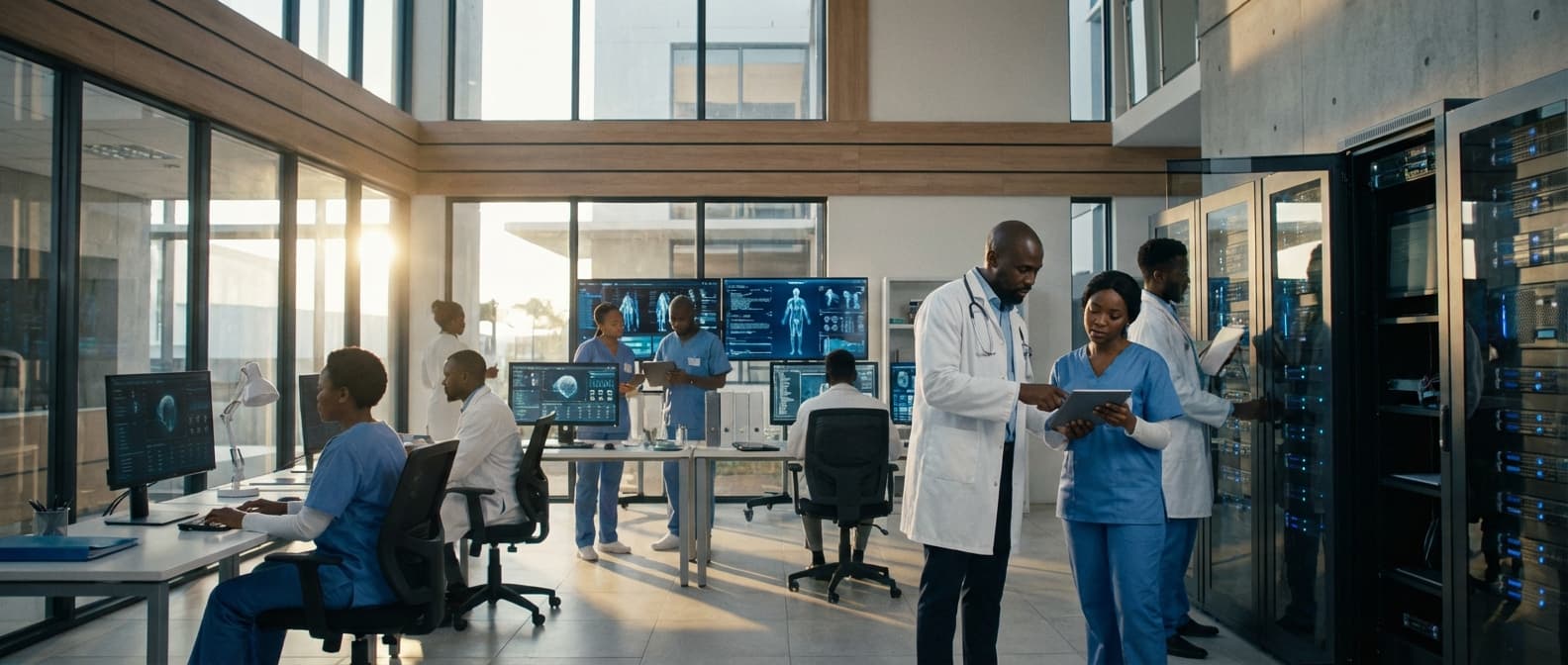
Tele-Radiology in Central African Republic
Engineering Excellence & Technical Support
24/7 access to certified radiologists providing rapid, accurate remote interpretation of diagnostic imaging studies. High-standard technical execution following OEM protocols and local regulatory frameworks.
Enhanced Diagnostic Accuracy in Remote Areas
Leveraging tele-radiology platforms, Central African Republic's healthcare facilities can now remotely access specialist radiologists for expert interpretation of X-rays, CT scans, and MRIs. This dramatically improves diagnostic accuracy for conditions like tuberculosis, fractures, and neurological emergencies in underserved regions, leading to more timely and effective treatment.
Bridging the Radiologist Gap
Tele-radiology overcomes the severe shortage of qualified radiologists in the Central African Republic by connecting local clinics and hospitals to a global network of imaging specialists. This ensures that critical imaging studies are reviewed by experienced professionals, regardless of geographical location, significantly expanding access to vital diagnostic services.
Secure and Efficient Image Sharing
Our secure, cloud-based tele-radiology solution enables the rapid and encrypted transmission of medical imaging data. This ensures patient privacy and data integrity while facilitating seamless collaboration between local medical teams and remote radiologists, streamlining workflows and reducing turnaround times for reports, even in areas with limited infrastructure.
What Is Tele-radiology In Central African Republic?
Tele-radiology in the Central African Republic (CAR) refers to the remote interpretation of medical imaging studies (such as X-rays, CT scans, and MRIs) by qualified radiologists. This service leverages telecommunications technology to transmit images and associated patient data from a healthcare facility in the CAR to a radiologist located elsewhere, who then provides a diagnostic report. The CAR faces significant challenges in healthcare access, particularly in the domain of specialized medical services like radiology due to a scarcity of trained personnel and advanced imaging equipment in many remote or underserved areas. Tele-radiology acts as a critical bridge to overcome these geographical and logistical barriers, enabling timely and accurate diagnoses for patients who would otherwise have limited or no access to radiological expertise.
| Beneficiary Group | Specific Needs Addressed | Impact of Tele-radiology |
|---|---|---|
| Patients in Remote and Rural Areas | Limited or no access to diagnostic imaging expertise and equipment; delayed diagnoses and treatment. | Provides access to expert interpretation, enabling timely diagnosis and appropriate management of various medical conditions. |
| Patients in Underserved Urban Areas | Shortage of local radiologists leading to long waiting times for interpretations; overstretched existing resources. | Augments local capacity, reduces report turnaround times, and improves diagnostic throughput. |
| Healthcare Facilities with Limited Radiologist Staff | Inability to provide 24/7 radiological coverage; reliance on general practitioners for preliminary interpretations. | Ensures continuous access to specialized radiological interpretations, improving patient safety and diagnostic accuracy. |
| Referral Hospitals and Clinics | Need for specialized diagnostic imaging for complex cases and patient management. | Facilitates efficient referral pathways and supports definitive diagnosis for a wide spectrum of pathologies. |
| Public Health Programs and Emergency Response | Challenges in rapidly deploying radiological expertise during outbreaks or natural disasters; need for widespread diagnostic support. | Enables rapid assessment of public health crises and provides essential diagnostic capabilities in resource-constrained emergency settings. |
Key Components of Tele-radiology in the Central African Republic
- Image Acquisition: Digital imaging modalities (X-ray, CT, MRI) within the CAR's healthcare facilities.
- Image Transmission: Secure and reliable transmission of DICOM-compliant images and patient metadata via internet or satellite links.
- Teleradiology Platform: Software and hardware infrastructure for managing image workflow, enabling communication between referring physicians and radiologists, and housing the Picture Archiving and Communication System (PACS).
- Radiologist Interpretation: A board-certified radiologist, potentially located internationally or in a more urban center within the CAR, who reviews the images and generates a diagnostic report.
- Report Delivery: Secure electronic delivery of the interpreted report back to the referring physician or healthcare facility.
- Quality Assurance: Protocols for ensuring the accuracy and reliability of interpretations, including peer review and continuous professional development.
Who Needs Tele-radiology In Central African Republic?
The Central African Republic (CAR) faces significant challenges in its healthcare system, particularly in diagnostic imaging. A severe shortage of trained radiologists and limited access to advanced imaging equipment in remote areas create substantial barriers to timely and accurate diagnoses. Tele-radiology offers a compelling solution to bridge these gaps, extending the reach of expert interpretation to underserved populations and supporting healthcare professionals in critical decision-making.
| Target Customer/Department | Specific Needs Addressed by Tele-Radiology | Benefits and Impact |
|---|---|---|
| Rural and Remote Health Centers/Clinics | Lack of local radiologists for X-ray, ultrasound, and CT scan interpretation. Inability to perform complex imaging studies locally. Delays in diagnosis leading to poorer outcomes. | Provides access to expert interpretations, enabling earlier and more accurate diagnoses. Reduces the need for patient transport to distant facilities. Improves the quality of care in underserved areas. |
| District and Regional Hospitals | Limited availability of on-site radiologists, especially during off-hours. Overburdened existing radiology departments. Need for specialized interpretations (e.g., neuroimaging, musculoskeletal). | Offers continuous diagnostic support, improving turnaround times. Augments local radiology capacity, allowing for more efficient workflows. Facilitates access to subspecialty expertise. |
| Central Hospitals/National Referral Centers | High patient volume and demand for radiology services. Potential for radiologist burnout. Need for second opinions and complex case consultations. | Enhances diagnostic efficiency and accuracy for complex cases. Supports the training of local radiologists. Provides a robust system for managing fluctuations in workload. |
| Trauma and Emergency Units | Critical need for rapid interpretation of imaging studies (e.g., head CTs, X-rays for fractures) in life-threatening situations. Limited availability of radiologists for emergency calls. | Enables immediate interpretation of urgent imaging, crucial for trauma management and patient survival. Reduces delays in surgical intervention. Improves patient outcomes in emergency scenarios. |
| Maternal and Child Health Departments | Need for ultrasound interpretation for prenatal care, fetal assessment, and diagnosis of obstetric complications. Limited access to skilled sonographers and radiologists for interpretation. | Facilitates timely diagnosis of pregnancy complications and fetal abnormalities. Improves prenatal care and reduces maternal and infant mortality. Supports safe delivery planning. |
| Infectious Disease Control Programs | Requirement for chest X-ray interpretation for conditions like tuberculosis (TB). Challenges in rapid diagnosis and follow-up in remote areas. | Enables efficient screening and diagnosis of infectious diseases like TB, particularly in areas with limited resources. Supports public health initiatives and disease surveillance. |
| Surgical Departments | Need for pre-operative and post-operative imaging interpretations to guide surgical planning and assess outcomes. Reliance on timely diagnostic reports. | Improves surgical decision-making by providing clear and timely imaging reports. Enhances patient management throughout the surgical pathway. Contributes to better surgical outcomes. |
Target Customers and Departments for Tele-Radiology in Central African Republic
- Rural and remote health centers and clinics
- District and regional hospitals
- Central hospitals and national referral centers
- Trauma and emergency units
- Maternal and child health departments
- Infectious disease control programs
- Surgical departments
Tele-radiology Process In Central African Republic
The implementation of tele-radiology in the Central African Republic (CAR) presents a crucial solution to address the severe shortage of radiologists and limited access to advanced imaging services, particularly in remote areas. This workflow outlines the process from an initial inquiry for a radiological interpretation to the final delivery of the report, designed to overcome infrastructural challenges and enhance diagnostic capabilities. The system aims to connect peripheral health facilities lacking radiologist expertise with centralized or international radiology services for expert interpretation of medical images.
| Stage | Description | Key Stakeholders | Challenges in CAR | Mitigation Strategies |
|---|---|---|---|---|
| Inquiry & Acquisition | Need for interpretation identified; image captured. | Referring Clinician, Radiographer/Technician | Limited access to imaging equipment; inconsistent power supply; lack of trained personnel. | Mobile X-ray units; solar power solutions; training programs for technicians. |
| Data Transmission | Image and clinical data sent to the reading center. | Radiographer/Technician, IT Support | Unreliable internet connectivity; low bandwidth; cybersecurity concerns. | Data compression techniques; satellite internet; offline data synchronization; encrypted USB transfer. |
| Platform Management & Triage | Request managed, image quality checked, and assigned. | Tele-Radiology Platform Administrator, Triage Radiographer/Coordinator | Technical glitches with the platform; potential for misassignment if not properly configured. | Robust platform design; clear assignment protocols; user training. |
| Radiologist Interpretation | Radiologist analyzes images and generates a report. | Radiologist | Shortage of radiologists nationwide; high workload for available radiologists; need for specialized expertise. | Recruitment of foreign-trained radiologists; remote work agreements; specialization training. |
| Report Delivery & Utilization | Report sent back to facility; informs patient care. | Referring Clinician, Patient | Delayed reporting due to transmission issues; difficulty in integrating reports into existing patient records; limited clinical follow-up resources. | Prioritization of urgent cases; standardized report formats; digital patient record integration; referral networks. |
Tele-Radiology Workflow in Central African Republic
- Inquiry Initiation: A healthcare professional (doctor, technician) at a peripheral health facility identifies the need for radiological interpretation of an image (X-ray, CT, MRI).
- Image Acquisition and Preparation: The medical imaging modality (e.g., X-ray machine) is used to capture the image. The image is then digitized and saved in a standard format (e.g., DICOM).
- Data Transmission: Due to potential limitations in internet connectivity, images might be compressed. Data is then uploaded to a secure tele-radiology platform. This could involve a local server at the facility, a regional hub, or directly to a cloud-based system, depending on available infrastructure. Methods may include wired internet, mobile data, or even secure physical transfer of data via USB drives in extreme cases.
- Secure Platform Access: The tele-radiology platform serves as a central hub for managing incoming requests and outgoing reports. It ensures data security and patient confidentiality.
- Triage and Assignment: A trained radiographer or a coordinating physician at the receiving end (central hospital or external reading center) reviews the incoming request and image. They may perform an initial quality check and then assign the case to an available and appropriately qualified radiologist.
- Radiologist Interpretation: The assigned radiologist accesses the images and patient clinical information on their workstation. They perform a thorough analysis of the images.
- Report Generation: The radiologist dictates or types a comprehensive diagnostic report, including findings, impression, and recommendations. This report is then integrated into the tele-radiology platform.
- Report Review and Validation (Optional but Recommended): In some advanced setups, a senior radiologist might review the report for quality assurance before finalization, especially for complex or critical cases.
- Report Transmission and Access: The finalized report is securely transmitted back to the requesting peripheral health facility via the tele-radiology platform. The healthcare professional who initiated the inquiry can then access the report.
- Patient Management: The referring physician uses the diagnostic report to inform patient management, treatment decisions, and follow-up care.
- Feedback and Quality Improvement: A mechanism for feedback from the referring physician to the radiologist is often included to facilitate continuous improvement of the service.
Tele-radiology Cost In Central African Republic
Tele-radiology services in the Central African Republic (CAR) are still in their nascent stages, with limited providers and infrastructure. This makes it challenging to establish definitive cost ranges. However, several factors significantly influence the pricing of these services, and we can outline potential pricing models and influencing factors. The local currency is the Central African CFA franc (XAF).
| Service Type (Estimate) | Estimated Cost Range (XAF) | Notes |
|---|---|---|
| Per-Study Interpretation (X-ray) | 25,000 - 75,000 XAF | Basic X-ray interpretation by a radiologist. May vary significantly based on complexity and TAT. |
| Per-Study Interpretation (CT/MRI) | 75,000 - 250,000+ XAF | More complex imaging modalities requiring specialized expertise. Costs escalate with scan resolution and the extent of the study. |
| Monthly Subscription (Small Clinic/Hospital) | 500,000 - 2,000,000+ XAF | May include a certain volume of studies, platform access, and basic support. Ideal for consistent, moderate-volume needs. |
| Monthly Subscription (Larger Facility/Network) | 2,000,000 - 10,000,000+ XAF | Higher volumes, dedicated support, potentially faster TAT, and advanced features. Pricing is highly customizable. |
| Urgent/STAT Interpretation Surcharge | +15,000 - 50,000 XAF (per study) | An additional fee for immediate reporting, guaranteeing priority for radiologists. |
Key Pricing Factors for Tele-Radiology in CAR
- Technology and Infrastructure: The cost of implementing and maintaining reliable internet connectivity, PACS (Picture Archiving and Communication System), and RIS (Radiology Information System) is a significant determinant. This includes hardware, software licenses, and ongoing maintenance.
- Radiologist Availability and Expertise: The scarcity of qualified radiologists in the CAR means that services may rely on international radiologists. The cost then incorporates their fees, which are often higher due to specialized expertise and the need for secure, encrypted data transfer.
- Volume and Type of Scans: The number of imaging studies (X-rays, CT scans, MRIs) to be interpreted, and the complexity of these studies, will directly impact the overall cost. Higher volumes can sometimes lead to economies of scale.
- Turnaround Time (TAT) Requirements: Urgent interpretations will command higher fees than routine reads. The need for rapid reporting, especially in critical care scenarios, requires dedicated radiologist availability.
- Platform and Service Provider: Different tele-radiology providers will have varying business models, overheads, and profit margins, leading to price discrepancies. Some may offer bundled services, while others charge per scan or per report.
- Data Security and Compliance: Ensuring secure data transmission and storage in compliance with any relevant health data regulations (even if nascent in the CAR) adds to operational costs.
- Training and Support: The cost of training local healthcare staff to utilize the tele-radiology platform and providing ongoing technical support will be factored into pricing.
- Geographic Location of the Facility: While tele-radiology aims to bridge distances, the cost of setting up and maintaining connectivity to remote or underserved areas within the CAR might indirectly influence pricing due to logistical challenges.
Affordable Tele-radiology Options
Tele-radiology offers a cost-effective solution for medical facilities by leveraging remote expertise. This technology allows for the interpretation of medical images (like X-rays, CT scans, and MRIs) by radiologists located anywhere in the world. This not only improves turnaround times and access to specialized subspecialists but also significantly reduces overhead associated with in-house radiology departments. Understanding how to implement affordable tele-radiology involves exploring value bundles and implementing strategic cost-saving measures.
| Cost-Saving Strategy | Description | Potential Impact |
|---|---|---|
| Negotiate Long-Term Contracts | Commit to longer contract durations (e.g., 1-3 years) with tele-radiology providers. This demonstrates commitment and can lead to more favorable pricing. | Significant discounts on per-read costs, greater price stability. |
| Optimize Workflow and Integration | Ensure seamless integration of tele-radiology services into your existing PACS and EMR systems. Efficient workflow reduces manual effort and potential errors. | Reduced administrative overhead, faster turnaround times, fewer miscommunications. |
| Leverage Tiered Pricing Models | Understand and utilize tiered pricing based on volume. As your imaging volume increases, you may qualify for lower per-read rates within a bundle. | Economies of scale leading to lower overall costs. |
| Consider Off-Peak or Asynchronous Interpretations | For non-emergent cases, explore options for interpretation during off-peak hours or asynchronously, which may be priced lower than immediate, on-demand reads. | Reduced cost for routine studies, improved resource allocation. |
| Bundle Modalities and Subspecialties | Instead of sourcing different subspecialists for each modality, look for providers who can offer a comprehensive bundle covering multiple imaging types and expertise. | Simplified vendor management, potential for package discounts. |
| Regularly Review Service Utilization | Periodically assess your actual usage against your bundled commitment. Adjustments may be possible to avoid overpaying for unused capacity or to secure better rates if usage exceeds expectations. | Ensures you are paying for what you use, optimized value for money. |
| Explore Open-Source or Hybrid Solutions | While less common for full-service tele-radiology, investigate if any open-source PACS viewers or integration tools can reduce software licensing costs when combined with a professional reading service. | Reduced initial software investment, though implementation and support costs need consideration. |
Understanding Value Bundles in Tele-Radiology
- {"title":"What are Value Bundles?","description":"Value bundles in tele-radiology are pre-packaged service offerings that combine multiple tele-radiology services at a set price. Instead of paying for each interpretation individually, clients purchase a bundle that might include a certain volume of reads, specific types of imaging modalities, or 24/7 coverage. These bundles are designed to offer predictability in costs and often provide a discount compared to à la carte pricing."}
- {"title":"Common Components of Value Bundles","description":"Bundles can be customized but commonly include: \n\n* Volume-Based Tiers: Pricing based on the number of studies interpreted per month or year.\n* Modality Specific Packages: Bundles for specific imaging types (e.g., all CT abdomen/pelvis reads).\n* Subspecialty Coverage: Packages guaranteeing access to specific subspecialists (e.g., neuroradiology, musculoskeletal radiology).\n* Turnaround Time Guarantees: Bundles that include specific service level agreements for report delivery.\n* 24/7/365 Coverage: Ensuring constant availability of radiologist interpretation."}
- {"title":"Benefits of Value Bundles","description":"Choosing value bundles can lead to: \n\n* Budget Predictability: Easier financial planning and management.\n* Cost Savings: Often includes volume discounts.\n* Streamlined Procurement: Simplifies the purchasing process.\n* Guaranteed Access: Ensures availability of services as per the bundle agreement.\n* Reduced Administrative Burden: Fewer individual invoices and contracts."}
Verified Providers In Central African Republic
In the Central African Republic, accessing reliable and trustworthy healthcare providers is paramount. Franance Health stands out as a beacon of quality and integrity, offering a comprehensive network of verified professionals dedicated to the well-being of the population. Their rigorous credentialing process ensures that all listed providers meet the highest standards of medical expertise, ethical practice, and patient care. This commitment to quality assurance makes Franance Health the premier choice for individuals seeking medical assistance in the CAR.
| Provider Type | Franance Health Verification Focus | Benefits for Patients |
|---|---|---|
| Doctors (General & Specialists) | Medical licenses, board certifications, postgraduate training, verifiable experience, background checks | Access to qualified and experienced physicians, assurance of proper diagnosis and treatment, access to specialized care |
| Nurses (Registered & Practical) | Nursing licenses, relevant training, CPR/AED certifications, demonstrated practical skills | Reliable nursing care, competent patient monitoring, assistance with daily health needs |
| Pharmacists | Pharmacy licenses, dispensing certifications, knowledge of drug interactions and safe medication practices | Safe and accurate dispensing of medications, professional advice on drug usage and side effects |
| Medical Technicians & Lab Personnel | Relevant certifications in their field (e.g., phlebotomy, radiology), proficiency in diagnostic procedures | Accurate and timely diagnostic testing, reliable test results for effective treatment planning |
| Healthcare Facilities (Clinics & Hospitals) | Operating licenses, compliance with health and safety regulations, equipment maintenance records, staff credentialing | Safe and functional healthcare environments, access to necessary medical equipment and resources, quality patient facilities |
Why Franance Health Credentials Matter
- Rigorous Vetting Process: Franance Health employs a multi-faceted approach to verify the qualifications, licenses, and certifications of every healthcare professional within their network.
- Commitment to Patient Safety: By ensuring providers meet stringent criteria, Franance Health prioritizes the safety and positive outcomes of all patients.
- Upholding Ethical Standards: Credentials extend beyond technical skills to encompass ethical conduct and professional integrity, guaranteeing respectful and compassionate care.
- Access to Specialized Expertise: Franance Health's network includes a diverse range of specialists, ensuring access to the specific medical expertise required for various conditions.
- Building Trust and Confidence: The verified status of Franance Health providers instills confidence in patients, allowing them to make informed decisions about their healthcare.
Scope Of Work For Tele-radiology
This document outlines the Scope of Work (SOW) for Tele-Radiology services, detailing the technical deliverables and standard specifications required for the successful implementation and operation of the service. The objective is to ensure high-quality, secure, and efficient remote radiology interpretation.
| Category | Deliverable / Specification | Description | Standards / Requirements |
|---|---|---|---|
| Technical Infrastructure | Image Transmission System | Secure and reliable system for transmitting DICOM images from originating sites to the tele-radiology service provider. | HL7, DICOM standards compliance; HIPAA/GDPR compliant encryption (AES-256); bandwidth requirements as per defined SLAs; support for various network conditions. |
| Technical Infrastructure | PACS/RIS Integration | Seamless integration with the client's existing PACS and Radiology Information System (RIS). | Bi-directional HL7 messaging for patient demographics, exam orders, and report delivery; DICOM query/retrieve capabilities. |
| Technical Infrastructure | Viewing Workstation | High-performance workstations for radiologists equipped with advanced visualization tools. | High-resolution medical-grade displays (2K/4K); FDA-approved PACS viewer software; minimum processing power and RAM; ergonomic design. |
| Technical Infrastructure | Network Connectivity | Robust and redundant network connectivity for reliable data transfer. | Dedicated VPN or secure internet connection; guaranteed uptime SLAs; latency and jitter specifications. |
| Reporting & Communication | Reporting Software | User-friendly reporting software for radiologists to generate and sign out reports. | Structured reporting templates; voice recognition integration (optional); secure report storage; HL7 output for EHR integration. |
| Reporting & Communication | Communication Platform | Secure platform for communication between referring physicians and radiologists. | Encrypted messaging; secure voice/video conferencing (optional); audit trails. |
| Security & Compliance | Data Security & Privacy | Ensuring the confidentiality, integrity, and availability of patient data. | HIPAA/GDPR compliance; role-based access control; audit logging; regular security audits; data encryption at rest and in transit. |
| Security & Compliance | Disaster Recovery & Business Continuity | Plan to ensure service availability in case of unforeseen events. | Regular data backups; off-site data storage; documented DR plan with defined RTO/RPO. |
| Service Delivery | Service Level Agreements (SLAs) | Defined metrics for service performance and response times. | Turnaround times (TAT) for different exam types; uptime guarantees; reporting accuracy rates; physician satisfaction scores. |
| Service Delivery | Quality Assurance (QA) | Processes to ensure the quality and accuracy of interpretations. | Peer review process; continuous professional development for radiologists; regular performance monitoring. |
| Service Delivery | Technical Support | Provision of timely and effective technical assistance. | 24/7 technical support availability; defined response and resolution times for critical issues. |
| Onboarding & Training | System Integration & Testing | Phased approach to integrate and test the tele-radiology solution with client systems. | Pre-implementation assessment; pilot testing; go-live support; user training. |
Key Objectives
- To provide timely and accurate diagnostic interpretations of medical imaging studies remotely.
- To ensure seamless integration with existing Picture Archiving and Communication Systems (PACS) and Electronic Health Records (EHR).
- To maintain the highest standards of patient data security and privacy.
- To facilitate subspecialty expertise access to underserved areas.
- To establish robust and reliable communication channels for image transmission and reporting.
- To define clear service level agreements (SLAs) for turnaround times and quality assurance.
Service Level Agreement For Tele-radiology
This Service Level Agreement (SLA) outlines the performance expectations for tele-radiology services, focusing on response times for critical image interpretation and overall system uptime. This agreement is between [Your Company Name] (hereinafter referred to as "Provider") and [Client Organization Name] (hereinafter referred to as "Client").
| Service Component | Response Time Guarantee (from study receipt) | Uptime Guarantee | Remedy for Failure |
|---|---|---|---|
| Critical Studies (e.g., Stroke, Trauma, PE) | Within 15 minutes (preliminary report) | 99.5% (excluding Scheduled Downtime) | 10% service credit for each instance of exceeding response time by >5 minutes, up to a maximum of 50% of monthly fees for critical interpretations. For Uptime failure, 5% service credit per 0.1% shortfall below 99.5%. |
| Urgent Studies (e.g., acute abdominal pain, new fractures) | Within 60 minutes (preliminary report) | 99.5% (excluding Scheduled Downtime) | 5% service credit for each instance of exceeding response time by >15 minutes, up to a maximum of 25% of monthly fees for urgent interpretations. For Uptime failure, 5% service credit per 0.1% shortfall below 99.5%. |
| Routine Studies | Within 24 hours (preliminary or final report) | 99.5% (excluding Scheduled Downtime) | No specific response time remedy, but may be considered in overall service quality evaluation. For Uptime failure, 5% service credit per 0.1% shortfall below 99.5%. |
| Platform Availability (for study upload, report access, communication) | N/A | 99.9% (excluding Scheduled Downtime) | 5% service credit for each 0.1% shortfall below 99.9% uptime. |
Definitions
- Critical Study: An imaging study identified by the Client as requiring immediate interpretation due to its potential to significantly impact patient care or outcome. The definition and criteria for a "Critical Study" will be mutually agreed upon and documented separately.
- Response Time: The time elapsed from when a study is successfully transmitted and received by the Provider's system to the time when the preliminary or final report is made available to the Client.
- Uptime: The percentage of time the Provider's tele-radiology platform and associated interpretation services are accessible and functional for the Client.
- Scheduled Downtime: Periods of planned maintenance or upgrades that are communicated to the Client in advance.
- Unscheduled Downtime: Any interruption of service not covered by Scheduled Downtime.
Frequently Asked Questions

Ready when you are
Let's scope your Tele-Radiology in Central African Republic project in Central African Republic.

Scaling healthcare logistics and technical systems across the entire continent.