
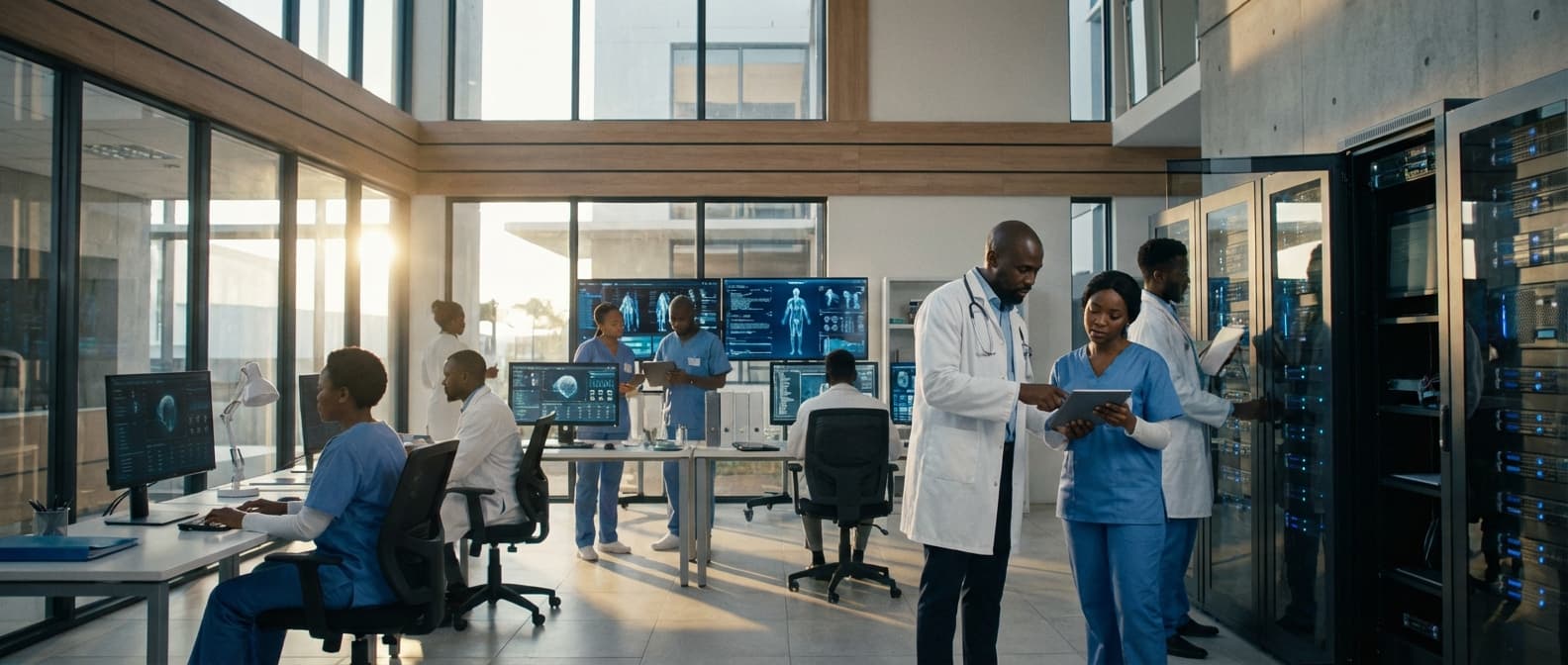
Medical IT Consultation in Central African Republic
Engineering Excellence & Technical Support
Strategic technology consulting to optimize healthcare operations, streamline workflows, and integrate cutting-edge medical information systems. High-standard technical execution following OEM protocols and local regulatory frameworks.
Robust EMR Infrastructure Deployment
We architect and implement scalable, secure Electronic Medical Record (EMR) systems, leveraging resilient on-premise and cloud-based solutions tailored for the unique infrastructural challenges of the Central African Republic. Our focus is on ensuring data integrity, accessibility, and long-term sustainability.
Telemedicine Network Optimization
We design and deploy high-availability telemedicine networks, optimizing bandwidth utilization and ensuring reliable connectivity for remote consultations and data sharing. This includes integrating satellite and cellular solutions to bridge connectivity gaps in underserved regions.
Healthcare Data Security & Compliance
We provide expert consultation on safeguarding sensitive patient data in compliance with emerging regional and international healthcare data protection standards. Our solutions encompass robust cybersecurity measures, data encryption, and comprehensive disaster recovery plans.
What Is Medical It Consultation In Central African Republic?
Medical IT Consultation in the Central African Republic (CAR) refers to the provision of expert advice and technical services specifically tailored to address the unique challenges and opportunities within the healthcare sector's information technology landscape in this region. It encompasses the strategic planning, implementation, optimization, and maintenance of health information systems (HIS), digital health solutions, and supporting infrastructure within the CAR's healthcare facilities and organizations. Given the often-limited resources, infrastructure constraints, and specific public health priorities of the CAR, these consultations are crucial for ensuring the effective and sustainable use of technology to improve healthcare delivery, data management, and patient outcomes.
| Who Needs Medical IT Consultation in CAR? | Typical Use Cases |
|---|---|
| Public Health Ministries & Agencies: For national health information system development, disease surveillance enhancement, policy formulation, and digital health strategy implementation. | Implementing a national EHR system, deploying a mobile data collection platform for epidemiological surveys, establishing a centralized health data repository. |
| Hospitals (Public and Private): To upgrade or implement HIS/EHR, improve patient record management, enhance diagnostic imaging systems, and streamline administrative processes. | Migrating from paper-based records to an EHR system, integrating laboratory information systems with hospital management systems, implementing PACS for radiology departments. |
| Non-Governmental Organizations (NGOs) & International Aid Organizations: For managing project-specific health data, implementing pilot digital health initiatives, and supporting healthcare facilities they partner with. | Developing a mobile application for community health workers to track patient visits and manage essential medicines, setting up IT infrastructure for emergency health response operations, providing IT support to remote health clinics. |
| Research Institutions & Universities: To facilitate data collection, analysis, and secure storage for medical research projects. | Establishing a secure research database, implementing tools for statistical analysis of health data, providing training on research informatics. |
| Healthcare Training Institutions: To modernize IT infrastructure for educational purposes, develop digital learning platforms, and train future healthcare IT professionals. | Implementing a learning management system (LMS) for medical students, setting up simulation labs with IT components, training healthcare students on basic IT troubleshooting. |
| Individual Clinics & Health Centers: To establish basic IT systems for patient registration, appointment scheduling, and basic record-keeping. | Installing a basic clinic management software, setting up internet connectivity for online consultations, implementing a simple patient database. |
Key Components of Medical IT Consultation in CAR
- Needs Assessment and Gap Analysis: Evaluating existing IT infrastructure, software, and human resource capabilities to identify deficiencies and areas for improvement.
- Strategic Planning & Roadmap Development: Creating actionable plans for IT adoption, integration, and digital transformation aligned with national health strategies and specific organizational goals.
- System Selection and Procurement: Advising on appropriate HIS, Electronic Health Records (EHR), Picture Archiving and Communication Systems (PACS), and other medical software based on technical requirements, interoperability standards, and budget constraints.
- Infrastructure Design & Deployment: Planning and overseeing the installation, configuration, and maintenance of hardware (servers, workstations, networking equipment), power solutions (generators, UPS), and connectivity (internet, VSAT).
- Data Management & Security: Establishing robust data governance policies, ensuring data integrity, implementing cybersecurity measures, and complying with relevant data privacy regulations.
- Interoperability & Integration: Facilitating the seamless exchange of health data between different systems and stakeholders, often in challenging network environments.
- Training & Capacity Building: Developing and delivering technical training programs for healthcare professionals and IT staff to ensure effective utilization and maintenance of digital health solutions.
- Project Management & Implementation Support: Overseeing the successful deployment of IT projects, from initial planning to go-live and post-implementation support.
- Troubleshooting & Ongoing Support: Providing remote and on-site technical assistance to resolve IT issues and ensure the continuous operation of critical systems.
- Regulatory Compliance & Standards Adherence: Ensuring IT solutions meet national and international standards for healthcare IT, including data security, privacy, and interoperability.
- Cost Optimization & Resource Allocation: Advising on efficient utilization of IT budgets and resources, considering the economic realities of the CAR.
Who Needs Medical It Consultation In Central African Republic?
Medical IT consultation in the Central African Republic is crucial for a wide range of healthcare stakeholders grappling with the unique challenges of a developing healthcare infrastructure. The need stems from a desire to improve efficiency, patient care, data management, and overall health outcomes in an environment often characterized by limited resources, geographical dispersion, and a growing reliance on technology. These consultations address everything from basic network setup and cybersecurity to the implementation of electronic health records (EHRs) and telemedicine solutions.
| Customer Type | Key Departments / Functions | Specific IT Needs |
|---|---|---|
| Public Health Ministries and Agencies | Information Technology Department, Health Information Systems Unit, Planning and Statistics Department, Disease Surveillance | National health data management systems, interoperability standards, cybersecurity for sensitive health data, digital public health campaigns, training for regional health offices, infrastructure assessment for remote areas. |
| Hospitals | Information Technology Department, Administration, Radiology, Laboratory, Pharmacy, Patient Records, Clinical Departments (various) | Electronic Health Record (EHR) implementation and optimization, Picture Archiving and Communication Systems (PACS) for radiology, Laboratory Information Systems (LIS), pharmacy management software, hospital network infrastructure, cybersecurity, telemedicine integration, staff training on IT systems. |
| Clinics and Health Centers | Clinic Management, Health Records, Nursing Station, Community Health Worker Coordination | Basic IT infrastructure setup (computers, printers, internet), simple patient registration systems, mobile health (mHealth) solutions for data collection and patient outreach, basic cybersecurity awareness, training for limited IT staff. |
| Non-Governmental Organizations (NGOs) focused on Health | Program Management, Data Management Unit, Logistics and Supply Chain, Monitoring & Evaluation | Data collection and analysis tools, mobile data collection platforms, secure data storage and sharing, IT support for remote field operations, development of digital health tools for specific programs (e.g., maternal health, infectious disease control), capacity building for local partners. |
| International Health Organizations and Donors | IT Project Management, Monitoring and Evaluation, Program Implementation Units | Assessing the IT needs of recipient organizations, developing IT project proposals, ensuring compliance with IT standards, advising on the procurement of IT equipment and software, supporting the implementation of large-scale health IT projects. |
| Research Institutions and Universities with Medical Programs | IT Department, Research Labs, Libraries, Academic Departments | Setting up and maintaining research data management systems, facilitating access to digital research resources, providing IT support for teaching and learning platforms, cybersecurity for research data, collaboration tools. |
| Private Healthcare Providers | Clinic/Hospital Management, Administration, IT Support (if available) | Establishing or upgrading IT infrastructure, implementing patient management software, improving billing and administrative efficiency, cybersecurity measures to protect patient data, exploring telemedicine options. |
Target Customers and Departments for Medical IT Consultation in Central African Republic
- Public Health Ministries and Agencies
- Hospitals (Tertiary, Secondary, and Primary Care)
- Clinics and Health Centers (Urban and Rural)
- Non-Governmental Organizations (NGOs) focused on Health
- International Health Organizations and Donors
- Research Institutions and Universities with Medical Programs
- Private Healthcare Providers (where present)
Medical It Consultation Process In Central African Republic
The Medical IT Consultation Process in the Central African Republic (CAR) is a structured approach to addressing the unique technological needs of healthcare facilities in the region. It begins with an initial inquiry, moves through detailed assessment and planning, and culminates in the execution and ongoing support of IT solutions. Given the infrastructure challenges and resource constraints often present in CAR, this process emphasizes practicality, sustainability, and alignment with local healthcare priorities. The workflow is designed to be adaptable, recognizing that each facility may have specific requirements and varying levels of existing IT maturity. Effective communication and collaboration with local stakeholders, including healthcare professionals, administrators, and IT personnel (where available), are crucial at every stage. The process aims to deliver tangible improvements in healthcare delivery through appropriate and well-implemented technology.
| Phase | Key Activities | Deliverables | Key Stakeholders |
|---|---|---|---|
| Inquiry and Initial Contact | Receiving consultation requests from healthcare facilities in CAR. Initial discussion to understand general needs and scope. | Acknowledgement of inquiry, preliminary understanding of client needs. | Healthcare Facility (e.g., Hospital, Clinic), Medical IT Consulting Firm |
| Needs Assessment and Requirement Gathering | On-site or remote assessment of existing IT infrastructure, hardware, software, network, and user capabilities. Detailed interviews with staff to understand workflows, challenges, and specific IT requirements. | Needs assessment report, documented functional and technical requirements. | Healthcare Facility Staff (doctors, nurses, administrators, IT personnel), Consultants |
| Solution Design and Proposal | Developing tailored IT solutions (e.g., EMR systems, telemedicine platforms, basic network infrastructure, hardware upgrades) based on requirements and budget. Creating a detailed proposal outlining scope, costs, timeline, and expected outcomes. | Proposed IT solution architecture, project proposal with budget and timeline. | Consultants, Healthcare Facility Management |
| Procurement and Implementation Planning | Assisting in or managing the procurement of necessary hardware, software, and services. Developing a detailed project plan for implementation, including resource allocation and risk mitigation strategies. | Procurement list/orders, detailed implementation plan. | Consultants, Healthcare Facility Procurement Department, Vendors |
| System Deployment and Configuration | Installation and configuration of hardware and software. Setting up network infrastructure and ensuring connectivity. Customizing solutions to fit specific workflows. | Installed and configured IT systems, functional network. | Implementation Team (Consultants, IT Technicians), Healthcare Facility Staff |
| Training and Knowledge Transfer | Providing comprehensive training to end-users and IT support staff on the new systems. Developing user manuals and support documentation. | Trained staff, user manuals, support documentation. | Consultants, Healthcare Facility End-Users and IT Staff |
| Testing and Validation | Conducting rigorous testing of all implemented systems to ensure they meet the defined requirements and are performing optimally. User acceptance testing (UAT). | Test reports, UAT sign-off. | Implementation Team, Healthcare Facility Key Users |
| Go-Live and Operational Handover | Transitioning the new systems into live operation. Providing initial on-site support during the go-live period. Formal handover of the implemented solution. | Live operational systems, handover documentation. | Implementation Team, Healthcare Facility Staff |
| Monitoring, Evaluation, and Support | Ongoing remote or on-site monitoring of system performance. Regular evaluation of the impact of IT solutions on healthcare delivery. Providing technical support and maintenance services. | Performance reports, impact assessment, resolved support tickets. | Consultants (Support Team), Healthcare Facility IT Staff |
Medical IT Consultation Process Workflow
- Inquiry and Initial Contact
- Needs Assessment and Requirement Gathering
- Solution Design and Proposal
- Procurement and Implementation Planning
- System Deployment and Configuration
- Training and Knowledge Transfer
- Testing and Validation
- Go-Live and Operational Handover
- Monitoring, Evaluation, and Support
Medical It Consultation Cost In Central African Republic
The cost of medical IT consultation in the Central African Republic (CAR) is highly variable, influenced by several key factors. These include the consultant's expertise and experience, the complexity and scope of the IT project, the duration of the consultation, and the specific IT solutions or services required. Factors like the consultant's geographical location within the CAR (e.g., consultations in Bangui might differ from those in more remote areas due to accessibility and infrastructure) and the urgency of the need also play a role. Furthermore, the type of organization seeking consultation (e.g., a small clinic versus a larger hospital or ministry of health) will impact the pricing structure. It's important to note that reliable, standardized pricing data for specialized services like medical IT consultation can be scarce in the CAR, making direct price comparisons challenging.
| Service Component | Estimated Range (Central African CFA Franc - XAF) |
|---|---|
| Initial Needs Assessment/Discovery (per day) | 200,000 - 500,000 XAF |
| General IT Strategy & Planning (per day) | 250,000 - 600,000 XAF |
| Specialized Consultation (e.g., EMR/EHR, PACS, Network Security) (per day) | 300,000 - 750,000+ XAF |
| Project Management Support (per day) | 280,000 - 650,000 XAF |
| Troubleshooting & Problem Solving (hourly) | 40,000 - 80,000 XAF |
| Remote Support (per hour, for simpler issues) | 30,000 - 60,000 XAF |
| Travel & Accommodation (if applicable, additional) | Varies significantly based on destination and duration |
Key Pricing Factors for Medical IT Consultation in Central African Republic
- Consultant's Experience and Expertise
- Project Scope and Complexity
- Duration of Consultation
- Specific IT Needs (e.g., EMR implementation, network infrastructure, cybersecurity, data management)
- Geographical Location within CAR
- Urgency of the Request
- Size and Type of Healthcare Organization
- Remote vs. On-site Consultation
Affordable Medical It Consultation Options
Navigating the complexities of Medical IT can be a significant investment for healthcare organizations. Fortunately, there are affordable consultation options that can provide essential expertise without breaking the bank. Value bundles offer a cost-effective way to access a range of services, while strategic cost-saving measures can further optimize your IT budget. This guide explores these options to help you make informed decisions for your practice.
| Cost-Saving Strategy | Description | Example Application in Medical IT |
|---|---|---|
| Phased Implementation | Breaking down large IT projects into smaller, manageable phases allows for staggered budgeting and the ability to assess ROI before committing to the next stage. | Instead of a full EHR system overhaul, consult on a pilot program for a specific department first, then scale based on success. |
| Leverage Existing Infrastructure | Prioritize optimizing and extending the life of current hardware and software before investing in new solutions. Focus on efficient utilization. | Conduct an assessment to see if current network infrastructure can support new telehealth services with minor upgrades, rather than a complete replacement. |
| Open-Source Solutions | Explore reputable open-source software alternatives for certain IT functions, which can significantly reduce licensing fees. | Consider open-source platforms for practice management or internal communication tools, provided they meet security and compliance standards. |
| Remote Consultation & Support | Utilize virtual meetings and remote access tools for consultations and ongoing support, reducing travel costs and time. | Many initial IT assessments, strategic planning sessions, and troubleshooting can be effectively conducted remotely. |
| Focus on Training & Skill Development | Invest in training your internal IT staff on specific technologies or best practices. This reduces reliance on external consultants for routine tasks. | Hire a consultant to train your IT team on cybersecurity best practices or EHR maintenance, empowering them to handle daily operations. |
| Managed Services Partnerships | Engage with managed IT service providers who offer tiered service plans. This can provide proactive maintenance and support at a predictable monthly cost. | Partner with a provider for ongoing network monitoring, security patching, and helpdesk support, often at a lower cost than hiring a full-time dedicated IT team. |
| Negotiate Vendor Contracts | Thoroughly review and negotiate contracts with IT vendors for software, hardware, and cloud services to secure better pricing and terms. | Before signing a new EHR contract, consult with an IT advisor to ensure the terms are competitive and understand all associated costs. |
Understanding Value Bundles
- {"title":"What are Value Bundles?","description":"Value bundles are pre-packaged sets of IT consulting services offered at a discounted rate compared to purchasing each service individually. They are designed to address common needs of healthcare organizations."}
- {"title":"Common Bundle Components","description":"Bundles often include a combination of services like IT strategy development, cybersecurity assessments, EHR/EMR optimization, cloud migration planning, compliance audits (HIPAA), and network infrastructure review."}
- {"title":"Benefits of Bundles","description":"Bundles provide predictable costs, streamline service procurement, and ensure a holistic approach to your IT needs. They can also foster a stronger, ongoing relationship with a consulting partner."}
- {"title":"Finding the Right Bundle","description":"Look for consultants who specialize in healthcare IT and whose bundles align with your current priorities and budget. Ask for clear definitions of what each service within the bundle entails."}
Verified Providers In Central African Republic
Navigating the healthcare landscape in the Central African Republic (CAR) can be challenging. Ensuring you receive care from verified providers is paramount to your health and safety. Franance Health stands out as a premier organization, offering a robust network of credentialed and trustworthy healthcare professionals and facilities across the CAR. Their rigorous vetting process and commitment to quality assurance make them the most reliable choice for medical services.
| Provider Type | Franance Health Verification Standard | Why it Matters |
|---|---|---|
| Medical Doctors (General Practitioners) | Valid medical license, verified degrees, background check, and patient review integration. | Ensures competent diagnosis and treatment from qualified professionals. |
| Specialist Physicians | In addition to GP standards, verification of board certification and relevant specialist training/experience. | Guarantees access to expert care for specific medical conditions. |
| Hospitals and Clinics | Licensing, compliance with national health regulations, evidence of functional medical equipment, emergency preparedness plans, and adherence to hygiene standards. | Provides a safe and well-equipped environment for treatment and recovery. |
| Diagnostic Laboratories | Accreditation by relevant health bodies, quality control measures for testing accuracy, and certified technicians. | Ensures reliable and accurate diagnostic results for informed medical decisions. |
| Pharmacies | Valid operating licenses, verification of pharmaceutical sourcing practices, and qualified pharmacists on staff. | Guarantees access to authentic and properly dispensed medications. |
Why Franance Health is the Best Choice for Verified Providers in the CAR:
- Rigorous Credentialing and Verification: Franance Health employs a multi-stage verification process for all its associated providers. This includes checking medical licenses, professional qualifications, and past performance records, ensuring only competent and ethical practitioners are part of their network.
- Commitment to Quality and Safety: Beyond basic credentials, Franance Health assesses facilities for adherence to strict safety protocols, hygiene standards, and the availability of essential medical equipment. This ensures a safe and effective care environment.
- Extensive Network Across the CAR: Franance Health has cultivated a broad network of doctors, specialists, clinics, and hospitals strategically located throughout the Central African Republic, making quality healthcare accessible even in remote areas.
- Patient-Centric Approach: Their focus is on providing compassionate and patient-centered care. Providers within the Franance Health network are expected to uphold high ethical standards and prioritize patient well-being.
- Transparency and Accountability: Franance Health maintains transparency in its provider listings and encourages patient feedback, fostering a system of accountability that continuously improves the quality of services offered.
- Specialized Care Access: Whether you require general medical services, specialized treatments, or emergency care, Franance Health can connect you with the right verified provider for your specific needs.
Scope Of Work For Medical It Consultation
This Scope of Work (SOW) outlines the services to be provided by [Consultant Name/Company] (hereinafter referred to as 'Consultant') to [Client Name/Organization] (hereinafter referred to as 'Client') for Medical IT Consultation. The primary objective is to assess, recommend, and assist in the implementation of IT solutions that enhance patient care, operational efficiency, and data security within the Client's healthcare environment. This SOW details the specific tasks, technical deliverables, and standard specifications required.
| Deliverable | Description | Standard Specifications / Requirements |
|---|---|---|
| Current State IT Infrastructure Report | Comprehensive analysis of existing hardware, software, network, and security infrastructure. | Includes network diagrams, hardware inventory, software licensing, and current security protocols. |
| Gap Analysis Report | Identifies discrepancies between current capabilities and desired state, highlighting areas for improvement. | Benchmarked against industry best practices (e.g., HIMSS EMRAM, HIPAA security rule). |
| IT Strategy and Roadmap Document | Outlines recommended IT investments, system upgrades, and implementation timelines to achieve strategic objectives. | Includes phased implementation plan, budget estimates, and ROI projections. |
| Technology Selection and Vendor Evaluation Report | Assists in evaluating and selecting appropriate medical IT solutions (EHR, PACS, telehealth platforms, etc.). | Includes vendor comparison matrices, technical feature comparisons, and security assessments of potential vendors. |
| System Design and Architecture Documentation | Detailed blueprints for proposed IT systems, including integration plans. | Adheres to established IT architecture principles and interoperability standards (e.g., HL7, FHIR). |
| Security Assessment and Remediation Plan | Evaluates current security posture and provides recommendations for mitigating risks and ensuring compliance. | Includes vulnerability assessments, penetration testing results (if applicable), and a detailed remediation plan aligned with HIPAA and other relevant regulations. |
| Implementation Project Plan | Detailed plan for the deployment of new or upgraded IT systems. | Includes tasks, timelines, resource allocation, and risk management strategies. |
| Training Materials and Documentation | User guides, administrator manuals, and training presentations for implemented systems. | Content tailored to different user roles and technical proficiencies. |
| Post-Implementation Review Report | Assessment of system performance, user adoption, and achievement of project objectives after deployment. | Includes key performance indicators (KPIs) related to system uptime, user satisfaction, and efficiency gains. |
| Data Migration Strategy and Plan | Detailed approach for migrating existing patient data to new systems securely and efficiently. | Includes data mapping, cleansing procedures, validation methods, and rollback plans. |
Project Phases and Key Activities
- Phase 1: Discovery and Assessment
- Phase 2: Strategy and Recommendation
- Phase 3: Implementation Support
- Phase 4: Training and Handover
- Phase 5: Post-Implementation Review
Service Level Agreement For Medical It Consultation
This Service Level Agreement (SLA) outlines the response times and uptime guarantees for Medical IT Consultation services provided by [Your Company Name] to [Client Name]. This agreement is effective as of [Start Date] and shall remain in effect until [End Date], or until terminated by either party in accordance with the terms of the Master Service Agreement.
| Service Category | Priority Level | Response Time Target (Business Hours) | Resolution Time Target (Business Hours) | Uptime Guarantee |
|---|---|---|---|---|
| Critical System Failure (e.g., EHR Outage, PACS Unavailability) | P1 - Urgent | 15 minutes | 4 hours | 99.9% |
| Major System Interruption (e.g., Network Outage, Server Malfunction) | P2 - High | 30 minutes | 8 hours | 99.8% |
| Significant Performance Degradation (e.g., Slow Application Response) | P3 - Medium | 2 business hours | 24 business hours | 99.5% |
| Routine Support & Inquiries (e.g., User Account Management, Software Questions) | P4 - Low | 4 business hours | 48 business hours | 99.0% |
Key Service Metrics
- Response Time: The maximum time allowed from the initiation of a support request to the initial acknowledgment and commencement of work by a qualified IT professional.
- Resolution Time: The target time to resolve an issue, acknowledging that complex issues may require extended troubleshooting.
- Uptime Guarantee: The percentage of time the specified IT services are available and operational, excluding scheduled maintenance and events beyond our reasonable control.
Frequently Asked Questions

Ready when you are
Let's scope your Medical IT Consultation in Central African Republic project in Central African Republic.

Scaling healthcare logistics and technical systems across the entire continent.