
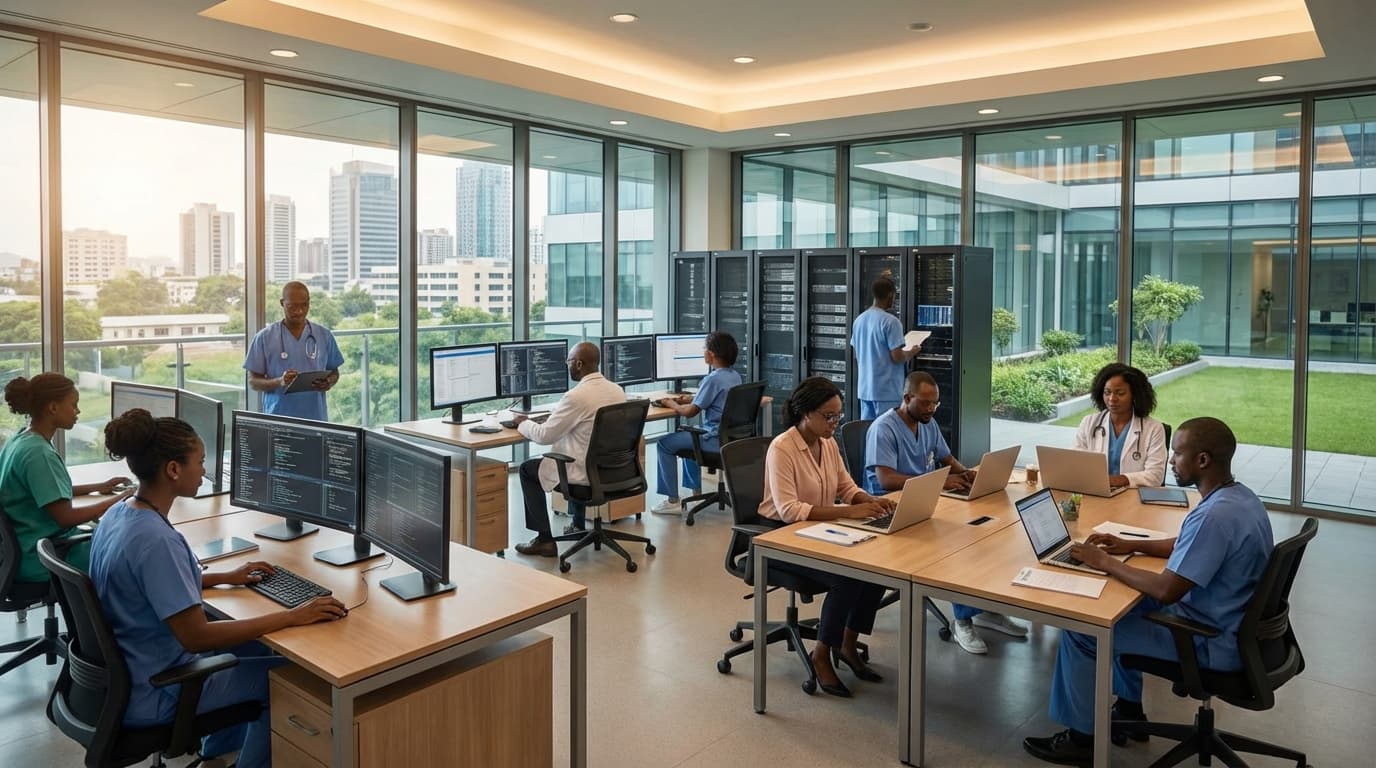
Radiology Reader & Reporting Support in Central African Republic
Engineering Excellence & Technical Support
Remote radiology reading and reporting services High-standard technical execution following OEM protocols and local regulatory frameworks.
Enhanced Diagnostic Accuracy
Leveraging advanced AI-powered reading support, radiologists in the Central African Republic can now achieve higher diagnostic accuracy, leading to earlier and more precise disease detection.
Remote Collaboration & Expertise
Our platform facilitates seamless remote collaboration, connecting local radiologists with international experts for case consultations and reporting support, overcoming geographical barriers to specialized knowledge.
Accelerated Reporting Turnaround
Streamlined workflows and automated preliminary findings significantly reduce reporting times, enabling faster patient management and improved healthcare outcomes in resource-limited settings.
What Is Radiology Reader & Reporting Support In Central African Republic?
Radiology Reader & Reporting Support in the Central African Republic (CAR) refers to the provision of specialized expertise and technological solutions to assist local healthcare facilities in interpreting medical imaging studies and generating comprehensive diagnostic reports. This service is crucial in regions like the CAR where a significant deficit of trained radiologists and advanced imaging infrastructure often hinders timely and accurate diagnosis, directly impacting patient care and outcomes. The core function of this support is to bridge the gap between the acquisition of radiological data and its actionable clinical interpretation. This can manifest through various modalities, including but not limited to, teleradiology, artificial intelligence (AI)-powered image analysis, and remote expert consultation. The overarching objective is to enhance diagnostic capacity, improve the quality of radiology reports, and facilitate evidence-based treatment decisions in a resource-constrained environment.
| Who Needs This Service? | Typical Use Cases | ||||
|---|---|---|---|---|---|
| Hospitals and Clinics in the Central African Republic lacking in-house radiologists or specialized imaging expertise. | Emergency departments requiring rapid interpretation of trauma scans (e.g., head CT, chest X-ray) for immediate surgical or medical intervention. | Rural health centers with basic imaging equipment (e.g., X-ray) but no local interpretation capabilities. | Specialty departments (e.g., oncology, neurology, pediatrics) requiring expert interpretation of advanced imaging modalities. | Public health initiatives focused on screening and diagnosis of prevalent diseases (e.g., tuberculosis, infectious diseases) requiring large-scale image analysis. | Medical training institutions seeking to enhance the radiological education of their students and residents. |
| Diagnosis of acute conditions such as stroke, myocardial infarction, or intestinal obstruction based on CT or MRI scans. | Detection and staging of malignancies from mammograms, CT scans, or MRIs. | Monitoring of treatment response in patients undergoing chemotherapy or radiation therapy. | Evaluation of pediatric congenital abnormalities or developmental disorders through various imaging techniques. | Screening for conditions like tuberculosis or pneumonia using chest X-rays, particularly in high-burden populations. | Management of complex orthopedic injuries or post-operative follow-up requiring detailed radiological assessment. |
Key Components of Radiology Reader & Reporting Support
- Teleradiology Services: Remote interpretation of medical images (X-ray, CT, MRI, Ultrasound) by qualified radiologists located elsewhere, transmitting findings and reports digitally.
- AI-Powered Image Analysis: Utilization of machine learning algorithms to assist in detecting anomalies, prioritizing critical findings, and improving the efficiency of interpretation.
- Remote Expert Consultation: On-demand access to specialist radiologists for complex cases, second opinions, and quality assurance of interpretations.
- Report Generation and Standardization: Development and implementation of standardized reporting templates to ensure clarity, completeness, and consistency in diagnostic reports.
- Training and Capacity Building: Providing educational resources and mentorship to local healthcare professionals involved in image acquisition and preliminary assessment.
- Image Management and Archiving: Establishing secure and accessible systems for storing and retrieving radiological images and reports.
Who Needs Radiology Reader & Reporting Support In Central African Republic?
This document outlines the target customer base and relevant departments within the Central African Republic (CAR) that would benefit from Radiology Reader & Reporting Support. The CAR faces significant challenges in healthcare infrastructure, including a severe shortage of skilled radiologists and the need for efficient diagnostic services. Therefore, specialized support in radiology reading and reporting is crucial for improving patient care across various medical settings.
| Target Customer/Department | Description of Need | Key Benefits of Support |
|---|---|---|
| Public Hospitals & Health Centers | Limited or no in-house radiologists. Rely heavily on basic imaging. Need for accurate interpretation of X-rays, ultrasounds, and CT scans (where available) for a broad range of conditions, from common infections to trauma. Capacity building for local medical staff is also a priority. | Improved diagnostic accuracy, timely treatment initiation, reduced misdiagnosis, enhanced patient outcomes, support for remote or underserved populations, training opportunities for local technicians. |
| Non-Governmental Organization (NGO) Health Facilities | Often operate in remote or conflict-affected areas with critical healthcare needs. High burden of diseases like TB, malaria, and malnutrition, requiring radiological assessment. May have limited equipment and even scarcer specialized personnel. | Essential diagnostic support for critical health programs, efficient patient management in challenging environments, collaboration with international health initiatives, access to expertise that would otherwise be unavailable. |
| Private Clinics & Diagnostic Centers | May have some imaging equipment but struggle with consistent access to experienced radiologists for complex cases or high volumes of reports. Aim to provide competitive and reliable diagnostic services to a paying clientele. | Increased service offering and competitiveness, faster turnaround times for reports, enhanced reputation for quality diagnostics, ability to handle a wider range of imaging modalities. |
| Military & Security Force Medical Units | Require prompt and accurate imaging interpretation for injuries sustained in operational environments, as well as for routine medical screening and occupational health. The need for rapid reporting is paramount. | Efficient medical support for active personnel, accurate assessment of combat-related injuries, facilitation of medical evacuation decisions, provision of specialized diagnostic services for military healthcare. |
| Tertiary Care & Referral Hospitals | Serve as centers for specialized treatment. Require advanced radiological interpretation for complex surgical planning, oncology, neurology, and cardiology. Need for subspecialty reporting where available. | Support for complex diagnostic challenges, improved management of critical illness, facilitation of advanced treatment protocols, contribution to medical research and education. |
| Emergency & Trauma Centers | The CAR's context often involves high rates of trauma. Immediate and accurate interpretation of imaging for fractures, internal bleeding, and head injuries is life-saving. | Rapid assessment of trauma cases, critical decision-making support in emergencies, reduction of morbidity and mortality from trauma, optimized management of mass casualty incidents. |
| Maternal & Child Health Facilities | Radiology is essential for obstetric complications (e.g., ectopic pregnancies, placental abnormalities) and pediatric diagnostics (e.g., congenital abnormalities, infections). | Improved antenatal care through ultrasound interpretation, better management of obstetric emergencies, accurate diagnosis of pediatric conditions, enhanced neonatal care. |
| Infectious Disease Control Units | Radiology plays a vital role in diagnosing and monitoring infectious diseases such as tuberculosis (chest X-rays), pneumonia, and other lung infections. | Accurate diagnosis and staging of infectious diseases, monitoring treatment efficacy, supporting public health surveillance, contribution to outbreak response. |
Target Customers & Departments for Radiology Reader & Reporting Support in Central African Republic
- Public Hospitals & Health Centers
- Non-Governmental Organization (NGO) Health Facilities
- Private Clinics & Diagnostic Centers
- Military & Security Force Medical Units
- Tertiary Care & Referral Hospitals
- Emergency & Trauma Centers
- Maternal & Child Health Facilities
- Infectious Disease Control Units
Radiology Reader & Reporting Support Process In Central African Republic
This document outlines the workflow for Radiology Reader & Reporting Support in the Central African Republic (CAR), detailing the process from the initial inquiry to the final execution of services. This system is designed to ensure efficient and accurate interpretation of radiological images and timely reporting, particularly in areas with limited specialized radiology personnel. The process emphasizes collaboration between referring healthcare facilities, the central support hub, and the remote radiology readers.
| Stage | Description | Actors Involved | Key Actions | Deliverables/Outcomes | Technology/Tools Used | |
|---|---|---|---|---|---|---|
| Inquiry & Request Submission | A healthcare facility in the CAR identifies a need for radiology interpretation and reporting for a patient's images. | Referring Clinician/Healthcare Facility Staff | Contact the central radiology support hub (via phone, email, or secure portal). | Confirmation of request received, patient details gathered, and required information documented. | Communication channels (phone, email, secure messaging), Request forms/templates. | |
| Image Transmission | Digital radiological images are securely transferred from the referring facility to the central support hub or directly to the reading platform. | Referring Healthcare Facility Staff, IT Support (if applicable) | Acquire images from the imaging modality (X-ray, CT, Ultrasound). | Securely transmit images using designated protocols and software. | PACS (Picture Archiving and Communication System) or DICOM-compliant viewers, Secure transfer protocols (VPN, encrypted cloud storage), Internet connectivity. | |
| Case Triage & Assignment | The central support hub or an automated system prioritizes and assigns the case to an available and appropriately qualified radiology reader. | Central Support Hub Coordinator, Radiology IT Administrator, Remote Radiology Reader | Review submitted requests and associated images. | Categorize urgency (e.g., STAT, routine). | Assign the case to a reader based on availability, subspecialty, and workload. | Worklist management system, Prioritization algorithms, Reader credentialing database. |
| Image Interpretation & Reporting | A qualified remote radiology reader meticulously examines the transmitted images and generates a comprehensive diagnostic report. | Remote Radiology Reader | Access images via a secure viewing platform. | Perform image analysis and identify abnormalities. | Dictate or type a detailed report, including findings, impressions, and recommendations. | Secure teleradiology platform, High-resolution medical image viewer, Voice recognition software (optional), Structured reporting templates. |
| Report Review & Validation | The generated report is reviewed by another qualified reader or a senior radiologist to ensure accuracy, completeness, and adherence to standards. | Senior Radiologist/Peer Reviewer, Remote Radiology Reader | Review the interpreted images and the draft report. | Provide feedback, corrections, or edits. | Approve or send back for revisions. | Teleradiology platform with annotation tools, Peer review module, Communication tools for feedback. |
| Report Delivery & Archiving | The finalized report is securely delivered back to the referring healthcare facility and archived for future reference. | Central Support Hub, Referring Healthcare Facility | Send the final report to the referring clinician/facility. | Ensure secure and timely delivery. | Archive images and reports according to regulatory and institutional policies. | Secure reporting portal, Encrypted email, PACS/RIS (Radiology Information System) for archiving. |
| Quality Assurance & Feedback | A continuous process to monitor performance, identify areas for improvement, and gather feedback from referring facilities. | Quality Assurance Team, Central Support Hub Coordinator, Referring Clinicians | Track turnaround times, report accuracy rates, and reader performance. | Collect feedback on the service provided. | Implement corrective actions and training as needed. | Performance metrics dashboard, Feedback surveys, Case review sessions. |
Key Stages of the Radiology Reader & Reporting Support Process
- Inquiry & Request Submission
- Image Transmission
- Case Triage & Assignment
- Image Interpretation & Reporting
- Report Review & Validation
- Report Delivery & Archiving
- Quality Assurance & Feedback
Radiology Reader & Reporting Support Cost In Central African Republic
Providing radiology reader and reporting support in the Central African Republic (CAR) faces unique challenges due to infrastructure limitations, a scarcity of specialized medical professionals, and fluctuating economic conditions. The cost is heavily influenced by the modality of imaging (X-ray, CT, MRI, Ultrasound), the complexity and volume of cases, and the experience and qualifications of the interpreting radiologist. Given the limited local availability of sub-specialized radiologists, outsourcing or utilizing teleradiology services often becomes a necessity, adding international pricing dynamics to the local context. Pricing is typically discussed in Central African CFA franc (XAF).
| Service Type / Modality | Estimated Price Range (XAF per study) | Notes |
|---|---|---|
| X-ray (Plain Film - single view) | 20,000 - 50,000 | Basic interpretation, may vary by number of views. |
| X-ray (Plain Film - multiple views) | 30,000 - 70,000 | Chest X-ray, skeletal surveys, etc. |
| Ultrasound (Abdomen, Pelvis, OB/GYN) | 40,000 - 90,000 | Includes abdominal, pelvic, obstetric, gynecological scans. |
| Ultrasound (Small Parts/Superficial) | 35,000 - 70,000 | Thyroid, breast, testes, etc. |
| CT Scan (Head, Chest, Abdomen, Pelvis) | 100,000 - 300,000+ | Varies by protocol, number of slices, and contrast use. Sub-specialized CT interpretations will be higher. |
| MRI Scan (Head, Spine, Joints) | 150,000 - 500,000+ | Highly dependent on body part, protocol, and contrast. Neuroimaging, musculoskeletal, and advanced sequences are more expensive. |
| Teleradiology Platform Fee (Monthly/Annual) | Variable (can be significant) | Often a base fee for access to the platform, independent of study volume. Negotiable. |
| Remote Interpretation Service (Per Study - Teleradiology) | 50,000 - 250,000+ | This is highly variable based on modality, complexity, and the provider's location and overhead. Emerging markets may have lower but still substantial rates. Specialized reads will be at the higher end. |
Key Pricing Factors for Radiology Reader & Reporting Support in CAR
- {"title":"Imaging Modality:","description":"X-rays are generally the least expensive to interpret, followed by ultrasounds. CT and MRI scans are significantly more costly due to their complexity and the specialized expertise required for accurate interpretation."}
- {"title":"Case Volume and Complexity:","description":"Higher volumes of studies and more complex cases (e.g., advanced trauma, intricate oncological imaging) will command higher fees. Routine screening exams will be less expensive per case than detailed diagnostic interpretations."}
- {"title":"Radiologist Expertise and Specialization:","description":"Interpreting radiologists with sub-specializations (e.g., neuroradiology, musculoskeletal radiology, pediatric radiology) are in higher demand and thus charge more. General radiologists will have lower rates."}
- {"title":"Turnaround Time (TAT):","description":"Rush reporting or STAT interpretations often incur a premium fee compared to standard turnaround times."}
- {"title":"Location and Delivery Method:","description":"Local radiologists, if available, might offer lower rates but face accessibility issues. Teleradiology services, often based internationally, will have pricing structures that may include platform fees, per-study charges, and potentially VAT or import duties if applicable."}
- {"title":"Technology and Infrastructure:","description":"Reliable internet connectivity and Picture Archiving and Communication Systems (PACS) are crucial for teleradiology. Costs associated with maintaining or accessing these can be factored in."}
- {"title":"Contractual Agreements:","description":"Long-term contracts with guaranteed volumes may lead to discounted per-study rates. One-off services will likely be at higher individual prices."}
- {"title":"Currency Fluctuations and Inflation:","description":"The XAF's stability and local inflation rates can influence pricing, especially for services procured internationally."}
Affordable Radiology Reader & Reporting Support Options
Finding affordable radiology reading and reporting support is crucial for healthcare providers seeking to optimize efficiency and manage costs without compromising diagnostic quality. This often involves exploring flexible service models, understanding value-based pricing, and implementing strategic cost-saving measures. Value bundles offer a comprehensive approach, combining multiple services at a reduced rate, while cost-saving strategies focus on optimizing resource utilization and negotiating favorable terms. This document outlines various options and strategies to achieve cost-effective radiology reading and reporting support.
| Value Bundle Component | Description | Cost-Saving Benefit |
|---|---|---|
| Core Reading + Subspecialty Support | Includes standard radiology interpretations (e.g., X-rays, CTs, MRIs) plus access to niche subspecialists (e.g., neuroradiology, musculoskeletal) as needed. | Reduces the need to hire expensive in-house subspecialists; pay only for what you use. Predictable costs for a wider range of services. |
| 24/7 Teleradiology Coverage + Critical Findings Alerting | Provides continuous overnight and weekend reads with immediate notification for urgent findings. | Ensures timely diagnosis for all patients, improves patient outcomes, and avoids potential penalties for delayed reports. Often more cost-effective than maintaining 24/7 in-house staff. |
| AI Pre-screening + Radiologist Final Read | Utilizes AI to identify potential abnormalities, which are then reviewed and confirmed by a human radiologist. | Increases radiologist efficiency by highlighting potential issues; faster report turnaround times. Can lead to higher throughput without increasing radiologist headcount. |
| Routine Reads + Quality Assurance/Peer Review | Covers a high volume of standard interpretations and includes a structured process for quality checks and peer review. | Ensures high diagnostic accuracy and consistency. Bundling QA can be more efficient than managing it internally, potentially reducing error-related costs. |
Key Options for Affordable Radiology Reading & Reporting Support
- Teleradiology Services: Outsourcing image interpretation to remote radiologists. This can be highly cost-effective, especially for off-hours coverage, subspecialty needs, or when internal staffing is insufficient. Pricing models vary from per-study to dedicated radiologist time.
- AI-Powered Diagnostic Assistance: Implementing Artificial Intelligence (AI) tools to pre-read images, highlight potential abnormalities, and assist radiologists. While an upfront investment, AI can improve efficiency, reduce turnaround times, and potentially lower the cost per study by augmenting human expertise.
- Hybrid Models: Combining in-house reading with outsourced support. This allows for maintaining control over critical cases while leveraging external resources for routine studies or specialized reads, optimizing both cost and workflow.
- Part-time or Flexible Staffing: Engaging radiologists on a part-time or on-demand basis to supplement existing staff, particularly during peak periods or for specific skill sets, avoiding the overhead of full-time employees.
- Group Purchasing Organizations (GPOs): Leveraging the collective purchasing power of GPOs to negotiate discounted rates with teleradiology providers and AI vendors.
Verified Providers In Central African Republic
Finding reliable and accredited healthcare providers in the Central African Republic (CAR) is a critical concern for individuals, NGOs, and international organizations operating in the region. Franance Health has emerged as a leading entity, distinguished by its robust credentialing process and unwavering commitment to quality care. Their verified providers represent the most dependable option for essential medical services, offering a crucial layer of assurance in a challenging environment. This document outlines Franance Health's rigorous credentialing standards and explains why partnering with their network guarantees access to high-caliber medical professionals.
| Provider Type | Franance Health Verified Benefits | Why it's the Best Choice |
|---|---|---|
| Doctors (General Practitioners & Specialists) | Certified qualifications, proven experience, adherence to medical ethics, access to updated medical knowledge. | Ensures accurate diagnosis, effective treatment plans, and reduced risk of medical errors. Crucial for complex health needs. |
| Nurses (RNs, LPNs) | Verified nursing licenses, practical patient care skills, adherence to hygiene and safety protocols, empathy and compassion. | Provides essential bedside care, medication administration, and vital sign monitoring. Critical for patient recovery and comfort. |
| Paramedics & Emergency Medical Technicians (EMTs) | Certified emergency response training, experience in pre-hospital care, knowledge of critical incident management, swift response capabilities. | Guarantees rapid and competent response to medical emergencies, saving lives and minimizing long-term health impacts. |
| Pharmacists | Licensed pharmacy practice, knowledge of drug interactions and dosages, adherence to prescription protocols, secure medication handling. | Ensures safe and appropriate dispensing of medications, preventing adverse drug reactions and counterfeit products. |
| Laboratory Technicians | Accredited laboratory training, proficiency in diagnostic testing, adherence to quality control standards, accurate result interpretation. | Provides reliable diagnostic information essential for effective treatment planning and disease management. |
Franance Health's Credentialing Pillars:
- Rigorous Verification of Medical Licenses and Certifications: Franance Health meticulously confirms the validity and current standing of all medical licenses and professional certifications held by their network providers. This includes cross-referencing with relevant national and international medical boards.
- Extensive Background Checks and Criminal Record Screening: A comprehensive background check, including criminal record screening, is a non-negotiable step in the credentialing process. This ensures the safety and trustworthiness of all practitioners.
- Professional References and Peer Reviews: Franance Health actively solicits and analyzes professional references from past employers and colleagues. Peer reviews are also utilized to assess clinical competency and ethical conduct.
- Verification of Education and Training: All educational qualifications and specialized training are thoroughly authenticated to ensure providers have the necessary foundational knowledge and expertise.
- Assessment of Clinical Experience and Competency: Beyond formal qualifications, Franance Health evaluates the practical clinical experience and demonstrated competency of each provider. This may involve case study reviews or interviews.
- Commitment to Ethical Standards and Patient Care: Franance Health upholds stringent ethical guidelines. Providers are assessed on their adherence to professional codes of conduct and their demonstrated commitment to patient-centered care.
- Continuous Quality Monitoring and Performance Review: The credentialing process is not a one-time event. Franance Health implements ongoing quality monitoring and performance reviews for all affiliated providers to maintain consistently high standards.
Scope Of Work For Radiology Reader & Reporting Support
This Scope of Work (SOW) outlines the requirements for Radiology Reader and Reporting Support services. The objective is to provide qualified radiologists to review medical images, generate comprehensive diagnostic reports, and ensure timely delivery of these reports to referring physicians and the electronic health record (EHR) system. This service will augment existing radiology department capabilities, address specific subspecialty needs, or provide overflow support.
| Technical Deliverable | Standard Specifications | Acceptance Criteria |
|---|---|---|
| Diagnostic Reports | Generated in a structured format (e.g., ACR standard, client template). Must include patient demographics, exam details, findings, impression/conclusion, and recommendations. Reports must be legible, free of grammatical errors, and clinically accurate. | Reports are submitted electronically within the agreed-upon TAT (e.g., STAT: < 1 hour, Urgent: < 4 hours, Routine: < 24 hours). 98% of reports meet TAT requirements. 99% accuracy rate validated through peer review or client feedback. 100% compliance with reporting templates and formatting. |
| Electronic Report Submission | Secure transmission of reports to the client's EHR/RIS/PACS system via HL7, DICOM SR, or other agreed-upon secure integration method. | Successful and verifiable electronic submission of 100% of generated reports into the designated system. No manual re-entry required by client staff. Successful data transmission confirmed by client IT and/or integration logs. |
| Image Interpretation | Interpretation of digital images conforming to DICOM standards. Adherence to best practices for image acquisition and interpretation. | All studies assigned are interpreted by a board-certified or eligible radiologist in the relevant subspecialty. Interpretation quality meets established professional standards and client expectations. |
| Communication and Consultation | Provision of timely verbal or electronic communication (secure messaging, phone) with referring physicians or other healthcare providers for critical findings or clarification. | Documented communication for critical findings or requests for clarification. Availability for consultation during agreed-upon hours. Response to urgent communication requests within 30 minutes. |
| System Access and Security | Secure access to client's PACS and EHR systems via VPN, secure gateway, or other authorized methods. Adherence to all client IT security policies and procedures. | 100% compliance with client IT security protocols. No security breaches or unauthorized access incidents. Successful establishment and maintenance of secure remote access for all assigned readers. |
Key Deliverables
- Image Interpretation and Diagnostic Reporting: Interpretation of various medical imaging modalities (e.g., X-ray, CT, MRI, Ultrasound, Nuclear Medicine) and generation of accurate, detailed, and clinically relevant diagnostic reports.
- Report Generation and Submission: Timely generation and electronic submission of reports directly into the client's designated EHR system or PACS reporting module.
- Consultation and Communication: Availability for consultation with referring physicians regarding findings, recommendations, and clarification of reports.
- Quality Assurance: Adherence to established radiology quality standards and client-specific protocols for interpretation and reporting.
- Data Security and Confidentiality: Strict adherence to all HIPAA regulations and client-specific data security protocols for patient information.
- Performance Metrics Reporting: Regular reporting on key performance indicators (KPIs) such as turnaround time (TAT), report accuracy, and physician satisfaction.
Service Level Agreement For Radiology Reader & Reporting Support
This Service Level Agreement (SLA) outlines the agreed-upon standards for Radiology Reader & Reporting Support services, focusing on critical response times and guaranteed uptime to ensure efficient and reliable diagnostic image interpretation and reporting.
| Service Component | Criticality Level | Response Time Target | Resolution Time Target | Uptime Guarantee |
|---|---|---|---|---|
| Urgent Reader Request (e.g., STAT interpretation) | Critical | 15 minutes | 2 hours | 99.9% |
| Routine Reader Request (e.g., non-urgent interpretation) | High | 1 hour | 8 business hours | 99.5% |
| Reporting System Access/Availability | Critical | 10 minutes | 1 hour | 99.95% |
| Reporting System Performance (slowness) | Medium | 30 minutes | 4 business hours | 99.5% |
| Reader Software Functionality (non-critical bug) | Low | 4 business hours | 3 business days | 99.0% |
| Data Retrieval/Reporting Query | Medium | 1 hour | 4 business hours | 99.5% |
Key Service Level Objectives
- Criticality Levels: Services are categorized into criticality levels to define appropriate response times.
- Response Time: The maximum time allowed for the initiation of a response to a service request.
- Resolution Time: The target time to resolve a reported issue or complete a requested service.
- Uptime Guarantee: The percentage of time the service is expected to be available and operational.
- Reporting & Escalation: Procedures for reporting issues and escalating critical incidents.
Frequently Asked Questions

Ready when you are
Let's scope your Radiology Reader & Reporting Support in Central African Republic project in Central African Republic.

Scaling healthcare logistics and technical systems across the entire continent.