
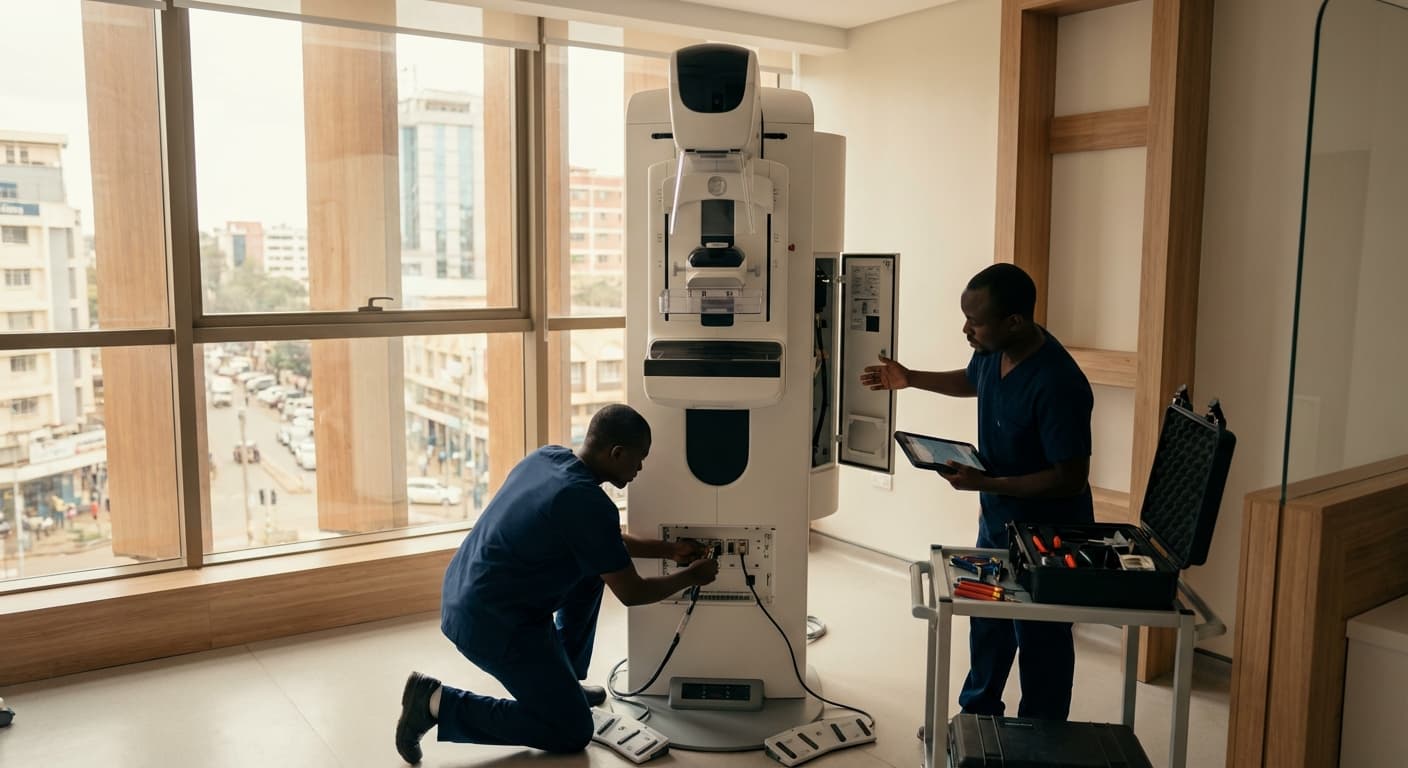
Mammography Installation Service in Central African Republic
Engineering Excellence & Technical Support
Mammography Installation Service High-standard technical execution following OEM protocols and local regulatory frameworks.
Advanced Imaging Technology
We deploy state-of-the-art mammography systems equipped with high-resolution detectors and advanced imaging algorithms. This ensures exceptional image quality for accurate early detection of breast cancer, even in challenging anatomical conditions prevalent in the region.
Expert Localized Installation & Calibration
Our certified technicians possess extensive experience in installing and calibrating mammography equipment in diverse environmental settings. We adhere to strict international quality standards, ensuring optimal performance and longevity of your imaging infrastructure in the Central African Republic's unique operational challenges.
Comprehensive Clinician Training & Support
Beyond installation, we provide in-depth training for radiologists and technicians on the effective operation and maintenance of the mammography units. Our ongoing technical support is tailored to the specific needs of healthcare facilities in the Central African Republic, ensuring seamless integration into clinical workflows.
What Is Mammography Installation Service In Central African Republic?
Mammography Installation Service in the Central African Republic refers to the comprehensive process of acquiring, setting up, and ensuring the operational readiness of mammography equipment within healthcare facilities in the nation. This service encompasses the entire lifecycle from equipment procurement to final calibration and initial user training. It is a critical component of establishing or upgrading breast cancer screening and diagnostic capabilities, particularly in regions where access to advanced medical imaging technologies may be limited. The service is designed to meet stringent quality assurance standards and regulatory requirements specific to medical device deployment and healthcare infrastructure.
| Stakeholder Group | Need for Mammography Installation Service | Typical Use Cases |
|---|---|---|
| Public Healthcare Facilities (Hospitals, Clinics) | Establishment of new breast imaging departments, upgrade of outdated equipment, expansion of screening programs. | Routine mammographic screening for asymptomatic women, diagnostic mammography for patients with suspected breast abnormalities, follow-up imaging for patients with a history of breast cancer. |
| Private Healthcare Providers | Enhancing service offerings, meeting patient demand for advanced diagnostic tools, ensuring competitive service standards. | Similar to public facilities, with a potential focus on specialized diagnostic services and expedited reporting. |
| Non-Governmental Organizations (NGOs) and International Aid Organizations | Implementing breast cancer awareness and screening initiatives, providing essential medical equipment to underserved areas. | Mobile mammography units for remote populations, installation in newly built or renovated health centers, supporting public health campaigns. |
| Government Health Ministries and Regulatory Bodies | Ensuring national standards for medical imaging quality, radiation safety, and equitable access to healthcare services. | Oversight of equipment procurement, validation of installation quality, development and enforcement of radiation protection protocols. |
Key Components of Mammography Installation Service:
- Site Assessment and Preparation: Evaluating existing infrastructure (power supply, radiation shielding, space requirements, environmental controls) and preparing the installation site.
- Equipment Procurement and Logistics: Facilitating the acquisition, import, customs clearance, and transportation of mammography systems and associated accessories.
- Physical Installation and Integration: Assembling, connecting, and integrating the mammography hardware and software components.
- Calibration and Quality Assurance Testing: Performing precise calibration of the X-ray system, image detectors, and software to ensure optimal image quality and adherence to international standards (e.g., ACR, FDA, IEC).
- Radiation Safety Compliance: Implementing and verifying radiation shielding measures and conducting dosimetry tests to ensure patient and staff safety as per national regulations.
- System Integration and Network Connectivity: Connecting the mammography unit to Picture Archiving and Communication Systems (PACS), Electronic Health Records (EHR), and other relevant hospital information systems.
- Initial User Training: Providing hands-on training to radiographers, technicians, and radiologists on the operation, maintenance, and troubleshooting of the mammography system.
- Post-Installation Verification and Handover: Conducting comprehensive performance verification tests and officially handing over the operational system with all necessary documentation.
Who Needs Mammography Installation Service In Central African Republic?
Mammography installation services are crucial for any healthcare facility in the Central African Republic that aims to provide comprehensive breast cancer screening and diagnostic capabilities. The establishment of a robust mammography program requires specialized technical expertise for proper equipment setup, calibration, and integration into existing imaging workflows. This service ensures that the mammography units are operational, safe, and capable of producing high-quality diagnostic images, which is paramount for accurate detection of breast abnormalities.
| Target Customer/Department | Specific Needs & Responsibilities | Key Personnel Involved |
|---|---|---|
| Radiology Department (Hospitals/Clinics) | Primary recipient of the mammography unit. Requires installation of the mammography machine, PACS (Picture Archiving and Communication System) integration for image storage and retrieval, and workstation setup for radiologists. Essential for diagnostic interpretation and follow-up procedures. | Radiology Technologists, Radiologists, IT Specialists, Biomedical Engineers |
| Oncology Department (Hospitals/Cancer Centers) | Utilizes mammography for diagnosis and monitoring of breast cancer patients. Requires seamless integration with their treatment planning and follow-up protocols. May also be involved in the justification for new equipment acquisition based on patient load and diagnostic needs. | Medical Oncologists, Radiation Oncologists, Clinical Nurses |
| Gynecology/Obstetrics Department (Hospitals/Clinics) | Often initiates or collaborates on breast cancer screening programs, especially for at-risk populations. May have a role in patient referral for mammography and understanding the outcomes of screenings. | Gynecologists, Obstetricians, Midwives |
| Surgical Department (Hospitals) | Relies on accurate mammography reports for pre-operative assessment and surgical planning for suspected or confirmed breast cancer cases. | Breast Surgeons, General Surgeons |
| Biomedical Engineering Department (Larger Institutions) | Plays a crucial role in managing medical equipment, including overseeing installation, maintenance, and ensuring compliance with safety standards. They will work closely with the installation service provider. | Biomedical Engineers, Technicians |
| Hospital Administration/Procurement Department | Responsible for the acquisition of the mammography equipment and the contracting of installation services. Ensures budget allocation and project management oversight. | Hospital Administrators, Procurement Officers, Project Managers |
| Ministry of Health/Public Health Agencies | May be involved in national screening programs, setting standards for equipment, and potentially funding or overseeing the installation of mammography units in public healthcare facilities. Their focus is on public health outcomes and accessibility. | Public Health Officials, Program Managers, Policy Makers |
Target Customers and Departments for Mammography Installation Service in Central African Republic:
- Hospitals (Public and Private)
- Specialized Cancer Treatment Centers
- Diagnostic Imaging Clinics
- Large Health Centers/Referral Hospitals
Mammography Installation Service Process In Central African Republic
This document outlines the comprehensive workflow for mammography installation services in the Central African Republic, from the initial client inquiry to the final execution and handover. The process is designed to ensure efficient, compliant, and successful deployment of mammography equipment, catering to the unique logistical and operational challenges within the region. Each stage involves specific steps to guarantee quality and client satisfaction.
| Stage | Key Activities | Description and Considerations (Central African Republic Context) |
|---|---|---|
| Receive client request, understand requirements, discuss equipment options, assess technical needs. | Initial contact via email, phone, or local representative. Focus on understanding the specific clinical needs, existing infrastructure, and budget constraints. Cultural nuances and communication styles are important. |
| On-site visit, assess space, power, cooling, radiation shielding, network connectivity, accessibility. | Crucial due to variable infrastructure. Requires thorough assessment of electricity stability (generators often essential), room dimensions for radiation protection, ventilation, and ease of access for delivery and future maintenance. Local expertise for site assessment is vital. |
| Prepare detailed quotation, define scope of work, terms, pricing, payment schedule, warranty. | Quotations must be clear and comprehensive, accounting for import duties, taxes, and potential unforeseen logistical costs. Contracts should address local regulations and dispute resolution mechanisms. |
| Order equipment, manage international shipping, customs clearance, import procedures. | This is a significant challenge. Requires experienced freight forwarders familiar with CAR customs. Lead times can be long. Insurance for transit is paramount. Prior understanding of import regulations and required documentation is critical. |
| Electrical upgrades, HVAC installation/modification, radiation shielding construction, network setup. | May involve significant construction or renovation. Reliance on local contractors. Quality control of construction is essential, especially for radiation shielding. Ensure backup power solutions are robust. |
| Coordinate arrival, secure safe unloading, unpack and inspect for damage. | Requires careful planning of transport from port/airport to the facility. Specialized handling equipment may be needed. Immediate inspection for transit damage is vital. |
| Assemble, connect, configure, and calibrate the mammography system according to manufacturer specifications. | Performed by certified technicians. May require on-site fabrication of mounts or supports. Calibration must be meticulous to ensure diagnostic accuracy. |
| Perform comprehensive system tests, phantom imaging, image quality assessment, compliance checks. | Rigorous testing is essential to confirm the system is functioning optimally and meets all diagnostic standards. Involves both technical and clinical quality checks. |
| Train radiographers, technologists, and maintenance staff on system operation, maintenance, and basic troubleshooting. Formal handover. | Training should be adapted to local technical literacy levels. Provide comprehensive user manuals in accessible languages. Confirm understanding and competency of the user staff. |
| Ongoing technical support, preventative maintenance, spare parts management, remote monitoring (if applicable). | Establish a clear service agreement. Availability of spare parts and timely technical support is crucial for long-term operational success. Consider remote diagnostics where feasible, acknowledging potential connectivity limitations. |
Mammography Installation Service Workflow in Central African Republic
- Inquiry and Needs Assessment
- Site Survey and Feasibility Study
- Quotation and Contract Negotiation
- Equipment Procurement and Logistics
- Site Preparation and Infrastructure Development
- Equipment Delivery and Unpacking
- Installation and Calibration
- Testing and Quality Assurance
- Training and Handover
- Post-Installation Support and Maintenance
Mammography Installation Service Cost In Central African Republic
Installing a mammography unit in the Central African Republic (CAR) is a complex undertaking, with costs influenced by a variety of factors. These factors include the type and model of mammography equipment, the specific installation site's readiness (e.g., power supply, structural integrity), the need for specialized infrastructure (like radiation shielding), logistical challenges in transporting equipment to remote locations, and the expertise of the installation team. Given the current economic landscape and limited availability of highly specialized services within the CAR, a significant portion of the cost is often associated with importing both the equipment and the skilled personnel. Therefore, pricing can be highly variable and often subject to negotiation and custom quotes from international or regional service providers.
| Cost Component | Estimated Range (XAF - Central African CFA franc) | Notes |
|---|---|---|
| Mammography Equipment (New, Entry-Level) | 15,000,000 - 40,000,000+ | Cost varies greatly by brand, features, and whether it's digital or analog. This is the base equipment cost. |
| Mammography Equipment (New, Advanced Digital) | 40,000,000 - 100,000,000+ | High-end digital mammography systems with advanced imaging capabilities. |
| Installation & Commissioning Services (International Provider) | 8,000,000 - 25,000,000+ | Includes travel, accommodation, labor for setup, calibration, and initial testing. Can be a significant portion of the total cost. |
| Site Preparation (Electrical, Structural) | 2,000,000 - 10,000,000+ | Depends on the existing infrastructure. May include upgrading power, reinforcing floors, or creating dedicated spaces. |
| Radiation Shielding | 3,000,000 - 15,000,000+ | Essential for safety. Costs depend on the materials and extent of shielding required. |
| Logistics & Transportation (Importation, Local Delivery) | 2,000,000 - 8,000,000+ | Includes shipping, customs clearance, and delivery to the final site, especially if remote. |
| Training for Technicians & Radiologists | 1,000,000 - 5,000,000+ | Crucial for effective use and diagnosis. Can be included in installation packages or be a separate cost. |
| Contingency/Miscellaneous | 5-10% of total cost | For unforeseen expenses. |
Key Pricing Factors for Mammography Installation in CAR:
- Type and Brand of Mammography Equipment
- Site Preparation and Infrastructure Requirements
- Logistics and Transportation Costs
- Labor and Expertise (Local vs. International)
- Ancillary Services and Training
- Import Duties and Taxes
- Geographic Location within CAR
Affordable Mammography Installation Service Options
Securing affordable mammography installation services is crucial for healthcare facilities aiming to provide essential diagnostic imaging without exceeding budget constraints. This involves understanding the various service options available, the benefits of value bundles, and implementing strategic cost-saving measures. Professional installation ensures the equipment is set up correctly, calibrated for optimal performance, and meets all safety and regulatory standards, ultimately impacting patient care and operational efficiency. Exploring a range of providers and service packages can lead to significant cost reductions while maintaining high-quality service.
| Value Bundle Component | Description | Cost-Saving Benefit |
|---|---|---|
| Comprehensive Installation Package | Includes site assessment, equipment delivery, physical installation, initial calibration, functional testing, and basic user training. | Streamlines the process, reduces the need for multiple vendors, and often offers a lower combined price than individual services. |
| Extended Warranty with Installation | Combines the installation service with an extended manufacturer's warranty at a discounted rate. | Protects against unexpected repair costs post-installation, providing long-term financial predictability. |
| Bundled Maintenance & Support | Installation service bundled with a service contract for routine maintenance and technical support. | Ensures consistent equipment performance and uptime, preventing costly emergency repairs and service interruptions. |
| Training & Education Packages | Installation is paired with advanced training for radiographers and technicians. | Maximizes equipment utilization and minimizes errors, leading to improved diagnostic accuracy and reduced rework. |
| Site Preparation & Infrastructure Upgrade | Installation service that includes necessary modifications to the facility's electrical, HVAC, or structural components. | Avoids delays and additional costs from unforeseen infrastructure issues during the installation phase. |
Key Considerations for Affordable Mammography Installation:
- Assess your facility's specific needs (type of mammography unit, space requirements, power infrastructure).
- Research multiple installation service providers and compare quotes thoroughly.
- Inquire about bundled services that can offer cost advantages.
- Understand the included components of each installation package (e.g., site preparation, equipment delivery, physical installation, calibration, testing, training).
- Factor in ongoing maintenance and support costs when evaluating the overall affordability.
- Consider the provider's experience, certifications, and customer reviews.
Verified Providers In Central African Republic
In the Central African Republic (CAR), navigating the healthcare landscape and identifying trusted, verified providers is crucial for ensuring quality care. Franance Health stands out as a leading organization dedicated to setting and upholding the highest standards in healthcare services. Their rigorous credentialing process and commitment to excellence make them the premier choice for individuals and organizations seeking reliable and competent medical support within the CAR.
| Credential Area | Franance Health Verification Standard | Patient Benefit |
|---|---|---|
| Medical Education & Training | Validation of degrees from accredited institutions, verification of specialized training. | Ensures providers possess the foundational knowledge and skills required for competent medical practice. |
| Professional Licensing & Registration | Confirmation of valid, current licenses to practice medicine within the CAR and any relevant international bodies. | Guarantees that providers are legally authorized and meet regulatory requirements for practice. |
| Clinical Experience & Competency | Review of past clinical performance, peer assessments, and verifiable patient outcomes. | Confirms practical application of knowledge and proven ability to deliver effective patient care. |
| Adherence to Ethical Standards | Background checks for disciplinary actions, review of ethical conduct pledges. | Protects patients from malpractice and ensures respectful, professional treatment. |
| Ongoing Professional Development | Requirement for continuous medical education (CME) credits and participation in advanced workshops. | Ensures providers remain current with medical innovations and evolving treatment protocols. |
Why Franance Health Credentials Represent the Best Choice:
- Rigorous Verification Process: Franance Health employs a multi-stage verification system for all its affiliated providers, scrutinizing educational qualifications, professional licenses, and past performance records.
- Commitment to Quality Standards: Beyond basic licensing, Franance Health ensures providers adhere to internationally recognized quality of care benchmarks and ethical medical practices.
- Continuous Professional Development: The organization mandates and facilitates ongoing training and development for its network, guaranteeing that providers are up-to-date with the latest medical advancements and techniques.
- Patient-Centric Approach: Franance Health prioritizes patient safety, satisfaction, and positive outcomes, a philosophy embedded in the selection and ongoing assessment of their accredited professionals.
- Comprehensive Network: Access to a diverse range of specialists and healthcare facilities across the CAR, all vetted and approved by Franance Health.
- Transparency and Accountability: Franance Health maintains a transparent system for provider credentials, offering a layer of trust and accountability for patients.
- Local Expertise with International Standards: Combining deep understanding of the CAR's healthcare context with adherence to global best practices.
Scope Of Work For Mammography Installation Service
This Scope of Work (SOW) outlines the requirements for the professional installation of a new mammography system at [Client Facility Name]. The SOW details the technical deliverables, standard specifications, and responsibilities of both the Vendor and the Client to ensure a successful and compliant installation.
| Section | Description | Technical Deliverables | Standard Specifications |
|---|---|---|---|
| Site Preparation and Readiness | The client is responsible for preparing the designated installation space, including ensuring compliance with power, environmental, and structural requirements. Vendor will provide detailed site preparation guidelines. | Confirmation of site readiness via a pre-installation checklist. Any required structural modifications or utility upgrades identified by the vendor. | Compliance with manufacturer's site preparation manual. Adherence to local building codes and electrical safety standards (e.g., NEC, IEC). |
| System Unpacking and Physical Installation | Vendor will unpack the mammography system, transport it to the installation site, and physically assemble and connect all components. | Successfully assembled and connected mammography system. Placement of all system components (e.g., gantry, console, workstation) as per layout. | Manufacturer's approved installation procedures and best practices. Adherence to radiation shielding requirements. |
| Electrical and Network Connectivity | Vendor will connect the mammography system to the facility's power supply and network infrastructure. | Secure and compliant electrical connections. Successful network integration with client IT infrastructure. | Compliance with local electrical codes. Adherence to client's network security policies and IT department's specifications. |
| Software Installation and Configuration | Vendor will install and configure all necessary system software, including operating system, imaging applications, and DICOM connectivity. | Fully functional and configured mammography software. Successful DICOM connectivity to PACS/RIS. | Manufacturer's recommended software versions and configurations. Compliance with DICOM standards (e.g., DICOM Part 14 for Grayscale Standard Display Function). |
| Calibration and Quality Assurance (QA) | Vendor will perform initial system calibration and QA testing to ensure optimal image quality and performance. | Completed calibration reports. Successful completion of all required QA tests (e.g., ACR accreditation phantom testing). | Manufacturer's calibration procedures. Adherence to ACR (American College of Radiology) accreditation requirements and other relevant regulatory standards (e.g., FDA, CE). |
| System Integration and Testing | Vendor will integrate the mammography system with existing hospital IT systems (PACS, RIS) and conduct end-to-end testing. | Successful transfer of images to PACS. Successful reception of patient/exam information from RIS. Workflow validation. | Compliance with DICOM standards for image and patient data exchange. Client IT department's integration protocols. |
| Client Training | Vendor will provide training to designated client personnel on system operation, basic maintenance, and troubleshooting. | Trained client personnel. Training documentation (user manuals, quick reference guides). | Manufacturer's training curriculum. Tailored training based on client's operational needs. |
| Documentation and Handover | Vendor will provide all necessary documentation for system operation, maintenance, and compliance. Formal handover of the installed system. | As-built drawings. Installation reports. Test and calibration records. User and service manuals. Warranty information. | Client's standard documentation requirements. Manufacturer's required documentation package. |
Key Objectives of the Installation Service
- To ensure the mammography system is installed and configured according to manufacturer specifications and relevant regulatory standards.
- To integrate the new system seamlessly with existing PACS, RIS, and other relevant IT infrastructure.
- To provide comprehensive testing and calibration to guarantee optimal image quality and system performance.
- To deliver thorough training to designated client personnel on system operation, basic maintenance, and troubleshooting.
- To ensure all necessary documentation, including as-built drawings and test reports, is provided to the client.
Service Level Agreement For Mammography Installation Service
This Service Level Agreement (SLA) outlines the guaranteed response times and uptime for the Mammography Installation Service provided by [Your Company Name] to [Client Company Name]. This SLA is an integral part of the overall service contract and ensures a consistent and reliable installation experience for critical medical equipment.
| Service Level | Uptime Guarantee | Response Time (Critical System Down) | Resolution Time (Critical System Down - On-site) |
|---|---|---|---|
| Mammography Installation Service | 99.9% Uptime during Service Hours for installation infrastructure and initial setup. (Excludes planned maintenance with prior notification and client-caused issues). | Within 2 Business Hours of reporting during Service Hours. | Within 8 Business Hours of reporting during Service Hours. For issues requiring specialized parts or extended troubleshooting, a revised resolution timeline will be communicated within the initial 8-hour window. |
Key Definitions
- Service Hours: Standard business hours, Monday to Friday, 9:00 AM to 5:00 PM [Client's Time Zone], excluding public holidays.
- Critical System Down: The mammography equipment is completely non-operational and unable to perform its primary function due to an issue with the installation or related infrastructure provided by [Your Company Name].
- Installation Related Issue: A problem directly attributable to the installation process, configuration, or components supplied by [Your Company Name] that prevents the mammography equipment from functioning as per manufacturer specifications.
- Response Time: The maximum time elapsed between [Client Company Name] reporting a Critical System Down issue to [Your Company Name] and [Your Company Name] acknowledging the report and initiating troubleshooting.
- Resolution Time: The maximum time elapsed between [Your Company Name]'s acknowledgment of a Critical System Down issue and the restoration of the mammography equipment to full operational status.
Frequently Asked Questions

Ready when you are
Let's scope your Mammography Installation Service in Central African Republic project in Central African Republic.

Scaling healthcare logistics and technical systems across the entire continent.