
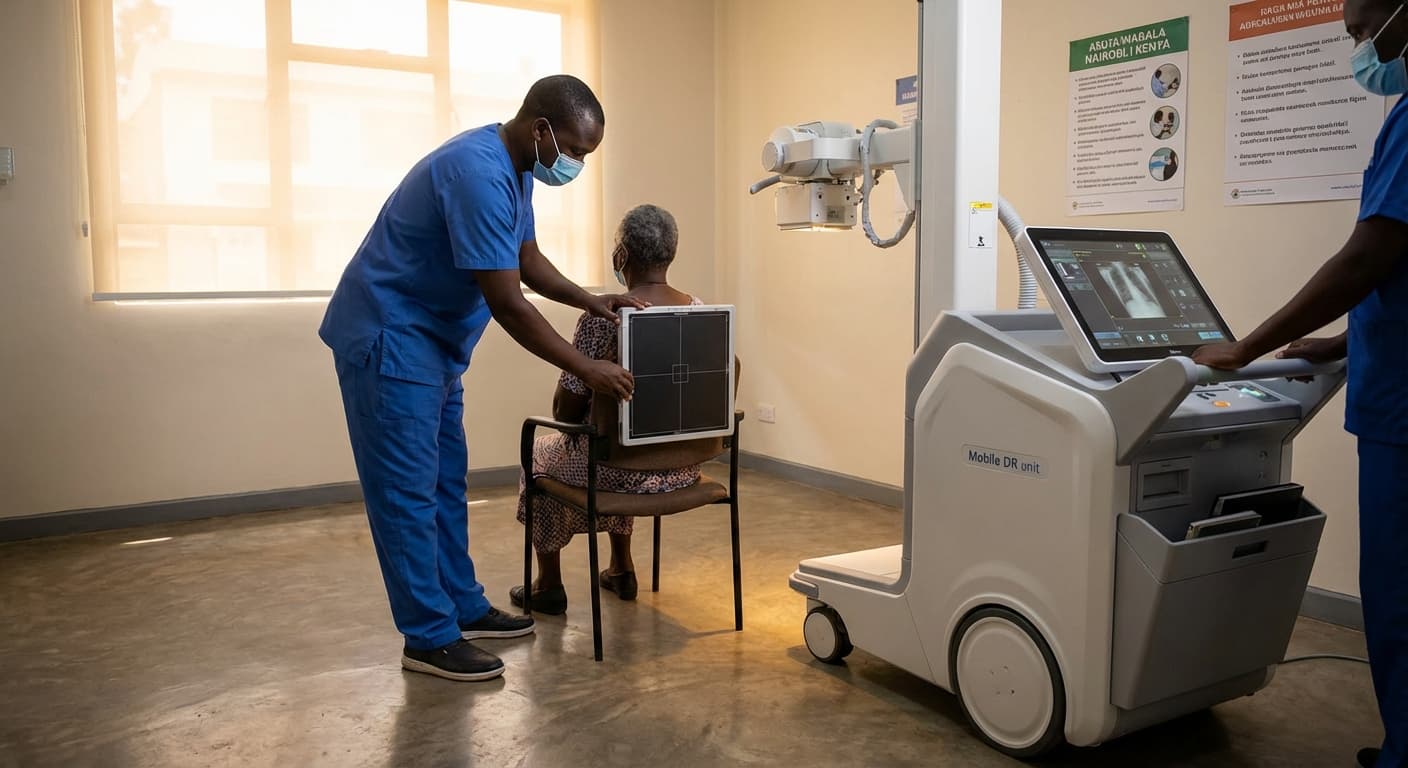
Digital X-Ray Installation Service (Mobile DR) in Central African Republic
Engineering Excellence & Technical Support
Digital X-Ray Installation Service (Mobile DR) High-standard technical execution following OEM protocols and local regulatory frameworks.
Rapid Deployment Mobile DR Units
Our service specializes in the swift and efficient installation of state-of-the-art mobile DR units across the Central African Republic. We understand the critical need for immediate diagnostic capabilities, especially in remote or underserved areas, and our expert technicians ensure minimal downtime and maximum operational readiness for your mobile X-ray fleet.
Robust & Ruggedized Installation Expertise
Leveraging years of experience in challenging environments, we provide robust and ruggedized installations tailored for the specific climatic and logistical conditions of the Central African Republic. Our process includes thorough site assessments, secure component mounting, and environmental shielding to guarantee the long-term reliability and performance of your digital X-ray systems.
Comprehensive Training & Integration Support
Beyond hardware installation, our service offers comprehensive on-site training for your medical personnel and IT staff. We ensure seamless integration of the mobile DR systems with existing hospital infrastructure or standalone workflows, empowering your healthcare providers with the skills and knowledge to utilize the advanced diagnostic tools effectively and safely.
What Is Digital X-ray Installation Service (Mobile Dr) In Central African Republic?
Digital X-Ray Installation Service (Mobile DR) in the Central African Republic refers to the comprehensive process of deploying and integrating portable digital radiography (DR) systems into healthcare facilities, mobile clinics, or disaster relief operations within this specific geographical context. This service ensures that medical institutions can leverage advanced diagnostic imaging capabilities, overcoming infrastructure limitations and providing critical radiological assessments where fixed installations are impractical or unavailable. The installation encompasses not only the physical setup of the DR equipment but also its integration with existing hospital information systems (HIS), picture archiving and communication systems (PACS), and power infrastructure, with a strong emphasis on robust training and ongoing technical support tailored to the unique operational environment of the Central African Republic.
| Entity Requiring Service | Primary Need/Justification | Typical Use Cases |
|---|---|---|
| Government Healthcare Ministries/Departments | To enhance diagnostic capabilities in underserved regions, improve public health outcomes, and respond to public health emergencies. | Deploying mobile units to rural clinics for general radiography, setting up temporary imaging centers during outbreaks, and equipping mobile diagnostic vans for outreach programs. |
| Non-Governmental Organizations (NGOs) and Humanitarian Organizations | To provide essential medical imaging services in areas affected by conflict, natural disasters, or lacking permanent infrastructure. | Establishing temporary field hospitals, supporting mobile medical camps, and providing diagnostic imaging for displaced populations. |
| Military Medical Corps | To offer deployable diagnostic imaging solutions for forward operating bases or in support of humanitarian assistance missions. | Providing portable X-ray capabilities for field medical units, supporting medical evacuation scenarios, and facilitating remote diagnostic assessments. |
| Research Institutions and Universities | To conduct epidemiological studies, disease surveillance, and clinical research requiring mobile imaging capabilities. | Facilitating portable X-ray screenings for research cohorts, supporting studies in remote or inaccessible locations, and enabling mobile data collection. |
| Private Healthcare Providers (where applicable) | To extend diagnostic services to remote communities or for specialized mobile outreach programs. | Offering specialized mobile X-ray services for specific patient groups, providing diagnostic imaging for remote industrial sites, and supporting home-based healthcare initiatives. |
Key Components of Digital X-Ray Installation Service (Mobile DR) in the Central African Republic
- Site Assessment and Planning: Evaluating the intended location for suitability, including power availability, space, environmental conditions, and network connectivity.
- Equipment Procurement and Logistics: Sourcing and transporting the Mobile DR unit, associated X-ray generators, detectors, workstations, and necessary accessories to the designated site.
- Hardware Installation and Configuration: Physical mounting of the DR detector, integration with the X-ray source, and setup of the imaging acquisition workstation.
- Software Installation and Integration: Deployment of imaging acquisition software, PACS client, and potentially HIS integration for seamless data workflow.
- Network and Connectivity Setup: Establishing reliable network connections for image transfer and data management, often involving satellite or cellular solutions in remote areas.
- Power Management Solutions: Implementing stable power supplies, including generators, UPS systems, and solar power options, to ensure continuous operation.
- Calibration and Quality Assurance: Performing initial calibration of the DR system to meet diagnostic imaging standards and establishing QA protocols.
- User Training: Comprehensive training for radiographers, technicians, and IT personnel on system operation, image acquisition, post-processing, and basic troubleshooting.
- Technical Support and Maintenance: Establishing protocols for ongoing remote and on-site technical support, preventative maintenance, and spare parts management.
- Regulatory Compliance and Safety: Ensuring adherence to local radiation safety regulations and providing necessary documentation.
Who Needs Digital X-ray Installation Service (Mobile Dr) In Central African Republic?
Mobile Digital Radiography (DR) installation services are crucial for enhancing diagnostic capabilities in the Central African Republic (CAR), where access to advanced medical imaging can be limited. These mobile units offer flexibility and can be deployed to remote areas, field hospitals, and emergency situations, bridging gaps in healthcare infrastructure.
| Customer Type | Primary Departments/Uses | Key Needs Addressed |
|---|---|---|
| Government Healthcare Facilities | Emergency Departments, Orthopedics, General Surgery, Infectious Disease Units, Rural Health Centers | Improving diagnostic speed and accuracy, extending reach to underserved populations, supporting national health initiatives. |
| NGOs (e.g., Doctors Without Borders, International Committee of the Red Cross) | Field Hospitals, Mobile Clinics, Emergency Response Teams, Trauma Care Units | Providing essential imaging in challenging environments, rapid deployment for medical emergencies, supporting humanitarian missions. |
| Military Medical Units | Forward Operating Bases, Field Hospitals, Casualty Evacuation Units | Enabling immediate diagnosis of injuries in combat or peacekeeping operations, enhancing medical readiness. |
| Disaster Relief Organizations | Temporary Medical Facilities, Refugee Camps, Emergency Response Sites | Swift assessment of injuries and illnesses during crises, facilitating triage and treatment in post-disaster scenarios. |
| Private Hospitals and Clinics | Outreach Programs, Satellite Clinics, Specialist Consultations (in remote areas) | Expanding service offerings to remote areas, improving referral pathways, offering advanced diagnostics beyond urban centers. |
| Remote Health Posts | Primary Diagnosis, Screening (e.g., for TB, fractures) | Bringing crucial diagnostic capabilities to areas with no existing X-ray equipment, reducing the need for patient transfers. |
Target Customers for Mobile DR Installation in CAR
- Government Healthcare Facilities
- Non-Governmental Organizations (NGOs) operating in the health sector
- Military Medical Units
- Disaster Relief and Humanitarian Aid Organizations
- Private Hospitals and Clinics (particularly those with outreach programs)
- Remote Health Posts and Clinics
Digital X-ray Installation Service (Mobile Dr) Process In Central African Republic
This document outlines the Digital X-Ray Installation Service (Mobile DR) process in the Central African Republic, detailing the workflow from the initial inquiry to the final execution and handover. The process is designed to be comprehensive, ensuring a smooth and efficient installation of mobile Digital Radiography (DR) systems for healthcare facilities within the country.
| Phase | Step | Description | Key Activities | Responsible Parties | Deliverables/Outcomes |
|---|---|---|---|---|---|
| 1: Inquiry and Initial Assessment | 1.1 Initial Inquiry | The process begins when a healthcare facility or government agency in the Central African Republic expresses interest in acquiring and installing a mobile DR system. | Contact initiation (phone, email, referral), initial needs discussion, preliminary information gathering. | Client (Healthcare Facility/Government Agency), Service Provider (Installer/Distributor) | Confirmation of interest, preliminary understanding of client needs. |
| 1.2 Needs Assessment & Site Survey (Remote/On-site) | A detailed understanding of the client's specific requirements, existing infrastructure, and the intended operational environment is established. | Requirements gathering (number of units, specific features, budget), assessment of electrical supply, internet connectivity, physical space, and accessibility. Remote assessment via questionnaires and photos/videos may precede an on-site visit if feasible. | Service Provider (Technical Sales/Engineers), Client (Facility Management/Radiology Department) | Detailed needs assessment report, preliminary site suitability assessment. | |
| 2: Planning and Preparation | 2.1 Proposal and Quotation | Based on the needs assessment, a comprehensive proposal and quotation are prepared and submitted to the client. | System configuration, software licensing, hardware components, installation services, training, warranty, pricing, payment terms. | Service Provider (Sales/Project Management) | Formal proposal and quotation document. |
| 2.2 Contract Negotiation and Signing | Agreement on terms and conditions, followed by the formal signing of the contract. | Review and negotiation of contract terms, legal review, contract execution. | Client (Legal/Procurement), Service Provider (Management/Legal) | Signed contract. | |
| 2.3 Order Placement and Procurement | The order for the mobile DR system and associated equipment is placed with the manufacturer or supplier. | Procurement of hardware, software, accessories, shipping arrangements. | Service Provider (Procurement/Logistics) | Confirmation of order, scheduled delivery dates. | |
| 3: Site Preparation and Logistics | 3.1 Site Preparation Guidance | The client is provided with clear instructions and requirements for preparing the installation site. | Recommendations for power outlets, grounding, climate control (if applicable), secure storage, and any necessary structural modifications. | Service Provider (Installation Team Lead), Client (Facility Maintenance/IT) | Client-prepared installation site. |
| 3.2 Equipment Shipping and Customs Clearance | The mobile DR system and accessories are shipped to the Central African Republic, and customs procedures are managed. | International shipping, documentation, import duties, customs clearance. | Service Provider (Logistics Partner), Client (Assistance with documentation if required) | Equipment arrival at port/designated location. | |
| 3.3 Transportation to Site | The equipment is transported from the point of arrival to the healthcare facility. | Local transportation, secure handling of sensitive equipment. | Service Provider (Logistics Partner), Client (Coordination) | Equipment safely delivered to the facility. | |
| 4: Installation and Configuration | 4.1 Unpacking and Inventory Check | Upon arrival at the site, the equipment is carefully unpacked, and an inventory check is performed against the order. | Careful handling, component verification, damage inspection. | Service Provider (Installation Team) | Verified inventory list, report of any damages or missing items. |
| 4.2 Hardware Installation | The physical components of the mobile DR system are installed according to manufacturer specifications. | Placement of DR detector, X-ray generator (if separate), control console, cabling, and power connections. Integration with existing facility network if required. | Service Provider (Installation Technicians) | Physically installed DR system hardware. | |
| 4.3 Software Installation and Configuration | The operating system, image acquisition software, and any PACS/RIS integration software are installed and configured. | OS installation, DR software setup, image processing parameters, user accounts, network settings. | Service Provider (Software Engineers/Technicians) | Configured DR software and connected systems. | |
| 5: Testing and Calibration | 5.1 System Testing | Comprehensive tests are performed to ensure all hardware and software components are functioning correctly. | Power-on tests, diagnostic checks, image acquisition tests, data transfer tests, network connectivity tests. | Service Provider (Installation Team) | Successful system diagnostics and functional tests. |
| 5.2 Image Quality Calibration | The DR system is calibrated to ensure optimal image quality and diagnostic accuracy. | Exposure parameter optimization, contrast and brightness adjustments, artifact correction, adherence to international imaging standards. | Service Provider (Radiology Physicist/Senior Technician) | Calibrated system producing diagnostic-quality images. | |
| 5.3 Integration Testing (if applicable) | If integrating with PACS/RIS, thorough testing of the integration is performed. | Data flow testing, image archival and retrieval testing, DICOM compliance verification. | Service Provider (Integration Specialists), Client (IT/Radiology Staff) | Seamless integration with PACS/RIS. | |
| 6: Training and Handover | 6.1 User Training | Comprehensive training is provided to the end-users on operating the mobile DR system. | System operation, image acquisition techniques, basic troubleshooting, software features, safety protocols. Training may be tailored for radiologists, radiographers, and IT staff. | Service Provider (Trainer/Application Specialist), Client (End-users) | Trained personnel capable of operating the system. |
| 6.2 Documentation and Handover | All relevant documentation is provided, and the system is formally handed over to the client. | User manuals, service manuals, warranty information, training materials, sign-off forms. | Service Provider (Project Manager), Client (Facility Representative) | Complete documentation package, signed handover certificate. | |
| 7: Post-Installation Support and Maintenance | 7.1 Initial Support Period | A period of dedicated support is provided immediately following installation to address any initial issues. | On-site or remote troubleshooting, prompt response to queries, minor adjustments. | Service Provider (Support Team) | Resolved initial operational issues. |
| 7.2 Ongoing Maintenance and Service | Long-term support and maintenance plans are established as per the contract. | Preventive maintenance, corrective maintenance, software updates, spare parts management. Remote monitoring may be implemented. | Service Provider (Service Engineers), Client (Facility Maintenance) | Continued system operability and performance. |
Digital X-Ray Installation Service (Mobile DR) Workflow
- Phase 1: Inquiry and Initial Assessment
- Phase 2: Planning and Preparation
- Phase 3: Site Preparation and Logistics
- Phase 4: Installation and Configuration
- Phase 5: Testing and Calibration
- Phase 6: Training and Handover
- Phase 7: Post-Installation Support and Maintenance
Digital X-ray Installation Service (Mobile Dr) Cost In Central African Republic
The cost of installing a Digital X-Ray (Mobile DR) system in the Central African Republic (CAR) can vary significantly due to several key factors. These factors include the specific model and manufacturer of the DR unit, the complexity of the installation site, the required accessories and software, transportation and logistics, and the specialized expertise of the installation team. Given the infrastructure challenges and limited availability of specialized medical equipment suppliers in the CAR, these costs can be considerably higher than in more developed regions. Pricing is typically presented in local currency, the Central African CFA franc (XAF).
| Cost Component | Estimated Range (XAF) |
|---|---|
| Mobile DR Unit (Mid-Range to High-End) | 15,000,000 - 50,000,000+ |
| Ancillary Equipment (Workstation, Generator, Software) | 3,000,000 - 10,000,000 |
| Shipping and Logistics (International & Domestic) | 2,000,000 - 8,000,000 |
| Site Preparation (if required) | 1,000,000 - 5,000,000 |
| Installation & Commissioning (Labor, Travel, Accommodation) | 2,000,000 - 7,000,000 |
| Training Services | 1,000,000 - 4,000,000 |
| Total Estimated Installation Cost (Excluding VAT/Taxes) | 24,000,000 - 84,000,000+ (Approximately USD 40,000 - 140,000+) |
Key Pricing Factors for Mobile DR Installation in CAR
- DR Unit Model and Manufacturer: High-end, feature-rich DR systems from renowned international brands will inherently cost more than basic models or those from less established manufacturers. This includes the detector technology (e.g., wired vs. wireless), image processing capabilities, and overall system robustness.
- Site Assessment and Preparation: The existing infrastructure at the healthcare facility plays a crucial role. If the installation site requires significant electrical upgrades, structural modifications, or specialized shielding, these costs will be added. Remote or challenging locations can also increase preparation expenses.
- Ancillary Equipment and Software: Beyond the DR unit itself, costs can include portable X-ray generators, workstations for image acquisition and processing, PACS (Picture Archiving and Communication System) integration, and any necessary software licenses for reporting and image management.
- Transportation and Logistics: Shipping the DR system and its components to the CAR can be a substantial expense due to import duties, customs clearance, and the logistical complexities of transporting sensitive medical equipment within the country, especially to non-urban areas. Insurance during transit is also a factor.
- Installation and Training Services: This includes the cost of specialized technicians to assemble and calibrate the system. Comprehensive training for radiographers and technicians on the operation of the DR unit and its software is essential and contributes to the overall price. Travel and accommodation for these personnel also need to be factored in.
- After-Sales Support and Maintenance: While not strictly installation cost, the initial service agreement, warranty coverage, and ongoing maintenance plans are often bundled or considered during the procurement phase and can influence the upfront investment.
- Local Market Dynamics: The limited number of suppliers and service providers in the CAR can lead to less competitive pricing. The perceived value and urgency of acquiring such technology can also influence negotiation outcomes.
Affordable Digital X-ray Installation Service (Mobile Dr) Options
Investing in a digital X-ray system, particularly a Mobile DR (Digital Radiography) unit, offers significant advantages in terms of efficiency, image quality, and patient care. This service focuses on providing affordable installation solutions, making advanced imaging technology accessible to a wider range of medical facilities. We understand that budget is a key consideration, so we've developed flexible value bundles and cost-saving strategies to meet diverse needs.
| Value Bundle Name | Included Components | Key Benefits | Estimated Price Range |
|---|---|---|---|
| Essential Mobile DR Package | Mobile DR Detector, Acquisition Workstation, Basic PACS Viewer, Installation & Training | Core functionality for digital radiography, immediate image viewing, fundamental workflow improvement. | $25,000 - $45,000 |
| Advanced Workflow Bundle | Mobile DR Detector, High-Performance Acquisition Workstation, Advanced PACS Integration, DICOM Conformance, Extended Training | Streamlined workflow, seamless integration with existing hospital IT, enhanced diagnostic tools, comprehensive user support. | $35,000 - $60,000 |
| Comprehensive Care Solution | Mobile DR Detector, Mobile DR Generator (if needed), Advanced Acquisition Workstation, Full PACS Integration, Remote Support Subscription, On-site Maintenance Contract | End-to-end digital imaging solution, maximum uptime and reliability, proactive support, peace of mind for critical operations. | $45,000 - $80,000+ |
Key Benefits of Mobile DR Installation
- Enhanced Workflow Efficiency: Immediate image availability reduces turnaround time for diagnoses and treatment planning.
- Improved Image Quality: Digital detectors provide superior image detail, leading to more accurate diagnoses and reduced need for repeat exposures.
- Patient Comfort & Safety: Mobile units minimize patient transport, especially crucial for bedridden or critically ill individuals, reducing discomfort and radiation exposure from repeated moves.
- Space Optimization: Mobile DR systems offer flexibility in placement and can be easily moved, freeing up valuable space within a facility.
- Reduced Consumable Costs: Eliminates the need for film and processing chemicals, leading to long-term savings.
Verified Providers In Central African Republic
In the Central African Republic, navigating the healthcare landscape to find verified and trustworthy providers can be a significant challenge. Franance Health has emerged as a beacon of reliability, offering a curated network of healthcare professionals and facilities that meet rigorous standards. Their commitment to credential verification and patient well-being positions them as the premier choice for accessing quality medical care.
| Provider Type | Verification Focus | Franance Health Advantage |
|---|---|---|
| Doctors (General Practitioners & Specialists) | Medical license, board certification, educational background, clinical experience, disciplinary history. | Ensures access to qualified and experienced physicians adhering to international standards of practice. |
| Hospitals & Clinics | Accreditation status, facility infrastructure, equipment quality, infection control protocols, patient safety records. | Guarantees care in well-equipped facilities with established safety measures and quality management systems. |
| Diagnostic Laboratories | Laboratory accreditation (e.g., ISO), equipment calibration, quality control measures, technician qualifications. | Provides confidence in the accuracy and reliability of diagnostic test results. |
| Pharmacies | Pharmacy license, drug sourcing verification, dispensing protocols, pharmacist qualifications. | Ensures access to authentic medications dispensed by qualified professionals. |
Why Franance Health is the Best Choice for Verified Providers in the Central African Republic:
- Rigorous Credentialing Process: Franance Health employs a multi-stage verification process for all its partner providers. This includes thorough checks of medical licenses, educational qualifications, professional experience, and adherence to ethical guidelines.
- Focus on Quality and Safety: Beyond basic credentials, Franance Health prioritizes providers who demonstrate a commitment to patient safety, modern medical practices, and continuous professional development. This ensures you receive care that is both effective and up-to-date.
- Extensive Network of Specialists: Whether you require general medical attention, specialized surgical procedures, or diagnostic services, Franance Health connects you with a diverse network of qualified professionals across various medical disciplines.
- Patient-Centric Approach: Franance Health understands the unique challenges faced by patients in the Central African Republic. Their platform is designed to offer accessible information, facilitate appointments, and provide support, making your healthcare journey smoother.
- Transparency and Trust: By clearly outlining their verification process and the qualifications of their network providers, Franance Health fosters an environment of transparency and builds trust with patients seeking reliable healthcare solutions.
Scope Of Work For Digital X-ray Installation Service (Mobile Dr)
This Scope of Work (SOW) outlines the requirements for the installation of a Mobile Digital Radiography (DR) system. It details the technical deliverables, standard specifications, and the responsibilities of the service provider to ensure a successful and compliant deployment. The objective is to integrate the Mobile DR unit seamlessly into the existing healthcare facility's workflow, ensuring optimal performance and user satisfaction.
| Phase | Key Activities | Technical Deliverables | Standard Specifications |
|---|---|---|---|
| Conduct thorough site survey to assess power, network, space, and environmental requirements. Verify compatibility with existing infrastructure. Confirm delivery logistics and personnel availability. | Site survey report detailing findings and recommendations. Finalized installation plan. Updated equipment checklist. | Compliance with manufacturer's site preparation guidelines. Minimum power outlet specifications. Network port requirements (e.g., Gigabit Ethernet). Environmental conditions (temperature, humidity). |
| Receive Mobile DR unit and associated components. Inspect for any shipping damage. Unpack and stage equipment in the designated installation area. | Confirmation of received equipment against packing list. Damage report (if applicable). | Secure handling procedures to prevent damage. Compliance with manufacturer's packing and handling instructions. |
| Assemble the Mobile DR unit. Connect all necessary components (detector, console, power, network). Install and configure system software. Integrate with PACS/HIS if specified. | Fully assembled and operational Mobile DR unit. Configured system software. Verified PACS/HIS integration (if applicable). Network connectivity established. | Adherence to manufacturer's assembly and wiring diagrams. Compliance with network security protocols. DICOM conformity for image transmission. |
| Perform system calibration according to manufacturer's procedures. Conduct image quality testing. Execute performance verification tests. | Calibration report. Image quality assessment report (including phantom images). System performance test results. Diagnostic reports. | Manufacturer's calibration protocols. Established image quality metrics (e.g., spatial resolution, contrast-to-noise ratio). Compliance with relevant radiology standards (e.g., IEC 60601). |
| Provide comprehensive training to end-users (radiographers, technologists). Cover system operation, image acquisition protocols, basic troubleshooting, and safety procedures. | Training attendance records. Training manual/documentation. Competency assessment results (optional). | Training curriculum aligned with manufacturer's recommendations. Practical hands-on sessions. Clear and concise documentation. |
| Provide all required technical documentation. Conduct final system walkthrough and obtain sign-off from client. Handover user manuals, service manuals, and warranty information. | Completed installation sign-off form. Electronic and/or hard copies of all relevant manuals. Warranty certificates. Software license agreements. | Comprehensive documentation package. Compliance with contractual handover requirements. Accurate record-keeping. |
Project Objectives
- Successful installation and configuration of the Mobile DR system.
- Integration with existing Picture Archiving and Communication System (PACS) and Hospital Information System (HIS) where applicable.
- Comprehensive training for designated radiology staff on system operation, basic troubleshooting, and image acquisition.
- Verification of system performance against manufacturer specifications and industry standards.
- Provision of all necessary documentation for system ownership and maintenance.
Service Level Agreement For Digital X-ray Installation Service (Mobile Dr)
This Service Level Agreement (SLA) outlines the guaranteed response times and uptime for the Digital X-Ray Installation Service (Mobile DR), provided by [Your Company Name] (hereinafter referred to as "Provider") to [Client Name] (hereinafter referred to as "Client"). This SLA is an addendum to the primary service contract and applies to all installed Mobile DR systems and associated support.
| Issue Severity | Provider Response Time Guarantee | Target Resolution Time (Remote/On-Site) | System Uptime Guarantee |
|---|---|---|---|
| Critical System Down | 1 Hour | 4 Business Hours (Remote), 24 Business Hours (On-Site) | 99.5% Monthly |
| Major System Issue | 2 Business Hours | 8 Business Hours (Remote), 48 Business Hours (On-Site) | 99.8% Monthly |
| Minor System Issue | 4 Business Hours | 2 Business Days (Remote) | 99.9% Monthly |
| Scheduled Maintenance | N/A (Client informed in advance) | N/A | Excluded from Uptime Calculation |
Definitions
- Critical System Down: The Mobile DR system is completely inoperable, preventing any diagnostic imaging procedures from being performed. No workaround exists.
- Major System Issue: The Mobile DR system is experiencing significant functional impairment, severely impacting diagnostic imaging capabilities. Diagnostic imaging may still be possible with significant limitations or workarounds, but performance is severely degraded.
- Minor System Issue: The Mobile DR system has functional limitations or performance degradation that do not prevent diagnostic imaging but may cause inconvenience or minor delays. This includes non-critical error messages or minor performance hiccups.
- Response Time: The time elapsed from the moment the Client reports an issue to the Provider via the designated support channels until the Provider's technical support team acknowledges the issue and begins initial investigation.
- Resolution Time: The time elapsed from the initial acknowledgement of an issue until the issue is resolved or a mutually agreed-upon workaround is implemented. This may involve remote troubleshooting, on-site technician dispatch, or parts replacement.
- System Uptime: The percentage of time the Mobile DR system is fully operational and available for use, excluding scheduled maintenance.
- Scheduled Maintenance: Pre-approved periods for system updates, upgrades, or preventative maintenance, communicated to the Client at least [Number] business days in advance.
- Emergency Maintenance: Unscheduled maintenance required to address critical security vulnerabilities or imminent system failures, which may be performed with less advance notice.
Frequently Asked Questions

Ready when you are
Let's scope your Digital X-Ray Installation Service (Mobile DR) in Central African Republic project in Central African Republic.

Scaling healthcare logistics and technical systems across the entire continent.