
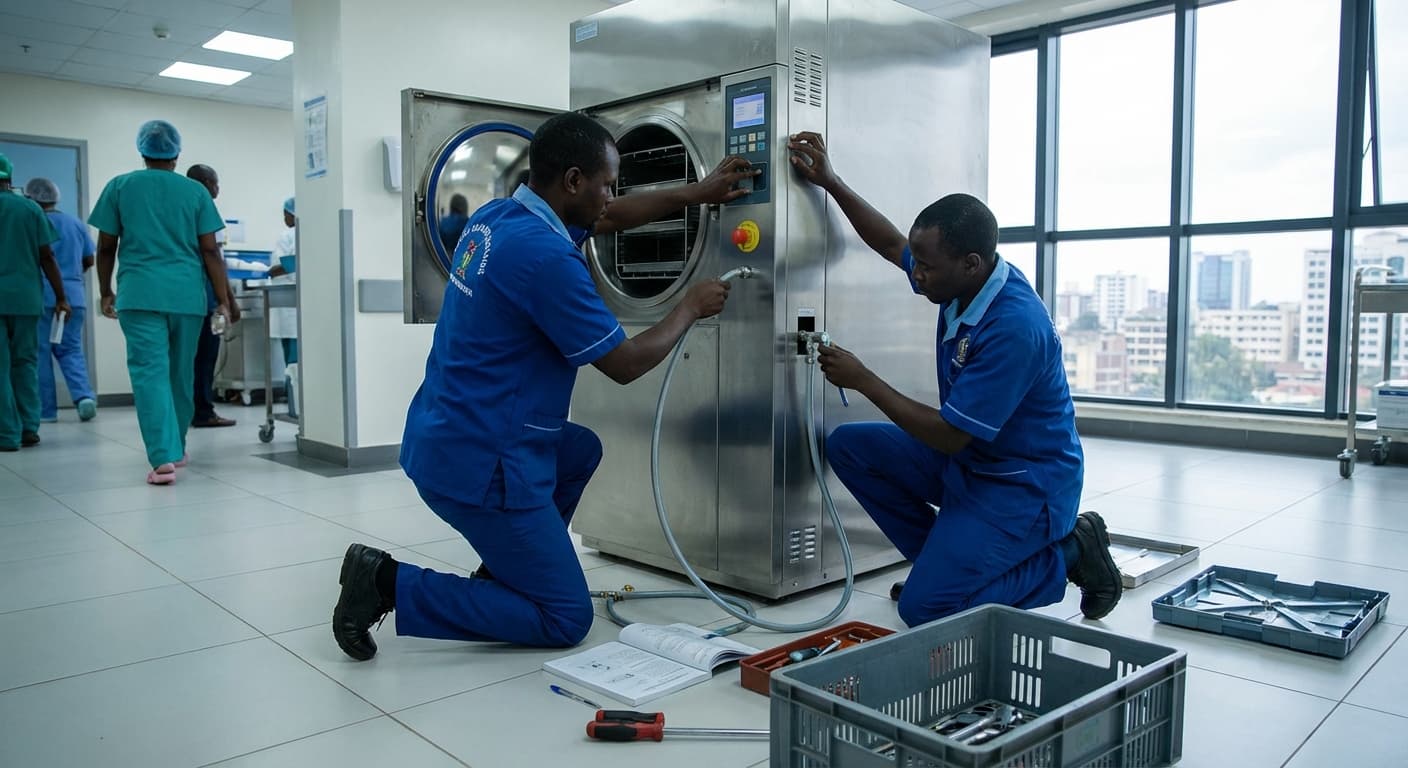
Autoclave & Sterilizer Installation Service in Central African Republic
Engineering Excellence & Technical Support
Autoclave & Sterilizer Installation Service High-standard technical execution following OEM protocols and local regulatory frameworks.
Certified Sterilization Protocols
Ensuring all autoclave and sterilizer installations adhere to stringent international and local health standards for optimal bioburden reduction and patient safety. Our technicians are certified in current sterilization best practices.
Precision Calibration & Validation
Meticulous calibration and full validation of all installed units, guaranteeing consistent and reliable sterilization cycles. We provide comprehensive documentation for compliance and operational integrity.
Robust Infrastructure Integration
Seamless integration of autoclave and sterilizer systems with existing medical infrastructure, including power, water, and ventilation. We ensure robust and reliable connectivity for uninterrupted operation in challenging environments.
What Is Autoclave & Sterilizer Installation Service In Central African Republic?
Autoclave & Sterilizer Installation Service in the Central African Republic refers to the specialized process of setting up, configuring, and commissioning autoclaves and other sterilization equipment within healthcare facilities, laboratories, and industrial settings in the region. This service ensures that these critical devices are installed correctly according to manufacturer specifications, relevant safety standards, and local regulations, thereby guaranteeing their efficacy in achieving effective sterilization of instruments, media, and materials. Proper installation is paramount to prevent equipment failure, ensure patient and staff safety, and maintain the integrity of sterilization processes, which is especially crucial in environments where resource limitations and unique logistical challenges may be present. The service encompasses a range of activities from site assessment and equipment delivery to the final validation of the sterilization cycle.
| Stakeholder Group | Need for Service | Typical Use Cases |
|---|---|---|
| Hospitals and Clinics (Public and Private) | To ensure safe and effective sterilization of surgical instruments, medical devices, and laboratory consumables, thereby preventing healthcare-associated infections (HAIs) and maintaining patient safety. Essential for compliance with infection control protocols. | Sterilization of surgical packs, anesthesia equipment, endoscopes, diagnostic instruments, personal protective equipment (PPE), and laboratory reagents. |
| Laboratories (Medical, Research, and Industrial) | To achieve sterility for culture media, laboratory glassware, disposable consumables, and research samples, preventing contamination and ensuring the accuracy and reproducibility of experimental results. Crucial for public health surveillance and scientific advancement. | Sterilization of culture media, petri dishes, pipettes, reagents, biological samples, and laboratory equipment in diagnostic, research, and quality control laboratories. |
| Dental Practices | To sterilize dental instruments and tools to prevent the transmission of infectious diseases between patients. Compliance with dental hygiene regulations is paramount. | Sterilization of dental instruments, handpieces, mirrors, probes, and other reusable dental equipment. |
| Veterinary Clinics and Animal Husbandry Facilities | To sterilize surgical instruments and equipment used in animal care, ensuring the health and safety of both animals and personnel. Relevant for disease control and prevention in livestock. | Sterilization of veterinary surgical instruments, diagnostic tools, and equipment used in animal treatment and research. |
| Pharmaceutical and Biotechnology Companies | To sterilize manufacturing equipment, components, and packaging materials to ensure product sterility and compliance with Good Manufacturing Practices (GMP). Essential for maintaining product quality and safety. | Sterilization of process equipment, bioreactors, filling lines, and packaging materials in pharmaceutical and biopharmaceutical manufacturing. |
| International Aid Organizations and NGOs | To establish and maintain functional healthcare infrastructure in areas with limited resources, ensuring access to safe medical procedures through reliable sterilization capabilities. | Setting up and equipping new health posts, mobile clinics, and supporting existing facilities with essential sterilization equipment for diverse medical interventions. |
Service Components and Considerations for Autoclave & Sterilizer Installation in CAR:
- Site Assessment and Preparation: Evaluating the installation location for adequate space, ventilation, power supply (voltage, amperage, phase), water and drainage connections (if applicable), and structural support. Ensuring compliance with local building codes and safety requirements.
- Equipment Procurement and Logistics: Managing the transportation of autoclaves and sterilizers to the installation site, often navigating challenging infrastructure and supply chain complexities inherent to the Central African Republic.
- Mechanical and Electrical Integration: Connecting the sterilizer to power sources, water supply, and drainage systems. Ensuring proper grounding and adherence to electrical safety standards.
- Plumbing and Gas Connections (if applicable): For steam autoclaves, this includes connecting to steam generators or main steam lines. For gas sterilizers, it involves safe and compliant connection to gas supply lines.
- Control System Configuration and Calibration: Setting up and calibrating the sterilizer's control panel, programming sterilization cycles, and verifying parameter accuracy (temperature, pressure, time).
- Safety System Verification: Testing all safety interlocks, pressure relief valves, door seals, and emergency shutdown mechanisms to ensure operational integrity.
- Performance Testing and Validation: Conducting test cycles with appropriate biological and chemical indicators to confirm that the sterilizer achieves the required sterilization parameters. This includes preliminary operational checks and full validation protocols.
- User Training: Providing comprehensive training to facility staff on the correct operation, routine maintenance, and troubleshooting of the installed equipment.
- Documentation and Handover: Supplying all relevant manuals, warranty information, installation reports, and validation certificates. Ensuring a formal handover of the operational equipment to the client.
- Adherence to Standards: Compliance with international standards (e.g., ISO, AAMI) and any specific national or regional guidelines for medical device installation and sterilization.
Who Needs Autoclave & Sterilizer Installation Service In Central African Republic?
The Central African Republic faces significant healthcare challenges, and ensuring the sterility of medical equipment is paramount for patient safety and effective treatment. Autoclave and sterilizer installation services are crucial for facilities aiming to provide reliable and safe medical care. These services are essential for preventing the spread of infections and maintaining the highest standards in healthcare delivery.
| Customer Type | Key Departments/Areas of Need | Primary Importance |
|---|---|---|
| Hospitals | Surgical Theaters, ICU, Emergency, Maternity, Dental, Outpatient | High - Frequent and diverse procedures |
| Clinics & Health Centers | Treatment Rooms, Minor Surgery Areas, Vaccination Centers | High - Essential for primary care safety |
| Maternity & Childbirth Centers | Delivery Rooms, Postnatal Care | Critical - Infection prevention during birth |
| Dental Practices | Treatment Rooms, Sterilization Area | Critical - Oral health and disease prevention |
| Veterinary Clinics | Surgical Suites, Treatment Areas | Important - Animal and public health |
| Laboratories | Sample Processing, Culture Incubation, Waste Disposal | High - Accuracy and safety |
| NGOs & Humanitarian Orgs | Mobile Clinics, Field Hospitals, Health Posts | High - Reaching underserved populations safely |
| Government Health Agencies | Public Health Facilities, Central Medical Stores | High - Policy enforcement and public health infrastructure |
| Medical Training Institutions | Practical Training Labs, Demonstration Units | Important - Educating future healthcare professionals |
Target Customers and Departments Requiring Autoclave & Sterilizer Installation Service in Central African Republic:
- {"title":"Hospitals (Public & Private)","description":"All departments within hospitals require sterile instruments. This includes surgical theaters, emergency rooms, intensive care units, maternity wards, dental clinics, and outpatient clinics. The volume of procedures necessitates robust and reliable sterilization systems."}
- {"title":"Clinics & Health Centers","description":"These facilities, often serving rural and underserved populations, are vital for primary healthcare. They perform a range of procedures from minor surgeries to wound care and vaccinations, all of which demand sterile equipment."}
- {"title":"Maternity & Childbirth Centers","description":"Focusing on safe delivery and newborn care, these centers must maintain strict hygiene protocols. Sterilization of instruments used during childbirth is non-negotiable."}
- {"title":"Dental Practices","description":"Dental procedures, whether diagnostic or operative, involve direct contact with patients' oral cavities. Sterilization of dental instruments is critical to prevent cross-contamination and transmission of diseases."}
- {"title":"Veterinary Clinics & Animal Hospitals","description":"While not human healthcare, veterinary facilities also perform surgeries and procedures that require sterilized instruments to ensure the health and safety of animals and prevent zoonotic disease transmission."}
- {"title":"Laboratories (Medical & Research)","description":"Clinical and research laboratories use sterile equipment for sample handling, culture preparation, and various diagnostic tests. Autoclaves are also used for the safe disposal of biohazardous waste."}
- {"title":"Non-Governmental Organizations (NGOs) & Humanitarian Organizations","description":"Many NGOs operate mobile clinics, field hospitals, and permanent health facilities, especially in areas with limited infrastructure. They often require robust and easily maintainable sterilization solutions."}
- {"title":"Government Health Ministries & Agencies","description":"These entities are responsible for setting and enforcing healthcare standards. They may oversee the installation of sterilization equipment in public facilities and require services for their own operational health units."}
- {"title":"Medical Training Institutions","description":"Schools and institutions that train doctors, nurses, dentists, and other healthcare professionals need functional sterilization equipment for practical training and to demonstrate best practices in infection control."}
Autoclave & Sterilizer Installation Service Process In Central African Republic
Our Autoclave & Sterilizer Installation Service in the Central African Republic is designed to be a comprehensive and efficient process, ensuring your vital medical or laboratory equipment is set up correctly and ready for use. We manage every step from your initial inquiry to the final handover, providing clear communication and expert execution throughout.
| Stage | Description | Key Activities |
|---|---|---|
| Inquiry | Client initiates contact for installation services. | Provide project details, equipment type, location. |
| Assessment | Technical evaluation of the installation site and requirements. | Site survey, infrastructure assessment (power, water, ventilation). |
| Proposal | Formal offer detailing scope, cost, and timeline. | Develop detailed proposal and quotation. |
| Agreement | Formalize the service contract and plan execution. | Sign agreement, finalize installation schedule. |
| Logistics | Managing equipment procurement and transportation. | Source/purchase equipment, arrange secure transport to CAR. |
| Preparation | Ensuring the site is ready for installation. | Site modifications, utility connections. |
| Installation | Physical setup and assembly of the unit. | Expert technicians, adherence to standards. |
| Testing | Verifying functionality and performance. | Calibration, functional tests, validation. |
| Training | Educating users on operation and maintenance. | On-site training sessions for staff. |
| Handover | Official transfer of the installed equipment. | Final inspection, documentation, and acceptance. |
| Support | Ongoing assistance and maintenance. | Technical support, scheduled servicing. |
Autoclave & Sterilizer Installation Service Workflow
- Initial Inquiry & Consultation: The process begins when you contact us with your requirements. We'll gather preliminary information about the type of autoclave/sterilizer, its intended use, location, and any existing infrastructure.
- Needs Assessment & Site Survey: Following the initial contact, our technical team will conduct a thorough site survey at your facility. This involves assessing power, water, drainage, ventilation, and space requirements, as well as identifying any potential challenges specific to the Central African Republic's environment.
- Proposal & Quotation: Based on the needs assessment, we will provide a detailed proposal outlining the scope of work, equipment, materials, timelines, and a transparent quotation for the installation service.
- Agreement & Planning: Once you accept the proposal, a formal agreement will be drawn up. We will then collaborate with you to finalize the installation schedule, ensuring minimal disruption to your operations.
- Equipment Procurement & Logistics: If you require us to procure the autoclave/sterilizer, we will manage the sourcing, purchasing, and secure transportation to your site in the Central African Republic. If you provide the equipment, we will coordinate its safe delivery to the installation location.
- Site Preparation: Our team will prepare the installation site according to the plan, which may include minor construction, electrical or plumbing modifications, and ensuring proper ventilation.
- Installation & Assembly: Certified technicians will perform the physical installation and assembly of the autoclave/sterilizer, adhering strictly to manufacturer guidelines and international safety standards.
- Testing & Calibration: Comprehensive testing and calibration will be conducted to ensure the unit operates at optimal performance and meets all specified parameters. This includes functional checks, leak tests, and cycle validations.
- User Training: We provide thorough training to your designated personnel on the operation, basic maintenance, and safety protocols of the newly installed autoclave/sterilizer. This empowers your team to use the equipment effectively and safely.
- Final Inspection & Handover: A final inspection will be performed with your representatives to ensure all work is completed to your satisfaction. Upon successful completion, we will formally hand over the installed and functional unit.
- Post-Installation Support: We offer ongoing technical support and can arrange for periodic maintenance and servicing to ensure the longevity and reliability of your autoclave/sterilizer.
Autoclave & Sterilizer Installation Service Cost In Central African Republic
The cost of autoclave and sterilizer installation services in the Central African Republic (CAR) can vary significantly due to several factors. These factors influence the overall price, from the basic labor involved to the complexities of the installation site and the specific type of equipment being installed. Understanding these elements is crucial for budgeting and obtaining accurate quotes.
Key Pricing Factors:
- Type and Size of Autoclave/Sterilizer: Larger, more complex, or specialized units (e.g., high-pressure steam autoclaves, ethylene oxide sterilizers) will naturally require more time, expertise, and potentially specialized tools for installation, leading to higher costs. Smaller, basic autoclaves will be less expensive to install.
- Site Preparation and Infrastructure: This is a major determinant. If the installation site lacks adequate plumbing (water supply, drainage), electrical outlets (appropriate voltage and amperage), ventilation, or a stable, level surface, significant preparatory work will be required. This could involve hiring plumbers, electricians, or even minor construction, all of which add to the total cost.
- Location within the CAR: Installation costs can differ based on the accessibility of the location. Services in major cities like Bangui are generally more affordable than those in remote or less accessible regions. Transportation of technicians and specialized equipment to remote areas will incur higher travel and logistical expenses.
- Complexity of Installation: The ease of access to the installation point within the facility matters. Installing in a new, purpose-built medical facility will be simpler than retrofitting into an existing, older building with cramped spaces or existing utilities that need to be rerouted.
- Brand and Model of Equipment: While the installation service cost is separate from the equipment purchase, the specific brand and model might influence the installer's familiarity and the need for specialized tools or software for calibration. Some manufacturers may also have preferred or certified installers.
- Required Utilities and Consumables: The installation might require specific piping, fittings, electrical components, or even initial consumables for testing and calibration. The cost of these materials will be passed on to the client.
- Post-Installation Services: The scope of the "installation service" can vary. It might include just physical placement and connection, or it could encompass full system testing, calibration, user training, and initial operational checks. More comprehensive services will naturally command higher prices.
- Technician Expertise and Experience: Highly skilled and experienced technicians, especially those with specific certifications for certain brands or types of sterilizers, will charge more for their expertise.
- Urgency of Service: Emergency or expedited installation requests might incur premium charges.
Estimated Cost Ranges (in Central African CFA Franc - XAF):
It's important to note that these are estimates and actual quotes can vary. These ranges are based on general market understanding and may not reflect precise, up-to-the-minute pricing. It is always recommended to obtain multiple quotes from reputable service providers.
Basic Installation (Small, basic autoclave, minimal site prep):
- Range: 100,000 XAF - 250,000 XAF
Standard Installation (Medium-sized autoclave/sterilizer, moderate site prep, standard utilities):
- Range: 250,000 XAF - 700,000 XAF
Complex/Advanced Installation (Large or specialized sterilizer, significant site preparation, complex utilities, remote location, or comprehensive post-installation services):
- Range: 700,000 XAF - 2,000,000+ XAF
Note on Local Currency: The official currency in the Central African Republic is the Central African CFA franc (XAF). Exchange rates with major international currencies fluctuate, so it's always advisable to check current rates when comparing prices internationally.
| Installation Type | Estimated Cost Range (XAF) |
|---|---|
| Basic Installation (Small, basic autoclave, minimal site prep) | 100,000 - 250,000 |
| Standard Installation (Medium-sized unit, moderate prep) | 250,000 - 700,000 |
| Complex/Advanced Installation (Large/specialized unit, significant prep, remote) | 700,000 - 2,000,000+ |
Factors Influencing Autoclave & Sterilizer Installation Costs in CAR
- Type and Size of Equipment
- Site Preparation and Infrastructure Needs
- Geographical Location within CAR
- Installation Complexity
- Equipment Brand and Model Specifics
- Inclusion of Utilities and Consumables
- Scope of Post-Installation Services
- Technician Skill and Experience
- Urgency of Service
Affordable Autoclave & Sterilizer Installation Service Options
Investing in a reliable autoclave or sterilizer is crucial for many industries, including healthcare, dentistry, laboratories, and veterinary clinics. However, the initial cost of the equipment and its professional installation can be a significant concern. This guide explores affordable autoclave and sterilizer installation service options, focusing on value bundles and cost-saving strategies to help you make a smart and economical choice.
| Value Bundle Option | Included Services | Potential Cost Savings | Best For |
|---|---|---|---|
| Basic Installation Package | Unit setup, connection to existing utilities, initial functional test. | Lower upfront cost compared to comprehensive packages. | Simpler installations with readily available infrastructure. |
| Comprehensive Installation & Training | Basic Installation + Operator training, calibration, water quality testing, waste disposal consultation. | Reduces future training costs, minimizes operator error, ensures optimal performance. | New facilities, staff turnover, complex equipment requiring specific operation. |
| Equipment Purchase & Installation Bundle | Discounted equipment price when purchased with installation services from the same provider. | Significant savings on both equipment and installation. | Businesses purchasing new autoclaves/sterilizers. |
| Service Contract Integration | Installation included or heavily discounted when bundled with a multi-year maintenance or service contract. | Predictable long-term costs, priority service, extended equipment lifespan. | Organizations seeking long-term cost management and operational reliability. |
| Referral or Loyalty Program Discounts | Discounts offered by installers for referrals from existing satisfied clients or for repeat business. | Direct cost reduction on installation fees. | Existing customers looking to expand or new businesses referred by trusted sources. |
Key Considerations for Affordable Installation
- Equipment Type and Size: Larger, more complex units will naturally incur higher installation costs.
- Existing Infrastructure: Availability of power, water, drainage, and ventilation will impact complexity and cost.
- Site Preparation: Minor modifications to existing spaces may be needed.
- Service Provider Reputation and Experience: Choosing reputable providers can prevent costly errors and ensure long-term reliability.
- Geographic Location: Labor costs and travel expenses can vary significantly by region.
- Warranty and Maintenance Packages: Bundling installation with future services can offer discounts.
- DIY vs. Professional Installation: While DIY might seem cheaper, it can lead to voided warranties, safety hazards, and costly repairs if done incorrectly.
Verified Providers In Central African Republic
In the Central African Republic (CAR), ensuring access to reliable and trustworthy healthcare services is paramount. Franance Health stands out as a premier provider, distinguished by its rigorous credentialing process and unwavering commitment to quality. This JSON output outlines why Franance Health's verified providers represent the best choice for healthcare in the CAR.
| Verification Component | Franance Health's Approach | Benefit to Patients |
|---|---|---|
| Academic and Professional Qualifications | Meticulous review of degrees, diplomas, and certifications from accredited institutions. | Ensures providers possess the foundational knowledge and expertise required for effective medical practice. |
| Licensure and Regulatory Compliance | Verification of current and valid professional licenses with relevant medical boards and authorities in the CAR and, where applicable, internationally. | Guarantees providers are legally authorized to practice and adhere to national healthcare regulations. |
| Clinical Experience and Competence | Thorough assessment of past work history, professional references, and, where feasible, practical skills evaluations. | Confirms providers have practical experience and a proven track record of delivering quality patient care. |
| Ethical Conduct and Professionalism | Background checks for disciplinary actions, malpractice claims, and adherence to a strict code of conduct. | Safeguards patients from unethical practices and ensures a professional and respectful patient-provider relationship. |
| Continuous Professional Development (CPD) | Encourages and tracks ongoing training and education to keep providers updated on the latest medical advancements and techniques. | Ensures patients benefit from current medical knowledge and innovative treatment approaches. |
Why Franance Health is the Superior Choice for Verified Providers in the CAR:
- Unparalleled Credentialing Standards: Franance Health implements a multi-layered verification process that scrutinizes the academic qualifications, professional licenses, and practical experience of every healthcare professional. This ensures only the most competent and ethical practitioners are part of their network.
- Commitment to Patient Safety: The verification process prioritizes patient safety above all else. This includes background checks and continuous performance monitoring to uphold the highest standards of care and minimize risks.
- Local Expertise, International Standards: Franance Health combines deep understanding of the unique healthcare challenges and needs within the Central African Republic with adherence to international best practices and ethical guidelines.
- Comprehensive Service Offerings: Their network encompasses a wide range of medical specialties, from primary care and pediatrics to specialized surgical and diagnostic services, providing a holistic approach to healthcare.
- Trust and Transparency: The 'verified' status from Franance Health offers patients a crucial layer of trust and transparency, assuring them they are receiving care from qualified and reputable professionals.
- Accessibility and Reach: Franance Health actively works to expand access to quality healthcare across the CAR, making essential medical services available in diverse and often underserved regions.
Scope Of Work For Autoclave & Sterilizer Installation Service
This Scope of Work outlines the requirements for the professional installation of autoclaves and sterilizers. It details the technical deliverables expected from the service provider and the standard specifications that will be adhered to throughout the project. The objective is to ensure a safe, functional, and compliant installation that meets all manufacturer guidelines and relevant industry standards.
| Specification Category | Standard/Requirement | Description/Notes |
|---|---|---|
| Electrical | UL/CE/Local Electrical Codes | All electrical connections must comply with local and international safety standards, including proper grounding, circuit protection, and voltage/amperage matching. |
| Plumbing | ASME/Local Plumbing Codes | Water supply, drainage, and steam lines must be installed using approved materials and techniques, ensuring no leaks and proper pressure regulation. |
| Ventilation | ASHRAE/Local HVAC Codes | Adequate ventilation must be provided to dissipate steam and heat, ensuring a safe working environment and compliance with air exchange rates. |
| Safety | Manufacturer Guidelines & OSHA/Local Safety Regulations | Installation must adhere strictly to manufacturer safety warnings and all applicable occupational health and safety regulations. This includes proper guarding, emergency stop functionality, and pressure relief systems. |
| Material Compatibility | ASTM/Relevant Standards | All materials used in the installation (pipes, fittings, sealants) must be compatible with the operating conditions (temperature, pressure, chemicals) and the sterilizing media. |
| Performance Testing | Manufacturer's Validation Protocols | Post-installation tests must verify operational parameters such as temperature, pressure, cycle times, and sterilization efficacy as per the manufacturer's validation guidelines. |
| Environmental | Local Environmental Regulations | Disposal of waste materials during installation and any discharge from the sterilizer must comply with all local environmental regulations. |
| Documentation | ISO 9001/Industry Best Practices | All reports, schematics, and manuals provided must be clear, accurate, and in a universally accepted format, ensuring traceability and ease of understanding. |
Technical Deliverables
- Detailed site assessment and planning report.
- Certified installation of autoclave/sterilizer according to manufacturer's specifications.
- Connection to required utilities (water, power, steam, drainage, ventilation) with appropriate safety measures.
- Calibration and performance validation testing.
- User training session for operation and basic maintenance.
- As-built drawings and schematics of the installed system.
- Post-installation inspection and sign-off report.
- All necessary permits and documentation for regulatory compliance.
- Provision of operation and maintenance manuals.
- Warranty documentation for parts and labor.
Service Level Agreement For Autoclave & Sterilizer Installation Service
This Service Level Agreement (SLA) outlines the response times and uptime guarantees for the Autoclave & Sterilizer Installation Service provided by [Your Company Name]. This SLA aims to ensure the timely and reliable installation of your critical sterilization equipment.
| Incident Severity | Response Time (Business Hours) | Response Time (Outside Business Hours) | Target Resolution Time (Business Hours) | Uptime Guarantee |
|---|---|---|---|---|
| Critical Incident | 2 Business Hours | 4 Business Hours | 8 Business Hours | 99.5% (monthly) |
| Non-Critical Incident | 4 Business Hours | 8 Business Hours | 24 Business Hours | 99.5% (monthly) |
Key Definitions
- Autoclave & Sterilizer Installation Service: The service of installing, connecting, and commissioning of new autoclaves and sterilizers at the Client's designated facility.
- Downtime: Any period during which the installed autoclave/sterilizer is non-operational due to issues related to the installation, or where the Client is unable to use the equipment as intended due to an installation-related fault.
- Critical Incident: An installation-related fault that renders the autoclave/sterilizer completely inoperable, posing a significant risk to the Client's operations or patient safety.
- Non-Critical Incident: An installation-related fault that causes partial functionality loss or affects non-essential features of the autoclave/sterilizer, but does not render it completely inoperable.
- Business Hours: Monday to Friday, 9:00 AM to 5:00 PM, excluding public holidays in [Your Country/Region].
- Response Time: The maximum time allowed for [Your Company Name] to acknowledge a reported incident and initiate troubleshooting or dispatch a technician.
- Resolution Time: The target time for [Your Company Name] to resolve an incident and restore the autoclave/sterilizer to full operational status. This is an aspirational goal and may vary based on the complexity of the issue.
- Uptime Guarantee: The guaranteed percentage of time the autoclave/sterilizer will be fully operational, excluding scheduled maintenance and client-induced issues.
Frequently Asked Questions

Ready when you are
Let's scope your Autoclave & Sterilizer Installation Service in Central African Republic project in Central African Republic.

Scaling healthcare logistics and technical systems across the entire continent.