
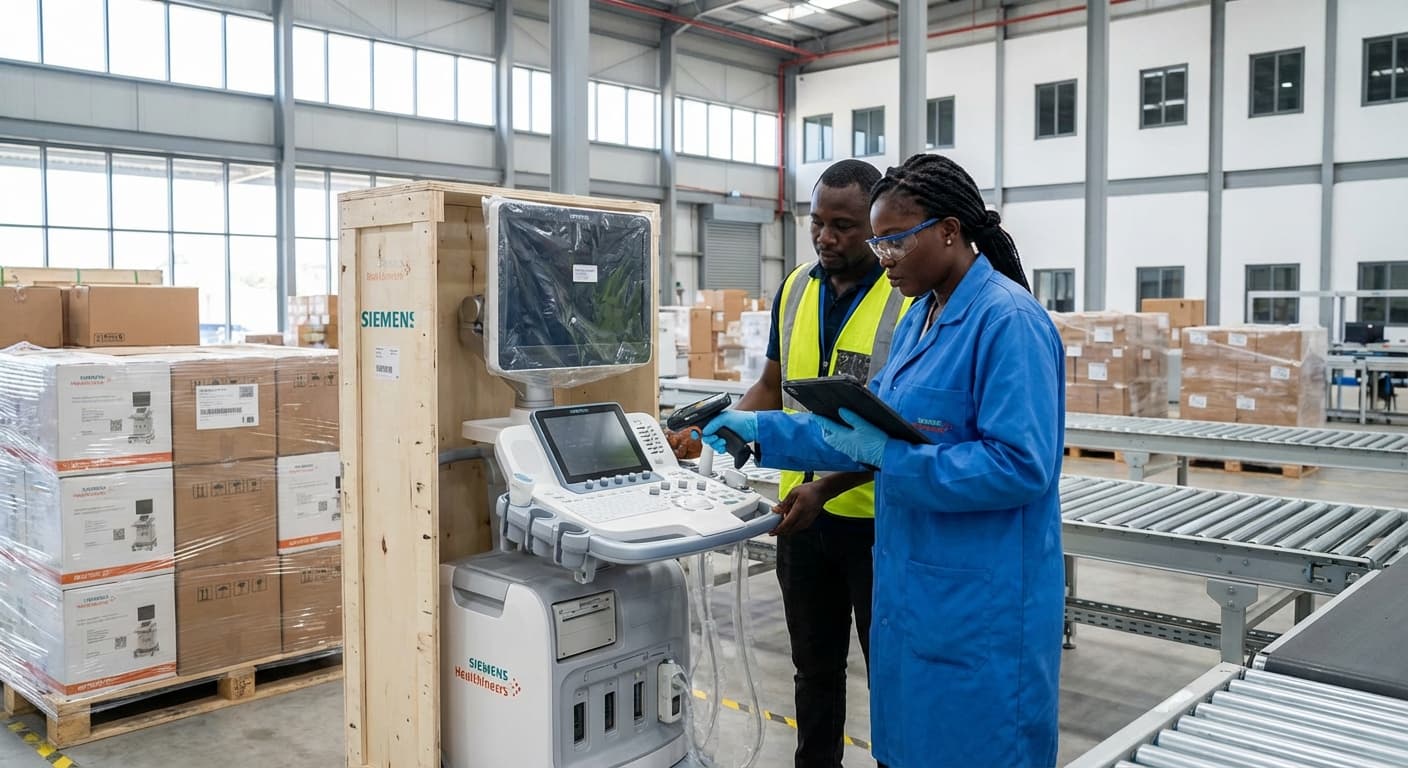
Warehouse Receiving Inspection Service (Medical Equipment) in Central African Republic
Engineering Excellence & Technical Support
Warehouse Receiving Inspection Service (Medical Equipment) High-standard technical execution following OEM protocols and local regulatory frameworks.
On-Site Verification & Compliance
Our expert inspectors perform real-time, on-site verification of incoming medical equipment against purchase orders and international standards within Central African Republic's unique logistical landscape, ensuring immediate identification of discrepancies and adherence to strict quality control.
Environmental Integrity Monitoring
We utilize advanced environmental monitoring tools to assess and document critical temperature and humidity conditions during the receiving process, safeguarding sensitive medical equipment from potential degradation and ensuring optimal product integrity upon arrival in challenging climates.
Secure Chain of Custody Tracking
Implementing robust tracking systems, we ensure a secure and transparent chain of custody from the moment of receipt. Our detailed digital records and photographic documentation provide irrefutable proof of condition and handling, minimizing risk and streamlining inventory management for medical facilities.
What Is Warehouse Receiving Inspection Service (Medical Equipment) In Central African Republic?
Warehouse Receiving Inspection Service (Medical Equipment) in the Central African Republic is a specialized quality control process that verifies the integrity, specifications, and compliance of medical equipment upon its arrival at a designated storage facility within the nation. This service is crucial for ensuring that the medical equipment is fit for purpose, meets all regulatory standards, and is free from damage or defects incurred during transit, prior to its distribution or deployment within the healthcare system.
| Stakeholder | Need for Service | Typical Use Cases |
|---|---|---|
| Government Health Ministries/Agencies (e.g., Ministry of Public Health and Population) | To ensure the procurement and deployment of safe, effective, and compliant medical equipment for public healthcare facilities. To prevent the infiltration of substandard or counterfeit medical devices. To maintain accountability for public health investments. | Receiving large consignments of essential medical supplies, diagnostic equipment, or specialized surgical instruments purchased by the government for national health programs. Acceptance of donations from international organizations or foreign governments. |
| Non-Governmental Organizations (NGOs) and International Aid Organizations | To ensure that procured or donated medical equipment meets the specific needs of their projects and beneficiaries. To maintain donor confidence and accountability for the effective use of resources. To guarantee the quality of equipment deployed in remote or underserved areas. | Inspection of equipment for mobile clinics, vaccination campaigns, or disease-specific treatment programs. Verification of refurbished or second-hand medical equipment being imported for humanitarian purposes. |
| Private Healthcare Providers (Hospitals, Clinics, Diagnostic Centers) | To guarantee the quality and functionality of equipment purchased for patient care and revenue generation. To mitigate financial losses due to faulty or damaged equipment. To comply with licensing and accreditation requirements. | Receiving advanced imaging equipment, surgical robotics, laboratory analyzers, or patient monitoring systems. Acceptance of shipments of consumables and spare parts for existing medical devices. |
| Medical Equipment Importers and Distributors | To fulfill contractual obligations with their clients by ensuring delivered goods are in optimal condition. To manage inventory effectively and identify potential issues before onward distribution. To streamline warranty and return processes. | Processing shipments of various medical devices from international manufacturers. Verifying the condition of equipment before it is delivered to individual healthcare facilities or sold to end-users. |
| Logistics and Warehousing Companies (managing medical equipment) | To uphold their responsibility as custodians of sensitive medical goods. To provide evidence of the condition of goods upon receipt. To ensure compliance with handling and storage protocols specific to medical equipment. | Receiving and storing medical equipment on behalf of other entities. Conducting initial checks before placing items into long-term storage. |
Key Components of Warehouse Receiving Inspection Service (Medical Equipment)
- Visual Inspection: Assessment of external packaging for damage, tampering, or signs of compromise. Examination of the equipment itself for visible defects, scratches, dents, or missing components.
- Documentation Verification: Cross-referencing received items against purchase orders, invoices, packing lists, and shipping manifests. Verification of serial numbers, lot numbers, and expiration dates against recorded data.
- Specification Compliance Check: Confirmation that the received equipment matches the ordered specifications, including model numbers, technical parameters, certifications, and included accessories. This may involve consulting manufacturer datasheets and product catalogs.
- Functional Testing (where applicable): Basic operational checks to ensure the equipment powers on, performs fundamental functions, and responds as expected. This may be a preliminary assessment, with more in-depth testing conducted by end-users.
- Condition Assessment: Evaluation of the overall physical condition of the equipment, noting any signs of wear, damage, or potential malfunction. This includes assessing the integrity of delicate parts and interfaces.
- Traceability and Labeling Verification: Ensuring that all equipment is correctly labeled with identifying information, including unique identifiers, manufacturer details, and any required regulatory markings.
- Environmental Control Check: Verification that the storage environment (temperature, humidity, light exposure) is suitable for the specific medical equipment, adhering to manufacturer recommendations and storage protocols.
- Reporting and Documentation: Detailed recording of inspection findings, including any discrepancies, damages, or non-conformities. Generation of inspection reports for record-keeping, claims processing, and decision-making.
Who Needs Warehouse Receiving Inspection Service (Medical Equipment) In Central African Republic?
Warehouse receiving inspection services for medical equipment are crucial in the Central African Republic (CAR) to ensure the quality, safety, and efficacy of vital medical supplies. Given the logistical challenges, potential for counterfeit goods, and the critical nature of healthcare in the region, a robust inspection process at the point of receiving is paramount.
| Customer Segment | Key Departments Involved | Primary Needs for Inspection Service | Potential Impact of Poor Inspection |
|---|---|---|---|
| Government Ministries & Agencies | Ministry of Public Health, DINAME, Central Medical Store | Ensuring compliance with national standards, preventing counterfeit/substandard equipment, verifying quantity and condition, safeguarding public funds. | Public health risks, wasted resources, ineffectiveness of health programs, loss of public trust. |
| NGOs & International Aid Organizations | Procurement departments, logistics teams, program managers | Verifying donated or procured goods, ensuring equipment meets project specifications, confirming operational readiness, maintaining donor confidence. | Compromised humanitarian aid delivery, project failure, reputational damage, loss of funding. |
| Private Healthcare Providers | Procurement managers, hospital administrators, clinical heads | Ensuring patient safety, maintaining service quality, preventing costly equipment failures, protecting business reputation. | Patient harm, medical errors, significant financial losses, legal liabilities, business closure. |
| International Donors & Funding Agencies | Project management units, procurement oversight, monitoring and evaluation teams | Accountability for disbursed funds, verification of equipment impact, risk mitigation, ensuring project objectives are met. | Ineffective use of aid, project delays or failures, loss of donor confidence, reputational damage to funding agencies. |
Target Customers and Departments for Medical Equipment Warehouse Receiving Inspection Services in the Central African Republic
- Government Ministries & Agencies:
- Ministry of Public Health (Ministère de la Santé Publique): Responsible for national health policy, procurement, and distribution of medical supplies. They need to ensure that all acquired equipment meets national standards and is fit for use.
- National Pharmaceutical and Medical Supply Directorate (Direction Nationale du Médicament et du Matériel Sanitaire - DINAME): Oversees the procurement, storage, and distribution of pharmaceuticals and medical equipment. Receiving inspection is a critical step in their supply chain management.
- Central Medical Store (Magasin Central de la Santé): The primary national repository for medical supplies. Inspectors are needed to verify incoming shipments before they are integrated into inventory.
- Public Hospitals and Health Centers: While often relying on national procurement, larger public facilities might receive direct donations or specialized equipment and require independent verification.
- Non-Governmental Organizations (NGOs) & International Aid Organizations:
- International Health Organizations (e.g., WHO, UNICEF, MSF): These organizations frequently provide medical aid and equipment. They need to ensure the donated or procured items are of high quality and appropriate for the local context.
- Local and International NGOs delivering healthcare services: Many NGOs operate clinics and hospitals across CAR and rely on the integrity of their medical equipment supply chain.
- Private Healthcare Providers:
- Private Hospitals and Clinics: These facilities, though often smaller, still require reliable medical equipment to provide services. They may procure equipment independently and need assurance of its quality.
- Pharmacies and Medical Supply Distributors: Private entities involved in the sale and distribution of medical equipment will benefit from receiving inspection to maintain their reputation and ensure compliance.
- International Donors and Funding Agencies:
- Organizations funding health projects in CAR: They have an interest in ensuring that the funds allocated for medical equipment are used to procure high-quality, effective items. Receiving inspection provides a vital accountability mechanism.
- Development Banks and Bilateral Aid Agencies: Projects involving the procurement and delivery of medical equipment will often mandate independent inspection services.
Warehouse Receiving Inspection Service (Medical Equipment) Process In Central African Republic
This document outlines the workflow for Warehouse Receiving Inspection Services for Medical Equipment in the Central African Republic, from the initial inquiry to the final execution of the service. The process is designed to ensure the quality, safety, and compliance of medical equipment upon arrival at designated warehouses.
| Stage | Description | Key Activities | Responsible Parties | Deliverables/Outcomes | Notes/Considerations |
|---|---|---|---|---|---|
| The client initiates contact to request inspection services for incoming medical equipment. |
| Client (Importer/Distributor/NGO), Service Provider (Inspection Agency) | Received inquiry, understanding of client's needs. | Clear communication of client's expectations is crucial. Understanding of local regulations (if any) is important from the outset. |
| Based on the gathered information, the service provider prepares a cost estimate and formalizes the service agreement. |
| Service Provider (Inspection Agency), Client (Importer/Distributor/NGO) | Formal quotation, signed Service Agreement. | Ensure quotations are comprehensive and cover all potential costs. Agreement should clearly define responsibilities, liability, and payment terms. |
| Preparation for the on-site inspection, including logistical arrangements and documentation review. |
| Service Provider (Inspection Agency), Client (Importer/Distributor/NGO), Warehouse Management | Inspection plan, scheduled inspection date, confirmed logistics. | Advance notification to the warehouse is essential. Understanding of the specific medical equipment and its potential failure modes can enhance inspection effectiveness. |
| The physical inspection of the medical equipment at the designated warehouse. |
| Service Provider (Inspection Team) | Observed findings, preliminary assessment of equipment condition. | Inspectors must adhere to safety protocols. The level of functional testing will depend on the equipment type and agreement. Local context and potential counterfeit issues should be considered. |
| Compiling and delivering a comprehensive report of the inspection findings. |
| Service Provider (Inspection Team/Reporting Department), Client (Importer/Distributor/NGO) | Comprehensive Inspection Report, photographic evidence. | The report must be clear, objective, and fact-based. timely delivery of the report is important for the client's decision-making. |
| Addressing any issues arising from the inspection and formally closing the service engagement. |
| Client (Importer/Distributor/NGO), Service Provider (Inspection Agency), Supplier | Resolution of identified issues, completed payment, closed service engagement. | Effective communication channels should be maintained throughout this stage. Lessons learned can inform future inspections. |
Key Stages of Warehouse Receiving Inspection Service
- Inquiry and Information Gathering
- Quotation and Agreement
- Pre-Inspection Planning
- On-Site Inspection Execution
- Reporting and Documentation
- Follow-up and Closure
Warehouse Receiving Inspection Service (Medical Equipment) Cost In Central African Republic
This document outlines the factors influencing and typical cost ranges for warehouse receiving inspection services for medical equipment in the Central African Republic (CAR). Due to the specific logistical challenges and economic conditions in CAR, these services often come with higher associated costs compared to more developed regions. Understanding these nuances is crucial for accurate budgeting and procurement.
| Inspection Service Level | Estimated Cost Range (XAF) | Notes |
|---|---|---|
| Basic Visual Inspection & Documentation Check (per unit) | 50,000 - 150,000 XAF | Covers visual damage assessment, checking serial numbers against documentation, and verifying packaging integrity. |
| Standard Inspection (per unit) | 150,000 - 400,000 XAF | Includes visual inspection, basic functional checks (if applicable and feasible), and preliminary documentation review. May include limited unpacking/repacking. |
| Comprehensive Inspection (per unit) | 400,000 - 1,000,000+ XAF | Involves detailed visual inspection, in-depth functional testing, calibration checks (if specified), and thorough documentation review. Can vary significantly based on equipment complexity. |
| Daily Rate for Specialized Inspector (e.g., Biomedical Engineer) | 250,000 - 700,000 XAF per day | Applies when an inspector with specialized expertise is required for extended periods or for complex diagnostic tasks. Excludes travel and accommodation. |
| Logistics and Travel Surcharge (per inspection) | 50,000 - 200,000 XAF (variable) | Applied for inspections outside of major urban centers (e.g., Bangui) or to remote locations, covering transportation and potential overnight stays. |
| Expedited Service Fee | 25% - 75% of base service cost | For urgent inspections requiring immediate attention and prioritization. |
Key Pricing Factors for Warehouse Receiving Inspection Services (Medical Equipment) in CAR:
- {"title":"Equipment Complexity and Value:","description":"Highly complex or high-value medical equipment (e.g., MRI machines, advanced diagnostic tools) requires specialized knowledge, more time for inspection, and potentially specialized testing equipment. The inherent risk associated with damage or malfunction of such items also drives up inspection costs."}
- {"title":"Quantity of Equipment:","description":"A larger volume of equipment generally leads to a higher overall cost, though per-unit inspection fees might decrease with bulk. However, a significant quantity can also strain inspection resources and potentially increase turnaround time."}
- {"title":"Inspection Scope and Depth:","description":"Basic visual checks and documentation verification are less expensive than comprehensive functional testing, calibration checks, and detailed report generation. The level of detail required by the client significantly impacts the service provider's time and expertise investment."}
- {"title":"Location of Warehouse (Accessibility):","description":"The CAR's infrastructure can be challenging. Warehouses located in remote or difficult-to-access areas will incur higher travel and logistical costs for inspectors, which will be passed on to the client."}
- {"title":"Urgency of Inspection:","description":"Expedited services or inspections requiring immediate attention outside of normal business hours will command premium pricing due to the need for rapid resource deployment and potential overtime."}
- {"title":"Inspector's Qualifications and Experience:","description":"Highly qualified inspectors with specific certifications or extensive experience in medical equipment diagnostics will charge higher rates. This is particularly important for specialized medical devices."}
- {"title":"Reporting Requirements:","description":"The format and detail of the inspection report can vary. Comprehensive reports with photographic evidence, detailed findings, and recommendations will be more costly to produce than a simple sign-off sheet."}
- {"title":"Third-Party Requirements:","description":"If the inspection needs to meet specific international standards or regulatory body requirements, this may necessitate the use of specialized equipment or adherence to stricter protocols, increasing costs."}
- {"title":"Service Provider's Overhead and Profit Margin:","description":"The operational costs of inspection companies, including salaries, insurance, equipment maintenance, and administrative overhead, are factored into pricing. Profit margins will also vary between providers."}
- {"title":"Currency Fluctuations and Inflation:","description":"The Central African CFA franc (XAF) can experience fluctuations, and inflation rates in the CAR can impact the cost of labor and resources, leading to price adjustments."}
Affordable Warehouse Receiving Inspection Service (Medical Equipment) Options
Finding affordable warehouse receiving inspection services for medical equipment is crucial for ensuring compliance, safety, and operational efficiency. These services verify that incoming medical devices meet specified requirements before entering inventory or being deployed. Cost-effective options often involve tiered service levels, bundled packages, and strategic partnerships. Understanding value bundles and cost-saving strategies can significantly reduce expenses while maintaining high-quality inspection standards.
| Value Bundle Option | Description | Cost-Saving Strategy | Ideal For |
|---|---|---|---|
| Basic Compliance Check | Focuses on essential verification: matching PO, visual damage check, serial/lot number recording, and basic documentation. No functional testing. | Streamlined process, reduced labor hours. Suitable for low-risk items or initial screening. | High-volume, low-risk medical supplies; consumables; or initial intake for more detailed inspections later. |
| Standard Inspection Package | Includes basic checks plus a more thorough visual inspection, confirmation of expiration dates (if applicable), and basic labeling verification. May include basic, pre-defined functional checks. | Balances thoroughness with efficiency. Offers a good middle ground for many common medical devices. | General medical equipment, instruments, and devices with moderate risk. |
| Comprehensive Inspection Bundle | Covers all aspects of the standard package plus in-depth visual inspection, detailed documentation, basic functional testing (as per manufacturer guidelines), and initial environmental checks (temperature, humidity). | Reduces the need for separate functional testing or detailed reviews post-receiving. Proactive identification of issues. | High-value, critical medical devices; complex equipment; or items with stringent regulatory requirements. |
| Customizable Tiered Service | Allows clients to select specific inspection modules based on equipment type, risk level, and regulatory needs. Can be a combination of elements from other bundles. | Pay only for what you need. Flexibility to adapt to diverse inventory. Avoids over-inspection of low-risk items. | Organizations with a wide range of medical equipment, varying risk profiles, and specific compliance needs. |
| Partnership & Volume Discounts | Engaging a single, reliable inspection service provider for a significant volume of inspections across multiple locations or over a long-term contract. | Leverages economies of scale. Reduced administrative overhead. Potential for dedicated resources. | Large healthcare networks, medical device manufacturers, or distributors with substantial inbound logistics. |
| Technology Integration | Utilizing specialized software or apps for digital data capture, image documentation, and real-time reporting during inspections. | Improved accuracy, reduced paperwork, faster processing times, and enhanced traceability. | Any organization seeking to modernize its receiving processes and improve data management. |
| Off-Peak or Flexible Scheduling | Scheduling inspections during non-peak hours or at times that align with the provider's existing routes or personnel availability. | Potentially lower hourly rates or reduced urgency fees. | Organizations with flexible receiving windows and less time-sensitive inventory. |
Key Components of Warehouse Receiving Inspection for Medical Equipment:
- Verification of shipment contents against purchase orders and packing lists.
- Visual inspection for damage, defects, or tampering.
- Confirmation of proper packaging and labeling.
- Documentation of received items, including serial numbers and lot numbers.
- Initial functionality checks (where applicable and feasible).
- Compliance checks against regulatory requirements and manufacturer specifications.
- Identification and quarantine of non-conforming products.
Verified Providers In Central African Republic
Navigating healthcare in the Central African Republic (CAR) can be challenging. Ensuring you are accessing services from verified and reputable providers is paramount for your well-being and safety. Franance Health stands out as a leading organization dedicated to providing high-quality, accessible, and ethically managed healthcare solutions within the CAR. Their commitment to rigorous credentialing and patient-centered care makes them the optimal choice for individuals and organizations seeking reliable medical assistance.
| Credentialing Aspect | Franance Health's Approach | Benefit to Patients |
|---|---|---|
| Professional Licenses & Certifications | Verification of all relevant medical licenses and board certifications. | Ensures providers are legally qualified and recognized experts in their fields. |
| Experience & Skill Assessment | Thorough review of past work history, case studies, and potentially practical assessments. | Guarantees providers have the practical skills and experience to handle diverse medical needs. |
| Ethical Conduct & Background Checks | Implementation of background checks and adherence to a strict code of ethics. | Protects patients from malpractice and ensures compassionate, trustworthy care. |
| Facility Standards (where applicable) | Assessment of medical facilities for hygiene, equipment, and operational standards. | Provides a safe and well-equipped environment for treatments and procedures. |
| Continuing Professional Development | Encouragement and often requirement for ongoing training and education. | Ensures providers stay updated with the latest medical advancements and techniques. |
Why Franance Health is the Best Choice for Verified Providers in the Central African Republic:
- Rigorous Credentialing Process: Franance Health implements a comprehensive and stringent vetting process for all healthcare professionals and facilities partnering with them. This ensures that all providers meet established standards of expertise, experience, and ethical conduct.
- Focus on Quality and Safety: Patient safety and the delivery of high-quality medical care are at the core of Franance Health's mission. They continuously monitor and evaluate their network to maintain the highest standards.
- Local Expertise and Understanding: Operating within the CAR, Franance Health possesses an intimate understanding of the local healthcare landscape, cultural nuances, and specific challenges faced by the population. This enables them to tailor services effectively.
- Accessibility and Reach: Franance Health works to expand access to healthcare services across the CAR, connecting patients with verified providers even in underserved regions.
- Transparency and Accountability: They champion transparency in their operations and hold their network providers accountable for delivering exceptional care.
- Comprehensive Service Offerings: Franance Health facilitates access to a wide range of medical services, from primary care to specialized treatments, all through their vetted network.
Scope Of Work For Warehouse Receiving Inspection Service (Medical Equipment)
This Scope of Work (SOW) outlines the requirements for providing comprehensive receiving inspection services for medical equipment at the designated warehouse facility. The service aims to ensure that all incoming medical equipment meets specified technical standards, quality requirements, and is free from damage or defects prior to acceptance into inventory. This SOW details the technical deliverables and standard specifications governing the inspection process.
| Category | Inspection Requirement | Standard Specification | Deliverable |
|---|---|---|---|
| Documentation Verification | Shipment Manifest Review | Match against Purchase Order (PO), Packing List, Invoice, Certificate of Origin, and any other required shipping documents. | Discrepancy Report (if applicable), Verified Shipment Log |
| Packaging Inspection | External Packaging Condition | No signs of tampering, punctures, water damage, or crushing. All seals intact and unbroken. | Visual Inspection Report |
| Equipment Identification | Item Labeling and Identification | Manufacturer name, model number, serial number, and any Lot/Batch numbers must be clearly visible and match documentation. | Visual Inspection Report |
| Physical Condition | Visual Assessment | No visible damage (scratches, dents, cracks), corrosion, or signs of wear. All components present and securely attached. | Visual Inspection Report |
| Technical Specifications | Functional Testing (Basic) | Where applicable and feasible, perform basic operational checks as per manufacturer's guidelines to ensure core functionality. This may include power-on, basic control interface response, and indicator light checks. | Functional Test Report (if applicable), Inspection Certificate |
| Accessory and Component Verification | Inclusion of all stated accessories and components | All included accessories, manuals, cables, and spare parts as per the PO and manufacturer's specifications. | Visual Inspection Report |
| Damage Reporting | Detailed Damage Documentation | Photographic evidence of any damage, including close-ups and context. Clear description of the nature and extent of damage. | Detailed Damage Report with Photographic Evidence |
| Non-Conformance Reporting | Identification of discrepancies | Any deviation from the PO, technical specifications, or quality standards. This includes incorrect items, missing items, or damaged items. | Non-Conformance Report (NCR) |
| Inspection Record Keeping | Comprehensive Inspection Logs | All inspection activities, findings, and decisions recorded in a structured format. Secure storage and timely retrieval of records. | Centralized Inspection Database/Log |
| Acceptance/Rejection | Decision based on inspection findings | Clear determination of acceptance or rejection of the received equipment based on the results of the inspection against defined criteria. | Inspection Certificate (Acceptance or Rejection) |
Key Objectives of the Receiving Inspection Service
- Verify the accuracy and completeness of received shipments against purchase orders and packing lists.
- Conduct thorough visual and functional inspections of medical equipment to identify any damage, defects, or non-compliance.
- Ensure all equipment meets the manufacturer's specifications and project-specific technical requirements.
- Document inspection findings meticulously and report any discrepancies or issues promptly.
- Facilitate the efficient flow of acceptable medical equipment into the warehouse inventory.
Service Level Agreement For Warehouse Receiving Inspection Service (Medical Equipment)
This Service Level Agreement (SLA) outlines the guaranteed response times and uptime for the Warehouse Receiving Inspection Service for Medical Equipment provided by [Your Company Name] to [Client Company Name]. This SLA aims to ensure efficient and reliable receiving processes to maintain the integrity and readiness of critical medical equipment.
| Service Component | Response Time Guarantee | Uptime Guarantee |
|---|---|---|
| Initial Inspection Request Acknowledgment: | Acknowledgement of a received inspection request within 30 minutes of submission. | N/A (This is a response time metric) |
| On-Site Inspection Commencement (Standard Equipment): | Commencement of physical inspection for standard medical equipment within 4 business hours of confirmed request and equipment availability at the receiving dock. | 99.8% |
| On-Site Inspection Commencement (High-Complexity/Critical Equipment): | Commencement of physical inspection for high-complexity or critical medical equipment within 2 business hours of confirmed request and equipment availability at the receiving dock. Identification of high-complexity/critical equipment will be mutually agreed upon. | 99.9% |
| Reporting of Preliminary Findings: | Provision of preliminary inspection findings via email or designated portal within 1 business hour after the completion of the inspection. | N/A (This is a response time metric) |
| Generation of Final Inspection Report: | Delivery of the final, detailed inspection report within 8 business hours of the inspection's completion. | 99.8% |
| Escalation for Critical Issues: | Immediate notification (within 15 minutes) to designated [Client Company Name] personnel upon discovery of critical defects or potential safety hazards during inspection. | N/A (This is a response time metric) |
| Service Availability (General): | N/A (This is an uptime metric) | 99.9% monthly availability for the inspection service platform and reporting tools. |
Key Service Metrics and Guarantees
- Service Availability: The Warehouse Receiving Inspection Service shall be available 24 hours a day, 7 days a week, 365 days a year, excluding scheduled maintenance periods.
- Scheduled Maintenance: [Your Company Name] will provide at least [Number] days' advance notice for any scheduled maintenance that may impact service availability. Such maintenance will be performed during off-peak hours whenever possible.
- Definition of Downtime: Downtime is defined as the period during which the Warehouse Receiving Inspection Service is not available for use by [Client Company Name] as a result of an unexpected failure or outage. Scheduled maintenance is not considered downtime.
Frequently Asked Questions

Ready when you are
Let's scope your Warehouse Receiving Inspection Service (Medical Equipment) in Central African Republic project in Central African Republic.

Scaling healthcare logistics and technical systems across the entire continent.