
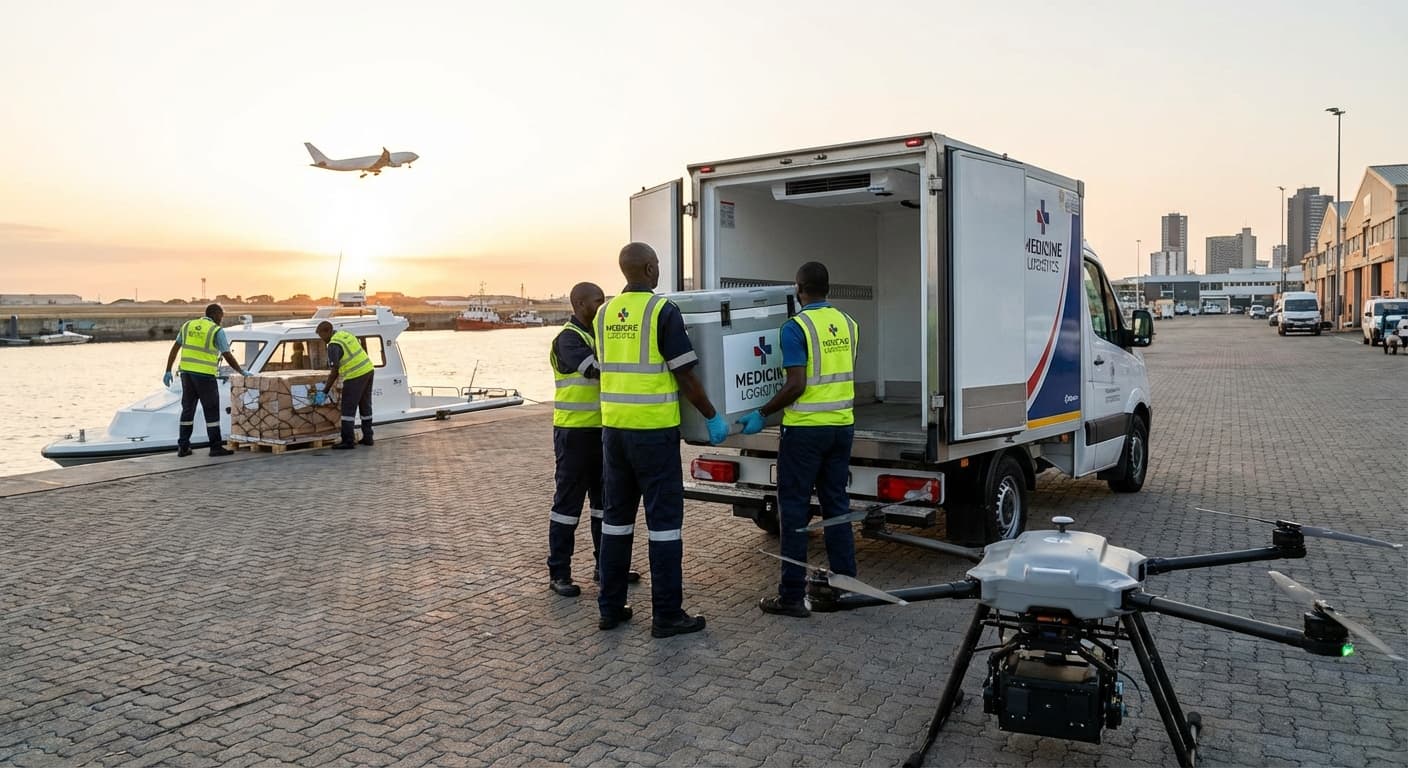
Door-to-Door Medical Logistics Coordination Service (Air/Sea/Road) in Central African Republic
Engineering Excellence & Technical Support
Door-to-Door Medical Logistics Coordination Service (Air/Sea/Road) High-standard technical execution following OEM protocols and local regulatory frameworks.
Expedited Air Cargo for Critical Medical Supplies
Leveraging strategically located airfields and a network of certified air cargo partners, we ensure rapid transit of life-saving medications, vaccines, and medical equipment to remote or hard-to-reach areas within the CAR. Our real-time tracking and temperature-controlled solutions guarantee product integrity from origin to destination.
Intermodal Sea-Road Solutions for Bulk Medical Shipments
For larger volumes of medical consumables and equipment, we orchestrate seamless sea-to-road logistics. Our expertise in navigating port procedures and coordinating with inland road carriers ensures efficient and cost-effective delivery across the CAR's challenging terrain, minimizing transit times and maximizing supply chain resilience.
Robust Road Network & Last-Mile Delivery in Volatile Regions
We deploy a dedicated fleet of specialized, GPS-equipped vehicles and trained drivers for secure and reliable road transportation. Our proactive risk assessment and contingency planning enable us to navigate complex security landscapes and challenging road conditions, guaranteeing on-time last-mile delivery of essential medical goods to clinics and health centers throughout the CAR.
What Is Door-to-door Medical Logistics Coordination Service (Air/sea/road) In Central African Republic?
Door-to-door medical logistics coordination service (Air/Sea/Road) in the Central African Republic refers to a comprehensive, integrated supply chain management solution specifically designed for the transportation of medical goods, equipment, and personnel within, into, and out of the nation. This service encompasses the end-to-end coordination of all logistical phases, including but not limited to procurement support, warehousing, customs clearance, transportation across air, sea, and road networks, last-mile delivery to healthcare facilities or individual patients, and reverse logistics for expired or waste materials. The 'door-to-door' aspect signifies a single point of accountability and management for the entire movement cycle, from the origin of the medical commodity to its final destination within the CAR. This involves intricate planning, real-time tracking, risk mitigation, and adherence to stringent regulatory frameworks governing medical supplies and pharmaceuticals in a complex operational environment.
| Service Component | Description | Relevant Modalities |
|---|---|---|
| Importation of Essential Medicines | Facilitating the secure and timely entry of vital pharmaceuticals and medical consumables into the CAR. | Air, Sea (via coastal countries with onward road transit), Road |
| Emergency Medical Supply Distribution | Rapid deployment of medical aid and equipment to disaster-stricken or conflict-affected areas. | Air (prioritized), Road |
| Vaccine Cold Chain Logistics | Maintaining the integrity of vaccine temperature requirements from point of manufacture to vaccination sites. | Air (for long-haul), Specialized Refrigerated Road Transport |
| Medical Equipment Relocation | Transporting diagnostic equipment, surgical instruments, and other essential medical devices to healthcare facilities. | Road, Air (for high-value/urgent items) |
| Humanitarian Aid Delivery | Coordinating the movement of medical supplies for NGOs and international aid organizations operating within the CAR. | Air, Road |
| Laboratory Sample Transport | Secure and timely transit of biological samples for diagnostic testing, requiring adherence to biohazard protocols. | Air, Road |
| Outbound Medical Exports | Facilitating the export of locally produced medical goods or waste for specialized treatment/disposal. | Air, Road |
Key Components of Door-to-Door Medical Logistics Coordination Service
- Procurement and Sourcing Support: Assistance in identifying and acquiring necessary medical supplies and equipment.
- Customs Brokerage and Clearance: Navigating import/export regulations and facilitating swift customs processing for medical goods.
- Warehousing and Storage: Provision of secure, temperature-controlled (if required) storage facilities for medical inventory.
- Multi-modal Transportation Management: Strategic planning and execution of movements via air (cargo aircraft, charter flights), sea (ports of entry, transshipment), and road (trucks, specialized vehicles).
- Last-Mile Delivery: Ensuring timely and secure delivery to remote or challenging-to-access healthcare points, including mobile clinics and field hospitals.
- Cold Chain Management: Maintaining the integrity of temperature-sensitive pharmaceuticals and biologicals throughout the supply chain.
- Tracking and Visibility: Real-time monitoring of shipments to provide accurate status updates and enable proactive problem-solving.
- Risk Management and Security: Implementing measures to safeguard medical cargo against theft, damage, or spoilage, particularly in volatile regions.
- Regulatory Compliance: Ensuring adherence to national and international standards for medical product handling and transportation.
- Reverse Logistics: Managing the return and disposal of expired, damaged, or hazardous medical waste.
Who Needs Door-to-door Medical Logistics Coordination Service (Air/sea/road) In Central African Republic?
The Central African Republic (CAR) presents unique challenges for medical supply chain management due to its vast, often inaccessible terrain, limited infrastructure, and ongoing humanitarian crises. A comprehensive Door-to-Door Medical Logistics Coordination Service, encompassing air, sea, and road transport, is crucial for ensuring the timely and secure delivery of essential medical goods. This service acts as a vital bridge, overcoming geographical and logistical hurdles to reach remote populations and critical healthcare facilities.
| Target Customer/Department | Primary Needs Addressed | Key Logistics Challenges in CAR Addressed |
|---|---|---|
| Government Health Ministries/Agencies | National health program supply chain, disease outbreak response, essential drug availability. | Nationwide distribution, customs clearance, last-mile delivery to regional depots. |
| International/Local NGOs | Mobile clinic supplies, community health outreach, emergency medical aid. | Access to remote villages, secure transport of sensitive medical items, coordination across multiple project sites. |
| UN Agencies (WHO, UNICEF, etc.) | Large-scale humanitarian aid, vaccination campaigns, nutritional support. | Bulk cargo management, inter-agency coordination, rapid deployment during crises. |
| Hospitals and Healthcare Facilities | Continuous availability of medicines, consumables, and equipment for patient care. | Reliable supply chain, inventory management support, access to specialized medical devices. |
| Emergency Response Teams | Rapid deployment of medical aid and personnel during emergencies. | Urgent transport of critical supplies, flexibility in routing, secure handling of life-saving items. |
| Research & Clinical Trial Organizations | Transport of biological samples, specialized equipment, and trial medications. | Temperature-controlled logistics, chain of custody, secure delivery to research sites. |
| Pharmaceutical/Medical Device Companies | Market access, product integrity, efficient distribution within the CAR. | Importation processes, regulatory compliance, distribution network establishment. |
| Mines/Industrial Operations | On-site medical facility support, worker health and safety. | Remote site delivery, tailored supply solutions for industrial settings. |
Who Needs Door-to-Door Medical Logistics Coordination Service (Air/Sea/Road) in Central African Republic?
- Government Health Ministries and Agencies: Responsible for national health programs, disease control initiatives, and the overall healthcare infrastructure. They require reliable delivery of vaccines, pharmaceuticals, medical equipment, and diagnostic tools to national and regional distribution points.
- International and Local Non-Governmental Organizations (NGOs): Operating numerous health clinics, mobile medical units, and specialized treatment centers across the CAR. They rely on coordinated logistics to deliver life-saving medicines, medical supplies, and emergency kits to the communities they serve, often in hard-to-reach areas.
- United Nations Agencies (WHO, UNICEF, WFP, UNFPA): Leading humanitarian efforts in the CAR, these agencies procure and distribute large volumes of medical supplies, nutritional supplements, and essential health commodities. Their operations demand robust and integrated logistics to ensure aid reaches those most in need.
- Hospitals and Healthcare Facilities (Public and Private): From major urban hospitals to rural health posts, all require a consistent and predictable supply of medicines, consumables, and equipment to provide basic and specialized medical care. Disruptions in supply can have severe consequences for patient health outcomes.
- Emergency Response and Disaster Relief Organizations: During outbreaks, natural disasters, or conflict-related emergencies, rapid deployment of medical personnel and supplies is paramount. A door-to-door service can expedite the delivery of emergency medical kits, surgical supplies, and specialized equipment.
- Research and Clinical Trial Organizations: Conducting vital medical research or clinical trials in the CAR will need secure and temperature-controlled transportation for biological samples, specialized equipment, and trial medications, often to remote research sites.
- Pharmaceutical and Medical Device Manufacturers/Distributors: Companies with products intended for the CAR market will require a partner to manage the complex importation and last-mile delivery of their goods, ensuring product integrity and timely market access.
- Mines and Large Industrial Operations with On-Site Clinics: These entities often have their own medical facilities and require reliable access to medical supplies for their workforce, especially in remote operational locations.
Door-to-door Medical Logistics Coordination Service (Air/sea/road) Process In Central African Republic
This document outlines the comprehensive door-to-door medical logistics coordination service for air, sea, and road transportation within the Central African Republic (CAR). The process is designed to ensure the safe, secure, and timely delivery of medical supplies, equipment, and personnel, navigating the unique logistical challenges of the region.
| Stage | Key Activities | Responsible Party | Documentation/Requirements | Key Considerations (CAR Specific) |
|---|---|---|---|---|
| Receive client request for medical logistics services. Gather details about the shipment: nature of goods (temperature-sensitive, hazardous, etc.), origin, destination, required timelines, quantity, and any special handling needs. Assess feasibility and potential challenges. | Logistics Coordination Service Provider (LCSP) | Inquiry form, detailed shipment description, urgency level, contact information. | Understanding local security situation, road conditions, potential for delays due to infrastructure or political instability, availability of specialized transport in remote areas. |
| Develop a detailed quotation including all anticipated costs (transport, handling, insurance, customs, contingency). Negotiate terms and conditions. Formalize the agreement with a Service Level Agreement (SLA). | LCSP, Client | Detailed quotation, SLA, payment terms, insurance policies. | Currency fluctuations, potential for unforeseen costs due to unpredictable events, need for flexible payment structures. |
| Develop a comprehensive transport plan (mode selection, routing, scheduling). Source and secure appropriate transport (aircraft, vessel, trucks). Arrange for packaging, labeling, and documentation compliance. Obtain necessary permits and licenses (e.g., import/export permits for medical goods). Coordinate with local partners (ground handlers, customs brokers, security personnel). Conduct risk assessment and develop contingency plans. | LCSP, Client, Local Partners | Bill of Lading/Air Waybill, packing lists, commercial invoices, certificates of origin, import/export permits, veterinary/phytosanitary certificates (if applicable), insurance certificates, emergency contact lists, risk assessment reports. | Availability and reliability of qualified ground handlers. Specific regulations for importing medical supplies. Need for secure storage facilities. Engagement with local community leaders for smooth passage in certain areas. Understanding language barriers. |
| Execute the shipment according to the plan. Monitor shipment progress in real-time. Provide regular updates to the client. Manage any in-transit issues or delays proactively. | LCSP, Transport Providers | Shipment tracking data, transit manifests, incident reports (if any). | Navigating checkpoints and potential corruption. Ensuring temperature control for sensitive items during transit. Managing driver fatigue and security on long road journeys. Communication challenges in remote areas. |
| Liaise with customs authorities at points of entry. Submit all required documentation. Facilitate inspections and overcome potential bureaucratic hurdles. Ensure compliance with all relevant national and international regulations. | LCSP, Customs Broker | All pre-shipment documentation, customs declarations, inspection certificates. | Complexity and potential for delays in customs clearance. Need for experienced local customs brokers who understand CAR regulations. Potential for informal payments and the need for strict adherence to ethical practices. |
| Coordinate the final leg of the journey to the exact delivery point. Ensure safe and secure transfer of goods to the designated recipient. Obtain signed proof of delivery. Provide on-site supervision if required. | LCSP, Local Delivery Team | Proof of Delivery (POD) signed by the recipient, delivery confirmation photos/videos, inventory check at destination. | Extremely challenging road conditions (e.g., rainy season). Security risks for the final delivery. Need for appropriate vehicles for the terrain. Ensuring the recipient has the capacity to receive and handle the goods. |
| Conduct a post-delivery review. Provide a comprehensive final report to the client, including details of the entire process, any deviations, lessons learned, and final cost reconciliation. Gather client feedback. | LCSP | Final delivery report, financial reconciliation, client feedback forms. | Documenting the success of the operation despite challenges. Identifying areas for improvement in future operations within CAR. Building long-term relationships based on transparency and reliability. |
Key Stages of the Medical Logistics Coordination Service
- Inquiry & Initial Assessment
- Quotation & Agreement
- Pre-Shipment Planning & Preparation
- Transportation & Transit Management
- Customs Clearance & Regulatory Compliance
- Last-Mile Delivery & Final Handover
- Post-Delivery & Reporting
Door-to-door Medical Logistics Coordination Service (Air/sea/road) Cost In Central African Republic
Coordinating door-to-door medical logistics, encompassing air, sea, and road transport, in the Central African Republic (CAR) is a complex undertaking. The costs involved are highly variable due to the country's challenging infrastructure, political instability, security concerns, and limited availability of specialized services. Pricing is typically determined on a case-by-case basis, taking into account numerous factors. This service involves not just the transportation of medical supplies but also the intricate planning, customs clearance, security, and last-mile delivery to ensure the integrity and timely arrival of critical shipments. The CAR's landlocked nature and extensive, often unpaved, road networks significantly impact transit times and costs, especially for road transport. Air freight is generally the fastest but most expensive option, while sea freight, which would necessitate onward road or air transport from a coastal port (e.g., Douala, Cameroon), is a longer and more complex process. The local currency, the Central African CFA franc (XAF), is used for most transactions, although USD may be preferred for larger international components of the service.
| Logistics Component | Estimated Price Range (XAF per unit/kg/km - illustrative) | Key Considerations |
|---|---|---|
| Road Freight (Local/Regional) | 1,000 - 5,000+ XAF per kg/100km | Highly dependent on road conditions, security, fuel prices, and distance. Prices can skyrocket for remote or insecure areas. |
| Air Freight (International to Bangui/Regional Airport) | 15,000 - 50,000+ XAF per kg (excluding local handling/delivery) | Fastest but most expensive. Subject to airline availability, fuel surcharges, and cargo type. |
| Sea Freight (via Douala, Cameroon) + Onward Transit | Varies significantly (container rates + onward transport) | Longest transit time. Cost includes port charges, customs in Cameroon, and then road/air freight to CAR. |
| Customs Clearance & Documentation (per shipment) | 200,000 - 1,000,000+ XAF | Can be complex and time-consuming. Exemptions for humanitarian aid need careful processing. |
| Security Escort (per day/trip) | 100,000 - 500,000+ XAF | Essential for many routes. Cost depends on the level of threat and number of personnel/vehicles. |
| Temperature-Controlled Transport (Specialized Vehicle/Container) | Additional 30% - 100% on base freight cost | Crucial for vaccines and sensitive medical supplies. Availability can be limited. |
| Warehousing & Handling (per day/pallet) | 10,000 - 50,000+ XAF | Secure, climate-controlled warehousing is often necessary. |
| Full Door-to-Door Coordination Service Fee (Percentage of Total Cost) | 15% - 30% of total logistics expenses | Covers planning, management, communication, and problem-solving. |
Key Pricing Factors for Door-to-Door Medical Logistics in CAR
- Nature of Medical Goods: Perishable items (vaccines, blood), temperature-sensitive products, or hazardous materials require specialized handling, temperature-controlled vehicles/containers, and stringent protocols, all of which increase costs.
- Volume and Weight: Larger and heavier shipments naturally incur higher transportation fees.
- Distance and Route Complexity: The longer the distance and the more challenging the terrain (e.g., remote areas, areas with poor road conditions, conflict zones), the higher the logistics cost.
- Mode of Transport: Air freight is the most expensive, followed by road, and then a combination involving sea freight (with onward transit).
- Urgency/Expedited Services: Rush shipments require prioritization and often incur premium charges.
- Customs Clearance and Duties: Navigating CAR's customs procedures can be time-consuming and involve various fees, duties, and taxes. Exemptions for humanitarian aid may be possible but require proper documentation and processing.
- Security and Risk Mitigation: Due to the security situation, armed escorts, secure warehousing, and insurance premiums are often necessary, significantly adding to the cost.
- Infrastructure and Accessibility: The availability and condition of roads, airports, and ports, as well as the accessibility of the final destination, directly impact logistics efficiency and cost.
- Specialized Equipment: Use of reefer trucks, specialized handling equipment, or specific packaging requirements will increase expenses.
- Service Provider Expertise and Overhead: Reputable logistics providers with experience in the CAR market will have higher operational costs but offer greater reliability and risk management.
- Geopolitical and Economic Stability: Fluctuations in currency exchange rates, fuel prices, and political stability can influence pricing.
- Insurance: Comprehensive insurance for the goods and transit is crucial and adds to the overall cost.
Affordable Door-to-door Medical Logistics Coordination Service (Air/sea/road) Options
Our affordable door-to-door medical logistics coordination service ensures the safe, timely, and compliant transportation of medical supplies, equipment, and specimens via air, sea, and road. We understand the critical nature of medical shipments and offer flexible, cost-effective solutions tailored to your needs. We provide comprehensive coordination, including route planning, carrier selection, customs clearance, temperature-controlled transport, real-time tracking, and risk management. Our goal is to streamline your supply chain, reduce transit times, and minimize costs while prioritizing the integrity of your sensitive cargo.
| Service Component | Standard Pricing (Example) | Bundle Discount (Example) | Cost-Saving Mechanism |
|---|---|---|---|
| Basic Coordination Fee (per shipment) | $150 | $120 (Bundle A) | Volume-based discount, streamlined process |
| Temperature-Controlled Transport Surcharge | $75/day | $60/day (Bundle A) | Pre-negotiated carrier rates, efficient route planning |
| Customs Clearance Assistance | $100 | $80 (Bundle B) | Integrated brokerage partners, reduced delays |
| Real-time Tracking & Reporting | Included | Enhanced reporting features (Bundle B) | Technology integration for efficiency |
| Air Freight Coordination (example rate) | $5/kg | Not applicable to specific per-kg rates, but included in overall bundle savings | Carrier negotiation, mode mix optimization |
| Sea Freight Coordination (example rate) | $0.50/kg | Not applicable to specific per-kg rates, but included in overall bundle savings | Carrier negotiation, mode mix optimization |
| Road Freight Coordination (example rate) | $1.50/km | Not applicable to specific per-km rates, but included in overall bundle savings | Carrier negotiation, strategic route optimization |
| Dedicated Account Management | N/A | Included (Bundle C) | Enhanced client support, proactive problem-solving |
Value Bundles & Cost-Saving Strategies
- Strategic Route Optimization: Leveraging our extensive network and data analytics to identify the most efficient and cost-effective transportation routes for your specific shipment, considering transit time, cost, and risk.
- Consolidated Shipments: Grouping multiple smaller shipments from the same or different clients going to similar destinations to reduce individual shipping costs and handling fees.
- Off-Peak Shipping Incentives: Utilizing carriers that offer discounts for shipping during non-peak hours or days, where possible, without compromising delivery timelines.
- Mode Mix Flexibility: Recommending a strategic combination of air, sea, and road transport based on urgency, volume, and budget, allowing for cost savings by using slower, more economical modes for less time-sensitive items.
- Pre-negotiated Carrier Rates: Benefiting from our strong relationships with a wide range of carriers, which allows us to secure discounted rates that are often unavailable to individual shippers.
- Volume-Based Discounts: Offering tiered pricing structures where larger volumes or more frequent shipments result in lower per-unit costs.
- Value-Added Services Bundling: Combining essential coordination services with optional add-ons like specialized packaging, insurance, or dedicated support into pre-defined bundles for predictable budgeting.
- Technology Integration for Efficiency: Implementing advanced tracking and management software that minimizes manual intervention, reduces errors, and provides real-time visibility, thus saving on operational overhead.
- Customs Brokerage Integration: Streamlining customs clearance processes by working with integrated brokerage partners, reducing delays and potential fines.
- Risk Mitigation & Insurance Optimization: Proactively identifying potential risks and offering optimized insurance coverage options that balance protection with cost-effectiveness.
Verified Providers In Central African Republic
In the Central African Republic (CAR), ensuring access to reliable and ethical healthcare providers is paramount. Franance Health stands out as a leading organization committed to upholding the highest standards of medical practice. Their rigorous credentialing process and dedication to patient well-being make them a trusted partner for individuals seeking quality healthcare within the CAR.
| Franance Health Credentialing Aspect | Significance for Patients in CAR |
|---|---|
| Verification of Medical Licenses and Qualifications | Ensures providers possess the necessary legal and educational background to practice. |
| Professional Experience Review | Confirms practical skills and a track record of effective patient care. |
| Background Checks (Criminal and Ethical) | Safeguards against individuals with a history of misconduct or harm. |
| Adherence to Ethical Guidelines | Guarantees respectful, confidential, and patient-centered treatment. |
| Commitment to Patient Safety Protocols | Reduces the risk of medical errors and promotes a secure healthcare environment. |
| Ongoing Performance Monitoring | Ensures continued quality of care and identification of any potential issues. |
| Recognition as a 'Verified Provider' | Provides a clear and trustworthy indicator of a provider's legitimacy and quality. |
Why Franance Health Credentials Matter in the Central African Republic:
- Rigorous Vetting Process: Franance Health employs a comprehensive vetting system for all affiliated providers. This includes verifying medical licenses, educational qualifications, professional experience, and criminal background checks. This thoroughness minimizes the risk of encountering unqualified or unethical practitioners.
- Commitment to Ethical Standards: Beyond technical proficiency, Franance Health emphasizes ethical conduct. Providers are expected to adhere to a strict code of ethics, prioritizing patient confidentiality, informed consent, and non-discrimination.
- Focus on Patient Safety and Quality of Care: The credentialing process is designed to identify providers who demonstrate a consistent commitment to patient safety and delivering high-quality medical services. This often involves evaluating past performance and adherence to best practices.
- Transparency and Accountability: Franance Health champions transparency. Patients can have confidence that providers associated with their network have been thoroughly reviewed and are held accountable for their professional conduct.
- Access to Trusted Medical Professionals: By partnering with Franance Health, individuals gain access to a network of healthcare professionals who have been pre-screened and verified, offering peace of mind and reducing the burden of independent research.
- Enhanced Patient Trust: The 'Verified Provider' status awarded by Franance Health serves as a powerful indicator of trust and reliability, empowering patients to make informed decisions about their healthcare.
Scope Of Work For Door-to-door Medical Logistics Coordination Service (Air/sea/road)
This Scope of Work (SOW) outlines the requirements for a comprehensive Door-to-Door Medical Logistics Coordination Service, encompassing air, sea, and road transportation. The service aims to ensure the safe, secure, and timely delivery of medical supplies, equipment, and biological samples from origin to destination, adhering to all regulatory and quality standards. This SOW details the technical deliverables and standard specifications expected from the service provider.
| Technical Deliverable | Description | Standard Specification / Requirement | Verification Method |
|---|---|---|---|
| Shipment Planning & Route Optimization Report | Detailed plan outlining the proposed transportation route, modes, transit times, and potential risks for each shipment. | Includes carrier selection criteria, route mapping software utilization, and justification for mode choices. Compliance with IATA, IMO, and ADR regulations for relevant cargo. | Review of submitted reports against pre-defined shipment requirements and best practices. |
| Temperature Monitoring & Data Log Report | Continuous recording and reporting of temperature data for temperature-sensitive shipments. | Use of validated temperature data loggers. Data to be accurate within +/- 0.5°C of actual temperature. Temperature excursion alerts to be configured for critical thresholds. Data retention for at least 2 years. | Independent review of data logs and temperature charts. Comparison of logged data with product storage requirements. |
| Real-time Shipment Tracking Portal/Report | Access to a system or regular reports providing live updates on shipment location, status, and estimated time of arrival (ETA). | Updates to be provided at minimum every 4 hours for air/sea, and every 2 hours for road. Portal to be accessible 24/7. Secure login credentials for authorized personnel. | Demonstration of tracking portal functionality. Periodic audit of tracking data accuracy. |
| Customs Clearance Documentation Package | All required documentation for smooth customs clearance at origin and destination. | Includes commercial invoices, packing lists, certificates of origin, import/export permits, safety data sheets (SDS) for hazardous materials, and any specific regulatory declarations. All documents to be accurate and compliant with local and international regulations. | Review of submitted documentation for completeness and accuracy prior to shipment dispatch and upon arrival. |
| Contingency Plan and Incident Report | A documented plan outlining procedures to address unexpected events (e.g., delays, damage, loss) and a report detailing any incidents that occur during transit. | Contingency plan to include alternative routing, communication protocols, and claims procedures. Incident reports to detail the cause, impact, and corrective actions taken. Reporting of incidents within 24 hours of occurrence. | Review of contingency plan prior to commencement of service. Post-incident analysis of incident reports. |
| Proof of Delivery (POD) with Condition Confirmation | Confirmation of successful delivery to the designated recipient, including verification of the condition of the cargo. | Signed POD form (physical or electronic) from the recipient. The POD should include a field for the recipient to note any damage or discrepancies. Photographs of the delivered shipment and its condition where applicable. | Verification of signed PODs. Cross-referencing with recipient feedback and any reported discrepancies. |
| Compliance Audit Report | Periodic reports demonstrating adherence to all relevant industry standards and regulations. | Includes audits for Good Distribution Practices (GDP), IATA Dangerous Goods Regulations (DGR), IMDG Code, and any other applicable medical logistics standards. Evidence of personnel training on these regulations. | Review of audit reports and supporting documentation. On-site inspections (if deemed necessary). |
| Final Shipment Summary Report | A comprehensive report summarizing the entire logistics process for a completed shipment or a period. | Includes total transit time, cost breakdown, any deviations from the plan, lessons learned, and recommendations for future shipments. Report to be delivered within 5 business days of shipment completion. | Review of summary reports for completeness and clarity. |
Key Service Components
- End-to-End Coordination: Managing all aspects of the logistics chain, from pickup at the sender's facility to final delivery at the recipient's location.
- Mode Selection Optimization: Recommending and arranging the most suitable transportation modes (air, sea, road) based on urgency, cost, cargo type, and destination.
- Temperature-Controlled Logistics: Ensuring specialized handling and transportation for temperature-sensitive medical items (e.g., vaccines, pharmaceuticals, biological samples).
- Specialized Handling: Providing expertise in handling fragile, hazardous, or high-value medical equipment and supplies.
- Customs Clearance & Documentation: Managing all necessary customs procedures, import/export documentation, and regulatory compliance.
- Real-time Tracking & Visibility: Offering constant monitoring of shipment status and location throughout the entire transit.
- Risk Management & Contingency Planning: Developing and implementing strategies to mitigate potential risks and address unforeseen disruptions.
- Secure Storage & Warehousing (if required): Facilitating temporary storage and warehousing solutions at transit points.
- Emergency Response Logistics: Providing rapid response for urgent medical supply needs during crises or emergencies.
Service Level Agreement For Door-to-door Medical Logistics Coordination Service (Air/sea/road)
This Service Level Agreement (SLA) outlines the performance standards and guarantees for the Door-to-Door Medical Logistics Coordination Service, encompassing air, sea, and road transportation. This SLA defines the response times for critical incidents and the uptime guarantees for the coordination platform and support services.
| Service Component | Response Time (Critical Incident) | Uptime Guarantee |
|---|---|---|
| 24/7 Operations Control Center Availability | 30 minutes for initial acknowledgement and engagement | 99.9% Monthly Uptime |
| Carrier Selection & Booking Confirmation (Expedited/Urgent) | 1 hour for initial confirmation of carrier availability | N/A (Service is incident-driven) |
| Shipment Tracking Updates (Critical/High-Value) | 15 minutes for scheduled update provision or upon request | N/A (Service is incident-driven) |
| Proactive Anomaly Detection & Notification | 15 minutes from detection of a potential disruption (e.g., weather, customs delay) | N/A (Service is incident-driven) |
| Customer Support (General Inquiries) | 4 business hours for initial response | 99.5% Monthly Uptime |
| Online Coordination Platform Availability | N/A | 99.9% Monthly Uptime |
Scope of Service
- Coordination of end-to-end medical logistics, including but not limited to pharmaceuticals, biological samples, medical equipment, and emergency medical supplies.
- Selection and management of qualified air, sea, and road carriers.
- Real-time tracking and monitoring of shipments.
- Proactive incident management and issue resolution.
- Communication and reporting to stakeholders.
Frequently Asked Questions

Ready when you are
Let's scope your Door-to-Door Medical Logistics Coordination Service (Air/Sea/Road) in Central African Republic project in Central African Republic.

Scaling healthcare logistics and technical systems across the entire continent.