
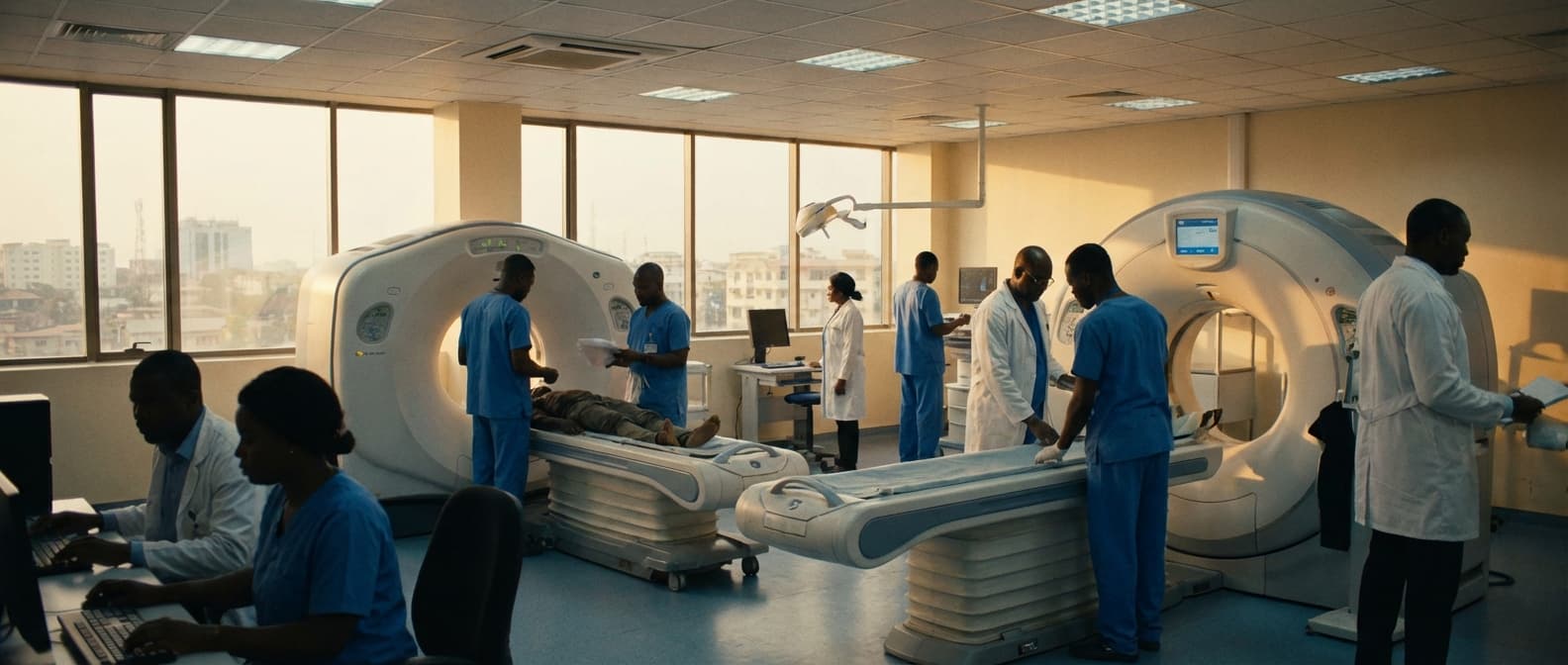
Imaging Acceptance Testing & QA in Central African Republic
Engineering Excellence & Technical Support
Commissioning and periodic QA for CT/MRI/X‑ray/US/Mammo. High-standard technical execution following OEM protocols and local regulatory frameworks.
Ensuring Diagnostic Accuracy with Rigorous Imaging QA
Implementing and enforcing stringent quality assurance protocols for all medical imaging modalities (X-ray, Ultrasound, CT, MRI) across Central African Republic healthcare facilities. This includes comprehensive calibration, image quality assessments (resolution, contrast, noise), and regular equipment performance verifications to guarantee diagnostic accuracy and reliable patient care, even in resource-limited settings.
Optimizing Image Workflow & Data Integrity
Developing and deploying robust acceptance testing procedures for new imaging equipment and Picture Archiving and Communication Systems (PACS) in the Central African Republic. This focuses on verifying seamless image acquisition, accurate data storage, secure retrieval, and adherence to relevant imaging standards (e.g., DICOM), ensuring efficient clinical workflows and the integrity of patient imaging data for improved medical decision-making.
Empowering Local Technicians through Specialized Training
Designing and delivering targeted training programs for radiology technologists and biomedical engineers in the Central African Republic on advanced imaging acceptance testing methodologies and routine QA procedures. This hands-on education fosters local capacity building, enabling self-sufficient and sustainable quality management of imaging equipment, ultimately enhancing healthcare delivery across the nation.
What Is Imaging Acceptance Testing & Qa In Central African Republic?
Imaging Acceptance Testing (IAT) and Quality Assurance (QA) in the Central African Republic refers to a systematic process of verifying and validating that medical imaging equipment and systems meet predefined specifications, regulatory requirements, and operational performance standards prior to deployment or after significant maintenance. This service ensures that acquired images are of diagnostic quality, the equipment functions reliably and safely, and that associated workflows are efficient and accurate within the specific context of the Central African Republic's healthcare infrastructure and challenges. IAT/QA is crucial for patient safety, accurate diagnosis, effective treatment planning, and the optimal utilization of scarce healthcare resources.
| Who Needs Imaging Acceptance Testing & QA? | Typical Use Cases | ||||
|---|---|---|---|---|---|
| Healthcare Facilities: Hospitals (public and private), clinics, diagnostic imaging centers, and specialized medical institutions in the Central African Republic acquiring new imaging equipment or undergoing major upgrades. | Procurement Processes: Government health ministries, NGOs, and international aid organizations involved in the procurement and deployment of medical imaging equipment to public health facilities. | Equipment Manufacturers and Vendors: To ensure their products meet the rigorous demands and environmental conditions of the target market. | Service Providers: Independent service organizations contracted for installation, maintenance, and calibration of imaging equipment. | Regulatory Bodies (if established): For compliance verification and quality oversight. | |
| New Equipment Installation: Post-installation verification of all imaging modalities (e.g., digital radiography, CT scanners, ultrasound machines, mobile X-ray units) before clinical use. | Major Equipment Upgrades or Refurbishments: Re-validation of performance and safety after significant hardware or software modifications. | Routine QA Programs: Periodic checks (e.g., annually or semi-annually) to ensure ongoing performance and image quality, particularly crucial in resource-limited settings where regular manufacturer maintenance may be infrequent. | Troubleshooting and Performance Degradation: When image quality issues or system malfunctions are reported, IAT/QA principles are applied to diagnose and rectify the problem. | Cross-Border Equipment Relocation: Verification of equipment performance after being moved from one facility to another, especially if conditions differ. | Emergency Response and Humanitarian Aid: Rapid deployment and verification of imaging equipment in temporary or field hospitals during health crises or natural disasters. |
Key Components of Imaging Acceptance Testing & QA
- Equipment Performance Verification: Assessing fundamental imaging parameters such as spatial resolution, contrast resolution, signal-to-noise ratio (SNR), uniformity, linearity, and artifact assessment for modalities like X-ray, CT, MRI, Ultrasound, and Mammography.
- Image Quality Assessment: Evaluating the diagnostic acceptability of acquired images under various clinical scenarios, considering factors specific to the local patient population and disease prevalence.
- Dose Measurement and Optimization (for ionizing radiation modalities): Verifying radiation output, performing patient-equivalent dose measurements, and ensuring compliance with established radiation protection principles and any local guidelines.
- System Integration and Workflow Testing: Confirming the seamless integration of imaging devices with Picture Archiving and Communication Systems (PACS), Electronic Health Records (EHR), and other ancillary systems, including testing data transfer, archiving, retrieval, and reporting functionalities.
- Safety and Electrical Testing: Performing electrical safety checks to ensure compliance with international and local safety standards, preventing hazards to patients and staff.
- User Interface and Operability Testing: Evaluating the ease of use, clarity of interface, and efficiency of operation for clinical personnel.
- Software and Firmware Validation: Verifying the correct functionality of embedded software, user interfaces, and post-processing applications.
- Documentation Review: Ensuring that all relevant technical manuals, service records, and operational procedures are available and accurate.
- Training Verification: Confirming that users have received adequate training for the operation and basic maintenance of the equipment.
Who Needs Imaging Acceptance Testing & Qa In Central African Republic?
Imaging Acceptance Testing and Quality Assurance (QA) are crucial for ensuring the reliability, accuracy, and efficiency of medical imaging systems. In the Central African Republic (CAR), where healthcare infrastructure can be challenged by limited resources and evolving technology, robust testing and QA are even more vital. These processes confirm that imaging equipment functions as intended, produces high-quality diagnostic images, and meets the specific needs of the healthcare facilities and their patients.
| Target Customer/Department | Specific Needs & Benefits of Imaging Acceptance Testing & QA |
|---|---|
| Public Hospitals (e.g., Hôpital Général de Bangui) | Ensuring the correct functioning of essential imaging equipment (X-ray, Ultrasound) for a high patient volume. Verifying image quality for accurate diagnosis, reducing the need for repeat scans, and optimizing the use of limited technical staff. Compliance with national health standards. |
| Private Hospitals & Clinics | Maintaining high standards of diagnostic accuracy for a competitive market. Ensuring patient safety and satisfaction. Validating the performance of newer or specialized imaging technologies to attract and retain patients. Minimizing downtime of expensive equipment. |
| Diagnostic Imaging Centers | Verifying the accuracy and consistency of images across various modalities (CT, MRI, Mammography). Ensuring proper calibration and radiation safety protocols. Providing reliable reports to referring physicians and patients. |
| Referral Centers & Specialized Units | Confirming the precise functionality of advanced imaging equipment used for complex diagnoses and treatment planning. Ensuring interoperability with Picture Archiving and Communication Systems (PACS) and Electronic Health Records (EHRs) if implemented. |
| Ministry of Health (MOH) & National Health Agencies | Establishing and enforcing national standards for medical imaging equipment. Overseeing the procurement and deployment of new technologies. Ensuring public health safety through proper equipment functioning and radiation protection. Supporting evidence-based healthcare planning. |
| NGOs Providing Healthcare Services | Verifying that donated or procured imaging equipment meets the needs of target populations and operates effectively in often remote or resource-constrained environments. Ensuring ethical and safe use of technology. Maximizing the impact of aid by ensuring equipment reliability. |
| Radiology Department | Confirming image quality, artifact reduction, and correct interpretation parameters. Validating dose levels for radiation-producing equipment. Ensuring proper workflow and efficiency in image acquisition and processing. |
| Medical Physics Department (if present) | Crucial for ensuring radiation safety, equipment calibration, and performance verification according to established protocols. QA is a core responsibility for medical physicists. |
| IT & Biomedical Engineering Departments | Verifying network connectivity, data integrity, and proper integration with PACS/RIS/EHR systems. Ensuring that equipment maintenance and repair processes are supported by reliable performance data. |
Target Customers & Departments for Imaging Acceptance Testing & QA in CAR
- Hospitals (Public & Private)
- Clinics & Health Centers
- Diagnostic Imaging Centers
- Referral Centers
- Government Health Ministries & Agencies
- Non-Governmental Organizations (NGOs) involved in healthcare
- Research Institutions (if applicable)
Imaging Acceptance Testing & Qa Process In Central African Republic
The Imaging Acceptance Testing & QA Process in the Central African Republic (CAR) is a structured workflow designed to ensure that imaging systems (e.g., X-ray machines, CT scanners, MRI machines) function correctly, meet established standards, and are safe for patient use. This process is crucial for healthcare providers, equipment vendors, and regulatory bodies. The workflow typically begins with an initial inquiry or purchase order and culminates in the successful execution of acceptance tests and the issuance of a quality assurance (QA) certificate. Given the context of the CAR, considerations for resource availability, training, and local technical expertise are paramount throughout the process. This workflow ensures that medical imaging equipment is deployed and maintained effectively to support healthcare delivery.
| Stage | Description | Key Activities | Responsible Parties | Considerations for CAR |
|---|---|---|---|---|
| Initial identification of need for imaging equipment and defining specific requirements. | Needs assessment, budget allocation, defining technical specifications (e.g., modality, performance). | Healthcare Facilities, Ministry of Health, Funding Agencies | Prioritize essential imaging needs based on public health priorities. Understand existing infrastructure limitations (power, space). |
| Identifying potential suppliers and evaluating their offerings. | Request for Proposals (RFPs), technical and financial evaluation of bids, vendor demonstrations. | Procurement Department, Technical Committee, Healthcare Facilities | Engage reputable vendors with experience in challenging environments. Verify references and certifications. |
| Formalizing the agreement between the buyer and the vendor. | Contract review, negotiation of terms (warranty, training, maintenance), issuing Purchase Order (PO). | Legal Department, Finance Department, Ministry of Health, Vendor | Ensure comprehensive warranty and service agreements are clearly defined. Include provisions for local training and spare parts. |
| Evaluating the proposed installation site to ensure readiness for the equipment. | Assessing power supply, HVAC, radiation shielding (if applicable), room dimensions, network connectivity. | Vendor's technical team, facility engineers, appointed QA personnel | Verify the stability and availability of electrical power. Assess environmental conditions (temperature, humidity). Plan for any necessary infrastructure upgrades. |
| The physical transport and setup of the imaging system. | Logistics and customs clearance, unpacking, assembly, connection to power and network. | Vendor's installation team, logistics providers, facility staff | Secure transportation to minimize damage. Ensure proper customs procedures are followed to avoid delays and costs. |
| Initial checks by the vendor to confirm basic functionality and calibration. | System startup, self-tests, basic image acquisition and quality checks by vendor's engineers. | Vendor's technical team | Ensure vendor provides comprehensive documentation of these tests. Witnessing these tests is highly recommended. |
| Formal testing by an independent third party or trained internal QA personnel to verify compliance with specifications and safety standards. | Performance testing (resolution, contrast, noise), image quality assessment using phantoms, safety checks (radiation levels, electrical safety), protocol verification. | Independent QA specialist, Ministry of Health QA team, trained facility technicians | Utilize internationally recognized testing protocols. Engage or train local QA personnel where possible to build capacity. Access to calibrated test equipment is crucial. |
| Addressing any issues or deviations found during acceptance testing. | Documenting defects, vendor investigation and repair, re-testing of corrected issues. | Vendor's technical team, QA specialist, facility management | Establish a clear timeline for defect resolution. Ensure thorough re-testing to confirm all issues are resolved. |
| Formal sign-off on the system after successful testing and defect resolution. | Review of test reports, signing of acceptance certificate, handover of user manuals and training materials. | Healthcare Facility Management, Ministry of Health, Vendor, QA Specialist | Ensure all documentation is complete and in an accessible format. Confirm adequate training has been provided to local staff. |
| Regular checks and maintenance to ensure continued optimal performance and safety. | Scheduled preventative maintenance, periodic QA checks, repair and calibration, staff competency assessment. | Facility maintenance team, vendor service engineers, Ministry of Health oversight | Develop a sustainable maintenance plan. Secure a reliable supply of spare parts. Foster local technical skills for routine maintenance and troubleshooting. |
Imaging Acceptance Testing & QA Process Workflow in CAR
- Inquiry & Requirements Gathering
- Vendor Selection & Proposal Submission
- Contract Negotiation & Purchase Order
- Pre-Installation Site Assessment
- Equipment Delivery & Installation
- Pre-Acceptance Testing (Vendor)
- Acceptance Testing (Independent QA)
- Defect Identification & Rectification
- Final Acceptance & Handover
- Ongoing QA & Maintenance
Imaging Acceptance Testing & Qa Cost In Central African Republic
Imaging Acceptance Testing & Quality Assurance (QA) costs in the Central African Republic (CAR) are influenced by several factors, making it challenging to provide definitive, universally applicable price ranges without specific project details. However, an understanding of these contributing elements can help in estimating potential expenditures. The CAR presents unique logistical, infrastructural, and resource challenges that directly impact service pricing. Factors such as the complexity of the imaging equipment, the required testing protocols, the geographic location of the deployment within CAR, the availability of qualified local personnel, and the overall project timeline all play a significant role. Given the developing nature of the infrastructure and specialized technical services in the CAR, costs can be higher compared to more developed regions due to increased travel expenses, potential need for imported expertise, and the reliance on generators or limited grid power for operations. The local currency, the Central African CFA franc (XAF), is used, and pricing will fluctuate based on prevailing exchange rates and local inflation. It is crucial to engage with local service providers or international companies with experience in the region to obtain accurate quotes.
| Service Component | Estimated Cost Range (XAF per unit/day) | Notes |
|---|---|---|
| Basic Imaging Equipment (e.g., X-ray, Ultrasound) - Acceptance Testing & QA | 150,000 - 500,000 XAF | Includes standard functional checks, calibration, and basic performance verification. May involve local technicians with some supervision. Higher end for more complex units or extended testing. |
| Advanced Imaging Equipment (e.g., CT, MRI) - Acceptance Testing & QA | 500,000 - 2,000,000+ XAF | Requires specialized engineers, advanced diagnostic tools, and potentially longer testing periods. Costs can escalate significantly if expatriate expertise is required or if site preparation is extensive. |
| Daily Rate for Specialized Technician/Engineer (Local) | 50,000 - 150,000 XAF | Varies based on experience and specific expertise. May require additional per diem and travel allowances. |
| Daily Rate for Specialized Technician/Engineer (Expatriate) | 200,000 - 500,000+ XAF | Includes salary, accommodation, per diem, travel, and often higher insurance costs. This is a significant cost driver. |
| Travel & Accommodation (per person, per day) | 30,000 - 100,000 XAF | Highly dependent on the location within CAR and the mode of transport. Remote areas will be at the higher end. |
| Logistics & Equipment Transport | Variable (can be significant) | Especially for remote sites or specialized testing equipment. May involve air freight or difficult ground transport. |
| Consumables & Calibration Materials | 20,000 - 100,000 XAF | Depending on the specific tests and equipment requirements. |
| Project Management & Reporting | 10-20% of total service cost | Covers planning, coordination, and documentation. |
Key Pricing Factors for Imaging Acceptance Testing & QA in CAR:
- Equipment Complexity and Type: Advanced medical imaging equipment (MRI, CT scanners, PET scanners) requiring specialized diagnostic tools and expertise will naturally incur higher testing costs than simpler equipment.
- Scope of Testing: The depth and breadth of acceptance testing, including functional tests, calibration, performance verification, and safety assessments, directly influence the time and resources required.
- Number of Units: Testing multiple imaging units will increase overall costs, though per-unit pricing might decrease with volume.
- Location and Accessibility: Deployments in remote or difficult-to-access areas within CAR will significantly increase travel, accommodation, and logistical expenses for testing teams.
- Availability of Local Expertise: The scarcity of highly skilled local technicians for specialized imaging equipment may necessitate the engagement of expatriate personnel, driving up costs considerably.
- Duration of Testing: Longer testing periods due to complex procedures, site issues, or repeated validation will increase labor and operational costs.
- Required Certifications and Documentation: Specific regulatory or client-mandated certifications and the associated documentation requirements can add to the testing burden and cost.
- Infrastructure Reliability: The need for backup power (generators) and stable internet connectivity for remote support or data transfer can add to operational costs.
- Service Provider Overhead: Local and international service providers will factor in their operational expenses, including insurance, administrative costs, and profit margins.
- Currency Exchange Rate Fluctuations: The XAF's stability relative to major currencies can influence the cost of imported parts, specialized tools, or services paid for in foreign currency.
Affordable Imaging Acceptance Testing & Qa Options
Acceptance Testing and Quality Assurance (QA) for imaging systems are crucial for ensuring performance, compliance, and patient safety. However, the cost can be a significant barrier, especially for smaller practices or those on tight budgets. This document outlines affordable imaging acceptance testing and QA options, focusing on value bundles and cost-saving strategies.
| Value Bundle/Strategy | Description | Cost-Saving Potential | Considerations |
|---|---|---|---|
| Basic Acceptance Testing Package | Includes essential performance tests (e.g., image quality, dose verification, calibration) for a single modality during initial installation. | Lower upfront cost compared to comprehensive packages. Reduces the need for multiple vendor visits. | May not cover ongoing QA or all regulatory requirements. Need to assess if it meets full compliance needs. |
| Comprehensive QA Subscription | A recurring service contract that includes periodic routine QA tests, calibration, and sometimes remote monitoring for multiple modalities. | Spreads costs over time, predictable budgeting. Often includes discounts for bundled services across modalities. | Requires a longer-term commitment. Ensure the provider's service scope aligns with your needs and regulatory mandates. |
| Internal Staff Training & Oversight | Training designated technologists to perform specific, pre-defined QA tasks (e.g., visual inspections, basic phantom measurements) under the supervision of an external medical physicist. | Significantly reduces the frequency of expensive on-site physicist visits. Empowers staff and improves turnaround time for minor checks. | Requires initial investment in training. Strict protocols and physicist oversight are crucial for accuracy and compliance. |
| Remote QA Monitoring & Data Management | Utilizing software solutions that can remotely collect and analyze QA data from imaging equipment, with periodic on-site validation by a physicist. | Reduces travel costs for physicists. Enables continuous monitoring and early detection of issues. | Requires initial investment in software. Internet connectivity and data security are critical. Not a complete replacement for all on-site testing. |
| Modality-Specific Bundles | Packages tailored to the specific needs of a single imaging modality, often including both acceptance and routine QA components. | Can be more cost-effective than a general package if you primarily use one type of imaging. Streamlines testing for specific equipment. | May not be suitable if you have a diverse range of imaging modalities. |
| Partnership with Third-Party QA Providers | Collaborating with specialized companies that offer a full suite of QA services at competitive rates. | Leverages expert knowledge and economies of scale. Often more affordable than in-house QA programs for smaller facilities. | Thoroughly vet providers for accreditation, experience, and responsiveness. Ensure contract clarity and understanding of service level agreements. |
Key Considerations for Affordable Imaging QA
- Defining Scope: Clearly identify the essential tests required for your specific imaging modality (X-ray, CT, MRI, Ultrasound, etc.) and regulatory compliance. Avoid over-testing.
- Leveraging Internal Resources: Empower trained internal staff to perform routine QA checks where appropriate, under the guidance of a qualified physicist.
- Bundled Services: Explore service providers that offer comprehensive QA packages covering multiple tests or modalities, often at a discounted rate.
- Remote QA/Monitoring: Investigate solutions that allow for remote data collection and analysis, reducing the need for on-site physicist visits for every test.
- Phased Implementation: If budget is extremely limited, prioritize critical tests and implement a phased approach to full QA coverage over time.
- Understanding Regulatory Requirements: Be aware of the specific QA requirements mandated by regulatory bodies (e.g., ACR, Joint Commission, state health departments) to ensure compliance without unnecessary expenditure.
- Negotiating Contracts: Don't hesitate to negotiate pricing with third-party QA providers, especially for long-term contracts or multi-site agreements.
Verified Providers In Central African Republic
In the Central African Republic, accessing reliable and verified healthcare providers is paramount, especially when considering specialized services. Franance Health stands out as a leading entity, offering a robust network of credentialed professionals. Their commitment to rigorous vetting processes ensures that all listed providers meet stringent quality and ethical standards. This dedication to verification not only builds trust but also guarantees that patients receive the highest caliber of medical care available in the region. Understanding the importance of expertise, Franance Health meticulously checks credentials, certifications, and professional histories, making them the most dependable choice for health services.
| Provider Type | Key Credentials Verified | Franance Health Assurance |
|---|---|---|
| General Practitioners | Medical Degree (MD/DO), National Medical License, Board Certification (if applicable) | Verified qualifications and good standing with medical boards. |
| Specialists (e.g., Surgeons, Cardiologists, Pediatricians) | Medical Degree (MD/DO), National Medical License, Specialty Board Certification, Fellowship Training (if applicable) | Confirmed expertise in their specific medical field and advanced training. |
| Nurses | Nursing Degree (BSN, RN), National Nursing License, Specializations (e.g., CRNA, NP) | Certified nursing professionals with relevant experience and licensure. |
| Pharmacists | Pharmacy Degree (PharmD), National Pharmacy License, Residency/Specialty Training (if applicable) | Licensed pharmacists ensuring safe and accurate medication dispensing. |
| Dentists | Dental Degree (DDS/DMD), National Dental License, Specializations (e.g., Orthodontics, Oral Surgery) | Qualified dental professionals committed to oral health. |
Why Franance Health is the Best Choice:
- Rigorous Vetting Process: Franance Health employs a multi-stage verification process for all its healthcare providers.
- Credential and Certification Checks: Ensures all practitioners possess valid and up-to-date medical licenses and certifications.
- Professional History Review: Thoroughly examines past performance, ethical conduct, and patient feedback.
- Commitment to Quality: Dedicated to maintaining the highest standards of medical practice and patient care.
- Trustworthy Network: Patients can rely on the integrity and expertise of Franance Health's listed providers.
Scope Of Work For Imaging Acceptance Testing & Qa
This Scope of Work (SOW) outlines the requirements for comprehensive Imaging Acceptance Testing (IAT) and Quality Assurance (QA) to ensure that the developed imaging solution meets all specified functional, performance, and usability requirements before deployment. The testing will cover various aspects including image acquisition, processing, display, storage, retrieval, and interoperability. This document details the technical deliverables expected and the standard specifications to be adhered to throughout the testing process.
| Testing Phase | Description | Key Activities | Technical Deliverables | Standard Specifications / References |
|---|---|---|---|---|
| Verifies individual functions and features of the imaging system. | Test cases for image acquisition, display, manipulation (e.g., zoom, pan, window/level), annotation, measurement, and basic image processing algorithms. | Functional Test Reports (including passed/failed test cases, bug reports). | System Requirements Specification (SRS), Use Case Diagrams, Functional Design Document (FDD). |
| Evaluates system responsiveness, throughput, and scalability. | Load testing (simulating concurrent users), stress testing (exceeding normal operating loads), latency testing for image loading and retrieval. | Performance Test Reports (response times, throughput metrics, resource utilization). | Performance Requirements Specification, Industry benchmarks (e.g., DICOM transfer times). |
| Ensures the imaging system works correctly with other systems. | Testing interfaces with HIS, PACS, EHR for patient demographics, order management, image sending/receiving, and reporting. HL7 and DICOM conformance testing. | Integration Test Reports, Interface Conformance Reports. | HL7 Standard Specification, DICOM Part 10 (Standardized Representation of Medical Images), DICOM Conformance Statements of integrated systems. |
| Assesses the ease of use and intuitiveness of the user interface. | User acceptance testing (UAT) with target end-users (radiologists, technicians), feedback collection on workflow efficiency and UI design. | Usability Study Report, User Feedback Summaries. | Human-Computer Interaction (HCI) principles, UI Style Guides. |
| Verifies that the system protects sensitive patient data. | Access control testing, data encryption validation, audit trail verification, vulnerability assessment. | Security Test Report, Audit Log Review. | HIPAA Security Rule, relevant ISO 27001 standards, institutional security policies. |
| Ensures that new changes or bug fixes haven't negatively impacted existing functionality. | Re-execution of previously passed test cases after code changes or bug fixes. | Regression Test Reports. | Existing Test Cases Suite. |
| Validates the accuracy and completeness of user manuals and technical documentation. | Review of installation guides, user manuals, administration guides, and API documentation. | Documentation Review Report. | Project documentation standards, relevant industry best practices. |
Key Objectives of Imaging Acceptance Testing & QA
- Verify that the imaging system functions as per the defined requirements and specifications.
- Ensure the accuracy, integrity, and quality of all acquired and processed images.
- Validate system performance under expected load and varying network conditions.
- Confirm seamless integration with existing hospital information systems (HIS), Picture Archiving and Communication Systems (PACS), and Electronic Health Records (EHR).
- Assess user interface (UI) and user experience (UX) for intuitiveness and efficiency.
- Identify and resolve defects to minimize post-deployment issues.
- Confirm compliance with relevant regulatory standards and security protocols.
Service Level Agreement For Imaging Acceptance Testing & Qa
This Service Level Agreement (SLA) outlines the performance standards and guarantees for Imaging Acceptance Testing & Quality Assurance (QA) services provided by [Provider Name] to [Client Name]. This agreement covers response times for critical issues and uptime guarantees for the testing environment.
| Issue Priority | Description | Response Time Guarantee (Business Hours) | Uptime Guarantee (Testing Environment) |
|---|---|---|---|
| Critical (P1) | Complete system outage, significant data loss, critical workflow blockage impacting patient care or core business operations. | 1 Hour | 99.9% |
| High (P2) | Major functionality failure, significant performance degradation impacting multiple users or workflows. | 2 Business Hours | 99.8% |
| Medium (P3) | Minor functionality failure, performance issues impacting a single user or specific workflow, non-critical errors. | 4 Business Hours | 99.5% |
| Low (P4) | Cosmetic issues, enhancement requests, minor bugs with no significant impact on functionality. | 8 Business Hours (next business day) | 99.0% |
Key Service Components
- Imaging Acceptance Testing: The process of verifying that imaging systems and workflows meet predefined functional and performance requirements.
- Quality Assurance (QA): Ongoing processes and activities to ensure the reliability, accuracy, and usability of imaging solutions.
- Testing Environment: The dedicated infrastructure, software, and tools used to conduct acceptance testing and QA.
- Issue Prioritization: A system for categorizing and prioritizing reported issues based on their impact on operations.
- Response Time: The maximum time allowed for the provider to acknowledge and begin addressing a reported issue.
- Resolution Time: The target time for resolving a reported issue, with varying targets based on priority.
Frequently Asked Questions

Ready when you are
Let's scope your Imaging Acceptance Testing & QA in Central African Republic project in Central African Republic.

Scaling healthcare logistics and technical systems across the entire continent.