
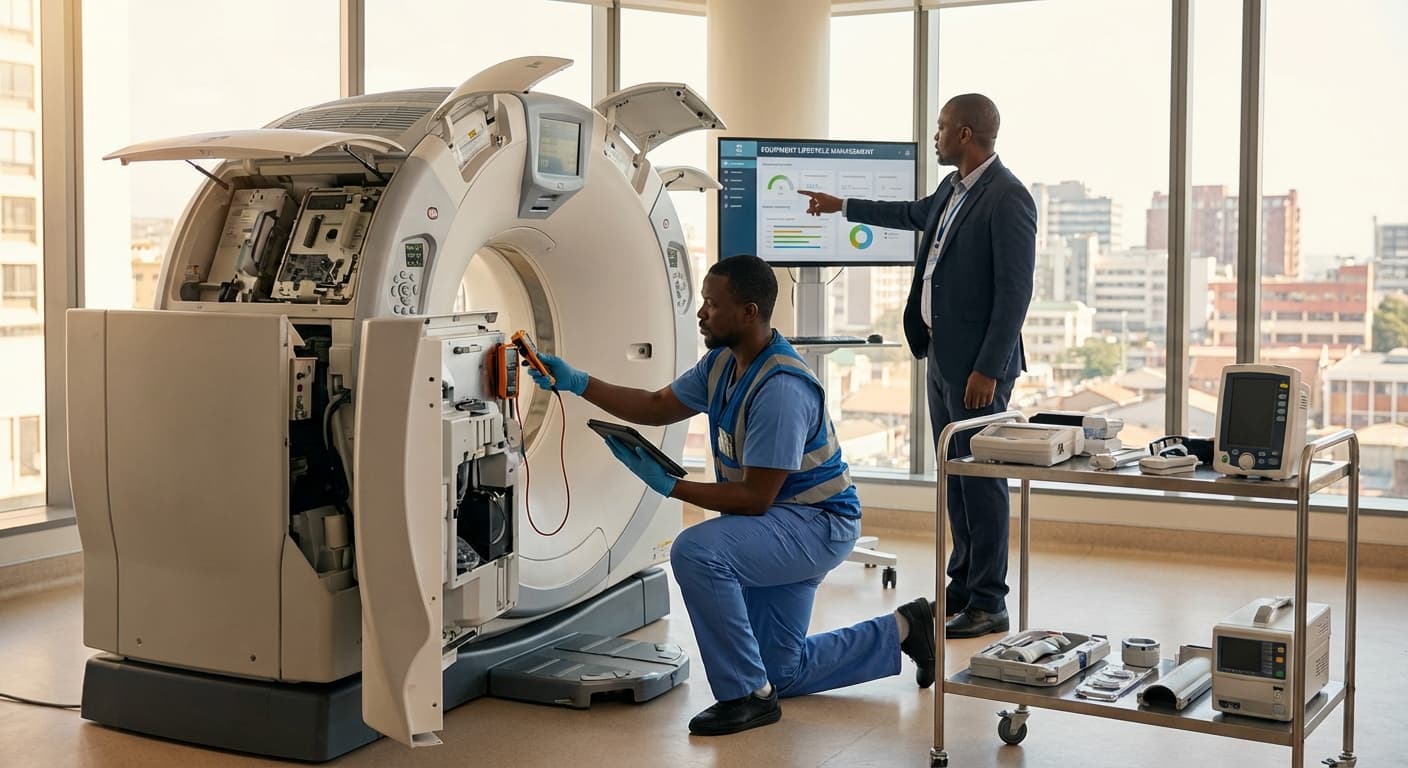
Equipment Replacement Planning & Obsolescence Strategy Service in Central African Republic
Engineering Excellence & Technical Support
Equipment Replacement Planning & Obsolescence Strategy Service High-standard technical execution following OEM protocols and local regulatory frameworks.
Mitigating Supply Chain Vulnerabilities
Our service proactively identifies critical equipment with impending obsolescence and develops alternative sourcing strategies. We leverage regional and international partnerships to secure reliable, long-term supply chains for essential machinery and spare parts, ensuring uninterrupted operations and minimizing risk in the Central African Republic's unique logistical landscape.
Optimizing Capital Expenditure & Lifecycle Value
We provide data-driven insights to forecast equipment replacement needs and total cost of ownership. This enables strategic allocation of capital, avoiding costly emergency replacements and maximizing the return on investment for your assets. Our obsolescence strategy ensures a phased and cost-effective transition to newer technologies, preserving operational efficiency.
Enhancing Operational Resilience & Safety
By anticipating and planning for equipment obsolescence, we prevent failures that could lead to production downtime, safety hazards, and environmental incidents. Our service ensures that your critical infrastructure in the Central African Republic is maintained with up-to-date, reliable, and safe equipment, bolstering overall operational resilience and compliance.
What Is Equipment Replacement Planning & Obsolescence Strategy Service In Central African Republic?
Equipment Replacement Planning & Obsolescence Strategy Service in the Central African Republic refers to a comprehensive set of methodologies and actionable plans designed to proactively manage the lifecycle of critical assets, particularly in the context of technological and operational obsolescence. This service addresses the challenges posed by the scarcity of advanced manufacturing, limited access to spare parts, and potential geopolitical instability that can exacerbate equipment lifespan issues. It involves detailed analysis of existing equipment inventories, including their current condition, performance metrics, maintenance history, and remaining useful life (RUL). Concurrently, it identifies emerging technologies and market trends that could render current equipment obsolete, impacting operational efficiency, security, and cost-effectiveness. The strategy development phase focuses on defining optimal replacement cycles, considering financial constraints, logistical feasibility, and the availability of compatible and sustainable alternatives within the CAR's economic and infrastructural landscape. It also encompasses the management of end-of-life equipment, including safe decommissioning, disposal, and potential refurbishment or recycling options, emphasizing environmental responsibility and regulatory compliance.
| Stakeholder Group | Specific Needs Addressed | Typical Use Cases |
|---|---|---|
| Government Agencies (e.g., Ministry of Defence, Ministry of Health, Ministry of Infrastructure) | Maintaining operational readiness and service delivery, ensuring national security, optimizing public expenditure on infrastructure and essential services. | Planning for the replacement of aging military hardware, upgrading medical equipment in public hospitals, modernizing road maintenance machinery, and ensuring reliable power generation infrastructure. |
| Public Utilities (e.g., Energy, Water, Telecommunications) | Ensuring continuity of service, reducing operational costs associated with frequent breakdowns, mitigating risks of service disruption due to obsolete technology, and improving network resilience. | Developing strategies for replacing outdated power transformers and transmission lines, upgrading water purification and distribution systems, and modernizing telecommunication network infrastructure (e.g., switching equipment, base stations). |
| Large Industrial Enterprises (e.g., Mining, Agriculture, Manufacturing) | Maximizing production output, minimizing downtime, ensuring worker safety, adhering to environmental standards, and maintaining competitive advantage through efficient operations. | Planning for the replacement of worn-out mining excavation and processing equipment, upgrading agricultural machinery for enhanced efficiency and yield, and modernizing manufacturing plant machinery and automation systems. |
| Non-Governmental Organizations (NGOs) and Humanitarian Agencies | Ensuring the effectiveness and sustainability of aid delivery, maintaining critical operational assets in challenging environments, and optimizing resource allocation. | Managing the lifecycle of vehicles used for transporting aid, replacing obsolete communication equipment for field operations, and ensuring the reliable functioning of water pumps and generators in remote humanitarian projects. |
| International Development Partners and Donors | Ensuring the long-term viability and impact of funded projects, promoting responsible asset management, and facilitating technology transfer and capacity building. | Providing technical assistance and oversight for equipment replacement plans in infrastructure development projects, health sector strengthening initiatives, and agricultural modernization programs. |
Key Components of the Service
- Asset Inventory and Condition Assessment
- Obsolescence Risk Identification and Analysis
- Remaining Useful Life (RUL) Prediction
- Technology Trend Monitoring and Forecasting
- Replacement Cycle Optimization
- Budgetary and Financial Planning for Replacements
- Procurement Strategy Development (considering local and international sourcing)
- Logistical Planning for Deployment and Decommissioning
- End-of-Life (EOL) Equipment Management (disposal, recycling, refurbishment)
- Risk Mitigation Strategies (e.g., supply chain disruptions, security concerns)
- Documentation and Knowledge Management
Who Needs Equipment Replacement Planning & Obsolescence Strategy Service In Central African Republic?
The Central African Republic, like many developing nations, faces unique challenges in managing its critical infrastructure and operational assets. Equipment replacement planning and obsolescence strategy services are vital for organizations that rely on machinery, technology, and specialized equipment to deliver essential services, drive economic activity, or maintain security. Without proactive planning, these entities risk costly downtime, reduced efficiency, safety hazards, and the inability to adapt to evolving technological landscapes. This service helps organizations to forecast when equipment will need to be replaced, understand the risks associated with aging technology, and develop strategies to mitigate these risks, ensuring continuity and modernization.
| Customer Type | Key Departments/Areas Requiring Service | Rationale for Need |
|---|---|---|
| Government Ministries & Agencies | Public Works, Infrastructure Development, Transportation, Energy, Defense, Health, Education, IT Departments | Ensuring the longevity and reliability of public assets (roads, bridges, power grids, water systems, military equipment, hospital machinery, school facilities) to provide essential services and maintain national security. Addressing outdated IT infrastructure for efficient governance. |
| Public Utilities & Service Providers (e.g., Water, Electricity, Communications) | Operations, Maintenance, Engineering, Procurement, Asset Management | Maintaining uninterrupted service delivery by replacing aging power generators, water pumps, transmission lines, and communication network hardware. Avoiding service disruptions due to equipment failure and planned obsolescence of critical components. |
| Mining & Extractive Industries | Operations, Maintenance, Engineering, Procurement, Geology, Safety | Managing the lifecycle of heavy machinery (excavators, haul trucks, processing equipment), safety systems, and analytical tools. Ensuring operational efficiency and safety in challenging environments where replacements can be logistically complex and expensive. |
| Manufacturing & Processing Sector | Production, Maintenance, Engineering, Quality Control, Supply Chain | Upgrading production lines, machinery, and control systems to improve efficiency, product quality, and competitiveness. Replacing outdated manufacturing equipment to reduce energy consumption and meet evolving market demands. |
| Transportation & Logistics Companies | Fleet Management, Operations, Maintenance, Procurement | Planning for the replacement of vehicles (trucks, buses, potentially aircraft or marine vessels), maintenance equipment, and IT systems for route optimization and tracking. Ensuring the safety and reliability of transportation networks. |
| Telecommunications Providers | Network Operations, Engineering, IT, Procurement | Upgrading aging network infrastructure (base stations, switches, fiber optic equipment) to offer faster speeds and new services. Managing the obsolescence of older technologies to maintain competitiveness and customer satisfaction. |
| Healthcare Institutions (Hospitals, Clinics) | Medical Equipment Management, IT Department, Facilities Management, Procurement | Ensuring the availability of functional and modern medical equipment (imaging machines, surgical tools, diagnostic devices) for patient care. Replacing outdated IT systems for patient records and hospital management. |
| Educational Institutions (Universities, Schools) | IT Department, Facilities Management, Academic Departments (for specialized equipment) | Modernizing computer labs, administrative systems, and specialized equipment in science and engineering departments. Ensuring a conducive learning environment with up-to-date technology. |
| International Aid & Development Organizations | Program Management, Logistics, Procurement, Monitoring & Evaluation | Managing the lifecycle of equipment used in development projects (e.g., agricultural machinery, water purification systems, educational materials, IT for NGOs). Ensuring the sustainability of projects by planning for future equipment needs and replacements. |
Target Customers & Departments in Central African Republic
- Government Ministries & Agencies
- Public Utilities & Service Providers
- Mining & Extractive Industries
- Manufacturing & Processing Sector
- Transportation & Logistics Companies
- Telecommunications Providers
- Healthcare Institutions
- Educational Institutions
- International Aid & Development Organizations
Equipment Replacement Planning & Obsolescence Strategy Service Process In Central African Republic
Our Equipment Replacement Planning & Obsolescence Strategy Service in the Central African Republic (CAR) provides a comprehensive workflow designed to ensure your critical assets are maintained, upgraded, or replaced proactively, mitigating risks associated with aging or obsolete equipment. This process is tailored to the unique operational and logistical challenges present in CAR, emphasizing cost-effectiveness, reliability, and sustainability.
| Phase | Key Activities | Deliverables | Considerations for CAR |
|---|---|---|---|
| Phase 1: Inquiry & Initial Consultation | Client initiates contact regarding equipment replacement needs or obsolescence concerns. Our team conducts an initial discussion to understand the scope, objectives, and current challenges. | Understanding of client's needs and objectives. High-level overview of potential services. | Establishing clear communication channels, acknowledging potential logistical delays, and understanding local business practices. |
| Phase 2: Assessment & Analysis | Detailed inventory of existing equipment. Technical assessment of condition, performance, and remaining lifespan. Identification of obsolete or at-risk equipment. Analysis of operational impact and failure history. Evaluation of spare parts availability and maintenance costs. | Comprehensive equipment inventory report. Obsolescence risk assessment. Cost-benefit analysis of repair vs. replacement. Identification of critical equipment vulnerabilities. | Logistical challenges in accessing remote sites for assessment. Need for local expertise for accurate condition reporting. Prioritizing essential services (e.g., healthcare, energy, telecommunications) due to infrastructure limitations. |
| Phase 3: Strategy Development & Recommendation | Development of tailored replacement and obsolescence management strategies. Prioritization of replacement based on risk, cost, and operational impact. Recommendation of specific equipment models, vendors, and technologies. Financial modeling and budget forecasting. Risk mitigation plans. | Detailed Equipment Replacement Plan. Obsolescence Management Strategy. Vendor/Technology recommendations. Budgetary proposals and financial projections. Risk assessment and mitigation strategies. | Sourcing reliable and durable equipment suitable for CAR's environment. Exploring local partnerships for supply and support. Considering long-term maintenance and operational costs in remote areas. Ensuring compatibility with existing infrastructure. |
| Phase 4: Planning & Procurement | Development of detailed project timelines. Identification and vetting of qualified suppliers and contractors. Negotiation of contracts and pricing. Securement of financing and budget approval. Planning for logistics, transportation, customs clearance, and installation in CAR. | Detailed project execution plan. Procurement contracts. Financing arrangements. Logistics and import/export plan. | Navigating complex import/export regulations and customs procedures in CAR. Securing reliable transportation networks (road, air). Mitigating risks of theft or damage during transit. Building contingency for unforeseen delays. |
| Phase 5: Execution & Implementation | Procurement and delivery of new equipment. Decommissioning and disposal of old equipment (environmentally sound practices). Installation, configuration, and testing of new equipment. Training of local personnel on operation and maintenance. Commissioning of new assets into operational service. | Newly installed and operational equipment. Trained local workforce. Decommissioning and disposal documentation. Performance verification reports. | Ensuring availability of skilled labor for installation and maintenance. Adapting training methods to local context. Implementing robust security measures for new equipment. Managing waste and disposal responsibly. |
| Phase 6: Monitoring & Review | Ongoing performance monitoring of new equipment. Regular review of the obsolescence strategy and its effectiveness. Post-implementation review and lessons learned. Development of future replacement cycles and maintenance schedules. Feedback loop for continuous improvement. | Performance monitoring reports. Updated obsolescence strategy. Lessons learned documentation. Recommendations for future planning. Continuous improvement framework. | Establishing remote monitoring capabilities where feasible. Building local capacity for ongoing maintenance and reporting. Periodic site visits to ensure continued success. Adapting strategies based on evolving local conditions and technological advancements. |
Service Workflow: Equipment Replacement Planning & Obsolescence Strategy in CAR
- Phase 1: Inquiry & Initial Consultation
- Phase 2: Assessment & Analysis
- Phase 3: Strategy Development & Recommendation
- Phase 4: Planning & Procurement
- Phase 5: Execution & Implementation
- Phase 6: Monitoring & Review
Equipment Replacement Planning & Obsolescence Strategy Service Cost In Central African Republic
Planning for equipment replacement and developing obsolescence strategies are crucial for businesses in the Central African Republic (CAR) to ensure operational continuity, minimize downtime, and optimize capital expenditure. The cost of such services is influenced by a range of factors, making it difficult to provide a single definitive price. However, understanding these factors is key to budgeting and negotiating effectively. Service providers in CAR typically offer these as part of broader asset management, IT consulting, or specialized engineering services. The CAR's unique economic and logistical environment significantly impacts pricing.
| Service Component | Typical Pricing Factors | Estimated Price Range (XAF - Central African CFA franc) |
|---|---|---|
| Initial Consultation & Scoping | Provider's hourly rates, complexity of initial requirements | 50,000 - 250,000 XAF |
| Asset Inventory & Data Collection | Number of assets, complexity of data, need for on-site visits | 100,000 - 1,000,000+ XAF (per site/major asset category) |
| Condition Assessment & Performance Analysis | Type of equipment, diagnostic tools required, need for specialized engineers | 150,000 - 1,500,000+ XAF (per asset type/major system) |
| Obsolescence Forecasting & Risk Assessment | Sophistication of forecasting models, depth of risk analysis | 200,000 - 2,000,000+ XAF |
| Replacement Strategy Development (including TCO) | Number of replacement scenarios, financial modeling complexity, integration with procurement | 300,000 - 3,000,000+ XAF |
| Report Generation & Presentation | Level of detail, customization, number of stakeholders | 100,000 - 500,000 XAF |
| Project Management & Coordination | Project duration, complexity, team size | Included in overall project cost or 10-20% of total project value |
| Travel & Logistical Expenses | Distance, mode of transport, accommodation, security | Variable (can significantly increase total cost, especially for remote locations) |
| Comprehensive Service Package (End-to-End) | Combination of all above elements, holistic approach | 1,000,000 - 10,000,000+ XAF (for medium to large-scale projects) |
Key Pricing Factors for Equipment Replacement Planning & Obsolescence Strategy Services in CAR
- Scope of Work: The complexity and breadth of the planning required are primary drivers. This includes the number of equipment types, criticality of each asset, and the desired level of detail in the obsolescence roadmap.
- Asset Inventory & Assessment: The number and diversity of equipment to be inventoried and assessed. A thorough assessment often involves condition checks, performance analysis, and future compatibility evaluations.
- Technology & Industry Specificity: Specialized equipment (e.g., medical, industrial, heavy machinery) requires niche expertise, which can command higher fees than standard IT equipment.
- Provider's Expertise & Reputation: Established firms with a proven track record and deep understanding of the CAR market will generally charge more than newer or less experienced entities.
- Data Availability & Quality: The ease with which the service provider can access reliable data on existing equipment (maintenance records, purchase history, usage patterns) impacts the time and resources required.
- Logistical Challenges: The CAR faces significant logistical hurdles, including transportation, accessibility to remote sites, and potential security concerns. These directly translate into higher operational costs for service providers.
- Market Demand & Competition: The availability of qualified service providers in the CAR influences pricing. A more competitive market can lead to more favorable rates.
- Project Duration & Urgency: Longer-term engagements or projects with tight deadlines may have different pricing structures, potentially involving premium rates for accelerated services.
- Report Deliverables & Customization: The format, depth, and customization of the final reports and strategic recommendations will affect the cost.
- Regulatory Compliance: If the planning needs to address specific industry regulations or environmental standards applicable in the CAR, this adds complexity and cost.
Affordable Equipment Replacement Planning & Obsolescence Strategy Service Options
Our Affordable Equipment Replacement Planning & Obsolescence Strategy Service is designed to help businesses proactively manage their asset lifecycle, minimize disruptive downtime, and optimize capital expenditure. We offer flexible service options and value bundles to suit diverse operational needs and budgets. Our core objective is to transform potential liabilities into strategic advantages, ensuring your equipment remains operational, cost-effective, and aligned with your business goals.
| Value Bundle Name | Included Services | Target Business Size | Key Cost-Saving Strategies Addressed | Investment Level |
|---|---|---|---|---|
| Essentials Plan | Obsolescence Risk Assessment (Tier 1), Basic Life Cycle Cost Analysis, Generic Replacement Prioritization. | Small to Medium Businesses (SMBs) | Avoids costly emergency replacements, identifies immediate risks, basic budget alignment. | Low |
| Growth Bundle | Comprehensive Obsolescence Risk Assessment, Detailed Life Cycle Cost Analysis, Strategic Replacement Roadmapping (1-3 years), Vendor & Technology Scouting (initial). | Growing SMBs & Mid-Market | Optimizes replacement timing, reduces total cost of ownership, informed technology adoption, negotiation leverage with vendors. | Medium |
| Enterprise Solution | Full suite of services including advanced obsolescence modeling, multi-year roadmapping, continuous vendor monitoring, maintenance optimization integration, disposal/resale strategy, and custom reporting. | Mid-Market to Enterprise | Maximized ROI on capital expenditure, minimized operational disruption, proactive risk mitigation, extended asset lifespan, maximized residual value, streamlined maintenance budgets. | High |
| Ad-Hoc Consultation | Targeted assessments or strategy sessions on specific equipment or challenges. | All Sizes (project-based) | Addresses immediate pain points, provides expert guidance for critical decisions. | Variable (project-based) |
Key Service Offerings
- Obsolescence Risk Assessment: Identifying equipment nearing end-of-life, unsupported, or at high risk of failure due to component unavailability.
- Life Cycle Cost Analysis: Evaluating the total cost of ownership for existing and replacement equipment, including acquisition, maintenance, energy, and disposal.
- Strategic Replacement Roadmapping: Developing phased replacement plans that align with budget cycles, operational demands, and technological advancements.
- Vendor & Technology Scouting: Researching and recommending viable, cost-effective alternatives and emerging technologies.
- Maintenance Optimization: Analyzing current maintenance practices to identify areas for improvement and cost reduction.
- Disposal & Resale Strategy: Planning for the responsible and profitable disposal or resale of retired assets.
- Customized Planning Tools & Templates: Providing actionable resources for ongoing internal management of equipment lifecycles.
Verified Providers In Central African Republic
Navigating healthcare in the Central African Republic (CAR) can be challenging. Ensuring you access services from verified and reputable providers is paramount for your well-being. Franance Health stands out as a trusted partner, offering a robust network of qualified medical professionals and facilities. Their commitment to credential verification and patient advocacy makes them the optimal choice for comprehensive healthcare solutions in the CAR.
| Credential Verification Aspect | Franance Health's Commitment | Benefit to Patients |
|---|---|---|
| Medical Licensing | Confirms active and valid medical licenses from recognized authorities. | Ensures providers are legally authorized to practice medicine. |
| Specialty Certifications | Validates specialized training and board certifications. | Guarantees expertise in specific medical fields. |
| Professional History Review | Conducts background checks and reviews professional conduct. | Minimizes risk by identifying any disciplinary actions or malpractice history. |
| Continuous Professional Development | Encourages and monitors ongoing training and education. | Ensures providers stay updated with the latest medical advancements and practices. |
| Facility Accreditation | Assesses and verifies the standards and safety of affiliated healthcare facilities. | Provides assurance of a safe and well-equipped medical environment. |
Why Franance Health is the Best Choice for Verified Healthcare in CAR
- Rigorous Provider Vetting: Franance Health employs a stringent process to verify the licenses, certifications, and professional standing of all its affiliated healthcare providers. This ensures you are treated by qualified and experienced medical personnel.
- Comprehensive Network: They have established a wide-reaching network of doctors, specialists, clinics, and hospitals across the Central African Republic, providing access to a diverse range of medical services.
- Patient-Centric Approach: Franance Health prioritizes patient safety, quality of care, and satisfaction. They act as a bridge between patients and providers, facilitating clear communication and advocating for your healthcare needs.
- Transparency and Trust: Their commitment to transparency means you can have confidence in the credentials and services offered through their platform, fostering a sense of trust and reliability in a complex healthcare landscape.
- Streamlined Access: Franance Health simplifies the process of finding and accessing verified healthcare providers, saving you time and reducing the stress associated with seeking medical attention in the CAR.
Scope Of Work For Equipment Replacement Planning & Obsolescence Strategy Service
This Scope of Work (SOW) outlines the services to be provided for Equipment Replacement Planning and Obsolescence Strategy. The objective is to develop a comprehensive and actionable strategy to proactively manage the lifecycle of critical equipment, mitigate the risks associated with obsolescence, and ensure continuous operational efficiency and reliability. This SOW details the technical deliverables and standard specifications expected from the service provider.
| Deliverable | Description | Standard Specification |
|---|---|---|
| Equipment Inventory Report | A detailed list of all identified equipment, including make, model, serial number, installation date, current condition, and criticality rating. | Formatted as a searchable database (e.g., Excel, CSV) with standardized fields. |
| Obsolescence Assessment Report | Analysis of each critical equipment's obsolescence status, including manufacturer end-of-life dates, spare parts availability, and risks associated with continued operation. | Includes risk scoring and prioritization for each item. |
| Equipment Replacement Roadmap | A prioritized plan for equipment replacement over a defined period (e.g., 5-10 years), including estimated costs, lead times, and potential operational impacts. | Visually presented (e.g., Gantt chart) and supported by detailed cost breakdowns. |
| Obsolescence Mitigation Strategy Document | A comprehensive strategy outlining approaches to manage and mitigate equipment obsolescence, including recommendations for spare parts stocking, alternative sourcing, and technology upgrades. | Includes action plans, responsible parties, and timelines. |
| Key Performance Indicator (KPI) Framework | Definition of metrics to measure the success of the replacement and obsolescence strategy, such as reduction in unplanned downtime, cost savings from proactive replacement, and lead time for critical part acquisition. | Clearly defined metrics with baseline values and target goals. |
| Procurement Strategy Guidelines | Recommendations for procurement processes, including vendor evaluation criteria, contract management considerations, and total cost of ownership (TCO) analysis for new equipment. | Template for Request for Proposals (RFPs) and vendor evaluation matrices. |
| Implementation Plan | A detailed, phase-by-phase plan for the execution of the approved strategy, including resource allocation, dependencies, and risk management. | Project plan format with milestones and deliverables. |
| Final Report and Presentation | A consolidated report summarizing all findings, recommendations, and the approved strategy, accompanied by a presentation to key stakeholders. | Professionally formatted report and presentation deck. |
Key Activities and Deliverables
- Phase 1: Assessment and Analysis
- Conduct a comprehensive inventory of all relevant equipment.
- Analyze historical data on equipment performance, failure rates, and maintenance costs.
- Identify critical equipment based on operational impact, safety implications, and strategic importance.
- Perform a detailed obsolescence assessment for each piece of critical equipment, considering manufacturer support, spare parts availability, and technology evolution.
- Evaluate current replacement and maintenance strategies.
- Phase 2: Strategy Development
- Develop a prioritized equipment replacement roadmap, including recommended timelines and budgetary considerations.
- Formulate an obsolescence mitigation strategy, outlining proactive measures and contingency plans.
- Define key performance indicators (KPIs) for tracking the effectiveness of the strategy.
- Recommend appropriate procurement strategies for new equipment, including vendor selection criteria and contract considerations.
- Develop a training and knowledge transfer plan for internal teams.
- Phase 3: Implementation Planning and Reporting
- Create a detailed implementation plan for the approved strategy.
- Develop reporting mechanisms and templates for ongoing monitoring and review.
- Conduct a final review and validation of the strategy with stakeholders.
Service Level Agreement For Equipment Replacement Planning & Obsolescence Strategy Service
This Service Level Agreement (SLA) outlines the performance standards and commitments for the Equipment Replacement Planning & Obsolescence Strategy Service (hereinafter referred to as 'the Service'). This SLA defines response times for reported issues and guarantees a specific level of service uptime. The Service aims to provide proactive planning and strategic guidance to minimize the impact of equipment obsolescence and ensure timely replacement, thereby maximizing operational efficiency and minimizing downtime.
| Service Element | Response Time (Business Hours) | Resolution Target | Uptime Guarantee |
|---|---|---|---|
| Critical Issue (Service Impairment) | 1 Hour | 4 Business Hours | 99.5% |
| High Priority Issue (Significant Impact) | 2 Business Hours | 8 Business Hours | 99.5% |
| Medium Priority Issue (Minor Impact) | 4 Business Hours | 2 Business Days | N/A (Service availability assumed, not direct uptime of a system) |
| Low Priority Issue (Inquiry/Request) | 8 Business Hours | 5 Business Days | N/A (Service availability assumed, not direct uptime of a system) |
| Scheduled Strategy Review/Update | As per agreed schedule | N/A | N/A (Service availability assumed, not direct uptime of a system) |
Scope of Service
- Proactive identification of potential equipment obsolescence risks.
- Development and maintenance of a strategic equipment replacement roadmap.
- Analysis of end-of-life (EOL) dates and vendor support lifecycles.
- Recommendations for alternative solutions and upgrade paths.
- Cost-benefit analysis for replacement vs. continued maintenance.
- Support in developing procurement strategies for new equipment.
- Regular review and updates of the obsolescence strategy based on evolving technology and business needs.
Frequently Asked Questions

Ready when you are
Let's scope your Equipment Replacement Planning & Obsolescence Strategy Service in Central African Republic project in Central African Republic.

Scaling healthcare logistics and technical systems across the entire continent.