
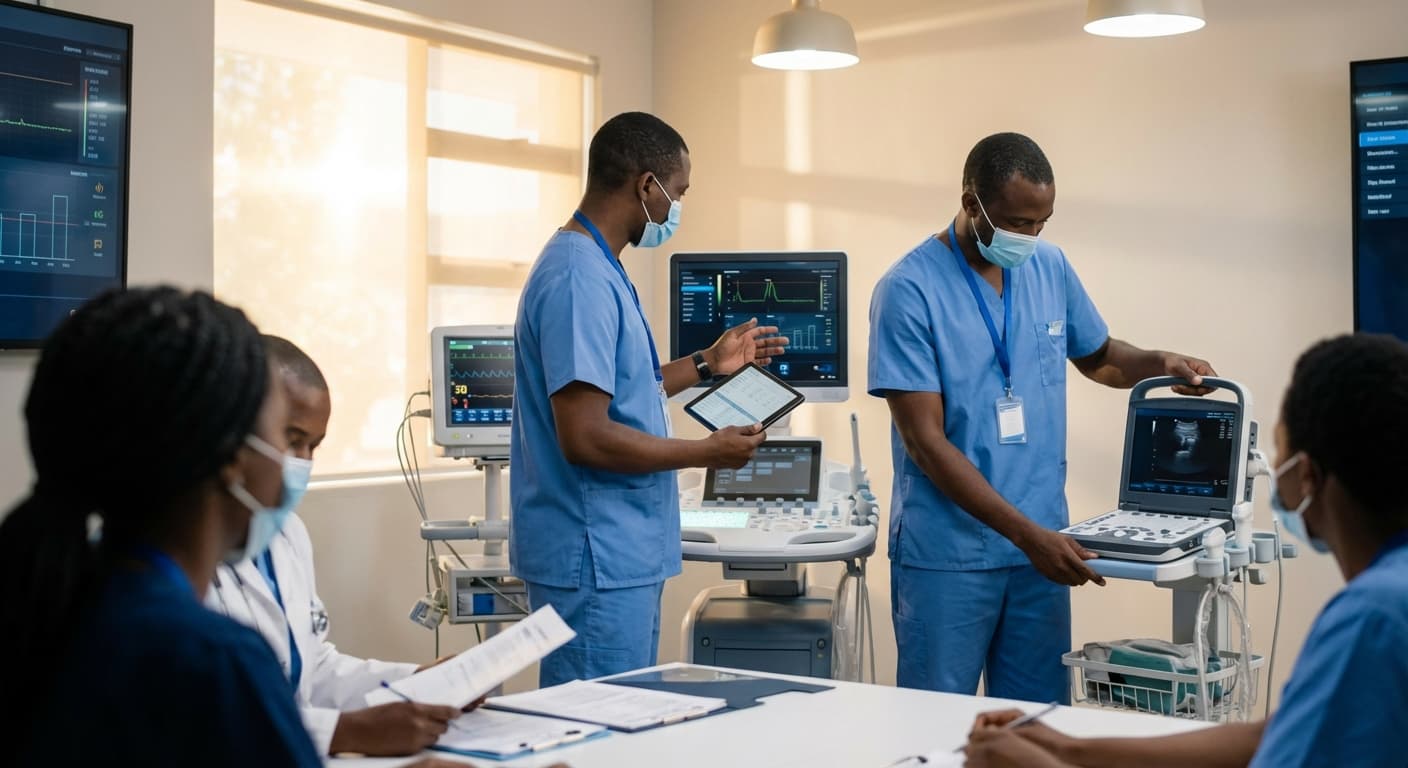
Clinical Needs Assessment for Medical Equipment in Central African Republic
Engineering Excellence & Technical Support
Clinical Needs Assessment for Medical Equipment High-standard technical execution following OEM protocols and local regulatory frameworks.
Data-Driven Prioritization Framework
Leveraging epidemiological data and disease burden statistics to create a prioritized list of essential medical equipment, ensuring that procurement directly addresses the most pressing health challenges in the Central African Republic. This includes mapping equipment needs to specific regions and health facility levels based on population density and prevalent health issues.
Sustainability & Maintenance Pathway Integration
Designing a needs assessment that explicitly incorporates local capacity for operation, maintenance, and repair. This involves evaluating the availability of trained personnel, spare parts, and infrastructure for sustainable equipment use, thereby preventing equipment obsolescence and maximizing long-term impact.
Contextualized Needs Mapping & Gap Analysis
Conducting a granular assessment of existing medical equipment stock across all health facility tiers (primary, secondary, tertiary) in the Central African Republic. This involves detailed site visits, interviews with healthcare professionals, and a comprehensive gap analysis to identify critical shortages and over-capacities, considering geographical accessibility and logistical constraints.
What Is Clinical Needs Assessment For Medical Equipment In Central African Republic?
A Clinical Needs Assessment for Medical Equipment in the Central African Republic (CAR) is a systematic process designed to identify, evaluate, and prioritize the essential medical equipment required to deliver effective and safe healthcare services within specific healthcare facilities or a defined geographical region. This assessment is crucial for optimizing resource allocation, ensuring the availability of appropriate technologies, and improving patient outcomes in a context often characterized by limited infrastructure, financial constraints, and a high disease burden. The service involves a multi-faceted approach encompassing the analysis of current healthcare demands, existing equipment inventory and functionality, clinical workflows, available technical expertise for maintenance, and the identification of gaps in equipment provision. It is inherently data-driven, relying on a combination of quantitative and qualitative methodologies to inform strategic procurement and deployment decisions.
| Who Needs This Service? | Typical Use Cases |
|---|---|
| Government Ministries of Health (e.g., Ministry of Public Health of the CAR): To inform national health strategies, procurement plans, and budget allocations for medical equipment across the country. | Procurement of essential medical equipment for primary healthcare centers in remote areas to address basic diagnostics and treatment needs. |
| Non-Governmental Organizations (NGOs) and International Aid Agencies: To guide targeted interventions, project planning, and fundraising efforts for healthcare improvement initiatives. | Establishing or upgrading diagnostic imaging capabilities (e.g., X-ray, ultrasound) in district hospitals to improve the accuracy and speed of disease diagnosis. |
| Healthcare Facilities (Hospitals, Clinics, Health Centers): To justify equipment upgrades, procure new technologies, and optimize the utilization of existing resources. | Implementing new surgical units or expanding existing ones by assessing the requirements for surgical instruments, anesthesia machines, and patient monitoring systems. |
| Donors and Funding Bodies: To ensure that their financial contributions are directed towards the most critical and impactful equipment needs, maximizing return on investment in terms of health outcomes. | Assessing the need for essential newborn care equipment in maternity wards to reduce neonatal mortality rates. |
| International Organizations (e.g., WHO, UNICEF): To support national health planning, develop evidence-based recommendations, and coordinate global health initiatives. | Developing a national plan for essential laboratory equipment and reagents to strengthen diagnostic capacity for prevalent infectious diseases. |
Key Components of a Clinical Needs Assessment for Medical Equipment:
- Facility Assessment: Evaluation of existing infrastructure, power supply stability, water access, and space for new equipment.
- Clinical Service Analysis: Mapping of current and projected healthcare services provided, including specialized departments and procedures.
- Equipment Inventory and Condition Survey: Documenting all existing medical equipment, its operational status, maintenance history, and user satisfaction.
- Gap Analysis: Identifying discrepancies between available equipment and the needs dictated by clinical services, patient demographics, and disease prevalence.
- User Training and Capacity Building Assessment: Determining the availability of trained personnel to operate and maintain proposed equipment.
- Maintenance and Sustainability Planning: Assessing the local capacity for repairs, availability of spare parts, and the long-term cost of ownership.
- Cost-Benefit Analysis: Evaluating the economic feasibility and impact of acquiring new equipment on service delivery and patient care.
- Stakeholder Consultation: Engaging with healthcare professionals, administrators, Ministry of Health representatives, and local community leaders.
Who Needs Clinical Needs Assessment For Medical Equipment In Central African Republic?
A clinical needs assessment for medical equipment is crucial for optimizing healthcare delivery and resource allocation in the Central African Republic. This process systematically identifies and prioritizes the medical equipment required to meet the specific health needs of the population and the operational capacity of healthcare facilities. It ensures that investments are strategic, leading to improved patient outcomes, enhanced service delivery, and more efficient use of limited resources.
| Department/Facility Type | Key Needs Addressed by Assessment | Specific Examples of Equipment |
|---|---|---|
| General Hospitals (e.g., Hôpital Central de Bangui) | Comprehensive diagnostic and treatment capabilities, emergency care, surgical procedures, specialized care. | X-ray machines, CT scanners, ultrasound devices, anesthesia machines, ventilators, surgical sets, laboratory equipment (hematology analyzers, chemistry analyzers), ICU beds, cardiac monitors. |
| District Hospitals | Essential primary and secondary healthcare services, emergency obstetric and neonatal care, basic surgical interventions. | Portable X-ray machines, ultrasound devices, basic surgical instruments, delivery tables, infant warmers, essential laboratory diagnostic kits, microscopes, oxygen concentrators. |
| Health Centers (Centres de Santé) | Primary healthcare, maternal and child health services, management of common illnesses, basic diagnostics. | Stethoscopes, blood pressure monitors, thermometers, basic diagnostic kits (malaria, HIV), weighing scales, examination tables, basic sterilization equipment, nebulizers. |
| Maternal and Child Health Centers | Prenatal care, delivery services, postnatal care, child immunization, management of common childhood illnesses. | Fetal dopplers, infant scales, delivery kits, phototherapy units, basic pediatric examination equipment, vaccines refrigerators. |
| Surgical Units/Operating Theaters | Performing life-saving surgical procedures, from minor to major interventions. | Operating tables, surgical lights, electrosurgical units, surgical instrument sets (general, orthopedic, gynecological), anesthesia machines, patient monitors. |
| Intensive Care Units (ICUs) | Critical care for severely ill patients, advanced monitoring and life support. | Ventilators, cardiac monitors, infusion pumps, defibrillators, dialysis machines (if applicable), specialized ICU beds. |
| Diagnostic Imaging Departments | Radiological diagnosis for a wide range of conditions. | X-ray units (fixed and portable), ultrasound machines, CT scanners, MRI scanners (if feasible and justified). |
| Laboratory Services | Diagnostic testing to support clinical decision-making. | Microscopes, hematology analyzers, chemistry analyzers, serology analyzers, PCR machines (for molecular diagnostics), basic microbiology equipment, centrifuges. |
| Emergency and Trauma Units | Immediate care for injuries and critical medical emergencies. | Trauma kits, resuscitation equipment, portable vital signs monitors, defibrillators, splints, stretchers. |
Target Customers for Clinical Needs Assessment
- Ministry of Public Health and Population (MOH): The primary entity responsible for national health policy, planning, and resource allocation.
- Regional and District Health Authorities: Responsible for overseeing healthcare services within their geographical areas and identifying local equipment gaps.
- Public Hospitals and Health Centers: The direct beneficiaries of the assessment, requiring equipment to provide essential medical services.
- Non-Governmental Organizations (NGOs) and International Aid Organizations: Often involved in supporting healthcare initiatives and infrastructure development, needing to align their equipment donations and projects with identified needs.
- Healthcare Training Institutions: Require specific equipment for training medical professionals, ensuring they are equipped to use modern medical technology.
- International Donors and Funding Agencies: Need evidence-based assessments to justify and direct their financial contributions towards the most impactful medical equipment.
- Healthcare Facility Managers and Procurement Officers: Directly involved in the procurement and management of medical equipment, benefiting from a clear roadmap of needs.
Clinical Needs Assessment For Medical Equipment Process In Central African Republic
This document outlines the workflow for conducting a clinical needs assessment for medical equipment in the Central African Republic (CAR), from initial inquiry to final execution. This process is crucial for ensuring that medical facilities receive appropriate, functional, and sustainable equipment tailored to their specific clinical requirements and the prevailing healthcare landscape in CAR.
| Stage Number | Stage Name | Key Activities | Outputs |
|---|---|---|---|
| Inquiry & Initial Contact | Receive request, understand basic requirements, identify key contacts. | Confirmation of request, initial scope definition. | |
| Needs Identification & Scoping | Conduct preliminary discussions, define target facilities, understand context. | Defined assessment scope, target facility list, understanding of broad needs. | |
| Team Formation & Planning | Assemble assessment team, develop work plan, define roles and responsibilities. | Assessment team composition, detailed work plan, logistical arrangements. | |
| Data Collection | Site visits, interviews, observation, equipment inventory, data review. | Raw data on facility needs, existing equipment, clinical practices, patient flows. | |
| Needs Analysis & Prioritization | Analyze collected data, identify gaps, rank equipment needs based on impact. | List of identified equipment needs, prioritized equipment list. | |
| Equipment Specification Development | Define technical requirements, performance standards, and usability for each item. | Detailed equipment specifications, bill of materials. | |
| Report Generation & Recommendation | Compile findings, formulate recommendations, draft assessment report. | Draft clinical needs assessment report. | |
| Stakeholder Consultation & Validation | Present report, gather feedback, incorporate revisions, gain final approval. | Validated clinical needs assessment report, stakeholder buy-in. | |
| Procurement Planning & Execution | Develop procurement strategy, initiate tendering, select suppliers, purchase equipment. | Procured medical equipment. | |
| Installation, Training & Commissioning | Install, test, and commission equipment; train end-users. | Installed and functional equipment, trained personnel. | |
| Monitoring & Evaluation | Track equipment performance, gather user feedback, assess impact, identify further needs. | Performance reports, impact assessments, recommendations for future interventions. |
Workflow Stages
- {"name":"Inquiry & Initial Contact","stage":1,"description":"The process begins with an inquiry from a healthcare facility, Ministry of Health representative, or a donor organization expressing a need for medical equipment assessment. This initial contact typically involves understanding the scope, geographical location, and general nature of the request."}
- {"name":"Needs Identification & Scoping","stage":2,"description":"A preliminary meeting or information gathering phase to define the specific needs. This involves understanding the target population, existing health challenges, current equipment status (if any), infrastructure limitations, and the type of clinical services offered. The scope of the assessment is then defined."}
- {"name":"Team Formation & Planning","stage":3,"description":"A multidisciplinary assessment team is formed, potentially including clinical specialists, biomedical engineers, logistics experts, and local healthcare representatives. A detailed work plan is developed, outlining methodologies, timelines, resources required, and risk mitigation strategies."}
- {"name":"Data Collection","stage":4,"description":"This is a critical phase involving direct engagement with healthcare facilities. Methods include site visits, interviews with healthcare professionals (doctors, nurses, technicians), review of patient data, observation of clinical practices, and inventory of existing equipment. Data on patient demographics, disease prevalence, and service demands are gathered."}
- {"name":"Needs Analysis & Prioritization","stage":5,"description":"Collected data is analyzed to identify specific equipment gaps, deficiencies, and requirements. This analysis considers clinical relevance, patient outcomes, cost-effectiveness, ease of use, and local capacity for maintenance and repair. Needs are then prioritized based on urgency and impact."}
- {"name":"Equipment Specification Development","stage":6,"description":"Detailed specifications for the identified and prioritized equipment are developed. This includes technical requirements, performance standards, safety features, usability, and compatibility with existing infrastructure and consumables. Consideration is given to sustainability and availability of spare parts in CAR."}
- {"name":"Report Generation & Recommendation","stage":7,"description":"A comprehensive report is compiled, documenting the assessment process, findings, identified needs, and prioritized equipment list with detailed specifications. This report includes recommendations for procurement, training, installation, maintenance, and ongoing support. The report is typically shared with stakeholders for review and validation."}
- {"name":"Stakeholder Consultation & Validation","stage":8,"description":"The assessment report and recommendations are presented to relevant stakeholders (Ministry of Health, facility management, potential donors) for feedback, discussion, and final validation. This ensures alignment and buy-in for the proposed equipment acquisition."}
- {"name":"Procurement Planning & Execution","stage":9,"description":"Based on the validated report, a procurement plan is developed. This may involve tendering processes, supplier selection, and negotiation of contracts. The actual procurement of the identified medical equipment then follows."}
- {"name":"Installation, Training & Commissioning","stage":10,"description":"Once the equipment arrives, it is installed, tested, and commissioned by qualified personnel. Crucially, comprehensive training is provided to local healthcare staff on the proper use, operation, and basic maintenance of the new equipment. This stage ensures the equipment is functional and utilized effectively."}
- {"name":"Monitoring & Evaluation","stage":11,"description":"Post-installation, a system for monitoring the use, performance, and maintenance of the equipment is established. Regular evaluations are conducted to assess the impact of the new equipment on clinical services, patient care, and overall health outcomes. Feedback loops are created for continuous improvement."}
Clinical Needs Assessment For Medical Equipment Cost In Central African Republic
This document outlines a clinical needs assessment for medical equipment costs in the Central African Republic (CAR), focusing on pricing factors and their typical ranges in the local currency, the Central African CFA franc (XAF). The CAR faces significant challenges in healthcare infrastructure, leading to a high demand for reliable and affordable medical equipment. Factors influencing cost include import duties, transportation, scarcity of local suppliers, currency fluctuations, and the overall condition and origin of the equipment (new vs. refurbished). Understanding these nuances is critical for effective budgeting and resource allocation in the healthcare sector.
| Equipment Category | Estimated Price Range (XAF) | Notes |
|---|---|---|
| Basic Diagnostic Tools (e.g., Stethoscope, Blood Pressure Monitor, Thermometer) | 15,000 - 75,000 | Represents a wide range from basic manual to digital models. Availability of reliable brands can be limited. |
| Basic Laboratory Equipment (e.g., Microscope, Centrifuge, Hematology Analyzer - manual/semi-auto) | 500,000 - 5,000,000 | Costs vary significantly with automation level. Refurbished options are common but require careful inspection. |
| Imaging Equipment (e.g., Portable X-ray Unit, Ultrasound Machine - basic) | 4,000,000 - 20,000,000 | Prices escalate rapidly with advanced features and portability. Maintenance is a significant ongoing concern. |
| Surgical Instruments (e.g., Basic Set, Electrosurgical Unit) | 300,000 - 5,000,000 | Costs depend on the comprehensiveness of the set and the type of electrosurgical unit. Sterilization equipment is a related necessity. |
| Patient Monitoring Systems (e.g., Vital Signs Monitor) | 800,000 - 6,000,000 | Basic units for monitoring heart rate and blood pressure are more affordable than multi-parameter systems. |
| Anesthesia Machines (Basic) | 3,000,000 - 15,000,000 | Essential for surgical procedures. Availability and maintenance are critical considerations. Older models are more prevalent. |
| Dental Chairs and Basic Equipment | 2,000,000 - 10,000,000 | Includes chair, light, and basic handpieces. Specialized equipment significantly increases cost. |
| Hospital Beds (Manual) | 150,000 - 500,000 | Simple manual beds are the most common. Electric beds are considerably more expensive and less practical due to power instability. |
| Delivery Beds | 400,000 - 1,500,000 | Specialized beds for obstetrics, with adjustable features. |
| Oxygen Concentrators (Portable/Stationary) | 200,000 - 1,000,000 | Crucial for respiratory support. Availability of spare parts for maintenance is key. |
Key Pricing Factors for Medical Equipment in CAR
- Import Duties and Taxes: Tariffs levied on imported medical devices significantly add to the final cost.
- Transportation and Logistics: The poor state of roads and limited infrastructure increase shipping costs and transit times.
- Local Supplier Markup: Limited competition among local distributors can lead to higher markups on equipment.
- Currency Exchange Rates: Fluctuations in the XAF against major currencies (USD, EUR) directly impact import costs.
- Equipment Condition and Origin: New, high-end equipment is considerably more expensive than refurbished or older models.
- Brand and Manufacturer Reputation: Well-established international brands often command premium prices.
- Warranty and After-Sales Service: The availability and cost of maintenance and repair services influence the total cost of ownership.
- Availability and Scarcity: Low supply of specific equipment drives up prices due to increased demand.
- Customs Clearance and Bureaucracy: Navigating administrative processes can incur additional fees and delays.
- Installation and Training: Costs associated with setting up and training personnel on new equipment.
Affordable Clinical Needs Assessment For Medical Equipment Options
Affordable clinical needs assessments are crucial for healthcare providers to make informed decisions about medical equipment. This process involves evaluating existing equipment, identifying gaps in care, and determining the most cost-effective solutions to meet patient needs. Leveraging 'value bundles' and implementing strategic cost-saving measures can significantly reduce overall expenditure without compromising quality of care.
| Value Bundle | Description | Cost-Saving Strategy |
|---|---|---|
| Integrated Diagnostic Systems | Bundling multiple diagnostic functions (e.g., ultrasound, ECG, basic lab testing) into a single, versatile unit. | Reduced capital expenditure by consolidating multiple devices. Streamlined workflow and potentially reduced training needs. Minimized footprint and maintenance overhead. |
| Service & Maintenance Packages | Negotiating comprehensive service contracts that include preventive maintenance, repairs, and sometimes even parts replacement for a fixed annual fee. | Predictable maintenance costs, avoiding unexpected repair bills. Often includes priority service, minimizing downtime. Potential for discounts on extended warranties. |
| Training & Education Bundles | Acquiring equipment with integrated or discounted training programs for clinical staff. | Ensures optimal equipment utilization and patient safety. Reduces the need for separate, expensive training sessions. Can improve staff proficiency and confidence. |
| Consumable & Accessory Packages | Purchasing necessary consumables and accessories (e.g., probes, electrodes, reagents) as part of the equipment acquisition or through preferred vendor agreements. | Bulk purchasing discounts. Ensures compatibility and availability of essential items. Can streamline procurement processes. |
| Refurbished & Certified Pre-Owned Equipment | Acquiring high-quality, previously used medical equipment that has been thoroughly inspected, refurbished, and certified by reputable vendors. | Significant reduction in initial capital outlay compared to new equipment. Often comes with a warranty, mitigating risk. Environmentally friendly option. |
| Leasing & Flexible Financing Options | Exploring equipment leasing or financing programs that spread the cost over time, often with upgrade paths. | Preserves capital for other operational needs. Allows access to newer technology without large upfront investment. Can include maintenance and upgrades in monthly payments. |
| Strategic Partnerships & Group Purchasing Organizations (GPOs) | Collaborating with other healthcare facilities or joining GPOs to leverage collective purchasing power for better pricing on equipment and services. | Access to negotiated discounts and favorable contract terms. Reduced administrative burden of individual vendor negotiations. Improved supply chain efficiency. |
Key Components of an Affordable Clinical Needs Assessment
- Current Equipment Inventory & Utilization Review: Documenting all existing equipment, its condition, maintenance history, and actual usage patterns to identify underutilized or obsolete items.
- Clinical Workflow Analysis: Mapping patient pathways and identifying bottlenecks or inefficiencies that could be addressed with new or upgraded equipment.
- Needs Identification & Prioritization: Based on clinical outcomes, patient demographics, emerging technologies, and regulatory requirements, determining the most critical equipment needs.
- Total Cost of Ownership (TCO) Analysis: Beyond the initial purchase price, factoring in maintenance, service contracts, training, consumables, energy consumption, and eventual disposal costs.
- Market Research & Vendor Evaluation: Exploring various equipment options, comparing features, performance, reliability, and vendor support, and obtaining multiple quotes.
- Budgetary Constraints & Funding Options: Understanding available financial resources and exploring grants, leasing, or financing options.
Verified Providers In Central African Republic
Navigating healthcare in the Central African Republic (CAR) can present unique challenges. Ensuring access to reliable, high-quality medical services is paramount for the well-being of individuals and communities. This is where Franance Health distinguishes itself, offering a network of verified providers committed to excellence and patient-centered care. Our rigorous credentialing process and dedication to transparency make Franance Health the optimal choice for anyone seeking trusted healthcare solutions in the CAR.
| Provider Type | Franance Health Verification Criteria | Benefits for Patients |
|---|---|---|
| Doctors (General Practitioners & Specialists) | Valid medical license, recognized degrees, proof of specialization (if applicable), clean disciplinary record, minimum years of practice. | Access to qualified medical professionals, accurate diagnoses, effective treatment plans, specialized care when needed. |
| Nurses & Midwives | Accredited nursing/midwifery school diploma, valid registration with the relevant health authority, proof of practical experience. | Skilled and compassionate care, support during pregnancy and childbirth, post-operative care, basic health services. |
| Hospitals & Clinics | Operational licenses, adherence to safety and hygiene standards, availability of essential medical equipment, qualified medical and administrative staff. | Access to comprehensive medical facilities, emergency services, inpatient and outpatient care, diagnostic services. |
| Diagnostic Laboratories | Accreditation, qualified laboratory technicians, calibrated and maintained equipment, adherence to quality control procedures. | Accurate and reliable diagnostic test results, supporting effective treatment decisions. |
Why Franance Health is the Best Choice for Verified Providers in the Central African Republic:
- Rigorous Vetting Process: Franance Health employs a comprehensive and stringent vetting procedure for all affiliated healthcare providers. This includes verification of licenses, certifications, educational backgrounds, and professional experience.
- Commitment to Quality: We prioritize providers who demonstrate a consistent commitment to delivering high-quality medical care, adhering to international best practices and ethical standards.
- Patient-Centric Approach: Our network consists of professionals who place the needs and well-being of their patients at the forefront of their practice, fostering trust and open communication.
- Transparency and Accountability: Franance Health believes in complete transparency. We provide clear information about our providers' credentials and maintain mechanisms for accountability, ensuring a consistently reliable healthcare experience.
- Accessibility and Network: We are building an extensive network of verified providers across various medical specialities, aiming to increase access to essential healthcare services throughout the Central African Republic.
- Continuous Improvement: Franance Health actively engages with its providers to encourage ongoing professional development and the adoption of the latest advancements in medical care.
Scope Of Work For Clinical Needs Assessment For Medical Equipment
This Scope of Work (SOW) outlines the requirements for conducting a comprehensive clinical needs assessment to identify and specify medical equipment for [Name of Facility/Project] over a [Timeframe, e.g., 5-year] period. The assessment will focus on aligning equipment acquisition with clinical service demands, technological advancements, and budgetary constraints, ensuring optimal patient care and operational efficiency.
| Phase | Activity | Deliverables | Timeline (Example) |
|---|---|---|---|
| Phase 1: Project Initiation & Planning | Define project scope, objectives, and stakeholder engagement strategy. Establish project team and communication protocols. Develop detailed project plan. | Project Charter, Stakeholder Register, Detailed Project Plan, Communication Plan. | Week 1-2 |
| Phase 2: Data Collection & Analysis | Conduct interviews and workshops with clinical staff (physicians, nurses, technicians). Review patient demographics, service utilization data, and clinical protocols. Assess existing equipment inventory, maintenance records, and usage patterns. Research industry best practices and emerging technologies. | Clinical Needs Assessment Survey/Interview Guide, Raw Data (interview transcripts, usage statistics), Existing Equipment Inventory & Analysis Report, Market Research Summary. | Week 3-8 |
| Phase 3: Needs Identification & Prioritization | Synthesize collected data to identify gaps in current equipment provision. Categorize needs by department, specialty, and urgency. Develop a prioritized list of required equipment based on clinical impact, patient safety, and operational efficiency. | Gap Analysis Report, Prioritized Equipment Needs List (categorized). | Week 9-10 |
| Phase 4: Specification Development | For each prioritized equipment item, develop detailed technical specifications. This will include performance requirements, safety features, user interface considerations, interoperability standards (e.g., HL7, DICOM), maintenance requirements, and estimated lifespan. Align with relevant national and international standards. | Standard Technical Specifications Document (per equipment category). | Week 11-16 |
| Phase 5: Reporting & Recommendations | Compile a comprehensive clinical needs assessment report. This report will include an executive summary, detailed findings, prioritized equipment lists, standard technical specifications, and recommendations for procurement, implementation, and training. Present findings to stakeholders. | Final Clinical Needs Assessment Report, Presentation Deck. | Week 17-18 |
Objectives
- To identify current and future clinical needs across all relevant departments and specialties.
- To evaluate existing medical equipment for suitability, performance, and remaining lifecycle.
- To research and recommend new medical equipment that meets defined clinical requirements, safety standards, and technological advancements.
- To develop prioritized lists of equipment based on clinical impact, urgency, and cost-effectiveness.
- To define standard technical specifications for all recommended equipment to ensure interoperability, ease of use, and maintainability.
- To provide a basis for procurement, budget allocation, and implementation planning.
Service Level Agreement For Clinical Needs Assessment For Medical Equipment
This Service Level Agreement (SLA) outlines the performance standards for the Clinical Needs Assessment service for Medical Equipment provided by [Your Company Name] to [Client Name]. This SLA focuses on response times for urgent and non-urgent requests, and uptime guarantees for the digital platform used to conduct assessments. This agreement is effective from [Start Date] to [End Date].
| Service Component | Metric | Target | Measurement Period | Remedy/Consequence |
|---|---|---|---|---|
| Clinical Needs Assessment Request Handling | Response Time (Urgent) | Within 4 Business Hours | Per Request | Escalation to Senior Analyst, Potential expedited assessment scheduling. |
| Clinical Needs Assessment Request Handling | Response Time (Non-Urgent) | Within 2 Business Days | Per Request | N/A (Standard processing) |
| Digital Assessment Platform Availability | Uptime Guarantee | 99.5% | Monthly | For every 1% of downtime below 99.5%, a 5% service credit on the monthly platform fee will be applied. Maximum credit capped at 25%. |
| Platform Performance | Average Page Load Time (Key Assessment Pages) | < 3 seconds | Monthly | N/A (Performance monitoring and optimization by [Your Company Name]) |
Key Definitions
- Clinical Needs Assessment: The process of evaluating and documenting the current and future medical equipment requirements of a healthcare facility, considering clinical workflows, patient care needs, and technological advancements.
- Urgent Request: A request for assessment requiring immediate attention due to critical equipment failure, immediate patient safety risk, or regulatory compliance deadline within 48 hours.
- Non-Urgent Request: A request for assessment that does not pose an immediate risk and can be scheduled within standard business operations.
- Uptime: The percentage of time the digital platform is operational and accessible to users for conducting and managing clinical needs assessments.
- Downtime: The percentage of time the digital platform is unavailable or inaccessible to users.
- Service Credit: A financial credit applied to the client's invoice as compensation for failing to meet agreed-upon SLA metrics.
Frequently Asked Questions

Ready when you are
Let's scope your Clinical Needs Assessment for Medical Equipment in Central African Republic project in Central African Republic.

Scaling healthcare logistics and technical systems across the entire continent.