
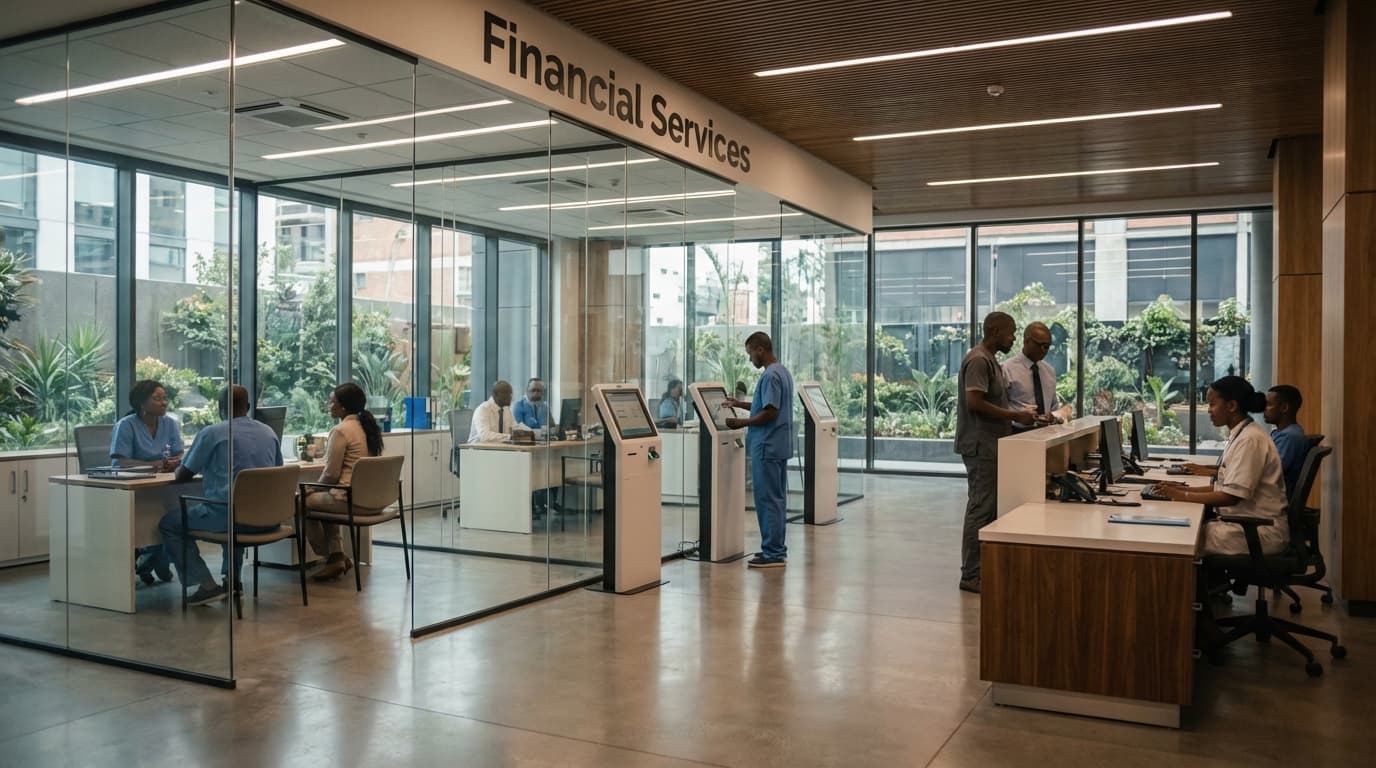
Medical Equipment Financing in Central African Republic
Engineering Excellence & Technical Support
Leasing and financing solutions for medical equipment High-standard technical execution following OEM protocols and local regulatory frameworks.
Tailored Financing Solutions
Access flexible loan terms and competitive interest rates specifically designed for purchasing vital medical equipment, ensuring healthcare providers can acquire state-of-the-art technology without prohibitive upfront costs.
Accelerated Acquisition Pathways
Streamlined application and approval processes to quickly facilitate the acquisition of critical medical devices, enabling faster deployment and improved patient care across the Central African Republic.
Partnerships for Accessibility
Collaborations with leading medical equipment manufacturers and suppliers to offer bundled financing packages, including installation and maintenance, reducing operational burdens and enhancing equipment longevity.
What Is Medical Equipment Financing In Central African Republic?
Medical Equipment Financing in the Central African Republic (CAR) refers to the provision of capital to healthcare institutions, clinics, hospitals, and individual medical practitioners for the acquisition, upgrade, or maintenance of essential medical devices and technology. This service is crucial in contexts like the CAR where access to advanced medical equipment is often limited by economic constraints and infrastructure challenges. It typically involves structured loan agreements, leasing options, or other financial instruments tailored to the specific needs and repayment capacities of healthcare providers. The objective is to facilitate the procurement of diagnostic tools, surgical instruments, therapeutic devices, laboratory equipment, and other vital medical apparatus, thereby enhancing the quality and accessibility of healthcare services.
| Who Needs Medical Equipment Financing in CAR? | Typical Use Cases for Financed Equipment | ||||||||
|---|---|---|---|---|---|---|---|---|---|
| Public Hospitals and Health Centers: Often underfunded, requiring external financing to replace outdated equipment or expand diagnostic capabilities. | Diagnostic Imaging: X-ray machines, ultrasound devices, CT scanners, and MRI machines to improve diagnostic accuracy. | Private Clinics and Hospitals: Seeking to enhance service offerings, attract more patients, and compete with better-equipped facilities. | Surgical Equipment: Operating room tools, anesthesia machines, and laparoscopic instruments to enable a wider range of surgical procedures. | Non-Governmental Organizations (NGOs) and International Aid Agencies: Operating health programs and requiring equipment for remote or underserved areas. | Laboratory and Testing Equipment: Analyzers for blood tests, microscopes, and molecular diagnostic kits to support disease detection and monitoring. | Maternal and Child Health Facilities: Incubators, neonatal ventilators, and ultrasound machines for obstetric care. | Rehabilitation and Physiotherapy Equipment: Devices for physical therapy, occupational therapy, and assistive devices. | Individual Medical Practitioners: Specialists looking to invest in advanced equipment for their private practices. | Emergency Medical Services: Ambulances with advanced life support systems and portable diagnostic devices. |
Key Components of Medical Equipment Financing in CAR
- Loan Facilities: Direct loans for outright purchase of medical equipment with agreed-upon interest rates and repayment schedules.
- Leasing Arrangements: Long-term rental agreements where the financier retains ownership of the equipment, allowing healthcare providers to use it for a specified period.
- Working Capital Loans: Funds to cover operational expenses related to equipment, such as maintenance, consumables, and staff training.
- Partnerships with Manufacturers/Suppliers: Collaboration with equipment vendors to offer bundled financing solutions.
- Risk Assessment and Due Diligence: Evaluation of the financial viability and operational capacity of the healthcare institution seeking financing.
- Collateral Requirements: Pledging of assets or future revenue streams as security for the financing.
- Monitoring and Evaluation: Post-acquisition tracking of equipment utilization and repayment performance.
Who Needs Medical Equipment Financing In Central African Republic?
Medical equipment financing in the Central African Republic (CAR) is crucial for improving healthcare access and quality, especially given the country's unique challenges. The demand stems from a critical need to upgrade outdated infrastructure, acquire essential diagnostic and treatment tools, and expand the reach of medical services to underserved populations. This financing directly addresses the gap between the urgent need for modern medical technology and the limited financial capacity of many healthcare providers and institutions within the CAR.
| Customer Type | Key Departments/Needs | Impact of Financing |
|---|---|---|
| Public Hospitals and Clinics | Maternity & Pediatrics (ultrasound, incubators), General Medicine (diagnostic tools, basic surgical equipment), Radiology (X-ray machines, basic ultrasound), Emergency Services (resuscitation equipment, vital signs monitors) | Improved maternal and child survival rates, enhanced diagnosis and treatment of common illnesses, increased capacity to handle emergencies. |
| Private Hospitals and Clinics | Surgery (anesthesia machines, surgical instruments), Cardiology (ECG machines, portable echo), Ophthalmology (slit lamps, phoropters), Dental (dental chairs, X-ray units) | Expansion of specialized services, improved patient outcomes in complex procedures, increased competitiveness and patient trust. |
| NGOs focused on Health | Mobile clinics (portable diagnostic equipment, basic treatment kits), disease-specific programs (e.g., malaria rapid diagnostic tests, HIV testing equipment), community health worker support tools | Wider reach of healthcare services in remote areas, targeted interventions for specific health crises, increased effectiveness of public health campaigns. |
| Diagnostic Laboratories | Microscopy equipment, hematology analyzers, biochemistry analyzers, basic microbiology tools | More accurate and timely disease diagnosis, reduced reliance on sending samples abroad, faster treatment initiation. |
| Specialized Medical Centers (e.g., maternity wards, surgical units) | Advanced imaging (CT scanners if feasible, more sophisticated ultrasounds), specialized surgical equipment, intensive care unit (ICU) equipment (ventilators, patient monitors) | Ability to perform more complex surgeries and manage critical care cases, leading to better patient prognoses and reduced need for overseas referrals. |
| Research Institutions (with a medical focus) | Laboratory equipment for research, advanced analytical instruments, data acquisition systems | Facilitation of local medical research, development of context-specific healthcare solutions, knowledge transfer and capacity building. |
Target Customers for Medical Equipment Financing in CAR:
- Public Hospitals and Clinics
- Private Hospitals and Clinics
- Non-Governmental Organizations (NGOs) focused on Health
- Diagnostic Laboratories
- Specialized Medical Centers (e.g., maternity wards, surgical units)
- Research Institutions (with a medical focus)
Medical Equipment Financing Process In Central African Republic
The medical equipment financing process in the Central African Republic (CAR) is a multi-stage workflow designed to facilitate the acquisition of essential medical technology for healthcare institutions. This process typically involves an initial inquiry, a thorough assessment of the borrower's needs and capacity, rigorous due diligence, the structuring of financing terms, the finalization of legal agreements, and the disbursement of funds or direct purchase of equipment. Navigating this process requires close collaboration between healthcare providers, financial institutions (which may include local banks, international development banks, or specialized equipment financing companies), and potentially government ministries.
| Stage | Description | Key Participants | Potential Challenges in CAR |
|---|---|---|---|
| Inquiry and Needs Assessment | Healthcare provider expresses interest in financing specific medical equipment. This involves detailing the type of equipment, its purpose, and estimated cost. | Healthcare Provider, Potential Financier (Bank, NGO, Development Agency) | Limited awareness of financing options, difficulty in articulating specific needs accurately. |
| Application Submission | Formal application submitted to the financing institution, including supporting documents such as organizational profiles, financial statements, and project proposals. | Healthcare Provider, Financing Institution | Lack of standardized application formats, incomplete documentation due to limited administrative capacity. |
| Creditworthiness and Feasibility Study | Financier evaluates the applicant's financial health, repayment capacity, and the operational feasibility of using the proposed equipment. This may involve site visits. | Financing Institution, Credit Analysts, Technical Experts | Unreliable financial data, informal economic structures, limited track record of some institutions. |
| Proposal and Term Sheet Development | Based on the assessment, the financier develops a financing proposal outlining loan amount, interest rates, repayment schedule, collateral requirements, and other terms. | Financing Institution, Healthcare Provider (for negotiation) | Negotiating favorable terms can be difficult; potential for unfavorable interest rates due to perceived risk. |
| Due Diligence and Risk Assessment | Comprehensive review of legal, technical, and financial aspects to identify and mitigate risks. This includes verifying ownership, operational licenses, and technical specifications of the equipment. | Financing Institution, Legal Advisors, Technical Consultants | Corruption risks, difficulty in verifying ownership and authenticity of equipment, potential for bureaucratic delays. |
| Legal Documentation and Approval | Drafting and signing of loan agreements, security documents, and any other legally binding contracts. Internal approvals within the financing institution. | Financing Institution, Legal Departments, Healthcare Provider | Complex legal frameworks, language barriers (French/Sango), lengthy approval processes within institutions. |
| Equipment Procurement and Delivery | The financier may directly procure the equipment or release funds to the healthcare provider for purchase. This stage involves selecting suppliers and managing logistics. | Financing Institution, Equipment Suppliers, Logistics Providers, Healthcare Provider | Challenges with international procurement, customs delays, potential for counterfeit or substandard equipment, poor transportation infrastructure. |
| Disbursement and Equipment Installation | Funds are released to the supplier, or directly to the healthcare provider upon verification of delivery and installation. Technical support for installation and initial operation. | Financing Institution, Healthcare Provider, Equipment Installers | Ensuring proper installation and functionality, lack of skilled technicians for maintenance and repair. |
| Monitoring and Repayment | Ongoing monitoring of equipment usage, maintenance, and adherence to repayment schedules. Regular reporting by the healthcare provider. | Financing Institution, Healthcare Provider, Ministry of Health (potentially) | Difficulty in tracking equipment usage and maintenance, potential for equipment breakdown due to lack of spare parts or skilled personnel, irregular revenue streams for repayment. |
Medical Equipment Financing Workflow in CAR
- Inquiry and Needs Assessment
- Application Submission
- Creditworthiness and Feasibility Study
- Proposal and Term Sheet Development
- Due Diligence and Risk Assessment
- Legal Documentation and Approval
- Equipment Procurement and Delivery
- Disbursement and Equipment Installation
- Monitoring and Repayment
Medical Equipment Financing Cost In Central African Republic
Financing medical equipment in the Central African Republic (CAR) presents unique challenges and opportunities. The cost of financing is influenced by a confluence of economic, political, and operational factors. These include the perceived risk of the investment, the specific type and value of the equipment, the tenor of the loan, and the overall financial health and creditworthiness of the borrowing entity. Due to the nascent state of the formal financial sector in CAR and potential currency fluctuations, interest rates can be higher than in more developed economies. Furthermore, the limited availability of specialized medical equipment suppliers within the country often necessitates importation, which adds layers of logistical costs and potential delays that can indirectly affect financing terms. Local currency financing is less common and can be subject to higher volatility and interest rates compared to USD-denominated loans, if those were an option. The government's commitment to healthcare infrastructure and its policies on medical imports and financing also play a significant role in shaping the landscape.
| Equipment Category | Estimated Annual Interest Rate Range (XAF) | Potential Fee Structure (XAF) | Notes |
|---|---|---|---|
| Basic Diagnostic Equipment (e.g., stethoscopes, blood pressure monitors) | 20% - 35% | 1% - 3% (origination fee) | Lower risk, potentially shorter tenors. Rates can vary significantly based on lender. |
| Imaging Equipment (e.g., X-ray, ultrasound) | 25% - 40% | 1.5% - 4% (origination fee, administration) | Higher capital cost, may require specialized financing. Importation impacts cost. |
| Surgical Equipment (e.g., basic surgical sets, operating table) | 22% - 38% | 1% - 3.5% (origination fee, documentation) | Moderate risk. Availability of local technicians for maintenance is a consideration. |
| Laboratory Equipment (e.g., microscopes, centrifuges, basic analyzers) | 23% - 39% | 1.5% - 4% (origination fee, service charges) | Can be high-value. Reliability of power supply is a factor. |
| Specialized Medical Devices (e.g., anesthesia machines, ventilators) | 28% - 45% | 2% - 5% (origination fee, legal, collateral appraisal) | Highest risk and cost due to specialization, importation, and potential maintenance needs. |
Key Pricing Factors for Medical Equipment Financing in CAR
- Risk Premium: Perceived political and economic instability in CAR often translates to a higher risk premium for lenders, driving up interest rates.
- Equipment Value & Type: High-value or specialized equipment will naturally involve larger loan amounts and potentially different risk assessments.
- Loan Tenor: The duration of the financing agreement significantly impacts the overall cost, with longer tenors generally incurring higher total interest.
- Borrower's Creditworthiness: The financial standing and track record of the healthcare provider or institution seeking financing are crucial in determining loan terms and rates.
- Importation Costs: If equipment needs to be imported, associated customs duties, shipping, and insurance costs can indirectly influence the financing package.
- Currency Volatility: Financing in local currency (Central African CFA franc - XAF) can be subject to higher interest rates due to exchange rate risks and inflation.
- Availability of Local Lenders: Limited local banking sector capacity and expertise in specialized equipment financing can restrict options and increase costs.
- Government Policies: Regulations on medical imports, financing incentives, and healthcare sector support can impact the affordability and availability of financing.
Affordable Medical Equipment Financing Options
Purchasing medical equipment can be a significant investment for healthcare providers. Fortunately, there are numerous affordable financing options available, including value bundles and various cost-saving strategies. Understanding these can help optimize budget allocation and ensure access to essential medical technology.
| Financing Type | Key Benefit | Consideration |
|---|---|---|
| Leasing | Low upfront cost, flexibility for technology upgrades | No ownership at end of term (unless finance lease), can be more expensive long-term |
| Equipment Loans | Ownership, potential tax benefits (depreciation) | Higher upfront commitment, requires good credit history |
| Rent-to-Own | Option to own at a lower price, flexible trial period | Monthly payments may be higher than standard lease |
| Value Bundles | Cost savings through package deals, integrated services | Requires careful assessment of included services to ensure they meet needs |
| Refurbished Equipment | Significant cost reduction | Requires vetting of vendor's reconditioning process and warranty |
Understanding Medical Equipment Financing
- {"title":"Leasing Options","description":"Leasing allows you to use equipment for a set period without full ownership. This can be beneficial for rapidly evolving technology or for managing cash flow. Options include operating leases (off-balance sheet) and finance leases (on-balance sheet, closer to ownership)."}
- {"title":"Equipment Loans","description":"Traditional loans from banks or specialized medical equipment lenders provide ownership of the equipment. These are suitable for long-term needs and can offer tax benefits through depreciation."}
- {"title":"Rent-to-Own Agreements","description":"Similar to leasing, but with an option to purchase the equipment at the end of the rental period, often for a predetermined, reduced price. This can be a flexible way to try equipment before committing to full ownership."}
- {"title":"Vendor Financing","description":"Many medical equipment manufacturers and distributors offer in-house financing plans, which can sometimes include competitive rates and streamlined application processes."}
- {"title":"Government Grants and Programs","description":"Depending on your location and the type of facility, government agencies may offer grants or low-interest loan programs specifically for medical equipment acquisition, especially for underserved areas or specific specialties."}
Verified Providers In Central African Republic
In the Central African Republic, ensuring access to reliable healthcare is paramount, especially when seeking specialized medical services. Identifying verified providers is crucial for patient safety and effective treatment. Franance Health stands out as a leading organization in this regard, offering a robust network of credentialed healthcare professionals and facilities. Their commitment to rigorous vetting processes and adherence to international standards makes them a trusted partner for individuals and organizations seeking quality medical care in the region. This dedication translates into a higher level of confidence for patients, knowing they are engaging with providers who meet stringent requirements for expertise, ethical practice, and patient care.
| Provider Type | Franance Health Verification Level | Key Benefits for Patients |
|---|---|---|
| Hospitals & Clinics | Accredited & Audited | Ensured compliance with safety protocols, advanced medical equipment, and qualified medical staff. |
| Specialist Physicians | Certified & Peer-Reviewed | Verification of medical licenses, board certifications, and a history of positive patient outcomes. |
| Diagnostic Laboratories | Quality Assured & Certified | Guaranteed accuracy and reliability of test results through adherence to international laboratory standards. |
| Emergency Services | Trained & Equipped | Access to rapid response teams and facilities capable of handling critical medical situations. |
Why Franance Health is the Best Choice for Verified Providers in CAR:
- Rigorous Credentialing Process: Franance Health employs a comprehensive verification system for all its affiliated healthcare professionals and institutions, ensuring they meet high standards of qualification, experience, and ethical conduct.
- Access to Specialized Expertise: Their network encompasses a wide range of medical specialties, providing access to highly skilled doctors and surgeons who can address diverse healthcare needs.
- Commitment to Quality Standards: Franance Health aligns with internationally recognized healthcare benchmarks, promoting best practices in patient care, safety, and medical outcomes.
- Patient-Centric Approach: The organization prioritizes patient well-being, facilitating seamless access to care and fostering trust through transparency and accountability.
- Established Presence and Reliability: With a proven track record, Franance Health has become a dependable source for verified medical services in the Central African Republic, offering peace of mind to those seeking treatment.
Scope Of Work For Medical Equipment Financing
This Scope of Work (SOW) outlines the technical deliverables and standard specifications required for medical equipment financing. The objective is to define the essential technical characteristics, functionalities, and performance criteria that the financed medical equipment must meet. This document will guide both the financing institution and the healthcare provider in ensuring that the procured equipment aligns with clinical needs, regulatory compliance, and long-term operational viability.
| Category | Standard Specification Requirement | Description | Verification Method |
|---|---|---|---|
| Performance | Clinical Efficacy | Equipment must demonstrate proven clinical efficacy in its intended application, supported by relevant studies or clinical trials. | Review of clinical literature, manufacturer's performance data, and site surveys. |
| Performance | Accuracy and Precision | Quantitative and qualitative measurements must meet or exceed industry-standard accuracy and precision levels. | Review of technical specifications, calibration records, and factory acceptance testing (FAT) reports. |
| Performance | Reliability and Uptime | Equipment should have a demonstrated Mean Time Between Failures (MTBF) and expected uptime percentage as per manufacturer's specifications and industry benchmarks. | Review of manufacturer's reliability data, service history (if available), and service level agreements (SLAs). |
| Safety | Electrical Safety | Must comply with relevant international and national electrical safety standards (e.g., IEC 60601 series). | Review of compliance certificates, test reports from accredited laboratories, and equipment markings. |
| Safety | Biocompatibility | All materials in contact with patients must be biocompatible and meet relevant ISO standards (e.g., ISO 10993). | Review of material certifications and manufacturer declarations. |
| Safety | Radiation Safety (if applicable) | For equipment emitting radiation, must comply with all relevant radiation safety regulations and standards. | Review of compliance certificates, shielding reports, and operational safety protocols. |
| Interoperability | Data Connectivity | Equipment should support standard data interfaces and protocols for integration with hospital information systems (HIS), Picture Archiving and Communication Systems (PACS), etc. (e.g., HL7, DICOM). | Review of technical specifications, interface documentation, and testing with existing hospital systems. |
| Interoperability | Peripheral Compatibility | Compatibility with essential peripherals (e.g., printers, monitors, sensors) must be confirmed. | Review of compatibility matrices and testing with specified peripherals. |
| Usability | User Interface (UI) and User Experience (UX) | Intuitive and user-friendly interface with clear operational instructions and feedback mechanisms. | On-site demonstration, user feedback, and review of training materials. |
| Usability | Ergonomics | Designed for ease of operation, patient comfort, and clinician well-being. | On-site assessment and user feedback. |
| Maintainability | Service Accessibility | Components requiring routine maintenance or repair should be easily accessible. | Review of service manuals and on-site inspection. |
| Maintainability | Availability of Spare Parts | Manufacturer must guarantee the availability of critical spare parts for a defined period (e.g., 7-10 years post-installation). | Review of manufacturer's spare parts policy and service contracts. |
| Regulatory Compliance | Product Registration and Approval | Equipment must be registered and approved by relevant regulatory bodies in the target market (e.g., FDA in the US, CE Mark in Europe). | Review of official approval certificates and registration documents. |
| Regulatory Compliance | Quality Management Systems | Manufacturer should operate under a certified Quality Management System (e.g., ISO 13485). | Review of ISO certification documents. |
| Documentation | Technical Documentation | Comprehensive technical documentation including schematics, component lists, and troubleshooting guides. | Review of service manuals and technical drawings. |
Technical Deliverables
- Detailed Equipment Specifications (Manufacturer-provided)
- Compliance Certificates (e.g., FDA, CE Mark, ISO)
- User Manuals and Service Manuals
- Installation and Calibration Reports
- Training Material and Records
- Warranty Documentation
- Maintenance and Service Contracts (if applicable)
- Software Licenses and Updates (if applicable)
- Performance Verification Reports
- Asset Tagging and Inventory Records
Service Level Agreement For Medical Equipment Financing
This Service Level Agreement (SLA) outlines the response times and uptime guarantees for the financing of medical equipment provided by [Your Company Name] to [Client Name]. This SLA is an integral part of the master financing agreement and is intended to ensure the smooth operation and availability of critical medical equipment for patient care. This agreement covers all financed medical equipment as listed in Appendix A of the Master Financing Agreement.
| Service Component | Service Level Objective (SLO) | Measurement Method | Remedy for Failure |
|---|---|---|---|
| Initial Response Time (Critical Financing Issue) | Within 4 business hours of notification | Time-stamped log of incoming support requests and initial contact. | 10% discount on next month's financing payment for each occurrence exceeding the SLO. |
| Initial Response Time (Non-Critical Financing Issue) | Within 8 business hours of notification | Time-stamped log of incoming support requests and initial contact. | 5% discount on next month's financing payment for each occurrence exceeding the SLO. |
| Uptime Guarantee (Per Calendar Month) | 99.5% Uptime | Calculated as: (Total Hours in Month - Total Downtime Hours) / Total Hours in Month. Downtime is measured from the time a critical financing issue is reported and confirmed to be within [Your Company Name]'s responsibility until the issue is resolved. | For every full 0.5% the Uptime Guarantee is not met, a credit equivalent to 5% of the monthly financing payment for the affected equipment will be applied to the subsequent invoice. |
| Regular Financing Status Updates | Bi-annual review meetings and ad-hoc updates as needed. | Meeting minutes and documented communication. | Not applicable (proactive service). |
Key Definitions
- Financed Equipment: Medical equipment as defined in Appendix A of the Master Financing Agreement, for which [Your Company Name] is providing financing.
- Downtime: The period during which the Financed Equipment is non-operational and cannot be used for its intended medical purpose due to issues directly related to the financing arrangement or its support provided by [Your Company Name]. This explicitly excludes downtime caused by operational failures of the equipment itself, user error, or external factors beyond the control of [Your Company Name].
- Response Time: The maximum time allowed for [Your Company Name] to acknowledge and begin addressing a reported issue concerning the financing of the Financed Equipment.
- Resolution Time: The maximum time allowed for [Your Company Name] to fully resolve an issue once it has been acknowledged and is being addressed.
- Uptime Guarantee: The minimum percentage of time the Financed Equipment is expected to be operational, considering only Downtime as defined above.
Frequently Asked Questions

Ready when you are
Let's scope your Medical Equipment Financing in Central African Republic project in Central African Republic.

Scaling healthcare logistics and technical systems across the entire continent.