
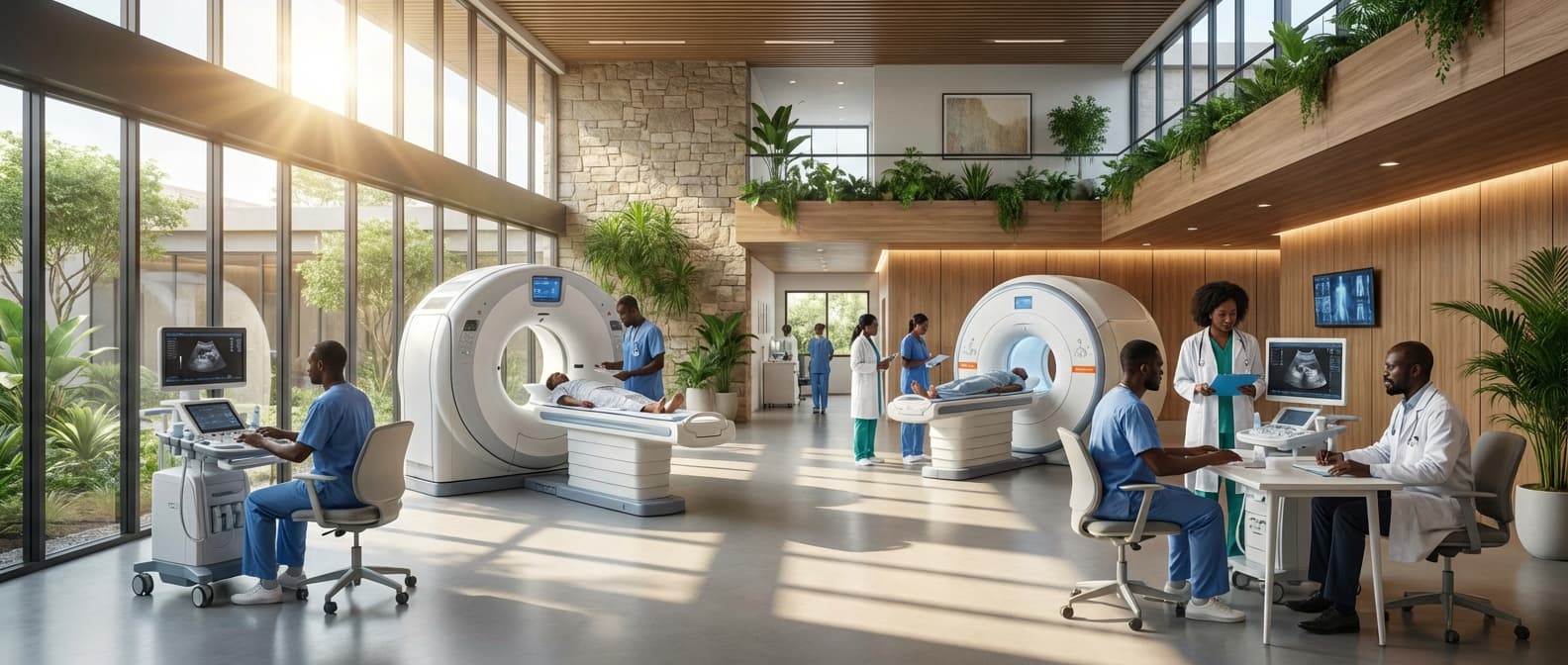
Endoscopy Solutions in Central African Republic
Engineering Excellence & Technical Support
Advanced endoscopic equipment delivering superior visualization and diagnostic precision for minimally invasive procedures. High-standard technical execution following OEM protocols and local regulatory frameworks.
Advanced Diagnostic Capabilities
Our state-of-the-art endoscopy equipment provides unparalleled visualization and detail, enabling earlier and more accurate diagnosis of gastrointestinal conditions, leading to improved patient outcomes in the Central African Republic.
Minimally Invasive Procedures
We offer a range of minimally invasive endoscopic solutions that reduce patient discomfort, shorten recovery times, and minimize the need for surgical intervention, making advanced care accessible in remote areas of CAR.
Enhanced Training & Support
Beyond equipment, we provide comprehensive training programs and ongoing technical support for healthcare professionals in the Central African Republic, ensuring the effective and safe utilization of our advanced endoscopy solutions.
What Is Endoscopy Solutions In Central African Republic?
Endoscopy solutions in the Central African Republic (CAR) refer to the provision and utilization of endoscopic diagnostic and therapeutic procedures. These services involve the insertion of an endoscope – a flexible or rigid tube with a light and camera – into the body to visualize internal organs and tissues. The primary objective is to obtain direct visual inspection, perform biopsies, remove foreign bodies, or conduct therapeutic interventions within lumens or cavities. The CAR, facing significant challenges in healthcare infrastructure and accessibility, relies on these solutions to address a spectrum of gastrointestinal, respiratory, and other internal medical conditions.
| Service/Procedure | Description | Indications (Who Needs It) | Typical Use Cases |
|---|---|---|---|
| Upper Endoscopy (Esophagogastroduodenoscopy - EGD) | Visual inspection of the esophagus, stomach, and duodenum. | Patients presenting with dysphagia, odynophagia, upper abdominal pain, unexplained weight loss, suspected peptic ulcer disease, or gastrointestinal bleeding. | Diagnosis of gastritis, peptic ulcers, esophagitis, Barrett's esophagus, screening for H. pylori, and detection of upper GI malignancies. |
| Lower Endoscopy (Colonoscopy/Sigmoidoscopy) | Visual inspection of the colon and rectum. | Patients with changes in bowel habits, rectal bleeding, abdominal pain, unexplained anemia, or a family history of colorectal cancer. | Detection and removal of polyps, diagnosis of inflammatory bowel disease (Crohn's disease, ulcerative colitis), screening for colorectal cancer, and evaluation of lower GI bleeding. |
| Bronchoscopy | Visual inspection of the airways (trachea and bronchi). | Patients with persistent cough, hemoptysis, suspected pneumonia, airway obstruction, or abnormal chest imaging. | Diagnosis of lung cancer, tuberculosis, foreign body aspiration, management of post-operative airway complications, and obtaining samples for microbiological analysis. |
| Endoscopic Retrograde Cholangiopancreatography (ERCP) | Visualization and intervention of the bile and pancreatic ducts. | Patients with suspected bile duct stones, strictures, or tumors, or pancreatic duct abnormalities. | Removal of bile duct stones, stent placement for biliary drainage, and biopsy of suspicious lesions. |
| Endoscopic Biopsy and Specimen Collection | Obtaining tissue samples for histopathological examination. | Any patient undergoing endoscopy where a definitive diagnosis requires histological confirmation. | Diagnosing malignancy, inflammatory conditions, and infectious etiologies of internal organs. |
| Foreign Body Retrieval | Removal of ingested or aspirated foreign objects. | Patients who have accidentally swallowed or inhaled foreign objects. | Retrieval of swallowed coins, buttons, bones, or aspirated food particles from the GI tract or airways. |
Key Components of Endoscopy Solutions in CAR:
- Endoscopic Equipment: Availability and maintenance of diagnostic and therapeutic endoscopes (e.g., gastroscopes, colonoscopes, bronchoscopes), associated light sources, imaging systems, and accessories.
- Trained Personnel: Availability of skilled gastroenterologists, pulmonologists, surgeons, and endoscopy technicians trained in performing and assisting with endoscopic procedures.
- Ancillary Services: Provision of sedation and anesthesia services, infection control protocols, and post-procedure care.
- Facility Infrastructure: Adequacy of dedicated endoscopy suites with appropriate ventilation, decontamination facilities, and recovery areas.
- Reagents and Consumables: Access to necessary biopsy forceps, snares, dilators, cautery devices, and other disposable materials.
Who Needs Endoscopy Solutions In Central African Republic?
The Central African Republic, like many developing nations, faces significant healthcare challenges. Access to advanced diagnostic tools such as endoscopy is crucial for early and accurate detection of various gastrointestinal and respiratory conditions. These conditions can range from common ulcers and infections to more serious issues like cancer and inflammatory bowel diseases. Without accessible endoscopy services, diagnosis is often delayed, leading to poorer patient outcomes and increased treatment costs. This highlights a critical need for comprehensive endoscopy solutions, including equipment, trained personnel, and maintenance support, within the country.
| Department/Specialty | Specific Needs/Applications | Key Personnel Involved |
|---|---|---|
| Gastroenterology | Diagnosis and treatment of esophageal, stomach, duodenal, and colonic diseases (ulcers, gastritis, GERD, inflammatory bowel disease, polyps, cancer). | Gastroenterologists, Endoscopists, Gastroenterology Nurses |
| Pulmonology | Diagnosis of lung diseases (e.g., pneumonia, tuberculosis, lung cancer, interstitial lung disease) through bronchoscopy. | Pulmonologists, Respiratory Therapists |
| General Surgery | Pre-operative assessment, diagnosis of acute surgical conditions (e.g., appendicitis, bowel obstruction), and therapeutic interventions. | General Surgeons |
| Oncology | Diagnosis and staging of gastrointestinal and lung cancers. | Oncologists, Pathologists |
| Internal Medicine | General diagnosis of unexplained abdominal pain, chronic diarrhea, or gastrointestinal bleeding. | Internists |
| Emergency Medicine | Diagnosis and management of acute gastrointestinal bleeding or foreign body ingestion. | Emergency Physicians |
Target Customers and Departments for Endoscopy Solutions in the Central African Republic
- {"title":"Hospitals (Public and Private)","description":"The primary beneficiaries of endoscopy solutions. These institutions are equipped to handle a range of medical conditions and require advanced diagnostic capabilities for effective patient care."}
- {"title":"Specialized Clinics","description":"Facilities focusing on gastroenterology, pulmonology, and general surgery will have a direct and consistent need for endoscopy."}
- {"title":"Non-Governmental Organizations (NGOs) and Humanitarian Organizations","description":"Groups involved in providing healthcare services in underserved areas often require mobile or robust endoscopy units to reach remote populations and address specific health crises."}
- {"title":"Medical Training Institutions","description":"Universities and medical schools that train future healthcare professionals will need endoscopy equipment for both educational purposes and to provide clinical services."}
Endoscopy Solutions Process In Central African Republic
The Endoscopy Solutions process in the Central African Republic (CAR) involves a structured workflow designed to efficiently deliver diagnostic and therapeutic endoscopic services. This process begins with an initial inquiry and culminates in the successful execution of the endoscopic procedure, followed by comprehensive post-procedure care and reporting. The CAR context presents unique logistical and resource considerations that influence each stage of the workflow.
| Stage | Description | Key Considerations in CAR | Key Stakeholders |
|---|---|---|---|
| Inquiry and Initial Consultation | Patient or referring physician contacts the endoscopy unit to request a procedure. This involves initial assessment of symptoms and indication for endoscopy. | Limited access to advanced diagnostics for initial symptom evaluation. Potential language barriers. Reliance on mobile communication or physical visits to clinics. | Patient, Referring Physician, Endoscopy Unit Administrator |
| Patient Triage and Scheduling | Based on the initial consultation, the patient is triaged for urgency and suitability for endoscopy. A schedule is established, considering available equipment, personnel, and patient availability. | Prioritization of urgent cases due to limited availability. Scheduling may be impacted by transportation challenges and clinic operating hours. | Endoscopy Unit Nurse/Coordinator, Physician |
| Pre-Procedure Preparation | Includes patient education about the procedure, dietary restrictions, bowel preparation (if applicable), and obtaining informed consent. Necessary laboratory tests may be ordered. | Ensuring patient comprehension due to potential literacy issues. Availability and affordability of bowel preparation agents. Limited access to pathology labs for pre-procedure testing. | Endoscopy Unit Nurse, Patient, Physician |
| Procedure Execution | The endoscopic procedure (e.g., gastroscopy, colonoscopy) is performed by a qualified endoscopist. This may involve diagnostic examination, biopsy collection, or therapeutic interventions. | Availability and maintenance of endoscopy equipment. Sterilization protocols are critical. Management of potential complications with limited immediate advanced support. | Endoscopist, Endoscopy Nurse, Anesthetist (if applicable), Technician |
| Post-Procedure Care and Recovery | Patients are monitored for immediate recovery, vital signs, and any adverse reactions. Instructions for home care and follow-up are provided. | Adequate recovery space and monitoring capabilities. Ensuring patients have a responsible caregiver for transport home if sedation was used. Clear discharge instructions are essential. | Endoscopy Nurse, Patient, Caregiver |
| Reporting and Follow-up | A detailed report of the findings is documented. Biopsy results are analyzed and communicated. Follow-up appointments are scheduled as needed for further treatment or monitoring. | Timely processing and communication of biopsy results. Challenges in scheduling follow-up appointments due to patient distance or limited clinic capacity. Integration with primary healthcare providers. | Endoscopist, Pathologist, Endoscopy Unit Administrator, Referring Physician, Patient |
Endoscopy Solutions Process in the Central African Republic: Workflow Overview
- Inquiry and Initial Consultation
- Patient Triage and Scheduling
- Pre-Procedure Preparation
- Procedure Execution
- Post-Procedure Care and Recovery
- Reporting and Follow-up
Endoscopy Solutions Cost In Central African Republic
Determining the exact cost of endoscopy solutions in the Central African Republic (CAR) is challenging due to limited publicly available data and the complex logistical and economic factors at play. However, we can discuss the primary pricing factors and provide estimated ranges, acknowledging that these are approximations. Endoscopy solutions encompass not just the procedure itself, but also the associated equipment, consumables, physician fees, and potential hospital charges. The pricing will vary significantly based on the type of endoscopy performed (e.g., gastroscopy, colonoscopy, bronchoscopy), the complexity of the case, the medical facility's standards, and the availability of specialized equipment and personnel.
| Endoscopy Type (Estimated) | Estimated Cost Range (Central African CFA Francs - XAF) | Notes |
|---|---|---|
| Gastroscopy (Upper Endoscopy) | 150,000 - 400,000 XAF | Includes basic procedure, sedation, and physician fees. May be higher in private facilities. |
| Colonoscopy (Lower Endoscopy) | 200,000 - 500,000 XAF | Includes basic procedure, sedation, and physician fees. Complexity of polyp removal can increase cost. |
| Bronchoscopy | 250,000 - 600,000 XAF | Can vary widely based on the need for biopsy or therapeutic interventions. |
| Endoscopic Retrograde Cholangiopancreatography (ERCP) | 600,000 - 1,500,000+ XAF | More complex procedure requiring specialized equipment and expertise. Often involves interventional procedures. |
| Endoscopic Ultrasound (EUS) | 800,000 - 2,000,000+ XAF | Highly specialized and typically available only in select advanced medical centers, if at all. |
| Basic Consumables (per procedure) | 30,000 - 100,000 XAF | This is a component cost, not a standalone procedure price. Includes biopsy tools, cleaning agents etc. |
Key Pricing Factors for Endoscopy Solutions in Central African Republic
- Type of Endoscopic Procedure: More complex or longer procedures generally incur higher costs.
- Medical Facility Type and Location: Private hospitals or specialized clinics in urban centers like Bangui will typically be more expensive than public facilities or those in rural areas, if available.
- Physician and Anesthesiologist Fees: The expertise and specialization of the medical team directly impact the cost.
- Equipment and Technology: Access to modern, high-definition endoscopy equipment and advanced diagnostic tools can increase expenses.
- Consumables and Disposables: Biopsy forceps, snares, cleaning solutions, and sterile supplies are essential and contribute to the overall cost.
- Sedation or Anesthesia: The type and administration of sedation or anesthesia will add to the procedure's price.
- Post-Procedure Care and Follow-up: Hospital stay, medications, and any necessary follow-up consultations are factored in.
- Importation and Logistics: Given the CAR's landlocked status and infrastructure challenges, importing medical equipment and supplies can significantly increase costs due to transportation, customs duties, and potential delays.
- Healthcare Infrastructure and Availability: The scarcity of advanced medical facilities and trained personnel in the CAR means that specialized procedures might be concentrated in fewer locations, potentially leading to higher demand-driven pricing.
- Insurance Coverage: The extent and type of health insurance coverage will influence out-of-pocket expenses for patients. Limited widespread insurance can mean higher direct patient costs.
Affordable Endoscopy Solutions Options
Navigating the costs of medical procedures, including endoscopies, can be a significant concern for many. Fortunately, there are various affordable endoscopy solutions available, and understanding value bundles and cost-saving strategies can empower patients to make informed decisions. Value bundles often combine multiple services, like the procedure itself, pre-operative consultations, anesthesia, and post-procedure follow-up, into a single, often discounted price. This transparency can simplify budgeting and may offer savings compared to paying for each service individually. Cost-saving strategies extend beyond bundles and include exploring different facility types, inquiring about self-pay discounts, and understanding insurance coverage thoroughly.
| Strategy | Description | Potential Savings |
|---|---|---|
| Value Bundles | Pre-packaged services (procedure, anesthesia, follow-up) at a single price. | Can be 10-30% less than individual service costs. |
| Outpatient Surgery Centers | Lower overhead than hospitals, often leading to reduced facility fees. | Can save hundreds to thousands of dollars on facility costs. |
| Self-Pay Discounts | Reduced rates for patients paying directly for services. | Varies widely, but can be significant (e.g., 20-50%). |
| Insurance Optimization | Understanding deductibles, co-pays, and in-network benefits. | Avoids unexpected out-of-pocket expenses and ensures maximum coverage. |
| Negotiation | Directly discussing pricing with the facility or provider. | Outcome is variable but can lead to a reduction in overall cost. |
Affordable Endoscopy Solutions: Value Bundles and Cost-Saving Strategies
- Value Bundles:
- Definition: A pre-packaged set of services offered at a consolidated price, aiming for greater transparency and potential savings.
- Components Typically Included: Endoscopic procedure (e.g., colonoscopy, upper endoscopy), physician fees, anesthesia services, facility fees, pre-procedure consultations, and post-procedure follow-up.
- Benefits: Predictable costs, potential for discounts compared to à la carte pricing, simplified billing.
- Where to Find: Often offered by hospitals, outpatient surgery centers, and sometimes through insurance provider networks.
- Cost-Saving Strategies:
- Compare Facility Types: Outpatient surgery centers generally have lower overhead than hospitals, potentially leading to lower procedure costs.
- Inquire About Self-Pay Discounts: If you don't have insurance or are facing high deductibles, ask facilities if they offer discounted rates for patients paying out-of-pocket.
- Understand Your Insurance Coverage: Carefully review your insurance plan to understand deductibles, co-pays, co-insurance, and out-of-pocket maximums related to diagnostic and preventive endoscopies. Contact your insurer to confirm in-network providers and coverage details.
- Negotiate Pricing: While not always possible, some facilities may be open to negotiation, especially for self-pay patients.
- Seek Second Opinions: For elective procedures, a second opinion can sometimes reveal more cost-effective options or confirm the necessity of the procedure.
- Explore Telehealth for Consultations: For pre- and post-procedure check-ins, inquire if telehealth appointments are available to save on travel and time.
- Ask About Package Deals: Even if not formally a 'bundle,' ask if combining multiple services or opting for a specific package offers any savings.
Verified Providers In Central African Republic
In the Central African Republic, ensuring access to reliable and high-quality healthcare is paramount. When seeking medical services, identifying verified providers is crucial for patient safety and effective treatment. Franance Health has emerged as a leading entity in this landscape, distinguished by its rigorous credentialing process and unwavering commitment to excellence. This document outlines why Franance Health stands out as the best choice for accessing verified healthcare in the Central African Republic.
| Verification Aspect | Franance Health's Process | Benefit to Patients |
|---|---|---|
| Licensing and Certification | Scrutinizes all official medical licenses and specialty certifications with relevant authorities. | Ensures providers are legally qualified and possess the necessary expertise for their practice. |
| Professional Experience | Verifies past employment, clinical experience, and references from reputable institutions. | Confirms that providers have practical experience and a track record of effective patient care. |
| Specialized Training | Confirms completion of advanced training, fellowships, and specialized medical courses. | Guarantees access to highly skilled professionals for complex medical conditions and niche treatments. |
| Reputation and Ethics | Conducts background checks for any disciplinary actions and assesses professional conduct. | Protects patients from unethical practices and ensures a safe and trustworthy healthcare environment. |
| Facility Standards (if applicable) | Assesses adherence to hygiene, safety, and equipment maintenance protocols. | Ensures that healthcare facilities are well-equipped, safe, and conducive to quality treatment. |
Why Franance Health is the Premier Choice for Verified Providers:
- Rigorous Vetting and Credentialing: Franance Health employs a multi-stage verification process for all healthcare providers and facilities. This includes thorough background checks, verification of medical licenses and certifications, and assessment of practical experience and specialized training.
- Commitment to Quality Standards: Adherence to international quality benchmarks and best practices is a cornerstone of Franance Health's operations. They ensure providers maintain high standards in patient care, hygiene, and ethical conduct.
- Comprehensive Network: Franance Health has cultivated a broad network of trusted healthcare professionals and institutions across various medical specialities. This allows patients to find the most suitable and verified expert for their specific needs.
- Patient-Centric Approach: The organization prioritizes patient well-being and satisfaction. Their verification process includes assessing providers' communication skills, empathy, and commitment to patient education.
- Transparency and Accountability: Franance Health fosters transparency by providing clear information about their verified providers' qualifications and services. They also maintain a system for feedback and accountability, ensuring continuous improvement.
- Accessibility and Support: Beyond verification, Franance Health often provides additional support services, such as assistance with appointment scheduling, navigating the healthcare system, and facilitating access to necessary medical resources, making the healthcare journey smoother for individuals in the Central African Republic.
Scope Of Work For Endoscopy Solutions
This Scope of Work (SOW) outlines the technical deliverables and standard specifications for the implementation of Endoscopy Solutions. The objective is to establish a comprehensive and integrated endoscopy system that meets clinical needs, enhances patient care, and ensures efficient workflow within the healthcare facility. This SOW covers hardware, software, integration, training, and support requirements.
| Category | Item | Standard Specifications | Notes |
|---|---|---|---|
| Hardware | Endoscopy Tower | High-resolution monitor (minimum 24-inch LED, Full HD 1920x1080), articulated arm for monitor positioning, integrated cart for components, medical-grade power supply, emergency stop button. | Must be compatible with all selected endoscopes and imaging devices. |
| Hardware | Video Processor | Full HD (1080p) resolution output, multiple input/output ports (HDMI, DVI, SDI), image enhancement features (e.g., digital zoom, white balance, contrast adjustment), DICOM compatibility. | Ability to record high-quality video and still images. |
| Hardware | Light Source | LED or Xenon, high-intensity illumination (>150W equivalent), variable light intensity control, color temperature adjustment, safety features (e.g., auto-shutoff). | Must provide consistent and artifact-free illumination. |
| Hardware | Endoscope | Based on clinical requirements (e.g., flexible, rigid, video gastroscope, colonoscope), high-definition sensor (minimum 1.2MP), ergonomic design, wide field of view (minimum 100 degrees), working channel diameter as per requirement. | Biocompatible materials, sterilizable. |
| Software | Endoscopy Reporting Software | User-friendly interface, customizable report templates, integration with EMR/PACS, image and video annotation tools, patient data management, secure data storage and retrieval. | Must comply with HIPAA and relevant data privacy regulations. |
| Software | PACS Integration Module | Seamless integration with existing Picture Archiving and Communication System, adherence to DICOM standards for image transfer and storage. | Ensure efficient workflow and data accessibility. |
| Integration | Network Connectivity | Gigabit Ethernet connectivity for all components, secure network protocols (e.g., TLS/SSL), adherence to hospital IT security policies. | Robust and reliable network infrastructure. |
| Training | Operator Training | Comprehensive training for physicians, nurses, and technicians on system operation, image capture, reporting, and basic troubleshooting. | On-site and remote training options. |
| Support | Technical Support | 24/7 technical support hotline, on-site repair services, guaranteed response times for critical issues, preventive maintenance schedules. | Service Level Agreement (SLA) to be defined. |
| Compliance | Regulatory Standards | All hardware and software must comply with relevant medical device regulations (e.g., FDA, CE marking), cybersecurity standards, and healthcare industry best practices. | Provide all necessary certifications and documentation. |
Key Deliverables
- Procurement and Installation of Endoscopy Towers
- Deployment of Video Processors and Light Sources
- Integration of Endoscopic Imaging Devices
- Implementation of Endoscopy Reporting Software
- User Training Programs
- Technical Support and Maintenance Services
- System Validation and Testing Reports
Service Level Agreement For Endoscopy Solutions
This Service Level Agreement (SLA) outlines the performance standards and guarantees for the Endoscopy Solutions provided by [Your Company Name] to [Client Name]. It defines the agreed-upon response times for technical support and the uptime guarantees for the Endoscopy Solutions platform.
| Service Component | Response Time Target (Business Hours) | Resolution Time Target (Business Hours) | Uptime Guarantee |
|---|---|---|---|
| Endoscopy Solutions Platform Availability | N/A (Monitored for continuous operation) | N/A (Focus on system stability) | 99.9% (Monthly) |
| Critical System Outage (e.g., inability to acquire/save images) | 1 Hour | 4 Business Hours | Included in overall platform availability |
| High Priority Issue (e.g., degraded image quality, performance issues impacting workflow) | 2 Business Hours | 8 Business Hours | Included in overall platform availability |
| Medium Priority Issue (e.g., minor software bugs, feature usability issues) | 4 Business Hours | 2 Business Days | Included in overall platform availability |
| Low Priority Issue (e.g., feature requests, informational queries) | 8 Business Hours | 5 Business Days | Included in overall platform availability |
Scope of Service
- This SLA covers the Endoscopy Solutions platform, including all associated hardware, software, and cloud-based services necessary for its operation.
- The Endoscopy Solutions are defined as [Specify the exact components of the Endoscopy Solutions covered, e.g., the endoscopy imaging software, the endoscopy equipment connectivity, the data storage and retrieval system, etc.].
Frequently Asked Questions

Ready when you are
Let's scope your Endoscopy Solutions in Central African Republic project in Central African Republic.

Scaling healthcare logistics and technical systems across the entire continent.