
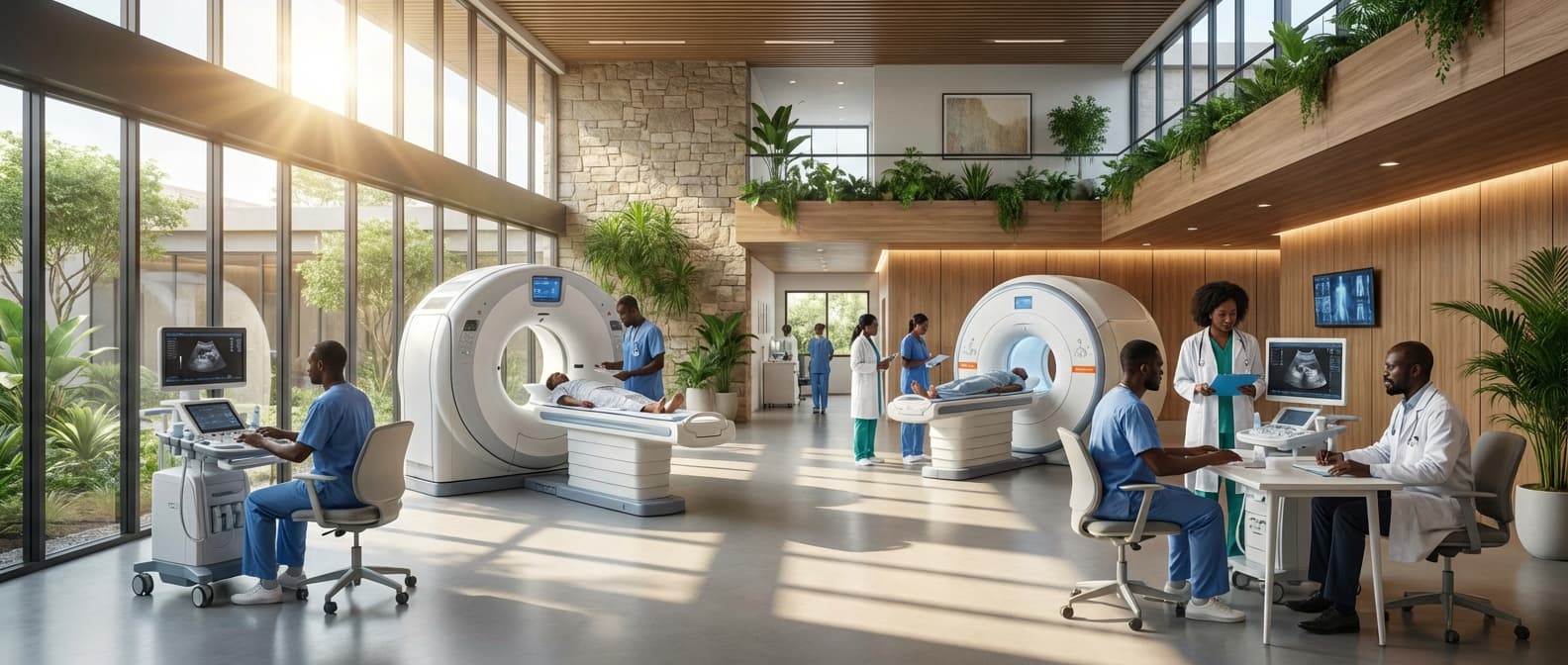
Diagnostic Imaging in Central African Republic
Engineering Excellence & Technical Support
High-resolution imaging systems including CT scanners, MRI, X-ray, and ultrasound technology for accurate clinical diagnosis. High-standard technical execution following OEM protocols and local regulatory frameworks.
Mobile Ultrasound Units for Rural Outreach
Deployment of portable ultrasound machines in remote villages allows for early detection of common obstetric and abdominal conditions, significantly reducing the need for long-distance travel to limited urban facilities.
X-ray Equipment Upgrade and Training Program
Introduction of modern, low-dose X-ray technology coupled with comprehensive training for local radiographers and technicians enhances diagnostic accuracy for tuberculosis, fractures, and other critical pathologies.
Tele-radiology Network for Specialist Consultation
Establishment of a tele-radiology platform connecting regional health centers with experienced radiologists in major hospitals or internationally, enabling rapid interpretation of complex imaging studies and improved patient care pathways.
What Is Diagnostic Imaging In Central African Republic?
Diagnostic imaging in the Central African Republic (CAR) refers to the medical specialty and technologies used to create visual representations of the interior of the body for clinical analysis and medical intervention. This encompasses a range of techniques that employ different forms of energy (e.g., X-rays, magnetic fields, sound waves, radioactive isotopes) to generate images. The primary objective is to detect, diagnose, and monitor diseases, injuries, and anatomical abnormalities. Access to advanced diagnostic imaging modalities in the CAR is significantly challenged by infrastructure limitations, resource scarcity, and a shortage of trained personnel, impacting the scope and availability of these essential services. Despite these challenges, wherever available, it plays a crucial role in patient care.
| Who Needs Diagnostic Imaging? | Typical Use Cases |
|---|---|
| Patients with suspected fractures, dislocations, or bone trauma. | Radiography (X-ray): Assessment of bone fractures, pneumonia, foreign bodies, and general skeletal abnormalities. |
| Individuals experiencing abdominal pain, pelvic pain, or suspected organ abnormalities. | Ultrasonography (Ultrasound): Evaluation of abdominal organs (liver, kidneys, spleen), pelvic organs (uterus, ovaries), pregnancy monitoring, and identification of fluid collections or masses. |
| Patients with neurological symptoms (e.g., stroke, head injury), or suspected soft tissue lesions. | Limited availability of CT and MRI is a major constraint. Where available, CT is used for head trauma, stroke, and complex fractures. MRI, if accessible, aids in detailed examination of soft tissues, brain, and spinal cord. |
| Patients undergoing certain diagnostic or therapeutic procedures where real-time imaging is required. | Fluoroscopy (limited availability): Real-time X-ray imaging for procedures like barium studies or guiding interventional procedures. |
| Patients with suspected cardiovascular issues (highly specialized and rarely available). | Echocardiography (a form of ultrasound): Assessment of heart structure and function. |
| Individuals with suspected infectious diseases requiring specific imaging correlation. | Various modalities are used in conjunction with clinical presentation to confirm or rule out conditions such as tuberculosis (chest X-ray). |
Key Aspects of Diagnostic Imaging in the Central African Republic
- Definition: The use of medical imaging technologies to visualize internal body structures for diagnostic purposes.
- Scope of Services: While comprehensive, advanced imaging services are limited, basic X-ray and ultrasound are the most commonly available.
- Patient Population: Individuals presenting with a wide spectrum of medical conditions requiring visualization for diagnosis and management.
- Challenges: Significant barriers include lack of equipment, maintenance issues, insufficient power supply, limited access to consumables (e.g., contrast agents, films), and a scarcity of trained radiologists, radiographers, and sonographers.
- Role in Healthcare: Despite limitations, diagnostic imaging, where accessible, is indispensable for accurate diagnosis, treatment planning, and disease monitoring, particularly in areas like trauma, infectious diseases, and maternal health.
Who Needs Diagnostic Imaging In Central African Republic?
Diagnostic imaging plays a crucial role in healthcare, even in resource-limited settings like the Central African Republic (CAR). Its absence or scarcity can lead to delayed diagnoses, ineffective treatment, and ultimately, poorer patient outcomes. This document outlines the key individuals and departments that would benefit most from improved access to and utilization of diagnostic imaging services in the CAR.
| Department/Setting | Key Needs for Diagnostic Imaging | Examples of Conditions Requiring Imaging | |||
|---|---|---|---|---|---|
| General Hospitals (e.g., Hôpital Général de Kinshasa - though technically in DRC, representative of large CAR facilities) | Radiology departments with basic X-ray, Ultrasound, and ideally CT/MRI capabilities. Mobile units for outreach. Trained radiographers and radiologists. | Fractures, pneumonia, tuberculosis, appendicitis, bowel obstructions, kidney stones, head injuries, abdominal masses, stroke, tumors. | |||
| District Health Centers/Clinics | Portable ultrasound for point-of-care diagnostics. Basic X-ray where feasible. Tele-radiology support if connectivity allows. | Pregnancy complications (placenta previa, fetal distress), enlarged organs (liver, spleen), fluid collections, uncomplicated fractures. | Maternal and Child Health Services | Ultrasound for antenatal care (fetal growth, presentation, anomalies). | Ectopic pregnancy, multiple gestations, placental abnormalities, congenital fetal anomalies. |
| Infectious Disease Units (e.g., TB, HIV/AIDS centers) | X-ray for chest imaging (TB diagnosis and monitoring). | Pulmonary tuberculosis, opportunistic infections in immunocompromised patients. | |||
| Surgical Departments | X-ray for pre- and post-operative assessment, fracture management. CT scans for complex trauma, surgical planning, and post-operative complications. | Trauma assessment, foreign body localization, organ damage assessment, surgical site infections, abscesses. | |||
| Emergency Departments | Rapid access to X-ray and CT scans for trauma, acute abdomen, and neurological emergencies. | Head injuries, internal bleeding, acute appendicitis, bowel perforation, stroke. | |||
| Research and Training Institutions | Access to a range of imaging modalities for research purposes and for training medical professionals. | Epidemiological studies, development of new diagnostic protocols, hands-on training for aspiring radiologists and technicians. | |||
| Non-Governmental Organizations (NGOs) and Humanitarian Aid Organizations | Support for establishing or upgrading imaging facilities in areas they serve, mobile imaging units for disaster relief or remote areas. | Wide range of conditions depending on the specific mission of the NGO, often addressing critical needs in underserved populations. |
Target Customers and Departments for Diagnostic Imaging in CAR
- Healthcare Professionals: Doctors, nurses, and other medical practitioners who make diagnostic and treatment decisions.
- Patients: Individuals presenting with a wide range of acute and chronic conditions requiring accurate diagnosis.
- Public Health Officials: Responsible for disease surveillance, outbreak investigation, and planning healthcare interventions.
- Medical Students and Trainees: Future healthcare providers who need to develop expertise in interpreting imaging studies.
Diagnostic Imaging Process In Central African Republic
Diagnostic imaging in the Central African Republic (CAR) faces significant challenges due to limited resources, infrastructure, and trained personnel. The workflow, while aiming for a systematic approach, is often impacted by these constraints. The process typically begins with a patient inquiry, usually initiated by a referring physician suspecting a condition requiring imaging for diagnosis or monitoring. This inquiry leads to a request for a specific imaging modality (e.g., X-ray, Ultrasound, CT scan, MRI, if available). The patient then needs to access a facility that offers the requested service. In urban centers like Bangui, options are more concentrated, but in rural areas, access can be a major hurdle. Upon arrival at the facility, the patient's information is registered, and the examination is scheduled if the equipment is functional and a radiographer/technologist is available. The imaging procedure itself is performed by trained personnel. After acquisition, the images are reviewed by a radiologist, if one is present at the facility or remotely. The radiologist interprets the findings and dictates or writes a report, which is then provided to the referring physician for clinical correlation and patient management. However, a significant bottleneck is the scarcity of radiologists, leading to delays or reliance on the referring physician's interpretation of images, especially in remote areas. The availability and maintenance of equipment, as well as the consistent supply of consumables (film, contrast agents, etc.), are critical for the execution of each step.
| Stage | Description | Common Challenges in CAR | Potential Impact |
|---|---|---|---|
| Physician Referral | Doctor identifies a need for imaging to diagnose or monitor a condition. | Lack of specialized training for primary healthcare workers, limited awareness of imaging benefits. | Delayed or missed diagnoses, inappropriate referrals. |
| Imaging Request & Modality Selection | Specific imaging technique (X-ray, Ultrasound, CT, MRI) is requested. | Limited availability of advanced modalities (CT, MRI), outdated equipment, lack of clarity on appropriate modality for certain conditions. | Inability to perform necessary investigations, reliance on less optimal methods. |
| Facility Access & Scheduling | Patient travels to a healthcare facility offering the requested imaging service. | Geographic distance, poor transportation infrastructure, limited number of imaging centers, equipment downtime, shortage of trained technicians. | Long waiting times, patients unable to access essential imaging, increased burden on patients and families. |
| Image Acquisition | Trained personnel operate the imaging equipment to capture images. | Shortage of qualified radiographers/technologists, lack of ongoing training, intermittent power supply, maintenance issues with equipment, lack of consumables (contrast agents, film). | Poor image quality, incomplete examinations, inability to perform scans, radiation safety concerns. |
| Image Interpretation | A radiologist reviews and analyzes the acquired images. | Severe shortage of radiologists, many facilities lack any radiologist, reliance on general practitioners or remote interpretation (if feasible). | Delayed diagnosis, misinterpretation of findings, lack of expert opinion, increased risk of treatment errors. |
| Report Generation & Delivery | A formal report detailing findings and conclusions is created and given to the referring physician. | Delays in report turnaround time due to interpreter shortage, challenges in secure and timely delivery of reports (especially in remote areas). | Hindered clinical decision-making, delayed treatment initiation, patient uncertainty. |
Key Stages in Diagnostic Imaging Workflow in CAR
- Patient Inquiry & Physician Referral
- Imaging Request & Modality Selection
- Facility Access & Scheduling
- Patient Registration & Preparation
- Image Acquisition
- Image Interpretation (Radiologist Review)
- Report Generation
- Report Delivery & Clinical Correlation
Diagnostic Imaging Cost In Central African Republic
Diagnostic imaging costs in the Central African Republic (CAR) are significantly influenced by a range of factors, often leading to considerable price variations. These factors include the type of imaging modality, the complexity of the examination, the location of the facility (urban centers typically have higher costs than rural areas), the specific equipment used (newer, more advanced machines can command higher prices), and the availability of qualified radiologists and technicians. Furthermore, the overall economic situation, including inflation rates and the cost of imported consumables and maintenance, plays a crucial role. Government subsidies or private insurance coverage, while limited in the CAR, can also impact out-of-pocket expenses for patients. Due to the often-limited infrastructure and reliance on imported technology and supplies, diagnostic imaging can be a substantial financial burden for many individuals in the CAR.
| Imaging Modality | Estimated Cost Range (XAF - Central African CFA franc) |
|---|---|
| Basic X-ray (e.g., Chest X-ray, Bone X-ray) | 15,000 - 40,000 |
| Ultrasound (e.g., Abdominal, Pelvic, Obstetric) | 20,000 - 50,000 |
| CT Scan (e.g., Head, Abdomen) | 75,000 - 150,000+ |
| MRI Scan (where available) | 200,000 - 500,000+ |
Key Factors Influencing Diagnostic Imaging Costs in the Central African Republic
- Imaging Modality (e.g., X-ray, Ultrasound, CT, MRI)
- Examination Complexity
- Facility Location (Urban vs. Rural)
- Equipment Age and Technology
- Availability of Skilled Personnel (Radiologists, Technicians)
- Importation Costs of Equipment and Consumables
- Maintenance and Repair Expenses
- Economic Conditions (Inflation, Exchange Rates)
- Availability of Subsidies or Insurance
Affordable Diagnostic Imaging Options
Diagnostic imaging, such as X-rays, CT scans, and MRIs, is a crucial part of medical diagnosis, but costs can be a significant concern. Fortunately, several affordable options and cost-saving strategies exist to make these essential services more accessible. Value bundles and strategic planning can significantly reduce out-of-pocket expenses and overall healthcare costs.
| Cost-Saving Strategy | Description | Potential Savings |
|---|---|---|
| Value Bundles | Pre-packaged services often at a discounted rate. May include scan, interpretation, and consultation. | Moderate to Significant |
| Outpatient Imaging Centers | Generally less expensive than hospital-based facilities. | Significant |
| Self-Pay / Cash Discounts | Offered to patients paying without insurance or with high deductibles. | Significant |
| Price Comparison | Researching costs across different providers for the same procedure. | Moderate to Significant |
| In-Network Providers | Utilizing imaging facilities contracted with your insurance plan. | Moderate |
| Doctor Consultation | Discussing necessity and potential alternative diagnostic methods. | Variable |
Key Affordable Diagnostic Imaging Options & Strategies
- Understanding the true cost: Researching prices from different providers before your appointment is essential. Prices for the same procedure can vary dramatically.
- Choosing the right facility: Outpatient imaging centers often have lower prices than hospital-based departments. Consider freestanding imaging centers or physician-owned practices.
- Comparing bundled services: 'Value bundles' package multiple related services together at a reduced price. This can include the imaging scan itself, the radiologist's interpretation, and sometimes even follow-up consultations.
- Leveraging insurance benefits: Understand your insurance plan's coverage for diagnostic imaging, including deductibles, co-pays, and out-of-network costs. In-network providers are almost always more affordable.
- Exploring self-pay discounts: If you don't have insurance or your deductible is very high, ask imaging centers about self-pay or cash discounts. These can offer substantial savings.
- Utilizing imaging advocacy and comparison tools: Websites and services exist that help you compare prices and find affordable imaging options in your area.
- Discussing alternatives with your doctor: Sometimes, a less expensive imaging modality or a different diagnostic approach might be suitable for your condition.
- Considering telehealth for consultations: For initial discussions about imaging needs or reviewing results, telehealth appointments can be a cost-effective alternative to in-person visits.
- Negotiating prices: Don't be afraid to discuss costs and inquire about potential discounts, especially if you are paying out-of-pocket.
- Health Savings Accounts (HSAs) and Flexible Spending Accounts (FSAs): Utilize pre-tax dollars from these accounts to pay for eligible diagnostic imaging services.
Verified Providers In Central African Republic
In the Central African Republic (CAR), ensuring access to quality healthcare is paramount, especially given the country's ongoing challenges. Identifying 'verified providers' becomes crucial for individuals and organizations seeking reliable medical services. Franance Health stands out as a leading entity, not only verifying providers but also embodying a commitment to excellence that makes them the best choice for healthcare needs in the CAR.
| Franance Health's Contribution | Impact on Healthcare in CAR | Why it Matters |
|---|---|---|
| Comprehensive verification of medical professionals and facilities. | Increases access to qualified and safe healthcare services. | Reduces the risk of receiving substandard or fraudulent medical care, especially in challenging environments. |
| Emphasis on quality standards and patient safety. | Elevates the overall standard of healthcare delivery. | Ensures that patients receive effective and safe treatments, leading to better health outcomes. |
| Focus on accessibility and serving diverse communities. | Promotes equitable access to healthcare across the country. | Helps to bridge geographical and economic barriers to medical care. |
| Building trust and transparency in the healthcare sector. | Empowers individuals to make informed healthcare choices. | Fosters confidence in the healthcare system, encouraging timely access to necessary services. |
| Continuous monitoring and re-evaluation. | Maintains high standards over time and addresses potential issues proactively. | Ensures that the quality of care remains consistent and reliable. |
Franance Health Credentials and Why They Represent the Best Choice:
- Rigorous Vetting Process: Franance Health employs a stringent credentialing process for all healthcare providers and facilities it verifies. This involves in-depth background checks, verification of licenses and certifications, review of educational qualifications, and assessment of clinical experience. This ensures that only competent and legitimate professionals are listed.
- Commitment to Quality Standards: Beyond basic credentials, Franance Health assesses providers against established quality benchmarks and patient safety protocols. This may include evaluating adherence to international best practices, availability of essential medical equipment, and implementation of robust hygiene and infection control measures.
- Focus on Accessibility and Equity: Franance Health recognizes the unique healthcare landscape of the CAR and actively seeks to include providers who are committed to serving underserved populations and remote areas. Their verification process considers the provider's reach and ability to offer services equitably.
- Patient-Centric Approach: Franance Health prioritizes the patient experience. Their verification criteria often include feedback mechanisms and reviews from past patients, ensuring that verified providers demonstrate professionalism, empathy, and effective communication.
- Comprehensive Service Directory: Franance Health aims to provide a comprehensive and up-to-date directory of verified healthcare providers across various specialties. This allows users to easily find the specific medical expertise they require, saving time and reducing the risk of encountering unqualified practitioners.
- Continuous Monitoring and Re-evaluation: Verification is not a one-time event. Franance Health maintains a system for ongoing monitoring and periodic re-evaluation of its verified providers. This ensures that standards are consistently met and that any issues are addressed promptly.
- Partnerships with Reputable Organizations: Franance Health often collaborates with local and international health organizations, government bodies, and NGOs. These partnerships lend further credibility to their verification process and broaden their reach in assessing and supporting healthcare providers.
- Trust and Transparency: By clearly outlining their verification methodology and making their list of verified providers accessible, Franance Health fosters trust and transparency within the healthcare ecosystem of the CAR. This empowers individuals to make informed decisions about their health.
- Bridging the Information Gap: In a region where reliable healthcare information can be scarce, Franance Health acts as a vital bridge, connecting individuals with trusted medical professionals and facilities, thereby improving health outcomes.
Scope Of Work For Diagnostic Imaging
This Scope of Work (SOW) outlines the technical deliverables and standard specifications required for the provision of comprehensive Diagnostic Imaging services. The objective is to ensure high-quality, accurate, and timely imaging studies that support patient care, diagnosis, and treatment planning.
| Imaging Modality | Standard Image Resolution (Pixels) | Standard File Format | Typical Turnaround Time (Report - Non-Urgent) | Accreditation/Certification Requirements |
|---|---|---|---|---|
| X-ray (Plain Radiography) | 2048x2048 or higher | DICOM | 24-48 hours | ACR Accreditation (or equivalent) |
| Computed Tomography (CT) | 1024x1024 or higher | DICOM | 4-24 hours | ACR Accreditation (or equivalent) |
| Magnetic Resonance Imaging (MRI) | 1024x1024 or higher | DICOM | 4-24 hours | ACR Accreditation (or equivalent) |
| Ultrasound | Varies by application (e.g., 512x512 for B-mode) | DICOM | 4-24 hours | AIUM Accreditation (or equivalent) |
| Nuclear Medicine | Varies by SPECT/PET scanner | DICOM | 4-24 hours | ACR Accreditation (or equivalent) |
| Mammography | 4000x4000 or higher | DICOM | 48-72 hours | MQSA Certified (or equivalent) |
| Fluoroscopy | 512x512 or higher (for spot imaging) | DICOM | 4-24 hours | ACR Accreditation (or equivalent) |
Key Technical Deliverables
- Acquisition and interpretation of various imaging modalities (X-ray, CT, MRI, Ultrasound, Nuclear Medicine, Mammography, Fluoroscopy).
- Delivery of high-resolution digital imaging files in DICOM format.
- Provision of accurate and comprehensive radiology reports, including findings, impressions, and recommendations, within defined turnaround times.
- Integration of imaging systems with the hospital's Picture Archiving and Communication System (PACS) and Electronic Health Record (EHR) systems.
- Adherence to established radiation safety protocols and ALARA (As Low As Reasonably Achievable) principles for all procedures involving ionizing radiation.
- Regular quality assurance (QA) and quality control (QC) procedures for all imaging equipment to ensure optimal performance and image quality.
- Maintenance and calibration of all imaging equipment according to manufacturer specifications and regulatory requirements.
- Access to on-call radiology services for urgent interpretations and consultations.
- Provision of teleradiology services for remote interpretation if applicable.
- Secure storage and retrieval of all imaging studies and reports for the required retention period.
Service Level Agreement For Diagnostic Imaging
This Service Level Agreement (SLA) outlines the performance standards for diagnostic imaging services provided by [Provider Name] to [Client Name]. It defines the expected response times for various service requests and guarantees a minimum uptime for critical diagnostic imaging systems.
| Service Request Type | Response Time Target | Resolution Time Target | Severity Level | Uptime Guarantee |
|---|---|---|---|---|
| Critical System Failure (e.g., Imaging scanner offline) | 15 minutes | 2 hours | High | 99.5% Uptime |
| Urgent Imaging Request/Scheduling Conflict | 30 minutes | 4 hours | Medium | 99.0% Uptime |
| Routine Imaging Request/Technical Support | 1 business hour | 8 business hours | Low | 98.0% Uptime |
| Image Archival/Retrieval Request | 2 business hours | 24 business hours | Low | N/A (dependent on archiving system) |
Scope of Services
- Diagnostic Imaging Modalities Covered: (e.g., MRI, CT, X-ray, Ultrasound, PET)
- Support Channels: (e.g., Phone, Email, Ticketing System)
- Service Hours: (e.g., 24/7, Business Hours)
Frequently Asked Questions

Ready when you are
Let's scope your Diagnostic Imaging in Central African Republic project in Central African Republic.

Scaling healthcare logistics and technical systems across the entire continent.