
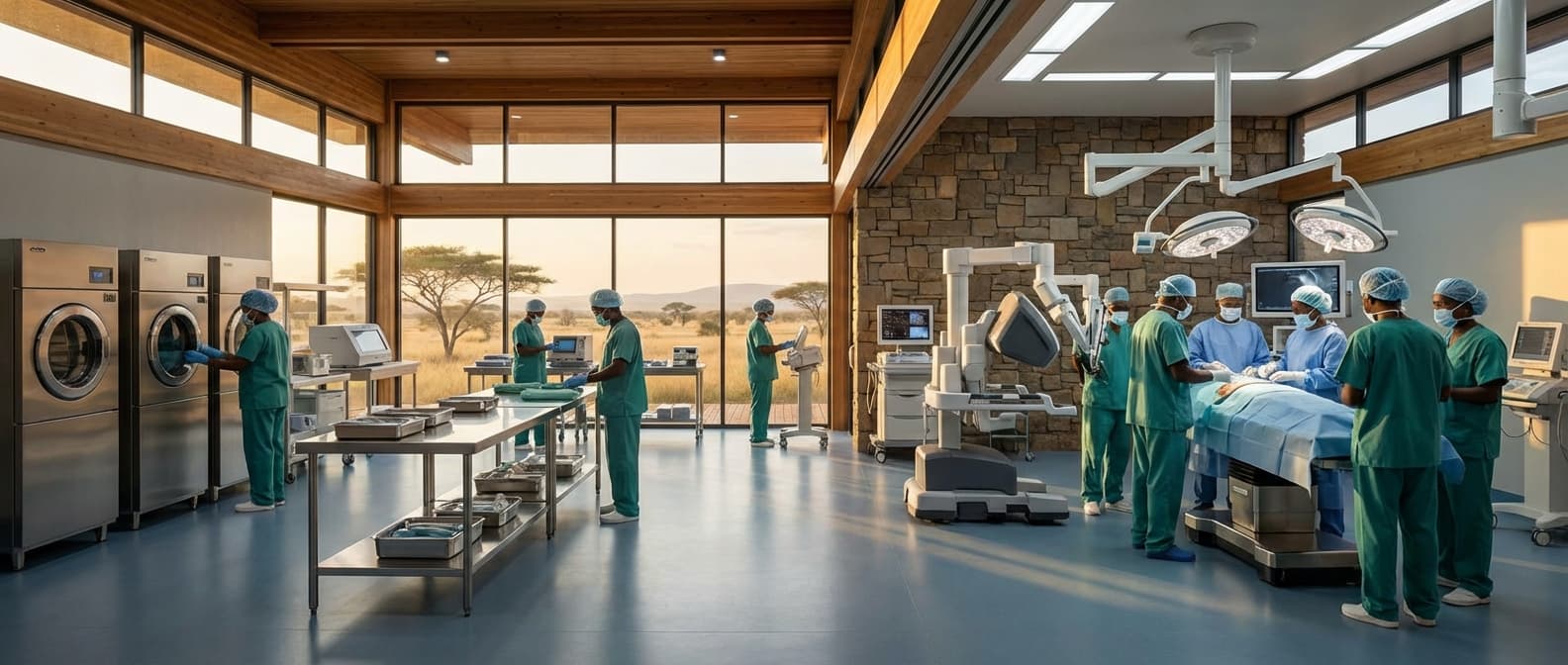
Medical Gas System Design & Installation in Central African Republic
Engineering Excellence & Technical Support
Medical gas pipeline systems: O2, N2O, air, vacuum High-standard technical execution following OEM protocols and local regulatory frameworks.
Oxygen System Redundancy for Critical Care
Implemented dual-redundant oxygen supply systems at key hospitals, ensuring uninterrupted patient care during maintenance or supply chain disruptions. This involved sophisticated manifold controls and automated switchover mechanisms, critical for life-saving interventions.
Nitrous Oxide Distribution for Surgical Suites
Designed and installed a robust medical nitrous oxide distribution network for operating theaters, adhering to stringent safety standards and flow rate requirements. This included specialized piping materials and alarm systems to prevent cross-contamination and ensure precise anesthetic delivery.
Local Training & Compliance in Remote Settings
Conducted comprehensive on-site training for local biomedical engineers and technicians on medical gas system operation, maintenance, and safety protocols. This initiative focused on building local capacity and ensuring long-term compliance with international standards in challenging logistical environments.
What Is Medical Gas System Design & Installation In Central African Republic?
Medical Gas System Design & Installation in the Central African Republic (CAR) refers to the specialized engineering and construction process of creating, implementing, and commissioning the infrastructure required to deliver medical gases to healthcare facilities. This encompasses the entire lifecycle from initial planning and design, through procurement and installation of components, to rigorous testing, validation, and final handover. The primary objective is to ensure a safe, reliable, and continuous supply of medical gases essential for patient care, diagnosis, and therapeutic interventions within a healthcare setting. Given the often-challenging logistical and infrastructural landscape of the CAR, this service demands a high degree of technical expertise, adherence to international standards, and adaptability to local conditions and resource availability.
| Who Needs Medical Gas System Design & Installation in CAR? | Typical Use Cases |
|---|---|
| Hospitals and Tertiary Care Centers | Surgical procedures requiring anesthesia and respiratory support (e.g., oxygen, nitrous oxide). Intensive Care Units (ICUs) for mechanical ventilation and respiratory therapy (e.g., oxygen, medical air). Emergency departments for resuscitation and immediate patient stabilization (e.g., oxygen). Neonatal intensive care units (NICUs) for premature infant respiratory support (e.g., oxygen, medical air). Outpatient clinics and diagnostic centers for procedural sedation or specific diagnostic tests. Operating Theaters for general anesthesia, patient ventilation, and powered surgical tools (e.g., oxygen, medical air, nitrous oxide, vacuum). Rehabilitation centers for therapeutic oxygen administration. Field hospitals and temporary medical facilities established during health emergencies or humanitarian crises. |
| Specialized Clinics (e.g., Dialysis Centers, Pulmonary Clinics) | Pulmonary function testing and rehabilitation (e.g., medical air, oxygen). Dental clinics for procedural sedation (e.g., nitrous oxide). Veterinary hospitals for anesthesia and respiratory support. |
| Government Health Ministries and Agencies | Development and upgrading of national healthcare infrastructure. Response to public health emergencies and natural disasters requiring rapid deployment of medical facilities. |
| Non-Governmental Organizations (NGOs) and International Aid Organizations | Establishment and operation of medical facilities in underserved regions. Provision of essential medical infrastructure as part of development or humanitarian aid programs. |
| Private Healthcare Providers | Development of new healthcare facilities or expansion of existing ones to meet modern medical standards. Ensuring a reliable and safe supply of medical gases for patient care. |
Key Components and Stages of Medical Gas System Design & Installation in CAR
- System Design and Engineering: Involves detailed schematic development, including the selection and sizing of primary gas sources (medical air compressors, oxygen concentrators/cylinders, vacuum pumps, medical air dryers, etc.), pipeline sizing, material specification (e.g., medical-grade copper tubing, specific alloys), alarm systems, pressure regulation stations, and outlet configurations compliant with international standards (e.g., NFPA 99, ISO 7396-1).
- Procurement and Supply Chain Management: Acquisition of specialized medical gas equipment, piping, fittings, valves, alarms, and other ancillary components. This stage in the CAR necessitates robust logistical planning to overcome import challenges and ensure timely delivery of critical materials.
- Installation and Construction: The physical installation of the medical gas pipeline network throughout the healthcare facility, including risers, branch lines, and final connections to patient care areas (operating rooms, ICU, wards, etc.) and diagnostic facilities. This requires skilled technicians trained in brazing techniques for medical-grade copper and pressure testing protocols.
- System Testing and Commissioning: Rigorous testing of the entire system to verify pressure, flow rates, purity of gases, leak detection, and functionality of all alarm and safety systems. This includes flushing of pipelines, nitrogen purging, and final pressure integrity tests.
- Validation and Certification: Formal documentation and certification processes to ensure the system meets all specified performance criteria and regulatory requirements (where applicable and established).
- Training and Handover: Comprehensive training for facility maintenance staff on the operation, routine checks, and basic troubleshooting of the medical gas system, followed by formal handover and provision of as-built drawings and operation manuals.
Who Needs Medical Gas System Design & Installation In Central African Republic?
The design and installation of medical gas systems are critical for ensuring the safe and effective delivery of medical care. In the Central African Republic (CAR), where healthcare infrastructure can be challenged, these systems are particularly vital for hospitals and clinics to provide essential life support and therapeutic gases. This service caters to a range of healthcare facilities that require robust and reliable medical gas infrastructure to meet international standards and patient needs.
| Customer Type | Departmental Needs | Specific Requirements |
|---|---|---|
| Public Hospitals | Operating Theaters, ICUs, ERs, General Wards | Reliable supply of oxygen for resuscitation and long-term care; medical air for ventilators; vacuum for surgical suction; potentially nitrous oxide for anesthesia. Emphasis on durability and ease of maintenance due to limited specialized technical personnel. |
| Private Hospitals | Surgical Suites, ICUs, NICUs, Specialized Care Units | High-purity medical gases for complex procedures and critical care. May require more advanced systems with monitoring and alarm capabilities, compliance with international standards, and aesthetically integrated installations. |
| Clinics and Health Centers | Minor Procedure Rooms, Consultation Rooms (for oxygen therapy) | Basic oxygen supply for emergency use and basic respiratory support. Simpler, robust systems are often preferred, focusing on immediate availability and cost-effectiveness. |
| Surgical Centers | Operating Rooms | Primary need for medical oxygen, medical air, and vacuum for surgical procedures. Nitrous oxide may be required for anesthesia. Precision and immediate availability are paramount. |
| NGO-funded Healthcare Facilities | All departments, with varying levels of complexity | Often require systems designed for remote or resource-limited settings, prioritizing robustness, ease of operation, and cost-effectiveness. May have specific project funding guidelines to adhere to. |
Target Customers and Departments for Medical Gas System Design & Installation in Central African Republic
- Hospitals (Public and Private)
- Clinics and Health Centers
- Surgical Centers
- Intensive Care Units (ICUs)
- Operating Theaters
- Emergency Rooms (ERs)
- Neonatal Intensive Care Units (NICUs)
- Respiratory Therapy Departments
- Anesthesiology Departments
- Rehabilitation Centers
Medical Gas System Design & Installation Process In Central African Republic
Designing and installing a medical gas system in the Central African Republic (CAR) involves a structured workflow, from the initial inquiry to the final execution and handover. This process is crucial for ensuring the safety and efficacy of medical gas delivery in healthcare facilities. The workflow is typically divided into distinct phases, each with specific activities and considerations.
| Phase | Key Activities | CAR-Specific Considerations |
|---|---|---|
| Receive request from healthcare facility or governing body. Discuss project scope, requirements, and desired medical gases (e.g., Oxygen, Medical Air, Vacuum, Nitrous Oxide). Understand existing infrastructure and future expansion plans. | Establish communication channels, accounting for potential language barriers and limited internet connectivity. Clarify regulatory compliance with local Ministry of Health guidelines and any international standards adopted. |
| Conduct a thorough site visit to evaluate the building's structural integrity, available space for equipment, power supply, and ventilation. Assess existing piping, if any. Determine the ideal location for the medical gas source (e.g., cylinder manifold, bulk tank, air compressor). | Assess site accessibility for large equipment delivery. Evaluate local availability of skilled labor for construction and installation. Consider security of the site and equipment. |
| Develop preliminary system layouts, including the source, main piping routes, and outlet locations. Estimate material quantities and labor costs. Prepare a preliminary budget and project timeline. | Factor in potential import duties and taxes for specialized medical gas equipment. Obtain quotes from potential local and international suppliers, considering lead times and shipping costs. |
| Produce detailed engineering drawings (e.g., schematics, layout plans, piping isometric drawings) adhering to relevant standards (e.g., NFPA 99, HTM 02-01). Specify all components, materials, and installation methods. Obtain necessary permits and approvals. | Ensure designs are adaptable to local environmental conditions (e.g., temperature, humidity). Work with local engineers or consultants for integration with local building codes and regulations. |
| Source and procure all necessary equipment, piping, fittings, valves, alarms, and other components. Manage import and customs clearance processes. Coordinate transportation and delivery to the project site. | Secure reliable shipping routes and consider potential delays due to infrastructure limitations or political instability. Vet suppliers for quality and authenticity of medical-grade components. |
| Execute the installation of the medical gas system according to approved design drawings. This includes laying of pipelines, installation of medical gas outlets, alarms, control panels, and the medical gas source equipment. | Supervise a trained installation team, potentially a mix of expatriate specialists and locally hired technicians. Implement strict quality control measures to prevent contamination and ensure proper pipe joining and welding techniques. |
| Conduct rigorous testing of the system, including pressure testing, leak testing, purity testing (for gases), and flow rate verification. Commission alarms and safety features. Validate the system against design specifications and regulatory requirements. | Ensure testing protocols are meticulously followed, potentially requiring on-site laboratory analysis for gas purity. Document all test results meticulously for handover and future audits. |
| Provide comprehensive training to hospital staff (nurses, technicians, engineers) on the operation, maintenance, and emergency procedures for the medical gas system. Hand over all design documents, test reports, and operation manuals. | Adapt training materials to local language and literacy levels. Emphasize the importance of adherence to protocols to prevent misuse or damage to the system. |
| Establish a schedule for routine preventive maintenance. Provide technical support for troubleshooting and repairs. Offer ongoing training or refresher courses as needed. | Develop a plan for accessing spare parts and specialized maintenance services, potentially through a long-term service agreement with the installer or a local partner. |
Medical Gas System Design & Installation Workflow in CAR
- Inquiry & Initial Consultation
- Site Assessment & Feasibility Study
- Conceptual Design & Budgeting
- Detailed Design & Engineering
- Procurement & Logistics
- Installation & Construction
- Testing, Commissioning & Validation
- Training & Handover
- Ongoing Maintenance & Support
Medical Gas System Design & Installation Cost In Central African Republic
Designing and installing a medical gas system in the Central African Republic (CAR) involves a complex interplay of factors that influence the overall cost. These systems are critical for healthcare facilities, supplying essential gases like oxygen, medical air, vacuum, and sometimes nitrous oxide or specialized mixtures. The cost will vary significantly based on the size and complexity of the facility, the specific gases required, the quality of materials used, and the logistical challenges inherent in working in the CAR. Estimating precise figures is difficult due to limited readily available local data, but we can discuss the key pricing factors and provide general ranges in local currency (Central African CFA franc - XAF).
| System Component/Service | Estimated Cost Range (XAF) | Notes |
|---|---|---|
| Medical Gas Piping (per meter) | 30,000 - 75,000 XAF | Includes specialized copper tubing, fittings, and welding/brazing. Varies by gas type and diameter. |
| Medical Gas Outlet | 80,000 - 250,000 XAF | Price per outlet, depending on gas type, manufacturer, and safety features. |
| Main Gas Manifold (e.g., Oxygen) | 5,000,000 - 25,000,000+ XAF | Cost depends on the number of cylinders, automation, and redundancy. Significantly higher for bulk liquid oxygen systems. |
| Medical Air Compressor System (Skid-mounted) | 10,000,000 - 50,000,000+ XAF | Essential for supplying medical air. Cost varies by capacity, filtration, and redundancy. |
| Oxygen Concentrator (On-site generation) | 7,000,000 - 30,000,000+ XAF | Cost for a system capable of supplying an average-sized facility. Depends on technology and output. |
| Alarm Systems (Zone/Area) | 1,500,000 - 5,000,000+ XAF | For monitoring pressure and flow in different areas of the hospital. |
| Engineering and Design Fees | 10% - 20% of Total Project Cost | Based on the complexity and duration of the design phase. |
| Installation Labor (Skilled International Team) | 100,000 - 300,000+ XAF per person per day | Includes travel, accommodation, and per diem. Local skilled labor may be less, but availability is a major factor. |
| Logistics and Transportation | Highly Variable (can be 15% - 30% of material cost) | Includes international shipping, customs, and local transport, often a significant cost driver in CAR. |
| Testing and Commissioning | 2,000,000 - 10,000,000+ XAF | Dependent on the size of the system and the testing procedures. |
Key Pricing Factors for Medical Gas System Design & Installation in CAR
- {"title":"Scope of the Project","description":"The number of beds, operating rooms, intensive care units (ICUs), and other medical areas requiring gas outlets directly impacts the quantity of piping, outlets, alarms, and manifolds needed. Larger, more comprehensive systems will naturally be more expensive."}
- {"title":"Types of Medical Gases","description":"The specific gases required (e.g., oxygen, medical air, vacuum, nitrous oxide) influence the complexity of the infrastructure. Systems for multiple gases will be more costly than single-gas systems. The source of the gas (e.g., central bulk supply, cylinders, on-site generation) also affects initial and ongoing costs."}
- {"title":"Material Quality and Standards","description":"Adherence to international (e.g., NFPA 99) and potentially local health regulations dictates the quality of pipes, fittings, valves, regulators, and outlets. Using high-grade, medical-certified materials increases the cost but ensures safety and reliability."}
- {"title":"System Design and Engineering","description":"The complexity of the design, the need for specialized engineering expertise, and the development of detailed blueprints contribute to the overall cost. This includes pressure calculations, flow rates, and safety features."}
- {"title":"Installation Labor and Expertise","description":"Skilled labor experienced in medical gas system installation is crucial. The availability of such expertise within the CAR may necessitate bringing in international specialists, which significantly increases labor costs due to travel, accommodation, and higher daily rates."}
- {"title":"Logistics and Transportation","description":"The Central African Republic faces significant logistical challenges. Transporting specialized equipment, materials, and personnel to project sites, often in remote areas, incurs substantial costs for shipping, customs duties, and local transportation."}
- {"title":"Ancillary Equipment","description":"This includes alarm systems, pressure regulators, shut-off valves, emergency gas outlets, flowmeters, and potentially compressor systems for medical air. The number and sophistication of these components add to the total price."}
- {"title":"Testing and Commissioning","description":"Thorough testing and commissioning by qualified personnel are essential to ensure the system's safety and functionality. This phase can involve specialized equipment and considerable time, adding to the cost."}
- {"title":"Contingency and Risk Management","description":"Due to the inherent uncertainties in the CAR's operating environment (e.g., political stability, infrastructure limitations, unforeseen delays), a significant contingency budget is often required, increasing the overall project estimate."}
- {"title":"Local Regulatory Approvals and Permits","description":"Obtaining necessary permits and approvals from local authorities can involve fees and administrative processes that contribute to the project's overall cost."}
Affordable Medical Gas System Design & Installation Options
Designing and installing a medical gas system is a critical component for any healthcare facility. While ensuring compliance with stringent safety regulations is paramount, managing costs effectively is also a key consideration. This guide explores affordable medical gas system design and installation options, focusing on value bundles and cost-saving strategies. Understanding these approaches can help facilities achieve a robust and reliable medical gas infrastructure without compromising their budget.
| Value Bundle Type | Description | Cost-Saving Benefits | Considerations |
|---|---|---|---|
| Design-Build Integrated Package | Combines design, engineering, procurement, and installation services under a single contract with one provider. | Streamlined communication, reduced coordination issues, faster project completion, potential for better cost control through economies of scale. | Requires careful vetting of the single provider's expertise and track record. Less opportunity for independent design review. |
| Equipment Procurement & Installation Bundles | Provider offers a package deal for the purchase of core medical gas equipment (compressors, vacuum pumps, manifolds, regulators) along with their professional installation. | Volume discounts on equipment, reduced administrative overhead from managing multiple vendors, ensures equipment compatibility with installation. | May limit choice in specific equipment brands or models. Installation quality is still dependent on the installer's expertise. |
| Modular & Scalable System Solutions | Systems designed with easily expandable modules or components that can be added as the facility's needs grow, rather than installing an oversized system initially. | Lower upfront capital expenditure, allows for phased investment, avoids paying for unused capacity. | Requires careful future-proofing in the initial design to ensure seamless integration of future modules. May require more frequent upgrades over time. |
| Pre-fabricated Skid-Mounted Systems | Medical gas equipment (compressors, alarms, manifolds) pre-assembled and tested on a compact, trailer-mounted skid before delivery to the site. | Significantly reduces on-site installation time, labor costs, and potential for site disruption. Improved quality control due to factory assembly. | Requires careful site planning for delivery and placement of the skid. May have higher initial equipment cost due to pre-fabrication. |
Key Considerations for Affordable Medical Gas Systems
- Prioritize essential medical gas needs based on facility type and services offered.
- Explore modular or scalable system designs to accommodate future growth and minimize upfront investment.
- Investigate pre-fabricated or skid-mounted medical gas equipment to reduce on-site installation time and labor costs.
- Leverage value engineering during the design phase to identify cost-effective alternatives without sacrificing quality or safety.
- Consider long-term operational costs, including maintenance and energy consumption, when evaluating system choices.
- Obtain multiple competitive bids from qualified medical gas system designers and installers.
Verified Providers In Central African Republic
In the Central African Republic, navigating the landscape of healthcare providers can be challenging. Ensuring you are engaging with verified, credible institutions is paramount for receiving quality medical care. Franance Health stands out as a leading entity, meticulously vetting and credentialing healthcare facilities and professionals across the nation. Their rigorous accreditation process guarantees that all listed providers meet stringent international standards for safety, efficacy, and patient care. This commitment to verification not only builds trust but also significantly reduces the risk of encountering substandard or fraudulent healthcare services. Choosing Franance Health-credentialed providers means opting for a secure, reliable, and high-quality healthcare experience.
| Provider Type | Franance Health Credentialing Criteria | Why This Matters for Patients |
|---|---|---|
| Hospitals & Clinics | Facility infrastructure, equipment maintenance, staff qualifications, infection control protocols, patient record management, ethical practices. | Ensures a safe and well-equipped environment for diagnosis and treatment, with trained personnel and robust patient care procedures. |
| Specialist Medical Professionals (Doctors, Surgeons, etc.) | Medical school accreditation, board certifications, continuing medical education, disciplinary record checks, patient testimonials (where applicable). | Confirms that practitioners possess the necessary expertise, are up-to-date with the latest medical advancements, and have a proven track record of ethical practice. |
| Diagnostic Laboratories | Equipment calibration and maintenance, reagent quality control, technician qualifications, turnaround times, accuracy of results. | Ensures the reliability and accuracy of diagnostic tests, leading to more precise diagnoses and effective treatment plans. |
| Pharmacies | Proper storage of medications, licensed pharmacists, authenticity of drugs, dispensing accuracy, patient counseling. | Guarantees access to genuine and safely stored medications, with professional guidance on usage and potential side effects. |
Key Benefits of Choosing Franance Health Verified Providers
- Guaranteed adherence to international quality and safety standards.
- Reduced risk of encountering fraudulent or substandard healthcare.
- Access to experienced and qualified medical professionals.
- Increased patient confidence and peace of mind.
- Streamlined access to reliable healthcare services.
- Promotes ethical and transparent medical practices.
Scope Of Work For Medical Gas System Design & Installation
This Scope of Work (SOW) outlines the requirements for the design and installation of a medical gas system for [Hospital/Facility Name]. The project encompasses all necessary engineering, procurement, fabrication, installation, testing, and commissioning of the medical gas system, ensuring compliance with all relevant codes, standards, and regulations. This SOW also specifies the technical deliverables and standard specifications to be adhered to throughout the project lifecycle.
| Category | Technical Deliverables | Standard Specifications/Codes | |||||||||||
|---|---|---|---|---|---|---|---|---|---|---|---|---|---|
| Design and Engineering | Detailed Design Drawings (including piping layouts, schematics, room elevations, pressure drop calculations, valve schedules) | NFPA 99: Health Care Facilities Code | ASME B31.3: Process Piping | Local Building Codes and Regulations | Facility Specific Standards | CFM/SHFM Requirements (if applicable) | Medical Gas System Pressure and Flow Rate Calculations | Alarm System Design | Central Supply Specifications | Medical Gas Outlet Specifications | Valve Specifications | Pressure Regulating Valve Specifications | Ventilation System Interface Drawings |
| Procurement and Fabrication | Material Submittals and Approvals | Shop Drawings for Piping and Assemblies | Certifications for Medical Gas Piping Materials | Traceability Documentation for Materials | ASME Section VIII: Rules for Construction of Pressure Vessels (for manifolds, receivers) | ASTM Standards for Piping Materials (e.g., ASTM B88 for copper) | Manufacturer's Data Sheets and Installation Manuals | ||||||
| Installation | Installation of Medical Gas Piping Network | Installation of Central Gas Supply Equipment (compressors, vacuum pumps, manifolds, alarm panels) | Installation of Medical Gas Outlets and Valves | Installation of Medical Gas Alarm Systems | Installation of Shut-off and Emergency Valves | Installation of Point-of-Use Alarms (if specified) | Welding and Brazing Procedures and Certifications | Leak Testing Procedures and Records | Proper Labeling and Identification of Piping and Equipment | NFPA 55: Compressed Gases and Cryogenic Fluids Code | OSHA Standards | Manufacturer's Installation Guidelines | |
| Testing, Balancing, and Commissioning | Pressure Testing Reports | Leak Testing Reports (e.g., bubble testing, pressure decay) | Purity Testing Reports for Medical Gases | Flow and Pressure Rate Verification Reports | Alarm System Functionality Testing Reports | Cross-Connection Testing Reports | Final Commissioning Report | NFPA 99: Health Care Facilities Code (Testing and Verification Sections) | ISO 7396-1: Medical gas pipeline systems – Part 1: Pipeline systems for compressed medical gases and vacuum | Facility Specific Commissioning Protocols | |||
| Training and Documentation | As-Built Drawings | Operation and Maintenance (O&M) Manuals | Training Manuals for Facility Staff | Test and Inspection Records | Warranties and Guarantees | Manufacturer's Literature and Data Sheets | Certificates of Compliance |
Project Phases and Activities
- Phase 1: Design and Engineering
- Phase 2: Procurement and Fabrication
- Phase 3: Installation
- Phase 4: Testing, Balancing, and Commissioning
- Phase 5: Training and Documentation
Service Level Agreement For Medical Gas System Design & Installation
This Service Level Agreement (SLA) outlines the response times and uptime guarantees for the design and installation of medical gas systems provided by [Your Company Name] to [Client Name]. This agreement is effective as of [Start Date] and remains in effect until [End Date], unless terminated earlier as per the terms of the main contract.
| Service Component | Response Time (Business Hours) | Resolution Target (Business Hours) | Uptime Guarantee |
|---|---|---|---|
| Design Phase - Critical Design Review Meetings: | 24 hours for confirmation, 48 hours for initial feedback | N/A (dependent on client input and iterative review) | N/A (focus on quality of design) |
| Design Phase - Issuance of Final Design Documents: | As per agreed project timeline | N/A | N/A |
| Installation Phase - On-site Support for Installation Issues (Critical): | 4 business hours for initial response | 24 business hours for critical issue resolution (may require escalation) | N/A (focus on timely intervention) |
| Installation Phase - On-site Support for Installation Issues (Non-Critical): | 8 business hours for initial response | 48 business hours for resolution | N/A |
| Post-Installation & Commissioning - Critical System Failures (during warranty period): | 2 business hours for initial response | 8 business hours for initial diagnostic and action plan; 24 business hours for full resolution | 99.5% uptime (excluding scheduled maintenance) |
| Post-Installation & Commissioning - Non-Critical System Failures (during warranty period): | 4 business hours for initial response | 24 business hours for resolution | 99.5% uptime (excluding scheduled maintenance) |
| Scheduled Preventative Maintenance & System Checks: | As per agreed maintenance schedule | N/A (planned downtime communicated in advance) | 99.5% uptime (allowing for scheduled maintenance windows) |
Key Definitions
- Medical Gas System: Refers to the complete network of piping, outlets, alarms, and associated equipment for the safe and reliable delivery of medical gases to patient care areas.
- Critical Failure: An event that renders the entire medical gas system inoperable or significantly compromises the safety and efficacy of medical gas delivery.
- Service Request: A formal communication from the Client to [Your Company Name] requesting assistance, maintenance, or modification of the medical gas system.
- Design Phase: The period during which the medical gas system layout, specifications, and blueprints are developed and finalized.
- Installation Phase: The period during which the physical components of the medical gas system are installed and commissioned.
- Uptime: The percentage of time the medical gas system is fully functional and operational for its intended purpose.
Frequently Asked Questions

Ready when you are
Let's scope your Medical Gas System Design & Installation in Central African Republic project in Central African Republic.

Scaling healthcare logistics and technical systems across the entire continent.