
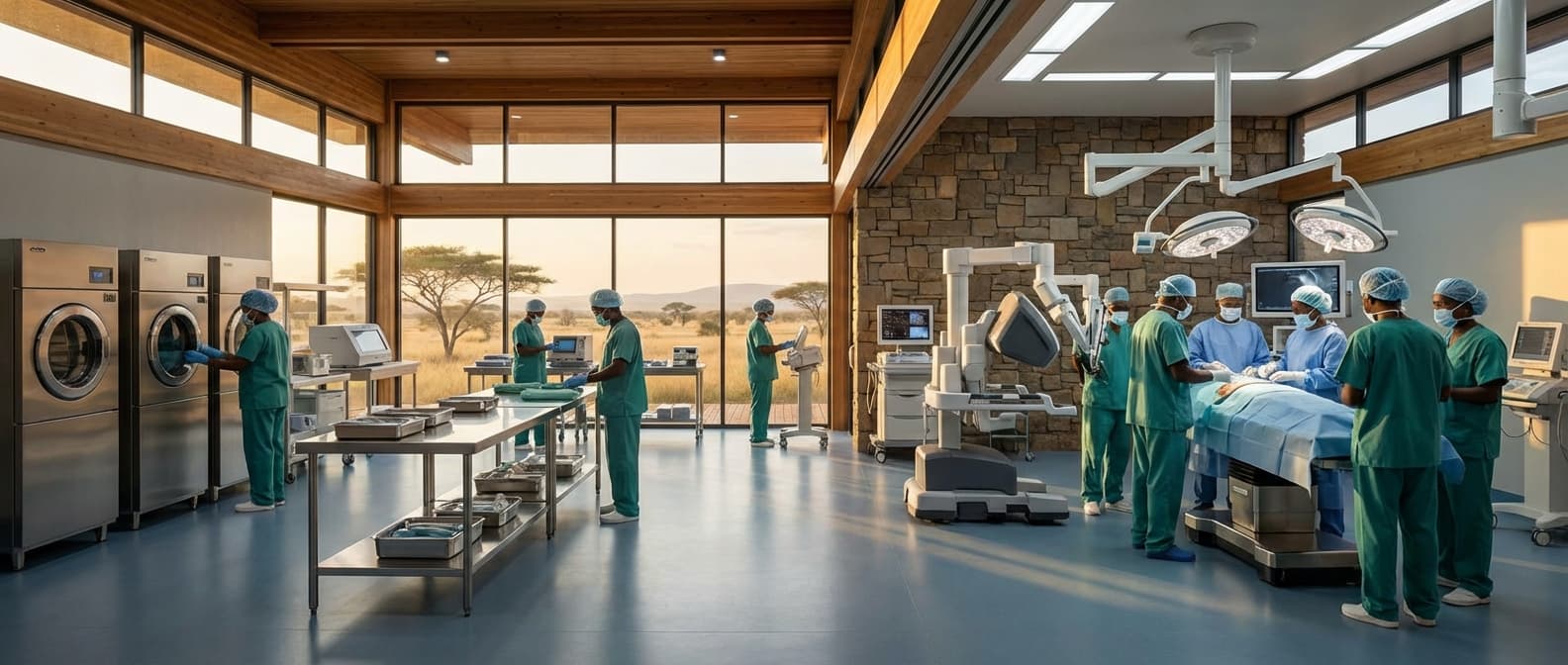
CSSD Design & Validation in Central African Republic
Engineering Excellence & Technical Support
CSSD workflow design, validation and process development High-standard technical execution following OEM protocols and local regulatory frameworks.
Advanced Sterilization Validation Protocols
Implementation of rigorous validation protocols for all CSSD sterilization equipment (autoclaves, plasma sterilizers, etc.) in accordance with international standards (ISO 13485, AAMI ST standards). This includes load qualification, performance qualification, and ongoing monitoring to ensure effective microbial inactivation and patient safety.
Optimized Sterilization Workflow Design
Designing and implementing efficient workflow layouts for Central African Republic healthcare facilities, focusing on a clear separation of clean and dirty areas, proper material flow, and the strategic placement of equipment to minimize cross-contamination risks and maximize throughput in resource-constrained environments.
Customized Training & Competency Assessment for Local Staff
Development and delivery of tailored training programs for Central African Republic CSSD technicians and supervisors, covering best practices in instrument reprocessing, sterilization technologies, quality control, and infection prevention. Includes practical skills assessment and competency verification to ensure skilled local workforce capacity.
What Is Cssd Design & Validation In Central African Republic?
Central Sterile Services Department (CSSD) design and validation are critical processes in healthcare facilities, ensuring the sterility and safety of reusable medical devices. In the Central African Republic (CAR), as in any nation, the establishment and ongoing operation of a high-functioning CSSD are paramount for infection prevention and control. CSSD design encompasses the strategic planning and physical layout of the department, optimizing workflow, safety, and efficiency. Validation, on the other hand, is the documented process of demonstrating that the CSSD's equipment, processes, and overall system consistently achieve the intended results, specifically the sterilization of medical instruments to a validated level of assurance.
| Service Element | Description | Who Needs It | Typical Use Cases in CAR |
|---|---|---|---|
| CSSD Design | The architectural and functional planning of the Central Sterile Services Department, considering space allocation, equipment placement, workflow pathways, and environmental conditions. | Healthcare facilities in the Central African Republic (hospitals, clinics, surgical centers) planning to establish or renovate a CSSD. | Ensuring adequate throughput for sterilization of instruments used in routine surgeries, emergency procedures, and specialized medical interventions. Optimizing space in resource-constrained settings. Designing for energy efficiency and water conservation where applicable. |
| CSSD Validation | The documented verification that CSSD equipment and processes perform as intended, consistently achieving the required sterility assurance level for medical devices. This includes IQ, OQ, and PQ. | Healthcare facilities in the Central African Republic operating a CSSD, particularly after equipment installation/modification, process changes, or as part of ongoing quality assurance. | Confirming the efficacy of autoclaves for sterilizing surgical instruments. Validating washer-disinfectors to ensure adequate cleaning. Verifying the performance of sterilizers for heat-sensitive instruments (e.g., low-temperature sterilization). Ensuring compliance with infection control standards for patient safety. |
| Consultancy & Training | Providing expert advice on CSSD design principles, equipment selection, workflow optimization, and comprehensive training for CSSD personnel. | Government health ministries, NGOs involved in healthcare infrastructure development, and individual healthcare facilities in the Central African Republic. | Establishing national guidelines for CSSD operations. Training local technicians to operate and maintain sterilization equipment. Developing capacity for infection prevention and control within the healthcare system. |
Key Aspects of CSSD Design & Validation in the Central African Republic
- Workflow Optimization: Designing the CSSD layout to follow a unidirectional flow (dirty to clean to sterile to storage) to prevent cross-contamination.
- Equipment Selection & Integration: Specifying and integrating appropriate sterilization technologies (e.g., autoclaves, low-temperature sterilizers) based on the types of instruments and facility resources.
- Environmental Controls: Implementing adequate ventilation, temperature, and humidity controls to maintain a sterile environment and ensure optimal equipment performance.
- Regulatory Compliance: Adhering to national and international standards for sterilization and infection control, which may require adaptation to local infrastructure and resource availability.
- Personnel Training: Designing for adequate space and resources to support the specialized training of CSSD technicians in handling, cleaning, disinfection, and sterilization processes.
- Quality Management Systems: Establishing robust quality assurance and quality control protocols for all CSSD operations.
- Validation Protocols: Developing and executing protocols for the Installation Qualification (IQ), Operational Qualification (OQ), and Performance Qualification (PQ) of all sterilization equipment and processes.
- Routine Monitoring & Testing: Implementing regular biological and chemical monitoring of sterilization cycles to confirm efficacy.
- Documentation & Record-Keeping: Maintaining comprehensive records of all sterilization cycles, maintenance, and validation activities.
Who Needs Cssd Design & Validation In Central African Republic?
In the Central African Republic (CAR), the need for robust Central Sterile Supply Department (CSSD) design and validation is critical, particularly in the face of under-resourced healthcare infrastructure and the persistent threat of healthcare-associated infections (HAIs). While the immediate focus might be on basic medical supplies, ensuring the sterility of instruments is a fundamental pillar of safe patient care. Effective CSSD design minimizes contamination risks, optimizes workflow, and ensures that surgical and diagnostic procedures can be performed with confidence, even in challenging environments.
| Customer/Department | Primary Needs | Impact of Proper CSSD Design & Validation |
|---|---|---|
| Hospitals (Government & Non-Governmental) | Safe and effective sterilization of surgical instruments, reduced infection rates, compliance with basic safety standards. | Enables critical surgical procedures, protects patients and healthcare workers from HAIs, builds trust in healthcare services. |
| Clinics and Health Centers with Surgical Capabilities | Reliable sterilization for minor surgical procedures, preventing post-operative infections, efficient use of limited resources. | Expands access to safe surgical care, improves patient outcomes, reduces the burden on larger hospitals. |
| Specialized Medical Facilities (e.g., Maternity Wards, Trauma Centers) | Sterilization of instruments for high-risk procedures, prevention of perinatal and post-traumatic infections, timely availability of sterile supplies. | Reduces maternal and infant mortality, improves recovery rates for trauma patients, supports specialized care delivery. |
| International Aid Organizations and NGOs | Ensuring the quality and safety of medical interventions provided, capacity building for local healthcare staff, adherence to international healthcare standards. | Facilitates effective humanitarian aid, promotes sustainable healthcare improvements, prevents unintended harm through poor sterilization practices. |
| Ministry of Health and Public Hygiene | Establishing national standards for infection prevention and control, monitoring and regulating healthcare facility practices, improving overall public health outcomes. | Drives national healthcare quality improvements, ensures a baseline of safety across the country, strengthens the public health system. |
Target Customers & Departments for CSSD Design & Validation in the Central African Republic
- Hospitals (Government and Non-Governmental)
- Clinics and Health Centers with Surgical Capabilities
- Specialized Medical Facilities (e.g., Maternity Wards, Trauma Centers)
- International Aid Organizations and NGOs Operating in the Healthcare Sector
- Ministry of Health and Public Hygiene
Cssd Design & Validation Process In Central African Republic
The design and validation of a Central Sterile Supply Department (CSSD) in the Central African Republic (CAR) is a multi-stage process requiring meticulous planning, regulatory adherence, and practical execution. This workflow outlines the typical progression from the initial inquiry to the final validated and operational CSSD.
| Phase | Key Activities | CAR Specific Considerations |
|---|---|---|
| Identify need, preliminary discussions, site survey, scope definition, budget, timeline. | Local capacity assessment, understanding existing infrastructure limitations, potential for phased implementation. |
| Develop design concepts, assess space, optimize workflow, initial equipment selection, cost estimation. | Adherence to WHO guidelines for low-resource settings, local building codes, climate control needs, reliable power sourcing. |
| Create architectural/MEP plans, detailed equipment specs, workflow diagrams, material selection, ventilation plans. | Availability of suitable construction materials, local availability of specialized MEP services, consideration for dust and humidity. |
| Issue tenders, evaluate bids, negotiate contracts, order equipment. | Import regulations and customs duties, supplier reliability and service agreements for remote locations, payment terms. |
| Site prep, MEP rough-ins, finishes, equipment installation. | Skilled local labor availability, quality control of construction, logistical challenges for equipment delivery. |
| Equipment power-up, functional checks, calibration, water quality testing. | Ensuring local technicians are trained for basic troubleshooting, availability of essential spare parts for initial testing. |
| IQ, OQ, PQ, process validation, environmental monitoring. | Availability of qualified local validation experts, access to appropriate biological and chemical indicators, cooperation with Ministry of Health. |
| Equipment operation, infection control, sterilization techniques, documentation. | Language barriers (French, local dialects), tailored training materials, train-the-trainer programs for sustainability. |
| Prepare validation reports, SOPs, submit to authorities. | Understanding and navigating CAR's specific healthcare regulations and approval processes, potential for bureaucratic delays. |
| Handover, implement QA, maintenance, re-validation. | Establishing robust local maintenance support networks, remote monitoring capabilities where feasible, ensuring long-term sustainability of operations. |
CSSD Design & Validation Workflow in CAR
- 1. Initial Inquiry & Needs Assessment:
- Healthcare facility identifies the need for a new or upgraded CSSD.
- Preliminary discussion with potential vendors, designers, or consultants specializing in CSSD.
- Site survey and assessment of current sterilization practices (if applicable).
- Understanding the facility's scope of services, patient volume, and types of surgical procedures.
- Identification of budgetary constraints and timeline expectations.
- 2. Conceptual Design & Feasibility Study:
- Development of preliminary design concepts based on needs assessment.
- Consideration of CAR-specific regulations, building codes, and environmental factors (e.g., climate, power stability).
- Evaluation of available space, workflow optimization, and infection control principles.
- Initial equipment selection based on service requirements and available technologies.
- Cost estimation for equipment, construction/renovation, and installation.
- Feasibility report presented to facility management for approval.
- 3. Detailed Design & Specification Development:
- Refinement of the conceptual design into detailed architectural, mechanical, electrical, and plumbing (MEP) plans.
- Development of detailed specifications for all CSSD equipment, including sterilization technologies (autoclaves, low-temperature sterilizers), cleaning equipment (instrument washers, ultrasonic cleaners), and ancillary items.
- Workflow diagrams illustrating the logical flow of instruments from soiled to sterile.
- Definition of material specifications for surfaces, flooring, and wall coverings to ensure easy cleaning and disinfection.
- Consideration of ventilation and air handling systems to maintain appropriate air quality and pressure differentials.
- Preparation of tender documents for procurement of equipment and services.
- 4. Procurement & Tender Process:
- Issuance of tender documents to pre-qualified suppliers and contractors.
- Evaluation of bids based on technical compliance, price, after-sales support, and vendor reputation.
- Negotiation of contracts and purchase orders.
- Ordering of long-lead-time equipment.
- 5. Construction/Renovation & Installation:
- Site preparation, including demolition (if applicable), structural modifications, and MEP rough-ins.
- Installation of finishes: flooring, wall cladding, ceilings, and lighting.
- Installation of ventilation and air conditioning systems.
- Delivery and installation of CSSD equipment according to the detailed design.
- Coordination between construction teams and equipment suppliers.
- 6. Commissioning & Testing (Pre-Validation):
- Initial power-up and functional testing of all installed equipment.
- Verification of MEP connections and performance.
- Calibration of all monitoring and control systems.
- Basic operational checks to ensure equipment is functioning as per manufacturer specifications.
- Water quality testing for sterilization cycles.
- 7. Validation Process:
- Installation Qualification (IQ): Verifying that the equipment has been installed correctly according to manufacturer's specifications and design requirements.
- Operational Qualification (OQ): Documenting that the installed equipment operates consistently and within acceptable limits when used in accordance with its operational parameters.
- Performance Qualification (PQ): Demonstrating that the entire CSSD process, using the installed equipment, consistently produces sterile products that meet predefined quality attributes. This involves running multiple sterilization cycles with challenging loads and verifying sterility through biological indicators (BIs) and chemical indicators (CIs).
- Process Validation: Validating the entire workflow from decontamination to sterile storage, ensuring no cross-contamination occurs and all steps are robust.
- Environmental Monitoring: Validation of air quality, temperature, and humidity in different zones of the CSSD.
- 8. Staff Training & Development:
- Comprehensive training for CSSD staff on operating all equipment.
- Training on infection control protocols, decontamination procedures, sterilization techniques, and quality control measures.
- Training on documentation and record-keeping practices.
- Emphasis on safety procedures for handling hazardous materials and equipment.
- 9. Documentation & Regulatory Approval:
- Preparation of all validation reports, including IQ, OQ, and PQ documentation.
- Compilation of standard operating procedures (SOPs) for all CSSD activities.
- Submission of validation reports and relevant documentation to CAR Ministry of Health or other relevant regulatory bodies for approval and licensing.
- 10. Operational Handover & Ongoing Monitoring:
- Formal handover of the validated CSSD to the healthcare facility.
- Implementation of routine performance monitoring and quality assurance programs.
- Regular calibration and maintenance schedules for all equipment.
- Periodic re-validation as per regulatory requirements or after significant changes.
- Continuous improvement of CSSD processes based on performance data and feedback.
Cssd Design & Validation Cost In Central African Republic
Designing and validating a Central Sterilization Supply Department (CSSD) in the Central African Republic (CAR) involves a complex interplay of factors influencing cost. These costs are highly variable due to the nation's specific economic landscape, infrastructure challenges, and the need to import specialized equipment and expertise. Pricing is typically discussed in the local currency, the Central African CFA franc (XAF). However, it's crucial to understand that estimates are often presented in USD due to the relative stability and international recognition of that currency, with conversions to XAF being subject to fluctuating exchange rates. The overall cost can range from tens of thousands to several hundred thousand US dollars, translating to hundreds of millions to billions of XAF.
| Cost Component (USD Estimate) | Estimated Range (USD) | Estimated Range (XAF - approx. 1 USD = 600 XAF, subject to change) |
|---|---|---|
| Design & Consultancy Fees | 5,000 - 25,000 | 3,000,000 - 15,000,000 |
| Equipment Purchase (Basic to Mid-Range) | 50,000 - 150,000 | 30,000,000 - 90,000,000 |
| Equipment Purchase (High-End/Advanced) | 150,000 - 400,000+ | 90,000,000 - 240,000,000+ |
| Site Preparation & Minor Renovations | 10,000 - 50,000 | 6,000,000 - 30,000,000 |
| Validation & Testing Services | 10,000 - 40,000 | 6,000,000 - 24,000,000 |
| Importation Duties, Taxes & Shipping | 20,000 - 100,000+ | 12,000,000 - 60,000,000+ |
| Training & Capacity Building | 5,000 - 20,000 | 3,000,000 - 12,000,000 |
| Contingency (10-15%) | 10,000 - 75,000 | 6,000,000 - 45,000,000 |
| Total Estimated Range (Basic to Mid-Range) | 110,000 - 360,000 | 66,000,000 - 216,000,000 |
| Total Estimated Range (Higher-End) | 250,000 - 700,000+ | 150,000,000 - 420,000,000+ |
Key Pricing Factors for CSSD Design & Validation in CAR
- 1. Facility Size and Scope: The physical dimensions of the CSSD and the volume of sterile supplies it needs to process directly impact design complexity and equipment requirements, thus influencing cost.
- 2. Equipment Selection and Quality: The choice between new, high-end equipment versus refurbished or basic models significantly alters the capital expenditure. Factors include sterilizers (autoclaves, low-temperature sterilizers), washer-disinfectors, ultrasonic cleaners, drying cabinets, and packaging machines.
- 3. Architectural and Engineering Design Services: Engaging qualified architects and engineers with experience in healthcare facilities is crucial for optimal workflow, safety, and compliance. Their fees will vary based on their reputation and the project's complexity.
- 4. Regulatory Compliance and Validation Standards: Adherence to international (e.g., ISO, AAMI) and potentially national standards for sterile processing is non-negotiable. The validation process, involving qualification and re-qualification of equipment, requires specialized personnel and testing, adding to the overall cost.
- 5. Site Preparation and Infrastructure: Existing infrastructure (water supply, electricity, ventilation, drainage) may require significant upgrades to meet CSSD operational needs, adding substantial costs. This is particularly relevant in regions with less developed infrastructure.
- 6. Importation and Logistics: A significant portion of specialized CSSD equipment and materials will need to be imported into CAR. Import duties, taxes, shipping costs, insurance, and local transportation can represent a substantial financial burden.
- 7. Training and Capacity Building: Skilled personnel are essential for operating and maintaining a CSSD. Training local staff on proper sterilization techniques, equipment operation, and quality control measures is an integral part of the project and incurs costs.
- 8. Project Management and Consultancy: Engaging experienced project managers or consultants can streamline the process, mitigate risks, and ensure efficient execution, but this also adds to the overall budget.
- 9. Currency Exchange Rate Fluctuations: As costs are often denominated in USD and paid in XAF, fluctuations in the exchange rate can significantly impact the final cost in local currency.
Affordable Cssd Design & Validation Options
Designing and validating a Central Sterile Supply Department (CSSD) is a critical investment for any healthcare facility, ensuring patient safety and operational efficiency. However, budget constraints can make this process challenging. This guide explores affordable CSSD design and validation options, focusing on value bundles and cost-saving strategies to help facilities achieve compliance and excellence without breaking the bank.
| Value Bundle/Strategy | Description | Cost-Saving Mechanism |
|---|---|---|
| Basic Functionality Bundle | Includes essential equipment for cleaning, disinfection, sterilization (e.g., washer-disinfectors, sterilizers), and sterile storage. | Reduces initial capital expenditure by focusing only on critical sterilization processes. |
| Integrated Workflow Solution | Combines equipment with basic tracking software for instruments and supplies, optimizing workflow from decontamination to sterile storage. | Improves efficiency, reduces manual errors, and minimizes lost instruments, leading to fewer delays and replacement costs. |
| Phased Validation Package | Offers validation services for core sterilization equipment in stages, aligning with budget and operational needs. | Spreads validation costs over time and focuses validation efforts on the most critical equipment first. |
| Energy-Efficient Equipment Selection | Prioritizes selection of energy-efficient washer-disinfectors and sterilizers. | Reduces long-term operational costs through lower utility bills (electricity, water). |
| Centralized Purchasing Power | Leverages group purchasing organizations (GPOs) or negotiates bulk discounts with suppliers for equipment and consumables. | Achieves lower unit costs through increased purchasing volume. |
| Modular Decontamination Area Design | Designs a flexible decontamination area with easily reconfigurable workstations. | Minimizes construction costs and allows for future expansion or adaptation without major structural changes. |
| Remote Monitoring & Diagnostics | Utilizes equipment with remote monitoring capabilities or third-party remote support services. | Reduces the need for on-site technician visits for routine checks and minor troubleshooting, saving on travel and labor costs. |
| Standardized Process Training Programs | Develops and implements standardized training modules for CSSD staff based on best practices and regulatory guidelines. | Ensures consistent adherence to protocols, reducing errors, rework, and potential patient safety incidents. |
| Consumable Optimization Strategy | Analyzes and optimizes the use of cleaning agents, sterilization wraps, and indicator products. | Reduces recurring operational expenses through efficient product usage and exploring cost-effective, compliant alternatives. |
| Risk-Based Validation Protocol | Focuses validation efforts on instruments and sterilization cycles with the highest risk of failure or impact on patient safety. | Optimizes validation resource allocation and reduces unnecessary testing. |
Key Considerations for Affordable CSSD Design & Validation
- Prioritize Core Functionality: Focus on essential equipment and workflows that directly impact sterility assurance and patient safety.
- Phased Implementation: Break down the project into manageable phases, allowing for gradual investment and implementation.
- Modular Design: Opt for modular CSSD layouts that can be adapted and expanded as needs evolve, reducing the need for costly reconfigurations.
- Standardization: Utilize standardized equipment and processes to streamline purchasing, training, and maintenance.
- Leverage Existing Infrastructure: Assess and optimize the use of existing building spaces and utilities where possible.
- Smart Technology Integration: Explore cost-effective smart technologies for tracking, monitoring, and automation that offer long-term savings.
- Training and Competency: Invest in comprehensive training for staff to ensure proper equipment use and process adherence, reducing errors and re-sterilization.
- Partnerships and Collaborations: Explore collaborations with other facilities or industry partners for shared resources or bulk purchasing.
- Risk-Based Validation: Implement validation strategies tailored to the specific risks associated with your facility's procedures and instrument types.
- Lifecycle Cost Analysis: Consider the total cost of ownership, including maintenance, consumables, and energy consumption, when selecting equipment.
Verified Providers In Central African Republic
In the Central African Republic (CAR), ensuring access to reliable and trustworthy healthcare providers is paramount, especially given the country's unique challenges. Franance Health has emerged as a leading entity, distinguishing itself through its rigorous vetting processes and commitment to quality. Their credentialing goes beyond mere certification; it signifies a deep understanding of the local context and an unwavering dedication to patient well-being. Franance Health's approach ensures that all affiliated providers meet the highest standards of medical expertise, ethical conduct, and operational efficiency, making them the best choice for individuals and organizations seeking dependable healthcare solutions in the CAR.
| Provider Type | Franance Health Credentialing Focus | Key Benefits for Patients |
|---|---|---|
| Hospitals and Clinics | Infrastructure, equipment, hygiene standards, adherence to treatment protocols, staff qualifications. | Safe environment, access to modern medical technology, consistent quality of care, experienced medical teams. |
| General Practitioners | Medical licensing, continuing education, patient-doctor communication skills, diagnostic accuracy. | Reliable primary care, accurate diagnoses, personalized treatment plans, compassionate service. |
| Specialist Physicians | Board certifications, years of specialized practice, surgical outcomes, patient satisfaction with specialized treatment. | Expertise in specific medical fields, advanced treatment options, successful management of complex conditions. |
| Paramedical Staff (Nurses, Technicians) | Professional certifications, practical skills, adherence to safety procedures, patient support capabilities. | Competent assistance during treatment, accurate diagnostic results, supportive and caring patient experience. |
| Pharmaceutical Services | Drug sourcing and authenticity verification, dispensing accuracy, pharmacist licensing, safe storage practices. | Access to genuine and effective medications, correct dosage information, safe medication management. |
Why Franance Health Credentials Matter in the CAR
- Rigorous Vetting Process: Franance Health employs a comprehensive credentialing system that scrutinizes the qualifications, experience, and ethical standing of all healthcare professionals.
- Local Contextual Understanding: Their credentials acknowledge the specific healthcare needs and operational realities of the Central African Republic, ensuring relevance and effectiveness.
- Commitment to Quality: Franance Health partners only with providers who demonstrate a consistent dedication to delivering high-quality patient care.
- Enhanced Patient Trust: The Franance Health seal of approval builds confidence for patients, assuring them of receiving competent and ethical medical services.
- Access to Specialized Care: Their network often includes specialists and facilities equipped to handle a wide range of medical conditions prevalent in the region.
Scope Of Work For Cssd Design & Validation
This document outlines the Scope of Work (SoW) for the Design & Validation of a Central Sterile Supply Department (CSSD). It details the technical deliverables and standard specifications required to ensure a functional, safe, and efficient CSSD operation, adhering to international best practices and regulatory requirements.
| Deliverable Title | Description | Applicable Standard/Specification |
|---|---|---|
| CSSD Workflow Analysis Report | Detailed analysis of existing or proposed sterile processing workflows, identifying bottlenecks and optimization opportunities. | ISO 17665-1, AAMI ST79 |
| Space Planning & Layout Drawings | Comprehensive drawings illustrating the optimal layout of the CSSD, including sterile, semi-critical, and critical areas, staff movement, and equipment placement. | HTM 01-01, NFPA 99 |
| Equipment Specification Sheets | Detailed technical specifications for all CSSD equipment, including sterilizers, washer-disinfectors, instrument washers, ultrasonic cleaners, drying cabinets, sealing machines, and storage cabinets. | Manufacturer's specifications, relevant IEC standards (e.g., IEC 60601 series), AAMI ST55, AAMI ST8 |
| Utility Requirements Report | Documentation of all required utilities (water, steam, electricity, ventilation, compressed air) and their specifications for CSSD equipment. | Manufacturer's specifications, ASHRAE standards |
| Ventilation & HVAC Design Report | Design specifications for the CSSD's ventilation system, ensuring appropriate air changes per hour, pressure differentials, and filtration (HEPA) in sterile areas. | ASHRAE 170, HTM 03-01 |
| Material & Finishes Specification | Selection of appropriate, durable, and easily cleanable materials for floors, walls, ceilings, and work surfaces within the CSSD. | Relevant building codes, healthcare facility guidelines |
| Infection Control Risk Assessment (ICRA) | Assessment of potential infection risks during design and construction phases, with mitigation strategies. | Local health authority guidelines, national infection control guidelines |
| Commissioning Plan | A detailed plan outlining the procedures for verifying and documenting that all CSSD systems and equipment are installed and function according to design specifications. | AAMI ST79, Manufacturer's recommendations |
| Operational & Maintenance Manuals | Comprehensive manuals for all installed equipment and CSSD systems, including operating procedures, maintenance schedules, and troubleshooting guides. | Manufacturer's documentation |
| Validation Protocol (IQ/OQ/PQ) | Installation Qualification (IQ), Operational Qualification (OQ), and Performance Qualification (PQ) protocols for all critical CSSD equipment and processes. | AAMI ST79, ISO 17665-1, Manufacturer's validation guidelines |
| Training Program for CSSD Staff | Development and delivery of a comprehensive training program covering all aspects of CSSD operation, sterilization processes, and infection control practices. | AAMI ST79, Professional development guidelines |
| Post-Occupancy Evaluation Report | Assessment of CSSD performance, workflow efficiency, and user satisfaction after a period of operation. | Internal quality management systems |
Key Areas Covered in the Scope of Work:
- Phase 1: Planning & Conceptual Design
- Phase 2: Detailed Design & Engineering
- Phase 3: Procurement & Construction Support
- Phase 4: Validation & Commissioning
- Phase 5: Post-Occupancy Evaluation & Optimization
Service Level Agreement For Cssd Design & Validation
This Service Level Agreement (SLA) outlines the response times and uptime guarantees for the Central Sterile Supply Department (CSSD) Design & Validation services. This agreement aims to ensure the timely and reliable delivery of services critical to maintaining infection control standards and operational efficiency within the healthcare facility.
| Service Element | Response Time Guarantee | Uptime Guarantee (for remote access/support) |
|---|---|---|
| Initial Inquiry/Request for Consultation | Within 4 business hours | N/A |
| Delivery of Design Concepts/Schematics | Within 5 business days of request approval | N/A |
| Delivery of Detailed Design Documents | Within 10 business days of concept approval | N/A |
| Delivery of Validation Protocol Draft | Within 7 business days of final design approval | N/A |
| Execution of Validation Testing (on-site coordination) | Scheduled within 2 business days of protocol approval and equipment availability | N/A |
| Delivery of Final Validation Report | Within 5 business days of successful validation execution | N/A |
| Support for Critical Design/Validation Issues (e.g., system failure impacting infection control) | Immediate (within 1 business hour) | 99.5% |
| General Support & Troubleshooting (non-critical) | Within 8 business hours | 99.0% |
Scope of Services Covered
- Initial CSSD design consultations and conceptualization.
- Detailed design development, including layout, workflow, and equipment specification.
- Validation protocol development for equipment and processes.
- Execution of validation testing and documentation.
- Post-validation support and troubleshooting.
- Review and approval of design and validation documentation.
- Ongoing consultation for design modifications or process improvements.
Frequently Asked Questions

Ready when you are
Let's scope your CSSD Design & Validation in Central African Republic project in Central African Republic.

Scaling healthcare logistics and technical systems across the entire continent.