
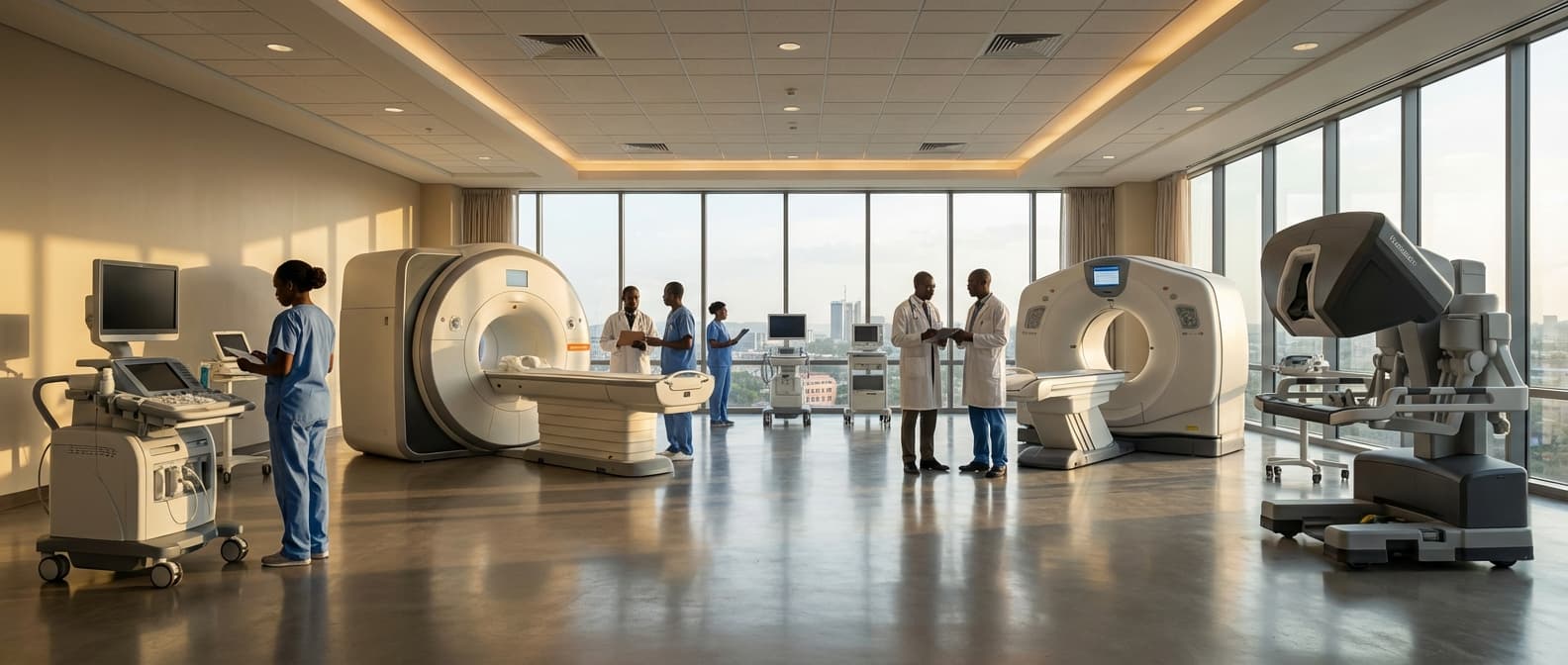
Renal Solutions in Central African Republic
Engineering Excellence & Technical Support
Complete dialysis systems and renal care equipment designed to deliver safe, effective, and patient-centered kidney treatment. High-standard technical execution following OEM protocols and local regulatory frameworks.
Expanding Dialysis Access
Renal Solutions has successfully deployed and maintained advanced hemodialysis units in key healthcare facilities across the Central African Republic, significantly increasing the availability of life-saving treatment for patients with end-stage renal disease.
Capacity Building for Healthcare Professionals
Through comprehensive training programs, Renal Solutions has empowered local medical staff, including nephrologists, nurses, and technicians, with the latest knowledge and skills in renal care management, ensuring sustainable and high-quality patient outcomes.
Robust Medical Supply Chain
Renal Solutions has established a reliable and resilient supply chain for essential dialysis consumables and medications within the Central African Republic, overcoming logistical challenges to ensure uninterrupted treatment for all patients under our care.
What Is Renal Solutions In Central African Republic?
Renal Solutions in the Central African Republic (CAR) refers to the provision of services aimed at diagnosing, treating, and managing kidney diseases. Given the healthcare infrastructure challenges in the CAR, these solutions often involve efforts to establish and maintain access to essential renal care, which can be critically limited. This encompasses a spectrum of interventions, from basic diagnostic capabilities to more advanced therapeutic options and preventive strategies. The overarching goal is to mitigate the burden of chronic kidney disease (CKD) and acute kidney injury (AKI) within the population.
| Who Needs Renal Solutions? | Typical Use Cases |
|---|---|
| Individuals with Diagnosed Chronic Kidney Disease (CKD): Particularly those in stages 3-5 who require medical management, monitoring, and potentially renal replacement therapy. | Management of hypertension and diabetes as primary drivers of CKD. Monitoring of glomerular filtration rate (GFR) and progression of kidney damage. Treatment of complications such as anemia, bone mineral disease, and fluid overload. Initiation and management of hemodialysis for end-stage renal disease (ESRD). |
| Patients Experiencing Acute Kidney Injury (AKI): This can be caused by various factors, including severe infections (sepsis), dehydration, nephrotoxic medications, or obstetric complications. | Identification and management of reversible causes of AKI. Fluid resuscitation and hemodynamic support. Use of nephroprotective agents where applicable. Temporary dialysis support to allow kidneys to recover. |
| Individuals with Risk Factors for Kidney Disease: This includes those with uncontrolled hypertension, diabetes mellitus, a family history of kidney disease, recurrent urinary tract infections, or exposure to nephrotoxic substances. | Screening for early signs of kidney damage (e.g., microalbuminuria). Aggressive management of underlying risk factors. Lifestyle counseling to mitigate future risk. |
| Patients with Comorbidities Affecting Renal Health: Such as individuals with advanced HIV/AIDS, malaria, or sickle cell disease, which can predispose to or exacerbate kidney damage. | Renal monitoring in the context of managing complex systemic diseases. Adjustment of medication dosages based on renal function. Specific management protocols for kidney involvement in infectious diseases. |
| The General Population (Preventive Aspect): Promoting awareness of kidney health and risk factors. | Public health campaigns to reduce prevalence of hypertension and diabetes. Education on the importance of hydration and avoiding over-the-counter nephrotoxic drugs. |
Key Components of Renal Solutions in the Central African Republic
- Diagnostic Services: Establishing and equipping facilities for basic renal function tests (e.g., serum creatinine, urinalysis), urine protein quantification, and imaging studies (ultrasound). Access to advanced diagnostics like kidney biopsy and detailed nephropathological analysis may be severely restricted and often necessitates referral abroad.
- Medical Management: Providing pharmacological interventions for hypertension, diabetes mellitus, electrolyte imbalances, anemia of chronic disease, and other comorbidities contributing to or resulting from kidney dysfunction. This includes ensuring availability of essential medications.
- Renal Replacement Therapy (RRT): This is a critical and often scarce component. It includes: * Hemodialysis (HD): Establishing and maintaining dialysis centers, including the provision of dialysis machines, dialyzers, and sterile consumables. Ensuring access to clean water and reliable electricity are significant logistical hurdles. * Peritoneal Dialysis (PD): While potentially less resource-intensive in terms of specialized equipment, its implementation requires patient and caregiver training and consistent supply chains for PD fluids and sterile materials. Availability is likely very limited. * Kidney Transplantation: This is largely unavailable due to the absence of the necessary surgical infrastructure, donor programs, and post-operative care capabilities.
- Patient Education and Support: Empowering patients with knowledge about their condition, lifestyle modifications (dietary advice, fluid management), medication adherence, and self-care practices. Support groups can play a vital role where feasible.
- Healthcare Professional Training: Developing and delivering training programs for physicians, nurses, and technicians in nephrology, dialysis operations, and general kidney disease management to build local capacity.
- Public Health Initiatives: Implementing awareness campaigns on risk factors for kidney disease (e.g., hypertension, diabetes, infectious diseases like malaria and HIV which can impact renal health) and promoting preventive measures.
Who Needs Renal Solutions In Central African Republic?
The Central African Republic (CAR) faces significant challenges in healthcare, with a critical shortage of specialized medical services, including those for kidney-related conditions. Renal solutions are desperately needed to address the growing burden of kidney disease, which is often exacerbated by lack of access to diagnostics, treatment, and preventative care. This need spans a wide spectrum of the population and healthcare infrastructure.
| Department/Customer Type | Specific Needs/Interests | Examples of Renal Solutions Required |
|---|---|---|
| Nephrology Department (if existing or to be established) | Diagnosis, management, and treatment of kidney diseases; patient monitoring and follow-up. | Dialysis machines (hemodialysis and peritoneal dialysis), laboratory diagnostic equipment (serum creatinine, urea, electrolytes), ultrasound machines, medications, skilled personnel. |
| Internal Medicine/General Practice Departments | Screening for kidney disease, early detection of risk factors (hypertension, diabetes), referral of suspected cases. | Basic diagnostic tools (urine dipsticks, blood pressure monitors), educational materials on kidney health for patients and staff. |
| Emergency Departments/Intensive Care Units (ICUs) | Management of acute kidney injury (AKI), fluid and electrolyte balance, life support for critically ill patients. | Acute dialysis capabilities, advanced monitoring equipment, rapid diagnostic tests. |
| Surgical Departments | Management of complications related to kidney disease that may require surgical intervention. | Post-operative care protocols, pain management, infection control. |
| Pediatric Departments | Diagnosis and management of kidney diseases in children, congenital kidney abnormalities. | Pediatric-specific dialysis equipment and consumables, specialized diagnostic tools. |
| Public Health & Ministry of Health | National kidney disease surveillance, policy formulation, resource allocation, public awareness campaigns, training programs. | Data management systems, epidemiological tools, funding for infrastructure and personnel, training curricula, public health campaign materials. |
| NGOs & International Aid Organizations | Delivery of direct patient care, provision of essential medical supplies, infrastructure development, capacity building, research. | Donations of equipment and consumables, funding for pilot projects, training workshops, mobile clinics, logistical support. |
| Diagnostic Laboratories | Accurate and timely testing for kidney function and related markers. | Automated hematology and biochemistry analyzers, urinalysis machines, reagents, quality control systems. |
| Medical Training Institutions | Educating and training healthcare professionals in nephrology and related fields. | Simulators, educational software, access to up-to-date medical literature, faculty development programs. |
Target Customers and Departments for Renal Solutions in Central African Republic
- Individuals Suffering from Kidney Disease: This is the primary end-user group, encompassing those with acute kidney injury (AKI), chronic kidney disease (CKD) in its various stages, and end-stage renal disease (ESRD). This includes a broad demographic, from children to the elderly, affected by conditions like diabetes, hypertension, infections, and genetic predispositions.
- Hospitals and Healthcare Facilities: All levels of healthcare facilities, from primary health centers to tertiary referral hospitals, will be potential users and beneficiaries of renal solutions. This includes both public and private institutions.
- Government Health Ministries and Agencies: The Ministry of Health and relevant public health bodies are crucial for policy development, resource allocation, and the integration of renal care into the national health strategy.
- Non-Governmental Organizations (NGOs) and International Aid Organizations: Many NGOs and international bodies are active in the CAR, providing healthcare services and humanitarian aid. They can be key partners in delivering and supporting renal solutions.
- Medical Professionals (Doctors, Nurses, Technicians): These individuals are the direct users of renal equipment and services, requiring training and ongoing support. This includes nephrologists, general practitioners, nurses specializing in critical care, and laboratory technicians.
- Patients' Families and Caregivers: While not direct users of the technology, their understanding and support are vital for patient adherence to treatment and overall well-being.
- Academic and Training Institutions: Institutions involved in medical education will benefit from resources to train future healthcare professionals in renal care.
Renal Solutions Process In Central African Republic
The Renal Solutions Process in the Central African Republic (CAR) outlines the comprehensive workflow for addressing kidney-related health issues, from the initial patient inquiry to the successful execution of treatment and ongoing management. This process is crucial in a region where access to advanced medical care can be challenging, requiring a structured and efficient approach to ensure optimal patient outcomes.
| Stage | Description | Key Activities | Responsible Parties | Potential Challenges in CAR |
|---|---|---|---|---|
| Inquiry & Initial Assessment | The first point of contact for a patient experiencing potential renal issues. | Patient reports symptoms, initial symptom assessment by healthcare provider, referral to specialized clinic if needed. | Patient, Community Health Worker, General Practitioner | Lack of awareness of renal diseases, limited access to basic healthcare facilities, geographical barriers. |
| Diagnosis & Staging | Determining the specific kidney condition and its severity. | Medical history, physical examination, laboratory tests (e.g., urinalysis, creatinine, eGFR), imaging studies (e.g., ultrasound). | Nephrologist, General Practitioner, Laboratory Technician, Radiologist | Limited availability of diagnostic equipment and consumables, shortage of specialized medical personnel, unreliable power supply for equipment. |
| Treatment Planning | Developing a tailored strategy based on the diagnosis and patient's overall health. | Discussion of treatment options (e.g., medication, dialysis, transplant consideration), risk-benefit analysis, patient consent. | Nephrologist, Patient, Family Members | Scarcity of essential medications, limited infrastructure for advanced treatments like dialysis, potential for cultural or financial barriers to adherence. |
| Intervention & Execution | Implementing the decided treatment plan. | Prescribing and administering medications, initiating and managing dialysis (hemodialysis or peritoneal dialysis), preparing for potential transplant if feasible. | Nephrologist, Dialysis Nurse, Pharmacist, Surgical Team (if applicable) | Severe shortage of dialysis machines and trained personnel, inconsistent supply of dialysis fluids and consumables, limited access to surgical expertise for transplant. |
| Follow-up & Management | Monitoring the patient's progress and managing their condition long-term. | Regular check-ups, monitoring of kidney function, management of complications (e.g., anemia, hypertension, electrolyte imbalance), medication adjustments. | Nephrologist, General Practitioner, Nurse | Difficulty in ensuring regular patient attendance for follow-ups due to distance and cost, inadequate long-term medication supply, lack of specialized care for complications. |
| Support Services & Education | Providing comprehensive support to patients and their families. | Nutritional counseling, psychological support, patient education on disease management and lifestyle modifications, financial assistance advocacy. | Dietitian, Social Worker, Nurse Educator, Patient Support Groups | Lack of trained support staff, limited access to educational materials, overwhelming financial burdens for patients and families. |
Renal Solutions Process Workflow
- Inquiry & Initial Assessment
- Diagnosis & Staging
- Treatment Planning
- Intervention & Execution
- Follow-up & Management
- Support Services & Education
Renal Solutions Cost In Central African Republic
Understanding the cost of renal solutions in the Central African Republic (CAR) requires considering several key pricing factors. These solutions, essential for dialysis, are often imported, making exchange rates, import duties, and transportation costs significant determinants of the final price. Availability and local market competition also play a crucial role. Due to limited infrastructure and the specialized nature of these medical supplies, prices can be considerably higher than in more developed nations. The primary local currency is the Central African CFA franc (XAF). Exact pricing ranges can fluctuate based on the specific type of renal solution (e.g., hemodialysis concentrate, peritoneal dialysis solutions), brand, and the supplier. However, a general understanding of the factors influencing these costs can be established.
| Renal Solution Type (General) | Estimated Price Range (XAF) | Notes on Pricing |
|---|---|---|
| Hemodialysis Concentrate (per liter/batch) | 15,000 - 40,000 | Highly variable; depends on concentration, brand, and source. Bulk purchases may offer discounts. |
| Peritoneal Dialysis Solution (per bag/liter) | 20,000 - 60,000 | Prices reflect glucose concentration, electrolyte balance, and bag size. Often sourced in bulk by clinics. |
| Sterile Water for Dialysis (per liter) | 5,000 - 15,000 | Essential component; cost influenced by purification process and volume. |
| Electrolyte Additives/Preservatives | 10,000 - 30,000 (per unit/bottle) | Specific components used in custom dialysis preparations. |
Key Factors Influencing Renal Solution Costs in the Central African Republic
- Importation Costs: Shipping, insurance, and handling fees for bringing solutions into CAR.
- Exchange Rates: Fluctuations in the value of the XAF against major currencies where solutions are sourced.
- Import Duties and Taxes: Government levies imposed on imported medical supplies.
- Supplier Markup: Profit margins of local distributors and healthcare providers.
- Brand and Quality: Premium brands or specialized formulations may command higher prices.
- Availability and Scarcity: Limited supply can drive up prices, especially in remote areas.
- Storage and Logistics: Costs associated with maintaining appropriate temperature and handling conditions.
- Regulatory Compliance: Expenses related to meeting local healthcare and pharmaceutical regulations.
Affordable Renal Solutions Options
Navigating the costs associated with kidney disease treatment can be overwhelming. Fortunately, various affordable renal solutions and cost-saving strategies exist to help manage expenses. Understanding value bundles and exploring different options can significantly improve financial well-being for individuals and families dealing with renal challenges.
| Strategy | Description | Potential Cost Savings |
|---|---|---|
| Value Bundles | Pre-packaged sets of related medical services for a fixed price. | Reduced overall cost compared to individual service purchases. |
| Generic Medications | Cost-effective alternatives to brand-name drugs with the same active ingredients. | Significant reduction in prescription drug expenses. |
| Home Dialysis | Dialysis performed in the patient's home (hemodialysis or peritoneal dialysis). | Lower long-term costs due to reduced facility overhead. |
| Preventive Care | Managing diabetes, hypertension, and other risk factors for kidney disease. | Delayed progression of disease, reducing the need for costly treatments. |
| Patient Assistance Programs (PAPs) | Financial aid and free medication programs for eligible patients. | Reduced or eliminated medication costs. |
| Telehealth | Remote consultations and monitoring via phone or video. | Lower travel expenses and time off work. |
Understanding Value Bundles and Cost-Saving Strategies
- Value Bundles: These are packages offered by healthcare providers or insurance plans that combine multiple services for a fixed price. They aim to simplify billing and often represent a cost saving compared to purchasing each service individually. Examples include bundled payments for transplant surgery, which might cover pre-operative care, the surgery itself, and post-operative rehabilitation.
- Generic Medications: For many renal-related medications, generic versions are available. These are chemically identical to their brand-name counterparts but are significantly cheaper, offering substantial savings on ongoing prescriptions.
- Home Dialysis Options: While requiring an initial investment and training, home hemodialysis and peritoneal dialysis can be more cost-effective in the long run compared to in-center dialysis due to reduced facility fees and increased flexibility.
- Preventive Care and Early Intervention: Proactive management of underlying conditions like diabetes and hypertension can slow the progression of kidney disease, potentially delaying or preventing the need for more expensive treatments.
- Negotiating Bills and Payment Plans: Don't hesitate to discuss medical bills with your healthcare provider. Many institutions offer discounts for prompt payment or can set up manageable payment plans to spread out the cost of treatment.
- Patient Assistance Programs (PAPs): Pharmaceutical companies and non-profit organizations often have PAPs that offer financial assistance or free medications to eligible individuals who cannot afford their prescriptions.
- Insurance Navigation and Advocacy: Thoroughly understanding your health insurance policy, including co-pays, deductibles, and out-of-pocket maximums, is crucial. Consider working with an insurance advocate to ensure you are receiving all eligible benefits.
- Telehealth and Remote Monitoring: For certain aspects of renal care, telehealth can reduce travel costs and time off work. Remote monitoring devices can also help manage conditions effectively without frequent in-person visits.
Verified Providers In Central African Republic
In the Central African Republic (CAR), ensuring access to reliable and accredited healthcare is paramount. Franance Health stands out as a leading provider, distinguished by its robust credentials and unwavering commitment to quality care. This section details why Franance Health is the optimal choice for healthcare services in the CAR, highlighting their verifiable certifications and the tangible benefits they offer to patients.
| Credential Type | Description | Benefit to Patients |
|---|---|---|
| Ministry of Public Health Accreditation | Official recognition and licensing by the CAR government. | Guarantees legal operation and adherence to national healthcare laws and safety standards. |
| ISO Certification (if applicable, or similar quality management system) | Adherence to internationally recognized quality management principles. | Ensures consistent service delivery, operational efficiency, and a focus on patient satisfaction and safety. |
| Partnership with International Health Organizations | Collaboration with established global medical bodies. | Access to cutting-edge medical knowledge, advanced treatment protocols, and potential for specialist referrals. |
| Certified Medical Professionals | Staff hold relevant degrees, licenses, and specialized certifications. | Ensures that patients receive care from qualified and competent healthcare providers. |
| Certified Pharmaceutical and Equipment Suppliers | Procurement from verified and reputable sources. | Guarantees the safety, efficacy, and authenticity of medications and medical devices used in treatment. |
Key Credentials of Franance Health in CAR
- Government Accreditation and Licensing: Franance Health operates under full compliance with the Ministry of Public Health and Population of the Central African Republic, holding all necessary licenses and accreditations. This ensures adherence to national healthcare standards and regulations.
- International Quality Standards Compliance: The organization actively pursues and maintains certifications aligned with international healthcare quality benchmarks, demonstrating a commitment to global best practices in patient safety, clinical efficacy, and operational efficiency.
- Partnerships with Reputable Medical Networks: Franance Health collaborates with established and trusted international medical organizations and networks. These partnerships facilitate knowledge exchange, access to specialized expertise, and the implementation of advanced medical protocols.
- Continuous Professional Development for Staff: A core tenet of Franance Health is the ongoing training and development of its medical and administrative personnel. This includes specialized training in critical care, emergency response, and patient-centered communication, ensuring a highly skilled and compassionate team.
- Rigorous Supplier Vetting: Franance Health implements strict protocols for selecting and vetting its medical suppliers, guaranteeing the use of high-quality pharmaceuticals, equipment, and consumables sourced from reputable and certified manufacturers.
- Patient Feedback and Quality Improvement Mechanisms: The organization actively collects and analyzes patient feedback to continuously improve its services. Robust quality assurance processes are in place to address any identified areas for enhancement.
Scope Of Work For Renal Solutions
This Scope of Work (SOW) outlines the technical deliverables and standard specifications for the Renal Solutions project. The objective is to develop and implement a comprehensive digital platform for managing patient renal health, including data collection, analysis, and reporting functionalities.
| Component | Description | Standard Specification/Technology |
|---|---|---|
| Cloud Infrastructure | Scalable and secure cloud hosting for the platform. | AWS/Azure/Google Cloud Platform; Containerization (Docker, Kubernetes) |
| Database | Relational database for structured patient data, with options for NoSQL for unstructured data. | PostgreSQL/MySQL/MongoDB; ACID compliance; Data encryption at rest and in transit |
| Backend Development | RESTful APIs for data access and business logic. | Python (Django/Flask)/Node.js (Express.js)/Java (Spring Boot); Microservices architecture |
| Frontend Development | Responsive and interactive web application. | React/Angular/Vue.js; HTML5, CSS3, JavaScript; WCAG 2.1 accessibility compliance |
| Data Analytics | Tools for statistical analysis, machine learning, and dashboarding. | Python libraries (Pandas, NumPy, Scikit-learn); R; BI tools (Tableau, Power BI) |
| Security | Authentication, authorization, encryption, and auditing mechanisms. | OAuth 2.0/JWT for authentication; TLS/SSL for encryption; Penetration testing |
| API Integration | Standardized protocols for interoperability. | RESTful APIs, FHIR standards for healthcare data exchange |
| Reporting | Generation of customizable reports for clinical and administrative use. | PDF generation libraries; Data export to CSV, Excel |
Technical Deliverables
- Cloud-based platform architecture design
- Database schema for patient records, treatment plans, and lab results
- User interface (UI) and user experience (UX) design mockups and prototypes
- Developed web application with modules for patient registration, appointment scheduling, electronic health records (EHR) integration, and data visualization
- API endpoints for secure data exchange with external systems (e.g., laboratory information systems, hospital EHRs)
- Data analytics module for identifying trends, predicting outcomes, and generating reports
- Security protocols and implementation for data privacy and compliance (HIPAA, GDPR)
- Testing strategy and execution reports (unit, integration, user acceptance)
- Deployment plan and executed deployment of the platform
- User manuals and training materials
- Post-deployment support and maintenance plan
Service Level Agreement For Renal Solutions
This Service Level Agreement (SLA) outlines the guaranteed response times and uptime for the services provided by Renal Solutions. This agreement is designed to ensure reliable and efficient service delivery to our valued clients.
| Service Component | Severity Level | Response Time Guarantee | Uptime Guarantee |
|---|---|---|---|
| Renal Solutions Platform (Core Functionality) | Critical (Service Unusable) | 15 minutes | 99.9% |
| Renal Solutions Platform (Core Functionality) | High (Significant Degradation) | 30 minutes | 99.9% |
| Renal Solutions Platform (Core Functionality) | Medium (Minor Impact) | 2 hours | 99.9% |
| Renal Solutions Platform (Core Functionality) | Low (Cosmetic/Informational) | 8 business hours | 99.9% |
| Reporting & Analytics Module | Critical (Unable to access reports) | 30 minutes | 99.5% |
| Reporting & Analytics Module | High (Delayed/Inaccurate Reports) | 2 hours | 99.5% |
| Integration Services (API) | Critical (Complete Outage) | 1 hour | 99.8% |
| Integration Services (API) | High (Intermittent Issues) | 4 business hours | 99.8% |
Key Service Commitments
- Response Time: Refers to the time taken by Renal Solutions' support team to acknowledge and begin working on a reported issue or request.
- Uptime Guarantee: Refers to the percentage of time the Renal Solutions' platform and core services are available and operational.
- Downtime: Refers to the period during which the Renal Solutions' platform or core services are unavailable to users.
- Scheduled Maintenance: Pre-announced periods of downtime for system updates, upgrades, or repairs. This maintenance is excluded from uptime calculations.
- Severity Levels: A classification system used to categorize the impact of an issue on the client's operations.
Frequently Asked Questions

Ready when you are
Let's scope your Renal Solutions in Central African Republic project in Central African Republic.

Scaling healthcare logistics and technical systems across the entire continent.