
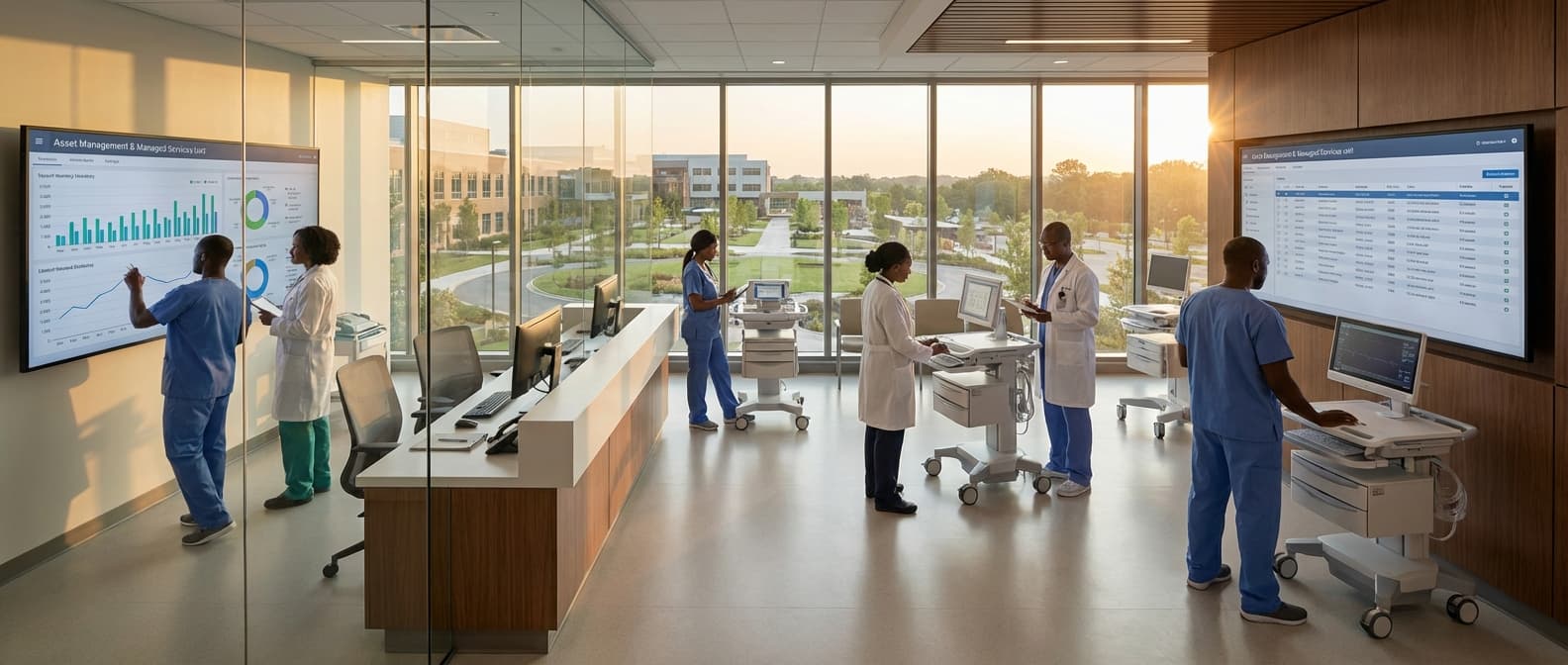
Maintenance KPI Reporting Service (Uptime/MTBF/MTTR) in Central African Republic
Engineering Excellence & Technical Support
Maintenance KPI Reporting Service (Uptime/MTBF/MTTR) High-standard technical execution following OEM protocols and local regulatory frameworks.
Real-time Uptime Monitoring for Critical Infrastructure
Our service provides continuous, granular monitoring of critical infrastructure uptime across the Central African Republic. This allows for immediate identification of any deviations from optimal performance, enabling proactive maintenance interventions and minimizing costly service disruptions in vital sectors like healthcare, energy, and telecommunications.
Enhanced Mean Time Between Failures (MTBF) Analysis
Leveraging advanced data analytics, we deliver in-depth Mean Time Between Failures (MTBF) reporting. This empowers maintenance teams in the Central African Republic to understand failure patterns, identify root causes of recurring issues, and implement targeted preventive measures to significantly extend the operational lifespan of assets and reduce unexpected breakdowns.
Streamlined Mean Time To Repair (MTTR) Optimization
Our reporting service focuses on optimizing Mean Time To Repair (MTTR) by providing actionable insights into repair processes. We help identify bottlenecks, analyze technician response times, and assess spare parts availability, enabling organizations in the Central African Republic to drastically reduce downtime during unplanned maintenance events and restore services faster.
What Is Maintenance Kpi Reporting Service (Uptime/mtbf/mttr) In Central African Republic?
Maintenance KPI Reporting Service (Uptime/MTBF/MTTR) in the Central African Republic refers to a specialized offering focused on the systematic collection, analysis, and presentation of key performance indicators (KPIs) related to the operational availability and reliability of physical assets and systems. This service is crucial for organizations operating in environments where infrastructure resilience and consistent operational performance are paramount. It leverages data from various sources, including sensor readings, maintenance logs, incident reports, and operational system outputs, to generate actionable insights. The primary KPIs tracked are: Uptime, which quantifies the percentage of time a system or asset is operational and available for use; Mean Time Between Failures (MTBF), a measure of the average time a system or asset operates before experiencing a failure; and Mean Time To Repair (MTTR), the average time it takes to restore a system or asset to full operational status after a failure. The service aims to provide stakeholders with a clear, data-driven understanding of asset performance, enabling proactive decision-making to optimize maintenance strategies, reduce downtime, and improve overall operational efficiency.
| Who Needs This Service? | Typical Use Cases in the Central African Republic | ||||||
|---|---|---|---|---|---|---|---|
| Energy Sector: Utilities (electricity generation, transmission, distribution), oil and gas exploration and production companies. | Telecommunications: Mobile network operators, internet service providers managing base stations, transmission equipment, and data centers. | Mining and Extractive Industries: Companies involved in the extraction of mineral resources, operating heavy machinery, processing plants, and associated infrastructure. | Logistics and Transportation: Companies managing fleets of vehicles, railway infrastructure, and port operations. | Manufacturing and Industrial Production: Factories and processing plants requiring continuous operation of production lines and machinery. | Infrastructure Management: Organizations responsible for critical public or private infrastructure like water treatment plants, airports, and road networks. | Healthcare Institutions: Hospitals and clinics relying on the consistent operation of medical equipment and essential utilities. | Government and Public Sector: Agencies managing public assets and services requiring high availability. |
| Optimizing power grid reliability: Monitoring transformer, substation, and generation unit uptime to minimize blackouts and improve service delivery. | Ensuring uninterrupted mobile network coverage: Tracking base station uptime and MTTR for cell towers to maintain service quality and customer satisfaction. | Maximizing mining equipment availability: Analyzing MTBF and MTTR for excavators, haul trucks, and processing equipment to reduce production losses. | Improving logistics efficiency: Monitoring vehicle uptime and repair times to ensure timely delivery of goods and services. | Minimizing production line stoppages: Tracking the performance of critical machinery to identify potential failures before they occur and reduce unplanned downtime. | Assessing the reliability of water supply systems: Monitoring pump and filtration system uptime to ensure continuous provision of clean water. | Guaranteeing the operational readiness of medical devices: Ensuring critical equipment like MRI machines and ventilators have high uptime. | Enhancing the resilience of critical government infrastructure: Proactively managing the maintenance of assets vital for public services and national security. |
Service Involves:
- Data Acquisition and Integration: Establishing mechanisms for collecting raw data from diverse sources such as SCADA systems, IoT sensors, manual logbooks, CMMS (Computerized Maintenance Management Systems), and enterprise resource planning (ERP) systems.
- Data Validation and Cleansing: Implementing processes to ensure data accuracy, consistency, and completeness, addressing potential errors, outliers, and missing values.
- KPI Calculation and Derivation: Applying established formulas and methodologies to compute Uptime, MTBF, MTTR, and potentially other related metrics (e.g., Availability, Failure Rate, Maintenance Cost per Asset).
- Performance Analysis and Trend Identification: Utilizing statistical techniques and analytical tools to identify patterns, trends, and anomalies in the collected data and calculated KPIs.
- Reporting and Visualization: Generating comprehensive reports and dashboards that present KPIs in an easily digestible format, often incorporating graphical representations (charts, graphs) for enhanced understanding.
- Root Cause Analysis Support: Facilitating the identification of underlying causes for failures and prolonged downtimes based on historical data and KPI trends.
- Benchmarking and Goal Setting: Providing context for performance by comparing current KPIs against historical data, industry standards, or predefined organizational targets.
- Recommendations for Improvement: Offering data-backed suggestions for optimizing maintenance schedules, inventory management, spare parts procurement, and technician training.
- System Monitoring and Alerting: Implementing real-time monitoring of critical assets and triggering alerts when KPIs deviate from acceptable thresholds.
- Historical Data Archiving and Retrieval: Ensuring secure storage and accessibility of historical performance data for long-term analysis and auditing.
Who Needs Maintenance Kpi Reporting Service (Uptime/mtbf/mttr) In Central African Republic?
A specialized Maintenance KPI Reporting Service, focusing on Uptime, Mean Time Between Failures (MTBF), and Mean Time To Repair (MTTR), is crucial for organizations in the Central African Republic (CAR) that rely heavily on operational continuity and efficient asset management. These metrics are vital for optimizing maintenance strategies, minimizing downtime, and ultimately boosting productivity and profitability. The service would cater to industries where equipment reliability is paramount and where the cost of unplanned downtime can be significant.
| Target Customer Type | Key Departments Benefiting |
|---|---|
| Mining Companies | Operations, Maintenance, Engineering, Asset Management |
| Telecommunications Providers | Network Operations Center (NOC), Field Maintenance, Engineering, IT |
| Energy & Utilities | Operations, Maintenance, Plant Management, Engineering |
| Manufacturing Plants | Production, Maintenance, Quality Control, Operations Management |
| Transportation & Logistics | Fleet Management, Operations, Maintenance, Safety |
| Healthcare Institutions | Biomedical Engineering, Facilities Management, Operations |
| Government Agencies | Infrastructure Management, Public Works, Operations |
| Large Agricultural Operations | Farm Management, Equipment Maintenance, Operations |
| NGOs | Logistics, Operations, Field Management |
Target Customers and Departments in the Central African Republic:
- Mining and Extractive Industries: Companies involved in the extraction of minerals, oil, and gas, where large-scale, heavy machinery is constantly in operation and subject to wear and tear.
- Telecommunications Companies: Providers of mobile and internet services, requiring continuous network uptime for customer satisfaction and revenue generation.
- Energy and Utilities: Power generation plants, water treatment facilities, and distribution networks that need to ensure uninterrupted service delivery.
- Manufacturing and Processing Plants: Factories producing goods that depend on consistent machine performance and minimal production stoppages.
- Transportation and Logistics: Airlines, railway operators, and large fleet management companies where vehicle and equipment reliability are critical for operations.
- Healthcare Institutions: Hospitals and clinics that rely on functional medical equipment for patient care.
- Government and Public Services: Agencies managing critical infrastructure like water supply, sanitation, and public transport.
- Large Agricultural Operations: Those utilizing heavy machinery for planting, harvesting, and processing.
- Non-Governmental Organizations (NGOs) with extensive field operations: Organizations relying on vehicles, generators, and communication equipment in remote areas.
Maintenance Kpi Reporting Service (Uptime/mtbf/mttr) Process In Central African Republic
This document outlines the workflow for the Maintenance KPI Reporting Service in the Central African Republic, focusing on Uptime, Mean Time Between Failures (MTBF), and Mean Time To Repair (MTTR). The service aims to provide clients with accurate and timely data to assess and improve their asset maintenance performance.
| Phase | Step | Description | Responsible Party | Key Deliverables/Outputs | Potential Challenges (CAR Context) |
|---|---|---|---|---|---|
| Phase 1: Inquiry and Requirements Gathering | 1.1 Initial Contact & Needs Assessment | Client contacts the service provider to inquire about maintenance KPI reporting. The provider assesses the client's specific needs regarding Uptime, MTBF, and MTTR, including reporting frequency and desired detail level. | Client, Service Provider | Understanding of client's asset types, operational context, and reporting expectations. | Language barriers, limited access to client representatives, unclear initial requirements. |
| Phase 1: Inquiry and Requirements Gathering | 1.2 Scope Definition & Proposal | Based on the needs assessment, the service provider defines the scope of work, including the assets to be monitored, the specific KPIs to be reported, and the reporting format. A formal proposal is submitted. | Service Provider | Detailed proposal outlining services, costs, timeline, and reporting format. | Difficulty in accurately estimating effort due to limited prior knowledge of client's specific infrastructure. |
| Phase 1: Inquiry and Requirements Gathering | 1.3 Agreement & Contract | Client reviews and accepts the proposal. A service agreement or contract is finalized, outlining terms, conditions, and service level agreements (SLAs). | Client, Service Provider | Signed service agreement/contract. | Bureaucratic processes, delays in legal review, potential currency fluctuations impacting fixed costs. |
| Phase 2: Data Source Identification and Access | 2.1 Identify Data Sources | Determine where the necessary data for Uptime, MTBF, and MTTR resides. This can include SCADA systems, CMMS (Computerized Maintenance Management Systems), operator logs, ERP systems, or even manual records. | Service Provider, Client IT/Operations | List of identified data sources for each asset type. | Lack of standardized data systems, reliance on manual record-keeping, limited documentation of existing systems. |
| Phase 2: Data Source Identification and Access | 2.2 Secure Data Access | Obtain necessary permissions and establish secure connections or methods for accessing the identified data sources. This might involve API integrations, database access, or secure file transfers. | Service Provider IT, Client IT/Security | Established secure access protocols and credentials. | Weak IT infrastructure, security concerns, intermittent internet connectivity, challenges in gaining administrative access. |
| Phase 3: Data Collection and Validation | 3.1 Data Extraction | Extract raw data from the identified sources for the agreed-upon reporting period. This may require scripting or specialized tools. | Service Provider Data Analyst | Raw data files/database extracts. | Inconsistent data formats, corrupted data files, reliance on manual data entry leading to errors. |
| Phase 3: Data Collection and Validation | 3.2 Data Cleaning and Transformation | Cleanse the extracted data by identifying and correcting errors, removing duplicates, standardizing formats, and handling missing values. Transform data into a usable format for analysis. | Service Provider Data Analyst | Cleaned and transformed dataset. | Incomplete or inaccurate historical data, difficulty in interpreting handwritten logs, significant data inconsistencies. |
| Phase 3: Data Collection and Validation | 3.3 Data Validation | Cross-reference extracted data with client records or domain expertise to ensure accuracy and completeness. Verify that timestamps for events (e.g., failures, repairs) are logical and consistent. | Service Provider Data Analyst, Client Subject Matter Expert | Validated dataset, documented validation findings. | Lack of client personnel availability for validation, subjective interpretation of data by different individuals. |
| Phase 4: KPI Calculation and Analysis | 4.1 Calculate Uptime | Determine the percentage of time assets were operational and available for use during the reporting period. Uptime = (Total Operational Time - Downtime) / Total Operational Time * 100%. | Service Provider Data Analyst | Calculated Uptime percentage for each asset/asset group. | Difficulty in accurately defining 'operational time' and 'downtime' due to complex operational processes or lack of precise event logging. |
| Phase 4: KPI Calculation and Analysis | 4.2 Calculate MTBF | Calculate the average time between two consecutive failures for a repairable item. MTBF = Total Operational Time / Number of Failures. | Service Provider Data Analyst | Calculated MTBF values (in hours or days) for each asset/asset group. | Inconsistent failure logging, difficulty distinguishing between minor issues and actual failures, insufficient failure history. |
| Phase 4: KPI Calculation and Analysis | 4.3 Calculate MTTR | Calculate the average time taken to repair a failed asset from the point of failure until it is back in operational status. MTTR = Total Downtime / Number of Repairs. | Service Provider Data Analyst | Calculated MTTR values (in hours or days) for each asset/asset group. | Inaccurate repair time recording, delays in reporting repair completion, difficulty in standardizing repair process steps. |
| Phase 4: KPI Calculation and Analysis | 4.4 Trend Analysis & Root Cause Identification (Optional) | Analyze KPI trends over time, identify significant deviations, and, where possible, provide preliminary insights into potential root causes of failures or extended repair times based on available data. | Service Provider Data Analyst/Maintenance Specialist | Summary of KPI trends, initial observations on performance drivers. | Limited data granularity to perform deep root cause analysis, lack of historical maintenance logs for comparison. |
| Phase 5: Report Generation and Delivery | 5.1 Design & Format Report | Create a clear, concise, and visually appealing report incorporating the calculated KPIs, trends, and any qualitative insights. The format will align with the agreed-upon proposal. | Service Provider Report Designer/Analyst | Draft report document (e.g., PDF, interactive dashboard). | Client preference for specific reporting tools or formats that may not be readily available or cost-effective. |
| Phase 5: Report Generation and Delivery | 5.2 Review & Quality Assurance | Internal review of the report to ensure accuracy, consistency, and adherence to reporting standards. Proofreading and technical checks are performed. | Service Provider QA Team | Finalized, quality-assured report. | Limited availability of QA resources, tight deadlines impacting review thoroughness. |
| Phase 5: Report Generation and Delivery | 5.3 Report Delivery | Deliver the final report to the client through agreed-upon channels (e.g., email, secure portal, in-person presentation). | Service Provider | Delivered report. | Unreliable postal services, unstable internet connectivity for electronic delivery, security risks associated with data transfer. |
| Phase 6: Review and Feedback | 6.1 Client Review | Client reviews the delivered report, assessing its accuracy, clarity, and usefulness in their decision-making processes. | Client | Client feedback on the report's content and presentation. | Client busy with operational demands, delays in providing feedback, differing interpretations of KPI significance. |
| Phase 6: Review and Feedback | 6.2 Feedback Integration & Service Improvement | Incorporate client feedback to refine future reporting cycles. Identify areas for improvement in data collection, analysis, or reporting presentation. Discuss any required adjustments to the service agreement. | Service Provider | Updated reporting templates, refined processes, adjusted service offerings (if applicable). | Difficulty in implementing client suggestions due to resource constraints or technical limitations, ensuring continuous improvement with limited feedback mechanisms. |
Service Workflow: Maintenance KPI Reporting (Uptime/MTBF/MTTR)
- Phase 1: Inquiry and Requirements Gathering
- Phase 2: Data Source Identification and Access
- Phase 3: Data Collection and Validation
- Phase 4: KPI Calculation and Analysis
- Phase 5: Report Generation and Delivery
- Phase 6: Review and Feedback
Maintenance Kpi Reporting Service (Uptime/mtbf/mttr) Cost In Central African Republic
The cost of a Maintenance KPI Reporting Service (Uptime, MTBF, MTTR) in the Central African Republic (CAR) is influenced by several factors, making it difficult to provide a precise fixed price without a detailed scope of work. However, we can outline the key pricing drivers and provide estimated ranges in local currency (Central African CFA Franc - XAF). These services are crucial for optimizing maintenance operations, ensuring asset reliability, and minimizing downtime. The CAR's unique economic and logistical landscape plays a significant role in these costs.
| Service Level/Scope | Estimated Monthly Cost (XAF) | Estimated Annual Cost (XAF) |
|---|---|---|
Key Pricing Factors for Maintenance KPI Reporting Services in CAR:
- {"title":"Scope and Complexity of Reporting:","description":"The number of assets being monitored, the types of equipment, and the granularity of data required (e.g., real-time vs. daily, historical trends, predictive analytics) will significantly impact the cost. More complex systems with diverse asset types will necessitate a more robust reporting solution."}
- {"title":"Data Collection Methods:","description":"How data is collected is a major cost driver. This can range from manual data entry (least expensive but prone to errors) to sensor-based IoT integration (most expensive but highly accurate and efficient). The availability and cost of installing and maintaining sensors in CAR are critical considerations."}
- {"title":"Software and Technology Platform:","description":"The choice of reporting software (e.g., specialized CMMS, custom dashboards, cloud-based solutions) will affect costs. Licensing fees, subscription models, and the need for specialized software development or customization are all factors."}
- {"title":"Integration with Existing Systems:","description":"If the reporting service needs to integrate with existing enterprise resource planning (ERP), SCADA, or other operational systems, this will add to the complexity and cost of implementation."}
- {"title":"Service Provider Expertise and Reputation:","description":"Highly experienced providers with a proven track record in industrial maintenance and data analysis, especially within challenging environments like CAR, may command higher fees. Their ability to provide actionable insights is valuable."}
- {"title":"Level of Support and Training:","description":"The extent of ongoing support, troubleshooting, and user training provided by the service vendor will influence the overall cost. On-site support in remote locations within CAR will be more expensive."}
- {"title":"Data Analysis and Interpretation:","description":"Beyond basic reporting, services that include advanced data analytics, root cause analysis, predictive maintenance recommendations, and strategic insights will be priced higher."}
- {"title":"Geographic Location and Logistics within CAR:","description":"Operating in the Central African Republic presents logistical challenges. Travel costs for on-site assessments, installations, and support personnel can be substantial, especially to remote industrial sites. Security considerations also play a role in operational costs."}
- {"title":"Project Duration and Commitment:","description":"Longer-term contracts or pilot projects with defined durations will have different pricing structures compared to ad-hoc reporting."}
- {"title":"Currency Fluctuation and Exchange Rates:","description":"The XAF is pegged to the Euro. Any fluctuations in the Euro's value can indirectly impact the cost of imported software, hardware, and services from international providers."}
Affordable Maintenance Kpi Reporting Service (Uptime/mtbf/mttr) Options
This document outlines affordable options for a Maintenance KPI Reporting Service focusing on Uptime, Mean Time Between Failures (MTBF), and Mean Time To Repair (MTTR). We'll explore value bundles designed to meet diverse needs and detail cost-saving strategies to ensure a high return on investment.
| Value Bundle | Core Features | Ideal For | Estimated Monthly Cost (USD) | ||
|---|---|---|---|---|---|
| Basic Insights | Uptime Reporting (Overall) | Small businesses, initial tracking needs | $150 - $300 | ||
| Standard Performance | Uptime (Detailed breakdown) | MTBF Calculation | Growing businesses, need for reliability insights | $350 - $600 | |
| Advanced Operations | Uptime (Detailed breakdown) | MTBF Calculation | MTTR Calculation | Established operations, focus on efficiency and rapid response | $650 - $1000+ |
| Custom Analytics | All standard features | Bespoke KPI dashboards | Integration with existing systems | Tailored to specific business requirements | Priced based on scope |
Key Maintenance KPIs Explained
- {"title":"Uptime","description":"The percentage of time a piece of equipment or a system is operational and available for use. High uptime is crucial for productivity and customer satisfaction."}
- {"title":"Mean Time Between Failures (MTBF)","description":"The average time that a repairable system or component operates between failures. A higher MTBF indicates greater reliability."}
- {"title":"Mean Time To Repair (MTTR)","description":"The average time it takes to repair a failed component or system and return it to operational status. A lower MTTR minimizes downtime."}
Verified Providers In Central African Republic
In the Central African Republic, ensuring access to quality healthcare from verified providers is paramount, especially when dealing with critical health needs. Franance Health stands out as a trusted entity, offering a comprehensive network of vetted medical professionals and facilities. Their commitment to rigorous credentialing processes means that when you choose Franance Health, you are selecting providers who meet high standards of expertise, ethical practice, and patient care. This dedication to quality assurance is what positions Franance Health as the premier choice for healthcare services in the region.
| Credential | Verification Method | Franance Health Standard |
|---|---|---|
| Medical License | Official Ministry of Health Records | Active, Unrestricted, and Valid |
| Professional Certifications | Issuing Medical Boards/Societies | Current and Recognized Specializations |
| Continuing Medical Education (CME) | Provider Records & Audits | Mandatory Completion & Documentation |
| Professional Experience | Employer Verification & References | Minimum Required Years in Practice |
| Ethical Conduct | Background Checks & Reputation Review | No Disciplinary Actions or Malpractice Suits |
| Facility Accreditation (where applicable) | National/International Health Accreditation Bodies | Compliance with Safety & Quality Standards |
Why Franance Health is the Best Choice for Verified Providers:
- Rigorous Vetting Process: Franance Health employs a multi-stage vetting system that includes verification of medical licenses, professional certifications, and background checks for all affiliated providers.
- Quality Assurance: Regular audits and patient feedback mechanisms ensure that providers consistently maintain high standards of care and adhere to best practices.
- Specialized Networks: Access to a diverse range of specialists and healthcare facilities, ensuring you can find the right expertise for your specific medical needs.
- Patient-Centric Approach: Franance Health prioritizes patient well-being, providing support and guidance throughout the healthcare journey.
- Transparency and Trust: Clear communication regarding provider credentials and services builds confidence and trust in the healthcare system.
Scope Of Work For Maintenance Kpi Reporting Service (Uptime/mtbf/mttr)
This Scope of Work (SOW) outlines the services to be provided for the Maintenance KPI Reporting Service, focusing on Uptime, Mean Time Between Failures (MTBF), and Mean Time To Repair (MTTR). The service aims to deliver accurate, timely, and actionable reports to support informed decision-making regarding maintenance operations and asset performance. This document details the technical deliverables and standard specifications required for the successful execution of this service.
| Deliverable | Description | Standard Specifications / Requirements | Frequency | Format |
|---|---|---|---|---|
| Raw Data Ingestion & Validation Report | Report detailing the successful ingestion of maintenance and operational data, along with any identified data quality issues and validation exceptions. | Data sources to include CMMS (Computerized Maintenance Management System), SCADA, sensor data, and manual logs. Data must be validated against predefined business rules for accuracy, completeness, and consistency. Validation exceptions logged with resolution status. | Daily (for critical operational data), Weekly (for less critical data) | PDF, CSV |
| Uptime Performance Report | Comprehensive report detailing the Uptime percentage for key assets and systems, including trends and breakdowns by failure mode. | Uptime calculated as (Total Operational Time - Downtime) / Total Operational Time * 100%. Downtime categorized by planned vs. unplanned. Analysis of factors contributing to downtime. Trend analysis over defined periods (e.g., weekly, monthly, quarterly). | Weekly, Monthly, Quarterly | PDF, Interactive Dashboard (e.g., Power BI, Tableau) |
| MTBF Performance Report | Report presenting the MTBF for specified assets and systems, highlighting areas of concern and improvement. | MTBF calculated as Total Uptime / Number of Failures. Analysis of failure patterns and root causes. Comparison against historical data and industry benchmarks. Identification of assets with consistently low MTBF. | Monthly, Quarterly, Annually | PDF, Interactive Dashboard |
| MTTR Performance Report | Report detailing the MTTR for different asset types and failure categories, focusing on repair efficiency. | MTTR calculated as Total Downtime due to Repair / Number of Repairs. Breakdown of repair times by stage (e.g., diagnosis, parts procurement, repair execution, testing). Analysis of factors impacting repair time. Recommendations for reducing MTTR. | Monthly, Quarterly, Annually | PDF, Interactive Dashboard |
| Root Cause Analysis (RCA) Summary Report | Summary of significant failure events, including identified root causes and proposed corrective actions. | Focus on recurring or high-impact failures. RCA methodologies to be agreed upon (e.g., 5 Whys, Fishbone Diagram). Clear articulation of root causes and actionable recommendations for preventing recurrence. | As needed (for significant failures), Quarterly (summary of trends) | |
| Executive Summary Dashboard | High-level overview of key maintenance KPIs, trends, and critical issues for management review. | Visually appealing dashboard with key metrics, trend lines, and alerts for critical deviations. Ability to drill down into detailed reports. | Monthly, Quarterly | Interactive Dashboard (web-based) |
| Data Quality & Performance Audit Report | Periodic audit of the data used for KPI calculation and the accuracy of the reporting process. | Review of data sources, data validation rules, calculation methodologies, and report generation. Assessment of adherence to defined standards and identification of potential improvements. | Bi-Annually, Annually |
Key Performance Indicators (KPIs) Covered
- Uptime: The percentage of time that a system or asset is operational and available for use. This is crucial for measuring operational readiness and minimizing downtime.
- Mean Time Between Failures (MTBF): The average time elapsed between inherent failures of a repairable system during normal system operation. A higher MTBF indicates greater reliability.
- Mean Time To Repair (MTTR): The average time required to repair a failed component or system and return it to operational status. A lower MTTR signifies efficient repair processes.
Service Level Agreement For Maintenance Kpi Reporting Service (Uptime/mtbf/mttr)
This Service Level Agreement (SLA) outlines the performance metrics, response times, and uptime guarantees for the Maintenance KPI Reporting Service, specifically focusing on Uptime, Mean Time Between Failures (MTBF), and Mean Time To Repair (MTTR). This document defines the responsibilities of both the Service Provider and the Client, and the remedies available in case of service non-compliance.
| Service Metric | Target | Measurement Period | Definition/Scope |
|---|---|---|---|
| Reporting Service Uptime | 99.9% | Monthly | Percentage of time the Reporting Service is available for generating and displaying Uptime, MTBF, and MTTR reports. Excludes Scheduled Maintenance. |
| MTBF (Reporting System) | = 1000 hours | Monthly | Average operational time of the reporting infrastructure between incidents impacting report generation or availability. |
| MTTR (Reporting System) | <= 4 hours | Per Incident | Average time to restore full reporting functionality after an Unscheduled Downtime incident impacting report generation or availability. |
| Incident Response Time (Critical) | <= 1 hour | Per Incident | Acknowledgement and initiation of troubleshooting for Critical incidents (e.g., complete reporting service outage). |
| Incident Response Time (High) | <= 2 hours | Per Incident | Acknowledgement and initiation of troubleshooting for High incidents (e.g., intermittent reporting errors affecting major KPIs). |
| Incident Response Time (Medium) | <= 4 hours | Per Incident | Acknowledgement and initiation of troubleshooting for Medium incidents (e.g., minor reporting inaccuracies). |
Key Definitions
- Uptime: The percentage of time the Reporting Service is operational and available to generate and display KPI reports.
- Mean Time Between Failures (MTBF): The average time elapsed between inherent failures of a repairable system during normal system operation. For this service, it refers to the average time the reporting system operates without encountering an error that prevents reporting.
- Mean Time To Repair (MTTR): The average time required to repair a system after a failure. For this service, it refers to the average time taken to restore full reporting functionality after an incident.
- Scheduled Maintenance: Planned downtime for system updates, upgrades, or essential maintenance, communicated to the Client in advance.
- Unscheduled Downtime: Any period when the Reporting Service is unavailable and not performing its intended function, excluding Scheduled Maintenance.
- Response Time: The time taken by the Service Provider to acknowledge and begin addressing a reported incident.
- Resolution Time: The time taken by the Service Provider to fully resolve an incident, restoring normal service operation.
Frequently Asked Questions

Ready when you are
Let's scope your Maintenance KPI Reporting Service (Uptime/MTBF/MTTR) in Central African Republic project in Central African Republic.

Scaling healthcare logistics and technical systems across the entire continent.