
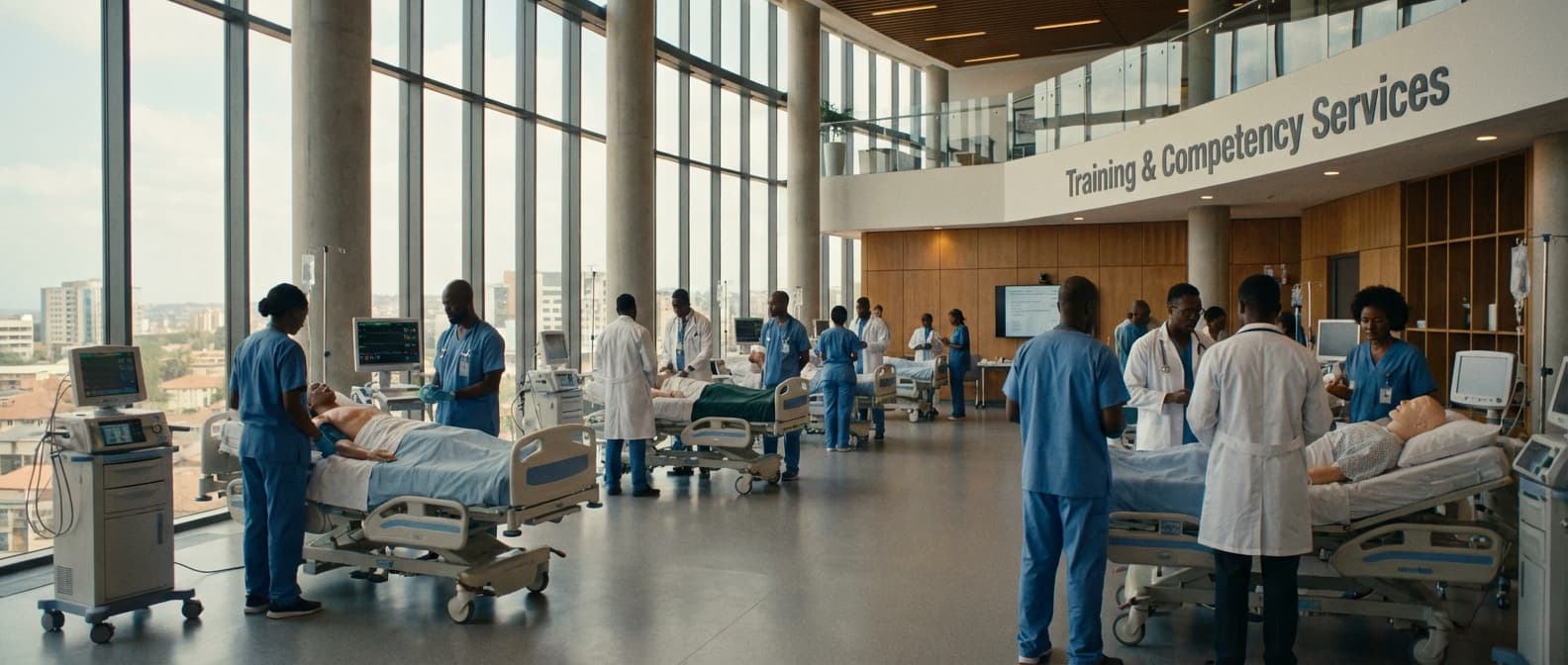
Ventilator User Training Service (Nurses) in Cameroon
Engineering Excellence & Technical Support
Ventilator User Training Service (Nurses) High-standard technical execution following OEM protocols and local regulatory frameworks.
Mastering Ventilation Modes
Understand and confidently operate essential ventilator modes (e.g., AC/VC, SIMV, PSV) to tailor respiratory support based on individual patient needs in diverse clinical scenarios encountered in Cameroon.
Patient Monitoring & Alarm Management
Develop critical skills in interpreting ventilator waveforms and real-time patient data, ensuring timely identification and effective management of crucial alarms to maintain patient safety and optimize outcomes.
Troubleshooting & Maintenance Basics
Gain practical knowledge in basic troubleshooting for common ventilator issues and routine maintenance procedures, ensuring uninterrupted patient care and maximizing equipment longevity in resource-constrained settings.
What Is Ventilator User Training Service (Nurses) In Cameroon?
Ventilator User Training Service (Nurses) in Cameroon refers to the structured educational programs designed to equip registered nurses and other qualified healthcare professionals in Cameroon with the knowledge and practical skills necessary for the safe and effective operation of mechanical ventilators. This service aims to enhance patient care outcomes by ensuring clinicians can competently manage patients requiring ventilatory support, troubleshoot equipment malfunctions, and respond appropriately to clinical deterioration.
| Target Audience | Rationale for Need | Typical Use Cases | ||
|---|---|---|---|---|
| Registered Nurses working in Intensive Care Units (ICUs) | Management of critically ill patients with respiratory failure requiring advanced respiratory support. | Post-operative care for patients undergoing major surgeries with anticipated respiratory compromise. | Management of patients with severe respiratory infections (e.g., COVID-19, pneumonia). | Stabilization and transport of critically ill patients requiring ventilation. |
| Registered Nurses working in High Dependency Units (HDUs) or Step-Down Units | Monitoring and managing patients transitioning from ICU or those requiring less intensive but still significant ventilatory support. | Early identification of potential respiratory deterioration in at-risk patients. | ||
| Anesthesia Nurses or Technicians | During surgical procedures requiring general anesthesia and mechanical ventilation. | Intra-operative patient monitoring and ventilator management. | ||
| Emergency Room Nurses | Initial stabilization and management of patients presenting with acute respiratory distress. | Preparation for transfer to higher levels of care. | ||
| Healthcare facilities in resource-limited settings | Addressing the critical shortage of highly specialized respiratory therapists, making nurses the primary caregivers for ventilated patients. | Maximizing the utilization of available ventilator equipment to save lives. |
Key Components of Ventilator User Training Service (Nurses) in Cameroon:
- Theoretical Foundations: Comprehensive modules covering respiratory physiology, pathophysiology of common respiratory failures (e.g., ARDS, COPD exacerbations, pneumonia), principles of mechanical ventilation (modes, settings, breath delivery), ventilator waveforms and interpretation, and pharmacology relevant to ventilated patients (sedatives, paralytics, bronchodilators).
- Equipment Familiarization: In-depth training on the specific makes and models of ventilators commonly deployed in Cameroonian healthcare facilities. This includes understanding control panels, alarm systems, circuit components, and basic maintenance procedures.
- Clinical Application and Management: Practical sessions focusing on patient assessment for mechanical ventilation initiation, ventilator setup and connection, appropriate mode selection based on patient condition, titration of ventilator settings, weaning protocols, and management of common complications (e.g., VAP, barotrauma, volutrauma).
- Troubleshooting and Emergency Response: Training on identifying and resolving common ventilator alarms and malfunctions, as well as protocols for emergency situations and circuit disconnections.
- Competency Assessment: Practical and theoretical evaluations to ensure trainees have achieved the required level of proficiency before independently managing ventilated patients.
- Continuing Education and Updates: Provision of ongoing training to address new technologies, updated clinical guidelines, and refresher courses.
Who Needs Ventilator User Training Service (Nurses) In Cameroon?
This document outlines the essential need for Ventilator User Training Services specifically tailored for nurses in Cameroon. Given the critical role ventilators play in patient care, particularly in intensive care settings, ensuring nurses are proficient in their operation is paramount. This training aims to enhance patient safety, improve clinical outcomes, and reduce the incidence of adverse events related to mechanical ventilation. The service will cover theoretical knowledge, practical application, troubleshooting, and maintenance of various ventilator models commonly used in Cameroonian healthcare facilities.
| Department | Specific Needs Addressed | Importance of Training |
|---|---|---|
| Intensive Care Unit (ICU) | Management of critically ill patients requiring mechanical ventilation, complex ventilator modes, weaning protocols. | High frequency of ventilator use necessitates advanced proficiency for optimal patient outcomes and reduced complications. |
| Emergency Room / Accident & Emergency (A&E) | Initial stabilization and management of patients with respiratory failure requiring immediate ventilation, transport ventilation. | Rapid decision-making and safe initiation of ventilation under pressure are crucial in emergent situations. |
| Anesthesia Department | Ventilator use during surgical procedures, intraoperative patient monitoring. | Ensuring patient safety during anesthesia and surgery by maintaining adequate ventilation and oxygenation. |
| Pediatric Intensive Care Unit (PICU) / Neonatal Intensive Care Unit (NICU) | Specialized pediatric and neonatal ventilation techniques, appropriate settings for different age groups and conditions. | Requires highly specialized skills due to the unique physiological needs of pediatric and neonatal patients. |
| General Wards (with Ventilator Support Capability) | Care of patients requiring non-invasive ventilation (NIV) or step-down care from ICU. | Enabling safe transition of patients and reducing ICU bed pressure while ensuring continued quality care. |
Target Customers and Departments
- Target Customers:
- Registered Nurses (RNs) and Enrolled Nurses (ENs) working in healthcare facilities across Cameroon.
- Newly graduated nurses requiring foundational training in critical care equipment.
- Experienced nurses needing refresher courses or training on new ventilator models.
- Nursing supervisors and educators responsible for in-service training and quality assurance.
Ventilator User Training Service (Nurses) Process In Cameroon
This document outlines the standard workflow for the Ventilator User Training Service (Nurses) in Cameroon, from the initial inquiry to the successful execution of the training program. The process is designed to ensure efficient communication, resource allocation, and effective knowledge transfer to healthcare professionals.
| Phase | Step | Description | Key Actors | Deliverables/Outcomes | Timeline |
|---|---|---|---|---|---|
| Phase 1: Inquiry and Initial Assessment | 1.1 Initial Contact | Healthcare facility (hospital, clinic) or relevant Ministry of Health department expresses interest in ventilator user training for their nursing staff. | Inquiring Facility/Ministry, Training Provider | Inquiry received, initial point of contact established. | 1-3 Business Days |
| 1.2 Needs Assessment & Scope Definition | Discussion to understand the specific training needs, number of nurses, types of ventilators in use, existing skill levels, and desired learning objectives. | Inquiring Facility (Nursing Heads, Biomedical Engineers), Training Provider (Training Coordinator) | Preliminary understanding of training scope, identification of key stakeholders, initial needs assessment report. | 3-5 Business Days | |
| Phase 2: Proposal and Agreement | 2.1 Proposal Development | Training provider develops a detailed proposal outlining training modules, duration, curriculum, trainers, venue requirements, equipment needs, and cost. | Training Provider | Formal training proposal submitted. | 5-7 Business Days |
| 2.2 Proposal Review & Negotiation | Inquiring facility reviews the proposal, may negotiate terms, and provides feedback. | Inquiring Facility, Training Provider | Proposal accepted or revised, agreement on terms. | 5-10 Business Days | |
| 2.3 Contract/Agreement Signing | Formal contract or Memorandum of Understanding (MOU) is signed between the training provider and the inquiring facility. | Inquiring Facility (Administration/Procurement), Training Provider (Legal/Management) | Signed contract/MOU, formal commitment to training. | 3-5 Business Days | |
| Phase 3: Planning and Preparation | 3.1 Detailed Curriculum Finalization | Finalizing the training curriculum, including theoretical sessions, practical demonstrations, and hands-on exercises, tailored to the agreed scope. | Training Provider (Lead Trainer, Curriculum Developer) | Finalized training curriculum and materials. | 2-3 Business Days |
| 3.2 Trainer Assignment & Briefing | Selecting and briefing qualified trainers on the specific needs and objectives of the training. | Training Provider (Training Coordinator) | Assigned and briefed trainers. | 2 Business Days | |
| 3.3 Logistics and Resource Allocation | Coordinating training venue, ensuring availability of ventilators for hands-on practice, training aids (mannequins, simulation equipment), and scheduling the training dates. | Training Provider (Logistics Officer), Inquiring Facility (Facility Management, Biomedical Department) | Confirmed training schedule, venue, and equipment. Participants identified and notified. | 7-10 Business Days | |
| Phase 4: Training Execution | 4.1 Pre-Training Briefing | Briefing participants on the training objectives, schedule, expectations, and assessment methods. | Lead Trainer, Training Participants | Participants understand training goals and structure. | Start of Training Day 1 |
| 4.2 Theoretical Sessions | Delivery of lectures, presentations, and discussions on ventilator principles, modes, settings, monitoring, and troubleshooting. | Trainer, Training Participants | Understanding of theoretical concepts. | As per curriculum schedule | |
| 4.3 Practical Demonstrations | Trainers demonstrate the operation of specific ventilator models, including setup, calibration, and parameter adjustments. | Trainer, Training Participants | Observation and understanding of practical procedures. | As per curriculum schedule | |
| 4.4 Hands-on Practice | Nurses actively engage in operating the ventilators under supervision, practicing various scenarios and settings. | Training Participants, Trainer (Supervision) | Development of practical skills and confidence. | As per curriculum schedule | |
| 4.5 Case Studies and Problem-Solving | Engaging participants in analyzing case studies and solving common ventilator-related challenges. | Trainer, Training Participants | Improved critical thinking and problem-solving abilities. | As per curriculum schedule | |
| 4.6 Assessment | Evaluating participant learning through quizzes, practical skills tests, and observed performance. | Trainer, Training Participants | Assessment of acquired knowledge and skills. | End of Training | |
| Phase 5: Post-Training and Evaluation | 5.1 Post-Training Feedback | Collecting feedback from participants and the inquiring facility on the training's effectiveness, relevance, and delivery. | Training Participants, Inquiring Facility Representatives, Training Provider | Feedback forms/surveys completed. | End of Training |
| 5.2 Certification | Issuing certificates of completion to nurses who have successfully completed the training and assessments. | Training Provider | Certificates of completion. | Within 5 Business Days post-training | |
| 5.3 Training Report & Follow-up | Submitting a comprehensive training report to the inquiring facility, including attendance, assessment results, and recommendations. Offering potential follow-up support. | Training Provider, Inquiring Facility | Training report, potential ongoing support plan. | Within 10 Business Days post-training | |
| 5.4 Impact Evaluation (Optional/Periodic) | Periodic evaluation to assess the long-term impact of the training on patient care and staff competency. | Training Provider, Inquiring Facility | Long-term impact assessment report. | 3-6 Months post-training |
Ventilator User Training Service (Nurses) Process in Cameroon
- Phase 1: Inquiry and Initial Assessment
- Phase 2: Proposal and Agreement
- Phase 3: Planning and Preparation
- Phase 4: Training Execution
- Phase 5: Post-Training and Evaluation
Ventilator User Training Service (Nurses) Cost In Cameroon
The cost of ventilator user training services for nurses in Cameroon can vary significantly due to several factors. These include the duration of the training, the complexity of the ventilators being taught, the experience and qualifications of the trainers, the location of the training (e.g., within a hospital facility or at a dedicated training center), and whether the training includes hands-on practical sessions with actual equipment. The availability of specialized training materials and the number of participants also play a role in the overall cost. While official, standardized pricing is not readily published, general estimates can be made based on market observations and the typical rates for professional medical training in the country.
| Training Scope | Estimated Cost Range (XAF) | Notes |
|---|---|---|
| Basic Ventilator Operation & Familiarization (1-2 days) | 75,000 - 200,000 | Covers fundamental principles, basic settings, and alarm management. May be less hands-on. |
| Intermediate Ventilator Management (3-5 days) | 200,000 - 500,000 | Includes in-depth understanding of modes, weaning protocols, common complications, and troubleshooting. Significant hands-on component expected. |
| Advanced Critical Care Ventilation (5+ days, or modular) | 400,000 - 1,000,000+ | Focuses on complex patient populations, specific ventilator features (e.g., non-invasive ventilation, high-frequency ventilation), and advanced physiological monitoring. Often includes case studies and simulations. |
| Refresher/Update Courses (1 day) | 50,000 - 150,000 | For nurses who have prior training but need to refresh their skills or learn about new updates/models. |
Pricing Factors for Ventilator User Training in Cameroon:
- Duration of Training: Shorter, introductory courses will be less expensive than comprehensive, multi-day programs.
- Ventilator Complexity: Training on basic ventilators is typically cheaper than training on advanced, critical care models with numerous settings.
- Trainer Expertise: Highly experienced and certified respiratory therapists or critical care nurses will command higher fees.
- Training Location: On-site training at a hospital might incur additional costs for travel and accommodation for trainers, but can reduce participant travel expenses.
- Hands-on Component: Practical sessions using actual ventilators are more resource-intensive and thus generally more expensive.
- Training Materials: The provision of detailed manuals, guides, and assessments contributes to the cost.
- Participant Numbers: Group discounts may be available for larger cohorts, while individual training will be more expensive per person.
- Provider Type: Training offered by established medical institutions or specialized training companies might differ in pricing from informal arrangements.
Affordable Ventilator User Training Service (Nurses) Options
This document outlines affordable ventilator user training service options specifically designed for nurses. We understand the critical need for skilled nursing staff to operate and manage ventilators effectively, especially in resource-constrained environments. Our training programs focus on practical, hands-on learning, incorporating best practices and cost-saving strategies to ensure high-quality education without exorbitant fees.
| Value Bundle | Description | Target Audience | Included Features | Estimated Cost-Saving Strategy | Price Range (Illustrative) |
|---|---|---|---|---|---|
| Basic Competency Bundle | Foundational training for nurses new to ventilator management. | Newer nurses, nurses in general wards transitioning to critical care. | Core ventilator modes (volume control, pressure control), basic alarms, patient setup. 8-hour session. | Group training sessions, standardized curriculum, basic equipment simulation. | $250 - $400 per nurse |
| Advanced Critical Care Bundle | In-depth training for nurses managing complex ventilated patients. | Experienced critical care nurses, nurses in ICUs and specialized units. | Advanced modes (AC/VC, PCV, PSV, BiPAP, NIV), weaning protocols, ARDS management, waveform analysis. 16-hour session. | Blended learning (online modules + in-person practical), train-the-trainer options for internal staff. | $500 - $800 per nurse |
| On-Site Facility Customization | Training tailored to the specific equipment and protocols of your institution. | Any healthcare facility with existing ventilator equipment. | Hands-on training on your facility's ventilator models, integration with EMR for documentation, site-specific emergency protocols. 2-3 day intensive. | Reduced travel costs for nurses, training on familiar equipment, knowledge transfer to internal educators. | Custom quote based on facility size and training duration (e.g., starting from $3,000 per training event for a group of 10 nurses). |
| Virtual Simulation & Remote Support | Leveraging technology for cost-effective and accessible training. | Facilities with limited access to trainers or requiring flexible scheduling. | Interactive online modules, virtual ventilator simulators, live Q&A sessions with instructors, remote troubleshooting assistance. Ongoing access to resources. | Eliminates travel and accommodation costs for both trainers and trainees, scalability to large numbers of nurses. | $150 - $300 per nurse (subscription-based options available) |
Key Components of Our Affordable Ventilator Training Services
- Comprehensive curriculum covering ventilator modes, settings, patient monitoring, troubleshooting, and infection control.
- Experienced and certified respiratory therapists and critical care nurses as instructors.
- Flexible training formats including on-site, off-site, and remote/virtual options.
- Access to simulated patient scenarios and real ventilator equipment (where applicable).
- Post-training support and refresher courses.
- Certification upon successful completion of the training program.
Verified Providers In Cameroon
Ensuring access to reliable and trustworthy healthcare services is paramount, especially when navigating the complexities of medical needs. In Cameroon, identifying 'Verified Providers' is a critical step towards receiving quality care. This is where Franance Health emerges as a distinguished leader, offering a robust network of credentialed professionals and facilities. Their commitment to rigorous verification processes sets them apart, providing patients with the confidence and assurance they deserve when making crucial health decisions. This document outlines why Franance Health's credentials signify the best choice for healthcare in Cameroon.
| Aspect of Verification | Franance Health's Commitment | Patient Benefit |
|---|---|---|
| Medical Licensing and Certification | Thorough validation of all professional licenses and board certifications. | Ensures providers are legally qualified and possess recognized expertise. |
| Educational Background and Training | Verification of degrees, residencies, and specialized training from reputable institutions. | Confirms that practitioners have received comprehensive and up-to-date medical education. |
| Professional Experience and Track Record | Assessment of past professional history and peer reviews. | Provides insight into a provider's practical experience and established reputation. |
| Adherence to Ethical Standards | Confirmation of compliance with medical ethics and professional conduct codes. | Guarantees that patients will receive respectful and principled care. |
| Facility Accreditation and Safety | Evaluation of healthcare facilities for compliance with health and safety regulations. | Ensures a safe and well-equipped environment for medical procedures and treatment. |
| Specialty Expertise | Verification of specific qualifications for specialized medical fields. | Allows patients to confidently seek care from experts in their particular medical needs. |
Why Franance Health Credentials Matter:
- Rigorous Professional Vetting: Franance Health employs stringent checks to confirm the qualifications, licenses, and certifications of all healthcare professionals within their network. This includes verifying medical degrees, specialist accreditations, and adherence to professional ethical standards.
- Facility Standards Compliance: Beyond individual practitioners, Franance Health scrutinizes healthcare facilities to ensure they meet established safety, hygiene, and operational standards. This encompasses equipment quality, infrastructure integrity, and adherence to best practices in patient care.
- Continuous Performance Monitoring: The verification process isn't a one-time event. Franance Health actively monitors the performance and patient feedback of their providers, ensuring ongoing quality and responsiveness.
- Patient-Centric Approach: By partnering with verified providers, Franance Health prioritizes patient well-being and safety. This dedication translates into a more secure and positive healthcare experience for individuals and families.
- Access to a Trusted Network: Franance Health's verified providers offer a reliable gateway to a spectrum of healthcare services, from general practitioners to specialized medical care, all within a framework of trust and accountability.
Scope Of Work For Ventilator User Training Service (Nurses)
This Scope of Work (SOW) outlines the requirements for providing comprehensive ventilator user training services specifically tailored for nurses. The objective is to equip nurses with the necessary knowledge and practical skills to safely and effectively operate and manage ventilators in clinical settings. This SOW details the technical deliverables, standard specifications for the training, and outlines the expected outcomes of the program.
| Category | Specification/Deliverable | Description | Measurement/Verification Method |
|---|---|---|---|
| Training Delivery Method | Blended Learning Approach | Combination of theoretical instruction (lectures, presentations, e-learning modules) and practical hands-on sessions. | Approved by Training Coordinator. |
| Training Duration | Comprehensive Program | Total duration to be determined based on the complexity of ventilators and depth of content, typically 2-5 days. Each module will have a defined time allocation. | Training schedule provided and adhered to. |
| Instructor Qualifications | Certified & Experienced Professionals | Instructors must be Registered Nurses (RNs) or Respiratory Therapists (RTs) with a minimum of 3-5 years of experience in critical care and mechanical ventilation, holding relevant certifications (e.g., ACLS, PALS if applicable). | CVs and certifications of instructors submitted for approval. |
| Training Materials | High-Quality & Accessible Resources | Participants will receive comprehensive training manuals, quick reference guides, access to online resources (e-learning platforms, videos), and simulation tools. | Materials reviewed and approved by the client's clinical education department. |
| Ventilator Model(s) for Training | Specific Manufacturer Models | Training to be conducted on the specific ventilator models currently in use at the client's facility (e.g., [List specific ventilator models here, e.g., Dräger Evita Infinity V500, GE Healthcare Engstrom Carestation]). | Confirmed by client prior to training commencement. |
| Simulation Equipment | Realistic Mannequins & Software | Use of adult and pediatric manikquins, lung simulators, and ventilator simulators to provide realistic practice scenarios. | Demonstration of simulation equipment functionality. |
| Competency Assessment | Multi-faceted Evaluation | Includes written quizzes, practical skills demonstrations, and scenario-based assessments to verify competency. | Pass/fail criteria clearly defined for each assessment component. |
| Participant Ratio | Optimal Learning Environment | Instructor to participant ratio not exceeding 1:6 for practical sessions to ensure adequate individual attention. | Verified by attendance records and observation. |
| Training Environment | Dedicated & Equipped Space | Training to be conducted in a dedicated classroom and/or simulation lab with access to working ventilators, power outlets, and appropriate audio-visual equipment. | Site inspection and confirmation by the client. |
| Certification | Certificate of Completion | Upon successful completion of all modules and assessments, participants will receive a certificate of attendance and competency verification. | Issued for each successfully trained nurse. |
| Post-Training Support | Follow-up Resources | Provision of contact information for follow-up questions and access to online resources for a defined period post-training (e.g., 30 days). | Contact details and resource links provided to participants. |
| Reporting | Detailed Training Report | A comprehensive report detailing training attendance, assessment results, identified areas for improvement, and recommendations for ongoing education. | Submitted to the client's clinical education department within 7 days of training completion. |
Training Modules and Content
- Introduction to Mechanical Ventilation: Principles, indications, contraindications, and basic terminology.
- Ventilator Components and Controls: Detailed explanation of ventilator parts, user interface, and functional parameters.
- Ventilator Modes: Understanding different ventilation modes (e.g., Volume Control, Pressure Control, SIMV, BiPAP, CPAP), their applications, and settings.
- Initial Patient Setup and Connection: Proper procedures for intubation/tracheostomy connection, circuit management, and leak testing.
- Monitoring and Assessment: Crucial parameters to monitor, interpretation of ventilator waveforms and alarms, and patient assessment during ventilation.
- Troubleshooting and Alarm Management: Identification and resolution of common ventilator alarms and malfunctions.
- Ventilator Weaning and Discontinuation: Principles and protocols for weaning patients off mechanical ventilation.
- Special Populations and Considerations: Ventilation strategies for specific patient groups (e.g., pediatrics, neonates, ARDS patients).
- Infection Control and Hygiene: Protocols for cleaning, disinfection, and maintenance of ventilator equipment.
- Ethical and Legal Aspects of Mechanical Ventilation: Patient rights, informed consent, and end-of-life care considerations.
- Hands-on Practice and Simulation: Practical sessions utilizing simulation equipment and potentially real ventilators (under supervision).
- Post-Training Assessment and Competency Verification.
Service Level Agreement For Ventilator User Training Service (Nurses)
This Service Level Agreement (SLA) outlines the response times and uptime guarantees for the Ventilator User Training Service specifically for nursing staff. This agreement ensures that nurses receive timely and reliable access to essential training resources to effectively operate and manage ventilators. The training service is critical for maintaining patient safety and ensuring optimal clinical outcomes.
| Service Component | Metric | Target | Measurement Period |
|---|---|---|---|
| Training Platform Access | Uptime Guarantee | 99.5% | Monthly |
| On-Demand Training Modules (Video, Documents) | Availability | 99.5% | Monthly |
| Live Webinar Access | Scheduled Session Uptime | 99.8% | Per Scheduled Session |
| Simulator Session Booking | Platform Responsiveness | 99.5% | Monthly |
| Technical Support (Chat/Email) | Initial Response Time | < 2 Business Hours | 24/7 Operation, Mon-Fri Business Hours for Human Response |
| Clinical Support (Content Questions) | Initial Response Time | < 4 Business Hours | Mon-Fri Business Hours |
| Emergency Technical Support | Availability | 24/7 | 24/7 Operation |
| Emergency Technical Support | Response Time | < 1 Business Hour | 24/7 Operation |
Key Service Metrics
- Response Time: Refers to the maximum time allowed for the training platform to acknowledge a user request or for a support query to receive an initial response.
- Uptime Guarantee: Represents the percentage of time the training platform is available and fully functional for users.
- Training Session Availability: Refers to the guaranteed availability of pre-recorded training modules, live webinars (scheduled), and the ability to book simulator sessions.
- Support Availability: Refers to the hours during which dedicated support personnel are available to assist with technical issues or content-related questions.
Frequently Asked Questions

Ready when you are
Let's scope your Ventilator User Training Service (Nurses) in Cameroon project in Cameroon.

Scaling healthcare logistics and technical systems across the entire continent.