
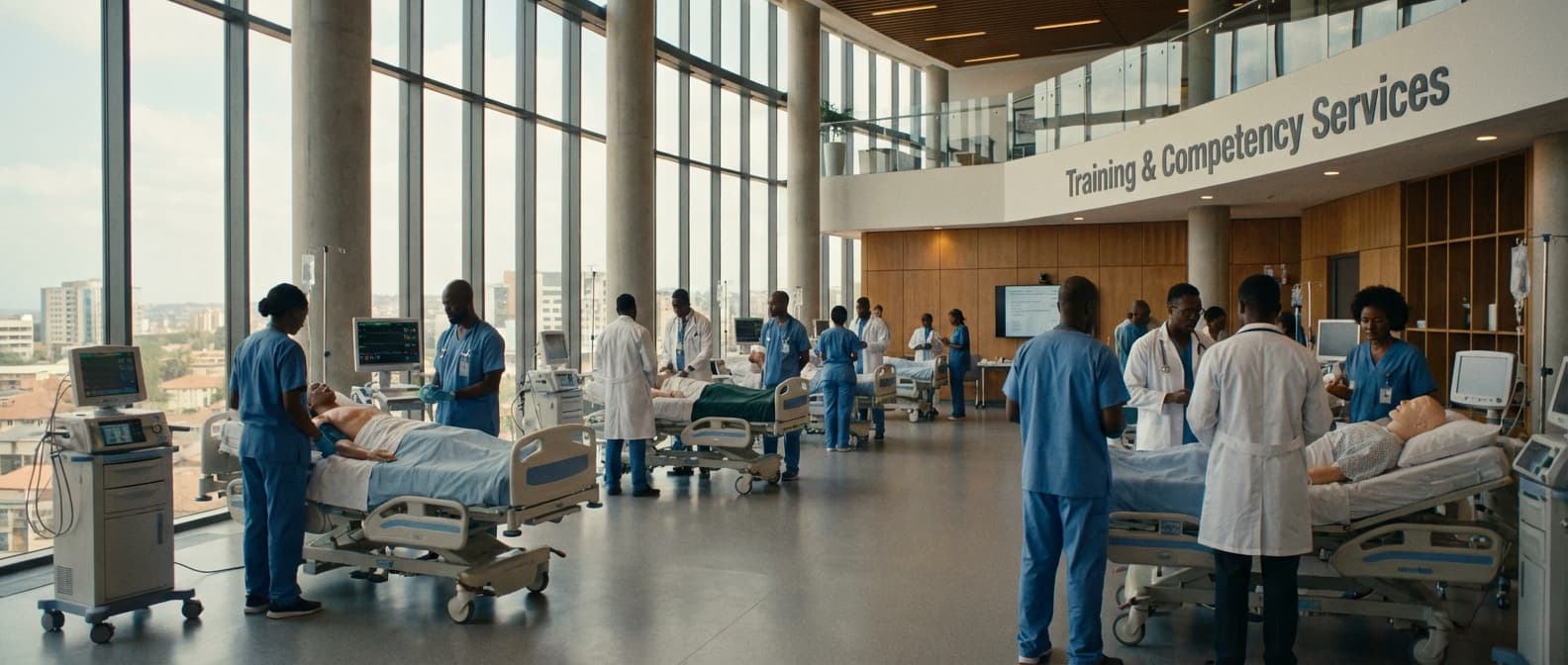
Ultrasound Application Training Service (Protocol-Based) in Cameroon
Engineering Excellence & Technical Support
Ultrasound Application Training Service (Protocol-Based) High-standard technical execution following OEM protocols and local regulatory frameworks.
Standardized Protocol Adherence
Our training emphasizes strict adherence to universally recognized ultrasound protocols, ensuring diagnostic consistency and quality across all learners in Cameroon. This systematic approach minimizes variability and enhances diagnostic accuracy.
Hands-On Skill Development
Through extensive simulation and supervised practical sessions, trainees gain practical experience in image acquisition and interpretation, tailored to common pathologies encountered in the Cameroonian healthcare landscape. We focus on building confident, competent sonographers.
Equipment Proficiency & Troubleshooting
Our curriculum integrates training on operating diverse ultrasound equipment and performing basic troubleshooting. This empowers healthcare professionals in Cameroon to maximize the utility of available resources and maintain operational efficiency.
What Is Ultrasound Application Training Service (Protocol-based) In Cameroon?
Ultrasound Application Training Service (Protocol-Based) in Cameroon refers to structured educational programs designed to equip healthcare professionals with the theoretical knowledge and practical skills required to perform and interpret ultrasound examinations according to established diagnostic protocols. This service is crucial for enhancing the diagnostic capabilities of healthcare facilities, particularly in resource-limited settings like Cameroon, where access to specialized imaging services can be challenging. The protocol-based approach ensures standardized, reproducible, and accurate ultrasound examinations, thereby improving patient care outcomes. The training emphasizes not only the technical operation of ultrasound equipment but also the systematic acquisition of images, anatomical recognition, recognition of pathological findings, and appropriate reporting.
| Who Needs It? | Typical Use Cases | |||||||
|---|---|---|---|---|---|---|---|---|
| Radiologists: To enhance their diagnostic acumen and proficiency in ultrasound interpretation, especially in specialized areas. | Obstetricians and Gynecologists: For routine antenatal scans, fetal anomaly screening, gynecological assessments, and interventional procedures. | General Practitioners and Family Physicians: To perform point-of-care ultrasound (POCUS) for initial diagnostic assessments and to guide management in primary healthcare settings. | Surgeons: For pre-operative assessment, intra-operative guidance, and post-operative monitoring. | Emergency Medicine Physicians: To rapidly assess trauma patients, identify fluid collections, and diagnose conditions like deep vein thrombosis (DVT) or pleural effusions. | Pediatricians: For evaluating congenital anomalies, abdominal pathologies, and musculoskeletal issues in children. | Sonographers/Ultrasound Technicians: To acquire foundational and advanced skills in ultrasound imaging according to established protocols. | Nurses and Midwives: Particularly in remote areas, for basic obstetric scanning and point-of-care assessments. | Medical Students and Residents: As part of their clinical rotation and early exposure to diagnostic imaging. |
| Obstetric Ultrasound: Dating scans, nuchal translucency measurement, anomaly scans (e.g., detecting spina bifida, anencephaly), growth monitoring, Doppler assessment of fetal well-being. | Abdominal Ultrasound: Evaluation of the liver, gallbladder, spleen, pancreas, kidneys, and urinary bladder for masses, stones, inflammation, or structural abnormalities. | Gynecological Ultrasound: Assessment of the uterus, ovaries, and fallopian tubes for conditions such as fibroids, cysts, endometriosis, and pelvic inflammatory disease. | Vascular Ultrasound: Doppler assessment of carotid arteries, peripheral arteries and veins (e.g., DVT diagnosis), and abdominal vasculature. | Musculoskeletal Ultrasound: Evaluation of joints, tendons, ligaments, and muscles for injuries, inflammation, or degenerative changes. | Small Parts Ultrasound: Imaging of the thyroid, breast, scrotum, and lymph nodes. | Point-of-Care Ultrasound (POCUS): Rapid bedside assessments in emergency departments, intensive care units, and remote clinics for conditions like pneumothorax, pericardial effusion, or abdominal free fluid. | Interventional Ultrasound: Guiding biopsies, fluid aspirations, and drain placements. |
What This Service Involves:
- Theoretical Instruction: Comprehensive lectures covering ultrasound physics, instrumentation, anatomical correlations, and common pathologies across various organ systems (e.g., obstetrics, gynecology, abdominal, musculoskeletal, superficial structures, vascular).
- Protocol-Driven Practical Training: Hands-on sessions where trainees learn to execute specific ultrasound protocols for different clinical indications. This involves standardized scanning planes, probe positioning, image optimization, and systematic documentation.
- Image Acquisition and Interpretation: Development of skills in acquiring high-quality diagnostic images and subsequently interpreting them for abnormalities. This includes differentiating normal from pathological findings.
- Case Study Analysis: Review of real-world ultrasound cases to reinforce learning and develop critical thinking and diagnostic reasoning.
- Equipment Familiarization and Maintenance: Training on the operation, basic troubleshooting, and routine maintenance of various ultrasound machines.
- Reporting and Documentation: Instruction on generating accurate, concise, and standardized ultrasound reports.
- Continuing Professional Development: Offering refresher courses and advanced modules to keep practitioners updated with evolving ultrasound techniques and applications.
Who Needs Ultrasound Application Training Service (Protocol-based) In Cameroon?
Ultrasound Application Training Service (Protocol-Based) in Cameroon is crucial for enhancing diagnostic capabilities and ensuring standardized best practices across various medical settings. This training is designed for healthcare professionals who regularly utilize or aim to utilize ultrasound technology for diagnostic purposes, focusing on adherence to established protocols for consistent and accurate interpretations. The service caters to a range of individuals and departments within the Cameroonian healthcare landscape, from public hospitals to private clinics and specialized imaging centers. The protocol-based approach ensures that practitioners are trained to perform specific examinations according to internationally recognized guidelines, which is particularly important in resource-limited settings where access to specialized expertise might be scarce. This standardization promotes inter-departmental consistency and facilitates easier knowledge sharing and collaboration.
| Target Department | Specific Needs Addressed | Examples of Ultrasound Applications (Protocol-Based) |
|---|---|---|
| Radiology Departments (Public & Private Hospitals) | Standardization of imaging protocols, advanced application training, quality assurance. | Abdominal ultrasound (liver, gallbladder, kidneys), Pelvic ultrasound (transabdominal and transvaginal), Thyroid ultrasound, Musculoskeletal ultrasound, Doppler studies (carotid, peripheral vascular). |
| Obstetrics and Gynecology Departments | Fetal biometry and anomaly scans, gynecological pathology assessment, intrauterine device (IUD) placement confirmation. | First-trimester screening, second and third-trimester anomaly scans, pelvic organ assessment, assessment of ovarian cysts and uterine fibroids. |
| Cardiology Departments | Echocardiography protocol adherence, interpretation of cardiac structures and function. | Transthoracic echocardiography (TTE), assessment of ventricular function, valvular heart disease evaluation. |
| Emergency Departments | Rapid point-of-care ultrasound (POCUS) protocols for trauma and acute conditions. | FAST scan (Focused Assessment with Sonography for Trauma), e-FAST scan, cardiac POCUS, lung POCUS, basic abdominal and pelvic POCUS. |
| Maternal and Child Health Clinics / Centers | Essential obstetric ultrasound, basic pediatric diagnostic ultrasound. | Basic fetal dating scans, assessment for obstetric emergencies, screening for pediatric abdominal masses, hydrocephalus assessment. |
| Specialized Medical Centers (e.g., Cancer Centers, Fertility Clinics) | Protocol-driven imaging for specific disease management and fertility assessment. | Interventional ultrasound guidance (biopsies), advanced gynecological imaging, fertility treatment monitoring (follicle tracking). |
| Medical Training Institutions (Universities & Schools of Health Sciences) | Curriculum development, training of future sonographers and radiologists, hands-on protocol practice. | Foundational ultrasound principles, systematic examination techniques across various specialties. |
| Non-Governmental Organizations (NGOs) & Humanitarian Organizations | Providing ultrasound services in underserved areas, training local healthcare workers on essential protocols. | Basic obstetric ultrasound, general abdominal and pelvic ultrasound for primary care settings. |
Target Customers and Departments for Ultrasound Application Training Service (Protocol-Based) in Cameroon
- Radiologists
- Sonographers
- General Practitioners with Ultrasound Capabilities
- Obstetricians and Gynecologists
- Cardiologists
- Pediatricians
- Emergency Medicine Physicians
- Urologists
- Anesthesiologists
- Medical Imaging Technicians
- Nursing Staff involved in point-of-care ultrasound
Ultrasound Application Training Service (Protocol-based) Process In Cameroon
This document outlines the typical workflow for an Ultrasound Application Training Service (Protocol-Based) in Cameroon, covering the process from initial inquiry to the successful execution of the training. This service is designed to equip healthcare professionals with the skills to utilize ultrasound equipment effectively and according to established protocols, particularly relevant in resource-limited settings where standardized practices are crucial.
| Stage | Description | Key Activities | Deliverables | Responsible Parties |
|---|---|---|---|---|
| The client (e.g., a hospital, clinic, or NGO) expresses interest in ultrasound application training. | Initial contact via phone, email, or website. Discussion of training needs, specific applications (e.g., obstetrics, general, emergency), target audience (doctors, nurses, sonographers), number of participants, and desired learning outcomes. Assessment of existing equipment availability and technical infrastructure. | Needs assessment report. Understanding of client's requirements. | Client, Training Provider |
| Based on the needs assessment, the training provider prepares a detailed proposal. | Development of a tailored training curriculum, including theoretical modules and practical sessions based on agreed-upon protocols. Selection of appropriate trainers with relevant expertise. Outline of training methodology (on-site, virtual, blended). Estimation of training duration and schedule. Cost breakdown for training fees, materials, travel, accommodation (if applicable), and equipment rental (if needed). Presentation of the proposal and quotation to the client. | Detailed Training Proposal. Itemized Quotation. | Training Provider |
| Upon client acceptance of the proposal, a formal agreement is established. | Negotiation of terms and conditions. Signing of a service agreement or contract. Confirmation of training dates, venue, and participant numbers. Payment of any required deposit. | Signed Service Agreement/Contract. Confirmed booking. | Client, Training Provider |
| All logistical aspects are managed to ensure a smooth training delivery. | Procurement or arrangement of training equipment (ultrasound machines, phantoms, simulation models). Preparation of training materials (manuals, presentations, handouts, assessment forms). Coordination of trainer travel and accommodation. Communication with participants regarding pre-training requirements (e.g., prerequisite knowledge, necessary documents). Site preparation for training venue (if on-site). | Training Materials. Confirmed trainer travel arrangements. Communication plan for participants. | Training Provider, Client |
| The core training program is delivered to the participants. | Welcome and introduction to the training program. Theoretical sessions covering ultrasound physics, image optimization, safety, and specific application protocols. Demonstrations by trainers. Hands-on practical sessions with real patients (under supervision) or phantoms, adhering to the protocol-based approach. Case study discussions and problem-solving exercises. Regular feedback sessions and knowledge checks. | Delivered training sessions. Participant engagement. | Training Provider, Participants |
| The effectiveness of the training is assessed and supported. | Post-training assessments (e.g., written exams, practical skill evaluations). Distribution of certificates of completion. Collection of participant feedback through evaluation forms. Post-training support (e.g., Q&A sessions, access to online resources, troubleshooting). Reporting on training outcomes and impact to the client. | Training Evaluation Report. Certificates of Completion. Participant Feedback Summary. | Training Provider, Client |
Ultrasound Application Training Service (Protocol-Based) Workflow in Cameroon
- Inquiry and Needs Assessment
- Proposal Development and Quotation
- Agreement and Contract Finalization
- Logistics and Pre-Training Preparations
- Training Execution
- Post-Training Follow-up and Evaluation
Ultrasound Application Training Service (Protocol-based) Cost In Cameroon
Providing accurate cost figures for Ultrasound Application Training Services (Protocol-Based) in Cameroon requires an understanding of several key influencing factors. The price is not static and can vary significantly based on the provider, the specific ultrasound applications covered, the duration and intensity of the training, and the location within Cameroon. These services are crucial for healthcare professionals seeking to enhance their diagnostic capabilities and adhere to standardized imaging protocols. The training typically involves theoretical knowledge, hands-on practical sessions with real equipment, and case study analysis, all aimed at ensuring competent and consistent ultrasound examinations.
| Training Category (Example) | Estimated Cost Range (XAF) - Low | Estimated Cost Range (XAF) - High | Typical Duration |
|---|---|---|---|
| Basic/General Ultrasound Principles | 50,000 | 150,000 | 1-3 Days |
| Obstetric & Gynecological Ultrasound (Basic to Intermediate) | 100,000 | 300,000 | 3-5 Days |
| Abdominal Ultrasound (Basic to Intermediate) | 80,000 | 250,000 | 2-4 Days |
| Specialized Ultrasound Module (e.g., Echocardiography, Musculoskeletal - Introductory) | 150,000 | 400,000 | 3-5 Days |
| Advanced/Comprehensive Protocol-Based Training (Multiple Modalities/Certification Prep) | 250,000 | 800,000+ | 5-10 Days or longer |
| Refresher/Continuing Education Workshops | 30,000 | 100,000 | 1-2 Days |
Key Pricing Factors for Ultrasound Application Training in Cameroon
- Provider's Reputation and Expertise: Established training institutions or experienced sonographers/radiologists with a proven track record generally command higher fees due to their credibility and the quality of instruction.
- Scope of Ultrasound Applications: Training on general ultrasound will be less expensive than specialized modules like obstetric and gynecological ultrasound, cardiac ultrasound, musculoskeletal ultrasound, or interventional ultrasound. Each specialization requires deeper knowledge and often more specialized equipment for training.
- Duration and Intensity of Training: Shorter, introductory workshops will naturally cost less than comprehensive, multi-day courses or full certification programs. The number of hours dedicated to theory and practical sessions directly impacts the overall cost.
- Training Modality (On-site vs. Remote/Online): On-site training, especially if it involves travel and accommodation for instructors or participants, will be more expensive. Fully online or blended learning approaches might offer cost savings but may compromise the hands-on component.
- Equipment Availability and Quality: If the training program utilizes high-end, modern ultrasound machines, the cost may be higher, reflecting the investment in equipment. Conversely, if the training relies on simulation software or older models, the price might be lower.
- Accreditation and Certification: Training programs that offer recognized accreditation or certification from medical bodies or professional organizations often carry a premium due to the added value and credibility.
- Location within Cameroon: Training offered in major urban centers like Douala or Yaoundé might have slightly higher costs due to operational expenses compared to less developed regions.
- Group Size and Customization: Larger group bookings or customized training packages tailored to the specific needs of a hospital or clinic can influence the per-participant cost, sometimes leading to discounts.
- Inclusion of Training Materials: Whether the course fee includes comprehensive study guides, manuals, access to online resources, or assessment fees will affect the overall price.
Affordable Ultrasound Application Training Service (Protocol-based) Options
Our Affordable Ultrasound Application Training Service offers comprehensive, protocol-based training designed to equip healthcare professionals with the essential skills for accurate diagnostic imaging. We understand the importance of cost-effectiveness in professional development, which is why we've structured our offerings to provide significant value through flexible value bundles and strategic cost-saving strategies.
| Cost-Saving Strategy | Description | Benefit |
|---|---|---|
| Early Bird Registration Discount | Register for any bundle or course more than 30 days in advance to receive a percentage-based discount. | Reduces upfront training investment. |
| Group Enrollment Savings | Enroll 3 or more individuals from the same institution simultaneously to unlock tiered discounts. | Significant cost reduction for teams and departments. |
| Bundled Course Discount | Purchasing a value bundle is inherently more cost-effective than enrolling in individual courses separately. | Maximizes learning for a lower overall price. |
| Online-Only Access Option | Opt for digital-only access to training materials and recorded sessions for a reduced fee, eliminating costs associated with in-person instruction. | Lower overhead costs translate to lower prices for learners. |
| Subscription Model (Future Offering) | Explore our upcoming subscription plans for continuous access to updated protocols and new application modules at a predictable monthly cost. | Provides ongoing professional development and budget predictability. |
| Customizable Training Packages | Work with our training specialists to tailor a bundle to your exact requirements, ensuring you only pay for the content you need. | Avoids unnecessary expenditure on irrelevant training modules. |
Value Bundles Explained
- {"title":"Core Application Bundle","description":"This foundational bundle covers the essential protocols for common ultrasound applications, such as abdominal, pelvic, and basic cardiac imaging. Ideal for general practitioners, sonography students, and those new to specific modalities."}
- {"title":"Specialty Module Bundle","description":"Designed for those requiring in-depth knowledge in a specific area. Choose from options like vascular, musculoskeletal, obstetric, or advanced cardiac ultrasound. This bundle includes specialized protocols and advanced techniques."}
- {"title":"Comprehensive Professional Bundle","description":"Our most inclusive bundle, combining core applications with a selection of specialty modules. This option provides a well-rounded education for experienced sonographers looking to expand their skill set or for institutions aiming for broad staff competency."}
- {"title":"Institution-Wide Access Bundle","description":"A cost-effective solution for hospitals, clinics, and educational institutions. This bundle offers scalable access for multiple users, customizable training paths, and dedicated support for your organization's specific needs."}
Verified Providers In Cameroon
In Cameroon's evolving healthcare landscape, identifying trusted and qualified medical providers is paramount for ensuring quality care. Franance Health has emerged as a leading platform dedicated to connecting patients with verified healthcare professionals. Their rigorous credentialing process and commitment to excellence make them the premier choice for individuals seeking reliable medical services.
| Type of Provider | Franance Health Verification Criteria | Benefits for Patients |
|---|---|---|
| Doctors (General & Specialists) | Valid medical license, recognized medical degree(s), specialization certifications, professional body membership, peer reviews (where applicable). | Access to board-certified physicians, confidence in expertise, reduced search time, informed decision-making. |
| Nurses | Registered nursing license, nursing degree/diploma, relevant certifications (e.g., critical care, midwifery). | Qualified and experienced nursing staff, assurance of proper care and support, enhanced patient comfort. |
| Pharmacists | Registered pharmacist license, pharmacy degree, knowledge of drug interactions and dispensing regulations. | Safe and accurate medication dispensing, expert advice on prescriptions, access to reliable pharmaceutical services. |
| Clinics & Hospitals | Operational licenses, accreditation status (if applicable), adherence to safety and hygiene standards, equipment verification. | Safe and well-equipped medical facilities, reliable diagnostic and treatment services, standardized quality of care. |
Why Franance Health Credentials Matter
- Rigorous Verification Process: Franance Health employs a multi-stage verification system for all listed providers. This includes checking medical licenses, educational qualifications, professional registrations, and background checks.
- Specialization and Expertise: Providers on Franance Health are thoroughly vetted for their specific areas of specialization, ensuring patients are matched with the most suitable doctors, nurses, and other healthcare professionals for their needs.
- Commitment to Patient Safety: By prioritizing credential verification, Franance Health significantly reduces the risk of encountering unqualified or fraudulent practitioners, thereby enhancing patient safety and trust.
- Access to Quality Care: The platform streamlines the process of finding reputable healthcare providers, making quality medical care more accessible to the Cameroonian population.
- Continuous Monitoring: Franance Health is committed to ongoing monitoring of provider credentials and performance, ensuring that the standards remain high over time.
Scope Of Work For Ultrasound Application Training Service (Protocol-based)
This Scope of Work (SOW) outlines the requirements for a protocol-based ultrasound application training service, focusing on technical deliverables and standard specifications. The objective is to ensure trainees acquire proficiency in operating ultrasound equipment and executing specific ultrasound protocols for various clinical applications.
| Deliverable | Description | Standard Specification/Requirement | Format | Frequency/Timeline |
|---|---|---|---|---|
| Training Curriculum Development | Creation of a comprehensive, protocol-driven training curriculum tailored to the specified ultrasound applications. | Curriculum must align with established professional guidelines (e.g., AIUM, ASE, SRU) and incorporate best practices for each protocol. Must include learning objectives, content modules, and assessment methods. | Digital Document (PDF, DOCX) | Once, prior to training commencement |
| Training Materials (Participant Manuals) | Development of detailed participant manuals for each ultrasound protocol. Content should be clear, concise, and visually supported. | Manuals must include step-by-step guidance for protocol execution, image acquisition criteria, anatomical landmarks, potential pitfalls, and relevant clinical correlations. Include diagrams, schematics, and sample images. | Digital Document (PDF) | Once per protocol, prior to training commencement |
| Hands-on Training Sessions | Delivery of instructor-led, hands-on training sessions utilizing ultrasound equipment. | Sessions must adhere to the developed curriculum and participant manuals. Instructor-to-trainee ratio not to exceed 1:4. Trainees must demonstrate competency in performing each protocol under supervision. Simulation exercises may be incorporated. | In-person sessions with provided equipment and phantoms/volunteers as applicable. | As per agreed training schedule (e.g., X days per protocol, Y hours per session) |
| Competency Assessment Tools | Development and administration of tools to assess trainee competency in protocol execution. | Tools may include practical scanning evaluations (checklist-based), image critique sessions, and written quizzes. Assessment criteria must be clearly defined and objective. Minimum passing score of 85% required for each protocol. | Digital Forms (for checklists), Quizzes (digital or paper) | Throughout and at the conclusion of each training module |
| Post-Training Support Materials | Provision of resources to support ongoing learning and skill reinforcement after the formal training. | Includes access to online resources (e.g., video library of protocol execution, Q&A forum) or reference guides. Availability of remote expert consultation for specific queries for a defined period (e.g., 30 days post-training). | Online portal access, email/phone support | Post-training period as defined in the agreement |
| Training Feedback Mechanism | Implementation of a system for trainees to provide feedback on the training program. | Anonymous feedback forms covering instructor effectiveness, curriculum relevance, material quality, and overall satisfaction. Analysis of feedback for continuous improvement. | Online Survey (e.g., SurveyMonkey, Google Forms) | At the conclusion of each training module and overall program |
| Training Completion Certificates | Issuance of certificates to trainees who successfully complete the training and achieve the required competency. | Certificates must clearly state the trainee's name, the ultrasound applications/protocols trained in, the date of completion, and the name of the training provider. Certificates should be formally signed. | Digitally signed PDF document | Upon successful completion of all training requirements |
Key Training Areas and Objectives
- Understanding Ultrasound Physics and Principles
- Equipment Operation and Image Optimization
- Core Ultrasound Protocols (e.g., Abdominal, Pelvic, Cardiac, Vascular, Musculoskeletal)
- Image Acquisition and Documentation Standards
- Introduction to Advanced Ultrasound Techniques (optional, based on agreement)
- Troubleshooting Common Artifacts and Technical Issues
- Patient Positioning and Ergonomics
- Understanding Relevant Safety Guidelines
Service Level Agreement For Ultrasound Application Training Service (Protocol-based)
This Service Level Agreement (SLA) outlines the guaranteed response times and uptime for the Ultrasound Application Training Service (Protocol-Based). This SLA is an addendum to the Master Services Agreement (MSA) between [Your Company Name] and [Client Company Name].
| Service Component | Uptime Guarantee (Monthly) | Priority Level | Response Time Target | Resolution Target |
|---|---|---|---|---|
| Ultrasound Application Access (Core Functionality) | 99.5% | Critical (e.g., application crashes, inability to launch) | 1 Hour | 4 Business Hours |
| Ultrasound Application Access (Core Functionality) | 99.5% | High (e.g., critical feature malfunction, major workflow interruption) | 2 Business Hours | 8 Business Hours |
| Ultrasound Application Access (Core Functionality) | 99.5% | Medium (e.g., non-critical feature malfunction, performance degradation) | 4 Business Hours | 2 Business Days |
| Training Material Access & Availability | 99.5% | Critical (e.g., unable to access any training materials) | 1 Business Hour | 4 Business Hours |
| Training Material Access & Availability | 99.5% | High (e.g., specific training module unavailable, broken links) | 4 Business Hours | 1 Business Day |
| Protocol-Based Guidance & Support | N/A (This is a support metric) | Critical (e.g., urgent need for protocol clarification impacting patient care) | 1 Business Hour | N/A (Resolved through communication) |
| Protocol-Based Guidance & Support | N/A (This is a support metric) | High (e.g., question regarding complex protocol application) | 4 Business Hours | N/A (Resolved through communication) |
| Protocol-Based Guidance & Support | N/A (This is a support metric) | Medium (e.g., general inquiry about a protocol) | 1 Business Day | N/A (Resolved through communication) |
Key Service Metrics
- Uptime Guarantee: The Ultrasound Application Training Service will be available and accessible 99.5% of the time, calculated on a monthly basis, excluding scheduled maintenance.
- Response Times: All support requests will be acknowledged and initially responded to within defined timeframes.
- Scheduled Maintenance: Planned maintenance will be communicated at least 48 hours in advance and will be performed during off-peak hours whenever possible. The time allocated for scheduled maintenance will be excluded from the uptime calculation.
Frequently Asked Questions

Ready when you are
Let's scope your Ultrasound Application Training Service (Protocol-Based) in Cameroon project in Cameroon.

Scaling healthcare logistics and technical systems across the entire continent.