
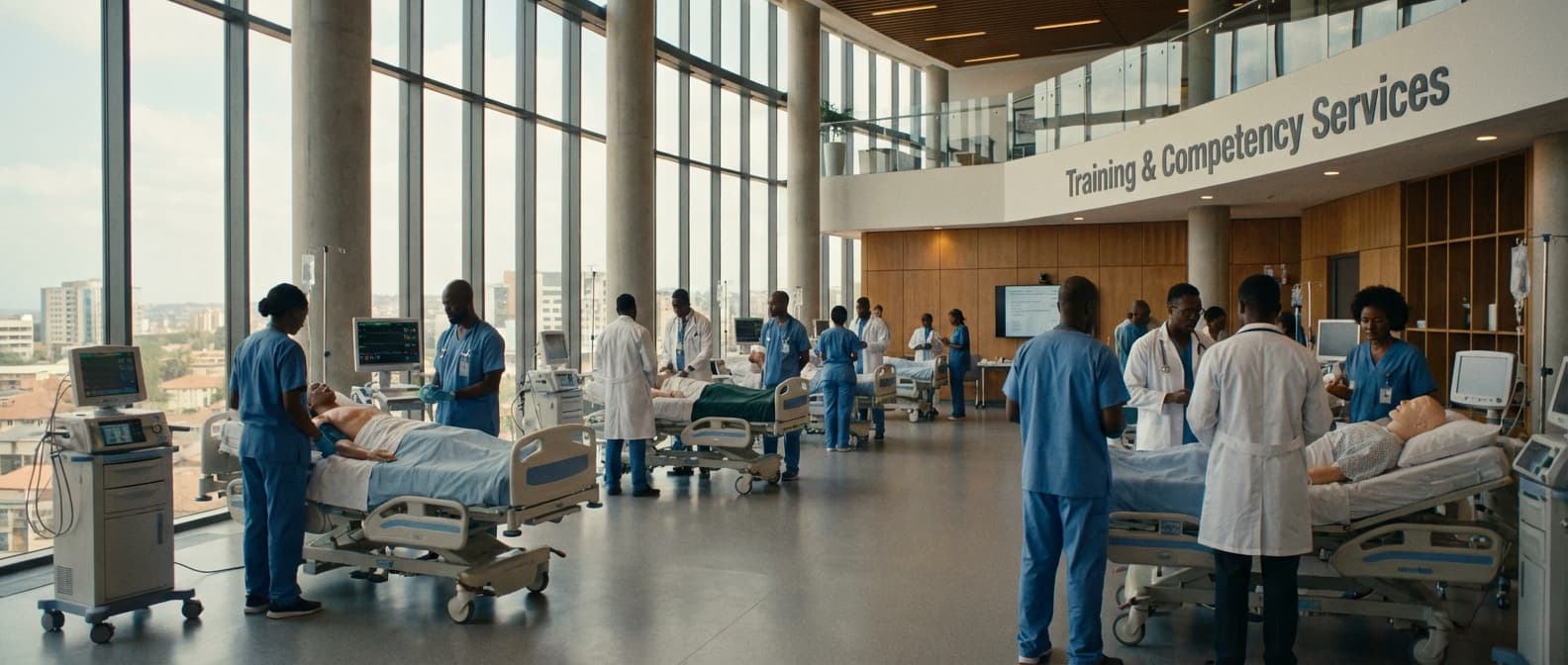
MRI Operator Training Service (Radiographers) in Cameroon
Engineering Excellence & Technical Support
MRI Operator Training Service (Radiographers) High-standard technical execution following OEM protocols and local regulatory frameworks.
Advanced MRI Pulse Sequences
Master critical MRI pulse sequences (e.g., Spin Echo, Gradient Echo, EPI, FLAIR) with hands-on simulations and practical case studies tailored for Cameroonian healthcare needs. Optimize image quality and minimize artifacts for accurate diagnoses.
Patient Safety & Contrast Management
Gain expert knowledge in patient preparation, screening for contraindications, and safe administration of MRI contrast agents. Understand current guidelines and protocols to ensure optimal patient outcomes and mitigate risks.
Image Post-Processing & Interpretation Fundamentals
Develop proficiency in essential image post-processing techniques and learn to identify common anatomical structures and pathological findings. This training provides a foundational understanding to support diagnostic workflows in Cameroonian hospitals.
What Is Mri Operator Training Service (Radiographers) In Cameroon?
MRI Operator Training Service (Radiographers) in Cameroon refers to specialized educational programs designed to equip radiographers with the requisite knowledge and practical skills for the safe, effective, and efficient operation of Magnetic Resonance Imaging (MRI) equipment. This training encompasses theoretical underpinnings of MRI physics, pulse sequences, image acquisition protocols, patient preparation, contraindication assessment, artifact identification and mitigation, radiation safety (where applicable, though MRI is non-ionizing), and post-processing techniques. It aims to ensure radiographers can independently perform high-quality MRI examinations and contribute to accurate diagnostic imaging within the Cameroonian healthcare system. The service involves a structured curriculum delivered through lectures, demonstrations, hands-on practical sessions with MRI scanners, simulation exercises, and competency assessments. It is crucial for advancing the diagnostic capabilities and healthcare infrastructure in Cameroon by making MRI technology more accessible and expertly managed.
| Target Audience | Purpose/Need | Typical Use Cases | |||||
|---|---|---|---|---|---|---|---|
| Certified Radiographers in Cameroon | To acquire specialized skills for operating MRI scanners, enhancing diagnostic imaging capabilities. | Deployment in hospitals and diagnostic imaging centers offering MRI services. | Performing MRI examinations for neurological disorders (e.g., stroke, tumors, multiple sclerosis). | Assessing musculoskeletal injuries (e.g., ligament tears, cartilage damage). | Diagnosing abdominal and pelvic conditions (e.g., liver lesions, gynecological issues). | Cardiac MRI for evaluating heart structure and function. | Oncology imaging for staging and monitoring treatment response. |
| Healthcare Institutions in Cameroon (Public & Private) | To ensure competent personnel for new or existing MRI facilities, meeting international standards. | Facilitating the establishment and efficient operation of MRI departments. | Improving the diagnostic accuracy and patient management pathways. | ||||
| Individuals seeking career advancement in medical imaging | To specialize in a high-demand and technologically advanced field of diagnostic imaging. | Transitioning from other imaging modalities (e.g., X-ray, CT) to MRI operation. |
Key Components of MRI Operator Training Service:
- MRI Physics Principles (e.g., signal generation, relaxation times, spatial encoding)
- Hardware and Software Operation of MRI Scanners (e.g., gradient systems, RF coils, console interface)
- Pulse Sequence Design and Application (e.g., spin echo, gradient echo, fast imaging techniques)
- Image Acquisition Protocols for Various Anatomical Regions (e.g., neuro, musculoskeletal, abdominal, cardiac)
- Patient Screening and Safety Protocols (e.g., ferromagnetic object detection, screening questionnaires, contrast agent administration)
- Contrast Agent Administration and Management (if applicable and within scope of practice)
- Artifact Recognition, Analysis, and Mitigation Strategies
- Image Post-Processing and Manipulation Techniques
- Quality Assurance and Quality Control Procedures for MRI Equipment
- Basic Troubleshooting and Maintenance
- Ethical and Legal Considerations in MRI Imaging
Who Needs Mri Operator Training Service (Radiographers) In Cameroon?
This service is crucial for ensuring that radiographers in Cameroon possess the necessary skills and knowledge to operate MRI machines safely and effectively. This translates to improved diagnostic accuracy, reduced patient risk, and optimized use of expensive medical equipment.
| Customer Type | Primary Need for MRI Operator Training | Key Departments Benefiting |
|---|---|---|
| Public Hospitals | Enhancing diagnostic capabilities for a broader patient population, improving public health outcomes. | Radiology, Neurology, Orthopedics |
| Private Hospitals | Maintaining competitive advantage, offering high-quality specialized services, patient satisfaction. | Radiology, Neurology, Oncology |
| Diagnostic Centers | Ensuring accurate and efficient scans for referring physicians, building a reputation for reliability. | MRI Unit, Radiology |
| Teaching Hospitals | Training competent radiographers, contributing to the development of medical expertise in the country. | Radiology, Medical Education |
| Health Ministries | Standardizing training quality, ensuring a skilled national workforce for advanced imaging. | Medical Services, Public Health Training |
| NGOs | Empowering local healthcare providers, improving access to advanced diagnostics in their project areas. | Healthcare Programs, Clinical Services |
Target Customers and Departments in Cameroon:
- {"title":"Hospitals (Public and Private)","departments":["Radiology Department","Neurology Department","Orthopedics Department","Oncology Department","Cardiology Department"],"description":"Hospitals are the primary healthcare providers and are increasingly investing in advanced imaging technology like MRI. This includes both large central hospitals and smaller, specialized clinics."}
- {"title":"Diagnostic Imaging Centers","departments":["MRI Unit","Radiology Services"],"description":"Independent imaging centers that offer a range of diagnostic services, including MRI, to patients and referring physicians."}
- {"title":"University Teaching Hospitals","departments":["Radiology Department","Medical Education Department"],"description":"These institutions not only provide patient care but also train future medical professionals. Well-trained radiographers are essential for both operational efficiency and educational quality."}
- {"title":"Government Health Ministries and Agencies","departments":["Department of Medical Services","Public Health Training Units"],"description":"Organizations responsible for healthcare policy, regulation, and resource allocation. They may invest in training to ensure a skilled workforce across the public health system."}
- {"title":"Non-Governmental Organizations (NGOs) with Healthcare Focus","departments":["Healthcare Program Management","Clinical Services"],"description":"NGOs involved in improving healthcare access and quality in underserved areas may fund or facilitate training for medical personnel in their partner facilities."}
Mri Operator Training Service (Radiographers) Process In Cameroon
This document outlines the standard workflow for the MRI Operator Training Service for Radiographers in Cameroon. It details the process from the initial inquiry from a healthcare facility or individual radiographer to the successful execution of the training program. The aim is to provide a clear, step-by-step guide ensuring efficiency and comprehensive delivery of the training.
| Stage | Description | Key Activities | Responsible Parties | Deliverables/Outcomes | |||
|---|---|---|---|---|---|---|---|
| The process begins when a potential client (e.g., hospital, clinic, individual radiographer) expresses interest in MRI operator training. | Receive inquiry (phone, email, website form). | Initial discussion to understand basic needs, number of trainees, and desired training focus. | Client (Healthcare Facility/Radiographer), Training Provider | Acknowledged inquiry, preliminary understanding of client's interest. | ||
| A detailed understanding of the client's specific training requirements is established. | Conduct in-depth needs assessment (on-site visit if necessary, questionnaires, interviews). | Identify specific skill gaps, equipment knowledge required, and learning objectives. | Develop a tailored training proposal outlining curriculum, duration, methodology, trainers, costs, and schedule. | Training Provider, Client | Comprehensive needs assessment report, customized training proposal. | |
| Formal agreement on the terms and conditions of the training service. | Review and negotiation of the training proposal. | Sign a formal training agreement/contract detailing all terms, including payment schedules, cancellation policies, and intellectual property. | Client, Training Provider | Signed training agreement/contract. | ||
| Setting up all logistical and academic requirements for the training. | Confirm training dates, venue, and logistics (accommodation, transportation if applicable). | Prepare training materials (presentations, manuals, practical exercises). | Schedule trainers and allocate resources. | Communicate pre-training information to trainees (prerequisites, schedule, required documents). | Client (for facilities), Training Provider | Confirmed schedule, prepared training materials, assigned trainers, informed trainees. |
| The core delivery of the MRI operator training program. | Deliver theoretical sessions (lectures, discussions, case studies). | Conduct practical sessions (hands-on training on MRI equipment, simulation if applicable). | Facilitate interactive learning and address trainee queries. | Monitor trainee progress and provide feedback. | Training Provider, Trainees | Completed training modules, practical skills demonstrated, trainee engagement. |
| Ensuring knowledge retention and assessing the effectiveness of the training. | Conduct post-training assessments (written exams, practical evaluations). | Gather feedback from trainees and the client on the training experience. | Provide ongoing support and answer follow-up questions. | Training Provider, Client, Trainees | Assessment results, training evaluation reports, addressed queries. | |
| Formal recognition of successful completion and continued engagement. | Issue certificates of completion to successful trainees. | Provide recommendations for further development or advanced training. | Maintain records of training and certifications. | Follow-up with the client to ensure application of learned skills in practice. | Training Provider, Client, Trainees | Certificates of completion, updated training records, potential for future training engagements. |
MRI Operator Training Service Workflow for Radiographers in Cameroon
- Inquiry and Initial Consultation
- Needs Assessment and Proposal Development
- Agreement and Contract Finalization
- Pre-Training Preparations
- Training Execution
- Post-Training Support and Evaluation
- Certification and Follow-up
Mri Operator Training Service (Radiographers) Cost In Cameroon
The cost of MRI operator training services for radiographers in Cameroon can vary significantly due to several influencing factors. These factors determine the overall price range, making it essential for institutions and individuals to conduct thorough research and obtain specific quotes.
Key Pricing Factors:
- Duration and Intensity of Training: Shorter, introductory courses will be less expensive than comprehensive, in-depth programs that cover advanced techniques and troubleshooting. The number of hours and days dedicated to theoretical and practical sessions directly impacts the cost.
- Provider Reputation and Accreditation: Training provided by well-established institutions with a strong reputation for quality and recognized accreditation (both local and international) often commands higher fees. These providers may offer more experienced instructors and better-equipped facilities.
- Curriculum Depth and Specialization: Standard MRI operator training will differ in price from specialized courses focusing on specific MRI applications (e.g., neuroimaging, cardiac MRI, musculoskeletal MRI). Specialized training often requires more expert instructors and advanced simulation equipment.
- Location and Facility Costs: The cost of training can be influenced by the location of the training center. Major urban centers like Douala and Yaoundé might have higher operational costs, which can be reflected in the training fees. The quality and availability of training facilities, including actual MRI scanner access for hands-on practice, are crucial determinants.
- Instructor Expertise and Qualifications: The experience, qualifications, and reputation of the instructors play a significant role. Highly experienced radiographers or radiologists with extensive MRI experience will likely lead to higher training costs.
- Inclusion of Materials and Resources: The provision of comprehensive training materials, textbooks, online resources, and practical aids can add to the overall cost. Some programs might also include post-training support or mentorship.
- Certification and Assessment: The process of assessment, examination, and the awarding of a certificate upon successful completion of the training can also influence pricing. Accredited certification usually comes with a fee.
- Group vs. Individual Training: Training offered to groups of radiographers from a single institution might have different pricing structures (often a per-person rate that is negotiated) compared to individual enrollments.
- On-site vs. Off-site Training: If an institution requires training to be conducted at their own facility, this can incur additional costs for travel, accommodation, and potentially the logistical setup of the training.
Estimated Cost Ranges in Local Currency (Cameroonian Francs - XAF):
Due to the dynamic nature of the training market and the aforementioned factors, providing precise figures is challenging. However, based on general market trends and similar professional training in Cameroon, the following ranges can be considered:
- Basic/Introductory MRI Operator Training: For a short course (e.g., 1-3 days) focusing on fundamental principles and basic operation, costs could range from 150,000 XAF to 350,000 XAF per participant.
- Intermediate/Comprehensive MRI Operator Training: For programs lasting a week or more, covering a broader curriculum, including some practical applications and safety protocols, the cost could be between 350,000 XAF to 700,000 XAF per participant.
- Advanced/Specialized MRI Training: For highly specialized courses or those with significant hands-on time on advanced simulators or actual scanners, the price could range from 700,000 XAF to 1,500,000 XAF or more per participant. These often involve international trainers or highly specialized local expertise.
It is crucial to note that these are estimates. Institutions and individuals are strongly advised to contact training providers directly to request detailed proposals and understand what is included in their fees.
| Training Type | Estimated Cost Range (XAF) |
|---|---|
| Basic/Introductory MRI Operator Training (1-3 days) | 150,000 - 350,000 |
| Intermediate/Comprehensive MRI Operator Training (e.g., 1 week+) | 350,000 - 700,000 |
| Advanced/Specialized MRI Training (e.g., specific applications, extensive hands-on) | 700,000 - 1,500,000+ |
Factors Influencing MRI Operator Training Costs in Cameroon
- Duration and Intensity of Training
- Provider Reputation and Accreditation
- Curriculum Depth and Specialization
- Location and Facility Costs
- Instructor Expertise and Qualifications
- Inclusion of Materials and Resources
- Certification and Assessment
- Group vs. Individual Training
- On-site vs. Off-site Training
Affordable Mri Operator Training Service (Radiographers) Options
This resource outlines affordable MRI operator training service options specifically for radiographers, focusing on value bundles and cost-saving strategies to make advanced MRI education accessible.
| Value Bundle Option | Inclusions | Cost-Saving Strategy | Typical Price Range (Illustrative) |
|---|---|---|---|
| Online Foundational MRI Certificate | Comprehensive online modules covering MRI physics, safety, basic protocols, and image interpretation. Self-paced learning. | Eliminates travel and accommodation costs. Flexible scheduling reduces disruption to existing work. | $800 - $2,000 |
| Blended Learning Package (Online + On-Site Practicum) | Online theory modules + a concentrated on-site component (e.g., 1-2 weeks) for hands-on scanner operation, patient positioning, and protocol execution. | Reduces the duration of expensive on-site training. Leverages existing workplace MRI scanners if applicable. | $2,500 - $5,000 |
| Institution-Specific Training Contracts | Customized training programs developed for a specific hospital or clinic, often leveraging their existing MRI equipment and staff. | Bulk discounts for multiple trainees. Training tailored to specific equipment reduces learning curve. Potential for government/organizational subsidies. | Varies significantly based on scope, duration, and number of trainees (can be $3,000 - $7,000+ per person, but often negotiated lower for groups). |
| Simulation-Based Training Modules | Advanced software simulating MRI scanner operation, allowing practice of various scenarios, sequences, and troubleshooting without actual scanner time. | Significantly reduces the need for expensive real-time scanner access during initial learning. Can be integrated into online or blended programs. | Often an add-on or integrated component, adding $500 - $1,500 to other packages. |
| Early Bird Discounts & Group Rates | Reduced fees for registering well in advance of program start dates or for multiple radiographers from the same institution enrolling together. | Direct price reduction through proactive planning and collaboration. | Variable, but can offer 5-15% savings. |
| Professional Development Funds & Grants | Accessing employer-provided continuing education budgets, professional development grants, or government-backed training initiatives. | Subsidizes or fully covers training costs, making it effectively free or significantly reduced for the individual radiographer. | Variable, depending on eligibility and program availability. |
Key Considerations for Affordable MRI Operator Training
- Target Audience: Training designed for radiographers seeking to specialize or enhance their skills in MRI operation.
- Training Modalities: Explore options like online courses, blended learning (online theory + in-person practicals), and dedicated on-site training.
- Accreditation & Certification: Prioritize programs that offer recognized accreditation or lead to industry-recognized certifications, enhancing career prospects.
- Curriculum Depth: Assess if the training covers essential MRI physics, safety protocols, image acquisition techniques, artifact management, and patient care.
- Hands-on Experience: Understand how practical training or simulated environments are incorporated to build operator confidence and competency.
Verified Providers In Cameroon
In Cameroon, ensuring access to reliable healthcare is paramount. Verified providers stand out as the bedrock of trust and quality. Among these, Franance Health credentials represent a gold standard, offering unparalleled assurance to patients seeking the best possible care. This document outlines why choosing providers with Franance Health credentials is the most informed and advantageous decision for your health needs.
| Benefit of Choosing Franance Health Verified Providers | Description |
|---|---|
| Uncompromised Quality of Care | Access to healthcare professionals and facilities that have met stringent criteria for medical expertise and patient safety. |
| Enhanced Patient Safety | Reduced risk of medical errors due to adherence to best practices and continuous quality improvement initiatives. |
| Trust and Reliability | Peace of mind knowing you are receiving care from a provider recognized for their integrity and commitment to excellence. |
| Access to Advanced Medical Practices | Franance Health certification often correlates with providers who are at the forefront of medical technology and treatment methodologies. |
| Improved Patient Outcomes | The focus on quality and continuous improvement directly translates to better health results for patients. |
| Ethical and Transparent Services | Assurance of fair pricing, clear communication, and respectful treatment throughout your healthcare journey. |
What Franance Health Credentials Signify:
- Rigorous Accreditation Process: Franance Health employs an extensive vetting system that scrutinizes every aspect of a healthcare provider's operations.
- Commitment to Quality Standards: Successful candidates must demonstrate adherence to the highest international benchmarks in patient care, safety, and ethical practices.
- Continuous Improvement Mandate: Franance Health certified providers are subject to ongoing evaluations to ensure they maintain their elevated standards and adapt to medical advancements.
- Patient-Centric Approach: The accreditation process places significant emphasis on patient satisfaction, communication, and overall experience.
- Ethical Conduct and Transparency: Providers are assessed for their commitment to honest billing, clear communication about treatments, and respectful patient interactions.
Scope Of Work For Mri Operator Training Service (Radiographers)
This Scope of Work (SOW) outlines the requirements for providing comprehensive MRI Operator Training Services specifically tailored for radiographers. The training will equip radiographers with the necessary theoretical knowledge and practical skills to safely and effectively operate MRI scanners, produce high-quality diagnostic images, and adhere to established protocols and safety guidelines. The program aims to ensure competency in various MRI sequences, patient care, and equipment management.
| Component | Description | Technical Deliverables | Standard Specifications |
|---|---|---|---|
| Theoretical Training Module | Comprehensive classroom-based instruction covering MRI physics, hardware, pulse sequences, contrast agents, safety, and pathology recognition. | Detailed training manuals, presentation slides, and pre/post-training assessments. | Content aligned with current ACR, RCR, or equivalent professional body guidelines. Minimum 80% pass rate for assessments. |
| Practical Hands-on Training | Supervised, in-scanner training on actual MRI equipment, focusing on patient positioning, protocol selection, image acquisition, and troubleshooting. | Logbook of performed scans with trainer sign-off for each competency area. | Minimum of 40 hours of supervised practical training per radiographer. Competency demonstration in at least 10 common MRI protocols. |
| Protocol Development and Customization | Guidance on understanding and, where appropriate, customizing standard MRI protocols for specific clinical needs and patient populations. | Examples of optimized protocols for common examinations (e.g., brain, spine, knee). | Protocols to be based on established best practices and evidence-based guidelines. |
| Safety Training | In-depth training on all aspects of MRI safety, including magnetic field safety, RF safety, acoustic noise, cryogenic safety, and emergency procedures. | Safety checklists, emergency response plan simulations, and post-training safety quiz. | Compliance with ACR, IEC, and local regulatory safety standards. Zero tolerance for safety breaches during training. |
| Image Quality and Artifact Management | Training on identifying image artifacts, understanding their causes, and implementing strategies for prevention and correction. | Demonstrations of common artifacts and their resolutions. Case studies of image quality improvement. | Objective assessment of image quality achieved by trainees during practical sessions. |
| Reporting and Documentation | Overview of the importance of accurate patient documentation and the role of the radiographer in the reporting process. | Templates for scan documentation and patient intake forms. | Understanding of data privacy regulations (e.g., HIPAA, GDPR). |
| Post-Training Evaluation | Comprehensive evaluation of radiographer competency through written examinations and practical skill assessments. | Individual competency reports for each radiographer, detailing strengths and areas for further development. | A defined passing score for both theoretical and practical evaluations, leading to certification of completion. |
| Training Materials and Resources | Provision of all necessary training materials, including manuals, handouts, and access to online learning platforms (if applicable). | Digital copies of all training materials. | Materials to be current, accurate, and relevant to modern MRI technology. |
Training Objectives
- Understand the fundamental principles of Magnetic Resonance Imaging (MRI).
- Identify and explain the components and functions of an MRI scanner.
- Perform pre-scan patient preparation, including screening for contraindications and ensuring patient comfort and safety.
- Operate the MRI console to acquire images using a range of standard and advanced pulse sequences.
- Recognize and troubleshoot common imaging artifacts and implement corrective measures.
- Apply appropriate imaging protocols for various anatomical regions and clinical indications.
- Ensure strict adherence to radiation safety and magnetic field safety protocols.
- Understand the principles of image processing, post-processing, and archival.
- Develop proficiency in patient communication and management during MRI examinations.
- Gain awareness of quality assurance and quality control procedures for MRI equipment.
Service Level Agreement For Mri Operator Training Service (Radiographers)
This Service Level Agreement (SLA) outlines the terms and conditions for the MRI Operator Training Service provided to Radiographers by [Your Company Name] (hereinafter referred to as 'Provider'). This SLA defines the guaranteed response times for technical support and the expected uptime of the training platform.
| Service Component | Uptime Guarantee | Response Time (Critical Incident) | Response Time (Non-Critical Incident) | Target Resolution Time (Critical Incident) | Target Resolution Time (Non-Critical Incident) |
|---|---|---|---|---|---|
| Training Platform Availability | 99.5% monthly uptime (excluding Scheduled Maintenance) | N/A | N/A | N/A | N/A |
| Technical Support (Access Issues, Login Problems, Content Loading Errors) | N/A | 1 Business Hour | 4 Business Hours | 4 Business Hours | 24 Business Hours |
| Platform Functionality (Quizzes, Simulations, Video Playback) | N/A | 2 Business Hours | 8 Business Hours | 8 Business Hours | 48 Business Hours |
Key Definitions
- Training Platform: The online learning management system (LMS) and associated digital resources used for MRI operator training.
- Radiographer: A qualified professional in the field of diagnostic imaging, seeking training in MRI operation.
- Incident: Any event that causes or may cause a disruption to the Training Platform's service, or a deviation from the expected performance levels.
- Downtime: The total duration, measured in minutes, during which the Training Platform is unavailable to the Radiographer, excluding Scheduled Maintenance.
- Scheduled Maintenance: Planned periods during which the Training Platform may be temporarily unavailable for updates, upgrades, or system enhancements. Radiographers will be notified at least [Number] hours in advance of Scheduled Maintenance.
- Response Time: The maximum time allowed for the Provider to acknowledge and begin addressing an Incident after it is reported by the Radiographer.
- Resolution Time: The target time for the Provider to resolve an Incident and restore the Training Platform to full operational status.
Frequently Asked Questions

Ready when you are
Let's scope your MRI Operator Training Service (Radiographers) in Cameroon project in Cameroon.

Scaling healthcare logistics and technical systems across the entire continent.