
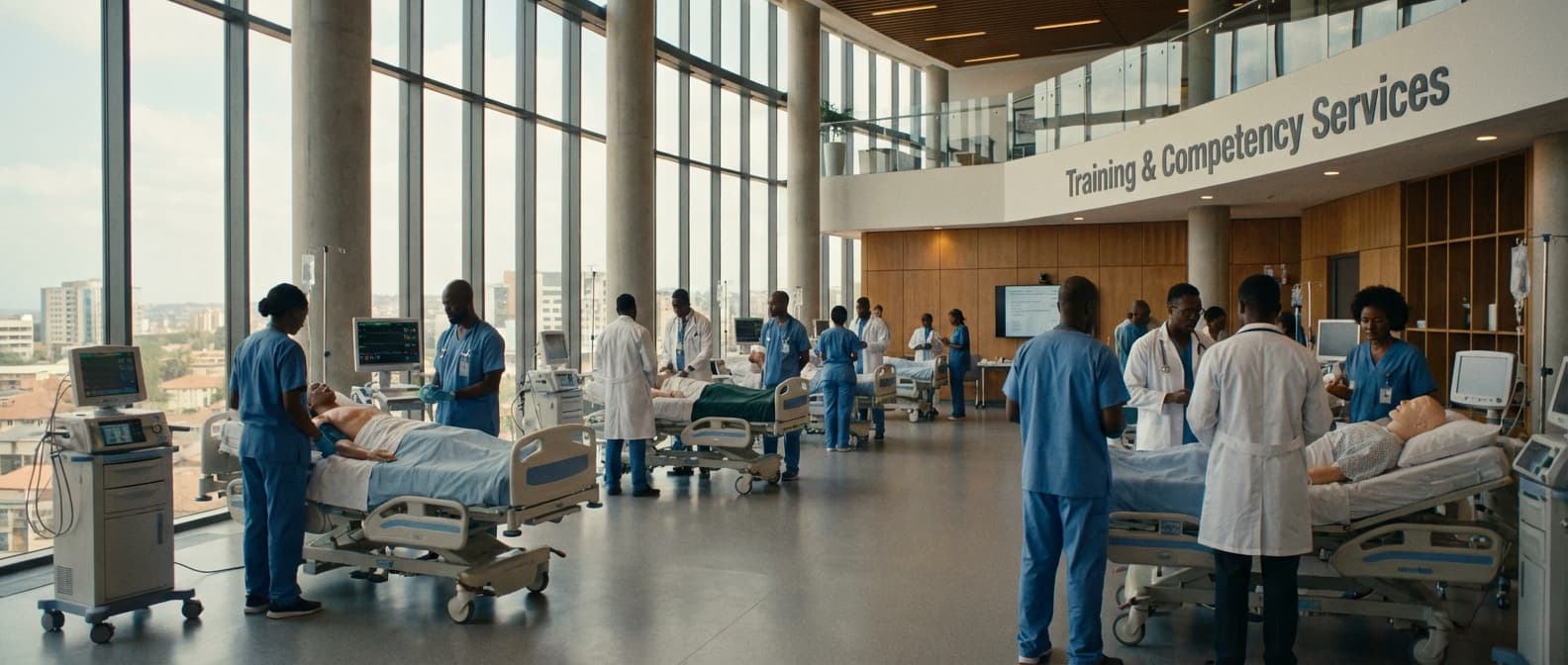
CT Operator Training Service (Radiographers) in Cameroon
Engineering Excellence & Technical Support
CT Operator Training Service (Radiographers) High-standard technical execution following OEM protocols and local regulatory frameworks.
Advanced Imaging Techniques & Protocols
Master cutting-edge CT imaging techniques and industry-standard protocols tailored for the Cameroonian healthcare landscape, ensuring accurate diagnoses for a wide range of pathologies.
Quality Assurance & Radiation Safety
Develop robust quality assurance procedures and implement best practices for radiation safety, adhering to national guidelines and international standards to protect both patients and personnel.
Radiology Workflow Optimization
Streamline your CT department's workflow from patient scheduling and scan acquisition to image interpretation and reporting, enhancing efficiency and patient throughput within your facility.
What Is Ct Operator Training Service (Radiographers) In Cameroon?
CT Operator Training Service (Radiographers) in Cameroon refers to specialized educational programs designed to equip radiographers with the theoretical knowledge and practical skills necessary to safely and effectively operate Computed Tomography (CT) scanners. This service encompasses comprehensive instruction on CT physics, image acquisition protocols, patient positioning, radiation safety principles, contrast media administration, image processing, quality assurance, and troubleshooting. The objective is to ensure that radiographers are proficient in generating high-quality diagnostic CT images while minimizing radiation dose to patients and adhering to international standards and local regulations.
| Who Needs CT Operator Training? | Typical Use Cases | |||||
|---|---|---|---|---|---|---|
| Certified Radiographers seeking specialization in CT imaging. | Acquisition of new CT scanning equipment requiring trained personnel. | Hospitals and diagnostic imaging centers in Cameroon that utilize CT scanners. | Medical professionals involved in diagnostic imaging departments. | Radiographers seeking to enhance their career prospects and skill set. | ||
| Diagnosis of trauma and acute conditions (e.g., stroke, hemorrhage, fractures). | Staging and monitoring of oncological diseases. | Evaluation of cardiovascular diseases (e.g., coronary artery disease, aortic aneurysms). | Assessment of abdominal and pelvic pathologies (e.g., appendicitis, diverticulitis, urinary tract stones). | Neurological imaging (e.g., tumors, infections, degenerative conditions). | Pulmonary imaging (e.g., pulmonary embolism, lung nodules, interstitial lung disease). | Interventional CT procedures (e.g., biopsies, drainages). |
Key Components of CT Operator Training Service
- CT Physics and Principles: Understanding X-ray generation, attenuation, detector technology, reconstruction algorithms, and image artifacts.
- CT Scanner Operation: Familiarization with hardware components, user interface, and software functionalities.
- Imaging Protocols and Techniques: Development and application of appropriate scanning parameters for various anatomical regions and clinical indications.
- Patient Care and Safety: Proper patient preparation, immobilization, and monitoring during the CT examination, with a strong emphasis on radiation dose optimization and management.
- Contrast Media Administration: Safe and effective use of intravenous and oral contrast agents, including recognition and management of potential adverse reactions.
- Image Processing and Post-processing: Techniques for windowing, leveling, 3D reconstruction, and other image manipulation methods to enhance diagnostic utility.
- Quality Assurance and Control: Implementing procedures to ensure consistent image quality and scanner performance.
- Radiation Protection: Adherence to ALARA (As Low As Reasonably Achievable) principles, use of shielding, and understanding of dose metrics.
- Ethical and Legal Considerations: Compliance with professional ethics and regulatory requirements in Cameroon.
Who Needs Ct Operator Training Service (Radiographers) In Cameroon?
CT Operator Training Service (Radiographers) in Cameroon is a critical offering for enhancing the diagnostic imaging capabilities across the nation. As Computed Tomography (CT) scans become increasingly vital for accurate diagnosis and treatment planning, ensuring radiographers possess the highest level of skill and knowledge is paramount. This service caters to both existing radiographers seeking to advance their expertise and new professionals entering the field, ultimately improving patient care and the efficiency of healthcare services.
| Department/Facility Type | Key Needs Addressed | Benefits of Training |
|---|---|---|
| Radiology/Imaging Departments (Public & Private Hospitals) | Proficiency in CT scanner operation, image acquisition protocols, patient positioning, radiation safety, artifact reduction, and post-processing. | Improved diagnostic accuracy, reduced scan times, enhanced patient safety, increased throughput, and better utilization of equipment. |
| Emergency Departments | Rapid and accurate CT scan acquisition for trauma, stroke, and other acute conditions. | Faster diagnosis in critical situations, leading to timely interventions and improved patient outcomes. |
| Surgical Departments (e.g., Neurosurgery, Orthopedics, Oncology) | Understanding of CT imaging for surgical planning, intraoperative guidance, and post-operative assessment. | More precise surgical planning, reduced complications, and better management of surgical patients. |
| Internal Medicine / Cardiology Departments | CT imaging for diagnosing and managing various medical conditions, including cardiovascular diseases. | Enhanced diagnostic capabilities for complex medical cases. |
| Medical Education Institutions | Curriculum development, faculty training, and hands-on experience for radiography students. | Producing highly competent and well-trained radiographers for the future healthcare workforce. |
Target Customers and Departments for CT Operator Training Service (Radiographers) in Cameroon
- Public Hospitals and Clinics: These institutions form the backbone of healthcare delivery in Cameroon and often face resource constraints. Well-trained radiographers are essential for maximizing the utility of existing CT equipment and ensuring consistent diagnostic quality.
- Private Hospitals and Diagnostic Centers: As private healthcare continues to grow, these facilities are investing in advanced imaging technologies like CT scanners. They require highly skilled radiographers to operate this equipment effectively and provide specialized diagnostic services.
- University Teaching Hospitals and Medical Schools: These institutions are crucial for training future healthcare professionals. Offering advanced CT training to their radiography departments ensures that graduating students are well-prepared for the demands of modern medical imaging.
- Government Ministries of Health: To implement national health strategies and improve healthcare infrastructure, the Ministry of Health can leverage this training service to upskill radiographers across public health facilities and ensure adherence to standardized protocols.
- Non-Governmental Organizations (NGOs) involved in healthcare: NGOs operating healthcare projects in Cameroon often establish or support clinics and hospitals. Providing CT operator training to their staff enhances the quality of diagnostic services they can offer, particularly in underserved areas.
- Individual Radiographers: Radiographers looking for professional development, career advancement, or specialization in CT imaging are direct beneficiaries. This training allows them to acquire new skills and stay updated with the latest advancements in CT technology and practice.
- Research Institutions and Academia: Researchers involved in medical imaging studies or those developing new diagnostic techniques may require specialized CT training for their personnel.
Ct Operator Training Service (Radiographers) Process In Cameroon
This document outlines the typical workflow for a CT Operator Training Service targeting radiographers in Cameroon, from initial inquiry to the successful execution of the training program. The process is designed to ensure clarity, efficient communication, and tailored training solutions to meet the specific needs of the trainees and their institutions.
| Stage | Description | Key Activities | Responsible Parties | Deliverables/Outcomes |
|---|---|---|---|---|
| The process begins when a radiographer, a radiology department, or an institution in Cameroon expresses interest in CT operator training. | Prospective client contacts training provider via email, phone, or website. Initial discussion of training needs and goals. | Prospective Client (Radiographer/Institution), Training Provider | Acknowledgement of inquiry, preliminary understanding of training interest. |
| A thorough understanding of the client's specific requirements is established to tailor the training program. | Detailed discussion to identify target audience (e.g., experience level, prior CT knowledge). Assessment of existing equipment and resources. Defining specific learning objectives and desired outcomes. Development of a customized training proposal outlining curriculum, duration, venue, instructors, and cost. | Training Provider (with input from Prospective Client) | Detailed training needs analysis report. Comprehensive training proposal. |
| Formalizing the training agreement to ensure mutual understanding and commitment. | Review and negotiation of the training proposal terms (e.g., dates, fees, payment schedule, cancellation policy). Drafting and signing of a formal training contract or Memorandum of Understanding (MOU). | Training Provider, Prospective Client | Signed training contract/MOU. |
| All logistical and preparatory steps are taken to ensure a smooth and effective training session. | Scheduling of training dates and times. Confirmation of venue (on-site at institution or external). Arrangement of travel and accommodation for instructors (if applicable). Preparation of training materials (manuals, presentations, simulators). Communication of training schedule, prerequisites, and required materials to trainees. | Training Provider, Trainees/Institution | Confirmed training schedule. Ready training venue and materials. Informed trainees. |
| The core of the service, where the CT operator training is conducted. | Theoretical lectures on CT principles, physics, protocols, and safety. Practical hands-on sessions on CT scanners. Demonstrations of various scanning techniques and imaging parameters. Case study discussions and problem-solving exercises. Assessment of trainee understanding through quizzes and practical evaluations. | Training Provider (Instructors), Trainees | Completion of training modules. Demonstrated competency in CT operation. Feedback from trainees. |
| Ensuring the effectiveness of the training and providing ongoing support. | Collection of feedback from trainees and their supervisors. Post-training assessment of knowledge retention and practical skills. Issuance of certificates of completion. Providing limited post-training support (e.g., answering follow-up questions, offering guidance on complex cases). Follow-up to assess the long-term impact of the training. | Training Provider, Trainees/Institution | Training evaluation report. Certificates of completion. Resolved post-training queries. Long-term impact assessment (optional). |
CT Operator Training Service Workflow in Cameroon
- Inquiry & Initial Contact
- Needs Assessment & Proposal Development
- Contract Negotiation & Agreement
- Pre-Training Preparations
- Training Delivery
- Post-Training Evaluation & Support
Ct Operator Training Service (Radiographers) Cost In Cameroon
The cost of CT operator training (radiographers) in Cameroon is influenced by several key factors, leading to a wide range of pricing. These factors include the reputation and accreditation of the training institution, the duration and depth of the program, the inclusion of practical hands-on experience with actual CT scanners, the level of theoretical knowledge imparted, and the availability of advanced training modules. Training can be provided by specialized medical training centers, hospitals offering in-service training, or even international organizations partnering with local institutions. The demand for skilled CT operators in specific regions of Cameroon can also affect pricing due to supply and demand dynamics. Furthermore, the inclusion of study materials, assessments, and certification fees are standard components that contribute to the overall cost.
| Training Type/Level | Estimated Price Range (XAF) |
|---|---|
| Basic/Introductory CT Operator Course (Short-term, theoretical focus) | 150,000 - 300,000 |
| Intermediate CT Operator Training (Includes some practical, longer duration) | 300,000 - 600,000 |
| Advanced/Specialized CT Operator Certification (In-depth practical, specific modalities) | 600,000 - 1,200,000+ |
| Hospital-based In-service Training (May be subsidized or partially covered by employer) | Variable (often internal cost or partial fee) |
| International Workshops/Seminars (Rare, often higher cost) | 1,500,000+ |
Key Pricing Factors for CT Operator Training in Cameroon:
- Institution Reputation and Accreditation: Reputable and accredited institutions often command higher fees due to their established quality and recognition.
- Program Duration and Depth: Longer, more comprehensive courses with extensive curriculum will be more expensive.
- Practical/Hands-on Training: Access to real CT scanners for practical sessions is a significant cost driver.
- Theoretical Content: The breadth and depth of theoretical knowledge covered, including physics, anatomy, pathology, and safety protocols.
- Advanced Modules: Specialized training in specific CT techniques (e.g., cardiac CT, interventional CT) will increase costs.
- Location within Cameroon: Training costs might vary between major cities (e.g., Yaoundé, Douala) and smaller towns.
- Inclusion of Materials and Certification: Textbooks, study guides, examination fees, and the final certification contribute to the overall price.
- Trainer Expertise: The qualifications and experience of the instructors can influence the training cost.
- Group vs. Individual Training: Bulk enrollments or institutional partnerships may receive discounted rates.
Affordable Ct Operator Training Service (Radiographers) Options
Securing affordable and effective CT operator training is crucial for radiographers looking to advance their careers and for healthcare facilities aiming to maintain high standards of imaging. This service focuses on providing comprehensive training that meets industry requirements without breaking the budget. We offer flexible learning pathways and strategic cost-saving measures to ensure accessibility for all.
| Training Component | Standard Pricing (Estimated) | Value Bundle Option | Cost-Saving Strategy |
|---|---|---|---|
| Basic CT Physics & Principles (Online Module) | $300 - $500 | Included in 'Foundation CT' bundle | Bulk enrollment discounts |
| CT Protocol & Image Acquisition (Online/Hybrid) | $500 - $800 | Included in 'Foundation CT' bundle | Early bird registration discounts |
| CT Patient Care & Safety (Online Module) | $200 - $400 | Included in 'Foundation CT' bundle | Group rates for facility-wide training |
| Advanced CT Applications (e.g., Cardiac, Angio - Hybrid) | $700 - $1200 | Included in 'Advanced CT' bundle | Referral program for new trainees |
| Hands-on CT Simulation/Lab Session (On-site) | $800 - $1500 | Optional add-on to bundles | Utilizing existing facility equipment (if feasible) |
| Certification Exam Prep Course | $400 - $700 | Included in 'Comprehensive CT' bundle | Bundled with core training modules |
Key Features of Affordable CT Operator Training:
- Comprehensive curriculum covering CT physics, patient positioning, protocol selection, image acquisition, and safety.
- Experienced and certified instructors with practical CT experience.
- Flexible learning formats including online, hybrid, and on-site options.
- Hands-on training opportunities with access to modern CT equipment (where applicable).
- Certification preparation and exam support.
- Continuing education credits (CEUs) for professional development.
Verified Providers In Cameroon
In Cameroon's evolving healthcare landscape, identifying truly verified providers is paramount for ensuring quality, safety, and efficacy. Franance Health stands out as a beacon of trust, meticulously vetting its network of healthcare professionals and facilities. This rigorous credentialing process goes beyond surface-level checks, delving deep into qualifications, experience, and adherence to ethical standards. Choosing Franance Health-verified providers means opting for a level of assurance that is unmatched, offering peace of mind for patients seeking reliable medical care.
| Credential Area | Franance Health Verification Standard | Patient Benefit |
|---|---|---|
| Medical Licenses & Certifications | Rigorous validation of all official licenses and board certifications through national and international bodies. | Guarantees that providers possess the fundamental legal and professional qualifications to practice medicine. |
| Clinical Experience & Specialization | Thorough review of past practice history, specialization areas, and documented successful patient outcomes. | Ensures patients are treated by professionals with proven expertise in their specific medical conditions. |
| Ethical Conduct & Professionalism | Assessment of disciplinary records, patient testimonials, and adherence to a strict code of professional ethics. | Protects patients from unethical practices and ensures respectful, compassionate care. |
| Facility Standards (where applicable) | Inspection and validation of healthcare facility infrastructure, equipment, and adherence to hygiene and safety regulations. | Provides assurance of a safe, well-equipped, and clean environment for medical procedures and treatments. |
| Continuing Medical Education (CME) | Verification of ongoing participation in professional development and training to stay updated with medical advancements. | Ensures patients receive care informed by the latest medical knowledge and techniques. |
Why Franance Health Credentials Represent the Best Choice in Cameroon:
- Uncompromising Vetting Process: Franance Health employs a multi-stage verification system that scrutinizes educational background, professional licenses, clinical experience, and patient feedback.
- Commitment to Quality Standards: Verified providers adhere to stringent quality of care protocols and best practices, ensuring a high standard of medical service.
- Patient Safety as a Priority: The credentialing process emphasizes patient safety, including background checks and assessments of a provider's commitment to ethical conduct.
- Access to Trusted Professionals: Franance Health connects patients with a network of highly qualified and reputable doctors, specialists, and healthcare facilities across Cameroon.
- Transparency and Accountability: Franance Health maintains transparency in its verification process, fostering trust and accountability within the healthcare ecosystem.
- Continuous Monitoring: Verification is not a one-time event. Franance Health engages in ongoing monitoring of its providers to ensure sustained adherence to their standards.
- Specialized Expertise: The network includes specialists across various medical disciplines, ensuring patients can find the right expert for their specific needs.
- Enhanced Patient Confidence: Knowing a provider is Franance Health-verified significantly boosts patient confidence and reduces the anxiety associated with seeking medical treatment.
Scope Of Work For Ct Operator Training Service (Radiographers)
This Scope of Work (SOW) outlines the requirements for a comprehensive CT Operator Training Service specifically designed for Radiographers. The service aims to equip radiographers with the necessary theoretical knowledge and practical skills to safely and effectively operate CT scanners, produce high-quality diagnostic images, and adhere to radiation safety protocols. The training will cover fundamental principles of CT imaging, advanced scanning techniques, patient care, image post-processing, and quality assurance. Technical deliverables will include detailed training materials, practical session demonstrations, and competency assessments. Standard specifications will ensure the training meets current industry best practices and regulatory requirements.
| Deliverable | Description | Format/Medium | Specification/Standard |
|---|---|---|---|
| Training Manuals & Handouts | Comprehensive written materials covering all training modules, including theoretical concepts, practical steps, and safety guidelines. | Digital (PDF) and/or Printed Copies | Clear, concise language, up-to-date information, industry-standard terminology, adherence to copyright. |
| Practical Demonstration Sessions | Live demonstrations of CT scanner operation, patient positioning, protocol selection, and artifact identification. | On-site (using actual CT equipment) or High-Fidelity Simulation | Demonstrations conducted by certified CT instructors using functional equipment or realistic simulators, adherence to manufacturer guidelines. |
| Competency Assessment Tools | Written examinations, practical skill checklists, and case study analyses to evaluate trainee comprehension and proficiency. | Online platform, Paper-based, or direct observation checklists | Validated assessment methods, objective scoring criteria, alignment with learning objectives. |
| Post-Training Support Resources | Access to FAQs, online forums, or follow-up Q&A sessions for ongoing support. | Online Portal, Email Support | Timely responses, accessible documentation, maintained knowledge base. |
| Certificate of Completion | Official document acknowledging successful completion of the CT Operator Training Service. | Digital (PDF) or Printed | Includes trainee name, course title, completion date, issuer's credentials, and unique identifier. |
| Training Session Schedules & Agendas | Detailed breakdown of training sessions, including timings, topics, and learning objectives. | Digital (PDF/Calendar Invites) | Organized, time-bound, and aligned with overall training plan. |
Key Training Modules
- Principles of CT Imaging
- CT Scanner Hardware and Software Operation
- Image Acquisition Protocols (various body parts)
- Radiation Safety and Protection
- Patient Preparation and Management
- Contrast Media Administration and Management
- Image Artifacts and Troubleshooting
- Introduction to CT Image Post-Processing
- Quality Assurance and Quality Control (QA/QC) for CT
Service Level Agreement For Ct Operator Training Service (Radiographers)
This Service Level Agreement (SLA) outlines the performance standards and guarantees for the CT Operator Training Service provided to radiographers. It defines response times for support requests and uptime guarantees for the online training platform.
| Service Component | Performance Metric | Target | Guarantee | Notes |
|---|---|---|---|---|
| CT Operator Training Platform Uptime | Availability | 99.5% | Guaranteed Monthly Uptime of 99.5% | Excludes scheduled maintenance. Scheduled maintenance will be communicated at least 48 hours in advance. |
| Technical Support (Platform Issues) | Response Time (Critical - e.g., platform inaccessible) | 1 Business Hour | Guaranteed response within 1 Business Hour | Business Hours: Monday-Friday, 9:00 AM - 5:00 PM (Client's Time Zone), excluding public holidays. |
| Technical Support (Platform Issues) | Response Time (High - e.g., functionality impaired) | 2 Business Hours | Guaranteed response within 2 Business Hours | Business Hours: Monday-Friday, 9:00 AM - 5:00 PM (Client's Time Zone), excluding public holidays. |
| Technical Support (Platform Issues) | Response Time (Medium - e.g., minor bug, feature query) | 4 Business Hours | Guaranteed response within 4 Business Hours | Business Hours: Monday-Friday, 9:00 AM - 5:00 PM (Client's Time Zone), excluding public holidays. |
| Content/Curriculum Support (Questions about training material) | Response Time | 1 Business Day | Guaranteed response within 1 Business Day | Business Hours: Monday-Friday, 9:00 AM - 5:00 PM (Client's Time Zone), excluding public holidays. |
Key Definitions
- CT Operator Training Service: The comprehensive online and/or in-person training program designed to equip radiographers with the necessary skills and knowledge to operate CT scanners safely and effectively.
- Radiographer: A certified or licensed professional involved in the performance of diagnostic imaging procedures, specifically focusing on CT scans in this context.
- Support Request: Any communication from the Client to the Service Provider regarding an issue, question, or request for assistance related to the CT Operator Training Service.
- Platform Downtime: Any period during which the CT Operator Training online platform is unavailable to the Client and its users, excluding scheduled maintenance.
- Scheduled Maintenance: Pre-announced periods of planned downtime for system updates, upgrades, or essential maintenance.
- Response Time: The maximum allowable time from when a Support Request is logged by the Service Provider until the Service Provider acknowledges receipt and begins to address the request.
Frequently Asked Questions

Ready when you are
Let's scope your CT Operator Training Service (Radiographers) in Cameroon project in Cameroon.

Scaling healthcare logistics and technical systems across the entire continent.