
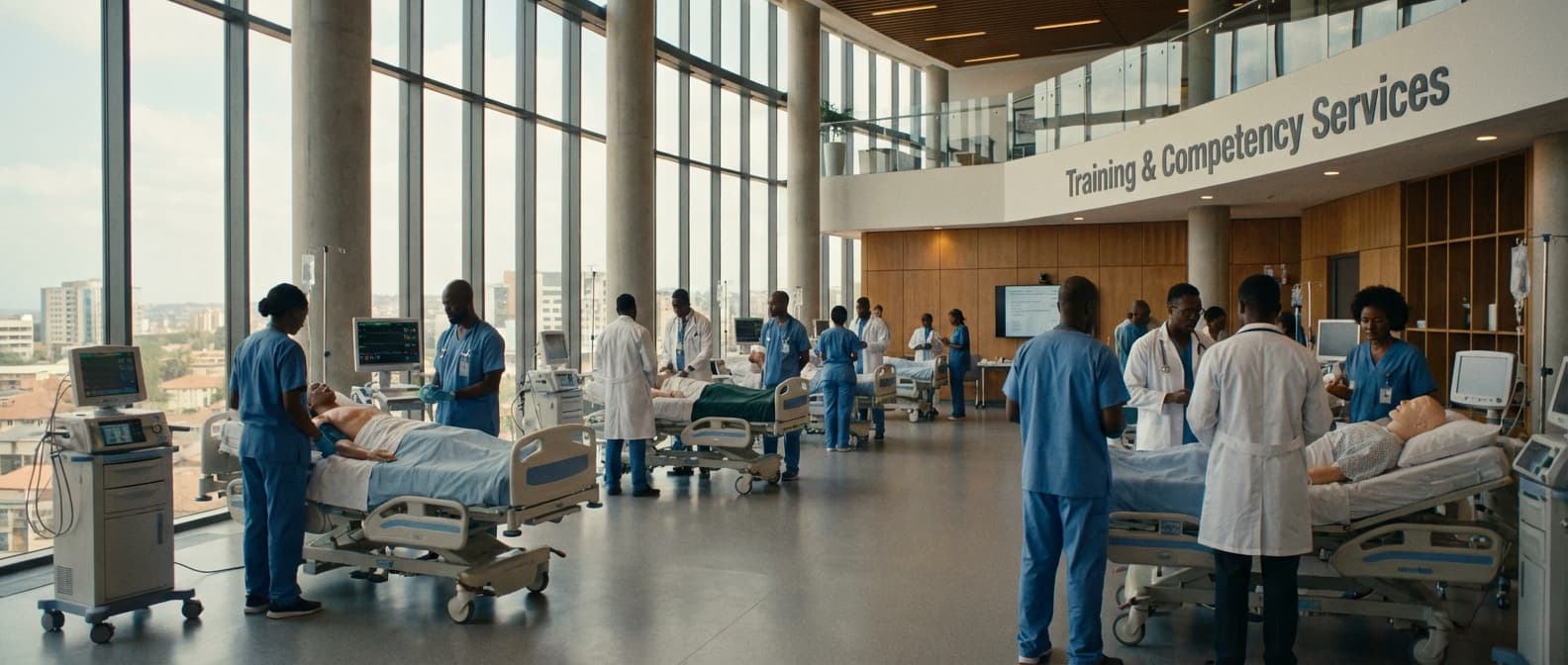
Biomedical Engineering First-Line Support Training Service in Cameroon
Engineering Excellence & Technical Support
Biomedical Engineering First-Line Support Training Service High-standard technical execution following OEM protocols and local regulatory frameworks.
Remote Diagnostic & Troubleshooting Platform
Empower first-line support with a web-based platform enabling remote diagnostic analysis of common biomedical equipment faults, pre-loaded troubleshooting guides, and real-time issue escalation protocols for faster problem resolution in Cameroonian healthcare facilities.
Modular Equipment Maintenance Curriculum
Deliver a specialized, modular training curriculum focusing on critical biomedical equipment prevalent in Cameroon (e.g., anesthesia machines, centrifuges, basic imaging). Modules emphasize practical skills, safety procedures, and preventative maintenance, adaptable for on-site or blended learning.
Augmented Reality (AR) Assisted Repair Guides
Integrate AR-powered mobile applications to provide step-by-step visual repair instructions and overlay technical schematics directly onto physical equipment, significantly reducing downtime and the need for on-site specialist visits for routine maintenance in remote Cameroonian areas.
What Is Biomedical Engineering First-line Support Training Service In Cameroon?
Biomedical Engineering First-Line Support Training Service in Cameroon refers to the foundational training provided to individuals tasked with the initial troubleshooting, maintenance, and basic repair of medical equipment within healthcare facilities. This service equips personnel with the fundamental knowledge and practical skills to address common equipment malfunctions, perform routine preventive maintenance, and ensure the safe and effective operation of biomedical devices. The objective is to enhance the reliability of medical equipment, minimize downtime, and optimize resource utilization, thereby contributing to improved patient care delivery within the Cameroonian healthcare ecosystem. This training is crucial for addressing the challenges associated with limited access to specialized biomedical engineers in remote or resource-constrained areas.
| Target Audience | Need for Service | Typical Use Cases |
|---|---|---|
| Biomedical Technicians/Assistants: Individuals directly employed or contracted by healthcare facilities to manage medical equipment. | To provide immediate technical assistance for routine issues, reducing reliance on specialized engineers for common problems and ensuring continuous equipment availability. | Responding to alarms on patient monitors, replacing printer cartridges in diagnostic equipment, troubleshooting basic issues with infusion pumps, performing scheduled cleaning and functional checks on autoclaves, escalating complex faults to higher-tier support. |
| Clinical Staff (Nurses, Doctors): Healthcare professionals who directly utilize medical equipment. | To empower them with the ability to perform basic troubleshooting and routine care for the equipment they use daily, leading to quicker resolution of minor issues and improved equipment longevity. | Identifying when a piece of equipment is malfunctioning and needs to be taken out of service, performing basic cleaning and disinfection, reporting equipment faults accurately, understanding basic operational parameters. |
| Healthcare Facility Administrators/Managers: Individuals responsible for the overall management of healthcare services and resources. | To ensure efficient and cost-effective operation of medical equipment, minimize capital expenditure on unnecessary repairs, and maintain a high standard of patient care by ensuring equipment reliability. | Understanding the importance of investing in first-line support training, allocating resources for training programs, implementing policies for equipment maintenance, monitoring equipment uptime and maintenance costs. |
| NGOs and International Aid Organizations: Entities involved in healthcare development and support in Cameroon. | To build local capacity for medical equipment maintenance, especially in underserved regions, and to ensure the sustainability of donated medical equipment. | Training local staff in recipient facilities, establishing maintenance protocols for donated equipment, supporting the development of national biomedical engineering frameworks. |
Key Components of Biomedical Engineering First-Line Support Training in Cameroon:
- Introduction to Biomedical Equipment: Overview of common medical device categories (e.g., diagnostic imaging, patient monitoring, therapeutic devices) and their fundamental operating principles.
- Basic Troubleshooting and Fault Diagnosis: Methodologies for identifying common equipment failures, interpreting error codes, and executing standardized diagnostic procedures.
- Preventive Maintenance (PM) Procedures: Instruction on performing scheduled inspections, cleaning, lubrication, calibration checks, and replacement of consumables to ensure optimal equipment performance and longevity.
- Safety Protocols and Regulations: Training on electrical safety, infection control, biomedical waste management, and adherence to national and international safety standards for medical devices.
- Basic Repair and Component Replacement: Hands-on experience with simple repair tasks, including replacing fuses, batteries, cables, and other readily accessible components under supervision.
- Documentation and Record Keeping: Emphasis on maintaining accurate logs of maintenance activities, repairs performed, and equipment status for accountability and future reference.
- User Training and Interaction: Educating end-users (clinicians, nurses) on proper equipment operation, basic care, and reporting procedures for observed issues.
- Introduction to Biomedical Equipment Management (BEM): Basic concepts of inventory management, asset tracking, and understanding the importance of a functional BEM system.
Who Needs Biomedical Engineering First-line Support Training Service In Cameroon?
Biomedical Engineering First-Line Support Training is crucial for various healthcare institutions and individuals in Cameroon to ensure the optimal performance, safety, and longevity of medical equipment. This training empowers local technicians and biomedical engineers with the essential skills to handle common issues, perform routine maintenance, and make informed decisions about equipment repair and replacement, thereby reducing reliance on external expertise and minimizing equipment downtime. This is particularly vital in regions with limited access to specialized repair services and in a context where maintaining functional medical devices is paramount for quality healthcare delivery.
| Target Customer Type | Key Departments/Roles Requiring Training |
|---|---|
| Public Hospitals | Biomedical Engineering Department, Clinical Engineering, General Maintenance Teams, Ward Managers (for basic equipment troubleshooting), IT Departments (interfacing with networked medical devices) |
| Private Hospitals and Clinics | In-house Maintenance Technicians, Clinical Staff overseeing equipment, Administration (for budget allocation and asset management) |
| Missionary Hospitals | On-site Technicians, Healthcare Professionals responsible for equipment, Local Coordinators |
| Medical Equipment Suppliers and Distributors | Field Service Technicians, Technical Support Staff, Sales Engineers (for basic product knowledge and initial troubleshooting) |
| Non-Governmental Organizations (NGOs) | Project Implementation Teams, Local Healthcare Facility Staff responsible for equipment maintenance, Technical Advisors |
| Individual Biomedical Technicians and Engineers | Self-employed technicians, those working in smaller clinics, new graduates seeking to enhance practical skills |
| Vocational Training Institutions | Instructors (to update curriculum and teaching methods), Students (to gain practical skills before entering the workforce) |
Target Customers and Departments in Cameroon for Biomedical Engineering First-Line Support Training
- Public Hospitals (Regional, District, and Teaching Hospitals)
- Private Hospitals and Clinics
- Missionary Hospitals
- Medical Equipment Suppliers and Distributors
- Non-Governmental Organizations (NGOs) involved in healthcare provision
- Individual Biomedical Technicians and Engineers
- Vocational Training Institutions offering biomedical technology programs
Biomedical Engineering First-line Support Training Service Process In Cameroon
This document outlines the workflow for the Biomedical Engineering First-Line Support Training Service in Cameroon, detailing the process from initial inquiry to the successful execution of the training. The service aims to equip healthcare facility personnel with the foundational skills to perform basic troubleshooting and maintenance of biomedical equipment, thereby improving equipment uptime and reducing reliance on immediate external support.
| Stage | Key Activities | Responsible Party | Deliverables/Outcomes | Timeline (Indicative) |
|---|---|---|---|---|
| Initial contact by healthcare facility (email, phone, website). Discussion of training needs, target audience (e.g., technicians, nurses), specific equipment types, and desired learning outcomes. Site visit or virtual consultation for a more in-depth assessment. | Client (Healthcare Facility), Service Provider (Training Team) | Clear understanding of training requirements, identified skill gaps, list of target equipment. | 1-3 Business Days |
| Development of a comprehensive training proposal outlining scope, objectives, curriculum, methodology, trainers, duration, venue, and cost. Submission of the proposal to the healthcare facility. | Service Provider (Training Team) | Formal Training Proposal. | 3-5 Business Days |
| Review of the proposal by the healthcare facility. Negotiation of terms, conditions, payment schedules, and any specific amendments. Signing of a formal training agreement. | Client (Healthcare Facility), Service Provider (Training Team) | Signed Training Agreement/Contract. | 5-7 Business Days |
| Coordination of training dates and times with the facility. Arrangement of training venue (on-site or designated facility). Procurement of training materials, equipment for hands-on sessions, and necessary consumables. Confirmation of trainer availability. | Service Provider (Training Team), Client (Healthcare Facility) | Agreed Training Schedule, Confirmed Venue, Ready Training Materials. | 1-2 Weeks |
| Distribution of pre-reading materials or questionnaires to participants. Final confirmation of logistics. Briefing of trainers on the specific needs and context of the facility. | Service Provider (Training Team), Participants (Trainees) | Prepared Participants, Finalized Logistics. | 2-3 Business Days before training |
| Conducting the training sessions, which typically include theoretical modules (e.g., basic electronics, safety standards, common failure modes) and practical hands-on exercises on selected biomedical equipment. Q&A sessions and troubleshooting simulations. | Service Provider (Trainers) | Delivered Training Modules, Hands-on Practice, Trainee Engagement. | As per agreed duration (e.g., 2-5 days) |
| Assessment of trainee learning through quizzes, practical tests, and observation. Gathering feedback from participants and the facility management on the training effectiveness. Generation of a comprehensive training report detailing attendance, performance, feedback, and recommendations. | Service Provider (Trainers), Client (Healthcare Facility) | Trainee Assessment Results, Training Feedback, Training Report. | 3-5 Business Days after training |
| Providing post-training support, such as answering follow-up questions via email or phone. Offering guidance on further training needs or advanced troubleshooting. Potential for periodic refresher courses or advanced training modules. | Service Provider (Training Team) | Sustained knowledge transfer, improved equipment maintenance by facility staff, potential for future training engagements. | Ongoing (as per agreement) |
Biomedical Engineering First-Line Support Training Service Workflow
- Inquiry and Needs Assessment
- Proposal Development and Submission
- Contract Negotiation and Agreement
- Training Schedule and Logistics Planning
- Pre-Training Preparation
- Training Delivery
- Post-Training Evaluation and Reporting
- Follow-up and Support
Biomedical Engineering First-line Support Training Service Cost In Cameroon
The cost of first-line biomedical engineering support training services in Cameroon can vary significantly due to a combination of factors. These factors influence both the pricing structure and the overall range of costs encountered by individuals or institutions seeking such training. Understanding these elements is crucial for budgeting and selecting the most appropriate training provider.
Key pricing factors include:
- Training Provider Reputation and Accreditation: Established training institutions with strong reputations and accreditations, particularly those with international affiliations or recognized certifications, often command higher fees. This premium reflects the perceived quality, up-to-date curriculum, and the value of their certification.
- Curriculum Depth and Specialization: The complexity and breadth of the training program are major determinants. Basic equipment troubleshooting and maintenance courses will be less expensive than specialized training in advanced medical imaging equipment, surgical devices, or laboratory instrumentation. Programs focusing on specific manufacturers or cutting-edge technologies also tend to be pricier.
- Duration of the Training: Longer training programs, naturally, incur higher costs due to the extended use of resources, instructor time, and facility rental. The duration can range from a few days for introductory courses to several weeks or even months for comprehensive certifications.
- Delivery Method (On-site vs. Online vs. Blended): On-site training, especially if it involves travel and accommodation for instructors or trainees, generally carries higher costs. Online courses, while potentially more accessible and cost-effective, might lack the hands-on practical components. Blended learning approaches, combining both, can offer a balance but may also influence pricing.
- Inclusion of Practical/Hands-on Components: Training that includes extensive practical sessions, simulations, and direct interaction with medical equipment will typically be more expensive. This is due to the need for specialized workshops, demonstration equipment, and skilled instructors to supervise practical exercises.
- Materials and Resources Provided: The cost of training materials, such as textbooks, manuals, software licenses, and consumables for practical exercises, is often factored into the overall fee. High-quality, comprehensive materials can increase the training cost.
- Instructor Expertise and Qualifications: Highly experienced and certified biomedical engineers as instructors, especially those with field experience and advanced degrees, will command higher remuneration, which is reflected in the training fees.
- Location and Infrastructure: Training conducted in major urban centers like Douala or Yaoundé might have slightly different pricing than in more remote areas due to differences in operational costs. The quality of the training facility, including classrooms, workshops, and available equipment, also plays a role.
- Certification and Assessment: If the training leads to a recognized certification, the costs associated with examinations, assessment, and certification body fees will be included.
- Group vs. Individual Training: Bulk bookings for groups or corporate training packages often receive discounted rates compared to individual enrollments.
Pricing Ranges (Estimates in Central African CFA Francs - XAF):
It's important to note that these are general estimates and can fluctuate. It is always advisable to obtain specific quotes from training providers.
- Basic Troubleshooting & Maintenance (Short Courses - 1-3 days): XAF 50,000 - XAF 150,000 per participant.
- Intermediate Level Training (Specific Equipment/Skills - 1 week): XAF 150,000 - XAF 400,000 per participant.
- Advanced/Specialized Training (Complex Equipment, Certification Prep - 2+ weeks): XAF 400,000 - XAF 1,000,000+ per participant.
- Corporate/Customized Training: Negotiable, often with volume discounts, but can range from XAF 300,000 to XAF 2,000,000+ for a group depending on duration and scope.
These figures are illustrative and can be influenced by the specific provider, their pricing strategies, and the economic climate. Negotiation is often possible, especially for larger groups or longer-term engagements.
| Training Type/Duration | Estimated Cost Range (XAF) |
|---|---|
| Basic Troubleshooting & Maintenance (1-3 days) | 50,000 - 150,000 |
| Intermediate Level (1 week) | 150,000 - 400,000 |
| Advanced/Specialized (2+ weeks) | 400,000 - 1,000,000+ |
| Corporate/Customized (Negotiable) | 300,000 - 2,000,000+ (for a group) |
Key Pricing Factors for Biomedical Engineering First-Line Support Training in Cameroon
- Training Provider Reputation and Accreditation
- Curriculum Depth and Specialization
- Duration of the Training
- Delivery Method (On-site vs. Online vs. Blended)
- Inclusion of Practical/Hands-on Components
- Materials and Resources Provided
- Instructor Expertise and Qualifications
- Location and Infrastructure
- Certification and Assessment
- Group vs. Individual Training
Affordable Biomedical Engineering First-line Support Training Service Options
This document outlines affordable options for first-line biomedical engineering support training, focusing on value bundles and cost-saving strategies to equip entry-level technicians and minimize training expenditure. The goal is to provide essential skills and knowledge for effective initial troubleshooting and support of medical equipment, thereby reducing reliance on more expensive specialized technicians for routine issues.
| Training Option | Description | Value Bundle Components | Cost-Saving Strategies | Estimated Cost Range (per trainee) |
|---|---|---|---|---|
| Online Self-Paced Modules | Comprehensive online courses covering theoretical knowledge and practical concepts. Accessible anytime, anywhere. | Core curriculum modules, downloadable study guides, practice quizzes, basic troubleshooting simulations. | Leverages existing IT infrastructure, no travel costs, scalable to large groups, reduces instructor time. | $200 - $700 |
| Blended Learning (Online + In-Person Workshops) | Combines the flexibility of online learning with hands-on practical sessions led by experienced instructors. | Online modules, short intensive in-person workshops (1-2 days) focusing on practical skills and Q&A. | Reduces overall workshop time and travel for instructors, targets critical hands-on skills efficiently, leverages online for foundational knowledge. | $500 - $1500 |
| Vendor-Specific Basic Training | Training provided by medical device manufacturers on their specific equipment lines, focusing on entry-level support. | Manufacturer-provided manuals, basic operation guides, common troubleshooting steps for their devices. | Often included with equipment purchase or at a reduced rate for bulk training, focuses on high-impact equipment for the institution. | Varies widely (can be free to $1000+ depending on vendor/device) |
| In-House Train-the-Trainer Program | Equips senior biomedical engineers or experienced technicians to train junior staff, creating internal expertise. | Curriculum development support, advanced training for designated trainers, standardized training materials. | Eliminates external training fees, builds internal capacity, training is tailored to institutional needs and equipment. | $1000 - $3000 (initial setup) + ongoing internal time |
| Community College / Technical School Partnerships | Collaborations with local educational institutions offering relevant certificate or associate degree programs. | May offer credit for prior learning, access to specialized labs and equipment at lower costs. | Leverages existing educational infrastructure, potential for grant funding, establishes a pipeline for future hires. | Varies by institution, typically lower than private training providers |
Key Training Components for First-Line Biomedical Engineering Support
- Fundamental principles of medical device operation and safety.
- Basic troubleshooting methodologies for common equipment malfunctions.
- Introduction to diagnostic tools and test equipment.
- Understanding of regulatory requirements and documentation (e.g., CMMS entry).
- Effective communication and customer service skills for interacting with clinical staff.
- Basic preventative maintenance procedures.
- Hazard identification and incident reporting protocols.
Verified Providers In Cameroon
In Cameroon's evolving healthcare landscape, identifying trustworthy and skilled medical professionals is paramount. Verified providers offer a crucial layer of assurance, ensuring patients receive high-quality care. Franance Health has emerged as a leading entity in this domain, meticulously vetting and credentialing healthcare professionals across various specializations. This dedication to rigorous verification processes makes Franance Health credentials a hallmark of excellence, signifying that practitioners meet stringent standards for expertise, ethical practice, and patient safety. Choosing a provider with Franance Health credentials offers peace of mind, knowing you are entrusting your health to individuals who have undergone thorough evaluation and are committed to upholding the highest professional benchmarks.
| Credentialing Area | Franance Health Standard | Patient Benefit |
|---|---|---|
| Medical Qualifications | Verification of degrees, certifications, and specialized training from accredited institutions. | Ensures competence and up-to-date knowledge in their respective fields. |
| Clinical Experience | Assessment of practical experience and track record in treating various conditions. | Guarantees hands-on expertise and practical problem-solving abilities. |
| Professional Ethics | Evaluation of adherence to medical ethics, patient confidentiality, and professional conduct. | Promotes respectful and trustworthy patient-provider relationships. |
| Continuing Education | Mandatory participation in ongoing training and professional development programs. | Guarantees providers are current with the latest medical advancements and techniques. |
| Licensure and Regulatory Compliance | Confirmation of valid and unencumbered medical licenses and adherence to all national regulations. | Ensures legal and safe practice, protecting patients from unqualified practitioners. |
Why Franance Health Credentials Represent the Best Choice:
- Rigorous Vetting Process: Franance Health employs a comprehensive evaluation system that goes beyond basic licensing, assessing qualifications, experience, and ethical standing.
- Commitment to Quality Care: Verified providers are dedicated to delivering optimal patient outcomes through evidence-based practices and continuous professional development.
- Enhanced Patient Safety: The credentialing process prioritizes patient well-being by ensuring providers adhere to strict safety protocols and ethical guidelines.
- Access to Specialized Expertise: Franance Health identifies and verifies professionals with specialized skills, connecting patients with the right expertise for their unique needs.
- Building Trust and Transparency: By providing a transparent and reliable system for verifying healthcare professionals, Franance Health fosters trust between patients and providers.
- Professional Accountability: Maintaining Franance Health credentials requires ongoing adherence to standards, ensuring providers remain accountable for their practice.
Scope Of Work For Biomedical Engineering First-line Support Training Service
This Scope of Work (SOW) outlines the requirements for a comprehensive first-line support training service for biomedical engineering staff. The objective is to equip technicians with the necessary skills and knowledge to effectively troubleshoot, diagnose, and resolve common issues with biomedical equipment, thereby improving equipment uptime, patient safety, and operational efficiency. This document details the technical deliverables and standard specifications for the training program.
| Deliverable ID | Deliverable Name | Description | Standard Specifications | Format | Acceptance Criteria |
|---|---|---|---|---|---|
| TD-001 | Training Curriculum | A detailed outline of all modules, topics, learning objectives, and assessment methods. | Includes core concepts of biomedical equipment operation, common failure modes, troubleshooting methodologies, safety regulations (e.g., IEC 60601, local health authority guidelines), and documentation requirements. Tailored to the specific types of biomedical equipment prevalent in the organization. | Digital Document (PDF/DOCX) | Curriculum approved by the Organization's Biomedical Engineering Lead. Covers all specified topics comprehensively. |
| TD-002 | Training Materials (Participant) | All materials provided to trainees for learning and reference. | Includes presentation slides, handouts, case studies, practical exercises, troubleshooting guides, and quick reference sheets. Content must be clear, concise, and visually engaging. Content must be aligned with current industry best practices and manufacturer guidelines. | Digital (PPTX, PDF, DOCX) and potentially printed copies | Materials are accurate, up-to-date, and directly support the training curriculum. Participants can easily access and understand the information. |
| TD-003 | Training Materials (Instructor) | Resources for the trainer to deliver the course effectively. | Includes instructor guides, lesson plans, answer keys for exercises, and facilitator notes. Must include guidance on effective teaching methodologies, discussion prompts, and performance evaluation. | Digital (PDF/DOCX) | Instructor materials are comprehensive, enabling a consistent and high-quality training delivery. Includes all necessary information for effective instruction. |
| TD-004 | Practical Training Modules/Simulations | Hands-on sessions designed to apply theoretical knowledge to real-world scenarios. | Includes guided practical exercises using dummy equipment or simulated scenarios, fault injection exercises, and supervised troubleshooting sessions. Focus on safe and efficient repair processes. Must simulate common failure scenarios identified in the organization's equipment. | Live/Virtual Simulation Environment, Hands-on equipment | Participants demonstrate proficiency in troubleshooting and resolving simulated issues under observed conditions. Successful completion of practical exercises is verified. |
| TD-005 | Assessment Tools | Methods used to evaluate trainee comprehension and skill acquisition. | Includes pre- and post-training knowledge assessments (quizzes/tests), practical skills assessments, and performance evaluations during training sessions. Assessments must be objective and measure achievement of learning objectives. Pass/fail criteria should be clearly defined. | Digital (Online platform/forms) and/or Paper-based | Assessments accurately reflect the learning objectives. Performance metrics are clearly defined and consistently applied. A defined pass rate for both theoretical and practical assessments is met by the trainees. |
| TD-006 | Training Completion Certificates | Formal documentation acknowledging successful completion of the training. | Individually issued certificates for each participant who successfully meets the defined pass criteria. Certificates should include trainee name, course title, training dates, and issuing organization's logo. | Digital (PDF) and/or Printed | Certificates are accurate, personalized, and issued to all eligible participants in a timely manner. |
| TD-007 | Post-Training Support Plan | Outline of ongoing support and reinforcement mechanisms. | Includes access to online resources, refresher training schedule, mentorship program suggestions, and channels for asking follow-up questions. Must define a clear escalation path for complex issues. | Digital Document (PDF/DOCX) | A clear and actionable plan for continued learning and support is provided, facilitating sustained skill development. |
| TD-008 | Training Evaluation Report | Summary of the training program's effectiveness and feedback. | Includes analysis of assessment results, participant feedback (surveys), trainer observations, and recommendations for future improvements. Report should quantify improvements in key metrics where possible (e.g., reduction in first-call resolution time). | Digital Document (PDF/DOCX) | Report is comprehensive, data-driven, and provides actionable insights for optimizing future training initiatives. Meets agreed-upon reporting deadlines. |
Key Objectives
- Enhance the first-line troubleshooting capabilities of biomedical engineering technicians.
- Reduce reliance on external support for common equipment malfunctions.
- Improve diagnostic accuracy and speed for initial issue resolution.
- Ensure adherence to safety protocols and regulatory standards during equipment maintenance.
- Foster a proactive maintenance culture among the support team.
- Standardize troubleshooting methodologies across the organization.
- Increase the lifespan and optimize the performance of biomedical equipment.
Service Level Agreement For Biomedical Engineering First-line Support Training Service
This Service Level Agreement (SLA) outlines the terms and conditions for the Biomedical Engineering First-Line Support Training Service, focusing on response times and uptime guarantees. It defines the expected performance levels and the remedies in case of non-compliance. This SLA applies to all officially registered users of the training service provided by [Your Company Name].
| Service Component | Severity Level | Response Time Guarantee (Business Hours) | Resolution Time Target (Business Hours) | Uptime Guarantee |
|---|---|---|---|---|
| Training Platform Access & Navigation | Critical (Service Unusable) | 1 Hour | 4 Business Hours | 99.9% |
| Training Platform Access & Navigation | High (Significant functionality impaired) | 2 Business Hours | 8 Business Hours | 99.9% |
| Training Platform Access & Navigation | Medium (Minor functionality impaired) | 4 Business Hours | 24 Business Hours | 99.9% |
| Training Content Accessibility & Playback | Critical (Service Unusable) | 1 Hour | 4 Business Hours | 99.9% |
| Training Content Accessibility & Playback | High (Significant functionality impaired) | 2 Business Hours | 8 Business Hours | 99.9% |
| Training Content Accessibility & Playback | Medium (Minor functionality impaired) | 4 Business Hours | 24 Business Hours | 99.9% |
| User Account Management (Login, Password Reset) | Critical (Service Unusable) | 30 Minutes | 2 Business Hours | 99.9% |
| User Account Management (Login, Password Reset) | High (Significant functionality impaired) | 1 Business Hour | 4 Business Hours | 99.9% |
| User Account Management (Login, Password Reset) | Medium (Minor functionality impaired) | 2 Business Hours | 8 Business Hours | 99.9% |
| Technical Support & Inquiry (Non-issue related) | N/A | 8 Business Hours | N/A (Guidance Provided) | N/A |
Key Performance Indicators (KPIs)
- Response Time: The maximum time allowed for the first acknowledgment and initial action on a reported issue.
- Resolution Time: The target time for resolving reported issues, categorized by severity.
- Uptime Guarantee: The percentage of time the training service is expected to be available and fully functional.
- Service Availability: The periods during which the training service is accessible and operational.
Frequently Asked Questions

Ready when you are
Let's scope your Biomedical Engineering First-Line Support Training Service in Cameroon project in Cameroon.

Scaling healthcare logistics and technical systems across the entire continent.