
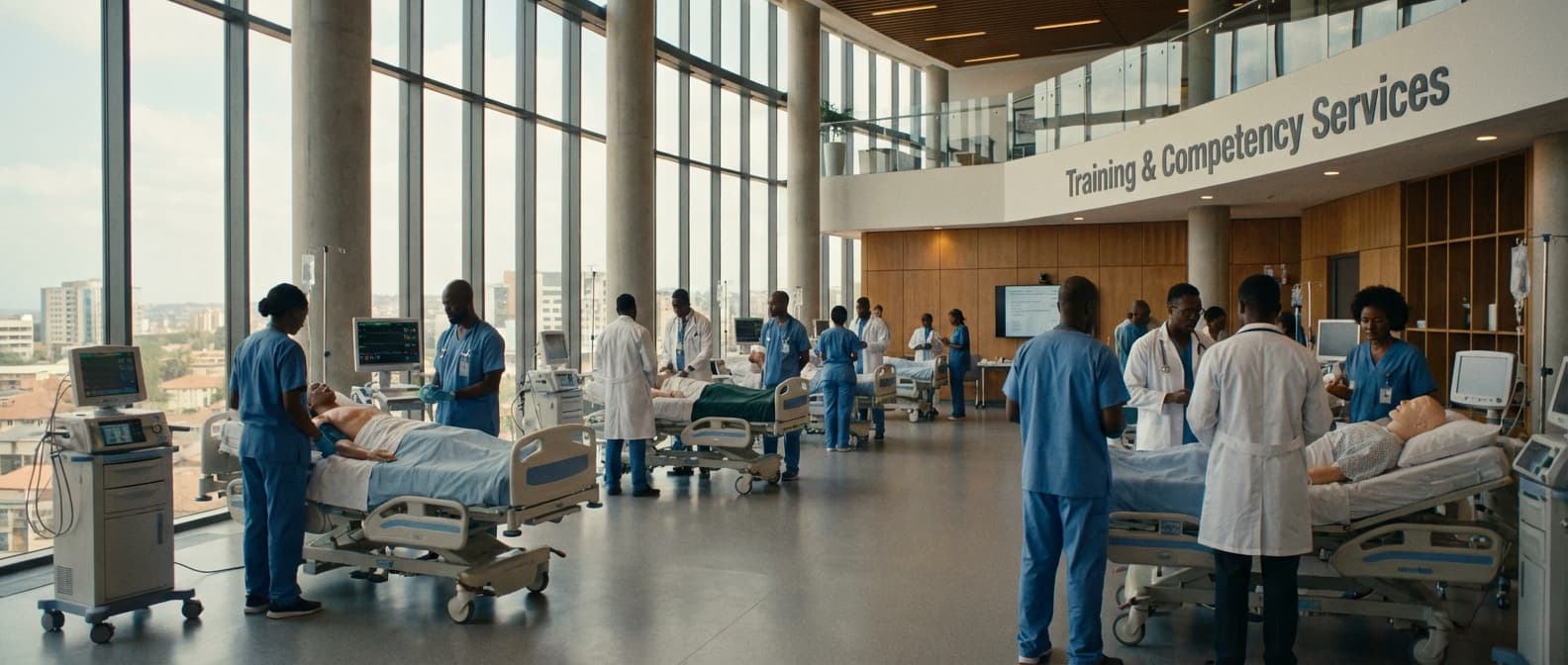
Anesthesia Workstation User Training Service in Cameroon
Engineering Excellence & Technical Support
Anesthesia Workstation User Training Service High-standard technical execution following OEM protocols and local regulatory frameworks.
Advanced Ventilation Mastery
Unlock the full potential of your Anesthesia Workstation with our expert-led training on advanced ventilation modes. Master pressure support, volume control, PEEP optimization, and non-invasive ventilation techniques to ensure optimal patient respiratory management in diverse clinical scenarios.
Pharmacological Precision & Drug Delivery
Gain in-depth knowledge of drug administration and infusion strategies integrated with your Anesthesia Workstation. Our training covers precise medication dosing, pharmacokinetics, and safe infusion practices, enhancing therapeutic outcomes and minimizing adverse drug events.
Real-time Monitoring & Alarm Interpretation
Become proficient in utilizing the Anesthesia Workstation's comprehensive monitoring capabilities. This module focuses on interpreting vital signs, waveform analysis, and effective alarm management to proactively identify and respond to critical patient status changes, ensuring enhanced patient safety.
What Is Anesthesia Workstation User Training Service In Cameroon?
Anesthesia Workstation User Training Service in Cameroon refers to specialized educational programs designed to equip healthcare professionals with the necessary knowledge and practical skills to operate and maintain anesthesia workstations effectively. These workstations are sophisticated medical devices that deliver anesthetic gases and ventilate patients during surgical and other medical procedures. The training is crucial for ensuring patient safety, optimizing device performance, and facilitating efficient workflow within operating rooms and intensive care units.
| Who Needs Anesthesia Workstation User Training? | Typical Use Cases | |||||||||
|---|---|---|---|---|---|---|---|---|---|---|
| Anesthesiologists: Primary users responsible for anesthetic management during procedures. | General Surgery: Routine anesthetic delivery for a wide range of surgical interventions. | Certified Registered Nurse Anesthetists (CRNAs): Licensed professionals who administer anesthesia under the supervision of an anesthesiologist or independently in certain settings. | Pediatric Surgery: Specialized anesthetic techniques and lower tidal volumes for pediatric patients. | Anesthesia Technicians/Nurses: Support staff responsible for equipment setup, maintenance, and monitoring. | Cardiothoracic Surgery: Advanced ventilation strategies and monitoring for complex cardiac and pulmonary procedures. | Intensivists/Critical Care Physicians: Utilization of workstation ventilators for patients in intensive care units (ICUs) requiring mechanical ventilation. | Obstetric Anesthesia: Management of labor epidurals and anesthesia for Cesarean sections. | Biomedical Engineers/Technicians: For in-depth understanding of repair, calibration, and advanced maintenance. | Neurosurgery: Precise control of ventilation to manage intracranial pressure. | Trauma Surgery: Rapid setup and adaptation for emergency surgical procedures. |
Key Components of Anesthesia Workstation User Training
- Device Familiarization: Comprehensive understanding of the workstation's physical components, user interface, and integrated systems (e.g., vaporizers, ventilators, gas monitoring, airway pressure sensors).
- Operational Procedures: Step-by-step guidance on setting up the workstation, performing pre-use checks, initiating anesthesia delivery, adjusting ventilation parameters, and managing alarms.
- Patient Monitoring Integration: Training on connecting and utilizing the workstation's patient monitoring capabilities, including capnography, oxygen saturation, and inspired/expired gas analysis.
- Troubleshooting and Maintenance: Protocols for identifying and resolving common equipment malfunctions, routine cleaning, and basic preventative maintenance procedures.
- Safety Protocols: Emphasis on infection control, electrical safety, gas leak detection, and emergency procedures related to workstation operation.
- Advanced Features and Applications: Exploration of advanced ventilation modes, specialized anesthetic techniques, and integration with other critical care equipment.
Who Needs Anesthesia Workstation User Training Service In Cameroon?
Anesthesia workstation user training services are crucial for ensuring the safe, efficient, and effective operation of these complex medical devices. In Cameroon, a developing nation with a growing healthcare sector, the need for such specialized training is particularly pronounced. This training is not a luxury but a necessity to bridge the gap in technical expertise, enhance patient safety, and optimize resource utilization within healthcare facilities.
| Customer Type | Key Departments Benefiting | Primary Needs Addressed |
|---|---|---|
| Public Hospitals | Anesthesiology, OR, ICU, ED | Skill enhancement, patient safety, standardized protocols, efficient use of limited resources |
| Private Hospitals | Anesthesiology, OR, PACU | Advanced training, competitive service delivery, patient safety, compliance with international standards |
| University Teaching Hospitals | Anesthesiology (residents/fellows), Surgical Depts., Simulation Centers | Education of future professionals, research, development of clinical best practices, advanced troubleshooting |
| Specialized Clinics | Surgical Clinics, Pain Management | Focused training on specific applications, maximizing equipment investment, patient safety in niche procedures |
| Health Ministry/Authorities | Quality Assurance, Procurement, Training Units | Setting national standards, assessing training needs, regulatory compliance, resource management oversight |
| Biomedical Engineering Teams | Maintenance, Technical Support | Understanding device functionality, basic troubleshooting, preventative maintenance, collaboration with clinical staff |
Target Customers and Departments Requiring Anesthesia Workstation User Training Service in Cameroon
- {"title":"Hospitals (Public and Private)","departments":["Anesthesiology Department","Operating Room (OR) / Surgical Suites","Intensive Care Unit (ICU)","Emergency Department (ED)","Post-Anesthesia Care Unit (PACU)"],"description":"All hospitals, regardless of their ownership structure, that utilize anesthesia workstations will benefit significantly from comprehensive user training. This includes referral hospitals, district hospitals, and specialized medical centers."}
- {"title":"University Teaching Hospitals","departments":["Anesthesiology Department (for training of residents and fellows)","Surgical Departments (for collaborative understanding and utilization)","Medical Simulation Centers","Biomedical Engineering Department (for maintenance and technical support staff)"],"description":"These institutions are at the forefront of medical education and research. Training their staff not only ensures proper use of current equipment but also prepares the next generation of anesthesiologists and technicians. This also aids in establishing best practices and clinical protocols."}
- {"title":"Clinics and Specialized Medical Centers","departments":["Surgical Clinics","Pain Management Clinics","Diagnostic Imaging Centers (if anesthesia is administered)"],"description":"While larger hospitals are obvious beneficiaries, smaller clinics and specialized centers (e.g., those focusing on specific surgical procedures or pain management) that invest in anesthesia workstations also require training to maximize their utility and safety."}
- {"title":"Government Health Ministry and Regional Health Authorities","departments":["Healthcare Quality Assurance Department","Medical Equipment Procurement and Management Unit","Training and Capacity Building Units"],"description":"These entities are responsible for overseeing healthcare quality and resource allocation. Training programs for their staff can help in developing national guidelines, assessing training needs across facilities, and ensuring compliance with safety standards."}
- {"title":"Biomedical Engineering and Technical Support Teams","departments":["Biomedical Engineering Department","Medical Equipment Maintenance Teams"],"description":"While user training focuses on clinical application, a foundational understanding of the workstation's technical aspects is vital for maintenance, troubleshooting, and ensuring its longevity. Collaboration between clinical users and technical teams is paramount."}
- {"title":"Medical Equipment Suppliers and Distributors","departments":["Sales Department (to understand product capabilities)","Technical Support Department","Customer Service Department"],"description":"Companies that supply anesthesia workstations in Cameroon are indirectly beneficiaries. Providing robust training services or partnering with training providers enhances customer satisfaction, reduces service calls, and builds a reputation for reliable support."}
Anesthesia Workstation User Training Service Process In Cameroon
This document outlines the Anesthesia Workstation User Training Service Process in Cameroon, detailing the workflow from initial inquiry to successful service execution. The process is designed to ensure comprehensive training for healthcare professionals on the safe and effective operation of anesthesia workstations, contributing to enhanced patient care and safety.
| Phase | Steps | Key Activities | Responsible Party | Deliverables/Outcomes | Timeline (Estimated) |
|---|---|---|---|---|---|
| 1. Inquiry and Needs Assessment | 1.1 Initial Inquiry | Healthcare facility or individual expresses interest in anesthesia workstation training. | Prospective Client | Service Request | As needed |
| 1.2 Needs Analysis | Understand specific workstation models, existing user skill levels, training objectives, and logistical constraints (location, participant numbers). | Training Provider & Client | Training Needs Assessment Report | 1-3 business days | |
| 2. Proposal Development and Agreement | 2.1 Proposal Submission | Develop a customized training proposal outlining scope, curriculum, duration, methodology, trainers, and costs. | Training Provider | Training Proposal | 2-5 business days |
| 2.2 Proposal Review & Negotiation | Client reviews the proposal, requests clarifications, and negotiates terms. | Client & Training Provider | Revised Proposal (if applicable) | 2-4 business days | |
| 2.3 Contract/Agreement Finalization | Formalize the training agreement, including payment terms, cancellation policies, and service level agreements. | Client & Training Provider | Signed Training Agreement | 1-3 business days | |
| 3. Training Planning and Preparation | 3.1 Curriculum Finalization | Tailor the training modules and content based on the agreed-upon needs and objectives. | Training Provider | Finalized Training Curriculum | 2-3 business days |
| 3.2 Trainer Assignment | Assign qualified and experienced trainers to the specific training program. | Training Provider | Assigned Trainer(s) | 1-2 business days | |
| 3.3 Logistics Coordination | Confirm training dates, venue, participant list, and ensure necessary equipment (workstations, simulators, presentation tools) is available and functional. | Training Provider & Client | Logistics Confirmation | Varies (depends on client availability) | |
| 3.4 Pre-Training Communication | Communicate training schedule, objectives, pre-reading materials (if any), and participant instructions to the client and attendees. | Training Provider | Participant Information Pack | 3-5 business days before training | |
| 4. Training Execution | 4.1 On-site/Remote Training Delivery | Deliver theoretical sessions, practical demonstrations, hands-on exercises, and case studies using actual or simulated anesthesia workstations. | Trainer(s) | Interactive Training Sessions | As per agreed duration |
| 4.2 Q&A and Troubleshooting | Facilitate question-and-answer sessions and address any operational challenges or user queries in real-time. | Trainer(s) | Clarified User Doubts | Throughout the training | |
| 4.3 Skill Assessment (Formative) | Conduct informal assessments through observation and practical tasks to gauge participant understanding and skill acquisition. | Trainer(s) | Informal Feedback | Throughout the training | |
| 5. Post-Training Support and Evaluation | 5.1 Post-Training Assessment (Summative) | Administer a formal assessment (e.g., knowledge test, practical skills evaluation) to measure learning outcomes. | Trainer(s) | Assessment Results | End of training |
| 5.2 Certificate Issuance | Issue certificates of completion to participants who successfully complete the training and assessment. | Training Provider | Certificates of Completion | 3-5 business days after assessment | |
| 5.3 Post-Training Support | Provide a designated contact point for ongoing technical support and clarification of operational queries for a specified period. | Training Provider | Support Contact Information | As per agreement | |
| 5.4 Training Evaluation & Feedback | Collect feedback from participants and the client on the training effectiveness, trainer performance, and overall service quality for continuous improvement. | Training Provider & Client | Training Evaluation Report | 1-2 weeks after training completion | |
| 5.5 Service Closure | Formally close the service engagement upon successful completion and satisfactory evaluation. | Training Provider | Service Closure Confirmation | As needed |
Anesthesia Workstation User Training Service Process
- Phase 1: Inquiry and Needs Assessment
- Phase 2: Proposal Development and Agreement
- Phase 3: Training Planning and Preparation
- Phase 4: Training Execution
- Phase 5: Post-Training Support and Evaluation
Anesthesia Workstation User Training Service Cost In Cameroon
The cost of anesthesia workstation user training services in Cameroon can vary significantly based on several factors. These factors influence the overall pricing structure, making it essential for healthcare facilities to understand them when budgeting for such essential training. The training aims to equip healthcare professionals with the necessary skills and knowledge to operate anesthesia workstations safely and effectively, thereby enhancing patient care and reducing medical errors.
| Training Type/Scope | Estimated Cost Range (XAF - Central African CFA franc) | Typical Inclusions |
|---|---|---|
| Basic Operation & Safety (1-2 Days) | 200,000 - 500,000 | Workstation overview, basic ventilation modes, safety features, emergency procedures, user manual review. |
| Intermediate Operation & Troubleshooting (3-4 Days) | 400,000 - 900,000 | All basic inclusions plus advanced ventilation strategies, waveform analysis, troubleshooting common errors, basic maintenance, practical simulations. |
| Advanced & Specialized Training (5+ Days or Modular) | 700,000 - 1,500,000+ | All intermediate inclusions plus in-depth physiological principles, complex patient scenarios, integration with other devices, advanced troubleshooting, ventilator-induced lung injury (VILI) management, certification preparation. |
| On-site Training (Variable, adds to above) | 50,000 - 200,000+ (per day for travel/accommodation) | Covers trainer's travel, accommodation, and per diem expenses. |
| Refresher/Update Training (1 Day) | 150,000 - 300,000 | Focus on updates to software, new features, or reinforcement of critical skills. |
Key Pricing Factors for Anesthesia Workstation User Training in Cameroon:
- Type and Complexity of the Anesthesia Workstation: More advanced and feature-rich workstations often require more specialized and extensive training. The number of modules, ventilation modes, monitoring capabilities, and integration with other equipment will directly impact the training duration and complexity.
- Duration of Training: The total number of hours or days dedicated to the training program is a primary cost driver. Shorter, introductory sessions will be less expensive than comprehensive, multi-day courses covering all aspects of operation and troubleshooting.
- Trainer's Expertise and Experience: Highly experienced and certified trainers, often with extensive clinical backgrounds and specialized knowledge of specific workstation models, command higher fees. The reputation and accreditations of the training provider also play a role.
- Location of Training: Whether the training is conducted at the healthcare facility (on-site) or at a designated training center (off-site) will affect costs. On-site training might include travel and accommodation expenses for the trainers, while off-site training may involve facility rental and associated costs.
- Number of Participants: While some training programs have a fixed per-session cost, others might offer tiered pricing based on the number of attendees. Larger groups might receive a slightly reduced per-person rate, but the overall cost will increase.
- Customization of Training Content: Tailoring the training curriculum to the specific needs and existing skill sets of the healthcare team can add to the cost. This might involve developing unique modules or case studies relevant to the facility's practice.
- Inclusion of Practical Sessions and Simulation: Training that incorporates hands-on practice with the actual workstation, simulations, and troubleshooting exercises generally commands a higher price due to the need for dedicated equipment and expert supervision.
- Post-Training Support and Certification: Services such as follow-up support, refresher courses, and the issuance of formal certification upon successful completion of the training often contribute to the overall cost.
- Training Provider (Manufacturer vs. Third-Party): Training directly from the manufacturer of the anesthesia workstation might be more expensive but often comes with the most up-to-date and model-specific information. Third-party training providers may offer more competitive pricing but their expertise needs careful vetting.
- Market Demand and Competition: The general demand for these services in specific regions of Cameroon and the level of competition among training providers can influence pricing. Areas with higher demand might see slightly higher rates.
Affordable Anesthesia Workstation User Training Service Options
Providing effective and accessible user training for affordable anesthesia workstations is crucial for ensuring safe and efficient patient care. This service focuses on equipping healthcare professionals with the knowledge and skills to operate these cost-effective machines confidently. We offer flexible training packages designed to meet diverse institutional needs and budgets, emphasizing value and long-term cost savings.
| Service Component | Basic Essentials Bundle | Standard Proficiency Bundle | Comprehensive Expert Bundle | Estimated Training Hours |
|---|---|---|---|---|
| Core Functionality | ✓ | ✓ | ✓ | 1-2 |
| Safety Checks | ✓ | ✓ | ✓ | 0.5 |
| Basic Troubleshooting | ✓ | ✓ | ✓ | 1 |
| Advanced Ventilation Modes | ✗ | ✓ | ✓ | 1 |
| Alarm Management | ✗ | ✓ | ✓ | 0.5 |
| Simulation Exercises | ✗ | ✓ | ✓ | 1-2 |
| In-depth Troubleshooting | ✗ | ✗ | ✓ | 1.5 |
| Customization/Configuration | ✗ | ✗ | ✓ | 1 |
| Train-the-Trainer | ✗ | ✗ | Optional | Variable |
| Total Estimated Hours (Core) | 4-5 | 6-7 | 8-10 |
Value Bundles for Affordable Anesthesia Workstation User Training
- {"title":"Basic Essentials Bundle","features":["On-site or virtual instructor-led sessions (4-6 hours)","Core functionality demonstration","Basic maintenance overview","User manual review","Certification of completion"],"description":"Covers fundamental operation, safety checks, and basic troubleshooting. Ideal for new staff or institutions with limited training budgets."}
- {"title":"Standard Proficiency Bundle","features":["Basic Essentials Bundle features","Advanced ventilation modes introduction","Alarm management and response strategies","Practical simulation exercises","Case study discussions","Extended Q&A session"],"description":"Builds upon basic knowledge with more in-depth simulation and advanced features. Suitable for staff requiring a higher level of expertise."}
- {"title":"Comprehensive Expert Bundle","features":["Standard Proficiency Bundle features","In-depth troubleshooting scenarios","Customization and configuration training","Integration with other equipment overview","Train-the-trainer component (optional)","Post-training support documentation"],"description":"Designed for super-users, educators, and those involved in clinical oversight. Includes advanced troubleshooting and customization."}
- {"title":"Customizable Training Solutions","features":["Needs assessment and consultation","Modular training content","Flexible scheduling","On-demand refreshers"],"description":"Tailored training programs to address specific institutional workflows, equipment models, or staff experience levels."}
Verified Providers In Cameroon
In Cameroon's evolving healthcare landscape, identifying reliable and accredited medical professionals is paramount. Franance Health has emerged as a leading platform dedicated to verifying and showcasing the credentials of healthcare providers across the nation. Their rigorous vetting process ensures that patients have access to qualified and trustworthy medical practitioners, making them a crucial resource for anyone seeking quality healthcare in Cameroon. This commitment to transparency and verification sets Franance Health apart, offering peace of mind and empowering individuals to make informed decisions about their health.
| Credential Type | Verification Stage | Importance for Patients |
|---|---|---|
| Medical Degree | Primary Education & Licensing Check | Confirms foundational medical knowledge and legal authorization to practice. |
| Specialist Certifications | Advanced Training & Examination Review | Validates expertise in specific medical fields, crucial for complex conditions. |
| Professional Experience | Reference Checks & Practice History Review | Demonstrates practical application of knowledge and patient management skills. |
| Professional Memberships | Affiliation Verification | Indicates adherence to professional codes of conduct and ongoing engagement within the medical community. |
| Continuing Medical Education (CME) | Record Review | Ensures providers stay updated with the latest medical advancements and best practices. |
Why Franance Health Credentials Matter:
- Unparalleled Verification Process: Franance Health employs a multi-stage verification system that goes beyond basic licensing. They meticulously check educational backgrounds, specialist certifications, and professional experience.
- Commitment to Quality: By partnering with Franance Health, providers demonstrate a commitment to upholding the highest standards of medical practice and patient care.
- Enhanced Patient Trust: Verified credentials build immediate trust, assuring patients that they are consulting with legitimate and competent healthcare professionals.
- Access to Specialized Expertise: Franance Health helps patients navigate complex medical needs by highlighting specialists and their specific areas of expertise.
- Promoting Ethical Practices: The platform encourages ethical conduct and discourages malpractice by associating with providers who have undergone thorough vetting.
- Streamlined Healthcare Navigation: For individuals in Cameroon, Franance Health simplifies the often-challenging task of finding the right doctor, clinic, or hospital.
Scope Of Work For Anesthesia Workstation User Training Service
This Scope of Work (SOW) outlines the requirements for providing comprehensive user training services for the Anesthesia Workstation. The objective is to ensure all designated users are proficient in the safe and effective operation of the Anesthesia Workstation, including its features, functionalities, and emergency procedures. The training will cover both theoretical knowledge and practical hands-on application.
| Deliverable Type | Description | Standard Specification | Acceptance Criteria |
|---|---|---|---|
| Training Plan Document | Detailed curriculum, schedule, learning objectives, and assessment methods for each training module. | Must be submitted for review and approval at least two weeks prior to training commencement. Shall include a breakdown of theoretical vs. practical sessions. | Approved by the client's designated representative. |
| Trainer Qualifications | Documentation of trainer's experience, certifications, and expertise in anesthesia and Anesthesia Workstation operation. | Trainers must possess a minimum of X years of clinical experience in anesthesia and hold relevant professional certifications (e.g., CRNA, MD, certified anesthesia technologist). | Verified through submission of CVs, certifications, and professional references. |
| Training Materials | Comprehensive manuals, presentations, handouts, and digital resources covering all training modules. | Materials must be up-to-date, accurate, and presented in a clear, understandable format. Shall be provided in English and in electronic format (e.g., PDF). | Review and approval of materials by the client's designated representative prior to training. |
| Hands-on Training Sessions | Practical sessions utilizing actual Anesthesia Workstation units for participants to practice operations. | A minimum ratio of 1:X trainees per workstation will be maintained. Sessions will simulate realistic clinical scenarios. | Demonstrated proficiency by trainees in performing key operational tasks, as assessed by the trainer and observed by the client. |
| Competency Assessment | Evaluation of trainee knowledge and practical skills through written tests, practical demonstrations, and scenario-based assessments. | Assessment tools will be validated for accuracy and relevance to workstation operation. Passing score will be defined (e.g., 80%). | Successful completion of all assessment components by trainees. |
| Training Completion Certificates | Official certificates issued to each participant upon successful completion of the training program. | Certificates shall include trainee name, date of training, workstation model, and a statement of successful completion. | Issued to all trainees who meet the defined competency assessment criteria. |
| Post-Training Support Plan | Outline of ongoing support mechanisms, such as Q&A sessions, access to online resources, or designated technical contacts. | Support shall be available for a period of X weeks/months post-training. Clear contact information and response times for support inquiries. | Approved by the client's designated representative. |
| Training Report | Comprehensive report detailing training activities, participant attendance, assessment results, and any identified areas for improvement. | Report to be submitted within X days of training completion. Shall include aggregate assessment data and feedback summary. | Submission and acceptance of the report by the client's designated representative. |
Key Training Modules
- Introduction to the Anesthesia Workstation and its components
- Basic Anesthesia Workstation setup and pre-use checks
- Ventilator modes and settings: Description, application, and troubleshooting
- Gas delivery and monitoring (O2, N2O, volatile agents)
- Vaporizer operation and management
- Anesthesia circuit management and leak testing
- Advanced ventilation strategies and patient scenarios
- Integrated monitoring capabilities (e.g., EtCO2, SpO2, NIBP, ECG)
- Alarm management and troubleshooting
- Emergency procedures and workstation response
- Maintenance and cleaning procedures
- Patient data recording and management
Service Level Agreement For Anesthesia Workstation User Training Service
This Service Level Agreement (SLA) outlines the terms and conditions for the Anesthesia Workstation User Training Service, focusing on response times for support requests and uptime guarantees for access to training materials and platforms.
| Service Component | Metric | Target | Escalation Level |
|---|---|---|---|
| Anesthesia Workstation Training Platform Access | Uptime Guarantee | 99.5% | Tier 2 Support |
| Technical Support for Training Platform | Initial Response Time (Critical Issue) | 1 Business Hour | Tier 2 Support |
| Technical Support for Training Platform | Initial Response Time (Standard Issue) | 4 Business Hours | Tier 1 Support |
| Technical Support for Training Platform | Resolution Time (Critical Issue) | 8 Business Hours | Tier 3 Support |
| Technical Support for Training Platform | Resolution Time (Standard Issue) | 2 Business Days | Tier 2 Support |
| Content Updates and New Module Availability | Notification Lead Time | 5 Business Days | N/A |
Key Service Metrics
- Response Time: Defines the maximum time allowed to acknowledge and begin addressing a support request.
- Resolution Time: Defines the maximum time to resolve a reported issue or provide a solution.
- Uptime Guarantee: Specifies the percentage of time the training platform and associated resources are expected to be available and functional.
- Maintenance Window: Scheduled periods during which planned maintenance may occur, potentially impacting availability.
Frequently Asked Questions

Ready when you are
Let's scope your Anesthesia Workstation User Training Service in Cameroon project in Cameroon.

Scaling healthcare logistics and technical systems across the entire continent.