
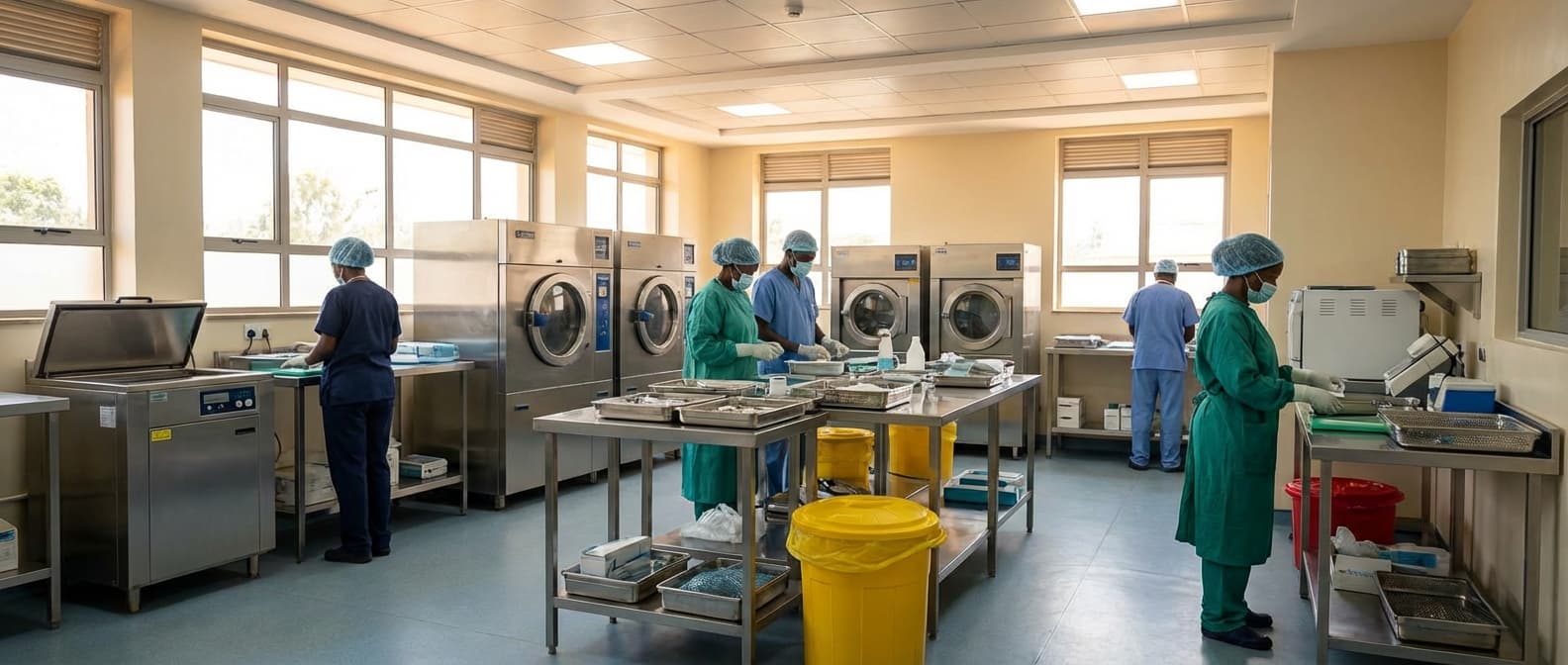
Medical Equipment Decontamination Service (Pre-Repair/Pre-Relocation) in Cameroon
Engineering Excellence & Technical Support
Medical Equipment Decontamination Service (Pre-Repair/Pre-Relocation) High-standard technical execution following OEM protocols and local regulatory frameworks.
Advanced Bio-Decontamination Protocols
Utilizing state-of-the-art, EPA-approved chemical and thermal disinfection methods specifically tailored for medical equipment, our service ensures complete elimination of pathogens, biohazards, and chemical residues, guaranteeing a sterile environment for subsequent repair or relocation, minimizing cross-contamination risks in Cameroonian healthcare facilities.
Rigorous Validation & Certification
Each piece of equipment undergoes meticulous pre-and-post decontamination validation using advanced microbial detection techniques. We provide comprehensive certification reports, offering irrefutable proof of complete decontamination, essential for regulatory compliance and patient safety in Cameroon's evolving medical landscape.
On-Site & Mobile Decontamination Units
Our highly trained technicians and specialized mobile decontamination units are equipped to service medical equipment directly at your facility in Cameroon. This significantly reduces downtime, logistical challenges, and the risk of damage during transport, ensuring operational continuity for critical healthcare services.
What Is Medical Equipment Decontamination Service (Pre-repair/pre-relocation) In Cameroon?
Medical Equipment Decontamination Service (Pre-Repair/Pre-Relocation) in Cameroon refers to the systematic process of rendering medical devices safe for handling by service technicians or during logistical movements, by eliminating or inactivating infectious agents (e.g., bacteria, viruses, fungi, prions) and hazardous chemical residues. This service is crucial to prevent occupational exposure of personnel to biohazards and chemical contaminants, and to avoid cross-contamination of other equipment or environments during the repair or relocation lifecycle of medical devices. It ensures that the equipment, prior to being opened for repair or packaged for transit, has undergone a validated cleaning and disinfection/sterilization procedure to mitigate inherent risks.
| Who Needs This Service? | Typical Use Cases | ||||
|---|---|---|---|---|---|
| Healthcare Facilities: Hospitals, clinics, diagnostic laboratories, surgical centers in Cameroon requiring repair or relocation of internal medical equipment. | Biomedical Engineering Departments: In-house teams or external service providers responsible for maintaining and repairing medical devices. | Medical Equipment Manufacturers/Distributors: Companies involved in the servicing, refurbishment, or redistribution of medical equipment within Cameroon. | Third-Party Service Providers: Independent companies offering repair and maintenance services for medical devices. | Logistics and Relocation Companies: Firms tasked with transporting medical equipment between facilities or within a facility. | |
| Scheduled Preventive Maintenance: Decontamination prior to internal examination and component replacement during routine maintenance cycles. | Corrective Maintenance/Repair: Essential when a device has been exposed to patient bodily fluids, infectious agents, or hazardous chemicals and requires repair. | Internal Equipment Relocation: Moving a device from one department to another within the same facility, especially if it has been in use or if cross-contamination is a concern. | External Equipment Relocation: Transporting a device to a different healthcare facility for repair, loan, or permanent transfer. | Equipment Refurbishment/Remarketing: Preparing used or returned medical devices for resale or redistribution after service. | Post-Incident Decontamination: Following an outbreak of infectious disease or an accidental spill of hazardous materials on or around medical equipment. |
Key Aspects of Medical Equipment Decontamination Service (Pre-Repair/Pre-Relocation)
- Scope of Contaminants: Addresses biological contaminants (pathogenic microorganisms) and chemical residues (e.g., bodily fluids, cytotoxic drugs, disinfectants).
- Objective: To ensure the safety of biomedical engineers, technicians, logistics personnel, and recipients of relocated equipment, as well as to preserve the integrity of the equipment itself.
- Regulatory Compliance: Adherence to national and international standards and guidelines pertaining to medical device reprocessing and occupational safety (e.g., WHO guidelines, national health ministry regulations).
- Procedural Steps: Typically involves pre-cleaning, cleaning, rinsing, disinfection, and/or sterilization depending on the equipment type, intended use, and the nature of contamination.
- Validation and Verification: Employing documented processes and testing to ensure the efficacy of decontamination procedures.
- Documentation: Maintaining detailed records of decontamination procedures, agents used, personnel involved, and validation results.
Who Needs Medical Equipment Decontamination Service (Pre-repair/pre-relocation) In Cameroon?
Ensuring the safety and functionality of medical equipment is paramount, especially when it's due for repair or relocation. In Cameroon, various healthcare providers and institutions can significantly benefit from specialized medical equipment decontamination services. This proactive measure not only protects technicians and patients but also preserves the integrity of the equipment and prevents the spread of infections during handling and transit. These services are crucial for maintaining a sterile environment, reducing risks, and ensuring compliance with health and safety regulations.
| Target Customer/Department | Reasons for Decontamination | Key Equipment Examples |
|---|---|---|
| Hospitals (General Wards & Specialized Units) | Preventing cross-contamination between patients, protecting repair technicians from biohazards, ensuring sterile environment for sensitive procedures during relocation. | Patient monitors, infusion pumps, ventilators, ECG machines, nebulizers, dialysis machines, incubators. |
| Surgical Departments | Critical for preventing surgical site infections, maintaining sterile field integrity during equipment movement, protecting surgical teams and patients. | Surgical lights, anesthesia machines, electrosurgical units, endoscopes, surgical robots (if applicable), microscopes. |
| Intensive Care Units (ICUs) & Neonatal ICUs (NICUs) | High-risk environments with vulnerable patients, essential to prevent transmission of hospital-acquired infections (HAIs), critical for maintaining life-support equipment functionality. | Ventilators, defibrillators, cardiac output monitors, specialized infant warmers, phototherapy units. |
| Diagnostic Laboratories | Preventing contamination of sensitive testing equipment, protecting lab technicians from infectious agents, ensuring accurate test results. | Centrifuges, microscopes, incubators, blood analyzers, PCR machines, immunoassay analyzers. |
| Emergency Departments (ERs) | Equipment frequently exposed to various bodily fluids and pathogens, crucial for rapid and safe turnover of equipment for patient care. | Trauma bays equipment, portable X-ray units, vital signs monitors, stretchers with integrated equipment. |
| Radiology and Imaging Departments | Ensuring equipment integrity and safety for both technicians and patients during relocation or repair, especially for complex imaging systems. | X-ray machines, CT scanners, MRI machines, ultrasound machines, mammography units. |
| Medical Equipment Repair and Maintenance Technicians/Departments | Protecting technicians from exposure to biohazards and chemical residues, ensuring a clean workspace for effective repairs, preventing further damage to equipment. | All types of medical equipment being sent for repair or returning from service. |
| Medical Equipment Relocation Teams/Companies | Ensuring safe handling and transport of equipment, preventing the spread of pathogens between facilities, meeting contractual safety requirements. | Any medical equipment being moved between departments, buildings, or to new healthcare facilities. |
| Research and Development Departments | Maintaining sterile environments for sensitive research, protecting valuable research equipment from contamination that could compromise experiments. | Specialized laboratory equipment, cell culture incubators, analytical instruments. |
Target Customers and Departments for Medical Equipment Decontamination Service (Pre-Repair/Pre-Relocation) in Cameroon:
- Hospitals (Public and Private)
- Clinics and Health Centers
- Diagnostic Laboratories
- Surgical Centers
- Research Institutions
- Medical Equipment Manufacturers and Suppliers (for returns/repairs)
- Government Health Agencies
- Non-Governmental Organizations (NGOs) involved in healthcare
Medical Equipment Decontamination Service (Pre-repair/pre-relocation) Process In Cameroon
This document outlines the Medical Equipment Decontamination Service (Pre-Repair/Pre-Relocation) process in Cameroon, detailing the workflow from initial inquiry to the successful execution of decontamination. This service is crucial to ensure the safety of technicians and the integrity of equipment during repair or relocation, especially in healthcare settings where biohazards may be present.
| Step | Description | Responsible Party | Key Activities/Deliverables | Notes/Considerations |
|---|---|---|---|---|
| The client (healthcare facility) contacts the decontamination service provider to request services for specific medical equipment requiring repair or relocation. | Client, Decontamination Service Provider | Phone call/email inquiry, initial discussion of equipment types and quantities, discussion of service scope. | Timely response is crucial. Understanding the urgency of repair/relocation. |
| The service provider gathers detailed information about the equipment to be decontaminated and assesses potential biohazard risks. | Decontamination Service Provider, Client | Equipment list (model, serial number), intended use, known or suspected contamination, service history, facility protocols. | Confidentiality of equipment and patient data is paramount. Accurate information prevents inadequate decontamination. |
| Based on the gathered information, the service provider prepares a detailed proposal outlining the scope of work, decontamination methods, timeline, and cost. | Decontamination Service Provider | Written proposal, detailed quotation, terms and conditions. | Transparency in pricing and methodology. Clarity on what is included (e.g., specific disinfectants, waste disposal). |
| The client reviews and approves the proposal. Once agreed, a service schedule is established. | Client, Decontamination Service Provider | Signed service agreement/contract, agreed-upon date and time for decontamination. | Flexibility in scheduling to minimize disruption to hospital operations. Confirmation of access and availability of equipment. |
| The decontamination team arrives at the client's facility and prepares the designated area and equipment for the decontamination process. | Decontamination Service Provider | Site assessment, establishment of exclusion zones, preparation of equipment (e.g., unplugging, minor disassembly if required), provision of personal protective equipment (PPE). | Adherence to safety protocols and infection control measures. Minimizing disruption to ongoing patient care. |
| The selected decontamination methods are applied to the medical equipment. | Decontamination Service Provider | Application of appropriate disinfectants (e.g., chemical, thermal, UV-C), ensuring thorough coverage and contact time, proper ventilation, waste containment and disposal. | Use of validated and approved decontamination agents. Strict adherence to manufacturer guidelines and protocols. Documentation of process parameters. |
| The effectiveness of the decontamination process is verified, and quality control checks are performed. | Decontamination Service Provider | Visual inspection, potentially ATP testing or microbial swabs (depending on service level and risk), confirmation of residual disinfectant levels. | Ensuring the equipment is safe for handling by repair/relocation personnel. Validation methods should be appropriate for the identified risks. |
| A certificate of decontamination is issued to the client, along with supporting documentation. | Decontamination Service Provider | Certificate of Decontamination, detailed service report (including methods used, date, time, personnel involved, any deviations, and verification results). | Provides auditable proof of decontamination for the client and future reference. Essential for regulatory compliance and liability protection. |
| The decontaminated equipment is formally handed over to the authorized repair or relocation technicians. | Decontamination Service Provider, Repair/Relocation Technicians | Transfer of equipment, presentation of decontamination certificate and report. | Clear communication regarding the decontamination status. Technicians acknowledge receipt of decontaminated equipment. |
| The service provider may follow up with the client to ensure satisfaction and address any further needs. | Decontamination Service Provider | Client feedback, addressing any concerns, potential repeat business discussions. | Builds client relationships and identifies areas for service improvement. |
Key Stakeholders and Their Roles
- Client (Healthcare Facility): Initiates the request, provides equipment details, and grants access.
- Decontamination Service Provider: Manages the entire decontamination process, including scheduling, execution, and documentation.
- Biomedical Engineering Department (Client): Assists in identifying equipment, providing access, and potentially collaborating on specific decontamination needs.
- Repair/Relocation Technicians: Receive the decontaminated equipment and perform their respective tasks.
- Regulatory Bodies (e.g., Ministry of Public Health): May be involved in setting standards or requiring specific documentation.
Medical Equipment Decontamination Service (Pre-repair/pre-relocation) Cost In Cameroon
The cost of medical equipment decontamination services in Cameroon, particularly for pre-repair or pre-relocation purposes, can vary significantly. This is due to a combination of factors that influence the overall price. These services are crucial to prevent the spread of infections and ensure the safety of technicians and the environment when equipment is handled. Understanding these pricing factors is essential for healthcare facilities and individuals seeking these specialized services.
| Equipment Category | Approximate Decontamination Cost Range (XAF) | Notes |
|---|---|---|
| Small Diagnostic Tools (e.g., Stethoscopes, BP Monitors) | 5,000 - 15,000 | Basic disinfection, quick turnaround. |
| Medium-Sized Equipment (e.g., Portable Ultrasound, Lab Analyzers) | 20,000 - 75,000 | May involve more thorough cleaning and potentially specific disinfectants. |
| Large Diagnostic/Therapeutic Equipment (e.g., X-ray Machines, Ventilators) | 80,000 - 250,000+ | Complex procedures, specialized disinfectants, longer timeframes. Costs can escalate significantly for very large or intricate systems. |
| Surgical Instruments (Sets) | 10,000 - 40,000 (per set) | Depends on the number and type of instruments in the set; often requires sterilization. |
| Specialized/High-Risk Equipment (e.g., Endoscopes, Dialysis Machines) | 50,000 - 200,000+ | Requires high-level disinfection or sterilization, often with specific protocols and equipment. |
Key Pricing Factors for Medical Equipment Decontamination in Cameroon:
- Type and Size of Equipment: Larger and more complex medical devices (e.g., MRI machines, CT scanners, large laboratory analyzers) will generally incur higher decontamination costs than smaller, simpler equipment (e.g., stethoscopes, blood pressure monitors, basic diagnostic tools). The surface area to be treated and the number of intricate components requiring specialized attention are key determinants.
- Level of Contamination: The extent and nature of the contamination significantly impact the service cost. Equipment heavily contaminated with biological hazards (blood, bodily fluids, pathogens) will require more rigorous and potentially specialized decontamination protocols, including the use of stronger disinfectants and longer exposure times, leading to higher costs.
- Decontamination Method Used: Different decontamination methods have varying costs. Standard disinfection might be less expensive than high-level disinfection or sterilization, which often involves specialized equipment (e.g., autoclaves, chemical vapor sterilizers) and more intensive processes. The choice of method is dictated by the type of equipment and the required level of sterility.
- Required Turnaround Time: Urgent decontamination services, often needed for immediate repairs or urgent relocations, can command a premium price. Standard service times are generally more cost-effective.
- Geographic Location within Cameroon: Service costs can differ between major urban centers (e.g., Douala, Yaoundé) where service providers are more numerous and competitive, and more remote or rural areas where logistics and travel expenses might increase the overall price.
- Service Provider Expertise and Reputation: Highly specialized decontamination companies with a proven track record, certified technicians, and advanced equipment may charge higher rates compared to general cleaning services that offer basic disinfection. Their expertise often translates to a higher level of assurance and compliance.
- Materials and Consumables: The cost of disinfectants, sterilants, personal protective equipment (PPE) for technicians, and any specialized cleaning agents used in the process are factored into the pricing.
- Disposal of Contaminated Waste: Proper and safe disposal of biohazardous waste generated during the decontamination process is a critical and regulated aspect. This cost is typically included in the service fee.
Affordable Medical Equipment Decontamination Service (Pre-repair/pre-relocation) Options
Ensuring medical equipment is clean and decontaminated before repair or relocation is crucial for safety, preventing cross-contamination, and maintaining the integrity of the equipment. Our Affordable Medical Equipment Decontamination Service offers cost-effective solutions through thoughtfully designed value bundles and strategic cost-saving measures. We understand the budget constraints faced by many healthcare facilities and are committed to providing essential decontamination services without compromising quality.
| Cost-Saving Strategy | Description | Benefit |
|---|---|---|
| Off-Peak Scheduling | Schedule decontamination services during non-peak hours or days, which may incur lower service rates. | Reduced labor costs for the service provider translates to savings for your facility. |
| Pre-Cleaned Equipment | Perform initial basic cleaning (e.g., removal of gross debris) on-site before our technicians arrive. | Reduces the time our technicians spend on-site, lowering labor costs and allowing for faster turnaround. |
| Standardized Disinfection Protocols | Utilize our pre-approved, standardized disinfection protocols that are efficient and effective for most common equipment types. | Streamlined processes reduce service time and material usage, contributing to lower costs. |
| Long-Term Service Agreements | Commit to a longer-term contract for regular decontamination services. | Provides price stability and often includes volume discounts or preferential scheduling. |
| Multi-Location Discounts | If you manage multiple facilities, consolidate your decontamination needs for a more competitive overall price. | Leverages economies of scale for larger service contracts across your organization. |
| DIY Surface Cleaning Kits (Optional Add-on) | We can provide certified, easy-to-use cleaning kits for basic on-site cleaning before our specialized service. | Empowers your staff for initial cleaning, reducing our specialized labor requirements for routine tasks. |
Value Bundles for Pre-Repair/Pre-Relocation Decontamination
- Basic Decontamination Bundle: Ideal for routine cleaning and disinfection of less complex equipment. Includes surface wiping, low-level disinfectant application, and visual inspection.
- Standard Decontamination Bundle: Caters to moderately complex equipment requiring a more thorough approach. Includes enhanced disinfection protocols, attention to accessible crevices, and basic sterilization of detachable parts (where applicable).
- Advanced Decontamination Bundle: Designed for critical or highly complex equipment, or when specific biohazard concerns exist. Incorporates advanced disinfection techniques, potential for high-level disinfection or sterilization of specific components, and detailed documentation.
- Bulk Service Discount: For facilities requiring decontamination of multiple pieces of equipment within a single service period. The more units you bundle, the greater the per-unit savings.
- Scheduled Maintenance Decontamination: Integrate our decontamination services into your regular equipment maintenance schedule for a predictable and discounted rate. This proactive approach ensures ongoing cleanliness and reduces last-minute emergency costs.
Verified Providers In Cameroon
In Cameroon's evolving healthcare landscape, identifying reliable and qualified medical professionals is paramount. Franance Health stands out by rigorously vetting its network of providers, ensuring that patients receive care from credentialed and experienced practitioners. This commitment to verification offers peace of mind and signifies a dedication to quality healthcare, making Franance Health the discerning choice for medical services.
| Provider Type | Franance Health Verification Standards | Benefits for Patients |
|---|---|---|
| General Practitioners | Verified medical degree, active license, positive patient feedback | Access to primary care with trusted, qualified doctors |
| Specialists (e.g., Cardiologists, Dermatologists) | Verified specialization, advanced certifications, proven experience | Expert diagnosis and treatment for specific health concerns |
| Surgeons | Board certification, extensive surgical history, peer review | Safe and effective surgical interventions by highly skilled professionals |
| Dentists | Dental degree, licensure, commitment to modern dental techniques | Comprehensive oral health care from reputable dentists |
| Pharmacists | Pharmacy degree, licensure, knowledge of drug interactions | Reliable prescription fulfillment and medication advice |
Why Franance Health Providers are the Best Choice:
- Rigorous credentialing process
- Verification of medical licenses and certifications
- Emphasis on continuous professional development
- Commitment to ethical medical practices
- Patient-centered approach to care
Scope Of Work For Medical Equipment Decontamination Service (Pre-repair/pre-relocation)
This Scope of Work (SOW) outlines the requirements for medical equipment decontamination services to be performed prior to repair or relocation. The objective is to ensure that medical equipment is rendered safe and free from biohazardous materials, chemical contaminants, and other potential hazards before it is handled by repair technicians or moved to a new location, thereby protecting personnel, the environment, and preventing the spread of infection or contamination.
| Service Component | Description | Standard Specifications / Deliverables | Verification / Acceptance Criteria |
|---|---|---|---|
| Pre-Decontamination Assessment | Initial visual inspection of the equipment to identify visible contamination and determine the appropriate decontamination protocol. | A documented assessment report including equipment identification, location, visual findings, and proposed decontamination method. | Signed assessment report by facility representative. |
| Decontamination Procedure | Application of approved cleaning agents and disinfectants to thoroughly clean and disinfect all external surfaces of the medical equipment. | Utilization of EPA-registered, hospital-grade disinfectants with appropriate contact times. Procedures for specific equipment types (e.g., imaging, surgical, patient monitoring) shall be followed as per manufacturer guidelines and infection control protocols. Disassembly and cleaning of accessible internal components may be required based on equipment type and assessed contamination level. | Visual confirmation of cleanliness. Absence of visible residue. Validation of disinfectant efficacy through approved methods if required (e.g., ATP testing, microbial swabbing at an additional cost if specified). |
| Rinsing and Drying | Thorough rinsing of equipment surfaces to remove residual cleaning agents and disinfectants, followed by complete drying. | Use of sterile or deionized water for rinsing as appropriate. Drying using lint-free cloths or air drying. Complete removal of moisture to prevent microbial growth and corrosion. | Visual confirmation of dryness. No visible water droplets or dampness. |
| Waste Disposal | Proper collection, segregation, and disposal of all contaminated materials (wipes, gloves, cleaning solutions, etc.) according to hazardous waste regulations. | Use of designated biohazard or chemical waste containers. Adherence to local, state, and federal hazardous waste disposal guidelines. Documentation of waste disposal. | Waste manifests or certificates of disposal. Compliance with all regulatory requirements. |
| Documentation and Certification | Provision of a certificate of decontamination for each piece of equipment serviced. | A signed and dated Certificate of Decontamination detailing the equipment serviced, date of service, decontamination agents used, and the technician's name/identifier. A summary report of services rendered. | Receipt of a Certificate of Decontamination for each serviced item. Acceptance of the summary report. |
| Personnel Safety | Ensuring all decontamination personnel are adequately trained and equipped with appropriate Personal Protective Equipment (PPE). | Mandatory use of gloves, masks, eye protection, and appropriate protective clothing. Adherence to established safety protocols and emergency procedures. | Observation of personnel adhering to PPE requirements. No reported incidents or accidents involving decontamination personnel. |
Key Objectives
- Prevent cross-contamination between equipment and personnel.
- Ensure the safety of repair technicians and relocation personnel.
- Comply with all relevant health and safety regulations and institutional policies.
- Minimize the risk of equipment damage due to residual contaminants.
- Facilitate efficient and safe handling of medical equipment.
Service Level Agreement For Medical Equipment Decontamination Service (Pre-repair/pre-relocation)
This Service Level Agreement (SLA) outlines the terms and conditions governing the decontamination of medical equipment prior to repair or relocation. It defines the expected response times and uptime guarantees for the decontamination service provider. This agreement is between [Client Name] (hereinafter referred to as 'Client') and [Service Provider Name] (hereinafter referred to as 'Provider').
| Service Aspect | Description | Service Level Objective (SLO) | Measurement Method |
|---|---|---|---|
| Response Time for Decontamination Request | Time taken from Client's notification of need for decontamination until Provider's initial contact and scheduling. | Within 4 business hours of notification. | Timestamp of Client's notification and timestamp of Provider's initial contact/scheduling confirmation. |
| Decontamination Commencement Time | Time taken from initial contact until the decontamination process begins on-site or at Provider's facility. | Within 1 business day of initial contact for standard requests. Within 4 business hours for emergency requests (defined by Client as critical equipment failure impacting patient care). | Timestamp of Provider's arrival/commencement of work and timestamp of initial contact. |
| Decontamination Completion Time (Standard) | Time taken to complete the decontamination process for a single, standard piece of equipment. | Within 4 business hours of commencement. | Timestamp of commencement and timestamp of completion confirmation. |
| Decontamination Completion Time (Complex/Multiple) | Time taken to complete decontamination for complex equipment or multiple units, as mutually agreed upon during scheduling. | To be mutually agreed upon and documented during the scheduling phase, based on equipment complexity and quantity. | Timestamp of commencement and timestamp of completion confirmation (as per schedule). |
| Service Uptime Guarantee | The Provider ensures that the decontamination service is available and operational during agreed-upon service hours. | 99.5% availability during scheduled service hours. | Calculated as (Total Scheduled Service Hours - Downtime Hours) / Total Scheduled Service Hours. Downtime is defined as periods when the service is unavailable due to Provider-related issues. |
| Quality of Decontamination | Effectiveness of the decontamination process in eliminating biohazards according to established protocols. | 100% compliance with agreed-upon decontamination protocols and Client's internal policies. | Post-decontamination verification (visual inspection, ATP testing where applicable, Client sign-off). |
| Communication & Reporting | Regular updates on service status and completion. | Daily status updates for ongoing decontamination requests. A final report upon completion, detailing the process, materials used, and verification results. | Timestamp of communication and availability of final report. |
Key Service Objectives
- To ensure the safety of personnel and the environment by effectively decontaminating medical equipment.
- To minimize downtime of medical equipment by providing timely decontamination services.
- To maintain a high standard of service quality and customer satisfaction.
Frequently Asked Questions

Ready when you are
Let's scope your Medical Equipment Decontamination Service (Pre-Repair/Pre-Relocation) in Cameroon project in Cameroon.

Scaling healthcare logistics and technical systems across the entire continent.