
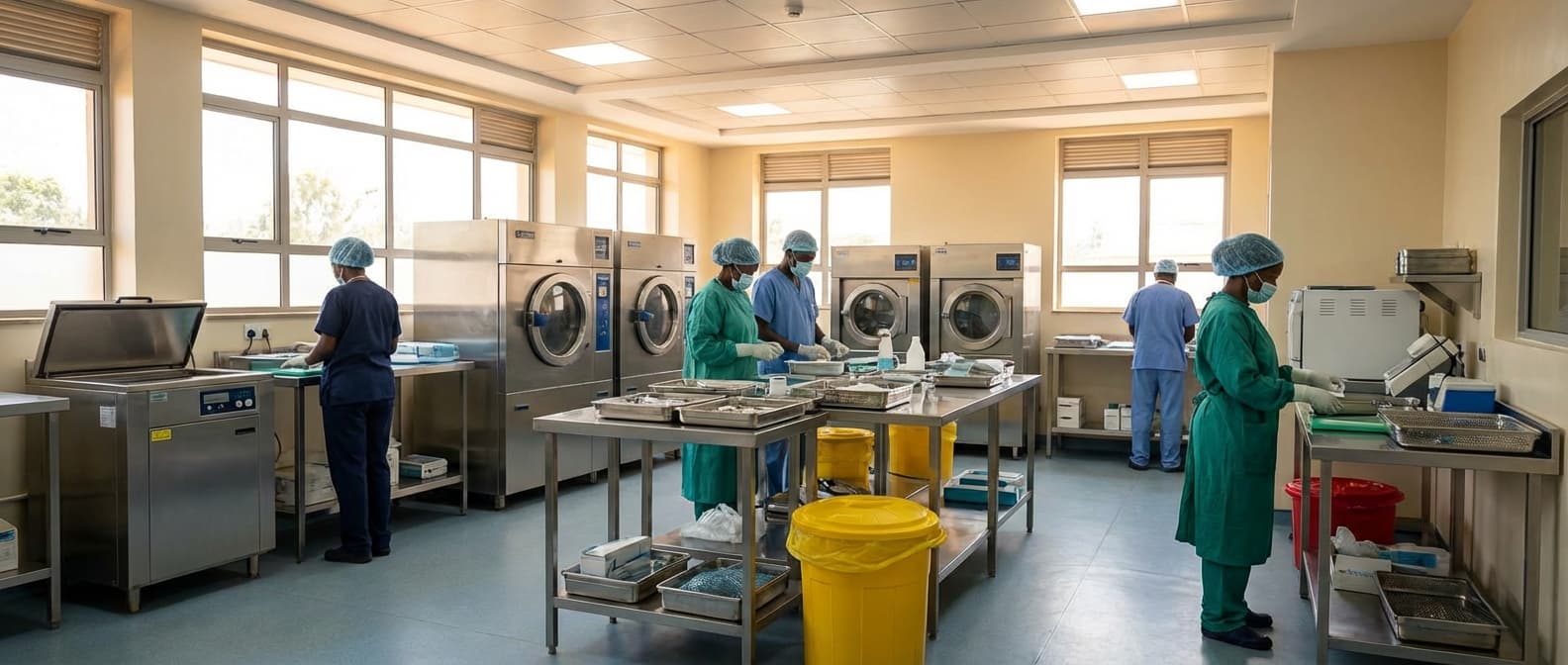
Autoclave Validation Support Service in Cameroon
Engineering Excellence & Technical Support
Autoclave Validation Support Service High-standard technical execution following OEM protocols and local regulatory frameworks.
Comprehensive Sterilization Cycle Verification
Our service provides rigorous validation of autoclave sterilization cycles, ensuring effective microbial inactivation and compliance with international standards. We employ meticulous testing methodologies, including biological and chemical indicators, to confirm cycle efficacy and document results for regulatory submission.
Regulatory Compliance & Risk Mitigation
Navigate Cameroon's evolving healthcare regulations with confidence. We offer expert guidance and validation services to ensure your autoclaves meet all necessary compliance requirements, minimizing the risk of non-compliance, product recalls, and patient safety concerns.
Process Optimization & Equipment Performance
Go beyond basic validation. We analyze your autoclave's performance to identify potential inefficiencies and recommend optimizations for enhanced throughput, reduced downtime, and extended equipment lifespan. Our goal is to ensure your sterilization processes are both reliable and cost-effective.
What Is Autoclave Validation Support Service In Cameroon?
Autoclave validation support services in Cameroon are specialized consulting and technical assistance offerings designed to ensure that steam sterilizers (autoclaves) operate effectively and consistently meet established efficacy standards for microbial inactivation. This service is critical for organizations that rely on autoclaves for sterilization of medical devices, laboratory equipment, pharmaceutical products, and other critical materials. The core objective is to provide documented evidence that the sterilization process consistently achieves the required Sterility Assurance Level (SAL) and eliminates viable microorganisms, thereby preventing healthcare-associated infections (HAIs) and ensuring product safety and regulatory compliance.
| Entity/Industry | Reason for Needing Service | Typical Use Cases |
|---|---|---|
| Hospitals and Clinics | Ensuring patient safety by sterilizing surgical instruments, medical devices, and reusable personal protective equipment (PPE) to prevent HAIs. | Sterilization of scalpels, forceps, endoscopes, dressings, and other patient-care items. |
| Dental Practices | Sterilization of dental instruments and equipment to maintain oral hygiene and prevent disease transmission. | Autoclaving of dental drills, explorers, mirrors, and probes. |
| Pharmaceutical Manufacturers | Sterilization of raw materials, packaging components, and finished products where thermal sterilization is applicable, ensuring product sterility and shelf-life. | Sterilization of vials, stoppers, syringes, and certain bulk drug substances. |
| Diagnostic Laboratories (Medical and Research) | Sterilization of laboratory glassware, media, instruments, and biohazardous waste to prevent contamination and ensure accurate experimental results. | Autoclaving of Petri dishes, test tubes, culture media, and laboratory equipment. |
| Veterinary Clinics | Sterilization of surgical instruments and equipment for animal healthcare. | Sterilizing instruments for animal surgery and routine procedures. |
| Research Institutions | Sterilization of laboratory equipment and waste in various scientific disciplines, including biology, chemistry, and environmental science. | Autoclaving of cell culture equipment, fermentation vessels, and research-related waste. |
| Cosmetic and Beauty Industry | Sterilization of tools and equipment used in procedures such as tattooing, piercing, and certain aesthetic treatments. | Autoclaving of needles, tweezers, and other reusable application tools. |
Key Components of Autoclave Validation Support Services:
- Installation Qualification (IQ): Verifies that the autoclave is installed according to manufacturer specifications and relevant industry standards, including checks on utilities (steam, water, power) and environmental conditions.
- Operational Qualification (OQ): Demonstrates that the autoclave operates within pre-defined parameters during normal and worst-case conditions. This involves testing critical process variables such as temperature, pressure, and time across the chamber.
- Performance Qualification (PQ): The most crucial phase, involving the use of biological indicators (BIs) and chemical indicators (CIs) to prove the autoclave's ability to achieve a specified SAL under actual operating conditions and with representative loads. This phase may also include cycle development and optimization.
- Revalidation and Calibration Services: Periodic revalidation is essential to confirm continued performance after repairs, modifications, or at predetermined intervals. Calibration of monitoring instruments is also a component.
- Documentation and Reporting: Comprehensive generation of validation protocols, reports, and certificates of compliance, adhering to Good Manufacturing Practices (GMP), Good Laboratory Practices (GLP), and relevant regulatory body requirements (e.g., Ministry of Public Health guidelines).
- Training and Consultancy: Providing expert advice on best practices, troubleshooting, and regulatory expectations related to sterilization processes.
- Cycle Development and Optimization: Assisting clients in designing, validating, and refining sterilization cycles for specific products and loads to maximize efficacy and efficiency.
Who Needs Autoclave Validation Support Service In Cameroon?
Autoclave validation is a critical process for ensuring the efficacy and safety of sterilization procedures in various healthcare and research settings. In Cameroon, like elsewhere, the need for reliable autoclave validation support services is paramount for organizations that rely on sterile equipment to prevent infections and ensure accurate experimental results. This service guarantees that autoclaves are functioning according to stringent standards, thus safeguarding patient health and the integrity of research.
| Target Customer/Department | Why Autoclave Validation is Crucial | Key Departments Involved |
|---|---|---|
| Hospitals (Public & Private) | Ensuring the sterility of surgical instruments, linens, and other medical supplies to prevent healthcare-associated infections (HAIs). Compliance with national and international healthcare regulations. | Surgical Wards, Intensive Care Units (ICUs), Operating Theaters, Central Sterile Supply Departments (CSSDs), Infection Control Departments. |
| Clinics & Diagnostic Laboratories | Sterilizing laboratory equipment, glassware, and culture media to prevent contamination and ensure accurate diagnostic results. Maintaining biosafety standards. | Laboratory Services, Microbiology Departments, Pathology Departments, Blood Banks. |
| Research Institutions & Universities | Sterilizing research equipment, consumables, and waste to maintain experimental integrity, prevent cross-contamination, and ensure researcher safety. Compliance with biosafety protocols. | Biology Departments, Chemistry Departments, Medical Research Units, Veterinary Research Centers. |
| Pharmaceutical Manufacturing | Sterilizing equipment, packaging materials, and production environments for sterile drug manufacturing. Ensuring product safety and efficacy. Meeting Good Manufacturing Practices (GMP) requirements. | Quality Control (QC) Department, Quality Assurance (QA) Department, Production Department, Sterile Manufacturing Units. |
| Dental Practices | Sterilizing dental instruments to prevent the transmission of infectious diseases among patients and dental staff. Adherence to dental hygiene standards. | Dental Clinics. |
| Veterinary Clinics | Sterilizing surgical instruments and equipment for animal care to prevent the spread of zoonotic diseases and ensure patient safety. | Veterinary Hospitals, Animal Clinics. |
| Central Sterile Supply Departments (CSSDs) | The core unit responsible for the reprocessing and sterilization of reusable medical devices. Autoclave validation is fundamental to their operation. | CSSD Staff, Biomedical Engineers. |
Target Customers and Departments Requiring Autoclave Validation Support in Cameroon
- Hospitals (public and private)
- Clinics and Diagnostic Laboratories
- Research Institutions and Universities
- Pharmaceutical Manufacturing Facilities
- Dental Practices
- Veterinary Clinics
- Central Sterile Supply Departments (CSSDs)
Autoclave Validation Support Service Process In Cameroon
This document outlines the typical workflow for Autoclave Validation Support Services in Cameroon, from initial client inquiry to the successful execution and reporting of validation activities. The process is designed to ensure compliance with relevant standards and regulations, providing clients with confidence in the performance and reliability of their autoclaves.
| Stage | Description | Key Activities | Deliverables/Outcomes | Responsible Parties |
|---|---|---|---|---|
| The client initiates contact to express interest in autoclave validation services. | Initial discussion of client's needs, autoclave type, size, usage, and regulatory requirements. Gathering preliminary information. | Understanding of client's validation scope and objectives. Identification of key stakeholders. | Client, Service Provider (Sales/Technical Representative) |
| Based on the needs assessment, a detailed proposal and quotation are prepared and submitted to the client. | Defining validation protocols (e.g., Installation Qualification (IQ), Operational Qualification (OQ), Performance Qualification (PQ)). Outlining scope of work, methodology, timeline, and cost. | Comprehensive Service Proposal, Detailed Quotation, Proposed Validation Plan (draft). | Service Provider (Technical/Sales Team), Client (Review & Approval) |
| Upon client acceptance of the proposal, a formal contract is established and the validation schedule is confirmed. | Contract negotiation and signing. Agreement on validation dates, site access, and personnel availability. Pre-validation communication. | Signed Service Contract, Agreed Validation Schedule, Confirmed On-site Team and Equipment. | Client (Legal/Procurement), Service Provider (Contracts/Project Management) |
| Both the client and the service provider undertake preparatory activities before the on-site visit. | Client: Ensuring autoclave is operational, clean, and accessible. Providing relevant documentation (manuals, maintenance logs). Service Provider: Preparing validation kits, calibration records, and personnel. | Readiness of Autoclave and Facility for Validation. Availability of all necessary validation materials. | Client (Maintenance/Biomedical Eng.), Service Provider (Validation Team) |
| The validation team conducts the planned validation activities on-site at the client's facility. | Performing IQ (verifying installation and configuration), OQ (testing operational parameters), and PQ (challenging the autoclave with biological indicators or load studies) according to the agreed protocol. | Raw validation data, completed checklists, observed deviations (if any), photographic evidence. | Service Provider (Validation Engineers/Technicians), Client (Observer/Assisted) |
| Collected data is meticulously analyzed to determine if the autoclave meets validation criteria. A comprehensive report is generated. | Reviewing all raw data. Performing statistical analysis. Comparing results against acceptance criteria. Documenting findings, conclusions, and recommendations. Preparing the validation report. | Comprehensive Autoclave Validation Report (including IQ, OQ, PQ results, analysis, and conclusions). | Service Provider (Validation Engineers/Report Writers) |
| Following report delivery, the service provider offers support and addresses any queries. | Presenting the final report to the client. Discussing report findings and recommendations. Providing guidance on corrective actions if necessary. Offering ongoing support or re-validation planning. | Client understanding and acceptance of the validation report. Resolution of any outstanding queries. Potential for future service agreements. | Service Provider (Project Manager/Technical Lead), Client (Management/Users) |
Autoclave Validation Support Service Workflow in Cameroon
- Inquiry & Needs Assessment
- Proposal & Quotation
- Contract & Scheduling
- Pre-Validation Preparation
- On-site Validation Execution
- Data Analysis & Reporting
- Post-Validation Support & Follow-up
Autoclave Validation Support Service Cost In Cameroon
The cost of autoclave validation support services in Cameroon can vary significantly depending on several key factors. These factors influence the pricing structure, making it essential for organizations to obtain detailed quotes for their specific needs. Understanding these drivers will help in budgeting and selecting the most appropriate service provider.
| Service Component | Estimated Cost Range (XAF) | Notes |
|---|---|---|
| Initial Installation Qualification (IQ) & Operational Qualification (OQ) per Autoclave | 400,000 - 800,000 | Covers verification of installation, functionality, and critical parameters. Varies by autoclave complexity. |
| Routine Performance Qualification (PQ) per Autoclave (e.g., Annually) | 250,000 - 500,000 | Assesses consistent performance over cycles. Frequency dictated by regulatory requirements and internal quality policies. |
| Calibration of Validation Instruments (if not included) | 50,000 - 150,000 | Cost depends on the number and type of instruments calibrated. Often a prerequisite for validation. |
| Travel & Accommodation (per technician, per day, outside major cities) | 30,000 - 70,000 | Variable based on location and service provider's travel policies. |
| Documentation & Reporting | Included in validation cost, but complex reports may incur extra. | Standard reports are usually part of the package. Customization adds cost. |
| Emergency/Rush Service Surcharge | 10% - 25% of base service cost | Applies to requests outside of standard scheduling. |
Key Factors Influencing Autoclave Validation Support Service Costs in Cameroon
- Type of Validation Required: Routine performance qualification (PQ) is generally less expensive than initial installation qualification (IQ) and operational qualification (OQ). IQ verifies proper installation, OQ tests functional parameters, and PQ confirms consistent performance over time.
- Number and Size of Autoclaves: A higher number of units or larger capacity autoclaves will naturally increase the cost due to the increased scope of work, calibration requirements, and testing procedures.
- Complexity of Autoclave System: Advanced autoclave systems with sophisticated control mechanisms, multiple sterilization cycles, or specialized functionalities may command higher validation costs due to the need for more specialized expertise and equipment.
- Geographic Location within Cameroon: Travel and accommodation expenses for the validation team can impact the overall cost, especially for remote or less accessible regions. Major cities like Douala and Yaoundé might have a slightly different pricing structure compared to rural areas.
- Service Provider's Expertise and Reputation: Established and experienced validation service providers with a proven track record and certifications often charge premium rates for their specialized knowledge and quality assurance.
- Scope of Services: Whether the service includes only validation, or also extended support, troubleshooting, maintenance recommendations, or documentation assistance, will affect the price.
- Frequency of Validation: While not directly a cost factor for a single service, the cumulative cost of regular, mandated validation cycles over time is a consideration.
- Urgency of Service: Rush or emergency validation services may incur additional fees.
- Calibration of Measuring Instruments: The cost of calibrating the validation instruments used (e.g., temperature probes, pressure gauges) is often factored into the service price or billed separately.
Affordable Autoclave Validation Support Service Options
Navigating the complexities of autoclave validation can be a significant undertaking for healthcare facilities, laboratories, and manufacturing sites. Ensuring your sterilization equipment is functioning optimally and meeting regulatory standards is paramount. Fortunately, there are affordable autoclave validation support service options available that can help manage costs without compromising quality. This guide explores how value bundles and strategic cost-saving measures can make professional validation accessible and efficient.
| Service Offering | Description | Value Proposition for Affordability | Typical Cost Considerations |
|---|---|---|---|
| On-Demand Validation Services | Project-based validation performed by external specialists when needed. Offers flexibility for facilities with infrequent validation requirements. | Pay only for services used, avoiding fixed overhead. Can be cost-effective for smaller operations or those with a limited number of autoclaves. | Hourly rates or per-validation fees. Travel expenses may apply. |
| Annual Maintenance & Validation Packages | Bundles that combine scheduled preventative maintenance with routine validation cycles (e.g., annual OQ/PQ). | Often provide a discount compared to purchasing services separately. Ensures proactive maintenance, reducing breakdown costs and unplanned validation needs. | Annual contract fees, often tiered based on autoclave size and number. May include discounted rates for additional services. |
| Multi-Site Validation Agreements | For organizations with multiple locations, these agreements can offer consolidated pricing and streamlined scheduling. | Leverages volume for better negotiation. Standardized protocols across sites can reduce complexity and cost. | Volume-based discounts, fixed annual fees per site, or per-validation pricing with aggregate volume considerations. |
| Remote Monitoring & Consultation | Leveraging technology for remote data analysis, trend monitoring, and expert consultation. This can reduce the need for on-site visits for routine checks. | Minimizes travel costs and technician time. Enables proactive identification of potential issues before they require extensive on-site intervention. | Subscription-based fees, per-consultation rates, or bundled with other service plans. |
| Training & Knowledge Transfer Programs | Empowering in-house staff with the knowledge and skills to perform certain aspects of validation or to better understand validation reports and requirements. | Reduces reliance on external services for basic tasks or initial troubleshooting. Improves internal understanding and compliance. | Per-attendee training fees, customized workshop costs, or bundled with software solutions. |
Understanding Autoclave Validation Service Options:
- {"title":"What is Autoclave Validation?","description":"Autoclave validation is a documented process that provides a high degree of assurance that a specific process (in this case, sterilization using an autoclave) will consistently produce a result meeting pre-determined specifications and quality attributes. It typically involves Installation Qualification (IQ), Operational Qualification (OQ), and Performance Qualification (PQ)."}
- {"title":"Why is Validation Crucial?","description":"Regulatory compliance (FDA, ISO, CAP, etc.), patient safety, product integrity, and operational efficiency are all directly impacted by proper autoclave validation. Failure to validate can lead to costly recalls, regulatory fines, and potential harm."}
- {"title":"Common Autoclave Validation Components:","description":"IQ (Installation Qualification): Verifies that the autoclave is installed correctly according to manufacturer specifications. OQ (Operational Qualification): Tests the autoclave's functionality across its operational range. PQ (Performance Qualification): Confirms that the autoclave consistently sterilizes loads under normal operating conditions, typically using biological indicators (BIs) or chemical indicators (CIs)."}
Verified Providers In Cameroon
In Cameroon's evolving healthcare landscape, identifying verified and reputable providers is crucial for ensuring quality care and peace of mind. Franance Health stands out as a beacon of trust, offering a comprehensive network of credentialed healthcare professionals and facilities. This dedication to rigorous verification processes underscores their commitment to patient safety and optimal health outcomes. Choosing Franance Health means opting for a healthcare experience characterized by expertise, reliability, and a patient-centric approach.
| Provider Type | Key Verification Criteria | Franance Health Assurance |
|---|---|---|
| Doctors | Medical degree, specialization certification, licensing by the Cameroonian Ministry of Public Health, no disciplinary actions, proven experience. | Franance Health verifies all listed qualifications and maintains a history of positive patient outcomes and reviews for each affiliated physician. |
| Hospitals & Clinics | Facility licensing, adherence to safety and hygiene standards, availability of essential equipment and services, qualified medical staff, emergency preparedness. | Franance Health conducts on-site assessments and reviews accreditation reports to ensure partner facilities meet our high standards for quality and safety. |
| Specialist Centers (e.g., Cardiology, Oncology) | Advanced technology, specialized training of medical personnel, established protocols for complex conditions, interdisciplinary team collaboration. | Franance Health partners with centers demonstrating expertise in their specialty, equipped with state-of-the-art technology and led by highly experienced specialists. |
| Diagnostic Laboratories | Accreditation by relevant authorities, use of validated testing methods, qualified laboratory technicians, robust quality control procedures. | Franance Health ensures all affiliated labs are accredited and utilize advanced diagnostic tools with strict quality assurance measures for accurate results. |
| Pharmacies | Licensing by the Ministry of Public Health, proper storage of medications, availability of licensed pharmacists, adherence to dispensing regulations. | Franance Health partners with pharmacies that demonstrate integrity, professionalism, and a commitment to providing safe and authentic medications. |
Why Franance Health Represents the Best Choice for Verified Providers in Cameroon:
- Rigorous Credentialing Process: Franance Health employs a multi-faceted vetting system for all its affiliated providers, ensuring they meet stringent educational, professional, and ethical standards.
- Board Certification and Specialization: Emphasis is placed on partnering with specialists who hold recognized board certifications, guaranteeing in-depth knowledge and advanced skills in their respective fields.
- Continuous Professional Development: Franance Health encourages and supports ongoing training and education for its network, ensuring providers remain at the forefront of medical advancements.
- Patient Feedback and Performance Monitoring: A robust system for collecting and analyzing patient feedback, alongside regular performance reviews, helps maintain high service quality and identify areas for improvement.
- Accreditation and Compliance: All Franance Health facilities and partner institutions undergo regular accreditation checks and adhere to national and international healthcare regulations.
- Ethical Practice and Patient Rights: Providers are held to the highest ethical standards, prioritizing patient confidentiality, informed consent, and a compassionate approach to care.
- Accessibility and Transparency: Franance Health strives to make verified healthcare accessible, providing clear information about provider qualifications and services.
Scope Of Work For Autoclave Validation Support Service
This Scope of Work (SOW) outlines the services to be provided for Autoclave Validation Support. The objective is to ensure the consistent and effective sterilization of materials through a comprehensive validation process, adhering to relevant industry standards and regulatory requirements. This service includes the development of validation protocols, execution of validation cycles, data analysis, and the generation of a final validation report. Technical deliverables will be in accordance with specified standards, and standard specifications will guide the validation process.
| Deliverable/Task | Description | Standard/Specification Reference | Format |
|---|---|---|---|
| Autoclave Validation Protocol | Document outlining the Installation Qualification (IQ), Operational Qualification (OQ), and Performance Qualification (PQ) procedures, including acceptance criteria. | ANSI/AAMI ST46, FDA 21 CFR Part 11, ISO 17665-1 | |
| Raw Validation Data Logs | Detailed records of temperature, pressure, and time measurements obtained during validation cycles, including any deviations. | Manufacturer's specifications, Protocol defined parameters | Electronic Spreadsheet (e.g., Excel), Scanned copies of log sheets |
| Validation Cycle Reports | Summaries of each validation cycle, clearly indicating whether the cycle met the defined acceptance criteria. Includes biological indicator results. | Protocol defined acceptance criteria, Biological Indicator Manufacturer's instructions | |
| Calibration Certificates for Validation Equipment | Certificates demonstrating that all equipment used for data acquisition (e.g., temperature probes, pressure transducers) is calibrated and traceable to national standards. | ISO/IEC 17025, ANSI/NCSL Z540-1 | |
| Final Autoclave Validation Report | A comprehensive report summarizing the validation activities, results, deviations (if any), conclusions, and recommendations for ongoing monitoring and revalidation. | ANSI/AAMI ST46, FDA 21 CFR Part 11, ISO 17665-1 | |
| Installation Qualification (IQ) | Verification that the autoclave is installed and configured according to manufacturer's specifications and user requirements. | Manufacturer's Installation Manual, Protocol defined parameters | Part of the Final Validation Report |
| Operational Qualification (OQ) | Verification that the autoclave operates within its specified limits across its operating range, including tests for alarm functions and critical parameters. | Manufacturer's Operating Manual, Protocol defined parameters | Part of the Final Validation Report |
| Performance Qualification (PQ) | Verification that the autoclave consistently sterilizes loads effectively under defined operating conditions, typically involving multiple cycles with representative loads and biological indicators. | ANSI/AAMI ST46, ISO 17665-1, Protocol defined parameters | Part of the Final Validation Report |
Technical Deliverables
- Autoclave Validation Protocol (IQ, OQ, PQ)
- Raw Validation Data Logs (Temperature, Pressure, Time)
- Validation Cycle Reports (Pass/Fail for each run)
- Calibration Certificates for Validation Equipment
- Final Autoclave Validation Report
Service Level Agreement For Autoclave Validation Support Service
This Service Level Agreement (SLA) outlines the response times and uptime guarantees for the Autoclave Validation Support Service provided by [Your Company Name]. This SLA is intended to ensure consistent and reliable support for your autoclave validation processes.
| Service Level | Response Time Guarantee | Uptime Guarantee (for remote access to support portal/tools) |
|---|---|---|
Scope of Service
- Remote technical support for autoclave validation software and hardware.
- Troubleshooting and issue resolution.
- Guidance on best practices for autoclave validation.
- Assistance with report generation and data analysis.
Frequently Asked Questions

Ready when you are
Let's scope your Autoclave Validation Support Service in Cameroon project in Cameroon.

Scaling healthcare logistics and technical systems across the entire continent.