
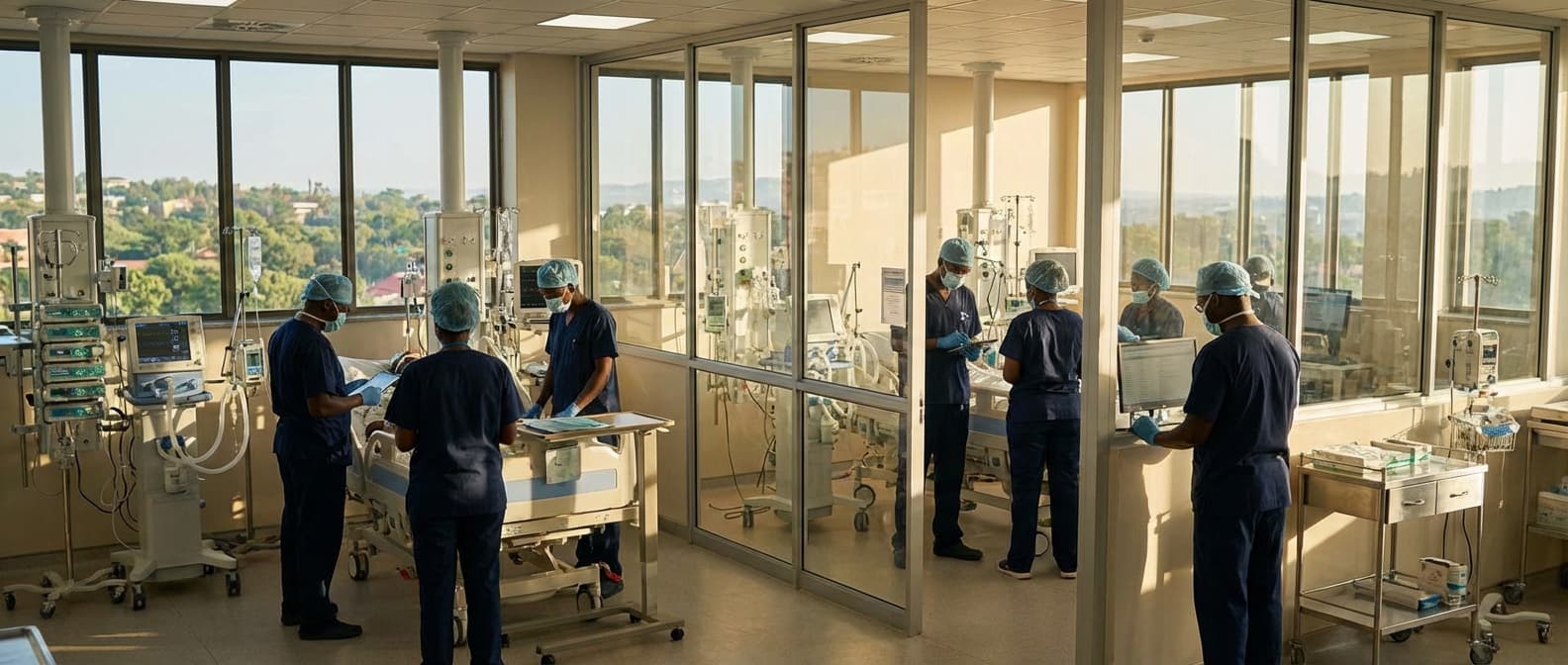
Ventilator Fleet Management & PM in Cameroon
Engineering Excellence & Technical Support
Preventive maintenance and fleet management for ICU ventilators High-standard technical execution following OEM protocols and local regulatory frameworks.
Streamlined Device Deployment & Tracking
Leveraging real-time GPS and IoT sensors, we provide comprehensive visibility into the location and operational status of every ventilator in the national fleet, enabling rapid deployment to critical care zones and minimizing downtime due to misplacement or emergency needs.
Predictive Maintenance & Remote Diagnostics
Our advanced AI-powered platform analyzes usage patterns and sensor data to predict potential equipment failures. This allows for proactive maintenance scheduling, reducing unexpected breakdowns and ensuring optimal ventilator performance, especially in resource-constrained environments.
Centralized Inventory & Service Management
We offer a robust, cloud-based system for managing the entire ventilator lifecycle, from procurement and distribution to maintenance scheduling and repair history. This ensures efficient resource allocation, optimized spare parts inventory, and improved response times for technical support across all healthcare facilities in Cameroon.
What Is Ventilator Fleet Management & Pm In Cameroon?
Ventilator Fleet Management & Preventive Maintenance (PM) in Cameroon refers to the comprehensive operational and upkeep strategy for mechanical ventilators utilized within healthcare facilities across the nation. This service encompasses a range of activities designed to ensure the optimal functionality, reliability, and safety of these critical life-support devices. It involves proactive scheduling and execution of maintenance tasks, calibration, performance verification, and inventory control, all aimed at minimizing downtime and maximizing the effective lifespan of the equipment. The overarching goal is to guarantee that ventilators are consistently available and perform to specified standards, particularly crucial in critical care settings where their failure can have immediate and severe consequences.
| Stakeholder Group | Need for Ventilator Fleet Management & PM | Typical Use Cases |
|---|---|---|
| Public Hospitals (e.g., Regional Hospitals, University Teaching Hospitals) | Ensuring availability of critical equipment for a large patient population, managing limited budgets for capital expenditure and maintenance, meeting national health service mandates. | Management of ventilators in Intensive Care Units (ICUs), Emergency Departments (EDs), Operating Rooms (ORs), and Respiratory Care Units. Support for routine surgical procedures, emergency interventions, and management of chronic respiratory conditions. |
| Private Hospitals & Clinics | Maintaining high standards of patient care, ensuring equipment uptime for revenue generation, managing specialized equipment for elective procedures and critical care. | Similar to public hospitals, with a focus on specialized critical care services, advanced ventilation modes, and management of complex patient cases. |
| Ministry of Public Health (MoPH) & Regional Health Directorates | Ensuring equitable access to functional medical equipment across the country, implementing national health policies, managing national medical equipment inventories, and facilitating procurement and maintenance frameworks. | Overseeing national ventilator procurement, allocation, and maintenance strategies. Monitoring equipment status in various health districts, responding to public health emergencies, and developing national guidelines for medical device management. |
| Non-Governmental Organizations (NGOs) & International Aid Organizations | Providing essential medical equipment and support to underserved areas, ensuring the sustainability of donated equipment, and facilitating capacity building for local healthcare providers. | Supporting the deployment and maintenance of ventilators in remote or resource-limited settings, often in collaboration with local MoPH structures. Providing training and technical assistance for local personnel. |
| Biomedical Engineering Departments & Third-Party Service Providers | Implementing and executing the technical aspects of maintenance, repair, and calibration; ensuring compliance with technical specifications and regulatory requirements; providing specialized technical expertise. | Performing scheduled PM, unscheduled repairs, and calibration of ventilators. Developing and managing maintenance contracts. Providing technical support and training to hospital staff. |
Key Components of Ventilator Fleet Management & PM in Cameroon
- Procurement & Inventory Management: Establishing standardized acquisition processes, maintaining accurate records of all ventilator units, including serial numbers, purchase dates, and service history.
- Installation & Commissioning: Ensuring proper installation and initial setup of new ventilators by qualified technicians, followed by rigorous testing and calibration against manufacturer specifications.
- Preventive Maintenance (PM): Implementing a scheduled program of routine inspections, cleaning, lubrication, filter replacement, battery checks, and functional testing based on manufacturer recommendations and usage patterns.
- Corrective Maintenance & Repair: Prompt diagnosis and repair of equipment malfunctions or failures, involving troubleshooting, component replacement, and post-repair verification.
- Calibration & Performance Verification: Regular calibration of sensors and delivery systems to ensure accurate ventilation parameters (e.g., tidal volume, respiratory rate, PEEP, FiO2) are delivered.
- End-of-Life Management: Planning for the decommissioning, disposal, or refurbishment of aging or obsolete ventilator units in compliance with relevant regulations.
- Training & Competency Assurance: Providing training for biomedical engineers, technicians, and clinical staff on the proper operation, basic troubleshooting, and maintenance of specific ventilator models.
- Documentation & Record Keeping: Maintaining detailed logs of all maintenance activities, repairs, calibrations, and user feedback for each unit, crucial for compliance, trend analysis, and quality improvement.
- Quality Assurance & Compliance: Adhering to national and international standards (e.g., ISO 13485, local Ministry of Health guidelines) for medical device maintenance and safety.
Who Needs Ventilator Fleet Management & Pm In Cameroon?
Ventilator fleet management and preventative maintenance (PM) are crucial for ensuring the consistent availability and optimal functioning of these life-saving medical devices. In Cameroon, where healthcare infrastructure can face challenges, a robust program for managing ventilators is not just beneficial but essential. This program addresses the need to maintain a ready supply of operational ventilators for routine care, emergencies, and public health crises, thereby improving patient outcomes and reducing mortality rates.
| Customer/Department | Key Needs & Benefits | Specific Responsibilities/Interests |
|---|---|---|
| Public Hospitals (e.g., Laquintinie Hospital, Yaoundé General Hospital) | Ensuring ventilator availability for critical care units (ICU, Emergency Rooms), reduced repair costs, extended equipment lifespan, improved patient safety. | Routine checks, scheduled PM, inventory management, training of biomedical technicians, prompt repair response, spare parts management. |
| Private Hospitals & Clinics (e.g., Hôpital de la Chantal, Clinique La Source) | Maximizing ROI on expensive equipment, maintaining high service standards, avoiding reputational damage from equipment failure. | Contracting for PM services, internal maintenance protocols, asset tracking, training for in-house staff. |
| Missionary/NGO Hospitals (e.g., Hôpital Baptiste Biblique, various rural clinics) | Reliable access to critical equipment in resource-limited settings, continuity of care, operational efficiency despite budget constraints. | Securing funding for maintenance, seeking partnerships for PM, basic troubleshooting and maintenance training. |
| Emergency Medical Services (EMS) | Ensuring ventilators are always ready for deployment in ambulances and during emergencies, swift response times. | Pre-trip checks, regular servicing, portable ventilator maintenance, battery management. |
| Ministry of Health (MoH), Cameroon | National health security, epidemic/pandemic preparedness, equitable distribution of functional equipment, data for planning and resource allocation. | Developing national guidelines for ventilator management, funding PM programs, establishing central repair hubs, monitoring equipment status, strategic procurement. |
| **National Disaster Management Organization (e.g., CONGEL) | Rapid deployment of operational ventilators during public health emergencies, surge capacity planning. | Identifying and verifying the availability of functional ventilators, coordinating logistics for deployment, requesting maintenance support. |
| Biomedical Engineering Departments/Units | Effective execution of PM, efficient repair services, troubleshooting, calibration, and validation of ventilators. | Performing scheduled maintenance, responding to repair requests, maintaining spare parts inventory, keeping detailed service records, training junior technicians. |
Target Customers and Departments for Ventilator Fleet Management & PM in Cameroon
- Public Hospitals: These are the primary beneficiaries, encompassing national, regional, and district hospitals that serve the majority of the population.
- Private Hospitals and Clinics: While often better resourced, these facilities still benefit from systematic management to ensure equipment longevity and reduce unexpected downtime.
- Missionary and Non-Governmental Organization (NGO) Hospitals: These institutions often provide critical healthcare services in underserved areas and rely heavily on reliable equipment.
- Emergency Medical Services (EMS) and Ambulance Services: Ensuring ventilators are operational in ambulances is vital for immediate patient care during transport.
- Ministries of Health (MoH) and Public Health Agencies: These governmental bodies are responsible for national health policy, resource allocation, and disaster preparedness, making them key stakeholders.
- National Disaster Management Organizations: In times of epidemics, pandemics, or natural disasters, these organizations will heavily rely on the availability of functional ventilators.
- Medical Equipment Procurement and Maintenance Agencies: Departments responsible for acquiring and maintaining medical equipment across various public health facilities.
Ventilator Fleet Management & Pm Process In Cameroon
This document outlines the standard workflow for managing ventilator fleet and preventive maintenance (PM) processes within healthcare facilities in Cameroon, from initial inquiry to completed execution. It details the steps involved in requesting services, scheduling, performing the maintenance, and documenting the outcome.
| Stage | Description | Key Activities | Responsible Parties | Deliverables/Outcomes |
|---|---|---|---|---|
| Inquiry & Request | The initial stage where a need for ventilator service or PM is identified and formally communicated. | Identification of a need (e.g., scheduled PM, equipment malfunction, relocation). Submission of a formal request to the Biomedical Engineering Department or designated fleet manager. Provision of initial details: ventilator model, serial number, location, nature of request. | Clinical Staff (Nurses, Doctors), Department Heads, Biomedical Engineering Technician/Manager | Formal service request form, Initial request logged in the system. |
| Assessment & Planning | Evaluating the request, determining the scope of work, and planning the necessary resources. | Reviewing the request and associated equipment history. Conducting a preliminary assessment (if needed, for malfunctions). Defining the specific PM tasks or repair procedures. Identifying required parts, tools, and consumables. Estimating time and labor requirements. | Biomedical Engineering Technician/Manager, Clinical Staff (for clarification) | Scope of work document, Parts and tools list, Estimated time and cost (if applicable). |
| Scheduling & Resource Allocation | Assigning a technician, securing necessary parts, and scheduling the service appointment. | Prioritizing the request based on urgency and impact. Assigning a qualified Biomedical Engineering Technician. Procuring or confirming availability of required parts and consumables. Scheduling the maintenance appointment with the requesting department, aiming for minimal disruption to patient care. | Biomedical Engineering Manager, Procurement Department, Clinical Department | Scheduled appointment date and time, Assigned technician, Confirmed parts availability. |
| Preventive Maintenance Execution | The actual performance of the scheduled maintenance tasks on the ventilator. | Following the manufacturer's recommended PM checklist. Performing cleaning, lubrication, and calibration. Inspecting all components for wear and tear. Replacing worn or expired parts as per the PM protocol. Ensuring the ventilator is clean and safe for patient use. | Biomedical Engineering Technician | Completed PM checklist, Replaced parts documented. |
| Testing & Verification | Ensuring the ventilator is functioning correctly and safely after maintenance. | Performing operational checks and functional tests. Verifying alarm functions and safety features. Conducting performance tests to ensure parameters are within specifications. Involving clinical staff in a brief verification of functionality if possible. | Biomedical Engineering Technician, Clinical Staff (optional) | Pass/fail status on functional tests, Verification sign-off. |
| Documentation & Reporting | Recording all activities, findings, and outcomes of the maintenance process. | Completing the service report, including:
| Biomedical Engineering Technician, Biomedical Engineering Manager | Signed and dated service report, Updated equipment maintenance log/database. |
| Follow-up & Feedback | Ensuring the patient care continues without issue and gathering feedback on the service. | Monitoring the ventilator's performance post-maintenance (if issues were noted). Addressing any immediate follow-up questions from the clinical team. Seeking feedback on the service provided (if a formal feedback mechanism exists). Analyzing trends in maintenance requests and equipment performance for proactive interventions. | Biomedical Engineering Manager, Clinical Staff | Confirmation of continued satisfactory operation, Feedback data (if collected). |
Workflow Stages
- Inquiry & Request
- Assessment & Planning
- Scheduling & Resource Allocation
- Preventive Maintenance Execution
- Testing & Verification
- Documentation & Reporting
- Follow-up & Feedback
Ventilator Fleet Management & Pm Cost In Cameroon
Managing ventilator fleets in Cameroon involves a range of costs influenced by several factors. These include the type and age of ventilators, the complexity of the required maintenance, the availability of spare parts, the expertise of the maintenance technicians, and the service provider's operational costs. Preventive maintenance (PM) is crucial for ensuring the reliability and longevity of these vital medical devices, thereby reducing the likelihood of costly emergency repairs and patient care disruptions. The pricing for PM can vary significantly based on whether it's performed by the original equipment manufacturer (OEM), a third-party biomedical engineering company, or an in-house hospital maintenance team.
| Service Type | Estimated Cost Range (XAF per Ventilator per Year) | Notes |
|---|---|---|
| Basic Preventive Maintenance (e.g., annual check-up, calibration) | 50,000 - 150,000 | Covers essential functional checks and calibration. May not include significant part replacements. |
| Comprehensive Preventive Maintenance (including minor part replacement) | 150,000 - 400,000 | Includes in-depth diagnostics, replacement of common wear-and-tear parts (filters, batteries, seals), and firmware updates. |
| Full Service Contract (OEM, all-inclusive) | 300,000 - 800,000+ | Typically includes all PM, labor, and often parts for breakdowns. Response times are usually guaranteed. Highest cost bracket. |
| Third-Party Biomedical Service (comprehensive) | 100,000 - 350,000 | Offers competitive pricing. Quality and warranty can vary; important to vet providers. |
| Emergency Repair Call-out Fee | 30,000 - 100,000 (plus parts/labor) | Cost for a technician to visit a facility urgently. Actual repair cost is additional. |
| Major Component Replacement (e.g., compressor, circuit board) | 200,000 - 1,000,000+ (per component) | Cost varies greatly depending on the specific part and ventilator model. Often necessitates a full repair quote. |
Key Pricing Factors for Ventilator Fleet Management & PM in Cameroon
- Ventilator Type and Technology: Sophisticated, high-end ventilators (e.g., ICU ventilators) with advanced features will generally have higher PM costs than simpler transport ventilators.
- Ventilator Age and Condition: Older ventilators may require more frequent or extensive PM due to wear and tear, and parts may be more expensive or difficult to source.
- Scope of Preventive Maintenance: PM can range from basic cleaning and calibration to full system diagnostics, component replacement, and software updates. The more comprehensive the service, the higher the cost.
- Spare Parts Availability and Cost: The cost and ease of obtaining genuine OEM parts or reliable third-party alternatives are significant drivers of PM expenses. Import duties and local supply chain issues can impact this.
- Technician Expertise and Certification: Highly skilled and certified biomedical technicians command higher rates. Training and ongoing professional development also contribute to costs.
- Service Provider Model: OEM service contracts are often the most expensive but may offer guaranteed response times and genuine parts. Third-party providers can offer competitive pricing, while in-house teams have labor and training costs.
- Geographic Location and Logistics: Travel costs for technicians to remote areas or difficult-to-access facilities can increase the overall PM price.
- Contractual Agreements: Long-term service contracts may offer bulk discounts or bundled services, potentially reducing per-unit costs.
- Regulatory Compliance and Documentation: Ensuring PM meets national health regulations and provides proper documentation can add to administrative costs.
- Volume of Fleet: Larger fleets might benefit from economies of scale, leading to lower per-unit PM costs through negotiated contracts.
Affordable Ventilator Fleet Management & Pm Options
Efficiently managing a ventilator fleet is crucial for healthcare providers to ensure patient care while controlling operational costs. This involves proactive maintenance, strategic procurement, and optimized utilization. Affordable fleet management and preventative maintenance (PM) options focus on maximizing the lifespan of equipment, minimizing downtime, and leveraging technology for streamlined operations. Value bundles offer comprehensive solutions, while cost-saving strategies address various aspects of fleet ownership and maintenance.
| Value Bundle Type | Description | Key Cost-Saving Benefits |
|---|---|---|
| Comprehensive Service Agreements | Includes preventative maintenance, on-site repairs, parts, labor, and sometimes loaner equipment. Often offered by the manufacturer or third-party service providers. | Predictable maintenance costs, reduced downtime, extended equipment lifespan, access to specialized technicians, eliminates need for extensive in-house inventory. |
| Parts & Labor Packages | Focuses specifically on covering the cost of replacement parts and the labor required for maintenance and repairs. | Mitigates unexpected repair expenses, ensures access to genuine parts, potentially lower cost than full service agreements if internal expertise is high. |
| Technology Integration Bundles | Combines equipment with software solutions for asset tracking, remote monitoring, and data analytics. | Improved inventory management, proactive issue identification, optimized utilization, reduced administrative overhead, data for informed decision-making. |
| Extended Warranty Packages | Extends the standard manufacturer warranty beyond the initial period, covering repairs for a set duration. | Protection against unexpected repair costs after the initial warranty expires, budget predictability. |
| Managed Equipment Services (MES) | Outsourced management of the entire medical equipment lifecycle, including procurement, maintenance, and disposal. | Significant capital expenditure reduction, improved operational efficiency, access to latest technology, reduced risk and liability. |
Key Components of Affordable Ventilator Fleet Management & PM
- Predictive Maintenance: Utilizing data analytics to anticipate equipment failures before they occur.
- Remote Monitoring: Employing technology to track ventilator performance and status remotely.
- Standardized Equipment:** Simplifying training, parts inventory, and maintenance procedures by standardizing on a limited range of ventilator models.
- Extended Warranties & Service Contracts: Negotiating favorable terms for long-term support.
- Refurbished Equipment Options: Considering high-quality refurbished ventilators as a cost-effective alternative to new purchases.
- Data-Driven Utilization Analysis: Understanding usage patterns to optimize allocation and identify underutilized or overutilized equipment.
- Training Programs: Investing in comprehensive training for biomedical technicians to perform in-house maintenance where feasible.
Verified Providers In Cameroon
In Cameroon's healthcare landscape, ensuring access to reliable and qualified medical professionals is paramount. Verified providers, particularly those with credentials from esteemed institutions like Franance Health, stand out as the optimal choice for patient care. This document outlines why Franance Health credentials signify excellence and what to look for in verified healthcare providers in Cameroon.
| Credential Type | Description | Significance for Patients |
|---|---|---|
| Franance Health Medical Training Programs | Comprehensive courses in various medical specialties, focusing on evidence-based practices and practical skills. | Ensures providers possess up-to-date knowledge and hands-on experience, leading to more accurate diagnoses and effective treatments. |
| Franance Health Patient Care Certifications | Modules dedicated to patient communication, empathy, and ethical conduct in healthcare settings. | Guarantees providers prioritize patient well-being, fostering trust and a positive patient experience. |
| Franance Health Continuing Education Modules | Regular updates on new medical technologies, research findings, and therapeutic approaches. | Confirms providers are committed to lifelong learning and applying the latest advancements in patient care. |
| Franance Health Specialty Diplomas | Advanced qualifications in specific areas like cardiology, pediatrics, surgery, or mental health. | Indicates specialized expertise, making these providers the go-to choice for complex medical conditions within their domain. |
Key Indicators of Verified Healthcare Providers in Cameroon
- Official Registration with the Ministry of Public Health: All practicing healthcare professionals must be registered and licensed by the Cameroonian Ministry of Public Health.
- Membership in Professional Associations: Affiliation with recognized Cameroonian medical or nursing associations indicates adherence to professional standards and ethics.
- Specialized Certifications and Diplomas: Beyond basic qualifications, specialized training and certifications demonstrate expertise in specific medical fields.
- Continuing Professional Development (CPD): Providers actively engaged in ongoing education and training show a commitment to staying current with medical advancements.
- Reputation and Patient Testimonials: Positive feedback and strong recommendations from the community are invaluable indicators of quality care.
- Affiliation with Accredited Healthcare Facilities: Working within hospitals or clinics that meet national or international accreditation standards.
- Franance Health Credentials: Specific certifications and training programs offered by Franance Health, which are recognized for their rigorous standards and practical application.
Scope Of Work For Ventilator Fleet Management & Pm
This document outlines the Scope of Work (SOW) for comprehensive Ventilator Fleet Management and Preventive Maintenance (PM) services. It details the technical deliverables, standard specifications, and operational requirements to ensure the optimal performance, reliability, and safety of the organization's ventilator fleet. The objective is to minimize downtime, extend equipment lifespan, and maintain compliance with all relevant regulatory standards.
| Category | Technical Deliverable/Activity | Standard Specification/Requirement | Key Performance Indicators (KPIs) |
|---|---|---|---|
| Fleet Inventory Management | Comprehensive Ventilator Asset Register | Includes make, model, serial number, acquisition date, location, service history, current status, calibration due dates, warranty information. | 100% accuracy of asset register; real-time updates. |
| Preventive Maintenance (PM) | Scheduled PM Program Implementation | Adherence to manufacturer's recommended PM schedules and procedures; use of OEM or equivalent parts; documented pre-PM checks, cleaning, calibration, functional testing, and post-PM reports. | PM completion rate (target > 95%); PM deferral rate (target < 5%); compliance with manufacturer's recommended intervals (within +/- 10%). |
| Corrective Maintenance (CM) | Emergency and Scheduled Repair Services | Response time targets for critical vs. non-critical equipment; diagnosis and repair by certified technicians; use of approved parts; root cause analysis for recurring failures; documented repair reports. | Mean Time To Repair (MTTR) for critical equipment (target < X hours); Mean Time Between Failures (MTBF) for key ventilator models (trend improvement); first-time fix rate (target > 85%). |
| Calibration and Performance Verification | Regular Calibration and Performance Testing | Calibration traceable to national standards; performance verification against manufacturer specifications; use of calibrated test equipment; documented calibration certificates. | Calibration compliance rate (100%); accuracy within manufacturer's tolerance. |
| Parts Management | Spare Parts Inventory and Procurement | Maintain adequate stock of critical spare parts; establish vendor agreements for timely procurement; track parts usage and inventory levels; adherence to obsolescence management. | Stock-out rate for critical parts (target < X%); lead time for non-stocked critical parts (target < Y days). |
| Documentation and Reporting | Maintenance Records and Reporting System | Centralized digital maintenance management system (CMMS); detailed logs for all PM and CM activities; generation of monthly/quarterly/annual fleet performance reports, including KPIs, cost analysis, and trend data. | Timeliness and completeness of maintenance records; report generation accuracy; stakeholder satisfaction with reporting. |
| Quality Assurance | Quality Control and Audits | Internal quality audits of maintenance processes and documentation; participation in external audits; adherence to internal quality management system. | Number of non-conformities identified during audits (trend reduction); timely closure of corrective actions. |
| Training and Competency | Technician Training and Certification | Ensure all technicians are trained and certified on specific ventilator models managed; ongoing professional development; competency assessments. | Percentage of technicians certified on relevant models; completion of required training hours. |
| Compliance and Safety | Regulatory Compliance and Safety Protocols | Adherence to all applicable regulatory standards (e.g., FDA, HIPAA, local health regulations); implementation of safety protocols during maintenance; proper waste disposal of parts and consumables. | Zero regulatory non-compliance findings related to equipment maintenance; adherence to documented safety procedures. |
Key Objectives
- Ensure optimal functionality and readiness of the entire ventilator fleet.
- Minimize unscheduled downtime through proactive preventive maintenance.
- Extend the operational lifespan of all managed ventilators.
- Maintain accurate and up-to-date inventory and maintenance records.
- Ensure compliance with all manufacturer recommendations and regulatory requirements (e.g., FDA, JCAHO, local health authorities).
- Provide timely and efficient repair services for all equipment failures.
- Optimize resource allocation for maintenance and repair activities.
Service Level Agreement For Ventilator Fleet Management & Pm
This Service Level Agreement (SLA) outlines the terms and conditions for the management and preventive maintenance (PM) of the specified ventilator fleet. It defines the expected response times for service requests and the uptime guarantees for critical equipment.
| Service Category | Response Time Target (Business Hours) | Uptime Guarantee | |
|---|---|---|---|
| Critical Equipment Failure (Life-Support Ventilators) | 1 Hour (Remote/Phone Support) | 98.5% Uptime (excluding scheduled downtime for PM) | 2 Hours (On-site Technician Dispatch) |
| Non-Critical Equipment Failure (Ventilators requiring non-urgent repair) | 4 Business Hours (Remote/Phone Support) | 97.0% Uptime (excluding scheduled downtime for PM) | |
| Preventive Maintenance (Scheduled) | N/A (Scheduled in advance) | N/A (PM is a proactive measure to maintain uptime) | |
| General Inquiries/Reporting Requests | 8 Business Hours | N/A |
Scope of Services
- Proactive Preventive Maintenance (PM) scheduling and execution.
- On-demand technical support and troubleshooting for equipment failures.
- Parts management and inventory control for common replacement components.
- Remote monitoring and diagnostics (where applicable).
- Reporting on fleet status, maintenance history, and equipment performance.
Frequently Asked Questions

Ready when you are
Let's scope your Ventilator Fleet Management & PM in Cameroon project in Cameroon.

Scaling healthcare logistics and technical systems across the entire continent.