
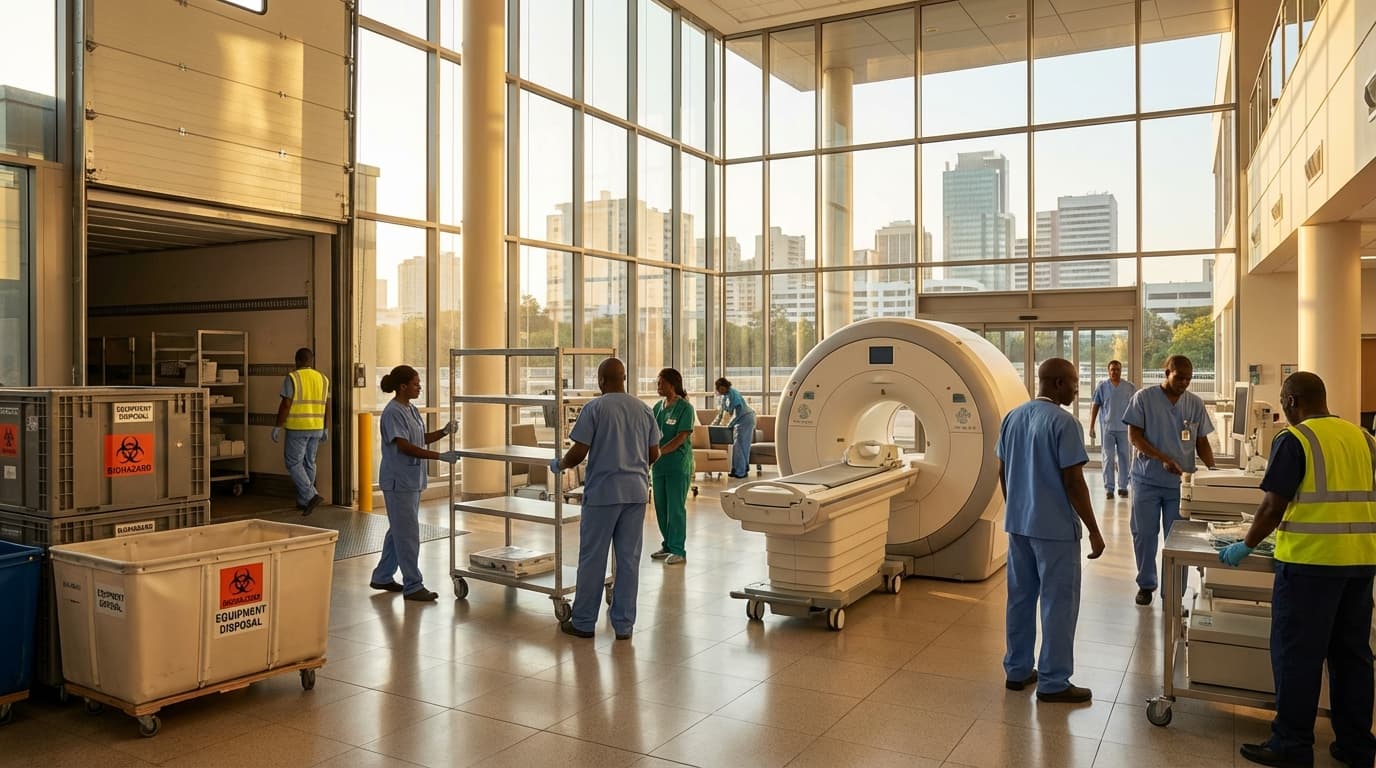
Heavy Medical Equipment De-Installation Service (MRI/CT/Cath Lab) in Cameroon
Engineering Excellence & Technical Support
Heavy Medical Equipment De-Installation Service (MRI/CT/Cath Lab) High-standard technical execution following OEM protocols and local regulatory frameworks.
Expert De-Installation of High-Field Imaging Systems
Our certified technicians specialize in the safe and meticulous de-installation of complex medical imaging equipment, including MRI, CT scanners, and Cath Labs. We adhere to stringent international safety protocols and manufacturer guidelines to ensure the integrity of your valuable assets during relocation or decommissioning in Cameroon.
Specialized Rigging & Logistics for Sensitive Equipment
We offer tailored rigging, crating, and logistics solutions for the secure transport of heavy medical equipment. Our team utilizes specialized equipment and techniques to navigate challenging environments across Cameroon, ensuring minimal risk of damage and optimal preparation for onward transit.
Compliance & Certification for Seamless Transitions
Gain peace of mind with our comprehensive de-installation services, including detailed documentation and certifications. We ensure all procedures comply with local Cameroonian regulations and international standards, facilitating smooth handover, insurance claims, and future installations.
What Is Heavy Medical Equipment De-installation Service (Mri/ct/cath Lab) In Cameroon?
Heavy Medical Equipment De-Installation Service (MRI/CT/Cath Lab) in Cameroon refers to the specialized process of safely and systematically dismantling, preparing, and packaging complex, high-value, and often physically large medical imaging and diagnostic equipment, such as Magnetic Resonance Imaging (MRI) scanners, Computed Tomography (CT) scanners, and Cardiac Catheterization (Cath Lab) systems, within healthcare facilities in Cameroon for relocation, disposal, or major maintenance. This service necessitates a team of highly trained technicians with expertise in handling sensitive electronic components, high-voltage systems, cryogenics (for MRI), and precision engineering, adhering to strict safety protocols and logistical considerations unique to the Cameroonian context. The objective is to minimize risk of damage to the equipment, personnel, and the facility during the decommissioning phase, ensuring readiness for subsequent transport, storage, or reinstallation.
| Who Needs This Service? | Typical Use Cases | ||||||
|---|---|---|---|---|---|---|---|
| Hospitals and Clinics (Public and Private): Healthcare institutions in Cameroon that are upgrading their imaging technology, relocating to new facilities, or decommissioning outdated equipment. | Equipment Relocation: Moving a functional MRI, CT, or Cath Lab from one wing of a hospital to another, or to a different facility within Cameroon. | Renovations and Upgrades: Temporarily removing equipment to allow for significant infrastructure upgrades or architectural changes within the imaging suite. | International Transfers: De-installing equipment for export out of Cameroon to another country or for return to the manufacturer. | Disposal and Recycling: Safely dismantling and preparing equipment for environmentally sound disposal or sale as used equipment. | Major Component Servicing: Removing equipment to allow for extensive, specialized maintenance or repair that cannot be performed in situ. | Expansion Projects: Preparing space for the installation of new, larger, or more advanced imaging systems by removing existing units. | Emergency Facility Closure/Relocation: Rapid de-installation to facilitate the closure or relocation of a healthcare facility due to unforeseen circumstances. |
Key Components of Heavy Medical Equipment De-Installation Service
- Site Assessment and Planning: Initial evaluation of the equipment's location, accessibility, power requirements, and structural considerations within the facility. Development of a detailed de-installation plan, including timelines, resource allocation, and risk mitigation strategies.
- System Shutdown and Disconnection: Following manufacturer-specific protocols, safely powering down and disconnecting all power sources, data interfaces, cooling systems (e.g., helium for MRI), and ancillary equipment.
- Component Dismantling: Careful disassembly of the main equipment unit and its sub-components (e.g., magnet, gantry, patient table, console, detectors) by certified technicians using specialized tools.
- Cryogen Management (MRI Specific): For MRI systems, controlled venting and management of cryogen (typically liquid helium) to prevent rapid boil-off and ensure safety. This may involve helium recovery or responsible venting procedures.
- Cable Management and Labeling: Organizing, securing, and meticulously labeling all removed cables, conduits, and connectors to facilitate re-installation.
- Packaging and Protection: Custom crating or packaging of each component using appropriate materials (e.g., anti-static, shock-absorbent) to protect them from environmental factors and physical damage during transit.
- Logistical Coordination: Arranging specialized transportation, permits, and customs clearance (if applicable) for the movement of heavy and sensitive equipment within Cameroon or internationally.
- Documentation and Reporting: Comprehensive record-keeping of the de-installation process, including photographic evidence, inventory of parts, and condition reports.
- Site Remediation: Restoration of the de-installation site to its original condition, including removal of any residual materials and ensuring structural integrity.
Who Needs Heavy Medical Equipment De-installation Service (Mri/ct/cath Lab) In Cameroon?
In Cameroon, specialized de-installation services for heavy medical equipment like MRI, CT scanners, and Cath Labs are crucial for a range of institutions and departments. These complex procedures require expertise, precision, and adherence to safety regulations. The need arises primarily during equipment upgrades, relocations, decommissioning due to obsolescence, or facility renovations. Proper de-installation ensures the safe removal, packaging, and transportation of these valuable and sensitive machines, minimizing risk of damage and preparing them for their next phase, whether it's storage, transport to another facility, or responsible disposal. This specialized service is a critical component of maintaining efficient and technologically advanced healthcare infrastructure in the country.
| Customer Type | Specific Departments Requiring Service | ||||||
|---|---|---|---|---|---|---|---|
| Hospitals (Public and Private) | Radiology Department (MRI, CT) | Cardiology Department (Cath Lab) | Neurology Department (MRI) | Oncology Department (CT, MRI) | Surgical Departments (Cath Lab for interventional procedures) | Biomedical Engineering Department | Facilities/Maintenance Department |
| Specialized Diagnostic Centers | Imaging Services (MRI, CT) | Cardiovascular Services (Cath Lab) | |||||
| University Teaching Hospitals | Radiology Department | Cardiology Department | Neurology Department | Surgery Department | Medical Physics Department | Biomedical Engineering Department | |
| Large Clinics with Advanced Imaging Capabilities | Diagnostic Imaging Unit | Interventional Cardiology Unit | |||||
| Medical Equipment Manufacturers and Suppliers | Service and Installation Teams | Logistics and Operations Departments | |||||
| Government Health Ministries | Infrastructure and Planning Divisions | Procurement Departments | Public Health Facilities Management | ||||
| International Aid Organizations | Project Management Teams (Healthcare Initiatives) | Procurement and Logistics Officers |
Target Customers and Departments in Cameroon Requiring Heavy Medical Equipment De-Installation Service (MRI/CT/Cath Lab):
- Hospitals (Public and Private)
- Specialized Diagnostic Centers
- University Teaching Hospitals
- Large Clinics with Advanced Imaging Capabilities
- Medical Equipment Manufacturers and Suppliers (for their own service operations or client transitions)
- Government Health Ministries (for national healthcare infrastructure projects)
- International Aid Organizations (involved in healthcare development projects)
Heavy Medical Equipment De-installation Service (Mri/ct/cath Lab) Process In Cameroon
This document outlines the comprehensive workflow for the Heavy Medical Equipment De-Installation Service (MRI/CT/Cath Lab) in Cameroon, from the initial client inquiry to the successful completion of the de-installation process. Our service ensures minimal disruption, adherence to safety standards, and professional handling of complex medical imaging and interventional equipment.
| Stage | Description | Key Activities | Deliverables/Outcomes | Estimated Timeline (Typical) |
|---|---|---|---|---|
| Initial Inquiry & Consultation | The process begins when a client (hospital, clinic, equipment vendor, etc.) contacts us with a need for de-installation services for MRI, CT, or Cath Lab equipment. | Receive and review client request, gather preliminary information about the equipment, location, and desired timeline. Initial discussion to understand specific needs and constraints. | Confirmation of service requirement, understanding of client's objectives. | 1-2 Business Days |
| Site Assessment & Planning | A thorough on-site evaluation of the equipment and its environment is crucial for safe and efficient de-installation. | On-site visit by experienced technicians and project managers. Detailed assessment of equipment type, model, power requirements, physical access (doorways, corridors, elevators), structural integrity of the room, and any specific site challenges. Development of a detailed de-installation plan, including safety protocols and equipment movement strategy. | Comprehensive site assessment report, detailed de-installation plan, risk assessment, and resource allocation plan. | 2-5 Business Days (depending on complexity) |
| Quotation & Contract Agreement | Based on the site assessment and de-installation plan, a detailed quotation is provided, followed by contract finalization. | Preparation of a detailed quotation outlining all costs (labor, materials, specialized transport, disposal if applicable). Presentation of the quotation to the client for review and approval. Negotiation and signing of the service contract, clearly defining scope, timelines, payment terms, and responsibilities. | Formal quotation, signed service contract. | 1-3 Business Days (after assessment) |
| Pre-De-installation Preparations | Before physical de-installation begins, meticulous preparation is essential. | Securing necessary permits or approvals (if any). Procurement and staging of specialized tools, lifting equipment, and transport vehicles. Notification of relevant building management and stakeholders. Confirming access to power and utilities for controlled shutdown. Pre-installation checks and documentation. | All necessary equipment and materials on-site, authorized access confirmed, pre-installation documentation completed. | 2-7 Business Days (prior to de-installation date) |
| Equipment De-installation | The core phase where the heavy medical equipment is safely disconnected, dismantled (if necessary), and prepared for removal. | Systematic disconnection of power, cooling, and data cables. Controlled shutdown of the equipment according to manufacturer guidelines. Dismantling of modular components (if required and planned). Secure packaging and protection of sensitive parts. Careful handling and maneuvering of the equipment out of its installed location. | De-installed equipment, safely packaged and secured for transport. | 1-5 Business Days (depending on equipment complexity and size) |
| Site Remediation & Handover | Restoration of the de-installation site to a safe and agreed-upon condition and formal handover. | Removal of any debris or temporary structures. Minor repairs to walls or floors if necessary and agreed upon. Final site inspection with the client. Formal handover of the de-installed equipment and the restored site. | Clean and safe de-installation site, signed handover document. | 1-2 Business Days |
| Post-De-installation Support | Ongoing support and documentation for the client after the de-installation is complete. | Provision of de-installation reports and relevant documentation. Assistance with logistics for transport to a new location or disposal (if arranged). Addressing any follow-up queries from the client. | Comprehensive de-installation report, logistical support as agreed. | Ongoing (as per contract) |
Key Stages of the De-Installation Process
- Initial Inquiry & Consultation
- Site Assessment & Planning
- Quotation & Contract Agreement
- Pre-De-installation Preparations
- Equipment De-installation
- Site Remediation & Handover
- Post-De-installation Support
Heavy Medical Equipment De-installation Service (Mri/ct/cath Lab) Cost In Cameroon
De-installing heavy medical equipment like MRI, CT scanners, and Cath Labs in Cameroon is a complex and specialized service that requires expert technicians, proper lifting equipment, and adherence to strict safety protocols. The cost of such services is influenced by a multitude of factors, leading to a significant price range. These factors include the type and size of the equipment, the complexity of the installation, the accessibility of the site, the geographical location within Cameroon, and the experience and reputation of the service provider. Specialized de-installation often involves dismantling intricate components, ensuring the safe extraction of the machinery, and proper packaging for transportation or storage. The urgency of the service can also impact pricing, with emergency de-installations typically commanding higher fees.
| Equipment Category | Estimated Cost Range (XAF - Cameroonian Francs) | Notes |
|---|---|---|
| MRI Scanner (Compact/Mid-Size) | 2,000,000 - 5,000,000 | Excludes highly complex or older models with unique dismantling requirements. |
| MRI Scanner (Large/High-Field) | 4,000,000 - 10,000,000+ | Significant increase due to weight, magnet shielding, and intricate components. |
| CT Scanner (Standard) | 1,500,000 - 4,000,000 | Depends on the number of detectors and gantry complexity. |
| CT Scanner (Advanced/Multi-Slice) | 3,000,000 - 7,000,000 | More sophisticated systems require more specialized handling. |
| Cath Lab Suite | 3,000,000 - 8,000,000 | Includes C-arm, generator, table, and associated imaging systems. Complexity is high. |
| Ancillary Heavy Medical Equipment (e.g., Large X-ray units, Linear Accelerators) | 2,500,000 - 7,000,000+ | Highly variable based on specific technology and shielding requirements. |
Key Pricing Factors for Heavy Medical Equipment De-Installation in Cameroon:
- Equipment Type and Size (e.g., MRI, CT Scanner, Cath Lab)
- Complexity of De-installation (number of components, specialized tools required)
- Site Accessibility and Logistics (e.g., ground floor vs. upper floor, narrow corridors)
- Geographical Location within Cameroon (major cities vs. remote areas)
- Service Provider's Expertise, Experience, and Reputation
- Need for Specialized Lifting and Moving Equipment (cranes, heavy-duty dollies)
- Safety and Environmental Compliance Requirements
- Time Sensitivity and Urgency of the Service
- Additional Services (e.g., temporary storage, site preparation, waste disposal)
Affordable Heavy Medical Equipment De-installation Service (Mri/ct/cath Lab) Options
When it comes to de-installing large, complex medical equipment like MRI, CT, and Cath Labs, "affordable" doesn't mean sacrificing safety or expertise. Our service focuses on providing cost-effective solutions through strategic planning, experienced technicians, and transparent pricing. We understand that budget constraints are a significant factor for healthcare facilities, and we've developed options to address this need without compromising the integrity of the de-installation process. Our value bundles are designed to streamline the entire operation, offering a comprehensive package of services at a predictable price. We also employ various cost-saving strategies, from efficient project management to leveraging our extensive network for specialized components, ensuring you receive the best possible value.
| Service Component | Standard Cost | Value Bundle Pricing | Cost-Saving Explanation |
|---|---|---|---|
| Site Survey & Planning | $1,000 - $2,500 | Included in Bundle | Proactive identification of issues prevents costly delays and rework. |
| Disassembly & De-installation (MRI/CT) | $5,000 - $15,000+ | Up to 15% Discount | Streamlined process and experienced team reduce labor hours. |
| Disassembly & De-installation (Cath Lab) | $8,000 - $20,000+ | Up to 15% Discount | Specialized knowledge minimizes complexity and potential for damage. |
| Specialized Rigging & Craning | Variable (based on need) | Negotiated Rates | Leveraging our network secures competitive pricing for essential equipment. |
| Waste Disposal & Environmental Compliance | $500 - $2,000 | Included in Bundle | Efficient handling and disposal minimizes landfill fees and ensures regulatory adherence. |
| Project Management & Reporting | $1,500 - $3,000 | Included in Bundle | Ensures clear communication and accountability, preventing scope creep and associated costs. |
Key Value Bundles and Cost-Saving Strategies
- Comprehensive De-Installation Package: Includes planning, disassembly, safe removal, site preparation for transport, and waste disposal.
- Expedited De-Installation Option: For urgent needs, we offer faster turnaround times with a focus on efficiency and minimal disruption.
- Phased De-Installation: For large projects or budget phasing, we can break down the de-installation into manageable stages.
- Site Assessment & Consultation: Thorough pre-de-installation assessment to identify potential challenges and optimize the process.
- Specialized Rigging and Transportation Coordination: We partner with trusted logistics providers to ensure safe and cost-effective transport.
- Project Management & Reporting: Dedicated project manager to oversee the entire process, providing regular updates and detailed reports.
- Return-on-Investment (ROI) Focus: We aim to maximize the value of your equipment by ensuring a smooth and safe de-installation, preserving its resale or relocation potential.
- Bulk De-Installation Discounts: Significant savings for facilities de-installing multiple pieces of equipment simultaneously.
- Off-Peak Scheduling: Utilizing off-hours or less busy periods to minimize operational impact and potentially reduce costs.
- Leveraging Existing Infrastructure: Where possible, we aim to utilize your facility's existing access points and pathways to reduce additional setup costs.
Verified Providers In Cameroon
In Cameroon's healthcare landscape, identifying verified and credible providers is paramount for ensuring quality patient care. Franance Health stands out as a premier network, distinguished by its rigorous credentialing process and commitment to excellence. This commitment translates into a superior healthcare experience for patients, making Franance Health the best choice for a range of medical needs.
| Credentialing Aspect | Franance Health's Standard | Benefit to Patients |
|---|---|---|
| Academic & Professional Qualifications | Verified degrees, licenses, and certifications from recognized institutions. | Ensures providers possess the foundational knowledge and skills. |
| Clinical Experience & Expertise | Assessment of practical experience and areas of specialization. | Connects patients with experienced and skilled medical professionals. |
| Patient Safety & Quality Protocols | Adherence to international and national best practices in patient care and safety. | Minimizes risks and promotes effective treatment outcomes. |
| Ethical Conduct & Professionalism | Background checks and review of disciplinary history. | Guarantees ethical treatment and respectful patient interactions. |
| Continuous Professional Development | Evidence of ongoing training and staying updated with medical advancements. | Ensures patients receive care informed by the latest medical knowledge. |
Why Franance Health is the Best Choice:
- Rigorous Credentialing: Franance Health employs a multi-faceted verification process for all its affiliated healthcare professionals and facilities. This includes a thorough review of academic qualifications, medical licenses, professional certifications, and a clean disciplinary record.
- Commitment to Quality: Beyond basic verification, Franance Health assesses providers based on their adherence to established clinical guidelines, patient safety protocols, and their demonstrated commitment to continuous professional development.
- Patient-Centric Approach: Franance Health prioritizes patient satisfaction and outcomes. Their network is built with providers who exhibit strong communication skills, empathy, and a dedication to personalized care.
- Access to Specialized Care: The network encompasses a wide array of medical specialties, ensuring that patients can find the most qualified experts for their specific health concerns.
- Transparency and Trust: By clearly outlining their credentialing standards and vetting process, Franance Health fosters an environment of trust and transparency, empowering patients to make informed decisions about their healthcare.
Scope Of Work For Heavy Medical Equipment De-installation Service (Mri/ct/cath Lab)
This Scope of Work (SOW) details the requirements for the safe and professional de-installation of heavy medical equipment, specifically MRI, CT scanners, and Cath Lab systems, from their current operational locations. The objective is to ensure the equipment is carefully dismantled, packaged, and prepared for transportation with minimal risk of damage or compromise to its integrity. This SOW outlines the technical deliverables, standard specifications, and responsibilities of the service provider.
| Technical Deliverable | Description | Standard Specifications/Requirements |
|---|---|---|
| Pre-De-installation Survey & Planning | Thorough assessment of the site, equipment, and surrounding infrastructure. | Includes site walk-through, identification of access/egress routes, power availability, environmental conditions, and potential hazards. Development of a detailed de-installation plan, risk assessment, and schedule. |
| Power Disconnection & Isolation | Safe and certified disconnection of all power supplies feeding the equipment. | Includes verification of power isolation, lockout/tagout procedures, and electrical safety checks by qualified personnel. |
| Data & Network Cable Disconnection | Careful disconnection and labeling of all data and network cables. | Includes identification of cable types (fiber optic, Ethernet, etc.), proper handling to prevent damage, and labeling for re-installation. |
| Ancillary System Disconnection | Disconnection of any associated systems (e.g., cooling, ventilation, patient monitoring). | Includes identifying all connected systems and performing disconnects in a controlled manner. |
| Equipment Dismantling | Systematic disassembly of the medical equipment into transportable modules. | Adherence to manufacturer's de-installation manuals and specific procedures for MRI coils, CT gantry components, Cath Lab consoles, etc. Use of specialized tools and equipment. |
| Component Protection & Packaging | Safeguarding of all dismantled components from damage during handling and transit. | Includes use of protective materials (bubble wrap, foam, anti-static bags), custom crating for sensitive parts (e.g., MRI magnets, X-ray tubes), and robust packaging solutions. |
| Labeling & Inventory | Clear and precise labeling of all components and a comprehensive inventory list. | Each component to be labeled with its name, equipment it belongs to, and a unique identifier. Inventory to include part number, description, quantity, and condition. |
| Site Restoration (Basic) | Removal of debris and general tidiness of the de-installation area. | Excludes structural repairs or significant modifications. All packaging materials and debris to be removed from the site. |
| De-installation Report | A detailed report documenting the entire de-installation process. | Includes photographs of the equipment before, during, and after de-installation; list of all components removed; any issues encountered and resolutions; confirmation of site restoration. |
| Personnel Qualifications | All personnel involved in the de-installation must be qualified and experienced. | Includes certified technicians, electricians, and riggers with specific experience in medical equipment de-installation. Evidence of training and certifications to be provided. |
| Safety Compliance | Strict adherence to all relevant health, safety, and environmental regulations. | Includes OSHA standards, local regulations, and site-specific safety protocols. Provision of safety equipment and PPE for all personnel. |
| Equipment Specifics (MRI) | De-installation of Magnetic Resonance Imaging (MRI) systems. | Includes safe handling of superconducting magnets (if applicable, including quench procedures and shielding), gradient coils, RF coils, patient table, and console. Requires specialized knowledge of cryogen handling and magnetic field safety. |
| Equipment Specifics (CT) | De-installation of Computed Tomography (CT) scanners. | Includes dismantling of the gantry, X-ray tube assembly, detector arrays, patient table, and console. Requires careful handling of high-voltage components and precision optics. |
| Equipment Specifics (Cath Lab) | De-installation of Cardiovascular (Cath) Lab systems. | Includes dismantling of the C-arm, X-ray generator, imaging system, patient table, console, and associated peripherals. Requires expertise in high-voltage and radiation safety. |
Key Objectives of De-Installation Service:
- Safe and compliant disconnection of all power, data, and ancillary connections.
- Dismantling of equipment into manageable components according to manufacturer guidelines and industry best practices.
- Protection and preservation of all delicate components and sub-assemblies.
- Proper labeling and inventory of all removed parts and hardware.
- Secure packaging and preparation for transit.
- Documentation of the de-installation process.
- Adherence to all relevant safety regulations and standards.
Service Level Agreement For Heavy Medical Equipment De-installation Service (Mri/ct/cath Lab)
This Service Level Agreement (SLA) outlines the guaranteed response times and uptime expectations for the de-installation of heavy medical equipment, specifically MRI, CT, and Cath Lab systems. This SLA aims to ensure efficient and minimally disruptive service during the de-installation process, minimizing downtime for related hospital operations.
| Service Type | Response Time Guarantee | Uptime Guarantee (for de-installation context) | Notes |
|---|---|---|---|
| MRI De-installation | Within 24 hours of Service Request acknowledgement. | 98% of scheduled de-installation time completed within the agreed-upon project timeline. No more than 4 hours of unplanned delay attributable to the Service Provider per de-installation project. | Requires clear site access and preliminary power down by client facilities team. |
| CT Scanner De-installation | Within 24 hours of Service Request acknowledgement. | 98% of scheduled de-installation time completed within the agreed-upon project timeline. No more than 4 hours of unplanned delay attributable to the Service Provider per de-installation project. | Requires clear site access and preliminary power down by client facilities team. |
| Cath Lab De-installation | Within 24 hours of Service Request acknowledgement. | 98% of scheduled de-installation time completed within the agreed-upon project timeline. No more than 4 hours of unplanned delay attributable to the Service Provider per de-installation project. | Requires clear site access and preliminary power down by client facilities team. |
Definitions
- Service Request: A formal request submitted by the Client for the de-installation of specified medical equipment.
- De-installation: The process of safely and systematically dismantling and preparing the specified medical equipment for transport or disposal.
- Response Time: The maximum allowable time from the acknowledgment of a Service Request to the commencement of de-installation activities by the Service Provider.
- Uptime Guarantee: A commitment by the Service Provider to minimize the duration of any unplanned downtime directly attributable to their de-installation services. For de-installation, this typically refers to the efficient completion of the scope of work within the agreed-upon timeframe, preventing delays that would impact subsequent project phases.
- Scheduled Maintenance/Downtime: Planned periods where the equipment is intentionally taken offline for maintenance or other operational reasons, and is not the responsibility of the Service Provider under this SLA.
- Force Majeure: Events beyond the reasonable control of either party, including but not limited to natural disasters, acts of war, or widespread labor strikes, which may impact response times and performance.
Frequently Asked Questions

Ready when you are
Let's scope your Heavy Medical Equipment De-Installation Service (MRI/CT/Cath Lab) in Cameroon project in Cameroon.

Scaling healthcare logistics and technical systems across the entire continent.