
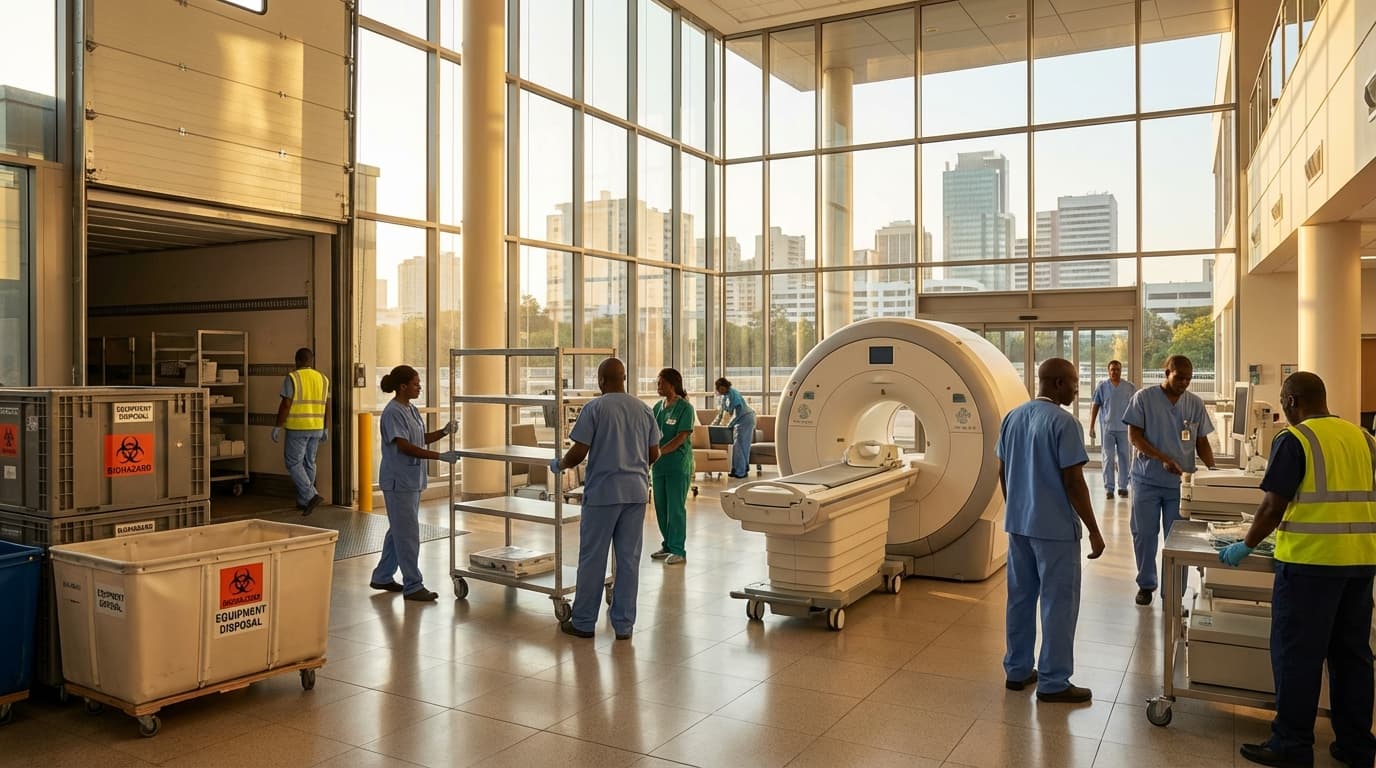
Decommissioning Service for Medical Devices in Cameroon
Engineering Excellence & Technical Support
Decommissioning Service for Medical Devices High-standard technical execution following OEM protocols and local regulatory frameworks.
Secure and Compliant Medical Device Decommissioning
Our expert technicians ensure the safe and environmentally responsible decommissioning of all medical devices in Cameroon, adhering strictly to national and international regulations. We prioritize data sanitization and secure component disposal to protect patient privacy and prevent unauthorized reuse of sensitive equipment.
Specialized Decommissioning Expertise for Medical Equipment
We offer a highly trained team with in-depth knowledge of diverse medical device technologies, from imaging and laboratory equipment to surgical instruments. Our systematic approach minimizes disruption to healthcare facilities while guaranteeing thorough and effective decommissioning.
Sustainable Resource Recovery and Environmental Stewardship
Beyond disposal, we focus on maximizing resource recovery through responsible recycling and refurbishment pathways for eligible medical devices. This commitment to sustainability not only supports environmental protection in Cameroon but also contributes to a circular economy.
What Is Decommissioning Service For Medical Devices In Cameroon?
Decommissioning services for medical devices in Cameroon refer to the systematic and documented process of retiring a medical device from active use. This involves ensuring the device is rendered inoperable, safe for handling and disposal, and compliant with national regulations and ethical considerations. The primary objective is to prevent unauthorized use, protect patient data, and facilitate environmentally responsible end-of-life management of medical equipment.
| Who Needs Decommissioning Services? | Typical Use Cases |
|---|---|
| Healthcare Facilities (Hospitals, Clinics, Diagnostic Laboratories): Institutions operating medical equipment requiring retirement. | End-of-life obsolescence of medical imaging systems (e.g., X-ray machines, CT scanners) due to technological advancement or wear and tear. |
| Medical Device Manufacturers/Distributors: When devices are recalled, returned, or are no longer supported, requiring secure end-of-life management. | Discontinuation of a specific medical device model or product line, necessitating the decommissioning of remaining inventory or demonstration units. |
| Government Health Agencies: Responsible for oversight and management of medical infrastructure, including the safe retirement of public health equipment. | Upgrade cycles for critical medical equipment within public health institutions, leading to the decommissioning of older but functional units. |
| Research Institutions: Utilizing specialized medical devices that eventually reach their service or research lifecycle. | Decommissioning of experimental or research-specific medical devices that are no longer required for ongoing studies. |
| Medical Device Repair and Maintenance Companies: Offering end-of-life services as part of their service portfolio. | Consolidation of medical equipment from multiple healthcare sites or during mergers/acquisitions, requiring the decommissioning of redundant or outdated devices. |
Key Components of Medical Device Decommissioning in Cameroon:
- Data Sanitization/Destruction: Securely erasing or physically destroying all sensitive patient data stored on the device, in compliance with data privacy regulations (e.g., GDPR-like principles if applicable to local data handling).
- Functional Inactivation: Rendering the device permanently non-operational to prevent accidental reactivation or misuse. This may involve disabling power sources, removing critical components, or performing physical modifications.
- Safety Assessment: Evaluating the device for any residual hazards (e.g., biohazards, chemical contamination, sharp components) to ensure safe handling during dismantling and disposal.
- Documentation and Auditing: Maintaining comprehensive records of the decommissioning process, including device identification, decommissioning steps performed, responsible personnel, and disposal methods. This documentation is crucial for regulatory compliance and asset management.
- Environmental Disposal: Adhering to national and local regulations for the environmentally sound disposal of medical waste, which may include specialized recycling, incineration, or secure landfilling depending on the device's materials and potential hazards.
- Asset Retirement: Officially removing the device from the organization's inventory and asset register.
Who Needs Decommissioning Service For Medical Devices In Cameroon?
Decommissioning services for medical devices in Cameroon are essential for a variety of organizations and departments responsible for the safe and compliant removal of equipment from service. This process is crucial for managing asset lifecycle, ensuring data security, and adhering to environmental regulations. The primary need for these services arises from healthcare institutions that are upgrading their technology, consolidating facilities, or retiring obsolete and non-functional medical equipment.
| Target Customer Group | Relevant Departments/Roles | Key Needs/Reasons for Decommissioning |
|---|---|---|
| Public Hospitals | Biomedical Engineering Department, IT Department, Procurement Department, Facility Management | Budgetary constraints for upgrades, equipment aging, compliance with national health standards, data security of patient records, proper disposal of hazardous materials. |
| Private Hospitals & Clinics | Hospital Administration, Biomedical Services, IT Security, Operations Management | Maintaining a modern and efficient facility, competitive edge, data privacy regulations (e.g., patient confidentiality), efficient space utilization, minimizing liability. |
| Diagnostic Laboratories | Laboratory Management, Technical Staff, IT Department, Compliance Officer | Technological advancements, calibration and maintenance costs, biohazard waste management, data integrity and secure disposal of sensitive test results. |
| Research Institutions | Research Directors, Principal Investigators, IT Department, Facilities Management | End of research projects, equipment obsolescence, need for newer, more advanced technology, data security for research findings. |
| Government Health Agencies | Ministry of Public Health (various directorates), Regional Health Authorities, Public Procurement and Disposal Units | National health infrastructure upgrades, asset rationalization, public funds management, ensuring adherence to environmental protection laws, standardizing equipment lifecycle management. |
| Medical Equipment Suppliers/Distributors | Service Department, Warehouse Management, IT Department | Disposal of demo units, old stock, or equipment returned under warranty; managing their own internal infrastructure and IT assets. |
Target Customers and Departments for Medical Device Decommissioning in Cameroon:
- Hospitals (Public and Private)
- Clinics and Medical Centers
- Diagnostic Laboratories
- Research Institutions
- Government Health Agencies
- Medical Equipment Manufacturers and Distributors (for their own facilities or as part of service agreements)
Decommissioning Service For Medical Devices Process In Cameroon
This document outlines the standard workflow for decommissioning medical devices in Cameroon, from the initial inquiry to the final execution of the service. The process is designed to ensure compliance with regulations, environmental responsibility, and data security.
| Stage | Description | Key Activities | Responsible Parties | Deliverables |
|---|---|---|---|---|
| The process begins when a healthcare facility or organization expresses interest in decommissioning medical devices. | Initial contact, needs assessment, discussion of service scope, understanding regulatory requirements. | Client (Healthcare Facility/Organization), Decommissioning Service Provider. | Understanding of client needs and regulatory landscape. |
| A thorough inspection of the site where the devices are located is conducted, along with a detailed inventory. | Physical inspection of the facility, identification and cataloging of all devices to be decommissioned (make, model, serial number, condition, location). | Decommissioning Service Provider. | Detailed inventory of devices, assessment of site conditions, identification of any potential challenges. |
| Based on the assessment, a comprehensive quotation is provided to the client, followed by the signing of an agreement. | Preparation of a detailed quotation outlining costs, timeline, and scope of work. Negotiation and finalization of terms. Signing of a service agreement/contract. | Decommissioning Service Provider, Client. | Formal quotation, signed service agreement. |
| Once the agreement is in place, a detailed plan for the decommissioning process is developed. | Development of a project plan, scheduling of decommissioning activities, coordination with the client regarding access and operational impact. | Decommissioning Service Provider. | Project plan, confirmed schedule. |
| Critical step to ensure data privacy and prepare devices for safe transport and disposal. | Secure erasure or destruction of all data stored on medical devices (e.g., patient records). Disassembly, cleaning, and packaging of devices as required. | Decommissioning Service Provider. | Data sanitization reports, securely packaged devices. |
| Safe and compliant transportation of the decommissioned devices from the client's site to the disposal facility. | Arrangement of specialized transport, ensuring adherence to any hazardous material regulations, secure loading and unloading. | Decommissioning Service Provider. | Secure and compliant transportation of devices. |
| The actual disposal or recycling of the medical devices according to environmental regulations. | Dismantling, shredding, or appropriate disposal methods. Adherence to local and international environmental standards. Recycling of reusable components where possible. | Decommissioning Service Provider. | Confirmation of proper disposal/recycling. |
| Providing the client with necessary documentation to confirm the service completion and compliance. | Issuance of a Certificate of Decommissioning and Disposal. Provision of detailed records of the entire process, including inventory, data sanitization reports, and disposal certificates. | Decommissioning Service Provider. | Certificate of Decommissioning and Disposal, comprehensive project records. |
Decommissioning Service for Medical Devices Process in Cameroon: Workflow
- Inquiry and Consultation
- Site Assessment and Inventory
- Quotation and Agreement
- Planning and Scheduling
- Data Sanitization and Device Preparation
- Transportation and Logistics
- Final Decommissioning and Disposal
- Certification and Record Keeping
Decommissioning Service For Medical Devices Cost In Cameroon
Decommissioning medical devices in Cameroon involves a range of costs, influenced by several factors specific to the local context. These costs encompass the secure disposal of sensitive equipment, adherence to environmental regulations, and the logistical challenges of managing medical waste. Understanding these pricing factors is crucial for healthcare facilities and organizations when budgeting for the end-of-life management of their medical technology.
| Device Category (Example) | Estimated Cost Range (XAF) | Notes |
|---|---|---|
| Small, Non-Hazardous Devices (e.g., basic examination lamps, small diagnostic kits, non-electronic furniture) | 15,000 - 50,000 | Primarily covers transportation and basic disposal fees. Low complexity. |
| Medium-Sized, Potentially Hazardous Devices (e.g., older ultrasound machines, basic laboratory equipment, small X-ray viewers) | 75,000 - 250,000 | Involves more complex dismantling, potential for small amounts of hazardous materials, and specialized transport. |
| Large, Complex, or Highly Hazardous Devices (e.g., MRI scanners, CT scanners, large diagnostic analyzers, chemotherapy infusion pumps, older CRT monitors with lead) | 300,000 - 1,500,000+ | Significant costs due to specialized dismantling, hazardous material handling and disposal, data destruction, and potentially heavy-duty transportation. May require international expertise for specific components. |
| Specialized Medical Equipment with Data Storage (e.g., EKG machines with memory, patient monitoring systems) | 50,000 - 200,000 | Cost is influenced by the data destruction process in addition to standard decommissioning. |
| General Service Fee (per project, for administrative and compliance checks) | 20,000 - 100,000 | Covers documentation, regulatory liaison, and project management. Varies with project scope. |
Key Pricing Factors for Medical Device Decommissioning in Cameroon
- Device Complexity and Type: More intricate or specialized medical equipment (e.g., MRI machines, CT scanners, complex laboratory analyzers) will inherently incur higher decommissioning costs due to specialized handling, potential for hazardous materials, and the need for expert dismantling. Simpler devices like basic examination tables or outdated monitors will be less expensive.
- Hazardous Material Content: Medical devices often contain materials that are classified as hazardous, such as mercury, lead, or specific chemicals. The presence and quantity of these materials dictate the specialized disposal methods and associated costs, requiring licensed waste management partners.
- Data Security and Destruction: For devices storing patient data (e.g., imaging equipment, electronic health record systems), secure data erasure or physical destruction is paramount. This adds a layer of cost related to specialized software or hardware for data sanitization, or the physical destruction process itself.
- Logistics and Transportation: The distance of the disposal facility from the healthcare institution, the size and weight of the devices, and the need for specialized transport vehicles all contribute to logistical costs. Urban centers may have more accessible disposal options compared to remote or rural areas.
- Disposal Method and Facility Fees: The chosen method of disposal (e.g., recycling, incineration, landfilling for non-hazardous components) impacts costs. Fees charged by licensed medical waste disposal facilities in Cameroon will vary based on their services, capacity, and adherence to national environmental standards.
- Regulatory Compliance and Documentation: Adhering to Cameroonian regulations for medical waste management and decommissioning requires proper documentation and potentially permits. Costs associated with these administrative processes, as well as potential consultancy fees to ensure compliance, are factored in.
- Service Provider Expertise and Reputation: Experienced and reputable decommissioning service providers in Cameroon may command higher fees due to their proven track record, specialized equipment, and trained personnel. However, this often translates to a more secure and compliant process.
- Volume of Devices: For larger decommissioning projects involving multiple devices, economies of scale might apply, potentially leading to a lower per-unit cost. Conversely, decommissioning a single, bulky item can be more expensive on a per-item basis.
- Recycling Potential: If a device has significant recyclable components (e.g., metals), the potential for recovering value through recycling might slightly offset decommissioning costs, though this is not always a significant factor in Cameroon's current recycling infrastructure for medical waste.
Affordable Decommissioning Service For Medical Devices Options
Decommissioning medical devices is a critical, yet often overlooked, aspect of healthcare facility management. It involves securely removing devices from service, ensuring data privacy, environmental compliance, and cost recovery. This service is essential for maintaining operational efficiency and adhering to regulatory standards. For facilities seeking affordable options, understanding value bundles and implementing effective cost-saving strategies is paramount.
| Cost-Saving Strategy | Description | Potential Savings Area |
|---|---|---|
| Volume Discounts | Negotiate lower per-unit costs when decommissioning a large number of devices simultaneously. | Reduced service fees per device. |
| Advance Planning & Scheduling | Schedule decommissioning during off-peak times or as part of larger facility projects to leverage economies of scale. | Lower labor and logistical costs. |
| Bundled Service Contracts | Opt for comprehensive decommissioning packages that include multiple services to benefit from bundled pricing. | Reduced overall service expenditure. |
| Prioritize Responsible Recycling | Partner with vendors who offer competitive pricing for environmentally sound recycling and component recovery, potentially generating resale value. | Offsetting decommissioning costs through asset recovery. |
| Data Sanitization Verification | Ensure the decommissioning provider offers clear, auditable verification of data erasure to avoid future data breach-related expenses. | Prevention of costly fines and reputational damage. |
| Negotiate End-of-Life Options | Discuss options for device donation, refurbishment, or resale with the decommissioning provider to explore cost-sharing or revenue generation. | Reduced net cost or potential revenue generation. |
| Consolidate Vendors | Work with a single, reliable vendor for all medical device decommissioning needs to streamline processes and potentially secure better contract terms. | Administrative efficiency and bulk negotiation power. |
Understanding Value Bundles
- {"title":"Comprehensive Decommissioning Packages","description":"These bundles typically include all necessary services from initial assessment and data sanitization to physical removal, transportation, and environmentally responsible disposal or recycling. Bundling often leads to discounts compared to individual service calls."}
- {"title":"Data Security & Compliance Focus","description":"Value bundles tailored for HIPAA or other regulatory compliance often prioritize robust data erasure and documentation. This reassures organizations about data privacy and avoids costly fines."}
- {"title":"Recycling & Resale Maximization","description":"Some bundles include services to assess devices for resale potential or advanced recycling for valuable components. This can offset decommissioning costs and even generate revenue."}
- {"title":"Logistics & Inventory Management Integration","description":"More advanced bundles can integrate with existing asset management systems, simplifying the tracking and reporting of decommissioned devices."}
Verified Providers In Cameroon
Finding reliable and trustworthy healthcare providers is paramount, especially when navigating a new or unfamiliar system. In Cameroon, the term 'Verified Providers' signifies a crucial level of assurance. These are healthcare professionals and facilities that have undergone rigorous vetting processes, ensuring they meet established standards of quality, ethics, and operational integrity. When considering 'Verified Providers in Cameroon,' understanding what makes them the best choice is key. This often involves a combination of factors including professional licensing, adherence to best practices, patient safety protocols, and a commitment to accessible and equitable healthcare.
| Feature | Benefit for Patients | Franance Health's Role |
|---|---|---|
| Rigorous Vetting Process | Ensures competence, ethical practice, and adherence to standards. | Establishes and maintains the verification framework and audits providers. |
| Focus on Quality and Safety | Reduces risks associated with sub-standard care and improves health outcomes. | Defines and enforces quality benchmarks and patient safety protocols. |
| Ethical Conduct and Transparency | Builds trust and empowers patients with clear information. | Promotes ethical guidelines and patient rights within the healthcare system. |
| Accessibility Initiatives | Makes healthcare services more reachable and affordable. | May facilitate partnerships that enhance accessibility and reduce costs. |
| Continuous Improvement | Ensures providers remain up-to-date with best practices and maintain high standards. | Implements ongoing monitoring and re-credentialing processes. |
Franance Health: A Benchmark for Verified Providers in Cameroon
- Comprehensive Credentialing: Franance Health employs a multi-faceted credentialing process that goes beyond basic licensing. This includes verifying medical education, training, certifications, and any disciplinary actions. They also assess practical experience and the provider's ability to deliver care within the Cameroonian context.
- Commitment to Quality Care: Verified providers through Franance Health are expected to demonstrate a consistent commitment to high-quality patient care. This means adhering to evidence-based medical practices, prioritizing patient safety, and continuously seeking to improve their services.
- Ethical Standards and Patient Rights: Franance Health emphasizes ethical conduct and the protection of patient rights. Verified providers are expected to uphold principles of medical ethics, maintain patient confidentiality, and engage in transparent communication.
- Accessibility and Affordability: While not always a direct credential, Franance Health often partners with providers who strive for greater accessibility and affordability of healthcare services. This can involve working with facilities that accept various insurance plans or offer flexible payment options.
- Ongoing Monitoring and Review: Verification isn't a one-time event. Franance Health typically has mechanisms for ongoing monitoring and periodic review of its verified providers to ensure continued compliance with their standards.
- Patient Feedback Integration: Many verification programs, including those likely supported by Franance Health, incorporate patient feedback. This allows for a more holistic assessment of a provider's performance and patient satisfaction.
Scope Of Work For Decommissioning Service For Medical Devices
This Scope of Work (SOW) outlines the requirements for decommissioning medical devices. It details the technical deliverables and standard specifications necessary to ensure safe, secure, and compliant removal of medical equipment from service. The primary objective is to ensure proper data sanitization, physical disposal, and adherence to relevant regulations and manufacturer guidelines.
| Category | Deliverable/Specification | Description | Standard/Reference |
|---|---|---|---|
| Data Sanitization | Data Erasure/Destruction Report | A certified report confirming that all patient data (PHI/PII) has been securely erased or physically destroyed according to established standards. | NIST SP 800-88 Rev. 1, DoD 5220.22-M, Manufacturer Guidelines |
| Data Sanitization | Data Sanitization Method | The method used for data sanitization (e.g., secure erase protocols, physical destruction of storage media). | As per NIST SP 800-88 Rev. 1 or equivalent |
| Physical Removal | Device De-installation Report | Documentation detailing the successful and safe physical removal of the medical device from its operational location. | Site-specific safety protocols, Manufacturer Manuals |
| Physical Removal | Disconnection and Labeling | Confirmation that the device has been safely disconnected from all power sources, network connections, and ancillary equipment, and appropriately labeled for transport. | Manufacturer Manuals, Electrical Safety Standards |
| Disposal/Recycling | Certificate of Destruction/Recycling | A certificate verifying that the device has been disposed of or recycled in an environmentally responsible and compliant manner. | Local Environmental Regulations, E-waste Recycling Standards (e.g., R2, e-Stewards) |
| Disposal/Recycling | Waste Manifest | Documentation of all waste materials generated and their tracking from origin to final disposal or recycling facility. | Hazardous Waste Regulations, Local Waste Management Policies |
| Compliance & Documentation | Decommissioning Plan Approval | Formal approval of the detailed decommissioning plan by the relevant stakeholders (e.g., IT, Biomedical Engineering, Facility Management). | Organizational Policies and Procedures |
| Compliance & Documentation | Final Decommissioning Report | A comprehensive report summarizing all decommissioning activities, including data sanitization, physical removal, disposal, and compliance verification. | Organizational Policies and Procedures, Regulatory Requirements |
| Compliance & Documentation | Asset Disposition Record | Updated asset management records reflecting the removal of the device from service and its final disposition. | Organizational Asset Management Policies |
| Safety | Personnel Safety Procedures | Adherence to all site-specific and industry-standard safety protocols during the decommissioning process. | OSHA, Local Safety Regulations, Biomedical Engineering Best Practices |
| Safety | Hazardous Material Identification and Handling | Identification and safe handling/disposal of any hazardous materials (e.g., batteries, specific components) present in the device. | Manufacturer Safety Data Sheets (SDS), Hazardous Material Regulations |
Key Objectives of Decommissioning
- Ensure patient data privacy and security through secure data erasure or destruction.
- Comply with all applicable local, national, and international regulations (e.g., HIPAA, GDPR, FDA).
- Adhere to manufacturer-specific decommissioning procedures.
- Minimize environmental impact through responsible disposal and recycling practices.
- Ensure the safety of personnel involved in the decommissioning process.
- Provide comprehensive documentation of the decommissioning process for audit and compliance purposes.
Service Level Agreement For Decommissioning Service For Medical Devices
This Service Level Agreement (SLA) outlines the response times and uptime guarantees for the Decommissioning Service provided by [Your Company Name] (hereinafter referred to as 'Provider') to [Client Company Name] (hereinafter referred to as 'Client') for medical devices. This SLA is an integral part of the overall service contract.
| Incident Type | Priority Level | Response Time Target (within Business Hours) | Resolution Time Target (within Business Hours) | Uptime Guarantee |
|---|---|---|---|---|
| Critical Incident | Highest | 1 Hour | 4 Business Hours | 99.5% (measured monthly) |
| Major Incident | High | 2 Business Hours | 8 Business Hours | 99.5% (measured monthly) |
| Minor Incident | Medium | 4 Business Hours | 2 Business Days | 99.5% (measured monthly) |
| General Inquiry/Request (e.g., scheduling a standard decommissioning) | Low | 1 Business Day | 3 Business Days | 99.5% (measured monthly) |
Definitions
- Decommissioning Service: The process of safely and securely retiring medical devices from active use, including data sanitization, physical disposal, and documentation.
- Response Time: The maximum time allowed for the Provider to acknowledge and begin addressing a reported issue or request.
- Uptime Guarantee: The percentage of time the decommissioning service is available and functional as per the agreed-upon scope and specifications. This specifically refers to the availability of the support and scheduling portal for initiating decommissioning requests and the availability of the field technicians to perform the service.
- Downtime: Any period during which the decommissioning service is unavailable or not functional, excluding Scheduled Maintenance.
- Scheduled Maintenance: Pre-announced periods where the decommissioning service may be temporarily unavailable for necessary upgrades, repairs, or maintenance. Client will be notified at least [Number] business days in advance.
- Critical Incident: An event that renders the entire decommissioning service inoperable, preventing the initiation or execution of any decommissioning requests.
- Major Incident: An event that significantly degrades the performance or availability of the decommissioning service, affecting a substantial portion of Client's decommissioning requests or a single high-priority request.
- Minor Incident: An event that causes minor disruption to the decommissioning service, affecting a limited scope of functionality or a single low-priority request.
- Business Hours: [Specify your business hours, e.g., Monday to Friday, 9:00 AM to 5:00 PM Local Time, excluding public holidays].
Frequently Asked Questions

Ready when you are
Let's scope your Decommissioning Service for Medical Devices in Cameroon project in Cameroon.

Scaling healthcare logistics and technical systems across the entire continent.