
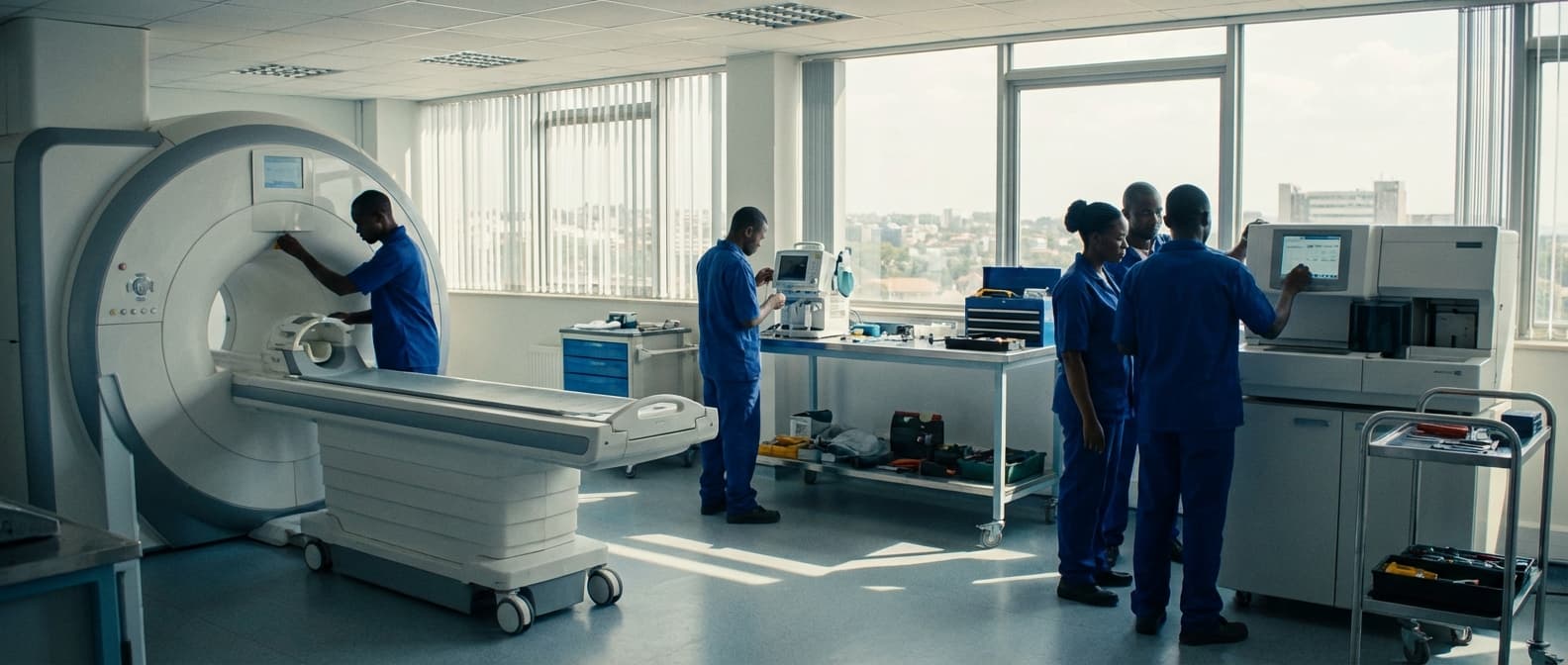
Uptime, Downtime & Root-Cause Analysis Reporting Service in Cameroon
Engineering Excellence & Technical Support
Uptime, Downtime & Root-Cause Analysis Reporting Service High-standard technical execution following OEM protocols and local regulatory frameworks.
Real-time Uptime Monitoring & Proactive Alerting
Leveraging advanced synthetic and real-user monitoring techniques, we provide instant visibility into your service availability across Cameroon. Our platform proactively detects anomalies and dispatches immediate alerts to your technical teams, minimizing the impact of unexpected outages.
Accelerated Downtime Resolution & Service Restoration
When downtime occurs, our service triggers automated diagnostic workflows and correlates data from various infrastructure components. This allows for rapid identification of the affected service and empowers your teams with the insights needed for swift problem diagnosis and efficient service restoration.
Comprehensive Root-Cause Analysis & Preventative Insights
We generate detailed root-cause analysis reports that go beyond surface-level issues. By analyzing historical performance data, incident timelines, and system logs, we uncover the underlying factors contributing to outages, enabling you to implement targeted preventative measures and enhance long-term service resilience in Cameroon.
What Is Uptime, Downtime & Root-cause Analysis Reporting Service In Cameroon?
This reporting service addresses critical aspects of IT infrastructure reliability and performance within Cameroon. It encompasses the continuous monitoring and analysis of system availability (Uptime), periods of unavailability (Downtime), and the subsequent investigation to identify the fundamental reasons for such disruptions (Root-Cause Analysis - RCA). The service provides actionable insights to enhance system resilience, minimize service interruptions, and optimize operational efficiency.
| Who Needs This Service? | Typical Use Cases |
|---|---|
| Businesses reliant on IT infrastructure for operations (e.g., banking, telecommunications, e-commerce, healthcare, government agencies). | Ensuring continuous availability of critical services like online banking portals, mobile network services, e-health platforms, and government websites. |
| Managed Service Providers (MSPs) and IT departments managing client or internal systems. | Proactively identifying and resolving issues affecting client SLAs (Service Level Agreements) and internal system stability. |
| Organizations with regulatory compliance requirements for system availability. | Demonstrating adherence to uptime standards and providing auditable records of incident management and resolution. |
| Companies undergoing digital transformation initiatives. | Validating the reliability and performance of new digital platforms and ensuring smooth user experiences. |
| Any entity experiencing recurring IT issues or seeking to improve operational efficiency and reduce the cost of downtime. | Investigating intermittent performance degradations, unexplained system crashes, and optimizing resource allocation based on historical data. |
Key Components of Uptime, Downtime & Root-Cause Analysis Reporting Service
- Uptime Monitoring: Continuous tracking and reporting of the percentage of time a system or service is operational and accessible.
- Downtime Measurement: Quantifying the duration and frequency of service interruptions, categorized by severity and impact.
- Alerting and Notification: Real-time alerts triggered by deviations from expected uptime or upon detection of potential issues, disseminated to relevant stakeholders.
- Log Aggregation and Analysis: Centralized collection and correlation of system logs, event data, and performance metrics from diverse sources for in-depth investigation.
- Root-Cause Analysis (RCA): Structured methodologies (e.g., 5 Whys, Fishbone diagrams, Fault Tree Analysis) applied to identify the originating factors of downtime incidents.
- Reporting and Dashboards: Generation of comprehensive reports detailing uptime/downtime trends, incident summaries, RCA findings, and recommended corrective actions. Interactive dashboards for real-time visibility.
- Performance Metrics Tracking: Monitoring key performance indicators (KPIs) that may precede or correlate with downtime events (e.g., latency, error rates, resource utilization).
Who Needs Uptime, Downtime & Root-cause Analysis Reporting Service In Cameroon?
In today's rapidly evolving digital landscape, reliable and efficient operations are paramount for businesses in Cameroon. Understanding and proactively managing system availability, identifying the causes of disruptions, and implementing corrective measures are crucial for maintaining customer satisfaction, productivity, and profitability. This service provides essential insights into your IT infrastructure's performance, helping you to mitigate risks and optimize your technological investments.
| Target Customer Segment | Key Departments/Roles |
|---|---|
| Large Enterprises (e.g., Banks, Telecommunication Companies, Oil & Gas) | IT Operations, Network Operations Center (NOC), Infrastructure Management, Service Delivery, CIO Office, Risk Management |
| Medium-Sized Businesses (e.g., Retail Chains, Manufacturing Firms, Hospitality Groups) | IT Management, Operations Manager, Technical Support, Business Owners |
| Government Agencies & Public Sector Organizations | IT Department, Digital Transformation Units, Ministry of Posts and Telecommunications, National Cybersecurity Agencies |
| E-commerce & Online Service Providers | Technical Operations, Web Development Teams, Customer Support, Chief Technology Officer (CTO) |
| Healthcare Institutions (Hospitals, Clinics) | IT Department, Information Security Officer, Hospital Administrators |
| Educational Institutions (Universities, Colleges) | IT Department, Academic Administration, Campus Infrastructure Management |
Who Needs Uptime, Downtime & Root-Cause Analysis Reporting Service in Cameroon?
- Businesses relying heavily on digital infrastructure and online services.
- Organizations aiming to improve customer experience and loyalty.
- Companies seeking to reduce operational costs associated with IT failures.
- IT departments looking for data-driven insights to enhance system stability and performance.
- Management teams requiring clear visibility into IT operational health for strategic decision-making.
Uptime, Downtime & Root-cause Analysis Reporting Service Process In Cameroon
This document outlines the typical workflow for an Uptime, Downtime & Root-Cause Analysis (RCA) Reporting Service process in Cameroon. This service is crucial for organizations to understand the performance of their IT infrastructure, identify the underlying causes of outages, and implement corrective actions to prevent future occurrences.
| Phase | Key Activities | Participants | Deliverables |
|---|---|---|---|
| Inquiry & Scoping | Discuss needs, define scope, understand requirements. | Client, Service Provider Sales/Technical Team | Needs assessment, preliminary scope definition. |
| Proposal & Agreement | Prepare and present proposal, negotiate terms, sign contract/SLA. | Service Provider Sales/Legal Team, Client Management | Formal proposal, signed contract/SLA. |
| Information Gathering & Access Provisioning | Request system access, configure monitoring tools, establish secure connections. | Service Provider Technical Team, Client IT Department | System access, configured monitoring tools, secure connections. |
| Real-time Monitoring & Data Collection | Collect uptime, downtime, performance, and event data. | Service Provider Monitoring Team | Continuous data streams, logs, performance metrics. |
| Downtime Event Detection & Initial Alerting | Identify anomalies, trigger alerts, notify relevant parties. | Automated Monitoring Systems, Service Provider Operations Team | Downtime alerts, initial notifications. |
| Incident Triage & Verification | Verify downtime, assess impact, gather preliminary information. | Service Provider Operations Team | Incident verification report, preliminary impact assessment. |
| Root-Cause Analysis (RCA) Execution | Apply RCA methodologies, analyze logs and events, identify root cause. | Service Provider RCA Analysts | Identified root cause, supporting evidence. |
| Data Analysis & Reporting | Quantify impact, analyze contributing factors, synthesize findings. | Service Provider RCA Analysts | Data analysis summaries, incident impact quantification. |
| Report Generation | Compile detailed RCA report with executive summary, findings, and recommendations. | Service Provider RCA Analysts, Technical Writers | Comprehensive RCA report. |
| Report Review & Delivery | Internal quality check, secure delivery to client. | Service Provider Senior Analysts, Client Representative | Finalized RCA report, delivered report. |
| Client Review & Feedback | Client reviews report, provides feedback, requests clarifications. | Client Management, Client IT Department | Client feedback, clarification requests. |
| Follow-up & Continuous Improvement | Track implementation of recommendations, refine processes. | Service Provider Account Manager, Service Provider RCA Team, Client IT Department | Action plans, process improvements. |
| Billing & Invoicing | Generate and submit invoices based on SLA. | Service Provider Finance Department, Client Finance Department | Invoice, payment. |
Uptime, Downtime & Root-Cause Analysis Reporting Service Workflow in Cameroon
- Inquiry & Scoping: Potential clients (businesses, government agencies, NGOs) express interest in the RCA reporting service. This initial phase involves understanding their specific needs, the systems in scope (e.g., network infrastructure, servers, applications, cloud services), the desired reporting frequency and format, and the level of detail required.
- Proposal & Agreement: Based on the inquiry, a detailed proposal is prepared outlining the scope of work, methodologies, deliverables, timelines, and associated costs. Upon agreement, a formal contract or service level agreement (SLA) is established.
- Information Gathering & Access Provisioning: The service provider requests access to relevant systems and logs. This may include network monitoring tools, server logs, application performance monitoring (APM) tools, event management systems, and any other data sources that can provide insights into system behavior. Secure access protocols (e.g., VPN, API keys) are established.
- Real-time Monitoring & Data Collection: Continuous monitoring of the defined systems is initiated. This involves collecting data on uptime (successful operation), downtime (outages or degraded performance), performance metrics (latency, throughput, error rates), and system events. Automated tools are typically employed for this.
- Downtime Event Detection & Initial Alerting: When a deviation from normal operating parameters is detected, indicating potential downtime, the monitoring system triggers alerts. These alerts are promptly communicated to the RCA service team and, as per the agreement, to the client's designated personnel.
- Incident Triage & Verification: Upon receiving an alert, the RCA service team conducts an initial triage. This involves verifying the reported downtime, assessing its impact, and gathering preliminary information from available logs and monitoring dashboards.
- Root-Cause Analysis (RCA) Execution: This is the core of the service. The team employs various RCA methodologies (e.g., 5 Whys, Fishbone Diagram, Fault Tree Analysis) to systematically investigate the cause of the downtime. This involves analyzing logs, reviewing configuration changes, examining hardware, and correlating events across different systems.
- Data Analysis & Reporting: Once the root cause is identified, the data is analyzed to support the findings. This includes quantifying the duration and impact of the downtime, identifying contributing factors, and assessing the severity of the issue.
- Report Generation: A comprehensive report is compiled. This report typically includes:
- Executive Summary
- Incident Description (What happened, when, and for how long)
- Impact Assessment (Business, operational, financial)
- Root Cause Identification (Detailed explanation of the underlying issue)
- Contributing Factors
- Corrective Actions Taken (Immediate fixes)
- Recommendations for Prevention (Long-term solutions, process improvements, technology upgrades)
- Supporting Evidence (Log snippets, screenshots, performance graphs)
- Report Review & Delivery: The generated report is reviewed internally by senior analysts to ensure accuracy and completeness. It is then delivered to the client through agreed-upon channels (e.g., secure portal, email).
- Client Review & Feedback: The client reviews the report and provides feedback. This may involve clarification requests, discussions on recommendations, or validation of findings.
- Follow-up & Continuous Improvement: The RCA service team may follow up with the client to ensure that recommended preventive actions are being implemented. The insights gained from the RCA process are also used to refine the monitoring strategies, RCA methodologies, and reporting templates for future engagements.
- Billing & Invoicing: Based on the agreed-upon contract or SLA, the client is billed for the services rendered.
Uptime, Downtime & Root-cause Analysis Reporting Service Cost In Cameroon
This report outlines the cost of Uptime, Downtime, and Root-Cause Analysis (RCA) reporting services in Cameroon. These services are crucial for businesses to monitor the performance and reliability of their IT infrastructure and applications, identify issues promptly, and implement solutions to prevent recurrence. The pricing of these services is influenced by several key factors, leading to a range of costs within the local market.
| Service Component | Estimated Cost Range (XAF) | Notes |
|---|---|---|
| Basic Uptime/Downtime Monitoring (per server/application) | 10,000 - 30,000 XAF / month | Covers fundamental monitoring and alerts for basic infrastructure. |
| Advanced Uptime/Downtime Monitoring (per server/application, including network devices) | 25,000 - 75,000 XAF / month | Includes more detailed performance metrics and wider system coverage. |
| Standard Root-Cause Analysis (per incident) | 50,000 - 150,000 XAF / incident | For common or moderately complex incidents. Report typically includes timeline, contributing factors, and initial recommendations. |
| Complex Root-Cause Analysis (per incident) | 150,000 - 500,000+ XAF / incident | For critical, multi-faceted incidents requiring deep technical investigation and specialized expertise. May involve multiple days of work. |
| Monthly/Quarterly Performance & Availability Reporting | 30,000 - 100,000 XAF / month | Summarizes overall system health, identifies trends, and provides high-level recommendations. Cost depends on the volume of data and report complexity. |
| SLA-Driven Incident Response & RCA (Retainer/Subscription) | 100,000 - 1,000,000+ XAF / month | For businesses requiring guaranteed response times and proactive RCA engagement. Pricing is highly dependent on the agreed-upon SLAs and the size of the IT environment. |
| Setup & Configuration Fee (Initial) | 50,000 - 300,000 XAF | One-time fee for setting up monitoring tools, defining thresholds, and initial system integration. Varies with infrastructure complexity. |
Key Pricing Factors for Uptime, Downtime & RCA Reporting Services in Cameroon:
- Scope of Monitoring: The number of systems, applications, servers, network devices, and critical business processes being monitored directly impacts cost. More extensive coverage means higher pricing.
- Frequency and Granularity of Reporting: The desired frequency of reports (e.g., daily, weekly, monthly) and the level of detail within those reports (e.g., raw data vs. summarized insights) will affect the service cost.
- Complexity of Infrastructure: Highly complex or distributed IT environments may require more sophisticated monitoring tools and expert analysis, leading to higher service fees.
- Level of Expertise Required: The seniority and experience of the analysts performing the RCA. Senior engineers with specialized knowledge command higher rates.
- Tools and Technology Used: Whether the service provider uses proprietary tools, open-source solutions, or commercial software can influence the overall cost. Integration with existing client systems can also add to complexity and cost.
- Response Time SLAs (Service Level Agreements): The guaranteed response times for critical incidents and the urgency of RCA investigations will impact pricing. Faster response times typically incur higher costs.
- Customization and Integration: The need for custom report formats, dashboards, or integration with other business systems (e.g., ticketing systems) will add to the service price.
- Volume of Downtime Events: While not a direct predictor of upfront cost, a history of frequent or significant downtime events might necessitate more in-depth RCA, potentially influencing ongoing service charges or requiring a higher initial setup fee.
- Service Provider Reputation and Track Record: Established providers with a proven track record and strong client testimonials may charge a premium for their reliability and expertise.
- Geographic Location and Local Market Dynamics: While most services can be delivered remotely, the operational costs and competition within Cameroon can influence pricing.
Affordable Uptime, Downtime & Root-cause Analysis Reporting Service Options
Our service provides comprehensive uptime, downtime, and root-cause analysis (RCA) reporting to help your business maintain operational efficiency and identify performance bottlenecks. We offer flexible value bundles and cost-saving strategies to ensure you get the most accurate and actionable insights without breaking the bank.
| Value Bundle | Included Services | Ideal For | Monthly Cost (Starts at) |
|---|---|---|---|
| Basic Insights | Standard Uptime & Downtime Reporting, Weekly RCA Summary | Small Businesses, Startups | $49 |
| Pro Performance | Real-time Uptime Monitoring, Daily Downtime Analysis, Bi-Weekly Automated RCA with Expert Review | Growing Businesses, Mid-sized Companies | $129 |
| Enterprise Guardian | 24/7 Real-time Uptime & Downtime Monitoring, On-demand RCA, Advanced Anomaly Detection, Dedicated Support | Large Enterprises, Mission-Critical Operations | $399 |
| Custom Solutions | Tailored to specific needs and integrations | Unique business requirements | Contact Us |
Key Features and Benefits
- Real-time Uptime Monitoring: Track the availability of your critical systems and applications.
- Detailed Downtime Analysis: Understand the duration, frequency, and impact of outages.
- Automated Root-Cause Analysis: Pinpoint the underlying issues causing downtime with AI-powered diagnostics.
- Actionable Reporting: Receive clear, concise reports with recommendations for improvement.
- Proactive Alerting: Get notified immediately of potential issues before they impact users.
- Scalable Solutions: Adapt our service to your growing business needs.
- Cost-Effective: Maximize your ROI with our transparent pricing and optimization strategies.
Verified Providers In Cameroon
In the pursuit of reliable and high-quality healthcare services in Cameroon, identifying verified providers is paramount. Franance Health stands out as a leading organization, distinguished by its rigorous credentialing process and unwavering commitment to patient well-being. This dedication translates into a network of healthcare professionals and facilities that consistently meet and exceed industry standards, offering a superior healthcare experience.
| Credentialing Aspect | Franance Health Approach | Benefit to Patients |
|---|---|---|
| Qualifications & Licensing | Rigorous verification of academic achievements, professional licenses, and certifications. | Ensures providers are legally and professionally equipped to offer medical services. |
| Professional Experience | Thorough review of work history, practice experience, and references. | Guarantees providers have practical, hands-on experience in their respective fields. |
| Reputation & Ethics | Checks for any disciplinary actions, malpractice claims, or ethical concerns. | Protects patients from substandard or unethical medical practices. |
| Continuing Medical Education (CME) | Confirmation of active participation in ongoing learning and professional development. | Ensures providers stay abreast of the latest medical advancements and best practices. |
| Facility Standards (for institutions) | Assessment of infrastructure, equipment, hygiene, and adherence to regulatory guidelines. | Provides access to safe, well-equipped, and compliant healthcare facilities. |
Why Franance Health Credentials Represent the Best Choice:
- Uncompromising Quality Standards: Franance Health's credentialing process involves meticulous vetting of all healthcare providers, ensuring they possess the necessary qualifications, licenses, and experience. This guarantees that patients receive care from competent and ethical professionals.
- Focus on Patient Safety: Patient safety is at the core of Franance Health's mission. Their credentialing includes background checks and reviews of past performance, minimizing risks and ensuring a secure healthcare environment.
- Access to Specialized Expertise: Franance Health partners with a diverse range of specialists, making it easier for patients to find the exact expertise they need, whether for routine care or complex medical conditions.
- Streamlined Healthcare Navigation: The Franance Health network simplifies the process of finding and accessing care. Their verified providers offer a level of trust and reliability that alleviates patient concerns and facilitates a smoother healthcare journey.
- Commitment to Continuous Improvement: Franance Health actively monitors the performance of its network providers, encouraging ongoing professional development and adherence to the latest medical practices. This commitment ensures that patients consistently benefit from up-to-date and effective treatments.
- Enhanced Patient Trust and Confidence: By choosing a Franance Health verified provider, patients gain peace of mind knowing they are receiving care from a trusted and accredited source, fostering a strong sense of confidence in their healthcare decisions.
Scope Of Work For Uptime, Downtime & Root-cause Analysis Reporting Service
This Scope of Work (SOW) outlines the requirements for a comprehensive Uptime, Downtime, and Root-Cause Analysis (RCA) Reporting Service. The service aims to provide clients with detailed insights into the availability and reliability of their IT systems and applications, enabling proactive issue resolution and continuous improvement. The technical deliverables will include regular reports, real-time dashboards (where applicable), and detailed RCA documents. Standard specifications will govern data collection, analysis methodologies, reporting formats, and communication protocols.
| Deliverable Type | Description | Frequency/Trigger | Standard Specification |
|---|---|---|---|
| Uptime/Downtime Report | Summary of system/application availability over a defined period. | Weekly, Monthly, Quarterly | Includes total uptime, downtime, percentage availability, and key service impact metrics. Data validated against agreed-upon monitoring sources. |
| Downtime Event Notification | Immediate alert upon detection of a critical downtime event. | Real-time (within 5 minutes of detection) | Includes affected systems/applications, estimated impact, and initial assessment. Communication via email, SMS, or designated alerting platform. |
| Root-Cause Analysis (RCA) Report | Detailed investigation into the underlying cause(s) of a specific downtime event. | Within 24-48 hours of critical downtime event resolution | Includes event timeline, contributing factors, impact assessment, root cause identification (using methodologies like 5 Whys, Fishbone diagrams), and corrective/preventative actions proposed. |
| Performance & Availability Dashboard | Visual representation of real-time and historical uptime/downtime data. | Real-time access (if applicable) | Key metrics displayed: overall availability, service-specific uptime, recent incidents, trending availability. Accessible via secure web portal. |
| Trend Analysis Report | Analysis of uptime/downtime trends over longer periods to identify recurring issues or areas for improvement. | Monthly, Quarterly | Highlights patterns, common failure points, and impact on availability SLAs. Provides recommendations for proactive maintenance or architectural changes. |
Key Objectives of the Service
- Accurately measure and report on system and application uptime and downtime.
- Identify the root cause of all significant downtime events.
- Provide actionable recommendations to prevent recurrence of identified issues.
- Enhance system reliability and overall IT infrastructure performance.
- Support data-driven decision-making for IT operations and strategic planning.
Service Level Agreement For Uptime, Downtime & Root-cause Analysis Reporting Service
This Service Level Agreement (SLA) outlines the guaranteed uptime, acceptable downtime, and the process for Root-Cause Analysis (RCA) reporting for the Uptime, Downtime & Root-Cause Analysis Reporting Service. This SLA is designed to ensure transparency, accountability, and a high level of service delivery.
| Metric | Target | Response Time for Incident Notification | RCA Report Delivery |
|---|---|---|---|
| Guaranteed Uptime | 99.9% | N/A | N/A |
| Maximum Permitted Downtime per Measurement Period | Approximately 43 minutes and 12 seconds (based on 99.9% Uptime) | N/A | N/A |
| Critical Service Incident (affecting core functionality for all users) | N/A | Within 30 minutes of detection | Within 2 business days of incident resolution |
| Major Service Incident (significant impact on a subset of users or features) | N/A | Within 1 hour of detection | Within 3 business days of incident resolution |
| Minor Service Incident (minimal impact, cosmetic issues) | N/A | Within 4 business hours of detection | Within 5 business days of incident resolution (optional, at [Your Company Name]'s discretion for non-critical issues) |
Key Definitions
- Service: Refers to the Uptime, Downtime & Root-Cause Analysis Reporting Service provided by [Your Company Name] to the Customer.
- Uptime: The percentage of time the Service is available and functioning as intended, excluding Scheduled Downtime and Permitted Downtime.
- Downtime: The percentage of time the Service is unavailable to the Customer, excluding Scheduled Downtime and Permitted Downtime. Downtime is measured as the total duration within a Measurement Period that the Service is not operational.
- Scheduled Downtime: Planned maintenance or upgrades to the Service, communicated to the Customer at least [Number] days in advance. Scheduled Downtime will typically occur during off-peak hours.
- Permitted Downtime: Downtime due to factors outside of [Your Company Name]'s reasonable control, including but not limited to, Force Majeure events (acts of God, war, terrorism, natural disasters), acts of third parties, or general internet failures.
- Measurement Period: A continuous period of [e.g., one calendar month] over which Uptime and Downtime are measured.
- Root-Cause Analysis (RCA): A systematic process to identify the underlying cause(s) of a Service incident or Downtime, aiming to prevent recurrence.
- Service Incident: Any event that causes the Service to deviate from its expected performance or availability.
Frequently Asked Questions

Ready when you are
Let's scope your Uptime, Downtime & Root-Cause Analysis Reporting Service in Cameroon project in Cameroon.

Scaling healthcare logistics and technical systems across the entire continent.