
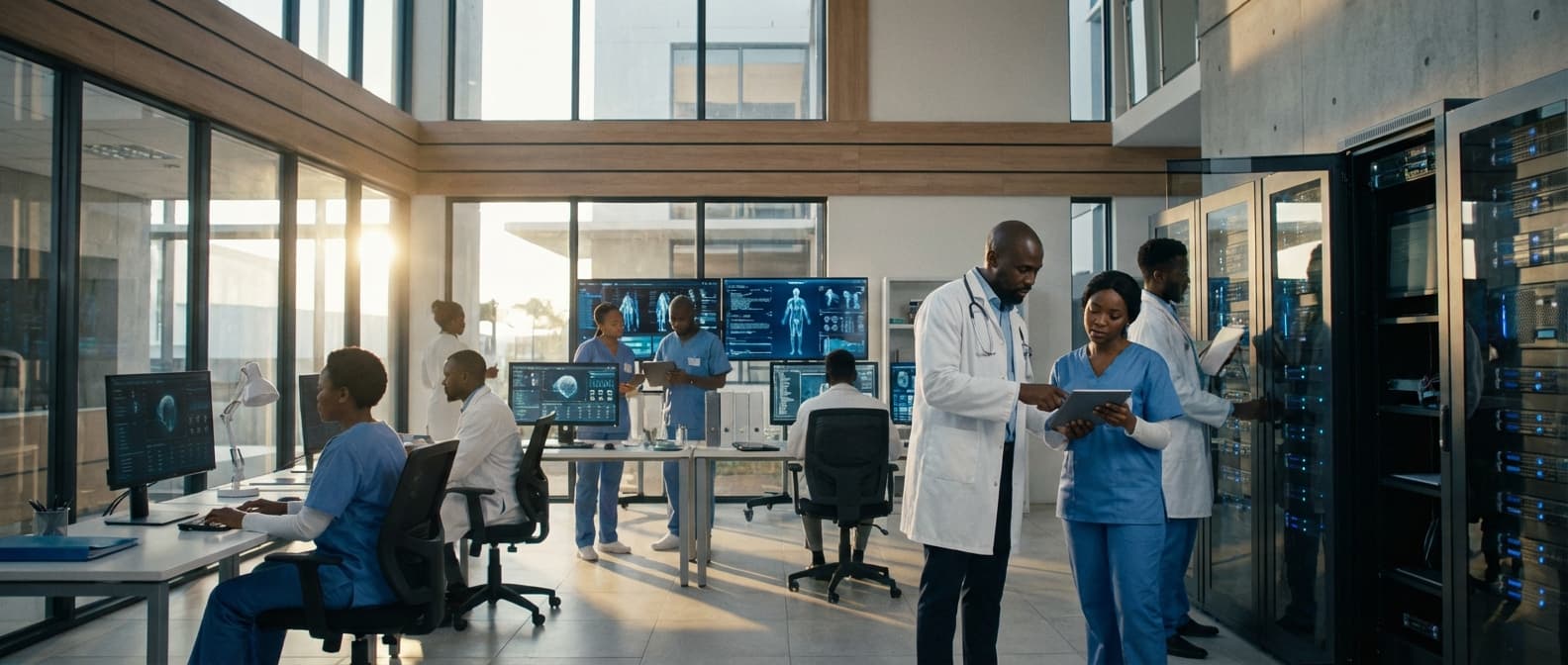
Tele-Radiology in Cameroon
Engineering Excellence & Technical Support
24/7 access to certified radiologists providing rapid, accurate remote interpretation of diagnostic imaging studies. High-standard technical execution following OEM protocols and local regulatory frameworks.
Bridging the Radiologist Gap
Tele-radiology platforms connect Cameroon's underserved rural and remote clinics with specialized radiologists, providing immediate diagnostic support and access to expert interpretations previously unavailable due to geographical and personnel limitations.
Accelerated Image Sharing & Diagnosis
Utilizing secure cloud-based infrastructure, imaging studies are uploaded and transmitted instantly to radiologists, drastically reducing turnaround times for diagnoses and enabling faster treatment decisions for critical cases across Cameroon.
AI-Powered Diagnostic Enhancement
Integration of AI algorithms within tele-radiology workflows assists Cameroonian radiologists by flagging potential abnormalities, improving accuracy, and prioritizing urgent cases, thereby enhancing the overall quality and efficiency of diagnostic imaging services.
What Is Tele-radiology In Cameroon?
Tele-radiology in Cameroon represents the transmission of radiological images (such as X-rays, CT scans, and MRIs) from a healthcare facility in Cameroon to a radiologist located remotely, often in another city or even internationally, for interpretation. This service leverages telecommunications technology to bridge geographical distances, enabling timely and expert diagnostic services in areas with limited access to specialized radiological personnel.
The core of tele-radiology involves the digital capture of medical images, their secure electronic transmission over networks, and the remote interpretation of these images by a qualified radiologist using specialized viewing workstations and software. The radiologist then dictates or electronically signs a report, which is transmitted back to the referring physician at the originating facility.
This service is critically needed in Cameroon due to a significant shortage of trained radiologists, particularly in rural and underserved regions. Many healthcare facilities lack in-house radiological expertise, leading to delayed diagnoses, suboptimal patient management, and increased morbidity and mortality.
Typical use cases include:
- Emergency Department Consultations: Providing rapid interpretation of trauma imaging (e.g., head CTs, skeletal surveys) to facilitate immediate clinical decision-making.
- Specialized Interpretations: Accessing expertise for complex cases such as advanced neuroimaging, oncological staging, or musculoskeletal MRI, which may not be available locally.
- Outpatient Imaging: Ensuring timely diagnosis for routine outpatient procedures, improving patient flow and reducing the need for long-distance travel.
- Remote and Rural Healthcare Support: Extending radiological diagnostic capabilities to clinics and hospitals in geographically isolated areas, thereby improving healthcare equity.
- Second Opinions: Facilitating independent expert review of challenging or equivocal findings to confirm diagnoses or guide treatment strategies.
- Capacity Building and Training: Remote radiologists can provide mentorship and training to local healthcare professionals, enhancing local diagnostic skills over time.
| Stakeholder | Need/Benefit | Impact on Healthcare Delivery |
|---|---|---|
| Patients in Rural/Underserved Areas | Access to timely and expert radiological diagnoses without extensive travel. | Reduced diagnostic delays, improved treatment outcomes, enhanced access to specialized care. |
| Healthcare Facilities in Remote Locations | Overcomes the shortage of in-house radiologists. | Enables provision of comprehensive diagnostic services, improves hospital efficiency, and enhances patient referral pathways. |
| General Practitioners and Specialists | Prompt access to expert interpretations for complex or critical cases. | Facilitates informed clinical decision-making, reduces diagnostic uncertainty, and optimizes patient management strategies. |
| National Health System | Improves overall healthcare quality and equity across the country. | Reduces disparities in access to advanced diagnostic imaging, strengthens the referral network, and potentially lowers overall healthcare costs through efficient resource utilization. |
| Radiology Trainees and Technicians | Opportunities for remote learning, case review, and skill development. | Enhances the quality of local radiology workforce training and professional development. |
Key Components of Tele-radiology in Cameroon
- Digital Image Acquisition (X-ray, CT, MRI, Ultrasound)
- Image Storage and Archiving (PACS - Picture Archiving and Communication System)
- Secure Network Transmission (VPN, encrypted data transfer)
- Remote Reading Stations with DICOM viewers
- Teleradiology Reporting Software
- Qualified Remote Radiologists
- Referring Physician and Workflow Management System
Who Needs Tele-radiology In Cameroon?
Tele-radiology, the practice of interpreting medical images remotely, offers significant advantages for improving healthcare accessibility and quality in Cameroon. The demand for these services is driven by a confluence of factors including a shortage of qualified radiologists, particularly in rural and underserved areas, and the need for specialized interpretations in complex cases. This technology can bridge geographical divides, allowing patients in remote regions to receive expert diagnostic opinions without the burden of long-distance travel, while also enabling local healthcare facilities to offer a wider range of diagnostic services.
| Target Customer/Department | Key Needs Addressed by Tele-Radiology | Potential Impact |
|---|---|---|
| Rural Clinics | Lack of radiologists, limited equipment, need for basic diagnostic imaging (X-ray, Ultrasound) | Improved access to diagnosis for common ailments, reduced patient referral costs and travel time. |
| Regional Hospitals | Radiologist shortages, limited subspecialty expertise, managing workflow | Enhanced diagnostic accuracy, access to specialized interpretations for complex cases, improved patient management. |
| University Hospitals/Specialized Centers | Workload management, access to niche subspecialties, peer consultation | Efficient service delivery, continuous learning, provision of highly specialized diagnostic services. |
| Private Clinics | Cost-effective access to specialized expertise, service expansion | Increased competitiveness, broader patient reach, improved quality of care. |
| Emergency Departments | Urgent interpretation needs, 24/7 availability of radiologists | Faster diagnosis and treatment initiation, improved patient outcomes in critical situations. |
| Public Health Programs | Large-scale screening, remote diagnostics, data collection for public health surveillance | Wider reach of health services, early disease detection, better disease control strategies. |
Target Customers & Departments for Tele-Radiology in Cameroon
- {"title":"Primary Healthcare Facilities (Rural & Remote Clinics)","description":"These facilities often lack onsite radiology services and struggle to provide basic diagnostic imaging. Tele-radiology allows them to send images for interpretation by qualified radiologists, enabling timely diagnosis and treatment planning for common conditions."}
- {"title":"District and Regional Hospitals","description":"While these hospitals may have some imaging equipment, they frequently face shortages of radiologists or have limited subspecialty expertise. Tele-radiology can supplement their existing services, providing access to specialists for complex cases and improving overall diagnostic accuracy."}
- {"title":"Specialized Medical Centers and University Hospitals","description":"Even well-equipped urban hospitals can benefit from tele-radiology for subspecialty interpretations (e.g., neuro-radiology, pediatric radiology, interventional radiology) and for managing peak workloads. This also facilitates peer consultation and continuous medical education."}
- {"title":"Private Clinics and Diagnostic Centers","description":"Private entities aiming to expand their service offerings or improve efficiency can leverage tele-radiology to provide advanced diagnostic imaging services to a wider patient base without the immediate need for full-time, in-house specialists."}
- {"title":"Emergency Departments","description":"Rapid interpretation of urgent imaging studies (e.g., CT scans for stroke, trauma) is critical. Tele-radiology can provide 24/7 access to radiologist reads, improving patient outcomes in time-sensitive situations."}
- {"title":"Public Health Initiatives and Outreach Programs","description":"Government and NGO-led health programs focused on specific diseases (e.g., tuberculosis, cancer screening) can utilize tele-radiology to facilitate widespread screening and diagnosis in remote populations."}
Tele-radiology Process In Cameroon
Tele-radiology in Cameroon is an evolving field aiming to bridge the gap in radiologist availability, especially in remote or underserved areas. The process generally involves a referring healthcare facility initiating an inquiry for a radiological interpretation, which is then transmitted electronically to a radiologist for analysis and reporting. This workflow streamlines access to expert diagnostic imaging services.
| Stage | Description | Key Actors | Technology/Tools Used | Challenges/Considerations |
|---|---|---|---|---|
| Inquiry Initiation | A healthcare facility (e.g., clinic, district hospital) identifies a need for a radiological interpretation for a patient's scan. | Referring Clinician/Technologist | Patient Information System (if available), Referral Forms (paper/digital) | Accurate patient history, clinical information, and appropriate scan selection are crucial. |
| Image Acquisition and Transmission | Radiological images are acquired using equipment at the referring facility. These images are then securely transmitted to a central tele-radiology hub or directly to a radiologist. | Radiology Technologist | X-ray machines, CT scanners, MRI scanners, PACS (Picture Archiving and Communication System), secure internet/VPN, specialized transmission software | Image quality, data security, internet connectivity, bandwidth limitations, interoperability of systems. |
| Triage and Assignment | Upon receipt, studies are triaged based on urgency and complexity. They are then assigned to an available and appropriate radiologist within the network. | Tele-radiology Coordinator/Manager, Senior Radiologist | Worklist management software, AI-powered triage tools (emerging) | Ensuring timely review of urgent cases, fair workload distribution, matching expertise to case complexity. |
| Radiological Interpretation | The assigned radiologist reviews the acquired images, analyzes them in conjunction with the patient's clinical information, and forms a diagnosis. | Radiologist | Workstations with high-resolution monitors, PACS viewer software, dictation software, AI-assisted diagnostic tools (emerging) | Maintaining diagnostic accuracy, managing interpretation turnaround time, dealing with image artifacts, radiologist burnout. |
| Report Generation and Transmission | The radiologist dictates or writes a detailed diagnostic report. This report is then finalized and transmitted back to the referring healthcare facility. | Radiologist, Transcriptionist (if applicable) | Speech recognition/dictation software, PACS reporting module, secure email/portal | Clarity and comprehensiveness of reports, accurate medical terminology, timely delivery of reports. |
| Feedback and Follow-up | The referring clinician reviews the report and integrates the findings into patient management. Feedback may be provided to the tele-radiology service, and follow-up scans may be requested. | Referring Clinician, Patient | Communication channels (phone, email, EMR) | Ensuring understanding of findings, effective communication between referring physician and radiologist, patient adherence to treatment. |
| Quality Assurance and Data Management | Regular audits of reports, image quality, and turnaround times are conducted. Patient data and reports are archived for future reference and research. | Quality Assurance Officer, IT Department, Radiologists | Audit tools, data analytics software, secure archiving systems | Maintaining high standards of care, ensuring data privacy and compliance, continuous improvement of the tele-radiology service. |
Tele-Radiology Workflow in Cameroon
- Inquiry Initiation
- Image Acquisition and Transmission
- Triage and Assignment
- Radiological Interpretation
- Report Generation and Transmission
- Feedback and Follow-up
- Quality Assurance and Data Management
Tele-radiology Cost In Cameroon
Tele-radiology services in Cameroon are an emerging and valuable solution for improving access to diagnostic imaging, particularly in remote or underserved areas. The cost of these services is influenced by several factors, leading to a range of pricing in local currency (Cameroonian Francs, XAF). Understanding these factors is crucial for healthcare providers and patients alike when considering tele-radiology solutions.
Key Pricing Factors:
- Complexity and Type of Scan: The cost generally correlates with the complexity of the imaging modality (e.g., X-ray, CT scan, MRI) and the specific body part or region being examined. More intricate scans requiring specialized interpretation will naturally command higher prices.
- Radiologist Expertise and Specialization: The experience, qualifications, and sub-specialization of the reporting radiologist play a significant role. Highly specialized radiologists (e.g., neuroradiologists, musculoskeletal radiologists) may charge more for their expertise.
- Turnaround Time (TAT): Urgent or STAT (as soon as possible) reads typically incur a premium fee compared to routine reporting, as they require immediate attention from the radiologist.
- Volume of Cases: Healthcare facilities that commit to a higher volume of tele-radiology cases might negotiate bulk discounts or preferential pricing from service providers.
- Technology Infrastructure: The investment in secure data transmission, Picture Archiving and Communication System (PACS), and reporting software by the tele-radiology provider can influence their pricing structure.
- Provider's Business Model: Whether the service is offered by a hospital's in-house tele-radiology department, a dedicated tele-radiology company, or a network of freelance radiologists, their operational costs and profit margins will affect pricing.
- Geographic Location within Cameroon: While tele-radiology aims to bridge distances, the operational costs for providers might subtly differ based on their physical location and the accessibility of resources.
- Ancillary Services: Additional services such as preliminary reports, second opinions, or specialized consultations can add to the overall cost.
Pricing Ranges in XAF (Cameroonian Francs):
It's important to note that these are approximate ranges and can fluctuate significantly. Specific quotations should always be obtained from individual tele-radiology service providers.
- Basic X-ray Interpretation: XAF 15,000 - XAF 30,000 per study.
- CT Scan Interpretation (excluding contrast): XAF 40,000 - XAF 80,000 per study.
- CT Scan Interpretation (with contrast): XAF 50,000 - XAF 100,000 per study.
- MRI Scan Interpretation (excluding contrast): XAF 60,000 - XAF 120,000 per study.
- MRI Scan Interpretation (with contrast): XAF 70,000 - XAF 150,000 per study.
- Urgent/STAT Reads: An additional surcharge of 20-50% may apply to the standard rates.
| Imaging Modality | Estimated Cost Range (XAF) | Notes |
|---|---|---|
| Basic X-ray Interpretation | 15,000 - 30,000 | Per study |
| CT Scan Interpretation (without contrast) | 40,000 - 80,000 | Per study |
| CT Scan Interpretation (with contrast) | 50,000 - 100,000 | Per study |
| MRI Scan Interpretation (without contrast) | 60,000 - 120,000 | Per study |
| MRI Scan Interpretation (with contrast) | 70,000 - 150,000 | Per study |
| Urgent/STAT Reads | Additional 20-50% Surcharge | On top of standard rates |
Factors Influencing Tele-Radiology Costs in Cameroon
- Complexity and Type of Scan (X-ray, CT, MRI)
- Radiologist Expertise and Specialization
- Required Turnaround Time (TAT)
- Volume of Cases / Bulk Discounts
- Technology Infrastructure & Software
- Provider's Business Model
- Ancillary Services (e.g., preliminary reports, second opinions)
- Geographic Location of Provider
Affordable Tele-radiology Options
Tele-radiology offers significant cost savings and improved efficiency for healthcare providers. By leveraging remote radiologists, organizations can reduce overhead associated with in-house staffing, facility costs, and recruitment. The value of tele-radiology lies in its ability to provide expert diagnostic services on-demand, improving turnaround times and patient outcomes. Value bundles are often offered by tele-radiology providers, bundling various services together at a discounted rate. This can include initial reads, secondary reads, subspecialty reads, and even preliminary reports. Cost-saving strategies encompass negotiating flexible contracts, utilizing technology to streamline workflows, and considering tiered service models based on urgency and subspecialty needs.
| Service/Bundle | Description | Potential Cost Savings/Value |
|---|---|---|
| Standard Read Bundle | Includes initial interpretation of general X-rays, CTs, MRIs by a general radiologist. | Reduced staffing costs, improved turnaround times for routine studies. |
| Subspecialty Bundle | Provides access to expert reads for specific areas like neuroradiology, musculoskeletal, or mammography. | Eliminates the need for expensive in-house subspecialists, improves diagnostic accuracy in complex cases. |
| After-Hours/24/7 Coverage | Ensures continuous radiologist availability for emergency or off-hours imaging. | Avoids overtime pay for in-house staff, maintains service continuity. |
| Quality Assurance/Second Read | An independent review of initial reads to enhance accuracy and patient safety. | Minimizes malpractice risk, improves diagnostic confidence. |
| Preliminary Report Option | Provides a rapid initial assessment, allowing for quicker clinical decision-making. | Faster patient management, improved throughput in emergency departments. |
Key Tele-Radiology Cost-Saving Strategies
- Negotiate flexible contract terms (e.g., per-study, per-hour, capitated models).
- Utilize advanced PACS and AI-powered tools for workflow optimization.
- Explore tiered service models for different report turnaround times and subspecialty needs.
- Consider a hybrid model: supplementing in-house radiologists with tele-radiology for specific times or subspecialties.
- Leverage volume discounts offered by tele-radiology providers.
- Focus on providers with strong technological infrastructure to minimize integration costs.
Verified Providers In Cameroon
In Cameroon's dynamic healthcare landscape, identifying and trusting healthcare providers is paramount. Franance Health has emerged as a leading accreditation and verification body, setting a high standard for quality and patient safety. This document outlines what Franance Health credentials signify and why they represent the best choice for healthcare consumers in Cameroon.
| Why Franance Health Verification is the Best Choice | Benefits for Patients | Benefits for Healthcare Providers | ||||
|---|---|---|---|---|---|---|
| Unmatched Trust and Reliability: Franance Health's rigorous vetting process provides an undeniable mark of quality and trustworthiness, reducing the anxiety of choosing a healthcare provider. | Peace of Mind: Knowing you are receiving care from a Franance Health verified provider means you can be confident in the quality, safety, and ethics of the treatment you receive. | Enhanced Reputation and Credibility: Accreditation by a recognized body like Franance Health significantly boosts a provider's reputation, attracting more patients and building trust within the community. | Access to Best Practices: Verified providers are committed to continuous improvement and staying abreast of the latest medical advancements and treatment protocols. | Operational Excellence: The verification process often leads to improvements in a provider's operational efficiency, management, and overall service delivery. | Competitive Advantage: In a crowded market, Franance Health certification differentiates providers, making them stand out as leaders in quality care. | Reduced Risk of Malpractice: Adherence to rigorous standards and best practices inherently lowers the risk of medical errors and subsequent legal issues. |
| Informed Decision-Making: Franance Health's verification empowers patients to make informed decisions about their healthcare by clearly identifying reliable and high-quality providers. | Improved Health Outcomes: Access to expertly verified providers increases the likelihood of receiving effective treatment and achieving better health outcomes. | Enhanced Patient Experience: Verified facilities are committed to patient satisfaction, offering a more comfortable and positive healthcare journey. | Protection Against Substandard Care: The verification process acts as a safeguard against potentially unqualified or unethical practitioners, ensuring a higher standard of care. | Greater Access to Specialized Services: Many specialized medical services are only offered by highly qualified and well-equipped facilities that meet stringent accreditation standards. | Empowerment Through Knowledge: Patients can confidently seek care from providers who have met the established benchmarks for quality and safety. | Advocacy for Patient Welfare: Franance Health's standards are designed to protect and promote the rights and well-being of every patient. |
| Attracting and Retaining Patients: Verified providers are more appealing to patients seeking quality care, leading to increased patient volume and loyalty. | Demonstration of Commitment to Excellence: Achieving and maintaining Franance Health credentials showcases a provider's dedication to providing the highest level of healthcare. | Streamlined Operations and Management: The accreditation process encourages robust internal processes, leading to more efficient and effective management. | Access to Funding and Partnerships: Some funding opportunities and partnerships may require or favor accredited healthcare providers. | Continuous Quality Improvement: The ongoing nature of accreditation promotes a culture of continuous learning and improvement within the organization. | Staff Motivation and Development: The pursuit of excellence and recognition can motivate healthcare staff and encourage professional growth. | Contribution to National Healthcare Standards: By adhering to and promoting high standards, Franance Health verified providers contribute to the overall advancement of healthcare in Cameroon. |
What Franance Health Credentials Mean:
- Rigorous Evaluation: Franance Health employs a comprehensive and multi-faceted evaluation process, assessing healthcare facilities and individual practitioners on a wide array of criteria.
- Clinical Excellence: Credentials signify adherence to best practices in medical treatment, diagnostics, and patient care, ensuring patients receive effective and up-to-date medical services.
- Safety and Hygiene Standards: A core component of the verification is the strict adherence to international safety protocols and stringent hygiene standards, minimizing the risk of infections and complications.
- Ethical Practices: Franance Health verifies that providers operate with the highest ethical standards, prioritizing patient well-being, informed consent, and confidentiality.
- Infrastructure and Equipment: The accreditation process includes an assessment of the facility's infrastructure, medical equipment, and technological capabilities, ensuring they are adequate and well-maintained.
- Qualified Personnel: Franance Health confirms that healthcare professionals possess the necessary qualifications, certifications, and ongoing professional development.
- Patient Rights Advocacy: Verified providers demonstrate a commitment to upholding patient rights, including access to information, the right to choose, and the right to respectful treatment.
Scope Of Work For Tele-radiology
This document outlines the Scope of Work (SOW) for the implementation and operation of a Tele-Radiology service. It details the technical deliverables, standard specifications, and operational requirements necessary to ensure a high-quality, efficient, and secure tele-radiology solution.
| Section | Description | Technical Deliverables | Standard Specifications |
|---|---|---|---|
| Tele-Radiology Platform | The core software system for managing image acquisition, storage, viewing, interpretation, and reporting. | Web-based or client-server application, PACS integration, RIS integration, DICOM viewer with advanced tools, secure data transfer protocols, audit trails, user management, reporting module. | HIPAA/GDPR compliance, DICOM 3.0 standards, HL7 integration capabilities, robust security features (encryption, access control, authentication), scalable architecture, high availability, disaster recovery. |
| Image Acquisition & Transmission | Process of capturing and securely transferring radiological images from the originating site to the tele-radiology platform. | DICOM compliant image export functionality, secure VPN or dedicated network connection, data compression (lossless preferred), image verification and validation mechanisms. | Secure transmission protocols (e.g., SFTP, HTTPS), network bandwidth requirements (min/recommended), image format standards (DICOM), reliable connection monitoring. |
| Radiologist Workstation & Tools | The hardware and software used by radiologists for image interpretation and report generation. | High-resolution diagnostic monitors (grayscale and color), ergonomic workstation setup, advanced image viewing software (e.g., multi-planar reconstruction, 3D rendering), dictation software or voice recognition system, secure remote access capabilities. | Monitor resolution and calibration standards, minimum workstation hardware specifications (CPU, RAM, GPU), ergonomic guidelines, voice recognition accuracy rates, multi-factor authentication for remote access. |
| Reporting & Communication | The process of generating and delivering diagnostic reports to referring physicians and stakeholders. | Structured reporting templates, integration with EHR/RIS, secure report distribution methods (fax, secure email, portal), report signing and version control. | Standardized reporting formats, HL7 integration for report transmission, secure communication channels, turnaround time SLAs, electronic signature compliance. |
| Data Security & Privacy | Measures to protect patient data and ensure compliance with privacy regulations. | End-to-end encryption (in transit and at rest), access control policies and user roles, regular security audits and vulnerability assessments, data anonymization/pseudonymization capabilities, audit logs for all data access and modifications. | Encryption standards (e.g., AES-256), compliance with HIPAA, GDPR, or local data protection laws, data retention policies, incident response plan. |
| Integration with Existing Systems | Seamless integration of the tele-radiology solution with the client's existing IT infrastructure. | PACS integration, RIS integration, EHR/EMR integration, directory services (e.g., Active Directory) integration for user authentication. | DICOM Conformance Statement, HL7 messaging standards, API documentation for custom integrations, compatibility testing with existing systems. |
| Training & Support | Comprehensive training for users and ongoing technical support for the tele-radiology system. | On-site or remote training sessions for radiologists, technologists, and IT staff, comprehensive user manuals and documentation, dedicated technical support team, service level agreements (SLAs) for support response and resolution times. | Training curriculum outlines, support contact information and hours, defined response and resolution times for different priority levels, knowledge base availability. |
| Performance Monitoring & Reporting | Continuous monitoring of system performance, image turnaround times, and service availability. | Real-time dashboards for system health, performance metrics reporting (e.g., average report turnaround time, system uptime), incident reporting and analysis. | Key Performance Indicators (KPIs) for tele-radiology services, reporting frequency and format, performance baseline establishment. |
Key Objectives
- To provide remote interpretation of radiological images (X-ray, CT, MRI, Ultrasound, etc.) by qualified radiologists.
- To enhance diagnostic turnaround times, especially in underserved or remote areas.
- To improve access to specialized radiological expertise.
- To ensure secure and efficient transmission of medical images and reports.
- To comply with all relevant healthcare regulations and data privacy standards.
Service Level Agreement For Tele-radiology
This Service Level Agreement (SLA) outlines the guaranteed response times and uptime for the Tele-Radiology services provided by [Your Company Name] (hereinafter referred to as "Provider") to [Client Company Name] (hereinafter referred to as "Client"). This SLA is an integral part of the Master Services Agreement (MSA) between the parties.
| Service Type | Guaranteed Response Time (from study upload) | Service Level Objective (SLO) | Exclusions |
|---|---|---|---|
| Emergency Study | Within 30 minutes | 99.5% of Emergency Studies | Client system issues preventing report access, Force Majeure |
| Urgent Study | Within 4 hours | 98% of Urgent Studies | Client system issues preventing report access, Force Majeure |
| Routine Study | Within 24 business hours | 97% of Routine Studies | Client system issues preventing report access, Force Majeure |
Key Definitions
- Emergency Study: An urgent radiology examination requiring immediate interpretation, typically for patients in critical condition or presenting with conditions that pose an immediate threat to life or limb. These are identified by the ordering physician as 'STAT' or 'Emergency'.
- Urgent Study: A radiology examination requiring prompt interpretation, but not immediately life-threatening. These are typically flagged as 'Urgent' or requiring same-day turnaround.
- Routine Study: A standard radiology examination with no immediate time constraints. These are typically interpreted within a standard business day.
- Uptime: The percentage of time the Tele-Radiology service is available and fully functional, excluding scheduled maintenance and Force Majeure events.
- Response Time: The time elapsed from when a study is successfully uploaded to the Provider's system until the preliminary or final report is made available to the Client.
- Scheduled Maintenance: Pre-announced periods when the service may be temporarily unavailable for system updates, upgrades, or planned maintenance. Notification will be provided at least [e.g., 48] hours in advance.
Frequently Asked Questions

Ready when you are
Let's scope your Tele-Radiology in Cameroon project in Cameroon.

Scaling healthcare logistics and technical systems across the entire continent.