
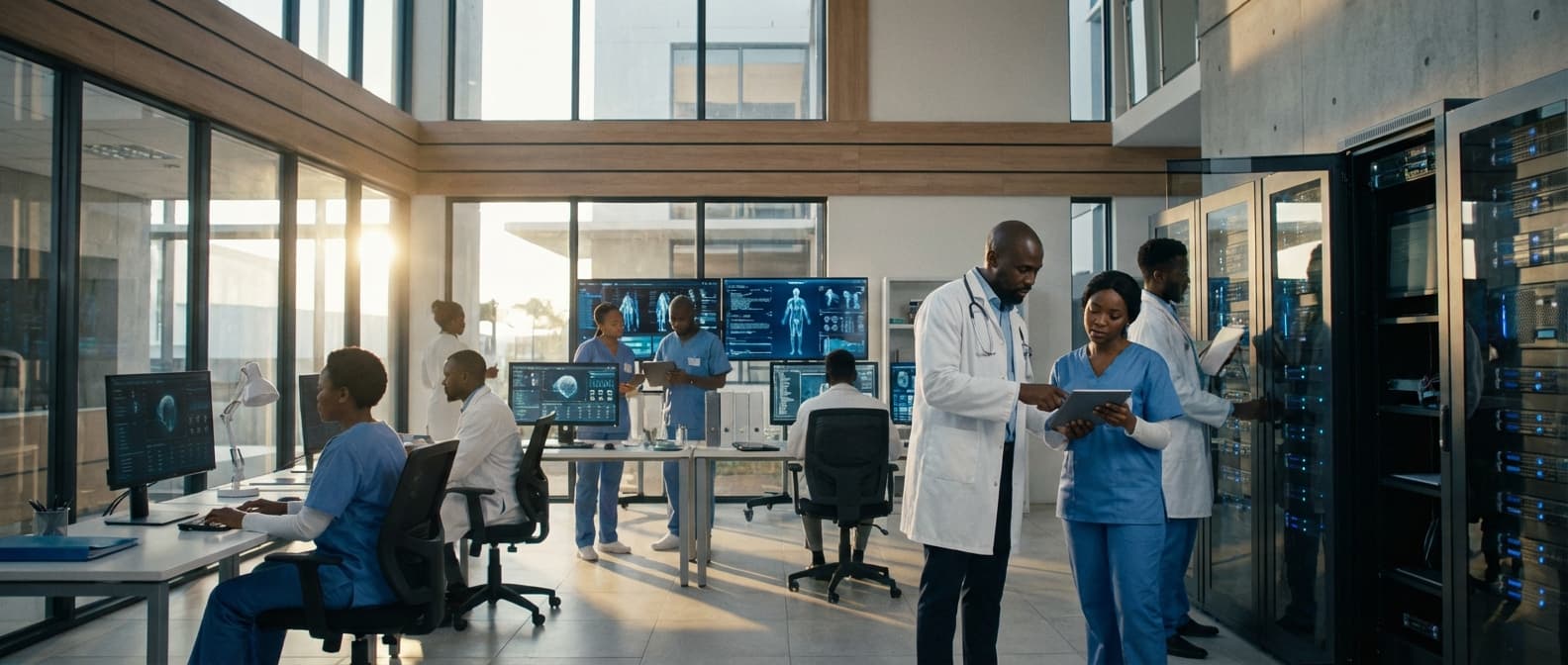
Medical IT Consultation in Cameroon
Engineering Excellence & Technical Support
Strategic technology consulting to optimize healthcare operations, streamline workflows, and integrate cutting-edge medical information systems. High-standard technical execution following OEM protocols and local regulatory frameworks.
Optimizing Hospital Infrastructure
We conduct comprehensive assessments of existing medical IT infrastructure in Cameroonian hospitals, identifying bottlenecks and recommending scalable, cost-effective solutions for enhanced connectivity, data management, and telemedicine capabilities, aligning with Ministry of Health digital health strategies.
Enhancing Cybersecurity for Healthcare Data
Our consultancy provides tailored cybersecurity strategies to protect sensitive patient information within Cameroonian healthcare facilities. This includes implementing robust data encryption, access control mechanisms, and compliance with national and international data privacy regulations to mitigate risks of breaches.
Implementing & Managing Electronic Health Records (EHR)
We guide Cameroonian healthcare providers through the selection, implementation, and ongoing management of Electronic Health Record (EHR) systems. Our focus is on improving patient care coordination, reducing medical errors, and enabling data-driven decision-making for better health outcomes and resource allocation.
What Is Medical It Consultation In Cameroon?
Medical IT consultation in Cameroon refers to specialized advisory services focused on the strategic planning, implementation, optimization, and management of information technology within healthcare organizations. This encompasses a broad spectrum of technological solutions designed to enhance patient care, improve operational efficiency, ensure data security and compliance, and facilitate research and innovation within the Cameroonian healthcare ecosystem. The service leverages expert knowledge of both IT best practices and the unique challenges and regulatory landscape specific to healthcare in Cameroon, including its infrastructure limitations and socioeconomic context.
| Who Needs Medical IT Consultation in Cameroon? | Typical Use Cases | ||
|---|---|---|---|
| Hospitals (Public and Private): Seeking to modernize patient record systems, improve administrative workflows, or implement telemedicine capabilities. | Implementing an EMR system for centralized patient data management and reduced medical errors. | Enhancing cybersecurity measures to comply with data protection laws and prevent breaches. | Developing a strategy for interoperability with regional health centers or national health information networks. |
| Clinics and Health Centers: Aiming to digitize patient records, improve appointment scheduling, or adopt basic telehealth services. | Transitioning from paper-based records to a digital solution for better accessibility and tracking. | Setting up a secure platform for patient communication and appointment reminders. | Evaluating and selecting affordable IT solutions suitable for resource-constrained settings. |
| Government Health Ministries and Agencies: Focusing on national health information systems, public health surveillance, and policy development. | Designing and implementing a national health data repository for epidemiological studies and resource allocation. | Developing policies and guidelines for the adoption of digital health technologies across the country. | Establishing frameworks for secure data sharing for public health initiatives and research. |
| Pharmaceutical Companies and Medical Device Manufacturers: Requiring IT solutions for data management, supply chain optimization, and research collaboration. | Implementing systems for clinical trial data management and regulatory compliance. | Optimizing supply chain logistics for medical products through IT integration. | Developing platforms for post-market surveillance and adverse event reporting. |
| Healthcare Research Institutions: Needing robust IT infrastructure for data analysis, collaboration, and secure storage of research data. | Setting up high-performance computing environments for complex medical data analysis. | Implementing secure collaboration tools for researchers across different institutions or countries. | Ensuring compliance with data privacy regulations for research participants. |
| Non-Governmental Organizations (NGOs) in Health: Working to improve healthcare access and delivery in underserved areas. | Deploying mobile health (mHealth) solutions for community health workers. | Establishing basic IT infrastructure in remote health posts for record-keeping and communication. | Implementing data collection tools for program monitoring and evaluation. |
Key Components of Medical IT Consultation:
- Healthcare IT Strategy Development: Crafting long-term IT roadmaps aligned with organizational goals, considering scalability, interoperability, and future technological advancements.
- Electronic Health Record (EHR) / Electronic Medical Record (EMR) System Selection and Implementation: Guiding the procurement, deployment, and customization of EHR/EMR systems to meet clinical and administrative needs.
- Health Information Exchange (HIE) and Interoperability Solutions: Designing and implementing frameworks for seamless data sharing between different healthcare providers and systems.
- Cybersecurity and Data Privacy (HIPAA, GDPR, and local regulations): Developing robust security protocols, risk assessments, and compliance strategies to protect sensitive patient data.
- Telemedicine and Remote Patient Monitoring Infrastructure: Advising on the setup and integration of technologies enabling remote consultations and patient care.
- Healthcare Analytics and Business Intelligence: Implementing systems for data analysis to derive insights for improved clinical outcomes, operational efficiency, and financial management.
- IT Infrastructure Assessment and Optimization: Evaluating existing hardware, software, and network capabilities, and recommending upgrades or replacements.
- Cloud Computing Strategy for Healthcare: Advising on the adoption of cloud solutions for data storage, application hosting, and disaster recovery.
- Digital Health Innovation and Emerging Technologies: Exploring the potential of AI, IoT, and other innovative technologies to transform healthcare delivery.
- IT Project Management and Governance: Providing oversight and management for IT projects, ensuring timely and budget-compliant execution.
- Training and Change Management: Developing and delivering training programs for healthcare staff on new IT systems and fostering adoption.
- IT Support and Managed Services: Establishing frameworks for ongoing technical support and maintenance of healthcare IT systems.
Who Needs Medical It Consultation In Cameroon?
In Cameroon, the increasing reliance on technology within the healthcare sector necessitates specialized expertise. Medical IT consultation is crucial for optimizing operations, enhancing patient care, and ensuring compliance with evolving digital health standards. This consultation addresses challenges related to electronic health records (EHRs), cybersecurity, network infrastructure, telemedicine implementation, and overall digital transformation strategies.
| Customer Type | Key Departments/Needs | Specific IT Challenges/Opportunities |
|---|---|---|
| Public Hospitals and Regional Health Centers | Administration, IT Department, Clinical Departments (e.g., Cardiology, Pediatrics), Pharmacy, Laboratory | Implementing/upgrading EHR systems, improving network connectivity, cybersecurity for patient data, data management and analytics, legacy system integration, digital patient engagement, training IT staff. |
| Private Hospitals and Clinics | Management, IT Support, Front Desk, Medical Records, Billing, Radiology, Oncology | Streamlining patient registration and scheduling, enhancing billing and revenue cycle management, deploying PACS (Picture Archiving and Communication Systems), cybersecurity to protect sensitive data, cloud migration, implementing patient portals. |
| NGOs in Healthcare | Program Management, Field Operations, Data Management, Monitoring & Evaluation | Developing and deploying mobile health (mHealth) solutions, data collection and analysis for public health programs, secure data sharing for remote monitoring, building digital infrastructure in underserved areas, capacity building for local staff. |
| Medical Research Institutions | Research Departments, Data Analysis Units, IT Infrastructure | Secure storage and management of research data, implementing bioinformatics tools, ensuring data integrity and reproducibility, network security for sensitive research findings, collaborative research platforms. |
| Diagnostic Laboratories and Imaging Centers | Laboratory Technicians, Radiologists, IT Department, Administration | LIS (Laboratory Information Systems) and RIS (Radiology Information Systems) implementation/optimization, PACS integration, secure data transfer to referring physicians, cloud-based storage solutions, compliance with data privacy regulations. |
| Government Health Ministries and Agencies | Public Health Departments, Health Information Systems Unit, Policy and Planning | Developing national health IT strategies, implementing national EHRs, data standardization and interoperability, public health surveillance systems, cybersecurity for national health data, digital health policy development and enforcement. |
Target Customers for Medical IT Consultation in Cameroon
- Public Hospitals and Regional Health Centers
- Private Hospitals and Clinics
- Non-Governmental Organizations (NGOs) focused on healthcare
- Medical Research Institutions
- Diagnostic Laboratories and Imaging Centers
- Pharmaceutical Companies with digital health initiatives
- Healthcare Startups
- Government Health Ministries and Agencies
Medical It Consultation Process In Cameroon
The Medical IT Consultation Process in Cameroon outlines the systematic approach undertaken by IT service providers to address the technological needs of healthcare facilities. This workflow ensures that client requirements are understood, solutions are tailored, and implementation is executed efficiently, ultimately aiming to improve healthcare delivery through technology.
| Stage | Description | Key Activities | Deliverables/Outcomes |
|---|---|---|---|
| Initial Inquiry & Needs Assessment | Understanding client's current IT landscape and future requirements. | Initial meetings, site visits, interviews, documentation review. | Detailed understanding of client needs, pain points, and objectives. |
| Proposal Development & Solution Design | Formulating tailored IT solutions and outlining project scope and cost. | Technical design, solution architecture, cost estimation, proposal writing. | Comprehensive IT proposal with scope, timeline, and budget. |
| Client Review & Approval | Presenting and finalizing the proposed solution with the client. | Proposal presentation, Q&A, negotiation, contract signing. | Approved project plan and signed service agreement. |
| Project Planning & Kick-off | Developing a detailed roadmap and initiating the project. | Project breakdown, resource allocation, communication plan, kick-off meeting. | Detailed project plan, assigned team, clear project objectives. |
| Implementation & Configuration | Deploying and setting up the approved IT solutions. | Hardware installation, software deployment, system integration, configuration. | Functional and configured IT systems. |
| Training & User Adoption | Equipping healthcare staff with the skills to use new technologies. | Training material development, training sessions, user guides. | Trained staff, increased user proficiency. |
| Testing & Quality Assurance | Ensuring the reliability and effectiveness of the implemented solutions. | System testing, user acceptance testing (UAT), bug fixing. | Tested and validated IT systems. |
| Deployment & Go-Live | Launching the new IT systems into the live environment. | System deployment, transition support, post-go-live monitoring. | Operational and accessible IT systems. |
| Post-Implementation Support & Maintenance | Providing ongoing assistance and upkeep of the IT infrastructure. | Help desk support, system updates, performance monitoring, issue resolution. | Stable, secure, and optimized IT environment, ongoing client satisfaction. |
Key Stages of the Medical IT Consultation Process in Cameroon
- Initial Inquiry & Needs Assessment: This foundational stage involves a potential client (a hospital, clinic, or other healthcare organization) reaching out to an IT consultancy firm. The initial contact can be via phone, email, or through a website contact form. The consultancy then schedules an initial meeting to understand the client's existing IT infrastructure, identify current pain points, and define the specific objectives and challenges the client hopes to address with IT solutions. This may involve understanding their existing systems (EHR, PACS, billing software), network infrastructure, hardware, security concerns, and regulatory compliance requirements specific to the Cameroonian healthcare sector.
- Proposal Development & Solution Design: Based on the detailed needs assessment, the IT consultancy develops a comprehensive proposal. This document outlines the proposed IT solutions, which could include implementing new Electronic Health Records (EHR) systems, upgrading network infrastructure, deploying cybersecurity measures, setting up telemedicine platforms, or providing IT support and maintenance. The proposal will detail the scope of work, timelines, required resources (hardware, software, personnel), and associated costs. This stage also involves the technical design of the proposed solutions, ensuring they are compatible with existing systems and meet industry best practices and local regulations.
- Client Review & Approval: The proposal is presented to the client for thorough review. This involves discussions to clarify any technical jargon, address potential concerns, and ensure alignment with the client's budget and strategic goals. Negotiation may occur at this stage to fine-tune the scope and cost. Once both parties are in agreement, the client formally approves the proposal, often through a signed contract.
- Project Planning & Kick-off: Following approval, a detailed project plan is created. This plan breaks down the implementation into manageable tasks, assigns responsibilities, sets milestones, and defines communication protocols. A project kick-off meeting is held with the client's key stakeholders and the IT consultancy's project team to formally commence the project, reiterate objectives, and ensure everyone is on the same page regarding expectations and responsibilities.
- Implementation & Configuration: This is the core execution phase where the agreed-upon IT solutions are deployed. This can involve hardware installation, software configuration, system integration, data migration, and network setup. Rigorous testing is conducted throughout this stage to identify and resolve any bugs or compatibility issues.
- Training & User Adoption: For new systems or significant upgrades, comprehensive training is provided to the healthcare staff who will be using the technology. This ensures smooth user adoption and maximizes the benefits of the implemented solutions. Training may be delivered in various formats, including in-person sessions, workshops, or online modules.
- Testing & Quality Assurance: Before the final go-live, extensive testing and quality assurance (QA) are performed. This includes user acceptance testing (UAT) where end-users validate that the system meets their needs and functions as expected. Any identified issues are addressed and re-tested until satisfactory results are achieved.
- Deployment & Go-Live: This is the official launch of the new IT system or updated infrastructure. The IT consultancy provides support during the transition to minimize disruption to healthcare operations. Post-go-live monitoring is crucial to identify and address any immediate issues that arise.
- Post-Implementation Support & Maintenance: The consultancy provides ongoing support and maintenance services as outlined in the contract. This can include regular system updates, troubleshooting, help desk support, and proactive monitoring to prevent future problems. Regular performance reviews and feedback sessions with the client are conducted to ensure continued satisfaction and identify opportunities for further optimization.
Medical It Consultation Cost In Cameroon
Consulting on Medical IT in Cameroon involves a range of costs influenced by several key factors. These include the complexity of the project, the specific services required (e.g., EHR implementation, network security, telemedicine setup, data analytics), the experience and reputation of the IT consultant or firm, and the duration of the engagement. Smaller, one-off projects like basic network assessments might be more affordable, while comprehensive EHR system rollouts or cybersecurity audits will naturally command higher fees. The location within Cameroon can also play a minor role, with major cities like Douala and Yaoundé potentially having slightly higher rates due to operational costs. Hourly rates for individual consultants typically range from XAF 20,000 to XAF 75,000, depending on expertise. Project-based fees can vary significantly, from XAF 500,000 for simple IT strategy advice to XAF 15,000,000+ for complex system integrations and deployments.
| Service/Consultation Type | Estimated Cost Range (XAF) | Notes |
|---|---|---|
| Basic IT Infrastructure Assessment | 150,000 - 500,000 | Focus on current hardware, software, and network. |
| Network Security Audit | 300,000 - 1,200,000 | Assessing vulnerabilities and recommending security protocols. |
| EHR/EMR System Selection & Planning | 500,000 - 2,500,000 | Guidance on choosing and initial planning for implementation. |
| EHR/EMR Implementation Support | 2,000,000 - 15,000,000+ | Can be a significant portion of the total project cost, depending on complexity and customization. |
| Telemedicine Platform Setup & Integration | 800,000 - 5,000,000 | Includes platform selection, integration with existing systems, and user training. |
| IT Strategy & Digital Transformation Planning | 400,000 - 2,000,000 | Developing a roadmap for technology adoption and integration. |
| Data Analytics & Reporting Setup | 600,000 - 3,000,000 | Implementing systems for data analysis and generating insights. |
| Hourly Consultation Rate (Expert) | 20,000 - 75,000 | Per hour, varies greatly based on specialization and experience. |
Key Factors Influencing Medical IT Consultation Costs in Cameroon
- Project Complexity and Scope
- Specific Services Required (EHR, Security, Telemedicine, etc.)
- Consultant/Firm Experience and Reputation
- Duration of Engagement
- Geographic Location within Cameroon
- Level of Customization Needed
- Ongoing Support and Maintenance Requirements
Affordable Medical It Consultation Options
Navigating the complexities of medical IT can be daunting, especially for practices mindful of their budget. Fortunately, there are various affordable consultation options available. These range from project-specific engagements to ongoing support packages, all designed to provide expert guidance without breaking the bank. Understanding value bundles and implementing cost-saving strategies are key to maximizing your IT investment.
| Strategy | Description | Cost-Saving Benefit |
|---|---|---|
| Value Bundles | Pre-packaged service offerings that combine multiple IT services (e.g., network monitoring, cybersecurity, helpdesk support, cloud management) at a reduced rate compared to purchasing them individually. | Provides predictable costs and ensures comprehensive coverage for essential IT functions. Often includes proactive maintenance, reducing the likelihood of costly emergencies. |
| Outsourcing Non-Core Functions | Engaging external consultants or MSPs for tasks like IT support, data backups, or software updates that are not central to patient care. | Reduces overhead associated with in-house IT staff, including salaries, benefits, training, and infrastructure. Allows internal staff to focus on core competencies. |
| Leveraging Cloud-Based Solutions | Utilizing Software-as-a-Service (SaaS) for EMR/EHR, practice management, and other critical applications. | Eliminates the need for expensive on-premises hardware and maintenance. Offers scalability and often includes IT support and updates as part of the subscription. |
| Standardizing Hardware and Software | Adopting a consistent set of IT equipment and applications across the practice. | Simplifies management, reduces training time, and allows for bulk purchasing discounts. Streamlines troubleshooting and support. |
| Preventive Maintenance and Monitoring | Implementing regular IT system checks, updates, and proactive monitoring to identify and address potential issues before they cause downtime or data breaches. | Significantly reduces the cost of emergency repairs and data recovery. Minimizes lost revenue due to system outages. |
| Negotiating Contracts | Carefully reviewing and negotiating terms with IT vendors, consultants, and software providers. | Ensures you are getting competitive pricing and the best value for your investment. Look for opportunities for long-term contracts with potential discounts. |
Understanding Medical IT Consultation Options
- Project-Based Consultations: Ideal for specific needs like EMR/EHR implementation, cybersecurity audits, or network upgrades. You pay for the defined scope of work.
- Retainer-Based Consultations: Provides ongoing access to IT expertise for a fixed monthly fee. This is excellent for proactive maintenance, strategic planning, and immediate support needs.
- On-Demand Consultations: Suitable for ad-hoc troubleshooting or quick advice. You typically pay an hourly rate for the time used.
- Virtual Consultations: Leveraging video conferencing and remote access can significantly reduce travel costs and increase accessibility to specialized IT professionals.
- Managed Service Providers (MSPs) with Healthcare Focus: Many MSPs offer tiered packages specifically for healthcare, which can be more cost-effective than hiring in-house IT staff for certain levels of support.
Verified Providers In Cameroon
Navigating healthcare in Cameroon can be a challenge. Ensuring you're accessing quality care from legitimate and skilled professionals is paramount. This is where verified providers, particularly those with Franance Health credentials, stand out. Franance Health is a recognized body that rigorously vets healthcare practitioners, ensuring they meet high standards of expertise, ethical practice, and regulatory compliance. Choosing a provider with Franance Health credentials offers a significant advantage, providing peace of mind and assurance of receiving competent and trustworthy medical services.
| Provider Type | Franance Health Credential Benefits | Key Considerations for Patients |
|---|---|---|
| General Practitioners | Ensures a solid foundation of diagnostic and treatment skills. Reliable first point of contact for health concerns. | Look for the official Franance Health seal or certificate. Don't hesitate to ask about their credentialing. |
| Specialist Doctors (e.g., Cardiologists, Dermatologists) | Confirms advanced expertise and specialized training in their field. Assurance of targeted and effective treatment. | Verify the specialist's specific Franance Health certification relevant to their area of practice. |
| Nurses and Midwives | Guarantees competency in patient care, adherence to safety protocols, and ethical conduct. Crucial for maternal and child health. | Seek out nurses and midwives who can readily present their Franance Health credentials for your peace of mind. |
| Pharmacists | Ensures knowledge of medications, safe dispensing practices, and accurate patient counseling. Vital for medication adherence and safety. | Confirm that the pharmacy and its practitioners are recognized by Franance Health for reliable pharmaceutical services. |
Why Franance Health Credentials Represent the Best Choice:
- Rigorous Vetting Process: Franance Health employs a comprehensive evaluation system that includes reviewing qualifications, experience, and adherence to professional standards.
- Commitment to Quality Care: Certified providers are dedicated to delivering high-quality medical services, prioritizing patient well-being and positive health outcomes.
- Enhanced Patient Trust and Safety: The credentialing process builds trust by assuring patients that they are interacting with legitimate and competent healthcare professionals.
- Adherence to Ethical Standards: Franance Health certified providers are expected to uphold the highest ethical principles in their practice.
- Access to Skilled Professionals: By seeking out Franance Health credentials, patients gain access to a network of demonstrably skilled and knowledgeable healthcare providers.
Scope Of Work For Medical It Consultation
This Scope of Work (SOW) outlines the technical consultation services to be provided by [Consultant Name/Company] to [Client Name/Organization] for their medical IT infrastructure. The primary objective is to assess, recommend, and assist in the implementation of solutions that enhance efficiency, security, and compliance within the client's healthcare IT environment.
| Technical Deliverable | Description | Standard Specification / Format | Timeline (Indicative) |
|---|---|---|---|
| Current State Assessment Report | A comprehensive document detailing the existing IT infrastructure, including hardware inventory, software licenses, network topology, cybersecurity posture, and user workflows. | PDF format. Includes diagrams, tables, and executive summary. Minimum of 30 pages. | 2-3 Weeks |
| Gap Analysis and Risk Assessment | Identifies discrepancies between the current state and desired future state, along with potential risks and their impact, particularly concerning security and compliance. | PDF format. Clearly outlines identified gaps, risk levels (e.g., High, Medium, Low), and mitigation strategies. | Included within Current State Assessment Report |
| Technology Recommendations Report | Proposes specific technologies, software solutions, and hardware upgrades to address identified gaps and improve operational efficiency. Includes justification and potential ROI. | PDF format. Prioritized recommendations with vendor-neutral overviews. Includes cost estimates. | 2 Weeks |
| IT Strategic Roadmap | A phased plan for IT development and implementation over a defined period (e.g., 1-3 years), outlining key initiatives, resource requirements, and success metrics. | PDF format. Visual roadmap representation. Aligns with business objectives. | 1 Week |
| Compliance Audit Report (if applicable) | An assessment of the IT infrastructure against specific healthcare regulations, highlighting areas of non-compliance and providing actionable steps for remediation. | PDF format. Detailed findings per regulation. Includes remediation plans. | 2-4 Weeks (depending on scope) |
| Project Plan Templates (for future projects) | Standardized templates for IT project planning, including scope definition, resource allocation, risk management, and communication plans. | Microsoft Project or equivalent format, and editable Word/Excel templates. | 1 Week |
| Knowledge Transfer Sessions | Scheduled meetings to educate client IT staff on recommended technologies, best practices, and system management. | Live virtual or in-person sessions. Supporting presentation slides (PowerPoint format) and documentation. | As per project schedule |
Objectives
- Assess the current medical IT infrastructure, including hardware, software, networking, and security protocols.
- Identify gaps and vulnerabilities in the existing system.
- Provide recommendations for system upgrades, new technology adoption, and process improvements.
- Develop a strategic IT roadmap aligned with the client's healthcare goals.
- Ensure compliance with relevant healthcare regulations (e.g., HIPAA, HITECH, GDPR).
- Assist in the planning and execution of IT projects, as defined in subsequent statements of work.
- Provide training and knowledge transfer to client IT staff where applicable.
Service Level Agreement For Medical It Consultation
This Service Level Agreement (SLA) outlines the response times and uptime guarantees for Medical IT Consultation services provided by [Your Company Name] to [Client Name]. This SLA is an addendum to the Master Service Agreement (MSA) between the parties.
| Service/System | Uptime Guarantee | Response Time (Initial Acknowledgment) | Resolution Time Target (Best Effort) |
|---|---|---|---|
| Core Electronic Health Record (EHR) System | 99.9% Monthly | Emergency: 15 minutes High-Priority: 1 hour Normal: 4 business hours | Emergency: 2 hours High-Priority: 8 business hours Normal: 2 business days |
| Critical Medical Device Connectivity | 99.8% Monthly | Emergency: 15 minutes High-Priority: 1 hour Normal: 4 business hours | Emergency: 2 hours High-Priority: 8 business hours Normal: 2 business days |
| Patient Portal & Scheduling System | 99.5% Monthly | High-Priority: 2 business hours Normal: 8 business hours | High-Priority: 1 business day Normal: 3 business days |
| General IT Support (Email, Network, Workstations) | N/A (Best Effort Support) | Normal: 8 business hours | Normal: 3 business days |
Definitions
- Business Hours: Monday to Friday, 9:00 AM to 5:00 PM [Client's Time Zone], excluding public holidays observed by [Your Company Name].
- Emergency Incident: A critical service disruption that renders a core medical IT system unusable or significantly impacts patient care. Examples include complete system outage, inability to access patient records, or failure of critical medical device connectivity.
- High-Priority Incident: A significant service degradation that impacts essential functions but does not render a core system completely unusable. Examples include intermittent access issues, slow system performance affecting multiple users, or a non-critical medical device malfunction.
- Normal Incident: A minor service degradation or request that does not significantly impact core functions or patient care. Examples include a single user experiencing minor performance issues, requests for routine system updates, or non-urgent inquiries.
- Uptime: The percentage of time a specified IT system or service is operational and accessible to the client.
- Downtime: The percentage of time a specified IT system or service is not operational or accessible.
- Resolution: The point at which a reported incident is fixed, a workaround is provided, or the service is restored to a functional state.
Frequently Asked Questions

Ready when you are
Let's scope your Medical IT Consultation in Cameroon project in Cameroon.

Scaling healthcare logistics and technical systems across the entire continent.