
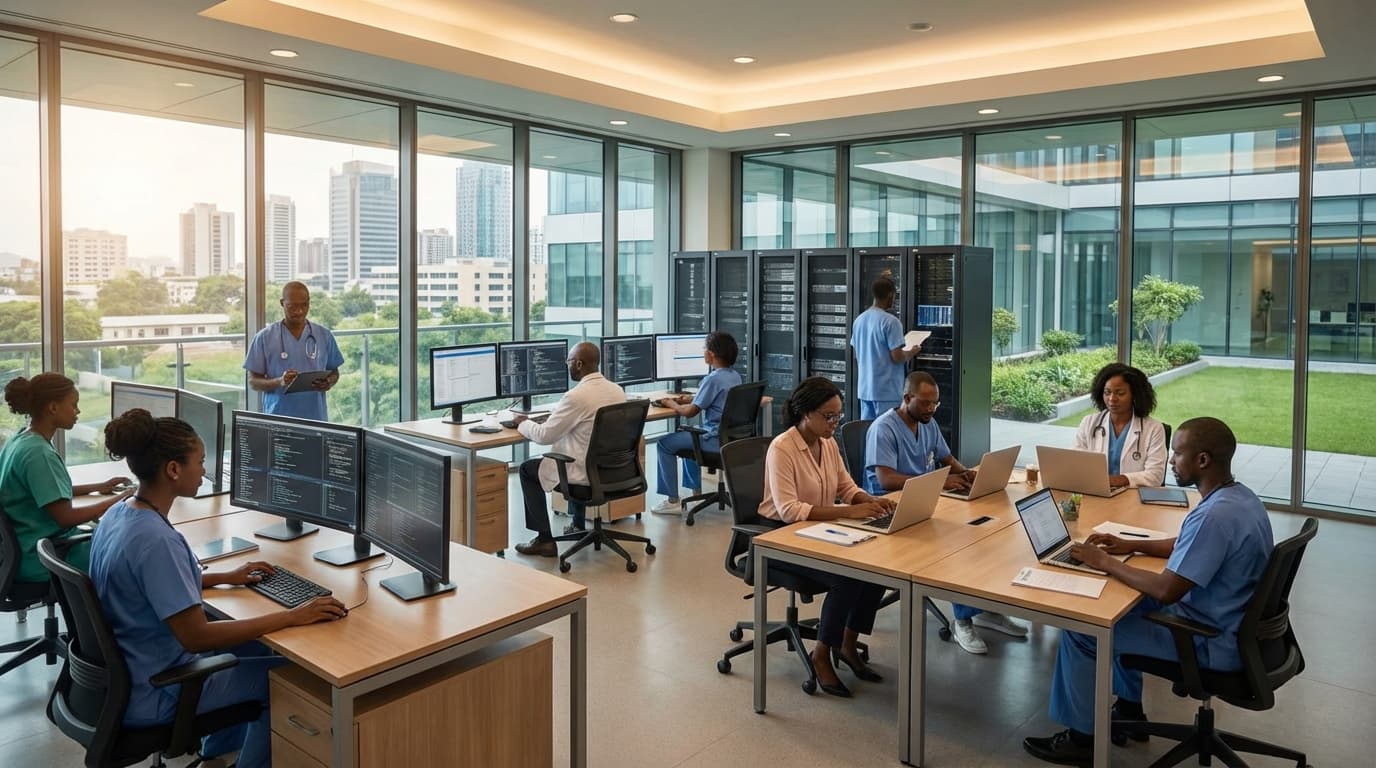
Radiology Reader & Reporting Support in Cameroon
Engineering Excellence & Technical Support
Remote radiology reading and reporting services High-standard technical execution following OEM protocols and local regulatory frameworks.
Enhanced Diagnostic Accuracy
Leveraging advanced AI algorithms, our platform provides automated preliminary findings and highlights potential abnormalities in radiological images, significantly improving the speed and accuracy of diagnosis for radiologists in remote or underserved areas of Cameroon.
Streamlined Reporting Workflow
Our integrated reporting tools offer structured templates, intelligent dictation support, and seamless integration with existing PACS systems, empowering radiologists in Cameroon to generate comprehensive and high-quality reports efficiently, reducing turnaround times and improving patient care.
Remote Collaboration & Expertise Access
Facilitating secure telemedicine capabilities, our solution connects Cameroonian radiologists with specialists worldwide for second opinions and complex case consultations. This breaks down geographical barriers, democratizing access to expert radiological knowledge across the nation.
What Is Radiology Reader & Reporting Support In Cameroon?
Radiology Reader & Reporting Support in Cameroon refers to the provision of expert diagnostic imaging interpretation and reporting services, often facilitated through teleradiology or remote consultation platforms, to healthcare facilities lacking sufficient on-site radiological expertise. This service aims to augment local capabilities by connecting Cameroonian institutions with a network of qualified radiologists for accurate and timely diagnostic assessments.
| Who Needs It? | Typical Use Cases | |||
|---|---|---|---|---|
| Hospitals and Clinics in Urban Centers: Facilities with moderate patient volume but facing radiologist shortages or long waiting lists for specialized interpretations. | Emergency Department (ED) Triage: Rapid interpretation of trauma scans or acute conditions for timely intervention. | Outpatient Diagnostics: Routine imaging studies requiring expert interpretation to support clinical decision-making. | Pre-operative Assessments: Evaluation of imaging to plan surgical procedures. | |
| Hospitals and Clinics in Rural/Remote Areas: Healthcare facilities with limited or no access to on-site radiologists, often relying on general practitioners. | Primary Healthcare Screening: Interpretation of basic imaging (e.g., chest X-rays for TB) in areas lacking specialized personnel. | Post-operative Monitoring: Assessing recovery and complications through imaging. | Chronic Disease Management: Regular imaging follow-ups for conditions like cancer or cardiovascular disease. | |
| Specialized Medical Centers: Facilities focusing on specific disciplines (e.g., oncology, neurology) requiring subspecialty radiological expertise. | Complex Case Review: Consultation on challenging or rare imaging findings. | Oncology Staging and Follow-up: Detailed interpretation of CT/MRI for cancer diagnosis, staging, and treatment response monitoring. | Neurological Imaging: Expert analysis of MRI/CT for stroke, tumors, or degenerative neurological diseases. | Pediatric Imaging: Specialized interpretation of imaging in pediatric patients. |
| Public Health Programs: Government initiatives or NGOs focusing on population health and disease surveillance. | Mass Screening Programs: Large-scale interpretation of imaging for public health campaigns (e.g., infectious disease screening). | Data Collection and Analysis: Contribution to epidemiological studies through standardized reporting. |
Key Components and Objectives
- Remote Image Interpretation: Transmission of medical images (X-ray, CT, MRI, Ultrasound) to off-site radiologists for review.
- Diagnostic Reporting: Generation of comprehensive and standardized radiology reports detailing findings, diagnoses, and recommendations.
- Quality Assurance: Implementation of quality control protocols to ensure the accuracy and consistency of interpretations.
- Expert Consultation: Providing access to specialized radiological subspecialties not available locally.
- Capacity Building: Offering educational support and feedback to local medical professionals.
- Improved Access to Care: Extending diagnostic capabilities to underserved or remote areas.
- Reduced Turnaround Times: Expediting diagnostic processes, leading to faster patient management.
- Cost-Effectiveness: Optimizing resource utilization by leveraging remote expertise.
Who Needs Radiology Reader & Reporting Support In Cameroon?
Radiology Reader & Reporting Support services are crucial for enhancing diagnostic capabilities and addressing the shortage of specialized radiologists in Cameroon. These services offer remote interpretation of medical images and generation of comprehensive radiology reports, thereby improving patient care, speeding up diagnoses, and alleviating the workload on existing medical professionals.
| Customer Segment | Primary Need | Departments Benefiting |
|---|---|---|
| Public Hospitals | Access to expert interpretation for a high volume of patients, especially in underserved regions. Overcoming radiologist shortages and reducing turnaround times for critical diagnoses. | Radiology, Emergency, Internal Medicine, Surgery, Pediatrics, Oncology |
| Private Hospitals & Large Clinics | Augmenting in-house radiology capacity, providing subspecialty expertise (e.g., neuro-radiology, musculoskeletal imaging), and ensuring consistent quality of reports for a competitive edge. | Radiology, Cardiology, Neurology, Orthopedics, Oncology, Gastroenterology |
| Smaller Clinics & Diagnostic Centers | Enabling the provision of advanced diagnostic imaging services without the need for in-house specialists. Access to accurate interpretations for a wider range of modalities. | Radiology, General Practice, Internal Medicine, Gynecology |
| Tertiary/Referral Hospitals | Providing second opinions, specialized subspecialty reads, and support during periods of high demand or when specific expertise is unavailable locally. | All departments requiring advanced imaging interpretation |
| NGOs and Humanitarian Organizations | Supporting medical missions and healthcare initiatives in remote or resource-limited areas where radiology expertise is scarce, ensuring vital diagnostic services for vulnerable populations. | Radiology, General Medicine, Surgery |
Target Customers & Departments in Cameroon
- Hospitals (Public and Private)
- Clinics and Diagnostic Centers
- Referral Centers
- Medical Imaging Departments
- Emergency Departments
- Surgical Departments
- Oncology Departments
- Pediatric Departments
- Maternity and Obstetrics Departments
Radiology Reader & Reporting Support Process In Cameroon
This document outlines the workflow for the Radiology Reader & Reporting Support Process in Cameroon, detailing the steps from an initial inquiry to the final execution of reporting services. This process is designed to ensure efficient and accurate interpretation of radiological images and the generation of comprehensive reports.
| Stage | Description | Key Actors | Deliverables/Outcomes | Potential Challenges |
|---|---|---|---|---|
| Healthcare providers, referring physicians, or institutions submit a request for radiology reading and reporting services. This can be initiated through a dedicated portal, email, or phone call. | Requesting Clinician/Institution, Administrative Staff | Formalized service request, Patient identification, Clinical history, Type of imaging requested. | Unclear or incomplete request details, Lack of standardized request forms. |
| Collection of all relevant patient information (demographics, medical history, prior reports) and the radiological images (DICOM files) from the requesting facility. | Requesting Facility Staff (Radiographers, Nurses, Admin), Patient (if applicable) | Complete patient file, DICOM images (X-ray, CT, MRI, Ultrasound, etc.). | Poor image quality, Incomplete patient history, Data privacy concerns, Inability to access or transfer images. |
| Secure upload of DICOM images to a secure PACS (Picture Archiving and Communication System) or a designated cloud platform. Images may undergo anonymization or preprocessing if necessary. | IT Support, Radiographer, Administrative Staff | Anonymized/preprocessed images accessible on the reading platform. | Technical issues with upload/download, Network connectivity problems, Storage limitations, Inadequate image preprocessing. |
| Requests are triaged based on urgency, subspecialty expertise required, and workload. Cases are then assigned to an appropriate radiology reader. | Triage Coordinator, Lead Radiologist, System Administrator | Assigned case with relevant patient and imaging data, Reader identified. | Workload imbalances, Difficulty in finding specialized readers, Delays in assignment due to insufficient personnel. |
| The assigned radiologist reviews the images, analyzes findings, and correlates them with the clinical information provided. | Radiology Reader (Radiologist) | Preliminary findings, Identification of critical findings. | Image artifact interference, Complex or rare cases, Lack of complete clinical context, Reader fatigue. |
| The radiologist dictates or types a comprehensive report based on their interpretation. The report may undergo a peer review or quality assurance check by another senior radiologist. | Radiology Reader, Quality Assurance Radiologist (if applicable) | Draft radiology report, Finalized radiology report. | Typographical errors, Inconsistent terminology, Incomplete reporting, Disagreement between readers. |
| The finalized report is securely delivered to the requesting clinician/institution via the designated platform (e.g., secure portal, fax, encrypted email). Reports are archived for future reference. | Administrative Staff, IT Support | Delivered radiology report, Archived report in PACS/database. | Delivery failures, Unauthorized access to reports, Inadequate archival systems, Data loss. |
| The requesting clinician may provide feedback on the report's clarity, accuracy, and timeliness. This feedback is used for continuous improvement of the reporting process. | Requesting Clinician, Quality Assurance Team, Management | Feedback logs, Performance metrics, Process improvement recommendations. | Lack of consistent feedback, Inadequate feedback analysis, Resistance to change, Difficulty in implementing improvements. |
Workflow Stages
- Inquiry & Request Initiation
- Patient & Image Data Acquisition
- Image Upload & Preparation
- Case Assignment & Triage
- Radiology Reading & Interpretation
- Report Generation & Review
- Report Delivery & Archival
- Feedback & Quality Assurance
Radiology Reader & Reporting Support Cost In Cameroon
The cost of radiology reader and reporting support in Cameroon can vary significantly based on several factors. These factors influence the pricing strategies of radiology service providers, whether they are individual radiologists, teleradiology groups, or hospital departments. Understanding these elements is crucial for healthcare facilities and patients seeking these services.
| Imaging Modality | Estimated Price Range (XAF) - Standard TAT | Estimated Price Range (XAF) - STAT/Urgent TAT | Notes |
|---|---|---|---|
| X-ray (Single View) | 10,000 - 25,000 | 15,000 - 40,000 | Basic interpretation, common findings |
| X-ray (Multiple Views/Complex) | 15,000 - 35,000 | 20,000 - 50,000 | e.g., Chest X-ray with multiple views, skeletal surveys |
| Ultrasound (Abdomen/Pelvis/General) | 20,000 - 40,000 | 30,000 - 60,000 | Requires skilled sonographer and experienced reader |
| CT Scan (Head/Chest/Abdomen) | 40,000 - 80,000 | 60,000 - 120,000 | Can increase for contrast-enhanced studies or complex protocols |
| MRI Scan (Brain/Spine/Joint) | 60,000 - 150,000 | 90,000 - 200,000+ | Generally the most expensive due to complexity and time; significant price variation based on sequence and body part |
| Mammography | 25,000 - 50,000 | 40,000 - 70,000 | Includes screening and diagnostic mammograms |
| Teleradiology Service (Per Study/Package) | Highly Variable (often negotiated) | Higher per-study cost for ad-hoc | Depends on volume, modality, TAT, and provider. Can range from 20,000 XAF for simple X-rays to over 100,000 XAF for complex MRI/CTs. |
Key Pricing Factors for Radiology Reader & Reporting Support in Cameroon
- Type of Imaging Modality: The complexity and time required for interpretation differ between modalities. For instance, a standard X-ray report will generally be less expensive than a complex MRI or CT scan interpretation, especially those involving advanced techniques like perfusion or diffusion imaging.
- Report Turnaround Time (TAT): Urgent or STAT (statim - immediately) reports come at a premium. Standard reporting might take 24-48 hours, while STAT interpretations can be delivered within hours, incurring a higher cost due to the priority allocation of radiologist time and potential overtime.
- Radiologist's Experience and Specialization: Highly experienced radiologists or those with subspecialty expertise (e.g., neuroradiology, musculoskeletal radiology, pediatric radiology) command higher fees. Their specialized knowledge often leads to more accurate and comprehensive reports.
- Volume and Contractual Agreements: Hospitals or clinics that contract with teleradiology providers for a consistent high volume of studies may negotiate bulk discounts. This contrasts with ad-hoc reporting for individual cases.
- Geographic Location within Cameroon: While national pricing might be a goal, operational costs can vary slightly between major cities (like Douala and Yaoundé) and more remote regions. Factors like infrastructure and cost of living can indirectly influence pricing.
- Provider Type: The pricing models differ between in-house hospital radiologists, local independent radiologists, and international teleradiology providers serving Cameroon. Teleradiology, in particular, can leverage economies of scale.
- Complexity and Duration of Study: Longer or more intricate studies that require detailed measurement, comparison with prior imaging, or multi-planar reconstructions will naturally take more time and thus incur higher costs.
- Ancillary Services: Some providers may offer additional services like preliminary reads, direct physician consultation, or inclusion in multidisciplinary team meetings, which can add to the overall cost.
- Technology and Infrastructure: Providers utilizing advanced PACS (Picture Archiving and Communication System) and advanced AI-powered reading tools might factor these technological investments into their pricing, potentially offering higher accuracy and efficiency.
Affordable Radiology Reader & Reporting Support Options
Accessing high-quality radiology reading and reporting support can be a significant investment for healthcare providers. Fortunately, there are numerous affordable options and cost-saving strategies available. Understanding value bundles and implementing smart procurement practices can lead to substantial savings without compromising the quality of care. This guide explores these opportunities, focusing on how to maximize value and minimize expenditure.
| Value Bundle Concept | Description | Cost-Saving Strategies | Examples |
|---|---|---|---|
| Tiered Reading Packages | Bundles of radiology reads offered at different price points based on volume or complexity (e.g., basic reads, complex reads, STAT reads). | Committing to higher volumes can unlock lower per-read costs. Consolidating reading needs with one provider can simplify billing and management. | A package of 100 standard reads per month at a discounted rate compared to individual pricing. A separate, higher rate for overnight STAT reads. |
| Comprehensive Service Bundles | Includes radiology reading, preliminary reporting, final reporting, and potentially quality assurance or peer review. | Reduces the need to manage multiple vendors. Streamlines workflow and communication. Can offer integrated pricing advantages. | A monthly subscription that covers all X-ray, CT, and MRI reads, including preliminary and final radiologist reports, and a dedicated client success manager. |
| Technology Integration Packages | Combines radiology reading services with AI-powered tools for initial image analysis, report generation assistance, or workflow optimization. | AI can reduce radiologist workload, leading to faster turnaround times and potentially lower per-read costs. Improves accuracy and consistency. | A service where AI flags potential abnormalities for radiologist review, coupled with outsourced radiologist reading of flagged studies and standard studies. |
| Flexible Staffing Models | Offers on-demand or scheduled access to radiologists based on fluctuating workload, rather than maintaining a fixed in-house team. | Avoids costs associated with full-time employee benefits, recruitment, and underutilization during slow periods. Pay only for what you use. | A teleradiology service that allows a clinic to scale up or down their radiologist support based on daily patient volume without long-term commitments. |
| Long-Term Contract Discounts | Significant price reductions offered for multi-year service agreements. | Provides budget predictability and security for the provider. Demonstrates commitment and can lead to better negotiated rates. | A 3-year contract for radiology reading services with a guaranteed 15% discount compared to month-to-month pricing. |
Key Considerations for Affordable Radiology Support
- Define your specific needs: Understand the volume, complexity, and turnaround time requirements for your radiology readings.
- Explore different service models: Consider outsourced reading, teleradiology, AI-assisted reporting, and hybrid approaches.
- Research vendor reputations: Look for providers with a proven track record of accuracy, reliability, and compliance.
- Negotiate contract terms: Don't be afraid to discuss pricing, service level agreements (SLAs), and payment structures.
- Leverage technology: Investigate how AI and other technologies can improve efficiency and reduce costs.
- Focus on long-term partnerships: Building strong relationships with vendors can often lead to better pricing and dedicated support.
- Monitor performance: Regularly review the quality and efficiency of the radiology support to ensure continued value.
Verified Providers In Cameroon
In Cameroon's rapidly evolving healthcare landscape, ensuring access to reliable and high-quality medical services is paramount. Verified providers, particularly those with established credentials like Franance Health, stand out as the best choice for patients seeking trustworthy care. This document outlines why seeking out verified providers, and specifically why Franance Health's credentials make them a superior option.
| Credential/Standard | Franance Health's Compliance | Significance for Patients |
|---|---|---|
| Accreditation by National Health Authorities (e.g., Ministry of Public Health) | Franance Health actively seeks and maintains accreditation with relevant Cameroonian health regulatory bodies. | Demonstrates adherence to national healthcare regulations, safety protocols, and quality standards set by the government. |
| Professional Licensing and Certification of Medical Staff | All medical professionals at Franance Health are fully licensed and hold recognized certifications in their respective specializations. | Ensures that practitioners possess the required expertise and legal authorization to provide medical services. |
| Adherence to International Quality Standards (e.g., ISO certifications, if applicable) | Franance Health is committed to implementing and upholding international best practices in healthcare delivery, striving for relevant certifications where applicable. | Indicates a dedication to operational excellence, patient satisfaction, and continuous improvement based on global benchmarks. |
| Patient Feedback and Satisfaction Scores | Franance Health maintains robust systems for collecting and analyzing patient feedback to consistently improve services. | Provides tangible evidence of patient trust and satisfaction, reflecting a commitment to a positive patient experience. |
| Specialized Training and Continuing Medical Education (CME) | Franance Health invests in ongoing professional development for its staff, ensuring they are up-to-date with the latest medical advancements. | Guarantees that patients receive care informed by current medical knowledge and techniques. |
| Infrastructure and Equipment Standards | Franance Health ensures its facilities are well-equipped and maintained according to established healthcare infrastructure guidelines. | Confirms that the environment is conducive to safe and effective medical procedures, with reliable equipment. |
Why Verified Providers are Essential in Cameroon:
- Patient Safety: Verification processes ensure that providers meet minimum standards for training, equipment, and hygiene, significantly reducing the risk of medical errors and infections.
- Quality of Care: Verified providers are more likely to adhere to best practices and offer evidence-based treatments, leading to better health outcomes for patients.
- Trust and Confidence: Knowing that a provider has undergone a rigorous verification process instills confidence and peace of mind for patients, especially when dealing with sensitive health matters.
- Ethical Practices: Verification often includes checks on ethical conduct, protecting patients from exploitation and ensuring fair treatment.
- Accessibility to Information: Verified providers are often more transparent about their services, pricing, and qualifications, empowering patients to make informed decisions.
Scope Of Work For Radiology Reader & Reporting Support
This Scope of Work (SOW) outlines the requirements for Radiology Reader & Reporting Support services. This includes the provision of qualified radiologists to read and interpret medical imaging studies, generate comprehensive reports, and potentially offer preliminary findings or expert consultations. The objective is to ensure timely, accurate, and high-quality radiological interpretations to support patient care and clinical decision-making.
| Specification Category | Standard Specifications | Notes/Examples |
|---|---|---|
| Report Format | Standardized reporting templates (e.g., ACR, institution-specific). | Includes patient demographics, examination details, findings, impression, and recommendations. |
| Reporting Language | Clear, concise, and unambiguous English (or specified language). | Avoidance of excessive jargon where possible; explanations for complex findings. |
| Image Quality Review | Assessment of image quality for diagnostic adequacy prior to interpretation. | Notification of suboptimal studies requiring repeat imaging. |
| Coding and Classification | Adherence to relevant coding standards (e.g., CPT, ICD-10) where applicable. | Assistance with report content for accurate billing and data analysis. |
| Urgency Levels & TAT | Defined categories of urgency (e.g., STAT, Urgent, Routine) with corresponding TATs. | STAT: < 60 minutes; Urgent: 4-8 hours; Routine: 24-48 hours (examples). |
| Dictation/Reporting Method | Secure electronic dictation, structured reporting software, or transcription services. | Integration with EHR/PACS for seamless workflow. |
| Data Archiving | Secure storage of all interpreted images and reports as per regulatory requirements. | Retention periods defined by institutional policies and legal mandates. |
| Credentialing & Qualifications | Board-certified or board-eligible radiologists with relevant subspecialty expertise. | Verification of medical licenses and certifications. |
| Communication Protocols | Defined channels for urgent communication of critical findings. | Secure phone lines, encrypted messaging platforms, or direct EHR alerts. |
Technical Deliverables
- Radiological Image Interpretation: Timely interpretation of various imaging modalities (e.g., X-ray, CT, MRI, Ultrasound, Mammography, Nuclear Medicine).
- Diagnostic Reports: Generation of accurate, concise, and clinically relevant reports following established reporting templates and guidelines.
- Preliminary Findings (Optional): Provision of immediate or preliminary findings for critical cases or as otherwise specified.
- Consultation and Collaboration: Availability for consultation with referring physicians or other healthcare professionals regarding findings and implications.
- Quality Assurance: Adherence to established quality assurance protocols for image interpretation and reporting.
- Data Security and Privacy: Strict compliance with all relevant data security and patient privacy regulations (e.g., HIPAA, GDPR).
- System Integration (if applicable): Ability to integrate with existing Picture Archiving and Communication Systems (PACS) and Electronic Health Records (EHR) systems.
- Turnaround Time (TAT) Adherence: Meeting agreed-upon turnaround times for report delivery based on urgency levels.
- Adherence to Protocols: Following specific institutional or departmental protocols for imaging interpretation and reporting.
- Continuing Medical Education (CME): Maintaining up-to-date knowledge and skills through ongoing professional development.
Service Level Agreement For Radiology Reader & Reporting Support
This Service Level Agreement (SLA) outlines the performance standards for Radiology Reader & Reporting Support services. It defines key metrics, including response times for critical requests and uptime guarantees for the reporting platform. This document aims to ensure a consistent and reliable service for radiologists and referring physicians.
| Service Component | Metric | Target | Measurement Period | Definition |
|---|---|---|---|---|
| Radiology Reader Support (Critical Incident) | Initial Response Time | 15 minutes | 24x7x365 | Time from ticket submission to initial acknowledgement and assignment by the support team. |
| Radiology Reader Support (Routine Incident) | Initial Response Time | 2 business hours | Business Hours (Mon-Fri, 8 AM - 6 PM Local Time) | Time from ticket submission to initial acknowledgement and assignment by the support team. |
| Reporting Platform Availability | Uptime | 99.9% | Monthly | Percentage of time the reporting platform is accessible and functional for users, excluding scheduled maintenance. |
| Reporting Platform Availability (Scheduled Maintenance) | Downtime | < 4 hours/month | Monthly | Total duration of scheduled maintenance activities that may impact platform availability. |
| Reporting Support (Critical Issue Resolution) | Resolution Time | 4 business hours | Business Hours (Mon-Fri, 8 AM - 6 PM Local Time) | Time from ticket submission to the restoration of critical reporting functionality. |
| Reporting Support (Routine Issue Resolution) | Resolution Time | 1 business day | Business Hours (Mon-Fri, 8 AM - 6 PM Local Time) | Time from ticket submission to the resolution of routine reporting issues. |
Key Service Metrics
- Response Time Guarantees: Timeliness of support for critical and routine issues.
- Uptime Guarantees: Availability of the reporting platform and associated services.
- Escalation Procedures: Defined steps for addressing unresolved issues.
- Reporting & Monitoring: Regular reporting on performance against SLA targets.
Frequently Asked Questions

Ready when you are
Let's scope your Radiology Reader & Reporting Support in Cameroon project in Cameroon.

Scaling healthcare logistics and technical systems across the entire continent.