
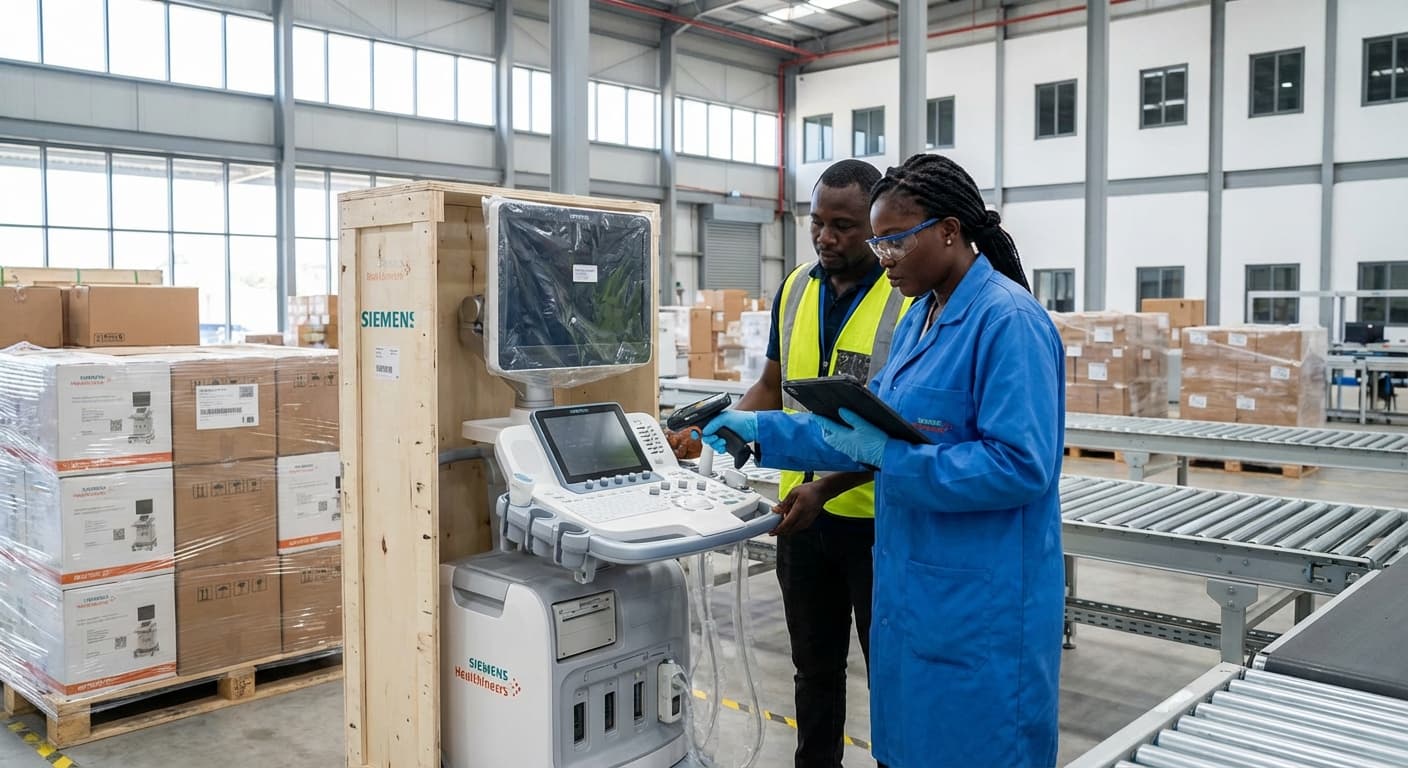
Warehouse Receiving Inspection Service (Medical Equipment) in Cameroon
Engineering Excellence & Technical Support
Warehouse Receiving Inspection Service (Medical Equipment) High-standard technical execution following OEM protocols and local regulatory frameworks.
ISO 13485 Compliant Inspection Protocols
Our receiving inspection adheres strictly to ISO 13485 standards, ensuring meticulous documentation, traceability, and validation of all medical equipment upon arrival at your Cameroon facility. This guarantees compliance with international quality management systems for medical devices.
Defect Detection & Quarantine Management
We employ advanced visual inspection techniques and functional checks to identify any manufacturing defects, shipping damage, or discrepancies. Non-conforming equipment is immediately segregated into a quarantine area, preventing accidental use and initiating prompt resolution with suppliers.
Real-time Inventory Integration & Serial Number Verification
Leveraging barcode scanning and sophisticated inventory management software, we perform real-time verification of serial numbers, lot numbers, and expiry dates against purchase orders. This ensures accurate inventory records from the point of receipt, minimizing stock discrepancies and enhancing supply chain visibility for your medical equipment in Cameroon.
What Is Warehouse Receiving Inspection Service (Medical Equipment) In Cameroon?
Warehouse Receiving Inspection Service (Medical Equipment) in Cameroon refers to a specialized quality control process conducted upon the arrival of medical equipment at a storage facility within Cameroon. This service aims to verify that the received equipment conforms to contractual specifications, regulatory requirements, and the client's quality standards before it is accepted into inventory and subsequently deployed or distributed. The inspection typically encompasses a systematic examination of the equipment's physical condition, documentation, functional integrity, and adherence to predetermined acceptance criteria.
| Stakeholder Group | Reason for Requiring Service | Typical Use Cases |
|---|---|---|
| Hospitals and Healthcare Facilities (Public & Private) | Ensures procurement integrity, patient safety, and operational readiness. Mitigates risks associated with receiving damaged, incorrect, or non-functional equipment. | Receiving new diagnostic imaging equipment, surgical instruments, patient monitoring systems, laboratory analyzers, and consumables. |
| Medical Equipment Suppliers/Distributors | Validates incoming shipments from manufacturers or international vendors before onward distribution. Maintains brand reputation and customer satisfaction. | Inspection of bulk shipments of diverse medical devices, spare parts, and accessories. |
| Government Procurement Agencies (e.g., Ministry of Public Health) | Verifies compliance with tender specifications and regulatory requirements for public health sector acquisitions. Ensures efficient utilization of public funds. | Inspection of large-scale procurements of hospital furniture, ward equipment, specialized medical technology, and essential medicines. |
| Non-Governmental Organizations (NGOs) & International Aid Organizations | Confirms that donated or procured medical supplies meet the intended purpose and quality standards for humanitarian projects. | Receiving refurbished medical equipment, donation of essential medical kits, and specialized equipment for remote health centers. |
| Medical Equipment Leasing/Rental Companies | Ensures returned equipment is in satisfactory condition and new equipment meets contractual obligations prior to deployment. | Receiving leased medical equipment after use by a client or inspecting new equipment for lease agreements. |
| Third-Party Logistics (3PL) Providers | Offers value-added services to their clients, ensuring the quality and integrity of medical equipment handled within their warehousing operations. | Integrated inspection services as part of their supply chain management for medical device clients. |
Key Components of Warehouse Receiving Inspection Service (Medical Equipment):
- Documentation Verification: Review of shipping manifests, invoices, certificates of origin, quality control certificates, user manuals, and any other accompanying documentation for accuracy and completeness.
- Physical Inspection: Assessment of packaging integrity, absence of transit damage (dents, scratches, tears), and verification of model numbers, serial numbers, and quantities against order specifications.
- Identity and Configuration Check: Confirmation that the received equipment matches the ordered specifications, including make, model, configuration, accessories, and optional features.
- Functional Testing (where applicable and feasible): Basic operational checks to ensure the equipment powers on, performs primary functions, and does not exhibit obvious defects. This may range from simple power-on tests to more complex diagnostic routines depending on the equipment type and inspection scope.
- Compliance Check: Verification against relevant Cameroonian regulatory standards (e.g., Ministry of Public Health regulations, SNEC standards) and international quality standards (e.g., ISO 13485 for medical devices) where applicable.
- Labeling and Identification: Inspection of product labeling, safety warnings, and identification tags for clarity, accuracy, and compliance with regulatory requirements.
- Record Keeping: Meticulous recording of inspection findings, including any deviations, discrepancies, or damages, and reporting these to the relevant stakeholders.
- Quarantine and Release Procedures: Implementation of procedures for quarantining non-conforming items and recommending their release, return, or repair based on inspection outcomes.
Who Needs Warehouse Receiving Inspection Service (Medical Equipment) In Cameroon?
A robust warehouse receiving inspection service for medical equipment is crucial in Cameroon to ensure the quality, safety, and efficacy of vital healthcare supplies. This service plays a critical role in mitigating risks associated with damaged, counterfeit, or substandard medical devices entering the supply chain, thereby safeguarding patient well-being and optimizing healthcare resource utilization.
| Target Customer Type | Key Departments Involved | Specific Needs & Benefits | |
|---|---|---|---|
| Government Ministries and Agencies (e.g., Ministry of Public Health) | Procurement Department, Quality Assurance Department, Logistics and Supply Chain Management, National Drug Quality Control and Evaluation Laboratory (NDQCEL) | Ensuring compliance with national standards and regulations, preventing the influx of counterfeit or substandard equipment, optimizing public health spending, maintaining patient safety in public healthcare facilities. | Ensuring compliance with national standards and regulations, preventing the influx of counterfeit or substandard equipment, optimizing public health spending, maintaining patient safety in public healthcare facilities. |
| Hospitals and Healthcare Facilities (Public & Private) | Procurement Department, Biomedical Engineering Department, Quality Management Department, Stores and Inventory Management, Clinical Departments (for specific equipment verification) | Verifying the integrity and functionality of received equipment before deployment, minimizing operational disruptions due to faulty devices, protecting patient safety, ensuring optimal performance of medical technology, reducing maintenance costs from early-stage defects. | Verifying the integrity and functionality of received equipment before deployment, minimizing operational disruptions due to faulty devices, protecting patient safety, ensuring optimal performance of medical technology, reducing maintenance costs from early-stage defects. |
| Medical Equipment Distributors and Suppliers | Warehouse and Logistics Department, Quality Control Department, Sales and Customer Service | Demonstrating commitment to quality and reliability to their clients, minimizing returns and complaints, ensuring their reputation for delivering high-quality products, efficient inventory management, compliance with international supplier standards. | Demonstrating commitment to quality and reliability to their clients, minimizing returns and complaints, ensuring their reputation for delivering high-quality products, efficient inventory management, compliance with international supplier standards. |
| Non-Governmental Organizations (NGOs) & International Aid Organizations | Logistics and Procurement Teams, Program Management, Monitoring and Evaluation Departments | Ensuring that donated or procured medical equipment for humanitarian projects meets required standards, maximizing the impact of aid by providing functional and safe equipment, accountability to donors, preventing waste of resources. | Ensuring that donated or procured medical equipment for humanitarian projects meets required standards, maximizing the impact of aid by providing functional and safe equipment, accountability to donors, preventing waste of resources. |
| Research Institutions & Laboratories | Laboratory Management, Procurement Officers, Technical Staff responsible for equipment operation | Guaranteeing the accuracy and reliability of scientific equipment, ensuring research integrity, preventing contamination or inaccurate results due to faulty instruments, optimizing research outcomes. | Guaranteeing the accuracy and reliability of scientific equipment, ensuring research integrity, preventing contamination or inaccurate results due to faulty instruments, optimizing research outcomes. |
| Pharmaceutical Wholesalers and Pharmacies (for associated equipment) | Warehouse and Logistics, Quality Assurance, Pharmacy Management | For equipment related to drug storage and handling (e.g., temperature-controlled units, specialized delivery containers), ensuring product integrity and patient safety, compliance with pharmaceutical storage regulations. | For equipment related to drug storage and handling (e.g., temperature-controlled units, specialized delivery containers), ensuring product integrity and patient safety, compliance with pharmaceutical storage regulations. |
Target Customers & Departments for Warehouse Receiving Inspection Service (Medical Equipment) in Cameroon
- Government Ministries and Agencies
- Hospitals and Healthcare Facilities (Public & Private)
- Medical Equipment Distributors and Suppliers
- Non-Governmental Organizations (NGOs) & International Aid Organizations
- Research Institutions & Laboratories
- Pharmaceutical Wholesalers and Pharmacies (for associated equipment)
Warehouse Receiving Inspection Service (Medical Equipment) Process In Cameroon
This document outlines the standard workflow for the Warehouse Receiving Inspection Service for Medical Equipment in Cameroon, covering the process from initial inquiry to the completion of the inspection and reporting.
| Stage | Description | Key Activities | Deliverables/Outcomes | Responsible Party |
|---|---|---|---|---|
| The client (importer, distributor, or healthcare facility) expresses interest in the receiving inspection service for medical equipment arriving in Cameroon. | Initial contact via phone, email, or website form. Client provides details about the shipment (type of equipment, quantity, origin, expected arrival date). | Understanding of client needs and scope of service. | Client |
| Based on the inquiry, a detailed proposal and quotation are provided to the client. | Review of client requirements. Preparation of a formal quotation outlining services, scope, timeline, and fees. Negotiation and finalization of terms. Signing of a service agreement/contract. | Agreed scope of work, pricing, and terms. Signed contract. | Service Provider, Client |
| Preparation and coordination for the actual inspection. | Assignment of inspection team. Review of relevant standards, regulations, and client-specific requirements. Scheduling of the inspection based on arrival dates. Communication with the client and relevant stakeholders (e.g., customs, warehouse). Preparation of inspection checklists and documentation. | Inspection plan and schedule. Mobilization of inspection team and resources. | Service Provider |
| The physical inspection of the medical equipment upon arrival at the designated warehouse in Cameroon. | Arrival at the inspection site. Verification of shipping documents against the actual received goods. Visual inspection for damage, defects, and compliance with specifications. Verification of quantity and model numbers. Check of packaging integrity and labeling. Sampling and testing (if applicable and agreed). Documentation of findings (photos, notes). | Documented inspection findings. Photographic evidence. Initial assessment of equipment condition and compliance. | Service Provider (Inspection Team) |
| Processing of inspection data and generation of a comprehensive report. | Compilation and analysis of all collected data. Cross-referencing findings with client specifications, manufacturer details, and relevant standards. Drafting of the inspection report, including observations, non-conformities, and recommendations. Review and quality assurance of the report. Submission of the final report to the client. | Comprehensive Inspection Report detailing findings, conclusions, and recommendations. | Service Provider |
| Addressing any outstanding issues and concluding the service. | Answering client queries regarding the report. Assisting with any corrective actions or further investigations (if required). Archiving of inspection records. Invoicing and final payment processing. | Client satisfaction. Resolution of any follow-up actions. Completion of the service cycle. | Service Provider, Client |
Key Stages of the Warehouse Receiving Inspection Service Workflow
- Inquiry and Service Request
- Quotation and Agreement
- Pre-Inspection Planning
- On-site Inspection Execution
- Data Analysis and Reporting
- Post-Inspection Follow-up
Warehouse Receiving Inspection Service (Medical Equipment) Cost In Cameroon
The cost of warehouse receiving inspection services for medical equipment in Cameroon can vary significantly based on several key factors. These services are crucial for ensuring the quality, safety, and compliance of incoming medical devices, preventing the introduction of faulty or counterfeit products into the healthcare system. The price is typically determined by the complexity of the equipment, the volume of items to be inspected, the level of detail required in the inspection, and the location of the warehouse within Cameroon.
Key Pricing Factors:
- Type and Complexity of Medical Equipment: Highly specialized or complex medical devices (e.g., MRI machines, advanced diagnostic imaging equipment, complex surgical instruments) require more skilled inspectors and specialized testing equipment, leading to higher inspection fees compared to simpler items like basic consumables or manual diagnostic tools.
- Volume of Items: A larger number of items for inspection usually results in a lower per-unit cost, but the overall project cost will be higher. Conversely, a small number of high-value, complex items might have a higher per-unit cost. Discounts may be offered for bulk inspections.
- Scope and Depth of Inspection: The extent of the inspection plays a major role. This can range from basic visual checks for damage and correct labeling to comprehensive functional testing, calibration checks, verification of sterilization status, and documentation review. More in-depth inspections naturally incur higher costs.
- Inspector Expertise and Qualifications: Inspections requiring specialized certifications, extensive experience with specific medical device categories, or advanced technical knowledge will command higher rates. The reputation and accreditation of the inspection service provider also influence pricing.
- Location and Accessibility: Warehouses located in major cities like Douala or Yaoundé may have slightly lower logistical costs for inspectors compared to those in more remote or less accessible regions, which could impact the overall price.
- Reporting Requirements: The level of detail and formality required for inspection reports can affect costs. Detailed reports with photographic evidence, compliance checklists, and formal sign-offs will generally be more expensive than summary reports.
- Turnaround Time: Urgent inspection requests might incur additional rush fees.
- Third-Party Accreditation/Certification: If the inspection needs to be conducted by an accredited third-party inspection body for regulatory or international standards compliance, this will often add to the cost.
| Factor | Impact on Cost | Typical Range (Illustrative) |
|---|---|---|
| Equipment Complexity | High complexity = Higher cost | Basic consumables: 15,000 - 50,000 XAF/item Complex diagnostic equipment: 150,000 - 500,000+ XAF/item |
| Volume of Items | High volume = Lower per-unit cost (bulk discount) | Single item: Standard rates Large shipment (e.g., 100+ items): Potential for 10-30% discount on per-unit rates |
| Inspection Depth | More checks = Higher cost | Visual check only: ~20% of standard inspection cost Full functional & calibration: Full standard rate |
| Inspector Expertise | Specialized skills = Higher rate | General inspector: Standard rate Specialized medical engineer: 1.5x - 2x standard rate |
| Location | Remote areas may incur travel costs | Major cities: Included in base rate Remote regions: + Travel fees (e.g., 20,000 - 100,000 XAF round trip depending on distance) |
| Reporting Level | Detailed reports cost more | Simple checklist: Included Comprehensive report with photos & data: + 10-20% of inspection fee |
Estimated Cost Ranges for Warehouse Receiving Inspection Service (Medical Equipment) in Cameroon (in Cameroonian Francs - XAF)
- {"item":"Basic Visual Inspection (per item/shipment)","range":"15,000 - 40,000 XAF","details":"Checking for visible damage, correct labeling, quantity verification. Suitable for low-risk consumables or non-critical items."}
- {"item":"Standard Functional Inspection (per item)","range":"40,000 - 150,000 XAF","details":"Includes visual checks plus basic operational testing to ensure the equipment powers on and performs essential functions. Applicable to a range of medical devices."}
- {"item":"Comprehensive Inspection (per item/complex system)","range":"150,000 - 500,000+ XAF","details":"Involves detailed functional testing, calibration checks, verification of accessories, documentation review, and compliance checks. For high-value, complex, or critical medical equipment."}
- {"item":"Project-Based Fees","range":"Negotiable, often starting from 500,000 XAF and upwards, depending on scale.","details":"For large-scale receiving operations or specialized projects, inspection companies may offer a consolidated project fee based on an assessment of the total scope and resources required."}
- {"item":"Travel and Accommodation (if applicable)","range":"Variable, depending on distance and duration.","details":"Additional costs for inspectors traveling to remote locations, often charged at actual cost or a per diem rate."}
Affordable Warehouse Receiving Inspection Service (Medical Equipment) Options
Finding affordable warehouse receiving inspection services for medical equipment is crucial for ensuring compliance, patient safety, and efficient operations. These services are vital to verify that incoming medical devices match purchase orders, are free from damage, and meet all regulatory requirements before being integrated into inventory or deployed. Cost-effectiveness is a primary concern for many healthcare providers and distributors, making an understanding of value bundles and cost-saving strategies essential.
| Value Bundle / Strategy | Description | Cost-Saving Benefit |
|---|---|---|
| Volume-Based Discounts | Negotiating lower per-inspection rates when committing to a higher volume of inspections over a contract period. Providers often have tiered pricing structures. | Reduced per-unit cost of inspection for higher throughput operations. |
| Subscription or Retainer Models | Paying a fixed monthly or annual fee for a set number of inspections or a dedicated inspector. This provides budget predictability. | Can offer preferential scheduling, faster response times, and predictable operational expenses, preventing unexpected high costs during peak periods. |
| Tiered Service Packages | Providers offer different levels of inspection (e.g., basic visual check, detailed functional test, full compliance audit) at varying price points. Choose the tier that meets your actual needs. | Avoids paying for services that are not required for specific equipment types or compliance mandates. |
| Long-Term Contracts | Committing to a service provider for an extended period (e.g., 1-3 years) can unlock significant discounts compared to short-term or ad-hoc services. | Leverages provider's ability to plan resources and secure better pricing from their own suppliers or labor pool. |
| Remote Monitoring & Pre-Checks | Utilizing technology for initial visual checks or data verification before physical inspection where possible. This can be done by warehouse staff with clear protocols. | Reduces the need for highly specialized inspectors for every incoming item, lowering labor costs. |
| Partnering with Existing Logistics Providers | If your logistics partner offers warehousing and inspection, it can be more cost-effective than a standalone inspection service due to integrated operations and reduced transportation costs. | Streamlined operations, reduced duplication of services, and potential for bundled pricing. |
| Standardized Inspection Checklists | Developing and using consistent, detailed checklists ensures that all necessary checks are performed efficiently and without duplication. This can be co-developed with the inspection service. | Increases inspector efficiency, reduces time spent per inspection, and minimizes errors that lead to rework or missed issues. |
| Outsourcing to Specialized Third-Party Providers | Instead of building in-house inspection capabilities, outsourcing to experienced third-party providers often leverages their economies of scale, specialized training, and lower overhead. | Avoids capital investment in training, equipment, and dedicated staff. Benefits from expert knowledge and efficient processes. |
| Flexible Staffing Models | Engaging services that offer flexible staffing, allowing you to scale up or down based on incoming shipment volumes without the fixed costs of full-time employees. | Reduces costs associated with underutilized staff during low-volume periods and ensures capacity during peak times without overstaffing. |
Key Aspects of Affordable Warehouse Receiving Inspection Services (Medical Equipment)
- {"title":"What is Warehouse Receiving Inspection for Medical Equipment?","description":"This process involves a systematic examination of medical equipment upon arrival at a warehouse. It includes verifying quantities, checking for shipping damage, confirming model numbers and specifications against purchase orders, inspecting packaging integrity, and often a preliminary functional check or visual assessment for compliance with relevant standards (e.g., FDA, ISO)."}
- {"title":"Why is it Important?","description":"Key benefits include preventing the acceptance of damaged or incorrect items, ensuring regulatory compliance, mitigating supply chain risks, reducing costly returns and replacements, and improving inventory accuracy."}
- {"title":"Factors Affecting Cost","description":"Costs are influenced by the volume of inspections, complexity of equipment, required testing depth, frequency of service, geographical location, and the provider's overhead and expertise."}
Verified Providers In Cameroon
In Cameroon, ensuring access to reliable and high-quality healthcare is paramount. The term 'Verified Providers' signifies healthcare professionals and institutions that have undergone rigorous vetting processes, confirming their adherence to stringent standards of practice, ethical conduct, and patient safety. Franance Health stands out as a leading platform dedicated to connecting individuals with these verified healthcare providers. Their commitment to credentialing and verification means that when you choose a provider through Franance Health, you are opting for a level of assurance and quality that is unmatched.
| Aspect of Verification | Franance Health's Approach | Benefit to Patients |
|---|---|---|
| Professional Credentials | Thorough verification of degrees, licenses, and certifications from recognized institutions. | Ensures providers possess the foundational knowledge and legal authorization to practice. |
| Clinical Experience | Assessment of past work experience, including hospital affiliations and specialized training. | Confirms practical application of skills and exposure to diverse medical cases. |
| Ethical Conduct | Review of professional history for any disciplinary actions or malpractice claims. | Guarantees that providers operate with integrity and prioritize patient welfare. |
| Continuing Education | Confirmation of ongoing professional development and training to stay updated with medical advancements. | Ensures providers are utilizing the latest diagnostic and treatment methodologies. |
| Patient Feedback Integration (Potential) | Mechanisms for collecting and potentially displaying verified patient reviews and ratings. | Provides real-world insights into provider performance and patient satisfaction. |
Why Franance Health Represents the Best Choice for Verified Providers in Cameroon:
- Rigorous Vetting Process: Franance Health employs a comprehensive and multi-faceted vetting process for all listed providers. This goes beyond basic licensing to include checks on educational qualifications, professional experience, continuing education, and adherence to ethical guidelines.
- Focus on Patient Safety and Quality: The primary objective of Franance Health's verification is to guarantee patient safety and deliver high-quality healthcare services. Verified providers are those who consistently demonstrate a commitment to best practices and patient well-being.
- Transparency and Trust: By providing clearly verified credentials, Franance Health fosters an environment of transparency. Patients can have greater confidence and trust in the healthcare professionals they choose, reducing the anxiety often associated with seeking medical care.
- Access to Specialized Expertise: The platform facilitates access to a wide range of verified specialists across various medical disciplines. Whether you need a general practitioner, a surgeon, a pediatrician, or a mental health professional, Franance Health ensures you are connecting with qualified individuals.
- Convenience and Efficiency: Franance Health streamlines the process of finding and booking appointments with verified providers. Their user-friendly platform saves individuals valuable time and effort in their search for reliable healthcare.
- Commitment to Continuous Improvement: Franance Health actively monitors and updates its verification protocols to align with evolving healthcare standards and best practices, ensuring that the providers listed remain at the forefront of quality care.
Scope Of Work For Warehouse Receiving Inspection Service (Medical Equipment)
This Scope of Work (SOW) outlines the requirements for Warehouse Receiving Inspection Services for medical equipment. The objective is to ensure that all incoming medical equipment meets the specified quality, condition, and documentation standards before being accepted into the warehouse inventory. This SOW details the technical deliverables and standard specifications that will be adhered to throughout the inspection process.
| Category | Technical Deliverable/Standard Specification | Description | Acceptance Criteria/Verification Method |
|---|---|---|---|
| Documentation | Incoming Shipment Manifest/Packing List | Verification of all items listed against the physical count. | Exact match of item quantity, part number, and description. Discrepancies to be immediately reported. |
| Documentation | Manufacturer's Certificate of Analysis (CoA) / Certificate of Conformity (CoC) | Ensures the product meets specified quality standards and regulatory requirements. | CoA/CoC present, valid, and matches the product received. Signatures and dates verified. |
| Documentation | Equipment User Manuals and Technical Documentation | Essential for proper operation, maintenance, and troubleshooting. | User manual and relevant technical documentation (e.g., service manuals, schematics) are provided for each equipment item. Legible and complete. |
| Physical Inspection | Damage Assessment (External) | Identification of any visible damage to packaging or the equipment itself. | No dents, scratches, tears, punctures, or other signs of physical damage beyond normal transit wear. Photographic evidence of any damage. |
| Physical Inspection | Completeness of Accessories and Components | Verification that all specified accessories, cables, power adapters, and essential components are present. | All listed accessories and components accounted for and in good condition. |
| Physical Inspection | Correct Item Verification (Part Number/Model) | Ensures the received equipment matches the order and documentation. | Part number, serial number, and model number on the equipment match the packing list and purchase order. Barcode scanning (if applicable). |
| Physical Inspection | Expiration Date Verification (for Consumables/Sterile Items) | Ensures items meet required shelf-life and are fit for use. | Expiration dates are checked and meet or exceed the minimum required shelf life specified by the client. Items nearing expiration flagged. |
| Functional Testing (if specified) | Basic Power-On Test | Confirms the equipment can be powered on and initializes correctly. | Equipment powers on, displays boot sequence, and reaches an operational ready state (if applicable) without error messages. |
| Functional Testing (if specified) | Key Functionality Check | Verifies core operational functions are performing as intended. | Performs a pre-defined set of basic operational tests as per manufacturer specifications or client-provided checklist. Results documented. |
| Reporting | Receiving Inspection Report (RIR) | Comprehensive report detailing the findings of the inspection. | RIR completed accurately and promptly for each shipment, including details of received items, inspection results, any discrepancies, damage, and recommendations. Digital format (e.g., PDF). |
| Reporting | Discrepancy Notification | Immediate communication of any issues or deviations from the SOW. | Timely (within X hours of discovery) written notification to the client via email or designated system for all identified discrepancies, damages, or non-conformances. |
| Disposition | Quarantine and Hold Procedure | Process for managing non-conforming or potentially problematic items. | Non-conforming items are clearly identified, segregated, and placed in a designated quarantine area pending client disposition instructions. |
Key Stages of Receiving Inspection:
- Pre-Inspection Planning and Documentation Review
- Physical Inspection of Equipment
- Functional Testing (where applicable)
- Documentation Verification
- Reporting and Disposition
Service Level Agreement For Warehouse Receiving Inspection Service (Medical Equipment)
This Service Level Agreement (SLA) outlines the terms and conditions for the Warehouse Receiving Inspection Service for Medical Equipment provided by [Your Company Name] to [Client Company Name]. It defines the expected response times and uptime guarantees to ensure efficient and compliant handling of incoming medical equipment.
| Service Component | Service Level Objective (SLO) | Measurement Method | Remedy for Non-Compliance |
|---|---|---|---|
| Notification of Incoming Shipment Acknowledgment | Within 2 business hours of receiving electronic notification. | Timestamp on email/system notification. | 10% discount on the next inspection service fee for each occurrence of exceeding the acknowledgment time. |
| Initiation of Inspection | Within 8 business hours of acknowledgment. | Timestamp of inspection commencement in the inspection system. | Service credits equivalent to 5% of the affected inspection fee for each hour of delay beyond the SLO. |
| Issuance of Inspection Report | Within 24 business hours of inspection completion. | Timestamp of report generation and delivery. | Service credits equivalent to 10% of the affected inspection fee for each 12-hour period of delay beyond the SLO. |
| System Uptime (for notification and reporting) | 99.5% uptime during standard business hours (Monday-Friday, 9:00 AM - 5:00 PM [Client's Time Zone]). | Monitoring logs of the inspection management system. | For any downtime exceeding the guaranteed uptime, a pro-rata refund of the monthly service fee for the duration of the outage. |
| Accuracy of Inspection Reports | 98% accuracy in identifying critical discrepancies and damages as defined in the Scope of Service. | Post-inspection audits and client feedback. | Re-inspection of the affected shipment at no additional cost and a formal root cause analysis and corrective action plan for the reported inaccuracies. |
Scope of Service
- Upon notification of incoming medical equipment shipments, [Your Company Name] will perform a comprehensive visual and documentation inspection.
- Inspection will include, but not be limited to, verification of shipping manifests, lot numbers, serial numbers, expiration dates (if applicable), and physical condition of the equipment and packaging.
- Identification and reporting of any damages, discrepancies, or non-compliance issues.
- Issuance of a detailed inspection report within the agreed-upon timeframe.
Frequently Asked Questions

Ready when you are
Let's scope your Warehouse Receiving Inspection Service (Medical Equipment) in Cameroon project in Cameroon.

Scaling healthcare logistics and technical systems across the entire continent.