
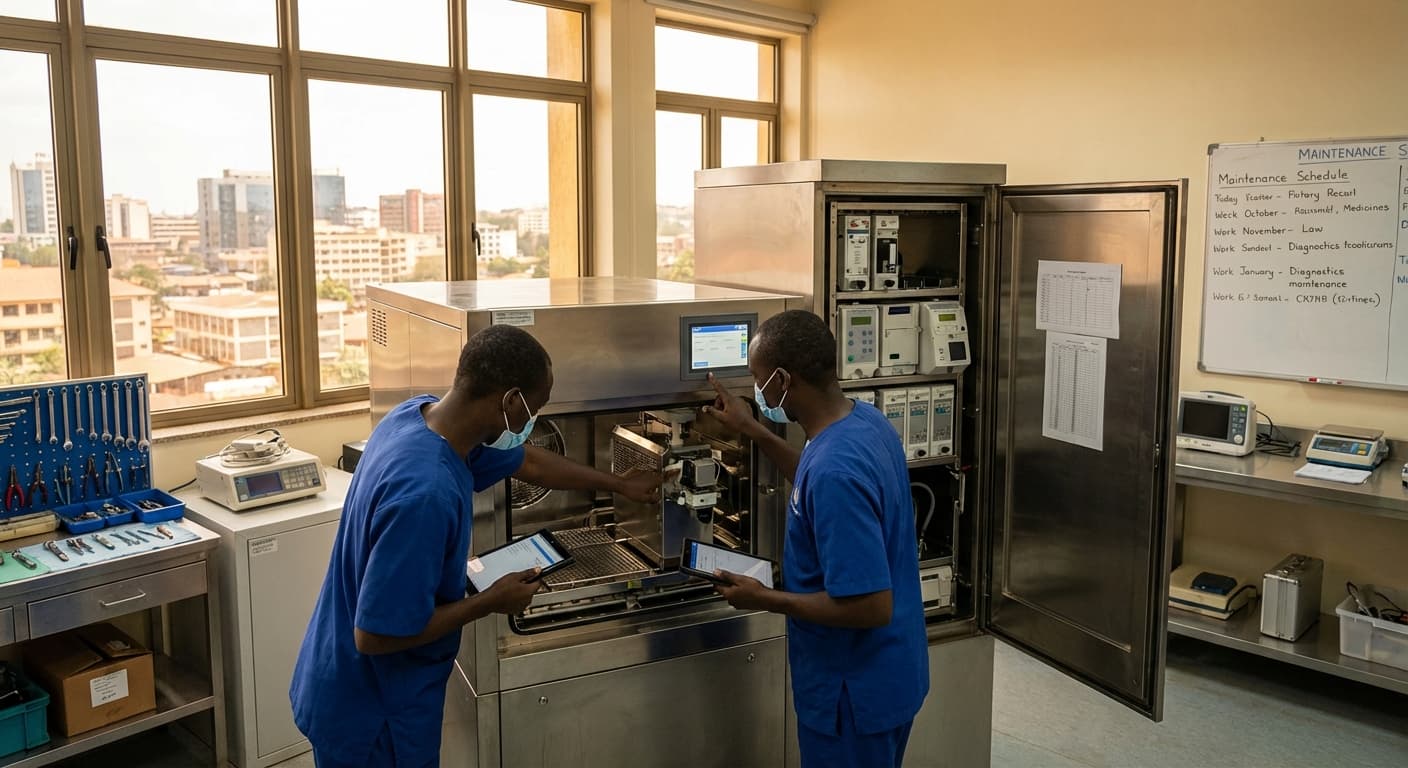
Total Cost of Ownership (TCO) & Lifecycle Budgeting Service in Cameroon
Engineering Excellence & Technical Support
Total Cost of Ownership (TCO) & Lifecycle Budgeting Service High-standard technical execution following OEM protocols and local regulatory frameworks.
Predictive Cost Modeling for Infrastructure Projects
Leverage advanced analytics and historical data to build accurate predictive TCO models for large-scale infrastructure in Cameroon. Our service forecasts capital expenditure, operational costs, maintenance, and end-of-life decommissioning, empowering informed investment decisions and mitigating financial risks.
Lifecycle Value Optimization for Industrial Assets
We go beyond initial purchase price to analyze the complete lifecycle of industrial assets within Cameroon. Our TCO and Lifecycle Budgeting services identify cost-saving opportunities in energy efficiency, predictive maintenance, spare parts management, and performance optimization, ensuring maximum return on investment throughout the asset's operational life.
Risk-Adjusted Budgeting for Public Sector Investments
For public sector entities in Cameroon, we provide risk-adjusted TCO and lifecycle budgeting. This includes factoring in currency fluctuations, inflation rates, regulatory changes, and socio-economic impacts specific to the Cameroonian context, ensuring robust and resilient budgets for critical public services and infrastructure.
What Is Total Cost Of Ownership (Tco) & Lifecycle Budgeting Service In Cameroon?
Total Cost of Ownership (TCO) and Lifecycle Budgeting (LCB) are critical financial management disciplines focused on understanding and managing the complete financial implications of acquiring, operating, and disposing of an asset or system over its entire lifespan. In Cameroon, as in any developing or developed economy, businesses and public sector entities face challenges in accurately forecasting expenditures and optimizing resource allocation. TCO & LCB services provide a structured approach to quantify all direct and indirect costs associated with an asset from cradle to grave, enabling more informed investment decisions, risk mitigation, and long-term financial planning.
| Who Needs TCO & LCB Services in Cameroon? | Typical Use Cases in Cameroon |
|---|---|
| Government Agencies & Public Sector: For large-scale infrastructure projects (roads, energy, water), public transportation systems, and IT system procurements. Essential for budget allocation, procurement transparency, and long-term service delivery planning. | Procurement of large capital assets: Evaluating bids for vehicles, construction equipment, medical machinery, and industrial plant based on their full lifecycle costs, not just the purchase price. |
| Large Enterprises & Corporations: Across all sectors, for significant asset acquisitions, fleet management, IT infrastructure, manufacturing equipment, and facility management. Crucial for strategic investment and operational efficiency. | IT Infrastructure Investments: Analyzing the TCO of servers, software licenses, cloud services, and network equipment, including maintenance, upgrades, and potential data center costs. |
| Financial Institutions & Investors: For assessing the viability and risk of projects and investments, understanding the long-term financial performance of assets they finance or acquire. | Energy and Utilities Sector: Evaluating the lifecycle costs of power generation facilities, distribution networks, and renewable energy installations, considering fuel, maintenance, and decommissioning. |
| Non-Governmental Organizations (NGOs) & Development Partners: For managing project assets, vehicles, and equipment in challenging operating environments, ensuring sustainability and maximizing the impact of limited funds. | Transportation & Logistics: Determining the optimal fleet composition and management strategy by analyzing the TCO of different vehicle types, fuel efficiency, maintenance schedules, and resale values. |
| Construction & Real Estate Developers: For evaluating the long-term operational and maintenance costs of buildings and infrastructure projects, influencing design and material choices. | Healthcare Sector: Assessing the TCO of medical equipment, hospital infrastructure, and IT systems to ensure cost-effective patient care and facility management. |
What is Total Cost of Ownership (TCO) & Lifecycle Budgeting Service in Cameroon?
- Definition: TCO & LCB services involve a comprehensive analysis and projection of all expenses related to an asset or project throughout its entire lifecycle. This includes initial acquisition costs, operational expenditures (e.g., maintenance, energy, labor), support costs, and end-of-life disposal or decommissioning costs.
- Scope: The service encompasses not only tangible financial outlays but also considers intangible costs such as downtime, obsolescence, training, and potential regulatory compliance expenses.
- Objective: The primary goal is to provide a holistic financial perspective, moving beyond the initial purchase price to reveal the true economic impact of an asset over time. This facilitates strategic decision-making, cost optimization, and enhanced financial predictability.
- Methodology: TCO & LCB services typically employ quantitative models, data analysis, and scenario planning to identify, categorize, and forecast all cost components. This often involves cross-functional collaboration and input from various stakeholders.
- Relevance in Cameroon: Given the dynamic economic landscape and potential infrastructure challenges in Cameroon, accurately understanding TCO and implementing LCB is crucial for efficient capital deployment, ensuring the sustainability of investments, and avoiding unforeseen budgetary overruns.
Who Needs Total Cost Of Ownership (Tco) & Lifecycle Budgeting Service In Cameroon?
In Cameroon's evolving economic landscape, understanding the Total Cost of Ownership (TCO) and implementing robust Lifecycle Budgeting for assets and projects is no longer a luxury but a strategic imperative. These services are crucial for organizations seeking to maximize their return on investment, optimize resource allocation, and ensure long-term financial sustainability. By meticulously tracking all costs from acquisition to disposal, businesses can make informed decisions, avoid hidden expenses, and achieve greater financial predictability. Lifecycle budgeting further enhances this by planning for and funding all phases of an asset's or project's existence, preventing costly surprises and ensuring continuous operational efficiency.
| Target Customer Segment | Typical Departments Involved |
|---|---|
| Manufacturing Companies | Operations, Procurement, Finance, Engineering, Maintenance, Asset Management |
| Construction & Infrastructure Firms | Project Management, Finance, Procurement, Engineering, Fleet Management, Legal |
| Telecommunications Providers | Network Operations, Finance, Procurement, IT, Engineering, Regulatory Affairs |
| Energy & Utilities Companies | Operations, Finance, Procurement, Engineering, Asset Management, Compliance |
| Transportation & Logistics Companies | Fleet Management, Operations, Finance, Procurement, Maintenance, Supply Chain |
| Government Ministries & Agencies | Finance, Planning, Procurement, Public Works, IT, Sector-Specific Departments (e.g., Health, Education) |
| Large Retail Chains | Store Operations, Facilities Management, Finance, Procurement, IT |
| Mining & Extractives Companies | Operations, Finance, Procurement, Engineering, Maintenance, Environmental & Safety |
Who Needs TCO & Lifecycle Budgeting Service in Cameroon?
- Organizations with significant capital investments in tangible assets (machinery, vehicles, infrastructure).
- Companies involved in long-term projects with ongoing operational and maintenance costs.
- Businesses operating in sectors with rapid technological advancements, requiring regular asset upgrades or replacements.
- Government agencies and parastatals responsible for public infrastructure and services.
- Companies seeking to improve financial transparency and accountability.
- Organizations aiming to reduce operational risks and unexpected expenditures.
- Businesses looking to enhance their procurement and asset management strategies.
- Entities with sustainability goals, where end-of-life disposal costs are a significant consideration.
Total Cost Of Ownership (Tco) & Lifecycle Budgeting Service Process In Cameroon
The Total Cost of Ownership (TCO) & Lifecycle Budgeting Service in Cameroon is designed to provide clients with a comprehensive understanding of the financial implications of acquiring and operating assets over their entire lifespan. This service is crucial for strategic decision-making, capital allocation, and risk management. The workflow is structured to be transparent, collaborative, and data-driven, ensuring accurate and actionable insights for our Cameroonian clientele.
| Stage | Description | Key Activities | Deliverables | Timeline (Typical) |
|---|---|---|---|---|
| Initial Inquiry & Needs Assessment | The client contacts our service provider with a requirement for TCO and lifecycle budgeting. This stage focuses on understanding the client's specific needs, the assets in question, and the desired outcomes. | Initial consultation, understanding project scope, asset identification, identifying key stakeholders, preliminary data requirements discussion. | Understanding of client needs, preliminary scope definition. | 1-3 business days |
| Proposal Development & Agreement | Based on the needs assessment, a detailed proposal is crafted outlining the scope of work, methodology, timelines, team expertise, and associated costs. A formal agreement is then established. | Defining specific TCO components (acquisition, operation, maintenance, disposal), selecting appropriate methodologies, estimating resource allocation, preparing a formal proposal, contract negotiation and signing. | Formal Service Proposal, Signed Service Agreement/Contract. | 3-7 business days |
| Data Collection & Validation | This is a critical phase where relevant data is gathered from various sources, both internal to the client and external. Accuracy and completeness are paramount. | Identifying data sources (invoices, maintenance records, operational logs, supplier quotes, market data), data extraction, data cleansing and standardization, stakeholder interviews, site visits (if necessary), cross-validation of data. | Validated and structured dataset for analysis. | 1-4 weeks (depending on data complexity and client accessibility) |
| TCO & Lifecycle Budgeting Analysis | Utilizing the validated data, the TCO and lifecycle budget are calculated. This involves applying established financial models and considering various scenarios. | Applying TCO calculation formulas, forecasting future costs (operational, maintenance, energy, etc.), estimating residual/disposal values, performing sensitivity analysis, risk assessment, inflation and discount rate application. | Calculated TCO for each asset/project, comprehensive lifecycle budget, identification of cost drivers and optimization opportunities. | 2-5 weeks |
| Reporting & Presentation | The findings of the analysis are compiled into a clear, concise, and actionable report. This report is then presented to the client's key stakeholders. | Developing detailed TCO reports, creating executive summaries, visualizing data through charts and graphs, preparing presentation materials, delivering a formal presentation, Q&A session. | Comprehensive TCO & Lifecycle Budgeting Report, Executive Summary, Presentation Slides. | 1-2 weeks |
| Implementation Support & Review | Post-presentation, we offer support in implementing the recommendations derived from the analysis. This can involve strategy refinement, vendor selection guidance, or ongoing monitoring. | Assisting with strategy development based on TCO insights, providing input on procurement decisions, developing asset management plans, periodic reviews and updates of TCO models, post-implementation performance tracking. | Actionable implementation plans, revised TCO models (if needed), performance review reports. | Ongoing (as per client's needs) |
Workflow Stages
- Initial Inquiry & Needs Assessment
- Proposal Development & Agreement
- Data Collection & Validation
- TCO & Lifecycle Budgeting Analysis
- Reporting & Presentation
- Implementation Support & Review
Total Cost Of Ownership (Tco) & Lifecycle Budgeting Service Cost In Cameroon
This document outlines the Total Cost of Ownership (TCO) and Lifecycle Budgeting services, with a specific focus on pricing factors and ranges within Cameroon. TCO and lifecycle budgeting are crucial financial management tools for businesses and organizations, providing a comprehensive understanding of all costs associated with an asset or project from its initial acquisition through its eventual disposal. In Cameroon, several factors influence the pricing of these services, making it essential to consider local economic conditions, expertise availability, and the complexity of the engagement.
| Service Component | Typical Cost Range (CFA Francs) | Notes |
|---|---|---|
| Initial Consultation & Scoping | 150,000 - 500,000 | Covers initial assessment, defining project scope, and understanding client needs. |
| Data Collection & Validation | 300,000 - 1,500,000+ | Varies significantly based on data availability and the effort required for validation. |
| Cost Modeling & Analysis (Per Asset/Project) | 500,000 - 3,000,000+ | This is the core analytical work. Price increases with the complexity and lifespan of the asset/project. |
| Risk Assessment & Sensitivity Analysis | 200,000 - 1,000,000 | Often bundled or offered as an add-on service. |
| Report Generation & Presentation | 250,000 - 800,000 | Includes detailed reports, executive summaries, and presentation materials. |
| Comprehensive TCO & Lifecycle Budgeting Project (Small to Medium Scale) | 2,000,000 - 10,000,000 | For a defined set of assets or a single significant project. Includes most of the above components. |
| Large-Scale/Enterprise-Wide TCO & Lifecycle Budgeting Implementation | 10,000,000 - 50,000,000+ | For organizations with numerous assets or complex, multi-year initiatives. Often involves custom software integration and extensive stakeholder engagement. |
Key Pricing Factors for TCO & Lifecycle Budgeting Services in Cameroon
- Scope and Complexity of the Project: The sheer size, intricacy, and number of assets or projects being analyzed significantly impact the service cost. Larger, more complex analyses require more time, resources, and specialized expertise.
- Duration of the Lifecycle: Longer lifecycle assessments (e.g., 20-30 years vs. 5-10 years) involve more data points, forecasting, and potential for unforeseen variables, thus increasing costs.
- Data Availability and Quality: The ease of accessing reliable historical and current data for cost estimation is a major determinant. If data is fragmented, inconsistent, or requires extensive collection and validation, it will elevate the service price.
- Industry and Asset Type: Different industries have unique cost drivers and asset types. Specialized knowledge of sectors like oil and gas, telecommunications, manufacturing, or infrastructure can command higher fees.
- Consultant Expertise and Reputation: The experience, qualifications, and established reputation of the consulting firm or individual providing the service are crucial. Highly experienced consultants with a proven track record generally charge more.
- Geographic Location within Cameroon: While less significant than other factors, there might be minor variations in pricing based on the cost of living and operational expenses in major economic hubs (e.g., Douala, Yaoundé) versus other regions.
- Level of Detail Required: The granularity of the TCO analysis (e.g., detailed breakdown of every cost component vs. high-level estimations) will affect the time and effort involved.
- Reporting and Presentation Requirements: The format, depth, and customization of the final reports and presentations can influence the overall cost.
- Additional Services: Integration with other financial planning tools, risk assessment, or sustainability cost analysis can add to the core TCO and lifecycle budgeting service fee.
- Economic Conditions and Currency Fluctuations: The prevailing economic climate in Cameroon, inflation rates, and potential currency fluctuations (though the CFA Franc is relatively stable) can indirectly influence pricing, especially for services involving international benchmarks or imported components.
Affordable Total Cost Of Ownership (Tco) & Lifecycle Budgeting Service Options
Our Affordable Total Cost of Ownership (TCO) & Lifecycle Budgeting Service helps organizations gain complete control over their assets and operational expenses. We offer a range of value bundles designed to integrate seamlessly with your existing processes, providing comprehensive insights and actionable strategies for cost reduction throughout an asset's entire lifecycle. Our approach focuses on maximizing ROI by minimizing hidden costs and optimizing resource allocation.
| Cost-Saving Strategy | Description | TCO/Lifecycle Impact | Typical Savings Potential |
|---|---|---|---|
| Preventive & Predictive Maintenance | Shifting from reactive to proactive maintenance to avoid unexpected breakdowns and extend asset life. | Reduces unplanned downtime, repair costs, and extends asset useful life. | 15-30% on maintenance and repair costs. |
| Energy Efficiency Upgrades | Investing in energy-efficient equipment and optimizing operational processes to lower energy consumption. | Decreases operational expenditure (OPEX) significantly throughout the asset's life. | 10-25% on energy bills. |
| Optimized Procurement & Sourcing | Leveraging bulk purchasing, strategic sourcing, and strong vendor negotiations to secure better pricing and terms. | Lowers initial acquisition costs and ongoing service/consumable expenses. | 5-15% on acquisition and operational supplies. |
| Standardization of Assets | Consolidating the number of different asset types and models to simplify maintenance, training, and spare parts inventory. | Reduces training complexity, inventory holding costs, and improves maintenance efficiency. | 7-12% on maintenance and inventory costs. |
| Extended Asset Utilization | Implementing strategies to maximize the useful life of existing assets through refurbishment or upgrading, rather than immediate replacement. | Defers capital expenditure (CAPEX) and delays disposal costs. | Significant reduction in CAPEX by extending asset life. |
| Efficient End-of-Life Management | Developing plans for asset disposal, resale, or recycling that maximize residual value and minimize disposal fees. | Reduces disposal costs and can generate revenue from asset recovery. | Up to 10% of asset residual value recovered or disposal cost reduction. |
Key Service Components & Value Bundles
- TCO Assessment & Benchmarking: Analyze current expenses, identify cost drivers, and compare against industry best practices to establish a baseline.
- Lifecycle Cost Modeling: Develop detailed financial models predicting all costs from acquisition to disposal, including operation, maintenance, upgrades, and end-of-life management.
- Predictive Maintenance Planning: Implement strategies to forecast and prevent equipment failures, reducing downtime and costly emergency repairs.
- Resource Optimization & Efficiency Audits: Identify opportunities to reduce energy consumption, material usage, and labor costs.
- Procurement & Vendor Management Optimization: Negotiate better terms, consolidate suppliers, and ensure vendor performance aligns with TCO goals.
- End-of-Life Asset Management & Disposal: Develop cost-effective and environmentally responsible strategies for retiring and disposing of assets.
- Value Bundle - 'Foundation': Includes TCO Assessment, Basic Lifecycle Cost Modeling, and initial benchmarking. Ideal for organizations starting their TCO journey.
- Value Bundle - 'Growth': Builds on 'Foundation' with Predictive Maintenance Planning, Resource Optimization Audits, and enhanced Lifecycle Cost Modeling.
- Value Bundle - 'Strategic Partner': Our most comprehensive offering, including all 'Growth' components plus Procurement Optimization, Vendor Management, and End-of-Life Asset Management. Provides ongoing strategic support and continuous improvement.
- Customizable Bundles: Tailor a solution to your specific industry, asset types, and budget requirements.
Verified Providers In Cameroon
In Cameroon, ensuring access to quality healthcare relies heavily on identifying and trusting verified healthcare providers. Franance Health stands out as a leading organization in this regard, meticulously vetting and credentialing medical professionals and facilities across the nation. Their rigorous verification process is designed to instill confidence in patients, assuring them that they are receiving care from competent and ethical practitioners. This commitment to quality not only elevates the standard of healthcare but also empowers individuals to make informed decisions about their well-being.
| Provider Type | Verification Focus | Franance Health Assurance |
|---|---|---|
| Hospitals & Clinics | Facility infrastructure, equipment, hygiene, staffing levels, emergency preparedness, accreditation status. | Franance Health confirms that facilities meet established national and international standards for safety and patient care, with a focus on advanced medical technology and well-trained medical teams. |
| Specialist Doctors | Medical degrees, postgraduate qualifications, specialist certifications, board examinations, clinical experience, professional affiliations. | Franance Health rigorously validates the expertise and qualifications of specialist doctors, ensuring they possess the highest level of training and experience in their respective fields. |
| General Practitioners | Medical degrees, internship completion, registration with the National Order of Physicians, continuous medical education. | Franance Health ensures general practitioners are licensed, competent, and committed to providing comprehensive primary healthcare services. |
| Diagnostic Laboratories | Equipment calibration, quality control measures, staff qualifications, adherence to international laboratory standards (e.g., ISO). | Franance Health verifies that laboratories employ advanced diagnostic techniques, maintain strict quality assurance protocols, and are staffed by qualified technicians. |
| Pharmacies | Dispensing licenses, stock management, pharmacist qualifications, storage conditions, compliance with pharmaceutical regulations. | Franance Health guarantees that verified pharmacies offer authentic medications, are managed by licensed pharmacists, and adhere to all regulatory requirements for safe drug dispensing. |
Key Credentials and Trust Factors for Verified Providers:
- Licensing and Registration: Ensuring providers hold valid licenses issued by the Cameroonian Ministry of Public Health and relevant professional bodies.
- Educational Background and Specialization: Verifying academic qualifications, certifications, and specialized training of medical personnel.
- Professional Experience: Assessing the practical experience and track record of healthcare practitioners.
- Facility Standards: Evaluating the infrastructure, equipment, hygiene, and safety protocols of healthcare facilities.
- Ethical Conduct and Compliance: Confirming adherence to professional ethics, patient rights, and regulatory guidelines.
- Patient Testimonials and Feedback: Incorporating patient reviews and satisfaction data as part of the ongoing assessment.
- Continuing Professional Development: Ensuring providers actively engage in ongoing learning and skill enhancement.
Scope Of Work For Total Cost Of Ownership (Tco) & Lifecycle Budgeting Service
This Scope of Work (SOW) outlines the services to be provided for a Total Cost of Ownership (TCO) and Lifecycle Budgeting engagement. The objective is to establish a comprehensive understanding of all costs associated with acquiring, operating, maintaining, and disposing of assets or projects over their entire lifecycle, and to develop robust budgeting strategies based on this understanding.
| Phase | Activities | Deliverables | Standard Specifications |
|---|---|---|---|
| Phase 1: Discovery & Data Gathering | Define the scope of assets/projects to be analyzed. Identify all relevant cost categories (acquisition, operation, maintenance, support, disposal, etc.). Collect historical and projected data from relevant stakeholders (finance, operations, IT, procurement, etc.). Conduct interviews and workshops to gather qualitative data and assumptions. | Project Scope Document. List of identified cost categories. Data Collection Template. Stakeholder Interview Summaries. | Data collected must be auditable and verifiable. Assumptions clearly documented and agreed upon. Scope limitations clearly defined. |
| Phase 2: TCO Model Development | Develop a detailed TCO model structure. Assign appropriate cost drivers to each category. Input collected data into the TCO model. Perform sensitivity analysis to understand the impact of changing variables. | TCO Model Framework. TCO Calculation Methodology. Sensitivity Analysis Report. | Model must be scalable and adaptable. Cost drivers must be clearly defined and justifiable. Sensitivity analysis should cover key risk areas. |
| Phase 3: Lifecycle Budgeting Framework | Develop a multi-year lifecycle budget based on TCO insights. Forecast expenditures across different lifecycle stages. Integrate TCO findings with existing financial planning processes. Define budget governance and approval mechanisms. | Lifecycle Budget Projections (e.g., 3-5 years). Budgeting Framework Document. Integration Plan with Financial Systems. | Budget must align with organizational financial policies. Forecasts should be realistic and based on robust data. Governance process must be clear and actionable. |
| Phase 4: Reporting & Recommendations | Generate a comprehensive TCO report, including key findings, cost breakdowns, and performance metrics. Present lifecycle budget recommendations. Provide strategic recommendations for cost optimization and risk mitigation. Develop a plan for ongoing TCO monitoring and updates. | Final TCO Report. Lifecycle Budget Presentation. Strategic Recommendations Document. TCO Monitoring & Update Plan. | Reports must be clear, concise, and actionable. Recommendations should be prioritized based on impact and feasibility. Monitoring plan should define frequency and key performance indicators (KPIs). |
Technical Deliverables
- Comprehensive Total Cost of Ownership (TCO) Model (e.g., spreadsheet-based, dedicated software tool).
- Detailed Lifecycle Budget Projections for the defined period.
- TCO Analysis Report summarizing findings, cost breakdowns, and insights.
- Sensitivity and scenario analysis reports.
- Recommendations for cost optimization and risk mitigation.
- Documentation of assumptions, methodologies, and data sources.
- Training materials (if applicable) for internal teams on using the TCO model and budgeting framework.
Service Level Agreement For Total Cost Of Ownership (Tco) & Lifecycle Budgeting Service
This Service Level Agreement (SLA) outlines the performance standards and commitments for the Total Cost of Ownership (TCO) & Lifecycle Budgeting Service (the 'Service'). It defines the responsibilities of both the Service Provider and the Client, and the metrics by which the Service's performance will be measured.
| Service Component/Metric | SLA Commitment | Measurement Period | Remedy for Breach |
|---|---|---|---|
| Core Service Availability (Uptime Guarantee) | 99.5% Uptime | Monthly | 10% credit on monthly Service fee for every 1% (or portion thereof) of uptime below 99.5%. |
| Scheduled Maintenance Window | Maximum 4 hours per month, communicated at least 7 days in advance, typically during off-peak hours. | Monthly | N/A (subject to advance notice) |
| Support Ticket Response Time (Critical Issues - Severity 1) | 1 hour acknowledgement | Per incident | N/A (focus on rapid acknowledgment) |
| Support Ticket Response Time (High Issues - Severity 2) | 2 business hours acknowledgement | Per incident | N/A (focus on rapid acknowledgment) |
| Support Ticket Response Time (Medium Issues - Severity 3) | 4 business hours acknowledgement | Per incident | N/A (focus on rapid acknowledgment) |
| Support Ticket Resolution Time (Critical Issues - Severity 1) | 4 business hours target | Per incident | 5% credit on monthly Service fee for each incident exceeding the target resolution time. |
| Support Ticket Resolution Time (High Issues - Severity 2) | 8 business hours target | Per incident | 2% credit on monthly Service fee for each incident exceeding the target resolution time. |
| Support Ticket Resolution Time (Medium Issues - Severity 3) | 2 business days target | Per incident | 1% credit on monthly Service fee for each incident exceeding the target resolution time. |
| Data Integrity & Accuracy (TCO Models) | 99.8% accuracy based on provided inputs and established methodologies. | Quarterly audit | Root cause analysis and corrective action plan. No direct financial remedy unless a material error is proven to be Provider's fault and causes demonstrable financial loss. |
| Report Generation Timeliness | All standard TCO and lifecycle reports generated within agreed-upon timelines (e.g., within 3 business days of data availability for recurring reports). | Per report | Expedited generation of subsequent reports or prorated credit if delays are persistent and due to Provider. |
Definitions
- Service: The Total Cost of Ownership (TCO) & Lifecycle Budgeting Service, encompassing analysis, modeling, reporting, and consultative support related to the long-term financial implications of asset and project investments.
- Client: The entity receiving the Service.
- Service Provider: The entity providing the Service.
- Downtime: Any period during which the Service is unavailable to the Client due to scheduled maintenance or unplanned Service interruptions.
- Scheduled Maintenance: Pre-announced periods during which the Service may be unavailable for upgrades, patches, or other necessary maintenance activities.
- Unplanned Outage: Any period of Downtime not classified as Scheduled Maintenance.
- Response Time: The maximum time allowed for the Service Provider to acknowledge a reported issue.
- Resolution Time: The maximum time allowed for the Service Provider to resolve a reported issue, as defined by the severity level.
- Uptime Guarantee: The minimum percentage of time the Service will be available to the Client within a given period.
Frequently Asked Questions

Ready when you are
Let's scope your Total Cost of Ownership (TCO) & Lifecycle Budgeting Service in Cameroon project in Cameroon.

Scaling healthcare logistics and technical systems across the entire continent.