
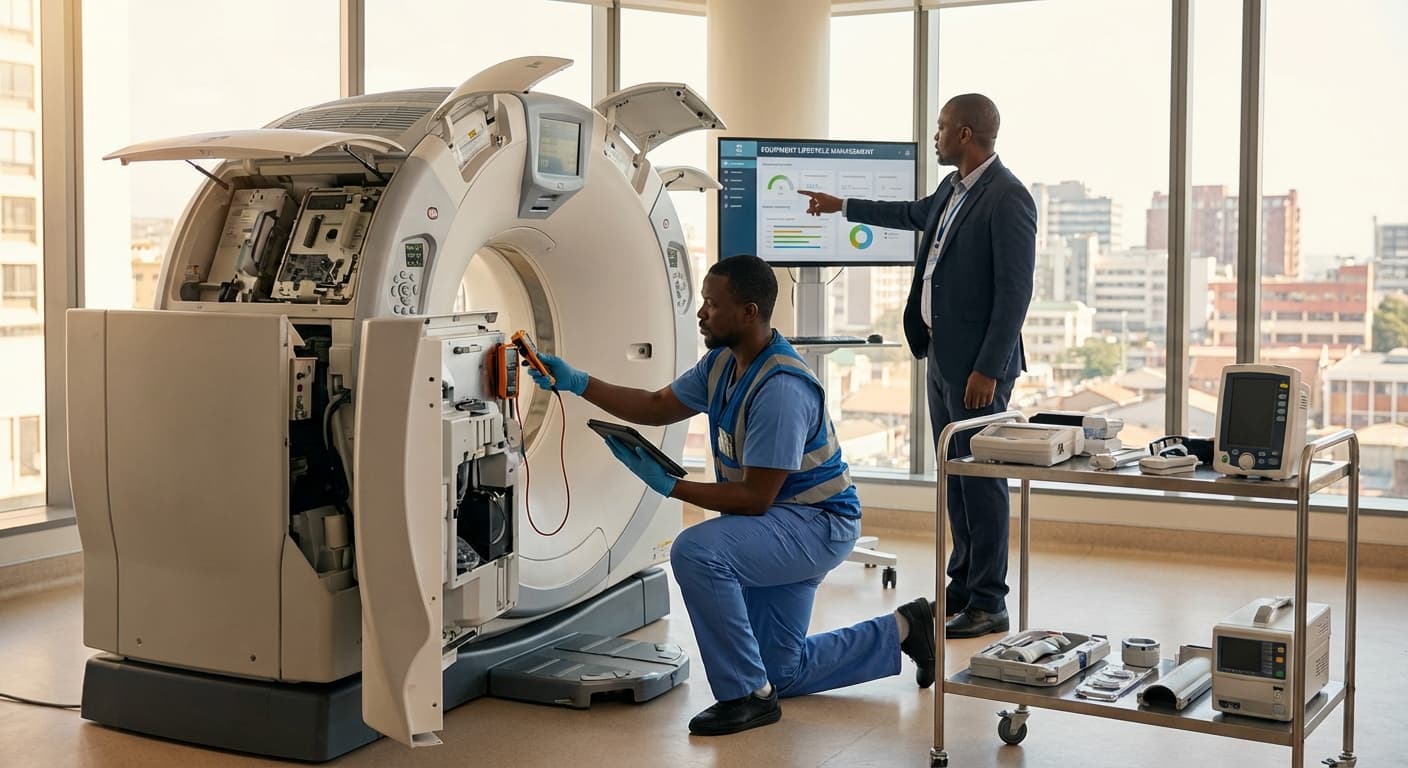
Equipment Replacement Planning & Obsolescence Strategy Service in Cameroon
Engineering Excellence & Technical Support
Equipment Replacement Planning & Obsolescence Strategy Service High-standard technical execution following OEM protocols and local regulatory frameworks.
Proactive Obsolescence Mitigation
Leverage predictive analytics and industry-specific data to identify critical equipment nearing obsolescence. Our service provides tailored mitigation strategies, including early procurement, lifecycle extension options, and strategic vendor engagement, ensuring uninterrupted operations for Cameroonian businesses.
Optimized Capital Expenditure Planning
Develop data-driven equipment replacement plans that align with your financial forecasts and operational needs. We analyze total cost of ownership, return on investment, and potential downtime costs to optimize your capital expenditure, maximizing asset utilization and minimizing unexpected expenses for organizations in Cameroon.
Supply Chain Resilience & Local Sourcing
Enhance supply chain resilience for critical equipment in Cameroon. Our strategy identifies key dependencies, explores alternative suppliers, and prioritizes local sourcing opportunities where feasible. This reduces lead times, mitigates geopolitical risks, and supports the growth of the Cameroonian industrial ecosystem.
What Is Equipment Replacement Planning & Obsolescence Strategy Service In Cameroon?
Equipment Replacement Planning & Obsolescence Strategy Service in Cameroon refers to a specialized consultancy offering that assists organizations in systematically managing the lifecycle of their physical assets, focusing on proactive replacement and mitigating the risks associated with technological and functional obsolescence. This service encompasses a comprehensive framework for evaluating existing equipment, forecasting future needs, identifying obsolescence vectors, and developing optimized strategies for asset renewal and disposal. It aims to ensure operational continuity, maximize return on investment from capital expenditures, and maintain a competitive technological edge within the Cameroonian business environment.
| Who Needs This Service | Typical Use Cases |
|---|---|
| Manufacturing & Industrial Operations: Companies reliant on heavy machinery, production lines, and process control systems. | Telecommunications Providers: Managing aging network infrastructure (e.g., base stations, switching equipment) and adopting new communication technologies (5G, fiber optics). |
| Energy Sector (Oil & Gas, Power Generation): Critical infrastructure with long asset lifecycles requiring stringent safety and performance standards. | Transportation & Logistics: Maintaining fleets of vehicles, specialized handling equipment, and logistics management systems. |
| Healthcare Institutions: Replacing outdated medical imaging equipment, diagnostic tools, and patient monitoring systems to ensure patient care quality and compliance. | Information Technology (IT) Departments: Managing servers, networking hardware, data storage solutions, and end-user computing devices facing rapid technological evolution. |
| Large-Scale Agriculture: Managing agricultural machinery, irrigation systems, and processing equipment prone to wear and tear and technological advancements. | Mining Operations: High-wear equipment and specialized machinery requiring regular assessment and planned replacement to maintain extraction efficiency and safety. |
| Public Sector & Government Agencies: Managing diverse asset portfolios including infrastructure, vehicles, and IT systems requiring long-term planning and budget allocation. | Financial Institutions: Ensuring the reliability and security of IT infrastructure, ATMs, and branch equipment. |
Key Components of the Service
- Asset Inventory and Condition Assessment: Detailed cataloging of all existing equipment, including specifications, purchase dates, maintenance history, and current operational status. Physical and performance-based evaluations to determine remaining useful life (RUL) and identify immediate replacement needs.
- Obsolescence Risk Identification and Analysis: Assessment of technological advancements, market trends, regulatory changes, and supplier discontinuations that may render existing equipment obsolete, inefficient, or non-compliant.
- Life Cycle Costing (LCC) Analysis: Comprehensive evaluation of all costs associated with an asset throughout its entire life, from acquisition to disposal, including initial purchase, installation, operation, maintenance, repair, and decommissioning. This informs economic replacement decisions.
- Predictive Maintenance and Performance Monitoring Integration: Leveraging data analytics and sensor technologies to forecast equipment failures, optimize maintenance schedules, and extend the effective operational life of assets where feasible.
- Replacement Strategy Development: Formulation of tailored strategies for equipment renewal, including buy-vs-lease analysis, technology roadmapping, phased replacement programs, and consideration of emerging technologies.
- Disposal and Decommissioning Planning: Development of environmentally sound and cost-effective plans for the disposal, resale, or recycling of retired assets, ensuring compliance with local Cameroonian regulations.
- Risk Mitigation and Contingency Planning: Identification of potential disruptions arising from equipment failure or obsolescence and the development of contingency plans to minimize operational impact.
- Budgeting and Financial Planning Support: Assistance in developing capital expenditure budgets for equipment replacement, aligning with organizational financial objectives and strategic priorities.
Who Needs Equipment Replacement Planning & Obsolescence Strategy Service In Cameroon?
Equipment Replacement Planning & Obsolescence Strategy services are crucial for organizations in Cameroon that rely heavily on machinery, technology, and infrastructure. Proactive planning and strategic management of equipment lifecycle are essential to avoid costly downtime, maintain operational efficiency, and mitigate risks associated with aging or outdated assets. These services help businesses anticipate future needs, optimize capital expenditure, and ensure compliance with evolving industry standards and regulations.
| Target Customer Segment | Key Departments Involved | Reasons for Need |
|---|---|---|
| Manufacturing & Industrial Companies | Operations, Maintenance, Engineering, Finance, Procurement | Maintaining production efficiency, reducing breakdowns, optimizing asset utilization, managing technological advancements. |
| Telecommunications Providers | Network Operations, IT Infrastructure, Engineering, Finance, Asset Management | Ensuring network reliability, managing technology upgrades, planning for 5G and future network evolution, mitigating security risks from outdated systems. |
| Oil & Gas Companies | Asset Integrity, Maintenance, Engineering, Operations, Procurement, HSE | Ensuring safety and compliance, managing harsh operating environments, planning for long-term asset life, decommissioning old equipment. |
| Hospitals & Healthcare Providers | Biomedical Engineering, IT, Operations, Finance, Procurement | Maintaining patient safety, ensuring accuracy of diagnostic equipment, managing medical technology obsolescence, compliance with healthcare regulations. |
| Transportation & Logistics Firms | Fleet Management, Maintenance, Operations, Procurement, IT | Optimizing fleet performance, reducing operational costs, ensuring timely delivery, managing vehicle technology upgrades. |
| Government Agencies (e.g., Public Works, Defense) | Asset Management, Engineering, Procurement, IT, Maintenance | Ensuring public safety, managing large infrastructure assets, optimizing taxpayer funds, maintaining critical national services. |
| Mining & Extractive Companies | Maintenance, Engineering, Operations, Health & Safety, Procurement | Managing wear and tear in harsh conditions, ensuring operational continuity, planning for specialized equipment replacements, environmental compliance. |
| Large Agricultural Enterprises | Farm Operations, Maintenance, Procurement, Finance | Optimizing mechanized farming efficiency, managing irrigation systems, planning for farm equipment upgrades, adopting precision agriculture technologies. |
| Construction & Civil Engineering Firms | Equipment Management, Operations, Maintenance, Procurement, Project Management | Ensuring project timelines, managing heavy machinery wear, optimizing equipment utilization, planning for new construction technologies. |
Target Customers and Departments in Cameroon Requiring Equipment Replacement Planning & Obsolescence Strategy Services:
- Manufacturing and Industrial Sectors
- Telecommunications and IT Infrastructure
- Energy and Utilities (Oil & Gas, Power Generation)
- Healthcare and Medical Facilities
- Transportation and Logistics
- Public Sector and Government Agencies
- Mining and Extractive Industries
- Agriculture and Agribusiness
- Construction and Civil Engineering
Equipment Replacement Planning & Obsolescence Strategy Service Process In Cameroon
The Equipment Replacement Planning & Obsolescence Strategy Service Process in Cameroon guides organizations through a structured approach to managing their aging assets, ensuring optimal performance, minimizing downtime, and mitigating the risks associated with obsolete equipment. This process is crucial for businesses in various sectors within Cameroon, including manufacturing, telecommunications, energy, and logistics, where reliable and up-to-date equipment is vital for operational efficiency and competitiveness. The workflow is designed to be comprehensive, starting from the initial client inquiry and culminating in the successful execution of the replacement or modernization strategy.
| Stage | Description | Key Activities | Deliverables | Cameroonian Contextual Considerations |
|---|---|---|---|---|
| Inquiry & Initial Consultation | The client expresses interest in the service, and an initial discussion is held to understand their general needs and challenges. | Receive client inquiry, schedule initial meeting, discuss service overview, identify preliminary scope of work. | Meeting minutes, preliminary scope document. | Understanding local business culture, identifying key decision-makers within Cameroonian organizations, potential language nuances (French/English). |
| Assessment & Data Collection | A thorough evaluation of the client's existing equipment, operational performance, maintenance history, and obsolescence risks. | Site visits, interviews with technical staff, inventory of equipment, review of maintenance logs, performance data analysis, condition assessments. | Equipment inventory report, maintenance history analysis, performance metrics, obsolescence risk assessment report. | Access to remote industrial sites, local availability of specialized assessment tools, data privacy concerns. |
| Analysis & Strategy Development | Interpreting the collected data to identify specific obsolescence issues, evaluate replacement options, and develop a tailored strategy. | Root cause analysis of equipment failures, forecasting future needs, evaluating technological advancements, financial modeling (TCO), risk assessment of inaction, developing replacement/upgrade scenarios. | Obsolescence threat analysis, life cycle cost (LCC) analysis, replacement/upgrade options report, preliminary strategic recommendations. | Understanding local economic conditions and currency fluctuations, availability of financing options, impact of import duties and taxes on new equipment. |
| Proposal & Approval | Presenting the findings and recommended strategy to the client for review and formal approval. | Developing a detailed proposal outlining recommended actions, timelines, budget, and expected ROI, presenting the proposal to stakeholders, addressing client queries and concerns, obtaining formal sign-off. | Formal service proposal, budget breakdown, project timeline, ROI analysis, signed agreement. | Navigating procurement processes in Cameroonian companies, ensuring clarity in contractual terms, managing expectations regarding timelines. |
| Procurement & Sourcing | Acquiring the necessary new equipment or components, or arranging for upgrade services. | Identifying suitable suppliers (local and international), obtaining quotes, managing purchase orders, handling import/export procedures, logistics and transportation arrangements. | Procurement contracts, shipping and customs documentation, received equipment/components. | Local supplier network assessment, customs clearance complexities, import restrictions, transportation infrastructure challenges (road conditions, port efficiency). |
| Implementation & Installation | The physical replacement, upgrade, or integration of new equipment into the client's operations. | Site preparation, de-installation of old equipment, installation of new equipment, integration with existing systems, initial setup and configuration. | Installed equipment, updated site schematics, installation reports. | Availability of skilled local labor for installation, adherence to local safety regulations, potential for power grid instability affecting installation schedules. |
| Testing, Commissioning & Handover | Ensuring the new equipment functions as intended and is fully integrated into the client's workflow. | Performance testing, functionality checks, integration testing with other systems, operator training, final inspection, formal handover of documentation and responsibility. | Test reports, commissioning certificates, training materials, operational manuals, final project report. | Availability of testing and calibration equipment, ensuring local technicians are adequately trained to operate and maintain new equipment, provision of user manuals in relevant languages. |
| Post-Implementation Review & Support | Evaluating the success of the project and providing ongoing support to ensure continued optimal performance. | Performance monitoring, warranty management, spare parts planning, ongoing technical support, lessons learned documentation. | Post-implementation review report, ongoing support plan, updated maintenance schedules. | Establishing local support networks or partnerships, ensuring availability of spare parts within Cameroon, managing long-term maintenance contracts. |
Workflow Stages
- Inquiry & Initial Consultation
- Assessment & Data Collection
- Analysis & Strategy Development
- Proposal & Approval
- Procurement & Sourcing
- Implementation & Installation
- Testing, Commissioning & Handover
- Post-Implementation Review & Support
Equipment Replacement Planning & Obsolescence Strategy Service Cost In Cameroon
Planning for equipment replacement and developing obsolescence strategies are crucial for businesses in Cameroon to maintain operational efficiency, avoid costly downtime, and ensure technological relevance. The cost of such services can vary significantly based on several factors. These include the scale and complexity of the organization, the number and types of equipment involved, the depth of the analysis required, and the expertise of the service provider. Small businesses with a limited inventory might require a basic assessment, while large industrial operations with specialized machinery will necessitate a comprehensive, long-term strategic plan. Furthermore, the level of detail in the obsolescence strategy – from simple replacement schedules to integrated lifecycle management and end-of-life disposal planning – will impact the cost. The reputation and experience of the consulting firm or individual offering the service also play a role, with established firms often commanding higher fees due to their proven track record and specialized knowledge. The urgency of the requirement can also influence pricing, with expedited services often incurring additional charges. Customization is key, and services tailored to specific industry needs or regulatory compliance requirements will naturally be priced higher.
| Service Component | Estimated Cost Range (XAF) | Typical Scope |
|---|---|---|
| Initial Equipment Inventory & Audit | 150,000 - 750,000 | Cataloging existing assets, condition assessment, and data collection. |
| Basic Replacement Planning (e.g., 1-3 year outlook) | 300,000 - 1,200,000 | Developing simple replacement schedules based on age and estimated lifespan. |
| Comprehensive Obsolescence Strategy Development | 750,000 - 3,000,000+ | In-depth analysis of technological trends, maintenance costs, risks, and a multi-year strategic roadmap. |
| Risk Assessment & Mitigation Planning | 200,000 - 800,000 | Identifying potential risks associated with obsolete equipment and proposing mitigation strategies. |
| Total Cost of Ownership (TCO) Analysis | 250,000 - 900,000 | Calculating all costs associated with equipment over its lifecycle, including acquisition, operation, maintenance, and disposal. |
| Vendor Selection & Negotiation Support | 400,000 - 1,500,000 | Assisting in identifying and negotiating with equipment suppliers. |
| Ongoing Monitoring & Updates (Annual retainer) | 300,000 - 1,000,000+ | Periodic review and updates to the strategy based on changing conditions. |
Key Pricing Factors for Equipment Replacement Planning & Obsolescence Strategy Services in Cameroon
- Scope and Complexity of the Organization
- Number and Types of Equipment
- Depth of Analysis and Reporting
- Level of Detail in Obsolescence Strategy
- Expertise and Reputation of Service Provider
- Urgency and Expedited Services
- Customization and Industry-Specific Requirements
- Duration of the Service Contract
Affordable Equipment Replacement Planning & Obsolescence Strategy Service Options
Our Affordable Equipment Replacement Planning & Obsolescence Strategy Service is designed to help businesses proactively manage their asset lifecycle, minimize unexpected costs, and optimize their capital expenditure. We provide flexible service options and value bundles to cater to diverse organizational needs and budgets, ensuring a tailored approach to obsolescence mitigation and strategic equipment renewal.
| Cost-Saving Strategy | Description | Service Alignment |
|---|---|---|
| Phased Replacements | Spreading capital expenditure over time by replacing equipment in planned stages rather than large, sudden overhauls. Minimizes budget shock and operational disruption. | Core Replacement Planning, Strategic Asset Lifecycle Management, All Value Bundles |
| Negotiated Bulk Purchases | Leveraging planned replacements to negotiate better pricing through bulk orders or by bundling new equipment with service contracts. | Strategic Asset Lifecycle Management, 'Strategic Sentinel', 'Complete Lifecycle Control' |
| Extended Service Contracts | Negotiating favorable service and support contracts at the time of purchase for longer-term predictability of maintenance costs, especially for mission-critical assets. | Obsolescence Risk Assessment, Strategic Asset Lifecycle Management, All Value Bundles |
| Refurbishment & Upgrade Options | Evaluating the cost-effectiveness of refurbishing or upgrading existing equipment versus full replacement, extending asset life and deferring capital outlay. | Obsolescence Risk Assessment, Strategic Asset Lifecycle Management, 'Strategic Sentinel', 'Complete Lifecycle Control' |
| Preventative Maintenance Optimization | Implementing robust preventative maintenance schedules to reduce the likelihood of unexpected failures and costly emergency repairs, extending equipment lifespan. | Core Replacement Planning, Strategic Asset Lifecycle Management, All Value Bundles |
| Early Obsolescence Identification | Proactively identifying and addressing equipment at risk of becoming obsolete allows for planned transitions, avoiding rushed purchases at higher prices or the use of costly legacy support. | Obsolescence Risk Assessment, Strategic Asset Lifecycle Management, All Value Bundles |
| Standardization | Reducing the variety of equipment types can lead to economies of scale in purchasing, simplified maintenance, and reduced spare parts inventory. | Strategic Asset Lifecycle Management, 'Strategic Sentinel', 'Complete Lifecycle Control' |
| Predictive Analytics Integration | Utilizing data from IoT sensors and operational history to predict potential failures, allowing for scheduled maintenance and replacement before critical breakdowns occur. | Strategic Asset Lifecycle Management, 'Strategic Sentinel', 'Complete Lifecycle Control' |
Service Options & Value Bundles
- {"title":"Core Replacement Planning","description":"Focuses on identifying critical equipment nearing end-of-life and developing phased replacement schedules based on usage, maintenance history, and criticality. Includes initial assessment and basic forecasting."}
- {"title":"Obsolescence Risk Assessment","description":"Expands on core planning by identifying specific obsolescence risks (e.g., part availability, software support, manufacturer discontinuation) and their potential impact on operations. Provides risk scoring and mitigation recommendations."}
- {"title":"Strategic Asset Lifecycle Management","description":"A comprehensive service that integrates replacement planning and obsolescence strategy with overall asset management. Includes detailed TCO (Total Cost of Ownership) analysis, best practice procurement strategies, and continuous monitoring."}
- {"title":"Value Bundle: 'Proactive Planner'","description":"Combines Core Replacement Planning with an initial Obsolescence Risk Assessment. Ideal for businesses looking to establish a foundational understanding of their asset health and future needs."}
- {"title":"Value Bundle: 'Strategic Sentinel'","description":"Integrates Obsolescence Risk Assessment with a customized Strategic Asset Lifecycle Management framework. Offers advanced forecasting, scenario planning, and ongoing support for long-term asset health."}
- {"title":"Value Bundle: 'Complete Lifecycle Control'","description":"The most comprehensive option, encompassing all aspects of Strategic Asset Lifecycle Management, including regular review cycles, advanced analytics, and dedicated expert consultation. Designed for organizations seeking maximum control and efficiency."}
Verified Providers In Cameroon
In Cameroon's evolving healthcare landscape, identifying truly verified and trustworthy providers is paramount for ensuring quality care. Franance Health has emerged as a leading entity, meticulously vetting and certifying healthcare professionals and facilities. Their rigorous credentialing process goes beyond basic registration, focusing on a comprehensive evaluation of qualifications, experience, ethical conduct, and adherence to international healthcare standards. This commitment to verification makes Franance Health-credentialed providers the best choice for individuals seeking reliable and high-quality medical services in Cameroon.
| Key Aspects of Franance Health Verification | Benefits for Patients |
|---|---|
| Thorough Qualification Assessment | Ensures providers have the correct medical education and licenses. |
| Experience and Specialization Verification | Confirms practical expertise and appropriate training for specific medical needs. |
| Reputation and Performance Monitoring | Mitigates risks by identifying providers with a history of excellent patient care. |
| Compliance with Ethical Guidelines | Guarantees a patient-centered approach and respectful treatment. |
| Adherence to Quality Standards | Assures that facilities and practitioners meet recognized benchmarks for care delivery. |
Why Franance Health Credentials Matter
- Rigorous Verification Process: Franance Health employs a multi-stage vetting system that includes academic and professional background checks, peer reviews, and ongoing performance monitoring.
- Commitment to Ethical Standards: Certified providers demonstrate a strong adherence to medical ethics and patient care principles, fostering trust and confidence.
- Focus on Competency and Experience: Franance Health ensures that credentialed professionals possess the necessary skills and practical experience to deliver effective healthcare.
- Adherence to Best Practices: Providers are evaluated for their compliance with updated medical guidelines and international healthcare benchmarks.
- Enhanced Patient Safety: The verification process contributes directly to improved patient safety by minimizing the risk of engaging with unqualified or substandard practitioners.
- Access to Quality Healthcare: Choosing a Franance Health-credentialed provider offers a guarantee of quality, leading to better health outcomes.
Scope Of Work For Equipment Replacement Planning & Obsolescence Strategy Service
This Scope of Work (SOW) outlines the services to be provided for Equipment Replacement Planning and Obsolescence Strategy. The objective is to develop a comprehensive, data-driven strategy that ensures operational continuity, minimizes risks associated with aging equipment, and optimizes capital expenditure for replacements and upgrades.
| Deliverable | Description | Format | Standard Specifications |
|---|---|---|---|
| Equipment Inventory Database | A comprehensive, digitized inventory of all relevant equipment, including make, model, serial number, installation date, condition, maintenance history, and criticality. | Digital Database (e.g., SQL, Excel, CMMS Export) | Data accuracy to be >95%. Standardized naming conventions and data fields. Includes lifecycle status (Operational, Aging, Obsolete). |
| Obsolescence Risk Assessment Report | Detailed analysis of identified obsolescence risks, categorized by type (e.g., end-of-life support, spare parts availability, technology divergence) and prioritized based on business impact. | PDF Report | Includes quantitative and qualitative risk scoring. Recommendations for immediate mitigation for high-risk items. |
| Equipment Replacement Criteria Document | Defined, objective criteria for triggering equipment replacement or upgrade, including factors like age, failure rate, maintenance cost, energy efficiency, regulatory compliance, and technological advancements. | PDF Document | Clear, measurable criteria. Examples of threshold values provided. Aligned with business objectives and risk tolerance. |
| Phased Replacement & Upgrade Plan | A multi-year plan outlining recommended equipment replacements and upgrades, prioritized by risk and business need. Includes estimated costs, timelines, and resource requirements. | PDF Report, Spreadsheet (for detailed scheduling) | Minimum 3-5 year horizon. Includes dependencies and potential phasing options. Annual budget breakdown. |
| Obsolescence Management Strategy Document | A proactive strategy for managing equipment obsolescence, including approaches for monitoring technology trends, managing spare parts, and evaluating alternative solutions (e.g., refurbishment, reverse engineering). | PDF Document | Includes defined processes for proactive monitoring and decision-making. Clear roles and responsibilities defined. |
| Risk Mitigation and Contingency Plan | Strategies to mitigate identified risks and contingency plans for critical equipment failures or unexpected obsolescence events. | PDF Document | Actionable steps for each identified risk. Defined triggers for contingency activation. |
| Capital Expenditure Forecast Report | Detailed forecast of capital expenditure required for equipment replacement and upgrades over the planning horizon, aligned with the Phased Replacement Plan. | Spreadsheet, PDF Report | Breakdown by year, equipment category, and funding source. Includes assumptions and sensitivity analysis. |
| Integration Recommendations Document | Recommendations for integrating the developed strategies and data into existing Maintenance, Reliability, and Asset Management systems. | PDF Document | Specific guidance on data flow, system updates, and potential interface requirements. Focus on actionable integration steps. |
| KPI Dashboard Mock-up/Specification | A mock-up or specification for a dashboard to track the performance of the obsolescence strategy and replacement plan against defined KPIs. | Digital Mock-up (e.g., Figma, PowerPoint), PDF Specification | Includes key metrics such as % of critical equipment at high obsolescence risk, Average Equipment Age, Planned vs. Unplanned Replacement Ratio, Budget Adherence. |
Key Service Areas
- Current State Assessment of Equipment Inventory
- Obsolescence Risk Identification and Prioritization
- Development of Equipment Replacement Criteria and Models
- Creation of a Phased Replacement and Upgrade Plan
- Development of a Proactive Obsolescence Management Strategy
- Risk Mitigation Strategies and Contingency Planning
- Capital Expenditure Forecasting and Budgeting Support
- Integration with Maintenance and Operations Systems
- Development of Key Performance Indicators (KPIs) for Strategy Success
Service Level Agreement For Equipment Replacement Planning & Obsolescence Strategy Service
This Service Level Agreement (SLA) defines the response times and uptime guarantees for the Equipment Replacement Planning & Obsolescence Strategy Service (hereafter referred to as 'the Service'). This SLA is designed to ensure the efficient and effective delivery of the Service, supporting the client's proactive management of their equipment lifecycle.
| Service Component | Response Time (Business Hours) | Uptime Guarantee |
|---|---|---|
| Initial Consultation & Requirement Gathering | Within 2 business days | N/A (one-time activity) |
| Obsolescence Risk Assessment & Reporting | Within 5 business days (for standard assessments) | N/A (deliverable-based) |
| Replacement Plan Development & Updates | Within 7 business days (for initial plans) | N/A (deliverable-based) |
| Urgent Obsolescence Alerts & Mitigation Advice | Within 1 business day | N/A (event-driven) |
| Access to Obsolescence Strategy Portal/Platform | N/A | 99.5% uptime (excluding scheduled maintenance) |
| Technical Support for the Obsolescence Strategy Portal/Platform | Within 4 business hours | N/A (support-based) |
| Regular Performance Review Meetings | As per agreed schedule | N/A (scheduled activity) |
Scope of Service
- Proactive identification of potential equipment obsolescence.
- Development and maintenance of equipment replacement plans.
- Strategic recommendations for technology refresh cycles.
- Analysis of end-of-life support for critical equipment.
- Guidance on decommissioning and disposal strategies.
- Regular reporting on equipment lifecycle status.
Frequently Asked Questions

Ready when you are
Let's scope your Equipment Replacement Planning & Obsolescence Strategy Service in Cameroon project in Cameroon.

Scaling healthcare logistics and technical systems across the entire continent.