
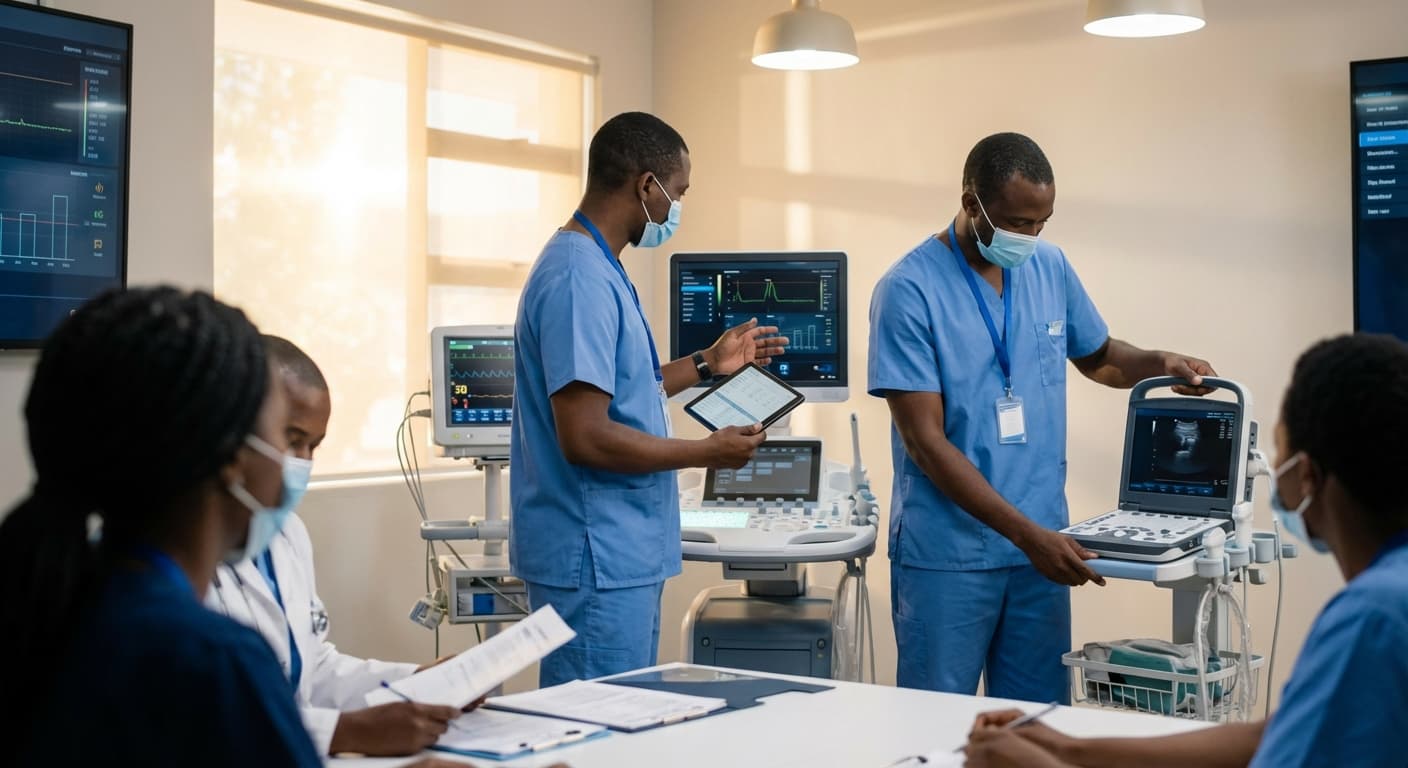
Clinical Needs Assessment for Medical Equipment in Cameroon
Engineering Excellence & Technical Support
Clinical Needs Assessment for Medical Equipment High-standard technical execution following OEM protocols and local regulatory frameworks.
Data-Driven Needs Identification
Leveraging real-time patient volume, disease prevalence data, and facility utilization metrics from various healthcare facilities across Cameroon to accurately forecast equipment requirements and prioritize essential medical supplies.
Contextualized Equipment Suitability Analysis
Evaluating medical equipment proposals against the specific operational environment, existing infrastructure (power, water, IT), and maintenance capabilities of Cameroonian healthcare settings to ensure long-term sustainability and efficacy.
Capacity Building and Training Integration
Integrating needs assessment with planned training programs for healthcare professionals on new equipment operation and maintenance, ensuring optimal utilization and minimizing downtime through a skilled local workforce.
What Is Clinical Needs Assessment For Medical Equipment In Cameroon?
A Clinical Needs Assessment for Medical Equipment in Cameroon is a systematic process designed to evaluate the existing healthcare infrastructure, identify critical gaps in medical equipment availability and functionality, and determine the most appropriate and sustainable equipment solutions to address specific clinical needs. This service is crucial for optimizing healthcare delivery, improving patient outcomes, and ensuring efficient resource allocation within the Cameroonian healthcare system. It involves a comprehensive review of clinical services, patient demographics, disease prevalence, existing equipment inventory, maintenance capabilities, and training requirements. The objective is to align medical equipment acquisition and deployment strategies with the actual and projected clinical demands of healthcare facilities.
| Who Needs It? | Typical Use Cases |
|---|---|
| Ministry of Public Health (MINSANTE) and Regional Health Directorates: For national and regional health sector planning, resource allocation, and strategic equipment procurement initiatives. | Developing national equipment procurement plans to address widespread deficiencies. Establishing standards for medical equipment in public health facilities. Prioritizing equipment investments based on national disease burden and health goals. |
| Public and Private Healthcare Facilities (Hospitals, Health Centers, Clinics): To identify specific equipment needs, justify procurement requests, and plan for infrastructure upgrades. | Upgrading or expanding services at a district hospital (e.g., introducing new diagnostic imaging capabilities). Equipping a newly constructed health center in a remote area. Replacing aging or obsolete equipment in a specialized department (e.g., Intensive Care Unit, Operating Theatre). |
| International Development Partners and NGOs: To inform their investment strategies, grant allocations, and project design for health system strengthening in Cameroon. | Designing a project to improve maternal and child health services through equipment provision. Assessing the equipment needs for a mobile clinic initiative. Supporting the rehabilitation of a hospital with new medical technology. |
| Medical Equipment Manufacturers and Suppliers: To understand the market demands, identify opportunities for product placement, and tailor their offerings to local requirements. | Identifying the most sought-after types of diagnostic equipment in specific regions. Determining the specifications for durable and low-maintenance equipment suitable for varied infrastructure. Understanding the training and after-sales support requirements for market entry. |
| Healthcare Administrators and Procurement Officers: To guide informed decision-making regarding equipment selection, budgeting, and contract negotiation. | Justifying the purchase of high-cost medical equipment to stakeholders. Developing tender documents that accurately reflect clinical needs. Assessing the total cost of ownership for different equipment options. |
Key Components of a Clinical Needs Assessment:
- Facility Assessment: Evaluating the physical infrastructure, power supply reliability, environmental conditions, and security of healthcare facilities.
- Clinical Service Analysis: Characterizing the types and volume of medical services offered, including diagnostic, therapeutic, and surgical procedures.
- Equipment Inventory and Condition Audit: Documenting all existing medical equipment, assessing its age, functionality, maintenance history, and obsolescence status.
- Gap Analysis: Identifying deficiencies in equipment availability, capacity, and technological advancement relative to current and future clinical needs.
- User Needs and Workflow Analysis: Understanding the requirements of healthcare professionals, their current workflows, and how new equipment will integrate.
- Maintenance and Technical Support Evaluation: Assessing the availability and capacity of local technical expertise, spare parts, and maintenance infrastructure.
- Training Needs Assessment: Determining the requisite training for healthcare personnel to operate and maintain new or upgraded equipment.
- Budgetary and Financial Feasibility: Estimating the capital and operational costs associated with acquiring, installing, and maintaining recommended equipment.
- Regulatory and Policy Review: Ensuring compliance with national healthcare regulations, standards, and procurement policies.
- Sustainability Planning: Developing strategies for long-term equipment management, including maintenance, replacement, and decommissioning.
Who Needs Clinical Needs Assessment For Medical Equipment In Cameroon?
Clinical needs assessment for medical equipment in Cameroon is a crucial process for ensuring that healthcare facilities are equipped with appropriate, functional, and sustainable technology to meet the diverse health needs of the population. This assessment is not a one-size-fits-all endeavor but rather a targeted approach designed to identify specific gaps and priorities within various healthcare settings and for different patient populations. It serves as the foundation for effective procurement, resource allocation, and ultimately, improved patient care and health outcomes across the nation.
| Target Customer Category | Typical Departments Involved | Key Considerations for Assessment |
|---|---|---|
| Hospitals (Tertiary, Secondary, Primary) | All departments (e.g., Surgery, Internal Medicine, Pediatrics, Obstetrics & Gynecology, Radiology, Pathology, Anesthesiology, Emergency) | Patient volume, disease prevalence, existing equipment inventory, technological advancements, staff expertise, maintenance capacity, budget constraints, service delivery models. |
| District Health Centers/Clinics | General Practice, Maternity, Pharmacy, Laboratory (basic) | Essential primary care services, common illnesses, antenatal care, delivery services, basic diagnostics, community outreach needs, availability of trained personnel. |
| Specialized Medical Centers | Oncology, Cardiology, Neurology, Pediatrics, Ophthalmology, etc. | Specific diagnostic and therapeutic equipment for the specialty, advanced treatment modalities, research needs, patient demographics for the specialty. |
| Maternal and Child Health Units | Obstetrics, Gynecology, Neonatology, Pediatrics, Family Planning | Delivery suites, neonatal intensive care units (NICUs), incubators, ventilators, fetal monitors, ultrasound machines, essential drugs and supplies. |
| Emergency Departments/Trauma Units | Emergency Medicine, Trauma Surgery, Critical Care | Trauma resuscitation equipment, cardiac arrest carts, ventilators, defibrillators, imaging equipment (e.g., portable X-ray), wound care supplies. |
| Diagnostic Laboratories | Clinical Chemistry, Hematology, Microbiology, Immunology, Histopathology, Radiology | Automated analyzers, microscopes, centrifuges, incubators, PCR machines, imaging equipment (X-ray, CT, MRI), biopsy equipment. |
| Surgical Wards and Operating Theaters | General Surgery, Orthopedics, Neurosurgery, Ophthalmology, ENT, etc. | Surgical instruments, anesthesia machines, patient monitors, electrosurgical units, lighting systems, sterilization equipment, recovery room equipment. |
| Intensive Care Units (ICUs) | Critical Care Medicine | Advanced ventilators, hemodynamic monitoring systems, infusion pumps, dialysis machines, ECMO (in advanced settings), defibrillators, pacemakers. |
| Rehabilitation Centers | Physical Therapy, Occupational Therapy, Speech Therapy | Therapeutic exercise equipment, gait training aids, assistive devices, electrotherapy equipment, prosthetics, orthotics. |
| Public Health Programs | Disease Control Units, Vaccination Programs, HIV/AIDS Clinics, Malaria Control | Diagnostic kits, cold chain equipment, mobile clinics, data management tools, community health worker equipment. |
| Medical Training Institutions | Anatomy, Physiology, Pathology, Surgery, Internal Medicine departments (for training) | Simulation manikins, anatomical models, laboratory equipment for practicals, basic diagnostic and therapeutic tools for student practice. |
Target Customers and Departments for Clinical Needs Assessment in Cameroon:
- Hospitals (Tertiary, Secondary, and Primary): The backbone of the healthcare system, these facilities require comprehensive assessments due to their broad range of services and patient volumes.
- District Health Centers/Clinics: Often the first point of contact for many Cameroonians, these centers need assessments focused on essential primary care equipment and services.
- Specialized Medical Centers: Facilities focusing on specific conditions (e.g., oncology, cardiology, pediatrics) require assessments tailored to their specialized needs.
- Maternal and Child Health Units: Critical for improving maternal and child survival rates, these units need assessments for obstetric, neonatal, and pediatric equipment.
- Emergency Departments/Trauma Units: Requiring rapid assessment and response capabilities, these units need a focus on life-saving equipment.
- Diagnostic Laboratories: Essential for accurate diagnosis, these departments need assessments for a wide array of analytical and imaging equipment.
- Surgical Wards and Operating Theaters: Requiring sterile environments and specialized surgical instruments, these areas are prime candidates for needs assessments.
- Intensive Care Units (ICUs): Demanding highly sophisticated monitoring and life-support equipment, ICUs are a priority for detailed assessments.
- Rehabilitation Centers: Focusing on recovery and physical therapy, these centers need specialized equipment for therapeutic interventions.
- Public Health Programs and Initiatives: Assessments for equipment supporting specific public health campaigns (e.g., vaccination, disease surveillance, HIV/AIDS management).
- Medical Training Institutions: Ensuring future healthcare professionals have access to modern equipment for training and skill development.
Clinical Needs Assessment For Medical Equipment Process In Cameroon
This document outlines the comprehensive workflow for conducting a Clinical Needs Assessment for Medical Equipment in Cameroon. The process is designed to ensure that procured medical equipment effectively addresses the healthcare needs of specific facilities and populations, promoting efficient resource allocation and improved patient care. The workflow begins with an initial inquiry and progresses through several key stages, culminating in the execution and implementation of the assessment findings.
| Stage | Key Activities | Responsible Parties | Deliverables | Timeline (Indicative) |
|---|---|---|---|---|
| Formal request or identification of a need for medical equipment assessment. Defining the scope and objectives of the assessment. Forming the assessment team. | Ministry of Public Health (MoH), Regional Health Authorities, Healthcare Facilities, NGOs, International Partners. | Assessment mandate, Terms of Reference (ToR), Initial assessment team composition. | 1-2 Weeks |
| Defining the specific healthcare needs of the target population/facility. Identifying existing equipment and infrastructure. Determining the type and quantity of equipment required. Establishing assessment criteria and methodologies. | Assessment Team (including clinicians, engineers, administrators), Facility Staff, MoH Representatives. | Needs statement, Scope of assessment, Assessment criteria and methodology document. | 2-4 Weeks |
| Gathering information on disease prevalence, patient demographics, existing services, available personnel, infrastructure limitations, and current equipment status. This may involve site visits, surveys, interviews, and review of existing records. Analyzing collected data to identify gaps and priorities. | Assessment Team, Facility Staff, Patients (where applicable). | Raw data, Completed surveys/questionnaires, Interview notes, Site visit reports, Data analysis summary. | 4-8 Weeks |
| Ranking identified equipment needs based on urgency, impact on patient care, cost-effectiveness, and sustainability. Developing specific recommendations for equipment procurement, including technical specifications, estimated costs, and training requirements. | Assessment Team, Clinical Experts, Procurement Specialists. | Prioritized list of medical equipment, Detailed equipment specifications, Cost estimates, Training plans. | 3-5 Weeks |
| Presenting preliminary findings and recommendations to stakeholders for feedback and validation. Incorporating feedback and finalizing the needs assessment report. Obtaining formal approval from relevant authorities. | Assessment Team, MoH Leadership, Facility Management, Technical Advisory Committee. | Draft needs assessment report, Finalized needs assessment report with approvals. | 2-3 Weeks |
| Supporting the procurement process by providing technical specifications and evaluation criteria. Assisting with equipment installation, commissioning, and initial training. Ensuring proper integration into existing workflows. | MoH Procurement Unit, Equipment Suppliers, Installation Technicians, Training Providers, Assessment Team (advisory role). | Procurement documents, Installation reports, Training completion records. | Ongoing (aligned with procurement cycles) |
| Tracking the utilization and performance of procured equipment. Assessing the impact of the equipment on healthcare service delivery and patient outcomes. Identifying any post-implementation challenges and proposing solutions. | MoH Monitoring & Evaluation Unit, Facility Management, Users of the equipment. | Utilization reports, Performance data, Impact assessments, Follow-up recommendations. | Ongoing (e.g., 6-12 months post-implementation) |
Clinical Needs Assessment Workflow for Medical Equipment in Cameroon
- Inquiry and Initiation
- Needs Identification and Scoping
- Data Collection and Analysis
- Prioritization and Recommendation Development
- Validation and Review
- Procurement and Implementation Support
- Monitoring and Evaluation
Clinical Needs Assessment For Medical Equipment Cost In Cameroon
This document outlines a clinical needs assessment for medical equipment costs in Cameroon. It aims to provide a foundational understanding of the pricing landscape, considering various factors that influence cost, and presenting estimated price ranges in the local currency (Cameroonian Franc - XAF). Accurate budgeting for medical equipment is crucial for healthcare providers to ensure adequate patient care, facility expansion, and operational efficiency. The assessment acknowledges that prices can fluctuate based on demand, supplier, origin of the equipment, import duties, taxes, and the specific configuration and features required. Therefore, the provided figures are indicative and require further detailed quotation for specific procurement decisions. The goal is to equip stakeholders with a general understanding of potential expenditures when planning for medical equipment acquisition in Cameroon.
| Medical Equipment Category | Estimated Price Range (XAF) | Notes/Typical Use Cases |
|---|---|---|
| Basic Diagnostic Equipment (e.g., Stethoscope, Sphygmomanometer, Thermometer) | 15,000 - 150,000 | Essential for primary healthcare facilities, clinics, and home care. |
| Laboratory Equipment (e.g., Microscope, Centrifuge, Basic Blood Analyzer) | 500,000 - 10,000,000 | Crucial for diagnostic testing in hospitals and larger clinics. Prices vary significantly with automation level. |
| Imaging Equipment (e.g., X-ray Machine, Ultrasound Machine - Portable) | 5,000,000 - 50,000,000+ | Essential for diagnosis in mid-to-large hospitals. Portable ultrasounds are more affordable than fixed units. CT scanners and MRIs are significantly higher. |
| Surgical Instruments (Basic Sets) | 200,000 - 2,000,000 | Varies based on the number and specialization of instruments in a set. Orthopedic or neurosurgical sets are considerably more expensive. |
| Patient Monitoring Systems (e.g., Vital Signs Monitor) | 1,000,000 - 10,000,000 | Used in ICUs, recovery rooms, and wards. Advanced multi-parameter monitors are at the higher end. |
| Anesthesia Machines (Basic) | 3,000,000 - 25,000,000 | Essential for surgical procedures. Modern, feature-rich machines are more expensive. |
| Hospital Beds (Manual and Semi-Electric) | 200,000 - 1,500,000 | Prices vary by material, number of adjustments, and incorporated features. |
| Defibrillators (AED and Manual) | 1,500,000 - 15,000,000 | AEDs are generally less expensive and designed for widespread public access. Manual defibrillators with advanced features are pricier. |
| Sterilization Equipment (Autoclave - Medium Size) | 1,000,000 - 10,000,000 | Crucial for infection control. Larger capacity and automated models are more costly. |
| Wheelchairs and Mobility Aids | 50,000 - 500,000 | Manual wheelchairs are cheaper; electric wheelchairs and specialized mobility devices are significantly more expensive. |
Key Pricing Factors for Medical Equipment in Cameroon
- Brand and Manufacturer Reputation: Premium brands often command higher prices.
- New vs. Refurbished/Used Equipment: Refurbished equipment offers a significant cost saving.
- Origin and Importation Costs: Equipment manufactured locally or regionally may be cheaper than imported goods due to reduced shipping, customs duties, and taxes.
- Technology and Features: Advanced features, higher precision, and integrated software increase costs.
- Supplier and Distributor Margins: Different suppliers will have varying pricing structures.
- Warranty and After-Sales Support: Extended warranties and comprehensive support packages add to the initial cost.
- Bulk Purchase Discounts: Ordering multiple units or a package of equipment can lead to reduced per-unit pricing.
- Installation and Training: Costs associated with setting up equipment and training staff are often separate but essential.
- Economic Conditions and Currency Fluctuations: Inflation and exchange rate volatility can impact import costs.
- Specific Clinical Application and Complexity: Specialized equipment for niche procedures will be more expensive than general-purpose devices.
Affordable Clinical Needs Assessment For Medical Equipment Options
Acquiring essential medical equipment can be a significant investment for healthcare providers. An affordable clinical needs assessment is crucial for identifying the most cost-effective solutions without compromising patient care. This involves a systematic evaluation of existing equipment, patient demographics, service lines, and future growth plans to pinpoint genuine needs versus wants. Leveraging value bundles and implementing smart cost-saving strategies are key to maximizing budget efficiency.
| Value Bundle Strategy | Description | Cost-Saving Benefit |
|---|---|---|
| Integrated System Purchase | Acquiring multiple, interconnected pieces of equipment from a single vendor, often with bundled software and training. | Reduced integration costs, streamlined purchasing process, potential volume discounts, and unified support. |
| Service and Maintenance Packages | Purchasing equipment with pre-negotiated, comprehensive service and maintenance plans. | Predictable maintenance costs, reduced downtime, extended equipment lifespan, and avoidance of unexpected repair bills. |
| Training and Education Bundles | Including user training, technical support, and ongoing education as part of the equipment acquisition. | Improved staff proficiency, optimized equipment utilization, reduced errors, and faster adoption of new technologies. |
| Consumables and Accessory Packages | Bundling essential consumables and accessories with the main equipment purchase. | Guaranteed availability of necessary supplies, potential discounts on bulk purchases, and simplified procurement. |
Key Components of an Affordable Clinical Needs Assessment
- Identify core clinical requirements and prioritize based on patient volume and acuity.
- Assess current equipment inventory for utilization, age, and maintenance costs.
- Analyze future service line expansion and projected patient demand.
- Consult with clinical staff to understand workflow and practical equipment needs.
- Research available technology and innovation relevant to identified needs.
- Evaluate service and maintenance contracts for existing and prospective equipment.
Verified Providers In Cameroon
In Cameroon's evolving healthcare landscape, identifying trusted and competent medical professionals is paramount. Verified providers offer a level of assurance that goes beyond simple licensure, indicating a commitment to quality, ethical practice, and continuous improvement. Franance Health stands out as a premier example of such a verified provider, distinguished by its rigorous credentialing process and dedication to patient well-being. This document outlines why choosing Franance Health and their verified providers represents the best option for healthcare needs in Cameroon.
| Verification Component | Franance Health's Approach | Benefit to Patients |
|---|---|---|
| Medical Licensing | Mandatory and current, with ongoing monitoring for compliance. | Ensures legal and foundational competency. |
| Educational Background | Thorough review of degrees, diplomas, and specialized training from accredited institutions. | Confirms a strong theoretical and practical knowledge base. |
| Professional Experience | Verification of past employment, surgical logs, and case reviews where applicable. | Demonstrates practical application of skills and real-world problem-solving. |
| Peer and Professional References | Solicitation of feedback from colleagues and supervisors to assess competence and collaboration. | Provides objective insights into a provider's professional reputation and teamwork. |
| Ethical Conduct and Disciplinary History | Background checks for any disciplinary actions or ethical violations with relevant medical boards. | Guarantees adherence to the highest standards of medical ethics and patient care. |
| Continuing Medical Education (CME) | Confirmation of participation in mandatory and voluntary CME activities. | Ensures providers remain current with evolving medical knowledge and techniques. |
Why Franance Health Providers Are the Best Choice:
- Rigorous Credentialing: Franance Health employs a multi-faceted verification process that scrutinizes not only medical licenses but also educational background, professional experience, peer reviews, and adherence to ethical guidelines.
- Commitment to Quality Care: Verified providers at Franance Health are selected for their demonstrated ability to deliver high-quality medical services, focusing on patient safety, effectiveness, and patient-centered approaches.
- Continuous Professional Development: Franance Health encourages and supports its verified providers in their ongoing learning and professional development, ensuring they are up-to-date with the latest medical advancements and best practices.
- Patient Trust and Transparency: The verification process fosters a culture of trust. Patients can be confident in the qualifications and ethical standards of Franance Health's practitioners, promoting transparency in healthcare delivery.
- Comprehensive Healthcare Network: Franance Health aggregates a network of diverse and highly qualified specialists and general practitioners, offering a wide spectrum of medical services to meet various health needs.
- Ethical Practice and Patient Advocacy: Providers are vetted for their commitment to ethical conduct, patient rights, and advocating for the best interests of their patients.
Scope Of Work For Clinical Needs Assessment For Medical Equipment
This Scope of Work (SOW) outlines the requirements for conducting a comprehensive clinical needs assessment for medical equipment. The assessment aims to identify, prioritize, and specify medical equipment essential for the optimal functioning of healthcare facilities, ensuring alignment with clinical workflows, patient care standards, and technological advancements. The project will result in detailed technical deliverables and standard specifications for all identified equipment.
| Deliverable | Description | Format | Responsible Party | Timeline (Weeks) |
|---|---|---|---|---|
| Project Plan | Detailed plan outlining methodology, timelines, resources, and stakeholder engagement strategy. | Document (PDF) | Project Manager | 2 |
| Current State Analysis Report | Comprehensive report detailing existing medical equipment inventory, utilization, maintenance status, and identified gaps. | Document (PDF) | Clinical Team Lead | 4 |
| Clinical Workflow Maps | Visual representation of key clinical pathways and patient journeys, highlighting equipment touchpoints and requirements. | Diagrams (Visio, Lucidchart) | Clinical Analysts | 6 |
| Needs Assessment Report | Report identifying and prioritizing clinical needs for new or upgraded medical equipment, categorized by department and specialty. | Document (PDF) | Clinical Lead & Procurement Specialist | 8 |
| Technical Specification Documents | Detailed technical specifications for each prioritized piece of medical equipment, including performance requirements, safety features, connectivity, and regulatory compliance. | Documents (Word/PDF) | Biomedical Engineers | 12 |
| Standard Equipment Catalog | A consolidated catalog of all specified medical equipment with standardized configurations and approved vendors (if applicable). | Database/Spreadsheet | Procurement Specialist | 14 |
| Final Report and Recommendations | Consolidated report summarizing the entire needs assessment process, including final equipment list, justifications, and strategic recommendations for procurement and implementation. | Document (PDF) | Project Manager | 16 |
| Validation and Approval Sign-offs | Formal sign-off from relevant stakeholders on the needs assessment findings and technical specifications. | Signed documents (PDF) | Department Heads & Hospital Administration | 18 |
Project Phases and Key Activities
- Phase 1: Project Initiation and Planning
- Phase 2: Clinical Workflow Analysis
- Phase 3: Equipment Identification and Prioritization
- Phase 4: Technical Specification Development
- Phase 5: Reporting and Documentation
- Phase 6: Validation and Approval
Service Level Agreement For Clinical Needs Assessment For Medical Equipment
This Service Level Agreement (SLA) outlines the performance standards for the Clinical Needs Assessment (CNA) service provided for medical equipment. It defines the expected response times for service requests and uptime guarantees for critical system components, ensuring timely and reliable support for healthcare providers.
| Service Category | Response Time Target | Resolution Time Target (Critical) | Resolution Time Target (High) | Resolution Time Target (Medium) | Uptime Guarantee |
|---|---|---|---|---|---|
| New CNA Request (Standard) | 2 business days | N/A | N/A | 5 business days | 99.5% |
| CNA Data Analysis/Report Generation | 1 business day | N/A | N/A | 3 business days | 99.5% |
| Technical Support (Platform Issues) | 4 business hours | 24 business hours | 48 business hours | 72 business hours | 99.5% |
| Urgent CNA Consultation (Critical Clinical Impact) | 2 business hours | 12 business hours | 24 business hours | N/A | 99.5% |
Key Service Components and Definitions
- Clinical Needs Assessment (CNA): The process of evaluating the specific clinical requirements and operational demands for medical equipment to ensure optimal selection, implementation, and utilization.
- Service Request: A formal notification submitted by the Client to the Provider regarding a need for CNA services, technical support, or issue resolution.
- Response Time: The maximum duration allowed for the Provider to acknowledge and initiate action on a Service Request after its submission.
- Resolution Time: The maximum duration allowed for the Provider to resolve a Service Request, depending on its severity.
- Uptime Guarantee: The percentage of time that critical system components related to the CNA process (e.g., assessment platforms, reporting tools) are expected to be available and operational.
- Downtime: The period during which critical system components are unavailable or non-operational.
Frequently Asked Questions

Ready when you are
Let's scope your Clinical Needs Assessment for Medical Equipment in Cameroon project in Cameroon.

Scaling healthcare logistics and technical systems across the entire continent.