
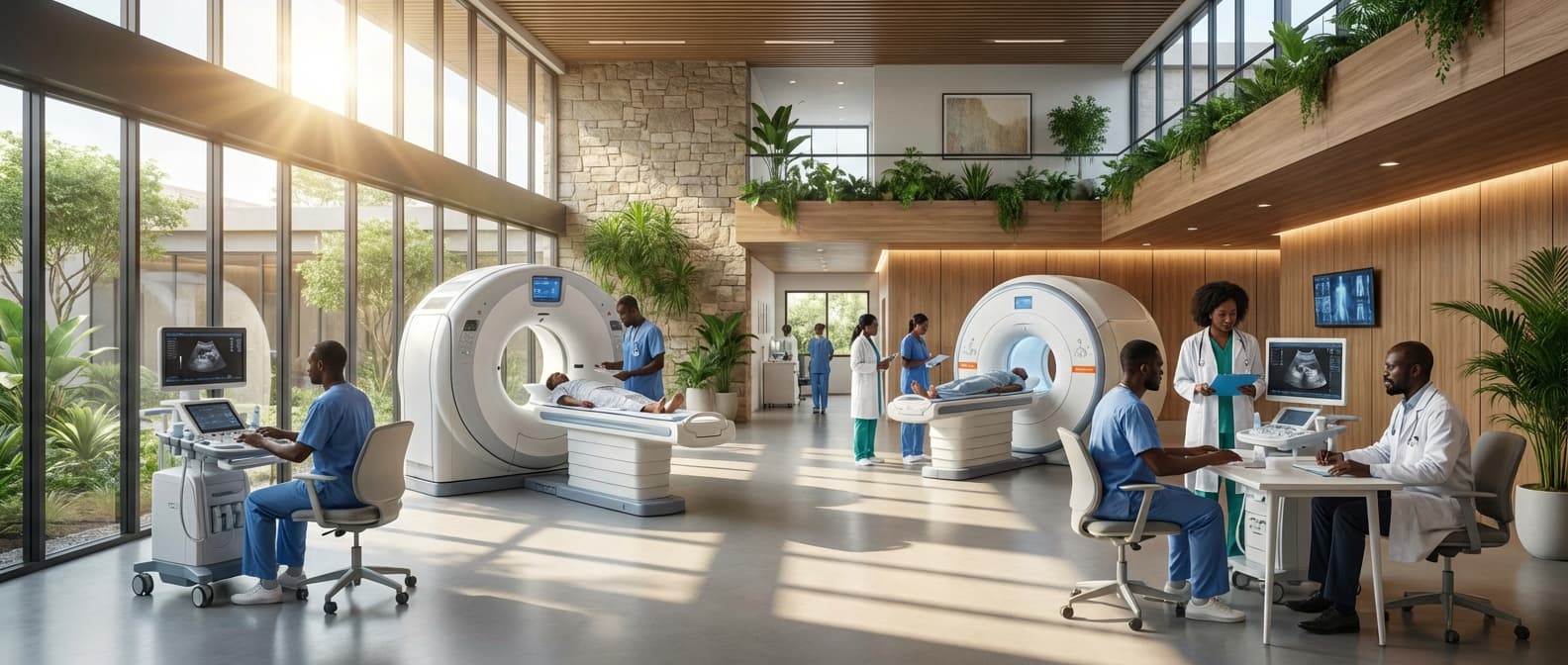
Endoscopy Solutions in Cameroon
Engineering Excellence & Technical Support
Advanced endoscopic equipment delivering superior visualization and diagnostic precision for minimally invasive procedures. High-standard technical execution following OEM protocols and local regulatory frameworks.
Advanced Diagnostic Endoscopy
Providing state-of-the-art endoscopic equipment and consumables to enable accurate and early diagnosis of gastrointestinal and respiratory conditions across Cameroon. Our solutions facilitate minimally invasive procedures for improved patient outcomes.
Endoscopy Training & Support
Offering comprehensive training programs and ongoing technical support for healthcare professionals in Cameroon, ensuring optimal utilization of endoscopic technologies and adherence to best practices for patient safety and procedural success.
Accessible Endoscopy Services
Bridging the healthcare gap by delivering reliable and cost-effective endoscopy solutions to hospitals and clinics nationwide. We are committed to making advanced diagnostic and therapeutic endoscopy accessible to more Cameroonians.
What Is Endoscopy Solutions In Cameroon?
Endoscopy solutions in Cameroon refer to a range of diagnostic and therapeutic procedures that utilize endoscopes to visualize the internal organs and cavities of the human body. An endoscope is a flexible or rigid tube with a light and a camera, which allows medical professionals to examine the gastrointestinal tract, respiratory system, urinary tract, and other internal structures without invasive surgery. These solutions are vital for accurate diagnosis, early detection of diseases, and minimally invasive treatments.
| Who Needs Endoscopy Solutions? | Typical Use Cases | |
|---|---|---|
| Individuals experiencing persistent gastrointestinal symptoms (e.g., abdominal pain, nausea, vomiting, diarrhea, constipation, unexplained weight loss, heartburn). | Diagnosis of peptic ulcers, gastritis, esophagitis, celiac disease, and inflammatory bowel diseases (Crohn's disease, ulcerative colitis). | |
| Patients with suspected or confirmed gastrointestinal bleeding (e.g., hematemesis, melena, hematochezia). | Screening for colorectal cancer and removal of precancerous polyps. | Investigation of dysphagia (difficulty swallowing) or odynophagia (painful swallowing). |
| Individuals with respiratory symptoms such as chronic cough, hemoptysis (coughing up blood), or persistent pneumonia. | Diagnosis and management of lung cancer, tuberculosis, and other pulmonary diseases. | Assessment of airway abnormalities or foreign bodies. |
| Patients with urinary tract symptoms like hematuria (blood in urine) or recurrent urinary tract infections. | Evaluation of bladder cancer, kidney stones, and other urological conditions. | |
| Patients requiring monitoring for conditions like Barrett's esophagus or during treatment for gastrointestinal conditions. | Management of bleeding from ulcers or varices. | Dilatation of esophageal or pyloric strictures. |
| Post-operative follow-up for certain gastrointestinal surgeries. | Removal of foreign bodies from the gastrointestinal or respiratory tract. |
Key Components of Endoscopy Solutions:
- Diagnostic Endoscopy: Procedures performed to identify the cause of symptoms, such as unexplained bleeding, pain, or changes in bowel habits.
- Therapeutic Endoscopy: Interventions performed using an endoscope to treat a condition, such as removing polyps, dilating strictures, or stopping bleeding.
- Endoscopic Equipment: Advanced visualization systems, endoscopes (gastroscopes, colonoscopes, bronchoscopes, etc.), light sources, image capture devices, and associated accessories.
- Skilled Personnel: Highly trained gastroenterologists, pulmonologists, surgeons, and endoscopy technicians proficient in performing and interpreting endoscopic procedures.
- Infection Control Protocols: Strict adherence to sterilization and disinfection guidelines for endoscopic equipment to prevent the transmission of infections.
Who Needs Endoscopy Solutions In Cameroon?
Endoscopy, a vital diagnostic and therapeutic tool, is increasingly recognized for its crucial role in healthcare. In Cameroon, the demand for advanced endoscopy solutions is driven by a growing awareness of gastrointestinal (GI) and respiratory health issues, coupled with an aging population and the rising prevalence of chronic diseases. These solutions are essential for accurate diagnosis, minimally invasive treatments, and improved patient outcomes across various medical disciplines.
| Customer Segment | Specific Needs/Applications | Department Focus |
|---|---|---|
| Public Hospitals | Screening and diagnosis of common GI conditions (ulcers, gastritis, polyps, cancers), early detection of GI bleeding, therapeutic interventions like polyp removal and stricture dilation. Respiratory diagnostics for infections, obstructions, and masses. | Gastroenterology, Internal Medicine, General Surgery, Pulmonology |
| Private Hospitals & Clinics | Higher volume of elective procedures, advanced diagnostic capabilities, patient comfort and rapid recovery. Often cater to a demographic with greater disposable income for specialized care. | Gastroenterology, General Surgery, Pulmonology, Gastroenterology Surgery |
| University Teaching Hospitals | Training future medical professionals, conducting research, managing complex and rare cases, requiring state-of-the-art equipment for both diagnosis and interventional procedures. | All departments with a focus on advanced GI and Respiratory care, Surgery, Internal Medicine, Diagnostics |
| Specialized Medical Centers | Focused expertise in GI and respiratory diseases, requiring specialized endoscopes (e.g., ERCP, EUS, bronchoscope), advanced imaging, and dedicated therapeutic tools. | Gastroenterology, Pulmonology, Gastroenterology Surgery |
| NGOs & Humanitarian Organizations | Providing essential diagnostic services in underserved areas, focusing on cost-effective and robust solutions. May require portable or mobile endoscopy units. | Gastroenterology, General Medicine |
| Medical Training Institutions | Simulation training, hands-on learning for medical students and residents, access to modern equipment for skill development. | Medical Education Departments, Simulation Centers |
Target Customers and Departments in Cameroon for Endoscopy Solutions
- {"items":["Public Hospitals (Ministry of Public Health)","Private Hospitals and Clinics","University Teaching Hospitals","Specialized Medical Centers (e.g., GI Clinics, Respiratory Centers)","Non-Governmental Organizations (NGOs) involved in healthcare provision","Medical Training Institutions (for educational purposes)"],"title":"Primary Target Customers"}
- {"items":["Gastroenterology","Pulmonology","Gastrointestinal Surgery","General Surgery","Otolaryngology (ENT)","Anesthesiology (for sedation and monitoring during procedures)","Internal Medicine","Oncology","Pediatrics (for pediatric endoscopy)"],"title":"Key Departments Requiring Endoscopy Solutions"}
Endoscopy Solutions Process In Cameroon
This document outlines the typical workflow for Endoscopy Solutions in Cameroon, from initial inquiry to the successful execution of the procedure. The process is designed to ensure patient safety, diagnostic accuracy, and efficient service delivery. It involves multiple stakeholders, including the patient, referring physician, healthcare facility, and the Endoscopy Solutions provider.
| Stage | Key Activities | Responsible Parties | Key Outcomes |
|---|---|---|---|
| Inquiry and Initial Consultation | Patient or referring physician contacts Endoscopy Solutions. Discussion of symptoms, medical history, and suitability for endoscopy. Explanation of the procedure, risks, benefits, and alternatives. Provision of preliminary cost estimates. | Patient, Referring Physician, Endoscopy Solutions Representative | Patient understands the proposed procedure. Initial decision to proceed with investigation. Potential for referral to specialist if needed. |
| Referral and Pre-procedure Assessment | Formal referral from the treating physician. Patient undergoes a thorough medical assessment (including blood tests, vital signs, and medical history review) to determine fitness for the procedure and anesthesia. Informed consent is obtained. | Referring Physician, Patient, Healthcare Facility Staff, Anesthesiologist (if applicable) | Patient is deemed medically fit for endoscopy. Informed consent document signed. All necessary pre-operative tests completed. |
| Scheduling and Preparation | Endoscopy Solutions coordinates with the healthcare facility and patient to schedule the procedure. Patient receives detailed instructions on diet, medication, and bowel preparation. Any required pre-medication is prescribed. | Endoscopy Solutions Coordinator, Patient, Healthcare Facility Staff | Procedure appointment confirmed. Patient is prepared for the endoscopy (e.g., fasting, bowel cleansing). All necessary equipment and consumables are in place. |
| Procedure Execution | Patient arrives at the facility and is prepped. Anesthesia (if required) is administered. The endoscopic procedure is performed by a qualified endoscopist. Biopsies or therapeutic interventions may be performed during the procedure. | Endoscopist, Anesthesiologist (if applicable), Nursing Staff, Patient | Endoscopic visualization and examination of the relevant organ. Collection of tissue samples (biopsies) or performance of therapeutic interventions as needed. Procedure completed safely and efficiently. |
| Post-procedure Care and Reporting | Patient is monitored in a recovery area. Immediate post-procedure instructions are given regarding diet and activity. Preliminary findings are communicated to the referring physician. A detailed endoscopy report is prepared, including findings and recommendations. | Nursing Staff, Endoscopist, Referring Physician, Patient | Patient's immediate recovery is managed. Referring physician receives initial results. Comprehensive endoscopy report is generated. |
| Follow-up and Billing | Patient follows up with their referring physician for further management based on the endoscopy report. Endoscopy Solutions handles the billing process with the patient and/or insurance provider. Archiving of patient records and procedure details. | Referring Physician, Patient, Endoscopy Solutions Billing Department | Patient receives appropriate follow-up care. Financial transactions are completed. Accurate and secure record-keeping is maintained. |
Endoscopy Solutions Process in Cameroon: Workflow Stages
- Inquiry and Initial Consultation
- Referral and Pre-procedure Assessment
- Scheduling and Preparation
- Procedure Execution
- Post-procedure Care and Reporting
- Follow-up and Billing
Endoscopy Solutions Cost In Cameroon
Endoscopy, a vital diagnostic and therapeutic medical procedure, involves inserting a flexible tube with a camera into the body to visualize internal organs. In Cameroon, the cost of endoscopy can vary significantly due to several factors. These include the type of endoscopy performed (e.g., gastroscopy, colonoscopy, bronchoscopy), the complexity of the procedure, the specific hospital or clinic (public vs. private, specialized centers), the experience of the medical professional, and the inclusion of additional services like biopsies, polyp removal, or sedation. Prices are typically quoted in the local currency, the Central African CFA franc (XAF). It's crucial for patients to inquire about all potential charges beforehand to avoid unexpected expenses.
| Type of Endoscopy | Estimated Cost Range (XAF) | Notes |
|---|---|---|
| Gastroscopy (Upper Endoscopy) | 50,000 - 150,000 | Covers esophagus, stomach, and duodenum. May include biopsy. |
| Colonoscopy (Lower Endoscopy) | 75,000 - 200,000 | Examines the colon. May include polyp removal or biopsy. |
| Bronchoscopy | 100,000 - 250,000 | Examines airways. Often involves sedation and potential biopsy. |
| Sigmoidoscopy | 40,000 - 100,000 | Examines the lower part of the colon. Less extensive than colonoscopy. |
| Cystoscopy | 60,000 - 150,000 | Examines the bladder. |
| ERCP (Endoscopic Retrograde Cholangiopancreatography) | 150,000 - 350,000+ | Complex procedure for bile and pancreatic ducts. Often requires specialized equipment and expertise. |
Factors Influencing Endoscopy Costs in Cameroon
- Type of Endoscopy (Gastroscopy, Colonoscopy, Bronchoscopy, etc.)
- Complexity of the Procedure (e.g., need for biopsy, polyp removal)
- Facility Type (Public hospital, Private clinic, Specialized center)
- Medical Professional's Expertise and Reputation
- Inclusion of Sedation or Anesthesia
- Pre-procedure Consultations and Post-procedure Care
- Geographic Location within Cameroon (major cities vs. smaller towns)
Affordable Endoscopy Solutions Options
Affordable endoscopy solutions are crucial for both patients and healthcare providers. Exploring various options, understanding value bundles, and implementing cost-saving strategies can significantly reduce the financial burden associated with endoscopic procedures. This includes examining pre-procedure planning, intra-procedure efficiency, and post-procedure follow-up.
| Value Bundle Component | Description | Cost-Saving Impact |
|---|---|---|
| Pre-procedure Consultations & Preparation | Includes initial physician consultation, necessary lab work, and patient education materials. | Reduces last-minute cancellations, optimizes patient readiness, and minimizes diagnostic redundancies. |
| Procedure Room & Equipment Usage | Covers the use of the endoscopy suite, specialized equipment (endoscopes, monitors, etc.), and disposables. | Efficient scheduling and equipment maintenance can lower per-procedure overhead. Bundling can ensure optimal utilization of resources. |
| Anesthesia/Sedation Services | Includes the administration of anesthesia or sedation by qualified personnel. | Standardized sedation protocols can improve efficiency and potentially reduce drug costs. Bundling can ensure predictable pricing. |
| Physician/Technician Fees | Professional fees for the endoscopist and supporting technical staff. | Predictable pricing through bundles can help patients and payers budget for procedures. May encourage efficiency. |
| Pathology & Lab Services | Costs associated with tissue sample analysis and other required laboratory tests. | Streamlined ordering and processing of tests can reduce administrative costs. Bundling can offer a consolidated price. |
| Post-procedure Recovery & Follow-up | Includes recovery room care, discharge instructions, and any immediate follow-up appointments. | Ensures proper recovery, reduces readmission rates, and can be a predictable part of the overall cost. |
Key Cost-Saving Strategies for Endoscopy
- Negotiate with Providers: Actively engage in discussions with hospitals and endoscopy centers regarding pricing. Be prepared to compare quotes from multiple facilities.
- Understand Insurance Coverage: Thoroughly review your insurance policy to understand what is covered, including deductibles, co-pays, and out-of-pocket maximums. Inquire about in-network versus out-of-network costs.
- Explore Public/Non-Profit Facilities: Consider utilizing services at public hospitals or non-profit healthcare organizations, which may offer more competitive pricing.
- Optimize Procedure Scheduling: Bulk scheduling or opting for off-peak appointment times might sometimes lead to discounts.
- Utilize Generic Medications: If prescription medications are required for the procedure or recovery, inquire about the availability and cost-effectiveness of generic alternatives.
- Preventive Care and Early Detection: Regular screenings and addressing early symptoms can prevent the need for more complex and costly procedures later on.
- Technology Adoption: Newer, more efficient endoscopic equipment can sometimes lead to shorter procedure times and reduced resource utilization, indirectly lowering costs.
- Streamlined Workflow: Efficient staffing and streamlined pre-procedure preparation can reduce overhead and labor costs.
Verified Providers In Cameroon
In Cameroon's evolving healthcare landscape, identifying reliable and qualified medical professionals is paramount for ensuring quality patient care. Verified providers, particularly those with credentials from reputable organizations like Franance Health, represent the pinnacle of medical expertise and ethical practice. This document outlines why choosing Franance Health-credentialed providers is the superior decision for patients seeking the best healthcare outcomes.
| Franance Health Credentialed Provider Characteristics | Why it Matters for Patients in Cameroon |
|---|---|
| Extensive Education and Training: Proven academic qualifications from recognized institutions. | Ensures a strong foundation in medical knowledge and understanding of diseases and treatments relevant to the Cameroonian context. |
| Demonstrated Clinical Competence: Verified practical experience and successful patient outcomes. | Guarantees that providers can effectively diagnose, treat, and manage a wide range of health conditions. |
| Adherence to Best Practices: Compliance with national and international medical guidelines. | Ensures patients receive care that is up-to-date, safe, and effective, reducing the risk of medical errors. |
| Commitment to Patient Welfare: Focus on patient-centered care and ethical decision-making. | Promotes a supportive and respectful healthcare experience where patient needs and preferences are prioritized. |
| Professional Integrity: A clean disciplinary record and commitment to ethical conduct. | Builds trust and assures patients that their healthcare providers operate with honesty and transparency. |
Key Benefits of Choosing Franance Health Verified Providers:
- Rigorous Verification Process: Franance Health employs a comprehensive and stringent vetting system that goes beyond basic licensing. This includes assessing educational backgrounds, practical experience, continuous professional development, and adherence to ethical standards.
- Commitment to Quality and Safety: Providers who earn Franance Health credentials have demonstrated a commitment to maintaining the highest standards of patient care, safety protocols, and evidence-based medical practices.
- Enhanced Trust and Credibility: The Franance Health mark signifies a level of trustworthiness and professional integrity that instills confidence in patients, assuring them they are in capable hands.
- Access to Specialized Expertise: Franance Health often focuses on identifying and credentialing specialists in various medical fields, ensuring patients can find highly skilled professionals for their specific needs.
- Upholding Ethical Medical Practices: Credentials from Franance Health indicate that providers adhere to a strict code of ethics, prioritizing patient well-being, confidentiality, and informed consent.
- Continuous Improvement and Learning: Franance Health emphasizes the importance of ongoing medical education and skill development, ensuring their credentialed providers remain at the forefront of medical advancements.
Scope Of Work For Endoscopy Solutions
This Scope of Work (SOW) outlines the technical deliverables and standard specifications for the procurement and implementation of Endoscopy Solutions. The objective is to acquire advanced endoscopic equipment and related services that ensure high-quality diagnostic and therapeutic procedures, improved patient outcomes, and efficient workflow within the healthcare facility. This SOW covers the technical aspects of the equipment, installation, training, and ongoing support. Adherence to the specified technical requirements and standard specifications is mandatory for all proposed solutions.
| Category | Specification Requirement | Standard/Reference |
|---|---|---|
| Image Resolution | Minimum Full HD (1920 x 1080 pixels); 4K UHD (3840 x 2160 pixels) preferred for advanced systems. | IEC 60601 series, ISO 13485 |
| Field of View (FOV) | Minimum 120 degrees for standard scopes; wider FOV preferred for specific applications. | Manufacturer's specifications |
| Working Channel Diameter | Variable, ranging from 1.2mm to 4.2mm, depending on the endoscope type and intended use. | Manufacturer's specifications, relevant ISO standards |
| Bending Angulation | Upward/Downward and Left/Right angulation specifications to be provided for each scope type. | Manufacturer's specifications |
| Illumination | High-intensity LED or Xenon light source; adjustable brightness; stable color temperature. | IEC 60601 series |
| Digital Zoom | Minimum 1.5x optical zoom; minimum 4x digital zoom. | Manufacturer's specifications |
| Recording Format | High-quality video and still image capture (e.g., H.264, MPEG-4, JPEG); DICOM compatibility for image transfer. | DICOM standards, relevant video compression standards |
| Disinfection Compatibility | Must be compatible with high-level disinfection (e.g., peracetic acid, glutaraldehyde) and, where applicable, low-temperature sterilization methods. | Manufacturer's specifications, relevant guidelines (e.g., SGNA, ESGE) |
| Electrosurgical Unit (ESU) Compatibility | Must be compatible with the proposed endoscopes; feature argon plasma coagulation (APC), monopolar, and bipolar modes. | IEC 60601 series |
| Ergonomics | Designed for comfortable handling, precise control, and ease of use during extended procedures. | User feedback, industry best practices |
| Connectivity | HDMI, USB, Ethernet ports for integration with monitors, recording devices, and hospital networks. | Relevant industry standards |
| Power Supply | Operate on standard hospital mains voltage with surge protection; battery backup preferred for essential components. | IEC 60601 series |
| Safety Features | Leakage current limits, electrical isolation, and patient protection as per IEC 60601-1. | IEC 60601-1 |
Key Technical Deliverables
- High-resolution endoscopy systems (e.g., video endoscopy, fiber optic endoscopy).
- Specialized endoscopes for various anatomical regions (e.g., gastroscopes, colonoscopes, bronchoscopes, duodenoscopes, laparoscopes).
- Integrated light sources and imaging processors.
- High-definition monitors and recording/documentation systems.
- Endoscopic accessories (e.g., biopsy forceps, snares, injection needles, retrieval devices, dilators, stents).
- Electrosurgical units with advanced coagulation and cutting capabilities compatible with endoscopic procedures.
- Irrigation and suction systems.
- Disinfection and sterilization equipment/systems for endoscopes.
- On-site installation and integration with existing hospital IT infrastructure (PACS, EMR).
- Comprehensive technical training for medical staff (physicians, nurses, technicians).
- Post-installation validation and performance testing.
- Warranty and post-warranty maintenance and support services.
- User manuals, technical documentation, and service guides in English.
- Compliance certificates with relevant international and national medical device regulations (e.g., FDA, CE).
Service Level Agreement For Endoscopy Solutions
This Service Level Agreement (SLA) outlines the guaranteed response times and uptime for our Endoscopy Solutions. It is designed to ensure that our clients receive reliable and timely support for their critical endoscopy equipment and services.
| Issue Severity | Uptime Guarantee | Response Time Guarantee | Resolution Target |
|---|---|---|---|
Key Definitions
- Uptime: The percentage of time the Endoscopy Solutions are operational and accessible to the customer, excluding scheduled maintenance.
- Response Time: The maximum time allowed from the initiation of a support request by the customer until a qualified support representative begins to actively work on resolving the issue.
- Downtime: The period during which the Endoscopy Solutions are unavailable to the customer, excluding scheduled maintenance.
- Critical Issue: An issue that renders the primary functionality of the Endoscopy Solutions unusable, significantly impacting patient care or operational workflow.
- Major Issue: An issue that degrades the performance or functionality of the Endoscopy Solutions, but does not render them entirely unusable.
- Minor Issue: An issue that has minimal impact on the functionality or performance of the Endoscopy Solutions and can be resolved with standard workarounds.
Frequently Asked Questions

Ready when you are
Let's scope your Endoscopy Solutions in Cameroon project in Cameroon.

Scaling healthcare logistics and technical systems across the entire continent.