
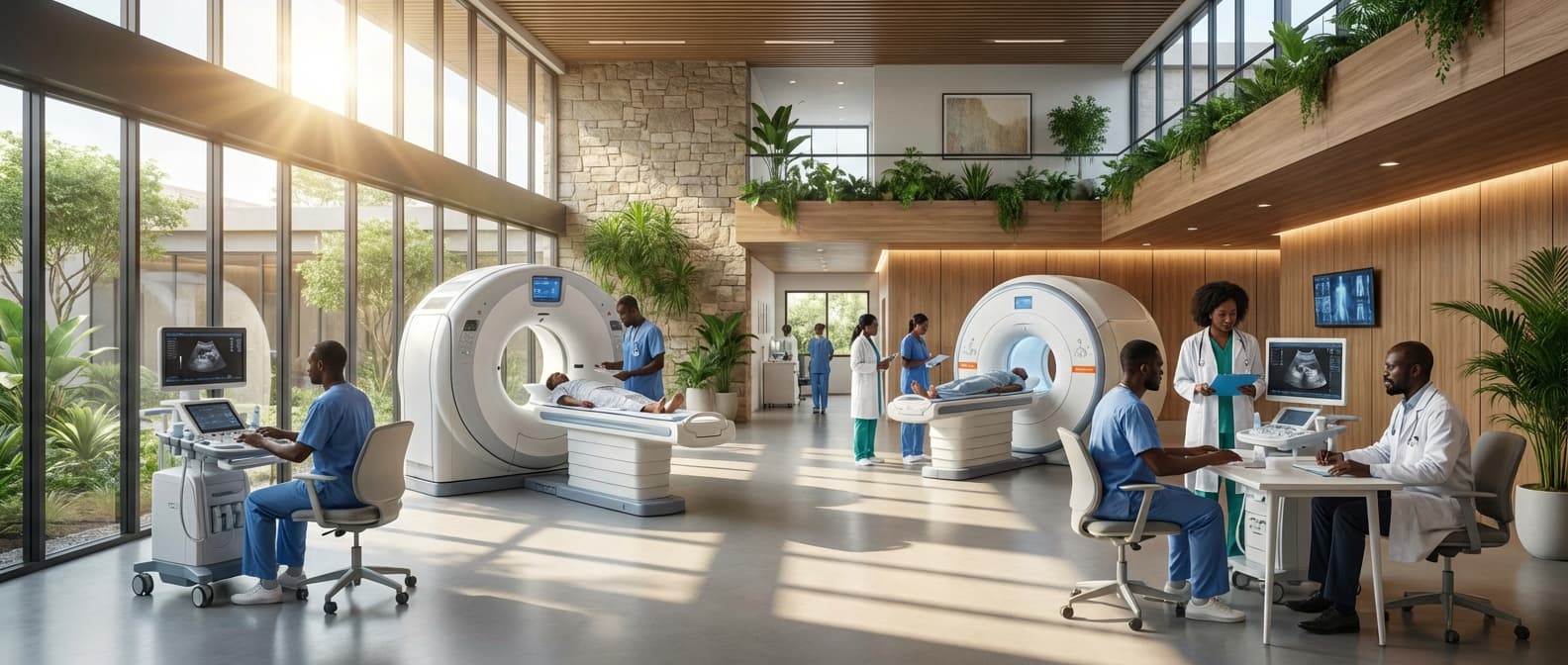
Diagnostic Imaging in Cameroon
Engineering Excellence & Technical Support
High-resolution imaging systems including CT scanners, MRI, X-ray, and ultrasound technology for accurate clinical diagnosis. High-standard technical execution following OEM protocols and local regulatory frameworks.
Mobile X-ray Units Deployed to Remote Areas
Introduction of portable X-ray units and trained radiographers to reach underserved rural populations, improving early disease detection for conditions like tuberculosis and pneumonia in hard-to-access regions.
AI-Powered Ultrasound for Maternal Health
Implementation of artificial intelligence algorithms integrated with ultrasound machines to assist healthcare professionals in identifying high-risk pregnancies and fetal abnormalities, particularly in areas with limited specialist radiologists.
Tele-Radiology Network Expansion
Establishing a robust tele-radiology network connecting major hospitals with regional health centers, enabling remote interpretation of complex imaging studies by expert radiologists, thereby enhancing diagnostic accuracy and reducing patient travel times.
What Is Diagnostic Imaging In Cameroon?
Diagnostic imaging in Cameroon encompasses a spectrum of medical imaging techniques utilized for the detection, diagnosis, and monitoring of diseases and injuries. These modalities provide non-invasive or minimally invasive visualization of internal bodily structures and functions, aiding clinicians in making informed treatment decisions. The service involves the application of physical principles, such as X-rays, magnetic fields, ultrasound waves, and radioisotopes, to generate images. The interpretation of these images is performed by qualified radiologists and radiographers.
| Who Needs Diagnostic Imaging? | Typical Use Cases |
|---|---|
| Individuals presenting with symptoms indicative of internal pathology (e.g., pain, swelling, neurological deficits, respiratory distress). | Fracture identification and assessment. Detection of tumors and other neoplastic lesions. Evaluation of organ damage (e.g., liver, kidney, heart). Diagnosis of cardiovascular diseases. Monitoring of treatment efficacy and disease progression. Screening for certain conditions (e.g., breast cancer, osteoporosis). Guiding interventional procedures (e.g., biopsies, drainages). |
| Patients with a history of trauma or injury. | Assessment of congenital abnormalities. Evaluation of infectious and inflammatory processes. Diagnosis of gastrointestinal and genitourinary tract disorders. Pre-operative and post-operative assessment. Neurological investigations (e.g., stroke, epilepsy, multiple sclerosis). |
| Individuals undergoing routine medical check-ups or specialized screenings. | Identification of sources of bleeding or obstruction. Evaluation of vascular abnormalities (e.g., aneurysms, stenosis). |
| Pregnant women for fetal monitoring and assessment. | Assessment of fetal growth and development. Detection of fetal anomalies. |
Key Diagnostic Imaging Modalities Available in Cameroon
- X-ray Radiography: Utilizes electromagnetic radiation to produce 2D images of internal structures, particularly useful for bone imaging, chest examinations, and contrast studies.
- Computed Tomography (CT) Scan: Employs X-rays and computer processing to create cross-sectional images of the body, offering detailed anatomical views for a wide range of conditions.
- Magnetic Resonance Imaging (MRI): Uses strong magnetic fields and radio waves to generate highly detailed images of soft tissues, organs, and blood vessels, crucial for neurological, musculoskeletal, and oncological assessments.
- Ultrasound (Sonography): Employs high-frequency sound waves to create real-time images of internal organs, soft tissues, and blood flow, frequently used in obstetrics, gynecology, cardiology, and abdominal imaging.
- Mammography: A specialized X-ray technique for imaging breast tissue, primarily used for breast cancer screening and diagnosis.
- Nuclear Medicine Imaging (e.g., PET, SPECT): Involves the administration of radioactive tracers to visualize physiological processes and detect diseases at a molecular level, often used in oncology, cardiology, and neurology.
Who Needs Diagnostic Imaging In Cameroon?
Diagnostic imaging plays a critical role in modern healthcare, providing essential tools for diagnosis, staging, and monitoring of diseases. In Cameroon, a developing nation with a growing healthcare sector, understanding who requires these services and where they are most utilized is crucial for resource allocation and service improvement. This document outlines the key target customers and departments for diagnostic imaging services in Cameroon.
| Department/Facility | Primary Diagnostic Imaging Modalities Utilized | Key Patient Needs Addressed |
|---|---|---|
| General Hospitals (Regional & District) | X-ray, Ultrasound (basic) | Fracture detection, soft tissue injuries, basic abdominal and obstetric assessments, chest X-rays for pneumonia and TB screening. |
| University Teaching Hospitals & Specialized Medical Centers | X-ray, Ultrasound (advanced), CT scans, MRI scans (where available), Mammography, Fluoroscopy | Complex diagnoses, cancer staging and follow-up, neurological assessments, cardiovascular imaging, interventional radiology procedures, advanced orthopedic evaluations. |
| Specialized Clinics (e.g., Cardiology, Neurology, Oncology, Gynecology) | Ultrasound (echocardiography, obstetric), CT, MRI (referral) | Targeted assessments for specific organ systems, disease-specific diagnostics, treatment planning. |
| Emergency Departments | X-ray, Ultrasound, CT (where available) | Rapid diagnosis of trauma, acute conditions, and life-threatening emergencies. |
| Maternity and Pediatric Wards | Ultrasound (obstetric), X-ray (pediatric) | Prenatal monitoring, assessment of fetal well-being, diagnosis of pediatric illnesses and injuries. |
Target Customers for Diagnostic Imaging in Cameroon
- {"title":"Patients with Specific Symptoms:","description":"Individuals presenting with signs and symptoms indicative of underlying conditions that require visualization, such as persistent pain, unexplained swelling, neurological deficits, or respiratory distress."}
- {"title":"Patients with Suspected or Diagnosed Diseases:","description":"Individuals who have a preliminary diagnosis or are undergoing evaluation for conditions like cancer, cardiovascular diseases, infectious diseases (e.g., tuberculosis), musculoskeletal injuries, or neurological disorders."}
- {"title":"Patients Requiring Pre-operative and Post-operative Assessment:","description":"Individuals undergoing surgical procedures to assess the extent of disease, plan the surgery, or monitor recovery and complications."}
- {"title":"Patients Undergoing Routine Screening and Health Checks:","description":"Although less common for advanced imaging, certain screenings like mammography or low-dose CT for specific risk groups may fall under this category."}
- {"title":"Trauma Patients:","description":"Individuals who have experienced accidents or injuries requiring immediate assessment of fractures, internal bleeding, or head injuries."}
- {"title":"Pediatric Patients:","description":"Children with congenital abnormalities, developmental issues, injuries, or diseases requiring specialized imaging techniques."}
- {"title":"Patients with Chronic Conditions:","description":"Individuals managing long-term illnesses (e.g., diabetes, kidney disease, arthritis) who require imaging for monitoring disease progression or treatment effectiveness."}
Diagnostic Imaging Process In Cameroon
The diagnostic imaging process in Cameroon, like in many healthcare systems, follows a structured workflow to ensure accurate and timely medical diagnoses. This process typically begins with a physician's referral or an inquiry from a patient seeking imaging services. The workflow encompasses several key stages, from initial consultation and scheduling to image acquisition, interpretation, and ultimately, the delivery of the diagnostic report.
| Stage | Description | Key Actors | Considerations in Cameroon |
|---|---|---|---|
| Physician Referral/Patient Inquiry | A healthcare provider identifies the need for a diagnostic imaging study to aid in diagnosis, monitoring, or treatment planning. Alternatively, a patient may directly inquire about services. | Referring Physician, Patient | Availability of referring physicians is high, but patient awareness of when imaging is appropriate may vary. Out-of-pocket payments can be a barrier for some patients. |
| Information Gathering and Pre-authorization | Essential patient information, clinical history, and the specific imaging modality required are collected. For insured patients, pre-authorization from the insurance provider is often necessary. | Healthcare Provider, Patient, Administrative Staff | Insurance penetration can be limited, leading to a higher proportion of out-of-pocket expenses. Administrative processes can sometimes be lengthy. |
| Scheduling and Patient Preparation | An appointment is scheduled based on the urgency of the case and the availability of the imaging equipment and personnel. Patients receive instructions regarding preparation (e.g., fasting, contrast agent administration). | Radiology Department Staff, Patient | Equipment availability and technician staffing levels can influence scheduling efficiency. Clear communication of preparation instructions is crucial, especially in areas with lower health literacy. |
| Image Acquisition | The imaging procedure is performed by a qualified radiographer or technologist using the designated imaging equipment (e.g., X-ray, Ultrasound, CT, MRI). | Radiographer/Technologist | Reliability of electricity supply can be a significant challenge, impacting equipment uptime. Maintenance and calibration of equipment are critical but can be hampered by resource limitations. |
| Image Processing and Quality Assurance | Acquired images are processed, enhanced (if necessary), and reviewed for technical quality by the technologist. A quality assurance check ensures the images are suitable for interpretation. | Radiographer/Technologist, PACS Administrator (if applicable) | Access to robust Picture Archiving and Communication Systems (PACS) may be limited in some facilities. Technologists play a vital role in ensuring image quality given potential equipment constraints. |
| Radiologist Interpretation | A qualified radiologist reviews the processed images, correlates them with the clinical information, and identifies any abnormalities or significant findings. | Radiologist | A shortage of qualified radiologists is a major concern in many parts of Cameroon. Referral to specialists or remote interpretation services might be considered. |
| Report Generation and Transmission | The radiologist dictates or writes a comprehensive report detailing the findings, diagnosis, and recommendations. This report is then transmitted to the referring physician. | Radiologist, Administrative Staff | Timely report turnaround is essential but can be affected by radiologist availability and communication infrastructure. Ensuring secure and efficient transmission of reports is important. |
| Follow-up and Further Management | The referring physician reviews the imaging report and incorporates the findings into the patient's overall management plan. This may involve further tests, treatment initiation, or specialist consultation. | Referring Physician, Patient | Effective communication between referring physicians and radiologists is key to optimal patient care. Accessibility of follow-up care and treatment can be influenced by regional disparities. |
Diagnostic Imaging Workflow in Cameroon
- Physician Referral/Patient Inquiry
- Information Gathering and Pre-authorization
- Scheduling and Patient Preparation
- Image Acquisition
- Image Processing and Quality Assurance
- Radiologist Interpretation
- Report Generation and Transmission
- Follow-up and Further Management
Diagnostic Imaging Cost In Cameroon
Diagnostic imaging plays a crucial role in modern healthcare, enabling accurate diagnosis and guiding treatment. In Cameroon, the cost of these essential services can vary significantly due to a combination of factors impacting both the supply and demand sides of the healthcare market. Understanding these pricing determinants is vital for patients, healthcare providers, and policymakers seeking to improve healthcare accessibility and affordability. The availability of advanced technology, the expertise of the radiologist or technician, the geographical location of the facility (urban vs. rural), and the type of imaging modality employed are primary drivers of cost. Furthermore, whether the imaging is performed in a public or private facility, and the presence of insurance coverage (though still limited for many), can also influence the final price. The local currency, the Central African CFA franc (XAF), is used for all transactions, and the prices discussed below are indicative ranges.
| Imaging Modality | Estimated Cost Range (XAF) |
|---|---|
| X-ray (Single View) | 10,000 - 25,000 |
| X-ray (Multiple Views/Skeletal Survey) | 20,000 - 50,000 |
| Ultrasound (Abdomen/Pelvis) | 30,000 - 70,000 |
| Ultrasound (Obstetric/Pregnancy) | 35,000 - 80,000 |
| CT Scan (Head/Brain) | 80,000 - 200,000 |
| CT Scan (Abdomen/Pelvis) | 100,000 - 250,000 |
| MRI Scan (Brain) | 150,000 - 400,000 |
| MRI Scan (Spine) | 180,000 - 450,000 |
| Mammography (Bilateral) | 40,000 - 80,000 |
Key Factors Influencing Diagnostic Imaging Costs in Cameroon
- Technology and Equipment: The cost of acquiring, maintaining, and upgrading sophisticated imaging machines (e.g., MRI, CT scanners, digital X-ray) directly impacts service prices. Newer, more advanced equipment generally commands higher fees.
- Radiologist/Technician Expertise: The qualifications, experience, and specialization of the medical professionals interpreting the images and operating the equipment contribute to the overall cost. Highly skilled professionals often charge more for their services.
- Facility Type (Public vs. Private): Private healthcare facilities, often better equipped and with shorter waiting times, typically have higher prices than public hospitals and clinics, which may be subsidized or aim for wider accessibility.
- Geographical Location: Urban centers, with higher demand and potentially higher operational costs, often feature higher imaging prices compared to rural or semi-urban areas where access to advanced imaging may be limited.
- Imaging Modality: Different types of imaging procedures have vastly different costs. For instance, a simple X-ray is significantly less expensive than an MRI scan.
- Ancillary Services: Costs can also include pre-procedure consultations, contrast agents, and the reporting of results by a radiologist. These may be bundled or itemized.
- Operational Costs: Utilities, rent, staffing, and administrative expenses for the imaging center or hospital contribute to the overall pricing strategy.
Affordable Diagnostic Imaging Options
Diagnostic imaging plays a crucial role in diagnosing and managing a wide range of medical conditions. However, the cost of these services can be a significant barrier for many patients. Fortunately, there are several affordable diagnostic imaging options and cost-saving strategies available. Value bundles, which combine multiple imaging services into a single, often discounted package, and proactive cost-saving measures can make essential diagnostic care more accessible.
| Strategy | Description | Potential Savings |
|---|---|---|
| Value Bundles | Combine multiple related imaging services into a single package at a reduced price. | Moderate to Significant |
| Compare Prices | Obtain quotes from various imaging providers for the same procedure. | Moderate to Significant |
| In-Network Providers | Choose imaging centers and hospitals contracted with your insurance plan. | Significant |
| Outpatient Imaging Centers | Opt for standalone imaging facilities over hospital-based departments. | Moderate |
| Cash Pay Negotiation | Request discounts when paying for services without insurance. | Moderate to Significant |
| Alternative Modalities | Discuss less expensive imaging options with your physician if appropriate. | Moderate |
Affordable Diagnostic Imaging Options & Cost-Saving Strategies
- {"title":"Understanding Value Bundles","description":"Value bundles, also known as package deals or bundled services, group related diagnostic imaging procedures together at a reduced overall price compared to paying for each service individually. This can be particularly beneficial for conditions that require a series of imaging tests over time or when multiple types of imaging are needed to fully assess a problem."}
- {"title":"Benefits of Value Bundles","description":"Typically offer a significant discount, simplify billing by consolidating costs, and can encourage a more comprehensive diagnostic approach when multiple tests are recommended."}
- {"title":"Where to Find Value Bundles","description":"Inquire directly with imaging centers and hospitals about any available package deals. Some insurance plans may also offer bundled services as part of their network benefits. Specific conditions or treatment pathways might have pre-negotiated bundles."}
- {"title":"Proactive Cost-Saving Strategies","description":"Beyond bundles, several individual strategies can help reduce out-of-pocket expenses for diagnostic imaging."}
- {"title":"Shop Around and Compare Prices","description":"The cost of the same imaging procedure can vary significantly between different providers. Get price quotes from multiple imaging centers, hospitals, and outpatient facilities in your area. Don't hesitate to ask for cash prices if you are uninsured or have a high deductible."}
- {"title":"Utilize In-Network Providers","description":"If you have health insurance, always choose providers that are in your insurance network. This significantly reduces your out-of-pocket costs compared to using out-of-network facilities."}
- {"title":"Negotiate Prices (Especially with Cash Pay)","description":"For self-pay patients, many imaging centers are willing to negotiate prices, especially if you pay upfront. Be polite but firm in your request for a discount."}
- {"title":"Understand Your Insurance Benefits","description":"Familiarize yourself with your insurance policy's coverage for diagnostic imaging, including deductibles, copays, coinsurance, and prior authorization requirements. Knowing these details can prevent unexpected bills."}
- {"title":"Consider Outpatient Imaging Centers","description":"Outpatient imaging centers are often less expensive than imaging departments within a hospital. The overhead costs are generally lower, and these savings are often passed on to patients."}
- {"title":"Look for Discount Programs and Promotions","description":"Some imaging facilities offer general discount programs for uninsured patients or run periodic promotions. It's worth asking if such programs exist."}
- {"title":"Discuss Alternatives with Your Doctor","description":"Talk to your physician about whether a less expensive imaging modality could provide sufficient diagnostic information. For example, an ultrasound might be an alternative to an MRI in some cases."}
- {"title":"Seek Free or Low-Cost Screenings","description":"Community health organizations and some hospitals offer free or low-cost screening events for certain conditions that may involve basic imaging or imaging referrals."}
Verified Providers In Cameroon
In Cameroon's evolving healthcare landscape, identifying reliable and accredited medical professionals is paramount for ensuring quality patient care. Franance Health stands out as a premier platform dedicated to connecting individuals with verified providers. This dedication stems from a rigorous credentialing process that goes beyond mere registration, ensuring that all listed practitioners meet stringent standards of expertise, ethical conduct, and regulatory compliance. Choosing a Franance Health verified provider means opting for a level of assurance that translates directly into confidence and peace of mind for patients seeking medical attention.
| Provider Type | Franance Health Verification Criteria | Benefits for Patients |
|---|---|---|
| Doctors (Specialists & General Practitioners) | Valid medical license, recognized medical degree, proof of specialization (if applicable), clean disciplinary record, ongoing professional development. | Access to highly qualified physicians with proven expertise, assurance of safe and effective treatment, confidence in diagnosis and management of health conditions. |
| Nurses | Registered Nurse (RN) or equivalent license, relevant nursing qualifications, practical experience, adherence to nursing ethics. | Receiving compassionate and skilled nursing care, trust in medication administration and patient monitoring, support during recovery and treatment. |
| Pharmacists | Licensed pharmacist, accredited pharmacy degree, knowledge of drug interactions and dispensing regulations. | Safe and accurate dispensing of medications, expert advice on drug usage and side effects, assurance of pharmaceutical quality. |
| Laboratories & Diagnostic Centers | Accreditation by relevant health authorities, qualified technicians and pathologists, adherence to quality control standards, up-to-date equipment. | Reliable and accurate diagnostic test results, confidence in medical reporting for diagnosis and treatment planning, access to advanced diagnostic technologies. |
| Hospitals & Clinics | Valid operational license, compliance with healthcare facility standards, presence of qualified medical staff, adherence to safety protocols. | Access to comprehensive medical services under one roof, assurance of a safe and hygienic environment, trust in the quality of care provided by the institution. |
Why Franance Health Verification Matters
- Uncompromising Quality Standards: Franance Health implements a multi-faceted verification process that scrutinizes educational qualifications, professional licenses, and a clean disciplinary record.
- Enhanced Patient Safety: By partnering with accredited institutions and regulatory bodies, Franance Health significantly reduces the risk of encountering unqualified or fraudulent practitioners.
- Access to Trusted Expertise: Our verified providers are not only licensed but also demonstrate a commitment to continuous professional development, ensuring they are up-to-date with the latest medical advancements.
- Ethical Practice Assurance: Franance Health's verification includes an assessment of ethical conduct, promoting a healthcare environment built on trust and patient-centered care.
- Streamlined Healthcare Navigation: We empower patients with the confidence to choose the right healthcare professional, saving valuable time and reducing the stress associated with finding reliable medical services.
Scope Of Work For Diagnostic Imaging
This Scope of Work (SOW) outlines the requirements for providing diagnostic imaging services. It details the technical deliverables, standard specifications, and expected outcomes for a comprehensive imaging program. The objective is to ensure high-quality, accurate, and timely diagnostic imaging services that support patient care, clinical decision-making, and research activities.
| Category | Technical Deliverables | Standard Specifications | Quality Assurance Metrics |
|---|---|---|---|
| Image Acquisition | High-resolution digital images (DICOM format). | Adherence to ALARA principles for radiation safety. Use of appropriate contrast agents and techniques. Optimal image noise levels and spatial resolution as per modality standards. | Image quality scores (e.g., ACR accreditation standards). Equipment calibration logs. Contrast administration error rate. |
| Image Interpretation | Written diagnostic reports signed by board-certified radiologists. Reports include findings, impressions, and recommendations. | Reports are clear, concise, and actionable. Timely report turnaround times (e.g., STAT, routine). Standardized reporting templates. | Radiologist peer review scores. Report turnaround time compliance. Discrepancy rates between initial and final reports. |
| Data Management & Archiving | Secure storage and retrieval of all imaging studies and reports in PACS (Picture Archiving and Communication System). Compliance with HIPAA and data privacy regulations. | Long-term archiving capabilities (e.g., 7 years for adults, longer for minors). Redundant backup systems. Robust audit trails. | Data integrity checks. System uptime and availability. Data retrieval times. |
| Equipment Maintenance & Calibration | Regular preventative maintenance, emergency repairs, and calibration of all imaging equipment. | Service Level Agreements (SLAs) for response and resolution times. Manufacturer-recommended maintenance schedules. Equipment performance testing. | Mean Time Between Failures (MTBF). Equipment downtime percentage. Successful completion of scheduled maintenance. |
| Radiation Safety | Implementation and monitoring of radiation safety protocols for patients and staff. | Compliance with regulatory standards (e.g., NCRP, state regulations). Regular dosimetry monitoring. Shielding verification. | Radiation dose monitoring reports. Number of radiation safety incidents. Compliance audit findings. |
| Continuing Education & Training | Ongoing training for technologists and radiologists on new techniques, equipment, and safety protocols. | Participation in accredited continuing education programs. In-service training sessions. Competency assessments. | Completion rates for mandatory training. Feedback from training sessions. Technologist certification status. |
Key Service Areas
- General Radiography (X-ray)
- Computed Tomography (CT)
- Magnetic Resonance Imaging (MRI)
- Ultrasound
- Nuclear Medicine
- Mammography
- Interventional Radiology
Service Level Agreement For Diagnostic Imaging
This Service Level Agreement (SLA) outlines the commitment for diagnostic imaging services provided by [Your Company Name] (hereinafter referred to as 'Provider') to [Client Name] (hereinafter referred to as 'Client'). This SLA covers response times for critical imaging requests and uptime guarantees for the diagnostic imaging systems and associated platforms.
| Service Metric | Target | Measurement Period | Remedy for Failure |
|---|---|---|---|
| Response Time (Critical Imaging Requests) | Within 15 minutes | 24 hours x 7 days | For each instance of exceeding the Response Time target by more than 5 minutes, the Client will receive a [e.g., 10% discount on the monthly service fee for the affected modality]. |
| Interpretation Time (Critical Imaging Requests) | Within 1 hour of image acquisition completion | 24 hours x 7 days | For each instance of exceeding the Interpretation Time target by more than 15 minutes, the Client will receive a [e.g., 5% discount on the monthly service fee for the affected modality]. |
| System Uptime Guarantee | 99.5% | Monthly | If monthly uptime falls below 99.5% (excluding Scheduled Maintenance), the Client will receive a credit equivalent to [e.g., 5% of the monthly service fee]. |
Key Service Metrics
- This agreement is effective from [Start Date] and will remain in effect until [End Date].
- Definitions: Critical Imaging Request: A diagnostic imaging study deemed medically urgent by a qualified healthcare professional requiring immediate interpretation or action to guide patient care.
- Definitions: Standard Imaging Request: A diagnostic imaging study that does not meet the criteria for a Critical Imaging Request.
- Definitions: System Downtime: Any period during which the diagnostic imaging systems or associated platforms are unavailable to the Client due to unscheduled maintenance, hardware failure, software malfunction, or other issues attributable to the Provider.
- Definitions: Scheduled Maintenance: Planned periods for system updates or maintenance, communicated in advance to the Client.
- Definitions: Response Time: The time elapsed from the moment a Critical Imaging Request is successfully submitted by the Client to the Provider's system until the Provider acknowledges receipt of the request.
- Definitions: Interpretation Time: The time elapsed from the moment a Critical Imaging Request is successfully submitted to the Provider's system until the final diagnostic report is made available to the Client.
- Definitions: Uptime: The percentage of time the diagnostic imaging systems and associated platforms are available and operational, excluding Scheduled Maintenance periods.
Frequently Asked Questions

Ready when you are
Let's scope your Diagnostic Imaging in Cameroon project in Cameroon.

Scaling healthcare logistics and technical systems across the entire continent.