
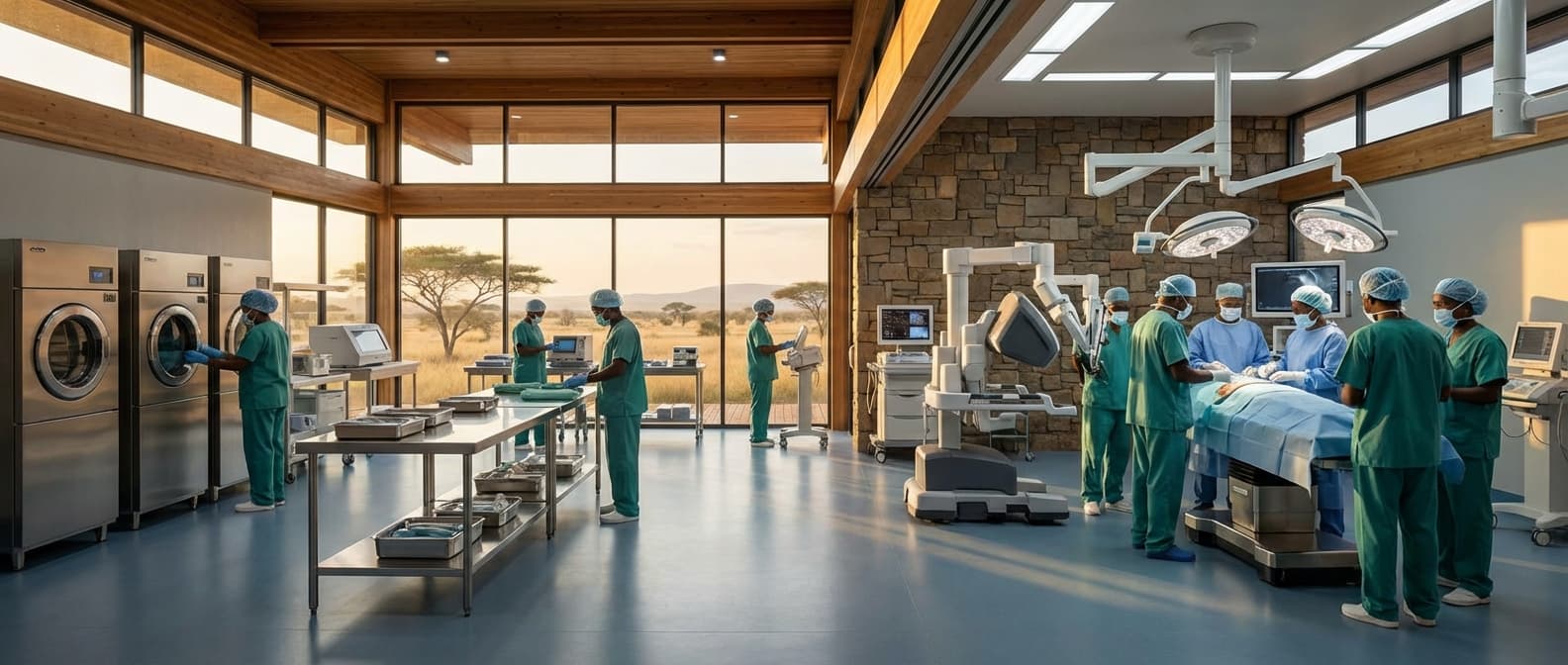
Medical Gas System Design & Installation in Cameroon
Engineering Excellence & Technical Support
Medical gas pipeline systems: O2, N2O, air, vacuum High-standard technical execution following OEM protocols and local regulatory frameworks.
Robust Medical Gas Pipeline Infrastructure
Engineered comprehensive medical gas pipeline systems for leading healthcare facilities in Cameroon, adhering to international standards (ISO 7396, HTM 02-01) and local regulations. Our designs prioritize patient safety, operational reliability, and future scalability, ensuring uninterrupted supply of vital gases like oxygen, medical air, and nitrous oxide.
Expert Installation & Commissioning
Successfully installed and commissioned complex medical gas systems across diverse healthcare settings in Cameroon, from bustling urban hospitals to remote clinics. Our certified technicians employ rigorous testing and validation protocols, including pressure testing, leak detection, and gas purity analysis, guaranteeing a safe and fully functional system from day one.
Tailored Solutions for Local Needs
Developed and implemented customized medical gas solutions that address the unique challenges and resource constraints of healthcare providers in Cameroon. This includes selecting appropriate equipment, optimizing system layouts for existing infrastructure, and providing comprehensive training to local maintenance staff, fostering long-term system sustainability and self-sufficiency.
What Is Medical Gas System Design & Installation In Cameroon?
Medical Gas System Design & Installation in Cameroon refers to the specialized engineering and construction process of creating, implementing, and commissioning safe and reliable medical gas pipelines and associated equipment within healthcare facilities. This encompasses the entire lifecycle from conceptualization and detailed engineering design to the physical installation, testing, and handover of systems for the distribution of medical gases such as oxygen, medical air, nitrous oxide, vacuum, and waste anesthetic gas disposal (WAGD). The objective is to ensure continuous, high-purity gas supply to patient care areas, meeting stringent international standards and local regulatory requirements for safety, performance, and efficacy.
| Who Needs Medical Gas System Design & Installation? | Typical Use Cases | ||||||||
|---|---|---|---|---|---|---|---|---|---|
| Hospitals (Public and Private): Essential for critical care units, operating rooms, emergency departments, and general wards. | Surgical Centers: Providing oxygen for anesthesia and resuscitation, medical air for ventilation support. | Clinics and Health Centers: Offering basic oxygen therapy and potentially medical air for respiratory support. | Rehabilitation Centers: Supplying oxygen for therapeutic purposes. | Research Laboratories within Healthcare Facilities: Requiring specific gas mixtures or high-purity gases for experimental procedures. | Veterinary Hospitals: Similar to human healthcare facilities, requiring oxygen and medical air for animal patient care. | New Healthcare Facility Construction: Integral part of the initial design and build process. | Renovation or Expansion of Existing Facilities: Upgrading or extending current medical gas infrastructure to meet increased demand or new standards. | Retrofitting Older Facilities: Modernizing outdated or non-compliant medical gas systems. | Emergency Preparedness and Disaster Relief Facilities: Establishing rapid deployment medical gas capabilities. |
| Oxygen Therapy: For patients with respiratory distress, hypoxia, or during surgical procedures. | Anesthesia: Delivery of anesthetic gases (e.g., nitrous oxide) mixed with oxygen. | Mechanical Ventilation: Providing medical air for ventilators and breathing circuits. | Pulmonary Function Testing: Precise delivery of medical air and other gases for diagnostic assessments. | Vacuum Services: Suction of bodily fluids during surgical procedures or in patient rooms. | Waste Anesthetic Gas Disposal (WAGD): Safe removal and scavenging of anesthetic gases from the operating environment. | Nitrous Oxide Administration: For analgesia and sedation in various medical settings. | Pneumatic Powered Medical Devices: Some instruments may utilize medical air for operation. |
Key Components and Services Involved:
- Site Assessment and Needs Analysis: Evaluating existing infrastructure, patient population, and service requirements to determine the scope of the medical gas system.
- System Design and Engineering: Developing detailed schematics, P&IDs (Piping and Instrumentation Diagrams), and specifications for gas sources, distribution networks, alarm systems, patient outlets, and ancillary equipment.
- Compliance with Standards: Adhering to international standards (e.g., NFPA 99, ISO 7396 series) and relevant Cameroonian healthcare construction and safety regulations.
- Equipment Specification and Procurement: Selecting and sourcing high-quality medical gas regulators, manifolds, shut-off valves, pressure relief devices, flowmeters, and other critical components.
- Installation and Fabrication: Executing the precise installation of medical gas pipelines, ensuring proper material selection (e.g., copper tubing for medical gases), brazing techniques, and system integrity.
- Testing and Commissioning: Conducting rigorous pressure testing, leak detection, purity analysis, flow rate verification, and functional testing of all system components and the entire network.
- Training and Handover: Providing comprehensive training to facility maintenance staff on system operation, routine checks, and emergency procedures.
- Documentation and Certification: Supplying detailed as-built drawings, operation and maintenance manuals, and certification of compliance.
Who Needs Medical Gas System Design & Installation In Cameroon?
Specialized medical gas system design and installation services are crucial for ensuring the safe, efficient, and reliable delivery of essential gases like oxygen, medical air, and vacuum in healthcare facilities. These systems are not a luxury but a fundamental requirement for modern patient care and surgical procedures. In Cameroon, where healthcare infrastructure is continuously developing, a significant demand exists for these expert services.
| Department/Area | Specific Needs & Applications | Importance of Professional Design & Installation |
|---|---|---|
| Operating Rooms (ORs) | Anesthesia delivery (e.g., N2O, medical air), resuscitation (oxygen), surgical ventilation, suction. | Ensures patient safety during surgery, precise gas mixture control, prevention of leaks and contamination, compliance with safety standards. |
| Intensive Care Units (ICUs) / High Dependency Units (HDUs) | Continuous mechanical ventilation (medical air, oxygen), non-invasive ventilation support, CPAP, suction. | Reliable and consistent gas supply for critically ill patients, timely response to respiratory distress, preventing patient deterioration. |
| Emergency Rooms (ERs) / Accident & Emergency (A&E) | Immediate oxygen therapy for trauma and shock, resuscitation, portable suction. | Rapid deployment of life-saving interventions, ensuring availability of essential gases during critical moments. |
| Maternity Wards / Neonatal Intensive Care Units (NICUs) | Oxygen therapy for newborns, assisted ventilation for premature infants, resuscitation. | Critical for infant survival and healthy development, precise gas delivery to fragile systems, preventing hypoxemia. |
| Pulmonology/Respiratory Wards | Oxygen therapy for patients with respiratory diseases (COPD, asthma), nebulization, CPAP. | Consistent and controlled oxygen delivery to manage chronic and acute respiratory conditions. |
| Recovery Rooms / Post-Anesthesia Care Units (PACUs) | Oxygen supplementation during recovery from anesthesia, monitoring. | Ensuring adequate oxygenation post-surgery, assisting in the patient's return to consciousness. |
| Laboratories | Calibration gases, carrier gases for analytical equipment (e.g., nitrogen, helium). | Accuracy and reliability of scientific instruments, safe handling of potentially hazardous gases. |
| Central Sterile Supply Department (CSSD) | Some sterilization processes may require specific gases. | Ensuring the integrity of sterilization cycles. |
Target Customers & Departments in Cameroon for Medical Gas System Design & Installation
- {"title":"Hospitals","description":"The primary beneficiaries of these services. All types of hospitals, from large public referral centers to smaller private institutions, require robust medical gas systems."}
- {"title":"Specialized Clinics","description":"Facilities focusing on specific medical areas such as cardiology, pulmonology, surgery, and intensive care units (ICUs) rely heavily on precise medical gas delivery."}
- {"title":"Emergency and Trauma Centers","description":"These facilities need immediate and continuous access to medical gases for life-saving interventions."}
- {"title":"Government Health Institutions","description":"Public hospitals and health centers managed by the Ministry of Public Health are major clients, often undergoing upgrades and new constructions."}
- {"title":"Private Healthcare Providers","description":"A growing sector in Cameroon, private hospitals and clinics invest in advanced medical infrastructure to offer competitive and high-quality care."}
- {"title":"Research and Teaching Hospitals/Institutes","description":"Institutions involved in medical education and research require well-equipped facilities, including reliable medical gas systems for laboratories and teaching wards."}
- {"title":"Non-Governmental Organizations (NGOs) and Humanitarian Organizations","description":"Organizations involved in delivering healthcare in underserved areas or during emergencies often fund and manage healthcare facilities that need modern medical gas systems."}
- {"title":"Veterinary Clinics and Animal Hospitals","description":"While primarily focused on human health, some advanced veterinary facilities also utilize medical gases for surgical procedures and critical care for animals."}
Medical Gas System Design & Installation Process In Cameroon
The design and installation of medical gas systems in Cameroon is a multi-stage process that ensures the safe and efficient delivery of vital gases to healthcare facilities. This workflow typically begins with an initial inquiry from a client and culminates in a fully functional and certified system. The process emphasizes adherence to local regulations, international standards, and best practices for medical gas installations. Key considerations throughout the entire workflow include safety, reliability, infection control, and ease of maintenance.
| Stage | Description | Key Activities | Deliverables/Outcomes |
|---|---|---|---|
| The process begins when a healthcare facility or project developer expresses interest in a medical gas system. | Receive client request, discuss project scope, understand general requirements, and schedule initial meetings. | Understanding of client needs, preliminary project scope defined, agreement on next steps. |
| A thorough evaluation of the healthcare facility's current and future medical gas requirements. | Visit site, assess existing infrastructure, determine gas types and quantities needed, identify installation locations, review architectural and MEP drawings, assess site accessibility and constraints. | Detailed understanding of site conditions, precise gas requirements, identification of installation routes and potential challenges. |
| Development of a preliminary design and cost estimation based on the needs assessment. | Develop basic system layout, select major components (e.g., central supply units, piping routes), prepare a preliminary Bill of Quantities (BoQ), generate a detailed quotation for the client's review. | Conceptual design drawings, preliminary BoQ, comprehensive quotation including materials, labor, and projected timelines. |
| Creation of comprehensive engineering drawings and specifications. | Develop detailed P&ID (Piping and Instrumentation Diagrams), electrical schematics, equipment specifications, finalize piping layouts, pressure drop calculations, material selection, obtain necessary regulatory approvals (if any). | Finalized engineering drawings (layout, P&ID, electrical), detailed BoQ, equipment specifications, project execution plan. |
| Acquisition of all necessary materials and equipment. | Source and purchase medical-grade piping, fittings, valves, alarms, central supply units (e.g., compressors, vacuum pumps, oxygen concentrators), patient outlets, gas cylinders, and all other required components, ensuring compliance with relevant standards. | All required materials and equipment delivered to site, quality control checks performed on procured items. |
| The physical construction and assembly of the medical gas system. | Install central supply equipment, lay and connect piping systems (welding, brazing for medical gases), install patient outlets and alarms, connect to existing building services, implement safety measures during installation. | Physically installed medical gas pipeline, central supply units, and terminal units. |
| Rigorous testing to ensure the system's functionality, safety, and compliance. | Pressure testing of pipelines, flushing and purging of lines, leak testing, gas purity testing, alarm system verification, functional testing of all components, pressure and flow rate verification, documentation of all test results. | Certified medical gas system, test reports, commissioning certificates, as-built drawings. |
| Educating facility staff on system operation and maintenance. | Provide comprehensive training to hospital engineers, technicians, and relevant medical staff on system operation, routine maintenance, troubleshooting, and emergency procedures. Formal handover of the completed system and all documentation. | Trained personnel, operation and maintenance manuals, warranty information, final project sign-off. |
| Ongoing support to ensure the long-term reliability of the system. | Offer scheduled preventative maintenance, provide reactive maintenance services for any issues, supply spare parts, conduct periodic system audits, and ensure continued compliance with evolving standards. | Reliable and safe medical gas supply, extended system lifespan, continued client satisfaction. |
Medical Gas System Design & Installation Process in Cameroon: Workflow Stages
- Inquiry & Initial Consultation
- Needs Assessment & Site Survey
- Conceptual Design & Quotation
- Detailed Design & Engineering
- Procurement & Material Sourcing
- System Installation
- Testing & Commissioning
- Training & Handover
- Post-Installation Support & Maintenance
Medical Gas System Design & Installation Cost In Cameroon
Designing and installing a medical gas system in Cameroon involves a range of costs influenced by several key factors. These systems are critical for patient care, providing essential gases like oxygen, medical air, nitrous oxide, and vacuum. The complexity of the system, the size of the healthcare facility, the types and number of gases required, and the quality of materials and equipment all contribute significantly to the overall price. Local labor rates, regulatory compliance, and the specific geographical location within Cameroon also play a role. It's essential to obtain detailed quotes from reputable suppliers and installers to get an accurate understanding of the investment required.
| System Component/Service | Estimated Cost Range (XAF) | Notes |
|---|---|---|
| Medical Gas Piping (per meter) | 8,000 - 25,000+ | Varies significantly with pipe diameter, material quality, and complexity of runs. |
| Medical Gas Outlets (per unit) | 20,000 - 80,000+ | Depends on the type of gas connector, brand, and mounting style (e.000g., wall, ceiling). |
| Central Gas Source (e.g., Bulk Oxygen Tank) | 5,000,000 - 20,000,000+ | Major capital investment. Price depends on capacity and supplier. |
| Medical Air Compressor System | 3,000,000 - 15,000,000+ | Includes compressor, dryer, filters, and receiver tank. Capacity is a key driver. |
| Alarm & Monitoring System | 1,000,000 - 5,000,000+ | For pressure, flow, and purity monitoring. Complexity of system affects price. |
| Pressure Regulators & Control Panels | 500,000 - 3,000,000+ | Per manifold or zone. Quality and number of control points are factors. |
| Design & Engineering Fees | 1,000,000 - 10,000,000+ | Percentage of total project cost or a fixed fee, depending on the consultant. |
| Installation Labor (per day/technician) | 25,000 - 75,000+ | Skilled technicians are required. Rates can vary by region and experience. |
| Small Clinic (basic oxygen & vacuum) | 10,000,000 - 30,000,000 | Assumes a few outlets and a simpler distribution system. |
| Medium-Sized Hospital (multiple gases) | 50,000,000 - 150,000,000+ | More extensive piping, multiple zones, and advanced monitoring. |
| Large Hospital/Specialized Facility | 150,000,000 - 500,000,000+ | Highly complex systems with numerous gases, advanced features, and extensive coverage. |
Key Pricing Factors for Medical Gas System Design & Installation in Cameroon:
- Facility Size and Scope: Larger hospitals with multiple wards, operating theaters, and intensive care units will require more extensive piping, outlets, and complex distribution networks, leading to higher costs.
- Number and Type of Medical Gases: The more gases required (e.g., oxygen, medical air, nitrous oxide, vacuum, carbon dioxide), and the more points of use for each gas, the greater the material and labor costs.
- Piping Material and Diameter: Copper piping is standard for medical gases due to its purity and durability. The diameter of the pipes will vary based on the gas flow requirements and the distance from the source to the outlet, impacting material quantities and installation complexity.
- Gas Source: The chosen source (e.g., central bulk oxygen tanks, medical air compressors, portable cylinders) will have a significant impact on the initial capital outlay and ongoing operational costs.
- Alarm and Monitoring Systems: Advanced alarm systems to monitor pressure, flow, and gas purity are essential for patient safety and add to the overall cost.
- Pressure Regulators and Control Equipment: High-quality regulators and control panels are necessary to ensure safe and consistent gas delivery.
- Medical Gas Outlets and Accessories: The number and type of wall outlets, ceiling pendants, and associated connectors will directly affect the cost.
- Installation Labor Costs: These vary based on the complexity of the installation, the skill of the technicians, and prevailing local wage rates in different regions of Cameroon.
- Design and Engineering Fees: Professional design and engineering services are crucial for ensuring compliance with standards and optimal system functionality.
- Regulatory Compliance and Certification: Costs associated with meeting national and international medical gas system standards and obtaining necessary certifications.
- Project Management and Supervision: Effective management of the installation process is vital and contributes to the overall project cost.
- Geographical Location: Transportation of materials and specialized labor to remote areas in Cameroon can increase costs.
Affordable Medical Gas System Design & Installation Options
Designing and installing a medical gas system is a critical investment for healthcare facilities. While the need for reliable, compliant systems is paramount, so is the need for cost-effectiveness. This document explores affordable design and installation options, focusing on value bundles and practical cost-saving strategies that do not compromise on safety or performance.
| Value Bundle Component | Description | Cost-Saving Benefit | Example Scenario |
|---|---|---|---|
| Integrated Design & Installation | A single contractor handles both the design and installation phases, ensuring seamless coordination and communication. | Reduces potential for design-build conflicts, streamlines project management, and can offer bundled pricing discounts. | A hospital outpatient clinic requires a new nitrous oxide system. A provider offers a bundle including system design, equipment sourcing, installation, and initial testing, saving the hospital the effort of managing multiple vendors. |
| Equipment Procurement & Installation Package | The vendor supplies all necessary medical gas equipment (manifolds, outlets, piping) and performs the installation. | Bulk purchasing power of the vendor can lead to lower equipment costs. Eliminates the need for the facility to manage multiple equipment orders and installation schedules. | A new dental practice needs oxygen and medical air. A bundle includes sourcing high-quality compressors, vacuum pumps, and gas outlets at a negotiated price, along with expert installation. |
| Turnkey System Solutions | A comprehensive package covering everything from initial consultation and design to installation, testing, commissioning, and even initial training for facility staff. | Maximizes efficiency and minimizes internal resource allocation. Often comes with a fixed price, providing budget certainty. | A small surgery center is expanding and needs a complete medical gas system for several new operating rooms. A turnkey solution provider handles all aspects, from blueprint to final certification, allowing the center's staff to focus on patient care. |
| Maintenance & Service Integration | Bundles that include ongoing maintenance contracts, inspections, and emergency service alongside installation. | Proactive maintenance prevents costly breakdowns and extends equipment lifespan. Predictable service costs improve budgeting. | A clinic installs a new medical gas system and opts for a bundle that includes annual inspections and priority emergency response, ensuring system reliability and minimizing unexpected repair expenses. |
Key Considerations for Affordable Medical Gas Systems
- Understanding your facility's current and future medical gas needs.
- Evaluating different system configurations and materials.
- Leveraging value bundles for integrated services.
- Implementing smart design choices to reduce long-term operational costs.
- Partnering with experienced and reputable medical gas system providers.
Verified Providers In Cameroon
In Cameroon's healthcare landscape, identifying reliable and trustworthy providers is paramount. Verified providers, particularly those with strong credentials like Franance Health, offer a significant advantage in ensuring quality care and patient safety. This document outlines why choosing Franance Health and other verified providers is the most prudent decision for your healthcare needs.
| Franance Health Credentials | Benefits for Patients | Why They Represent the Best Choice |
|---|---|---|
| Accreditation and Licensing: Holds all necessary national and international accreditations and licenses required to operate in Cameroon. This signifies adherence to stringent regulatory frameworks. | Guaranteed Competence: Patients are assured that all medical professionals at Franance Health are qualified, licensed, and have undergone background checks. | Unwavering Commitment to Standards: Their accreditation proves a dedication to maintaining the highest levels of medical practice and patient care, setting them apart from non-verified entities. |
| Experienced and Specialized Medical Staff: Employs a team of highly skilled doctors, nurses, and specialists with proven track records and continuous professional development. | Expert Diagnosis and Treatment: Access to a diverse range of medical expertise ensures accurate diagnoses and effective, personalized treatment plans. | Access to Top Talent: Patients benefit from the collective knowledge and experience of a well-curated medical team, leading to superior health outcomes. |
| State-of-the-Art Facilities and Equipment: Invests in modern medical technology and maintains well-equipped facilities that meet international standards for hygiene and safety. | Accurate Diagnostics and Advanced Treatments: Advanced equipment enables precise diagnostic imaging, laboratory tests, and access to modern therapeutic interventions. | Cutting-Edge Healthcare Delivery: Their commitment to advanced technology ensures patients receive the most effective and efficient medical care available. |
| Patient-Centric Approach: Prioritizes patient well-being, comfort, and privacy with a focus on compassionate care and clear communication. | Empowered Healthcare Experience: Patients feel respected, informed, and actively involved in their treatment journey, fostering trust and reducing anxiety. | Holistic Care and Support: Beyond medical treatment, Franance Health provides a supportive environment that addresses the emotional and practical needs of patients. |
| Ethical Practices and Transparency: Operates with the highest ethical standards, ensuring transparency in billing, treatment options, and patient rights. | Trustworthy and Reliable Services: Patients can be confident in the integrity of the services provided, with no hidden costs or misleading information. | Building Long-Term Trust: Their commitment to ethical conduct builds lasting relationships with patients based on mutual respect and reliability. |
Why Verified Providers are Crucial in Cameroon:
- Ensuring Quality of Care: Verified providers adhere to established standards and regulations, guaranteeing a baseline level of medical competence and ethical practice.
- Patient Safety: Rigorous vetting processes for verified providers minimize risks associated with unqualified practitioners and substandard facilities.
- Trust and Credibility: Verification builds confidence for patients, allowing them to make informed decisions about their healthcare providers.
- Access to Reliable Information: Verified providers often have transparent operational practices, making it easier for patients to access relevant information about services and personnel.
- Improved Health Outcomes: By consistently meeting quality benchmarks, verified providers contribute to better health outcomes for individuals and the community.
Scope Of Work For Medical Gas System Design & Installation
This document outlines the Scope of Work (SOW) for the design and installation of a medical gas system, including key technical deliverables and standard specifications. The project aims to ensure a safe, reliable, and compliant medical gas infrastructure within the specified healthcare facility. The scope covers all phases from conceptual design to final commissioning and handover.
| Technical Deliverable | Description | Standard Specification Reference |
|---|---|---|
| Medical Gas System Design Drawings | Detailed P&ID (Piping and Instrumentation Diagrams), floor plans showing piping routes, outlet locations, manifold rooms, and riser diagrams. | NFPA 99, NFPA 55, ASSE Series Standards, Local Building Codes |
| Equipment Specifications & Selection | Detailed specifications for all medical gas equipment including compressors, vacuum pumps, manifolds, regulators, alarms, outlets, and shut-off valves. | Manufacturer's Submittals, NFPA 99, FDA Regulations |
| Material & Installation Standards | Specifications for piping materials (e.g., copper tubing, brass fittings), welding procedures, brazing techniques, and pipe support methods. | ASME B31.3, ASTM B88, NFPA 99 |
| Alarm & Monitoring Systems | Design and specification of medical gas alarm panels and remote monitoring systems to alert staff of pressure or purity deviations. | NFPA 99, ASSE 1017, ASSE 1018 |
| Testing & Certification Reports | Comprehensive reports detailing all pressure tests, leak tests, gas purity analysis, and operational performance verification. | NFPA 99, ASSE 6040 |
| As-Built Drawings | Final updated drawings reflecting the actual installed system, including any deviations from the original design. | Project Requirements, NFPA 99 |
| Operations & Maintenance Manuals | Detailed manuals for the operation, maintenance, and troubleshooting of all installed medical gas system components. | Manufacturer's Documentation, NFPA 99 |
Key Project Phases and Activities
- Design Phase: Conceptual design, detailed design, system layout, equipment selection, piping schematics, and compliance with relevant codes and standards.
- Procurement Phase: Sourcing of medical gas equipment, piping, valves, alarms, and other necessary components.
- Installation Phase: Fabrication and installation of medical gas piping, outlets, manifolds, compressors, vacuum pumps, and all associated infrastructure.
- Testing & Commissioning Phase: Pressure testing, leak testing, purity testing, operational testing of all system components, and performance verification.
- Documentation & Handover Phase: Provision of as-built drawings, O&M manuals, training for facility staff, and final project acceptance.
Service Level Agreement For Medical Gas System Design & Installation
This Service Level Agreement (SLA) outlines the expected response times and uptime guarantees for the design and installation of medical gas systems provided by [Your Company Name] to [Client Name]. This SLA is an integral part of the overarching service contract between the parties.
| Service Component | Response Time (Business Hours) | Uptime Guarantee |
|---|---|---|
| Initial Design Consultation & Needs Assessment | 48 hours for initial scheduling after request | N/A (Design phase) |
| Delivery of Draft Design Schematics | 7 business days after client provides all required site information | N/A (Design phase) |
| Equipment Procurement Confirmation | 3 business days after final design approval | N/A (Procurement phase) |
| Commencement of Installation | Within 15 business days of equipment availability (subject to site readiness and scheduling) | N/A (Installation phase) |
| Emergency Site Visit (for critical installation issues during active work) | 8 business hours | N/A (Installation phase) |
| System Testing & Validation Completion | Within 5 business days of installation completion | N/A (Testing phase) |
| Final Documentation & Handover | 7 business days after successful system validation | N/A (Completion phase) |
| Post-Installation System Uptime (after successful handover) | N/A (Response time applies to new service requests) | 99.5% (Excluding scheduled maintenance and pre-approved downtime) |
Scope of Services Covered
- Initial consultation and needs assessment for medical gas system design.
- Development of detailed design schematics and specifications.
- Procurement of approved medical gas equipment and materials.
- On-site installation of the medical gas system.
- System testing, validation, and certification.
- Post-installation documentation and handover.
Frequently Asked Questions

Ready when you are
Let's scope your Medical Gas System Design & Installation in Cameroon project in Cameroon.

Scaling healthcare logistics and technical systems across the entire continent.