
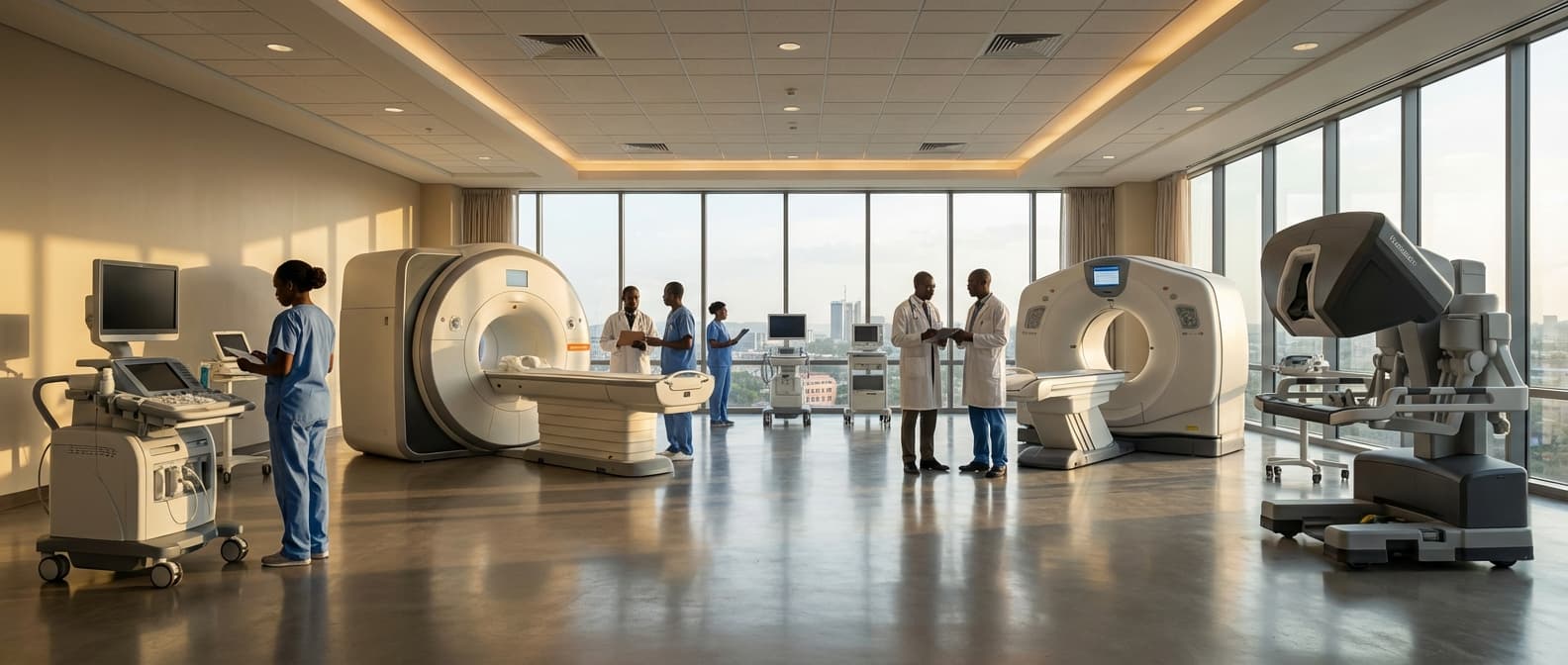
Life Support & Consumables in Cameroon
Engineering Excellence & Technical Support
Reliable supply of essential medical consumables and life support equipment ensuring uninterrupted, quality patient care delivery. High-standard technical execution following OEM protocols and local regulatory frameworks.
Mobile Oxygen Refilling Stations
Deploying a network of mobile oxygen refilling stations in remote and underserved regions of Cameroon, utilizing portable compressors and bulk oxygen storage solutions. This initiative ensures consistent and accessible oxygen supply for critical care patients, particularly in areas with limited infrastructure.
Advanced Water Purification Systems
Implementing solar-powered advanced water purification systems (e.g., reverse osmosis, UV sterilization) in health facilities and communities facing water scarcity. These systems guarantee the availability of safe, potable water for sanitation, hygiene, and medical procedures, drastically reducing waterborne diseases.
Integrated Cold Chain Logistics for Pharmaceuticals
Establishing a robust and integrated cold chain logistics network using temperature-controlled vehicles and smart monitoring devices for vaccines and temperature-sensitive medications. This ensures the efficacy and potency of vital life-saving drugs from the point of manufacture to the patient, especially in Cameroon's diverse climate.
What Is Life Support & Consumables In Cameroon?
Life Support & Consumables in Cameroon refers to a specialized service providing essential medical equipment, supplies, and related logistical support to individuals or organizations requiring continuous physiological maintenance or advanced medical care within the Cameroonian context. This service is crucial for patients with chronic or acute critical illnesses, individuals in remote or underserviced areas, and entities involved in humanitarian aid or specialized medical interventions. The scope encompasses the provision, maintenance, and replenishment of life-sustaining devices, pharmaceuticals, sterile supplies, and nutritional support, tailored to the specific clinical needs and local operational environment. This involves ensuring a reliable supply chain, technical expertise for equipment operation and repair, and compliance with national healthcare regulations and international standards.
| Who Needs Life Support & Consumables? | Typical Use Cases |
|---|---|
| Patients with severe respiratory failure (e.g., COPD, ARDS, pneumonia) | Mechanical ventilation in intensive care units (ICUs) or home settings. |
| Individuals with acute or chronic renal failure | Hemodialysis and peritoneal dialysis in clinical facilities or at home. |
| Patients requiring intensive cardiovascular monitoring or intervention | Management of arrhythmias, hemodynamic instability, and post-cardiac arrest care. |
| Critically ill patients unable to maintain adequate oral intake | Enteral or parenteral nutrition delivery in hospitals or during emergency response. |
| Individuals in remote or underserved areas with limited access to healthcare | Mobile medical units, outreach programs, and emergency field hospitals. |
| Humanitarian organizations and NGOs | Disaster relief operations, refugee camps, and conflict zones requiring medical support. |
| Hospitals and healthcare facilities | Routine patient care, emergency departments, and specialized medical wards. |
| Individuals requiring home-based medical care | Long-term management of chronic conditions requiring ongoing equipment and supply provision. |
Key Components of Life Support & Consumables in Cameroon
- Ventilation Support (e.g., ventilators, CPAP machines, oxygen concentrators, cylinders)
- Cardiovascular Support (e.g., infusion pumps, defibrillators, cardiac monitors)
- Renal Support (e.g., dialysis equipment and consumables)
- Nutritional Support (e.g., enteral and parenteral feeding solutions, feeding tubes)
- Wound Care Supplies (e.g., dressings, bandages, antiseptics)
- Sterile Consumables (e.g., syringes, needles, IV sets, gloves)
- Medications and Pharmaceuticals (especially critical care drugs)
- Diagnostic Consumables (e.g., reagents, test strips)
- Logistical Services (e.g., transportation, storage, maintenance, technical support, training)
Who Needs Life Support & Consumables In Cameroon?
This document outlines the target customer base and relevant departments within Cameroon for companies and organizations providing life support and consumables. This includes a broad spectrum of sectors requiring these essential resources for operational continuity, health and safety, and research. Understanding these segments is crucial for effective market penetration and service delivery.
| Customer Segment | Key Needs | Examples of Departments/Organizations |
|---|---|---|
| Healthcare Providers | Medical equipment, pharmaceuticals, sterile supplies, diagnostic reagents | Public Hospitals (e.g., Laquere Centre, Hôpital Laquintinie), Private Clinics, Diagnostic Labs |
| Emergency & Humanitarian Organizations | Field medical kits, water purification, sanitation supplies, emergency shelter consumables | Cameroon Red Cross, UNHCR, MSF (Doctors Without Borders) |
| Industrial Operations | Personal Protective Equipment (PPE), safety equipment, industrial cleaning agents, first-aid supplies | Mining companies (e.g., Cam Iron), Oil & Gas service providers, Food processing plants |
| Educational & Research Bodies | Laboratory consumables, safety equipment, reagents, specialized research apparatus | University of Yaoundé I, University of Buea, Research Institutes |
| Government & Public Institutions | Medical supplies for prisons, public health campaigns, security forces' medical needs | Ministry of Health, Ministry of Justice (Prison Services), Gendarmerie, Army |
| Specialized Services | On-board medical kits, emergency response equipment | Airlines operating in Cameroon, large logistics companies |
Target Customers & Departments in Cameroon for Life Support & Consumables
- {"title":"Healthcare Sector","departments":["Anesthesiology","Intensive Care Unit (ICU)","Emergency Room","Surgical Departments","Laboratories (Diagnostic & Research)","Pharmacy","Infection Control","Procurement/Supplies"],"description":"Hospitals, clinics, laboratories, and medical research centers are primary consumers of life support equipment (ventilators, oxygen concentrators, dialysis machines) and a vast range of consumables (syringes, gloves, masks, bandages, disinfectants, reagents)."}
- {"title":"Emergency Services & Disaster Relief","departments":["Civil Protection Department","Red Cross/Red Crescent Societies","International NGOs","Military (Medical Units)","Fire Services"],"description":"Organizations involved in emergency response, disaster management, and humanitarian aid require immediate access to life support systems and essential consumables for affected populations and first responders."}
- {"title":"Industrial & Manufacturing Sector","departments":["Health, Safety, and Environment (HSE)","Operations","Maintenance","Quality Control","Production"],"description":"Industries dealing with hazardous materials, high-risk environments, or requiring sterile conditions necessitate safety-related life support equipment and specific consumables. This includes areas like mining, oil and gas, and food processing."}
- {"title":"Research & Education Institutions","departments":["Research Laboratories (various disciplines)","Medical Schools","Science Departments","Animal Facilities","Procurement/Stores"],"description":"Universities, colleges, and research institutes conducting scientific experiments, biological studies, or medical training require a steady supply of laboratory consumables, safety equipment, and specialized life support apparatus."}
- {"title":"Government Agencies & Public Services","departments":["Ministry of Public Health","Ministry of Defense","Ministry of Interior","Correctional Services","Public Health Laboratories"],"description":"Various government bodies, including those managing public health initiatives, prisons, and security forces, may require life support and consumables for their operations and personnel."}
- {"title":"Aviation & Transportation Sector","departments":["Ground Operations","Medical/First Aid Services","Safety & Security"],"description":"Airlines and large transportation hubs may need to maintain medical supplies and basic life support equipment for passenger emergencies."}
Life Support & Consumables Process In Cameroon
The workflow for Life Support & Consumables procurement and delivery in Cameroon typically involves a structured process to ensure timely and efficient provision of essential goods and services. This process begins with an inquiry from a requesting entity and culminates in the execution and delivery of the required life support and consumables. The specific steps and documentation may vary depending on the nature of the organization (e.g., NGO, UN agency, private sector), the urgency of the need, and the specific items required, but a general workflow can be outlined.
| Stage | Description | Key Actors/Departments | Typical Documentation | Key Considerations |
|---|---|---|---|---|
| Inquiry & Needs Assessment | The process begins when a need for life support or consumables is identified. This can be proactive planning or a response to an emergency. A detailed assessment of the specific items, quantities, and quality standards is conducted. | Requesting Department/Program Team, Logistics/Procurement Officer | Needs Assessment Report, Itemized List of Requirements | Clarity on specifications, urgency, and expected usage. |
| Requisition & Justification | A formal requisition is raised, detailing the identified needs. This document must include a clear justification for the procurement, linking it to program objectives or operational requirements. | Requesting Department/Program Team, Procurement Department | Purchase Requisition Form, Justification Memo | Accuracy of information, strong justification for necessity. |
| Budgetary Approval | The requisition is reviewed against available budgets. Funds must be allocated and approved before proceeding with procurement. | Finance Department, Budget Holder, Management | Budget Allocation Sheet, Approval Signatures | Availability of funds, adherence to budget lines. |
| Procurement Planning & Sourcing | Based on the approved requisition, a procurement plan is developed. This involves identifying potential suppliers, market research, and determining the most appropriate procurement method (e.g., tender, request for quotation, direct purchase). | Procurement Department, Logistics Department | Procurement Plan, Market Survey Reports, Supplier Database | Compliance with procurement policies, identifying reliable suppliers. |
| Supplier Selection & Contracting | Suppliers are evaluated based on predefined criteria (e.g., price, quality, delivery time, past performance). A contract or purchase order is issued to the selected supplier. | Procurement Department, Legal Department (for contracts) | Tender Documents, Quotations, Bid Evaluation Reports, Purchase Order/Contract | Fair and transparent selection process, clear contract terms. |
| Order Placement & Confirmation | The official order is placed with the supplier. The supplier confirms the order, including delivery timelines and payment terms. | Procurement Department, Supplier | Purchase Order, Order Confirmation | Timely confirmation, alignment with agreed terms. |
| Logistics & Transportation Planning | Detailed plans are made for the transportation of goods from the supplier to the final destination in Cameroon. This includes mode of transport, routes, and any necessary permits. | Logistics Department, Transport Coordinator | Shipping Manifests, Waybills, Transportation Plans, Import/Export Permits | Cost-effectiveness, security, and timely delivery. |
| Customs Clearance & Importation (if applicable) | If goods are imported, they undergo customs clearance procedures. This involves submitting necessary documentation and paying any applicable duties and taxes. | Logistics Department, Customs Brokers, Ministry of Finance/Customs | Bill of Lading, Commercial Invoice, Packing List, Customs Declaration Forms, Duty/Tax Receipts | Accurate documentation, understanding of Cameroonian customs regulations. |
| Receiving & Warehousing | Upon arrival, goods are received, inspected for quantity and quality, and stored appropriately in a designated warehouse or facility. | Logistics Department, Warehouse Staff, Quality Control Officer | Goods Received Note (GRN), Inspection Reports, Stock Cards | Thorough inspection, secure storage, inventory management. |
| Distribution & Delivery | Consumables and life support items are distributed to the intended beneficiaries or program sites according to the distribution plan. | Logistics Department, Field Staff, Distribution Teams | Distribution Lists, Delivery Notes, Beneficiary Signatures | Efficient and equitable distribution, accountability. |
| Confirmation of Receipt & Usage Tracking | Confirmation of receipt is obtained from the end-users or beneficiaries. Usage of consumables is tracked to monitor inventory levels and forecast future needs. | Field Staff, Program Teams, Logistics Department | Signed Delivery Confirmations, Usage Reports, Stock Reconciliation Forms | Proof of delivery, accurate tracking of consumption. |
| Payment & Financial Reconciliation | Invoices from suppliers are processed, verified against purchase orders and delivery documents, and payment is made. | Finance Department, Procurement Department | Invoices, Payment Vouchers, Bank Transfer Confirmations, Reconciliation Reports | Timely payments, accurate financial records. |
| Reporting & Archiving | Final reports on procurement, distribution, and financial expenditure are compiled. All relevant documentation is archived for audit and future reference. | Procurement Department, Finance Department, Program Management | Procurement Reports, Financial Reports, Audit Trails, Archived Documents | Completeness and accuracy of documentation, adherence to retention policies. |
Life Support & Consumables Process in Cameroon: Workflow Stages
- Inquiry & Needs Assessment
- Requisition & Justification
- Budgetary Approval
- Procurement Planning & Sourcing
- Supplier Selection & Contracting
- Order Placement & Confirmation
- Logistics & Transportation Planning
- Customs Clearance & Importation (if applicable)
- Receiving & Warehousing
- Distribution & Delivery
- Confirmation of Receipt & Usage Tracking
- Payment & Financial Reconciliation
- Reporting & Archiving
Life Support & Consumables Cost In Cameroon
Life support and consumables in Cameroon, like in many developing nations, are subject to a complex interplay of pricing factors. These include the cost of raw materials, import duties and taxes, transportation and logistics, currency exchange rates, local market demand, and the profit margins of various intermediaries. The pricing also varies significantly based on geographical location within Cameroon (urban vs. rural) and the specific type and brand of the product. For essential medical supplies, government subsidies and non-governmental organization (NGO) involvement can also influence affordability. Healthcare facilities, whether public or private, often have different procurement channels, leading to price discrepancies. The informal market also plays a role, with potentially lower prices but also risks associated with quality and authenticity. Generally, prices are quoted in the local currency, the Central African CFA franc (XAF).
| Category | Item Example | Typical Price Range (XAF) | Notes |
|---|---|---|---|
| Medical Consumables | Box of Sterile Gloves (100 units) | 8,000 - 15,000 | Price varies by brand and quality. Local production can be cheaper. |
| Medical Consumables | Syringe with Needle (disposable, 5ml) | 500 - 1,500 (per unit) | Bulk purchases or from NGOs can significantly reduce per-unit cost. |
| Medical Consumables | IV Drip Set | 1,000 - 3,000 | Brand and sterility are key price determinants. |
| Medical Consumables | Sterile Gauze Roll (medium) | 800 - 2,000 | Availability in rural areas might be limited and prices higher. |
| Life Support Equipment (Consumable Parts) | Oxygen Mask (disposable) | 2,000 - 5,000 | Essential for respiratory support, price influenced by material. |
| Life Support Equipment (Consumable Parts) | Ventilator Filter | 15,000 - 40,000+ | Highly specialized, import costs and brand significantly impact price. |
| Pharmaceuticals (Consumables) | Basic Pain Reliever (e.g., Paracetamol, 500mg, 10 tablets) | 500 - 1,500 | Generic versions are widely available and more affordable. |
| Pharmaceuticals (Consumables) | Saline Solution (500ml IV bag) | 2,000 - 5,000 | Crucial for hydration and drug administration. |
| Hygiene Consumables | Hand Sanitizer (500ml) | 3,000 - 8,000 | Demand-driven, especially during health crises. Local production emerging. |
| Hygiene Consumables | Face Masks (surgical, box of 50) | 10,000 - 25,000 | Prices fluctuated significantly during pandemics. Quality varies. |
Key Pricing Factors for Life Support & Consumables in Cameroon
- Import Duties and Taxes
- Transportation and Logistics Costs
- Currency Exchange Rate Fluctuations (XAF to USD/EUR)
- Raw Material Costs (global and local)
- Local Market Demand and Competition
- Profit Margins of Importers, Distributors, and Retailers
- Geographical Location (Urban vs. Rural Accessibility)
- Type and Brand of Product (Generic vs. Branded)
- Government Subsidies and Regulations
- NGO and Humanitarian Aid Influence
- Procurement Channels (Public Hospitals, Private Clinics, Pharmacies)
- Informal Market Dynamics
Affordable Life Support & Consumables Options
Navigating the costs of life support and essential consumables can be a significant challenge. This guide explores affordable options, focusing on value bundles and effective cost-saving strategies to help individuals and institutions manage expenses without compromising quality of care. Understanding how to leverage bulk purchases, subscription models, and alternative suppliers can lead to substantial savings.
| Value Bundle Type | Description | Potential Savings | Considerations |
|---|---|---|---|
| Starter Kits | Bundles of essential consumables for new patients or setups (e.g., oxygen tubing, masks, filters). | 10-15% off individual item prices. | Ensure the kit contains items with appropriate usage lifespan; avoid paying for extras not immediately needed. |
| Monthly Maintenance Packs | Pre-packaged sets of consumables for regular maintenance of life support equipment (e.g., filters, cleaning supplies). | 15-20% off regular purchase price; streamlined ordering. | Requires consistent usage; assess if all items in the pack are used within the month. |
| High-Volume User Plans | Discounted pricing tiers based on projected monthly or annual consumption of specific consumables. | 20-30% or more, depending on volume. | Commitment to a certain volume; potential penalties for underutilization. Requires accurate forecasting. |
| Integrated Care Packages | Bundles combining equipment rentals/purchases with ongoing consumable supplies and potentially service agreements. | Can offer significant overall cost reduction and convenience. | Requires careful review of contract terms, service level agreements, and total cost of ownership over the equipment's lifespan. |
| Generic Consumable Bundles | Packages featuring a range of essential consumables from a single, cost-effective generic brand. | 25-40% off compared to premium brand bundles. | Verification of quality and compatibility with existing equipment is paramount. Check for certifications. |
Key Cost-Saving Strategies
- Bulk Purchasing: Buying larger quantities of frequently used consumables often comes with lower per-unit costs. Establish usage patterns to determine optimal bulk sizes.
- Subscription Services: Many suppliers offer subscription plans for recurring consumable needs. These can provide predictable costs and discounts for long-term commitment.
- Generic or Equivalent Products: Explore high-quality generic or equivalent brands that meet the same specifications as premium brands but at a lower price point. Ensure they are FDA-approved or have comparable regulatory certifications.
- Negotiate with Suppliers: Don't hesitate to negotiate pricing, especially for larger orders or long-term contracts. Loyalty and consistent purchasing can be leverage.
- Inventory Management: Accurate inventory tracking prevents overstocking and reduces waste due to expiration. Implement a 'first-in, first-out' (FIFO) system.
- Compare Supplier Pricing: Regularly research and compare prices from multiple reputable suppliers. Price fluctuations are common, and finding the best deal is crucial.
- Rent vs. Buy: For expensive life support equipment, consider rental options, especially for short-term needs or when budget constraints are severe. Analyze the total cost of ownership.
- Government/Non-Profit Programs: Investigate if any local, state, or federal programs, or non-profit organizations, offer subsidies or discounted access to life support equipment and consumables.
Verified Providers In Cameroon
In Cameroon's evolving healthcare landscape, identifying truly "Verified Providers" is paramount for ensuring quality care and patient safety. Franance Health stands out as a leading platform committed to this principle, meticulously vetting and credentialing healthcare professionals and facilities. This rigorous verification process not only builds trust but also empowers patients to make informed decisions, knowing they are engaging with reputable and qualified practitioners. Franance Health's commitment to transparency and excellence makes their listed providers the best choice for reliable and high-quality healthcare services in Cameroon.
| Credential Aspect | Franance Health Verification Process | Benefit to Patients |
|---|---|---|
| Medical Licenses and Certifications | Thorough verification of all essential medical licenses and certifications with relevant Cameroonian authorities. | Ensures practitioners are legally qualified and have met the required educational standards. |
| Professional Experience and Specializations | Verification of reported professional experience, including residencies, fellowships, and specific areas of expertise. | Helps patients find specialists best suited for their specific medical needs. |
| Reputation and Disciplinary Records | Checks for any past disciplinary actions or negative feedback from professional bodies or regulatory agencies. | Minimizes the risk of encountering practitioners with a history of misconduct. |
| Facility Standards (for clinics and hospitals) | Assessment of infrastructure, equipment, hygiene standards, and compliance with national healthcare regulations. | Guarantees that facilities meet essential safety and quality benchmarks. |
| Continuous Professional Development (CPD) | Encourages and verifies participation in ongoing training and educational activities. | Confirms that providers are up-to-date with the latest medical advancements and best practices. |
Why Franance Health Credentials Represent the Best Choice:
- Unwavering commitment to patient safety through stringent vetting.
- Ensuring practitioners possess legitimate and up-to-date qualifications.
- Promoting transparency in healthcare service provision.
- Facilitating informed decision-making for patients.
- Building trust in Cameroon's healthcare system.
- Providing access to a network of highly reputable professionals and facilities.
Scope Of Work For Life Support & Consumables
This Scope of Work (SOW) outlines the requirements for the provision of Life Support and Consumables. It details the technical deliverables, standard specifications, and key performance indicators necessary for ensuring the well-being and operational readiness of personnel.
| Category | Item/Service | Technical Deliverable | Standard Specification / Reference | Quantity/Frequency | Acceptance Criteria |
|---|---|---|---|---|---|
| Water & Sanitation | Potable Water Supply | On-demand potable water delivery system | WHO Guidelines for Drinking-water Quality; ISO 6200 | As required, minimum 5 liters/person/day | Water meets microbiological and chemical contaminant limits. System operational 24/7. |
| Water & Sanitation | Wastewater Management | Collection, treatment, and disposal of wastewater | Local environmental regulations; EPA guidelines | Continuous | Treated wastewater meets discharge permit limits. No environmental contamination. |
| Food & Nutrition | Food Rations | Provision of balanced and nutritious food rations | FAO/WHO Recommended Daily Allowances; HACCP principles | 3 meals/day/person | Food is safe, nutritious, and palatable. Meets allergen requirements. |
| Food & Nutrition | Medical Nutritionals | Specialized dietary supplements | Medical prescription; Manufacturer's specifications | As prescribed | Supplied as per prescription with valid expiry dates. |
| Medical & Health | Medical Supplies | First aid kits, bandages, disinfectants, basic medications | ANSI/ISEA Z308.1; Local pharmaceutical regulations | Replenished monthly or as needed | Supplies are sterile (where applicable), within expiry dates, and adequately stocked. |
| Medical & Health | Hygiene Products | Soap, hand sanitizer, personal hygiene kits | Local health and safety standards | Replenished weekly | Products are effective and safe for use. |
| Shelter & Environment | Air Filtration | Replacement filters for environmental control systems | Manufacturer's specifications; ASHRAE standards | As per maintenance schedule or performance degradation | Filters meet required MERV rating. Air quality within specified parameters. |
| Shelter & Environment | Waste Disposal Services | Collection and disposal of general and hazardous waste | Local waste management regulations; RCRA (if applicable) | Daily/Weekly collection | Waste removed promptly. Disposal is compliant and environmentally sound. |
| Operational Consumables | Fuel for Generators | Supply and delivery of diesel/petrol for power generation | ASTM D975 (diesel); ASTM D4814 (petrol) | As required, with minimum stock levels maintained | Fuel meets specified grade and purity. Delivery on time to maintain power continuity. |
| Operational Consumables | Lubricants & Oils | Engine oils, hydraulic fluids, greases | Manufacturer's specifications for equipment | As per maintenance schedule or consumption | Lubricants meet specified viscosity and performance characteristics. |
| Documentation & Reporting | Inventory Reports | Monthly detailed inventory of all life support and consumables | Standardized inventory management system | Monthly | Reports are accurate, timely, and reconcile physical stock with records. |
| Documentation & Reporting | Quality Assurance Certificates | Certificates of analysis for water and food; Material safety data sheets (MSDS) | As per relevant standards and regulations | Provided with initial delivery and upon request | Certificates are complete and verifiable. |
Key Objectives
- To ensure a continuous and reliable supply of all necessary life support equipment and consumables.
- To maintain the highest standards of quality, safety, and hygiene for all provided items.
- To meet specified delivery schedules and manage inventory effectively.
- To provide comprehensive technical documentation and training as required.
- To minimize waste and promote sustainable practices in the provision of consumables.
Service Level Agreement For Life Support & Consumables
This Service Level Agreement (SLA) outlines the guaranteed response times and uptime for Life Support & Consumables services provided by [Your Company Name] to [Client Name]. This SLA is an integral part of the Master Service Agreement between the parties.
| Service Component | Uptime Guarantee | Response Time (Critical Incident) | Response Time (Major Incident) | Resolution Time (Critical Incident) | Resolution Time (Major Incident) |
|---|---|---|---|---|---|
| Life Support Equipment Maintenance & Repair | 99.9% Uptime | 15 Minutes | 60 Minutes | 4 Hours | 24 Hours |
| Essential Consumables Delivery | 99.5% Availability of Stocked Items | 30 Minutes (Order Acknowledgement) | 2 Hours (Delivery Commencement) | 4 Hours (Delivery Completion for Critical Shortages) | 24 Hours (Delivery Completion for Major Shortages) |
Key Service Definitions
- Critical Life Support Equipment: Medical devices essential for patient survival, including but not limited to ventilators, dialysis machines, and infusion pumps requiring continuous operation.
- Essential Consumables: Supplies directly used in conjunction with Critical Life Support Equipment or for immediate patient care, such as breathing circuits, dialysis filters, and IV bags.
- Uptime: The percentage of time that the Life Support & Consumables service is available and functional, excluding scheduled maintenance and Force Majeure events.
- Response Time: The maximum time allowed for [Your Company Name] to acknowledge and begin addressing a reported service issue.
- Resolution Time: The maximum time allowed for [Your Company Name] to resolve a reported service issue and restore functionality.
- Critical Incident: A failure of Critical Life Support Equipment or a critical shortage of Essential Consumables that directly impacts patient care and safety.
- Major Incident: A significant disruption to the supply or maintenance of Essential Consumables or a non-critical failure of Life Support Equipment that may impact patient care but does not pose an immediate threat to life.
Frequently Asked Questions

Ready when you are
Let's scope your Life Support & Consumables in Cameroon project in Cameroon.

Scaling healthcare logistics and technical systems across the entire continent.