
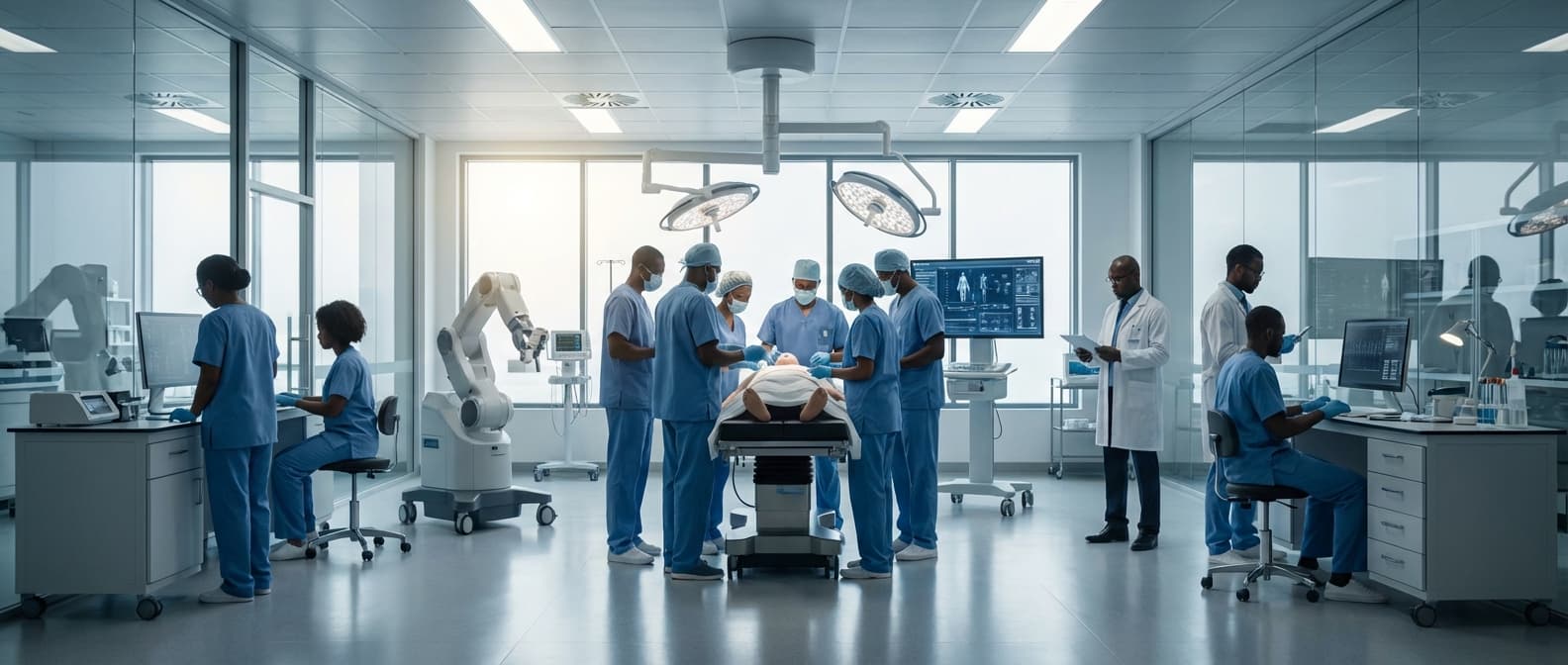
Biomedical Engineering Consulting in Cameroon
Engineering Excellence & Technical Support
Equipment selection, procurement and implementation consulting High-standard technical execution following OEM protocols and local regulatory frameworks.
Advanced Medical Device Design & Prototyping
Leveraging cutting-edge simulation tools and rapid prototyping technologies (3D printing, CNC machining) to design and develop innovative, context-appropriate medical devices tailored to the specific needs and resource limitations of Cameroonian healthcare facilities. This includes optimizing for local manufacturing feasibility and user-friendliness.
Biomedical Informatics & Data Analytics for Healthcare Improvement
Implementing robust biomedical informatics solutions and data analytics frameworks to enhance patient care, optimize hospital operations, and drive evidence-based decision-making in Cameroonian healthcare settings. This includes developing custom software for electronic health records, data visualization platforms, and predictive modeling for disease outbreaks.
Sustainable Biomedical Equipment Management & Training Programs
Developing and implementing comprehensive strategies for the sustainable management, maintenance, and repair of biomedical equipment. This encompasses establishing local technical support networks, conducting hands-on training programs for healthcare technicians, and advising on cost-effective equipment procurement and lifecycle management to ensure long-term operational reliability.
What Is Biomedical Engineering Consulting In Cameroon?
Biomedical Engineering Consulting in Cameroon refers to the provision of expert technical and advisory services related to the application of engineering principles to biology and medicine within the Cameroonian healthcare landscape. This specialized field bridges the gap between medical science and engineering technology, focusing on the design, development, maintenance, and optimal utilization of medical devices, equipment, and healthcare systems. Consultants in this domain leverage their interdisciplinary knowledge to address the unique challenges and opportunities present in Cameroon's healthcare infrastructure, aiming to enhance patient care, improve operational efficiency, and facilitate technological advancement.
| Who Needs Biomedical Engineering Consulting in Cameroon? | Typical Use Cases | ||||||
|---|---|---|---|---|---|---|---|
| Hospitals and Clinics (Public and Private): Require support for equipment management, facility planning, and technology adoption. | Government Ministries of Health: Need assistance with national healthcare technology policy, procurement strategies, and infrastructure development. | Medical Device Manufacturers and Distributors: Seek guidance on product registration, market access, installation, and after-sales service within Cameroon. | Research Institutions and Universities: Benefit from consultation on setting up and maintaining research laboratories, and on the development of local biomedical innovation. | International Development Organizations: Partner with consultants for projects aimed at improving healthcare infrastructure and access to medical technology in Cameroon. | Investors and Financial Institutions: May require expert assessment of medical technology investments and healthcare facility viability. | Insurance Companies: Can utilize consulting services for device evaluation and claims assessment related to medical equipment. | |
| Procurement and Installation of Diagnostic Imaging Equipment: Ensuring proper selection, site preparation, and commissioning of MRI, CT scanners, and X-ray machines. | Upgrading and Equipping of Operating Theaters: Designing sterile environments, selecting surgical lighting, anesthesia machines, and monitoring systems. | Implementation of Hospital Information Systems (HIS) and Electronic Health Records (EHR): Advising on the technological infrastructure and integration of health IT solutions. | Maintenance and Repair Programs for Critical Medical Devices: Establishing preventative maintenance schedules and troubleshooting protocols for life-support equipment. | Feasibility Studies for New Healthcare Ventures: Assessing the technological and infrastructural requirements for establishing new hospitals or specialized clinics. | Development of National Medical Device Registries and Standards: Contributing technical expertise to regulatory bodies. | Training Programs for Biomedical Technicians: Enhancing the local workforce's capacity to manage and maintain medical technology. | Assessment of Medical Waste Management Systems: Designing and implementing safe and compliant disposal methods for medical waste. |
Key Aspects of Biomedical Engineering Consulting in Cameroon
- Equipment Lifecycle Management: Overseeing the procurement, installation, validation, calibration, maintenance, and decommissioning of medical devices, ensuring compliance with regulatory standards and operational readiness.
- Healthcare Facility Design & Planning: Providing engineering input for the design, renovation, and equipping of healthcare facilities, including operating rooms, intensive care units, diagnostic imaging centers, and laboratories, with a focus on workflow optimization, infection control, and safety.
- Technology Assessment & Integration: Evaluating emerging biomedical technologies, recommending suitable solutions for specific clinical needs, and managing their integration into existing healthcare systems.
- Regulatory Compliance & Quality Assurance: Assisting healthcare institutions and manufacturers in navigating national and international regulations pertaining to medical devices, as well as implementing robust quality management systems.
- Training & Capacity Building: Developing and delivering training programs for healthcare professionals and technical staff on the proper operation, maintenance, and troubleshooting of medical equipment.
- Risk Management & Patient Safety: Identifying and mitigating potential risks associated with medical technology, and developing protocols to enhance patient safety.
- Biomaterials & Device Design Consultation: Advising on the development and selection of biocompatible materials and the design of novel medical devices, often in collaboration with local research institutions or manufacturers.
- Infrastructure Development: Contributing engineering expertise to the broader development of healthcare infrastructure, including power supply reliability, sterile water systems, and waste management for medical facilities.
Who Needs Biomedical Engineering Consulting In Cameroon?
Biomedical Engineering (BME) consulting plays a vital role in enhancing healthcare infrastructure and services in Cameroon. It addresses critical needs related to medical equipment management, healthcare facility design, regulatory compliance, and the adoption of advanced medical technologies. The demand for BME consulting is driven by a growing awareness of the importance of safe, efficient, and modern healthcare delivery. This expertise is crucial for both public and private healthcare providers aiming to optimize their operations and patient care outcomes.
| Customer Type | Key Needs Addressed | Relevant Departments |
|---|---|---|
| Public Hospitals & Health Centers | Equipment lifecycle management, infrastructure planning, maintenance strategies, technology adoption | Engineering Department, Procurement Office, Facilities Management, Clinical Departments |
| Private Hospitals & Clinics | Advanced technology integration, operational efficiency, quality assurance, specialized service development | Medical Director's Office, Engineering/Technical Services, Procurement, Clinical Management |
| Manufacturers & Distributors | Market entry strategies, product localization, technical support infrastructure, training programs | Sales & Marketing, Technical Support, Logistics, Regulatory Affairs |
| NGOs & Development Agencies | Needs assessment, project implementation, capacity building, equipment donation management | Program Management, Technical Advisors, Logistics, Monitoring & Evaluation |
| Academic & Research Institutions | Laboratory design & setup, research equipment acquisition, technical training, curriculum development | Engineering Departments, Research & Development Units, Academic Affairs, IT Department |
| Regulatory Bodies | Policy development, device approval processes, post-market surveillance, training for inspectors | Standards & Quality Assurance, Licensing Department, Health Services Directorate |
Target Customers and Departments for Biomedical Engineering Consulting in Cameroon
- {"title":"Public Healthcare Sector","description":"Government hospitals and health centers are prime beneficiaries, facing challenges with aging equipment, limited technical expertise, and the need for infrastructure upgrades. They require support in procurement, maintenance, and planning for new facilities."}
- {"title":"Private Hospitals and Clinics","description":"These institutions, often striving for higher standards and specialized services, need BME expertise to ensure their equipment is state-of-the-art, properly maintained, and compliant with evolving healthcare regulations. They also benefit from strategic planning for expansion and technology integration."}
- {"title":"Medical Equipment Manufacturers and Distributors","description":"Companies that supply medical devices to Cameroon need BME consultants for market analysis, product adaptation, installation support, and training for local technicians. This helps ensure their products are suitable and well-supported within the Cameroonian context."}
- {"title":"International NGOs and Development Agencies","description":"Organizations involved in healthcare projects in Cameroon often require BME consulting to assess needs, select appropriate technologies, implement infrastructure projects, and ensure the sustainability of healthcare initiatives. They focus on improving access to quality healthcare for underserved populations."}
- {"title":"Academic and Research Institutions","description":"Universities and research centers focused on health sciences can benefit from BME consulting for laboratory setup, equipment acquisition, and the development of research infrastructure. This supports the training of future healthcare professionals and the advancement of medical research."}
- {"title":"Government Regulatory Bodies","description":"Agencies responsible for healthcare regulation and standards may engage BME consultants for expertise in developing and enforcing guidelines related to medical device safety, quality, and licensing. This ensures a robust regulatory framework for healthcare."}
Biomedical Engineering Consulting Process In Cameroon
The Biomedical Engineering consulting process in Cameroon, like in many other regions, follows a structured workflow to ensure project success and client satisfaction. This process typically begins with an initial inquiry and culminates in the final execution and reporting. Key stages involve understanding the client's needs, developing a tailored solution, and implementing it effectively, all while adhering to local regulations and best practices.
| Phase | Key Activities | Typical Duration | Deliverables |
|---|---|---|---|
| Inquiry & Initial Consultation | Client expresses need, preliminary discussion, understanding core requirements | 1-3 days | Initial understanding of client needs |
| Needs Assessment & Scoping | Detailed information gathering, site visits, defining project scope and objectives | 2-7 days | Scope of Work document, Project objectives |
| Proposal Development | Developing solution, methodology, timeline, cost estimation | 3-10 days | Detailed Project Proposal |
| Contract Negotiation & Agreement | Reviewing and finalizing proposal terms, signing contract | 2-7 days | Signed Consulting Agreement |
| Project Planning & Design | Detailed task breakdown, risk assessment, resource allocation, technical design | 1-4 weeks | Project Plan, Design Documents (if applicable) |
| Execution & Implementation | Carrying out planned activities, procurement, installation, development | Variable (weeks to months) | Implemented solutions, installed equipment, developed protocols |
| Monitoring & Quality Assurance | Tracking progress, conducting checks, ensuring adherence to standards | Continuous throughout execution | Progress Reports, Quality Checklists |
| Testing & Validation | Functional testing, performance checks, safety verification | Variable (days to weeks) | Test Reports, Validation Certificates |
| Training & Handover | Training client personnel, transferring knowledge, handing over documentation | 1-5 days | Training Materials, Handover Documentation |
| Project Closure & Evaluation | Final reporting, client sign-off, lessons learned, post-project review | 3-7 days | Final Project Report, Client Feedback |
Biomedical Engineering Consulting Workflow in Cameroon
- Inquiry and Initial Consultation: The process starts with a potential client reaching out to a biomedical engineering consulting firm with a specific need or problem. This could involve equipment selection, facility design, maintenance strategy, regulatory compliance, or technology assessment.
- Needs Assessment and Scoping: During the initial consultation, consultants delve deeper into the client's requirements. This involves detailed discussions, site visits (if applicable), and information gathering to clearly define the project's scope, objectives, deliverables, and constraints.
- Proposal Development: Based on the needs assessment, the consulting firm develops a comprehensive proposal. This document outlines the proposed solution, methodology, timeline, required resources, team expertise, and a detailed cost breakdown. It serves as a formal offer to the client.
- Contract Negotiation and Agreement: Once the client reviews and approves the proposal, negotiations take place regarding terms, conditions, payment schedules, and any modifications. A formal contract is then signed, legally binding both parties to the project.
- Project Planning and Design: This is a crucial phase where the detailed plan for execution is developed. It involves breaking down the project into smaller tasks, assigning responsibilities, identifying potential risks, and establishing communication protocols. For technical projects, detailed design specifications and schematics are created.
- Execution and Implementation: This is the core of the project where the proposed solutions are put into action. This could involve procuring and installing equipment, developing maintenance protocols, conducting training, performing site assessments, or implementing new workflows. Close collaboration with the client's team is essential.
- Monitoring and Quality Assurance: Throughout the execution phase, consultants continuously monitor progress against the plan. Quality assurance checks are performed to ensure that deliverables meet the agreed-upon standards and client expectations. Regular progress reports are provided to the client.
- Testing and Validation: Depending on the project, rigorous testing and validation procedures are conducted to ensure the functionality, safety, and effectiveness of implemented solutions. This is particularly critical for medical equipment and facility designs.
- Training and Handover: For projects involving new equipment or systems, comprehensive training is provided to the client's personnel to ensure they can operate and maintain the solutions effectively. A formal handover of all relevant documentation and assets is performed.
- Project Closure and Evaluation: Once all deliverables are met and the client is satisfied, the project is formally closed. This often includes a final report summarizing the project's outcomes, lessons learned, and any recommendations for future improvements. A post-project evaluation may also be conducted.
Biomedical Engineering Consulting Cost In Cameroon
Biomedical Engineering consulting costs in Cameroon are subject to a variety of factors that influence the final price. These factors include the complexity and scope of the project, the experience and reputation of the consultant or firm, the duration of the engagement, and the specific services required. Costs are typically quoted in Cameroonian Francs (XAF). The market is still developing, so pricing can be less standardized than in more established markets. Small to medium-sized projects might range from XAF 500,000 to XAF 2,000,000. Larger, more complex, or long-term engagements involving detailed design, regulatory submissions, or extensive site assessments can easily exceed XAF 5,000,000 and go up to XAF 15,000,000 or more, depending on the specifics. Travel and accommodation expenses, if applicable, are usually billed separately or factored into the overall cost.
| Service Type/Project Size | Estimated Cost Range (XAF) |
|---|---|
| Initial Consultation/Feasibility Study (Short-term) | 250,000 - 750,000 |
| Equipment Specification and Procurement Assistance | 750,000 - 2,500,000 |
| Installation, Commissioning, and Validation (per device/system) | 1,000,000 - 4,000,000 |
| Medical Device Management Program Development | 2,000,000 - 8,000,000 |
| Regulatory Affairs Support (e.g., import licenses, certifications) | 1,500,000 - 7,000,000 |
| Training and Capacity Building (for hospital staff) | 500,000 - 3,000,000 |
| Comprehensive Project Management (e.g., new ward/clinic setup) | 5,000,000 - 15,000,000+ |
Key Pricing Factors for Biomedical Engineering Consulting in Cameroon
- Project Scope and Complexity
- Consultant's Experience and Expertise
- Duration of the Engagement
- Specific Services Required (e.g., design, installation, validation, training, regulatory affairs)
- Geographic Location within Cameroon (for on-site work)
- Reputation and Track Record of the Consulting Firm/Individual
- Urgency of the Project
- Inclusion of Travel and Accommodation Expenses
Affordable Biomedical Engineering Consulting Options
Biomedical engineering consulting can be a crucial asset for startups and established companies alike, offering expertise in areas like product development, regulatory affairs, clinical trials, and market analysis. However, the cost can be a significant barrier. Fortunately, several affordable options and cost-saving strategies exist, including value bundles and flexible engagement models. Understanding these can help you access high-quality expertise without breaking the bank.
| Service Type | Typical Engagement Model | Potential Cost-Saving Strategy | Best For |
|---|---|---|---|
| Regulatory Affairs (e.g., FDA, CE) | Value Bundle (Submission Prep) | Project-Based Pricing | Companies seeking specific regulatory clearance. |
| Product Development & Design | Value Bundle (Feasibility & Prototyping) | Phased Approach | Startups and companies with novel product ideas. |
| Clinical Trial Design & Management | Value Bundle (Protocol Development) | Retainer Agreement (for ongoing oversight) | Companies planning or conducting trials. |
| Market Research & Strategy | Value Bundle (Market Analysis) | Project-Based Pricing | Companies entering new markets or launching new products. |
| Quality Management Systems (QMS) | Value Bundle (QMS Implementation) | Phased Approach | Companies needing to establish or improve their QMS. |
| Intellectual Property (IP) Strategy | Project-Based Pricing | Niche Expertise | Companies protecting their innovations. |
| General Business & Operations Consulting | Retainer Agreement | Remote Consulting | Companies needing continuous expert advice. |
Understanding Value Bundles and Cost-Saving Strategies
- {"title":"What are Value Bundles?","description":"Value bundles in consulting are pre-packaged service offerings that combine multiple services or a defined scope of work at a fixed price. These are designed to provide clients with comprehensive solutions and predictable costs. Instead of hourly billing for individual tasks, you purchase a complete package tailored to a specific project phase or objective."}
- {"title":"Benefits of Value Bundles","description":"Predictable budgeting, clearer scope of work, streamlined project management, and often a cost saving compared to individual service fees. They ensure a focused approach to achieving a defined outcome."}
- {"title":"Common Value Bundle Examples","description":"Examples include: 'Feasibility Study Bundle,' 'Regulatory Submission Preparation Bundle,' 'Market Entry Strategy Bundle,' 'Prototype Design and Validation Bundle,' and 'Clinical Trial Design Bundle.'"}
- {"title":"Cost-Saving Strategy 1: Project-Based Pricing","description":"Many consultants offer fixed pricing for well-defined projects. This shifts the risk of scope creep to the consultant and provides budget certainty for the client. It's ideal for projects with clear deliverables and timelines."}
- {"title":"Cost-Saving Strategy 2: Retainer Agreements","description":"For ongoing needs, a monthly or quarterly retainer can be cost-effective. This ensures dedicated access to expertise and can often include a set number of hours or a specific scope of work at a discounted hourly rate compared to ad-hoc engagements."}
- {"title":"Cost-Saving Strategy 3: Phased Approach","description":"Break down large projects into smaller, manageable phases, each with its own defined scope and budget. This allows for iterative development and reduces upfront investment, enabling you to assess value and progress before committing to the next phase."}
- {"title":"Cost-Saving Strategy 4: Leveraging Niche Expertise","description":"Focus on consultants with specialized knowledge in your specific area. They can often deliver results more efficiently and effectively than generalist firms, leading to faster problem-solving and reduced overall costs."}
- {"title":"Cost-Saving Strategy 5: Early-Stage/Startup Packages","description":"Some consulting firms offer discounted packages specifically for early-stage companies or startups, recognizing their budget constraints. These might include foundational services like business plan review, IP strategy, or initial regulatory guidance."}
- {"title":"Cost-Saving Strategy 6: Remote Consulting and Digital Tools","description":"Embrace remote consulting to reduce travel expenses. Utilize collaboration platforms, cloud-based project management tools, and virtual communication to maintain seamless interaction and efficiency."}
- {"title":"Cost-Saving Strategy 7: In-House Training and Knowledge Transfer","description":"Negotiate for knowledge transfer and training as part of your consulting engagement. This empowers your internal team to handle future tasks, reducing reliance on external consultants over time."}
Verified Providers In Cameroon
In Cameroon's evolving healthcare landscape, identifying reliable and skilled medical professionals is paramount. 'Verified Providers in Cameroon' highlights the critical importance of choosing credentialed and trusted healthcare practitioners. Franance Health stands out as a beacon of quality, offering a rigorously vetted network of medical professionals. Their commitment to excellence ensures that patients receive the highest standard of care, backed by proven expertise and ethical practice. This focus on verified credentials not only builds patient confidence but also elevates the overall quality of healthcare services available in Cameroon.
| Provider Type | Franance Health Verification Benefits | What it Means for Patients |
|---|---|---|
| Doctors (General & Specialists) | Verified degrees, licenses, board certifications, and practice history. | Access to qualified and experienced physicians, ensuring accurate diagnoses and effective treatment plans. |
| Nurses | Confirmed nursing qualifications, registration with the relevant council, and a clean professional record. | Receive competent and compassionate nursing care, crucial for recovery and ongoing health management. |
| Pharmacists | Verified pharmacy degrees, licenses, and adherence to dispensing regulations. | Ensure safe and accurate dispensing of medications, minimizing risks and maximizing treatment efficacy. |
| Medical Technicians (Lab, Radiology) | Certified qualifications and proven competency in their respective diagnostic fields. | Reliable and accurate diagnostic results, vital for informed medical decisions. |
| Therapists (Physio, etc.) | Verified degrees and licenses in their therapeutic specialization. | Receive evidence-based rehabilitation and therapeutic interventions for optimal recovery and improved quality of life. |
Why Franance Health Providers are the Best Choice:
- Rigorous Vetting Process: Franance Health employs a comprehensive verification system for all its providers, ensuring they meet stringent standards of education, training, and experience.
- Specialized Expertise: Access a diverse range of specialists covering all major medical fields, guaranteeing you find the right care for your specific needs.
- Commitment to Patient Safety and Ethics: All Franance Health providers adhere to the highest ethical guidelines and prioritize patient well-being above all else.
- Improved Accessibility: Connect with trusted healthcare professionals conveniently, reducing the stress and uncertainty often associated with finding quality medical care.
- Enhanced Trust and Confidence: The 'verified' status provides peace of mind, assuring you that you are in capable and trustworthy hands.
Scope Of Work For Biomedical Engineering Consulting
This Scope of Work (SOW) outlines the consulting services to be provided by [Consulting Firm Name] to [Client Name] in the field of Biomedical Engineering. The objective is to leverage specialized expertise to address specific technical challenges, enhance product development, or provide strategic guidance. This SOW details the technical deliverables, standard specifications, and the overall framework for the engagement.
| Deliverable | Description | Format | Standard Specification/Reference |
|---|---|---|---|
| Project Kick-off Meeting Minutes | Summary of initial meeting, objectives, key stakeholders, and preliminary timelines. | Microsoft Word Document / PDF | Standard Meeting Minutes Template |
| Detailed Requirements Document | Comprehensive documentation of technical, functional, and performance requirements for the project. | Microsoft Word Document / PDF | IEEE 830-1998 (Recommended Practice for Software Requirements Specifications) or similar |
| Technical Design Document | Detailed blueprints, schematics, and architectural descriptions of the proposed solution. | Microsoft Visio / AutoCAD Drawings / PDF | Industry best practices for technical documentation (e.g., specific standards for medical device design, electrical schematics). |
| Risk Assessment Report | Identification, analysis, and mitigation strategies for potential risks associated with the project. | Microsoft Word Document / PDF | ISO 14971:2019 (Medical devices - Application of risk management to medical devices) |
| Prototype Design Specifications | Detailed documentation of any hardware or software prototypes developed. | Bill of Materials (BOM), CAD Models, Source Code Repositories | Relevant industry standards for prototype development (e.g., IPC standards for PCB design). |
| Test Plan | Outlines the strategy, scope, resources, and schedule for all testing activities. | Microsoft Word Document / PDF | ISO 62304:2006 (Medical device software – Software life cycle processes) for software testing, or specific testing protocols for hardware. |
| Test Reports | Detailed results and analysis of all executed tests, including pass/fail criteria. | Microsoft Word Document / PDF | As per Test Plan and relevant standards. |
| Validation Report | Confirms that the developed solution meets the specified requirements and intended use. | Microsoft Word Document / PDF | FDA 21 CFR Part 820 (Quality System Regulation) or similar regulatory guidance. |
| User Manual / Technical Guide | Instructions for operation, maintenance, and troubleshooting of the final solution. | Microsoft Word Document / PDF | Industry standards for technical documentation and user guides (e.g., ISO/IEC/IEEE 82079-1:2012). |
| Final Project Report | Comprehensive summary of the project, including achievements, challenges, lessons learned, and recommendations. | Microsoft Word Document / PDF | Standard Project Report Template |
| Source Code (if applicable) | Well-commented and organized source code for any software developed. | Git Repository / Compressed Archives | Coding standards relevant to the programming language and application domain. |
| CAD Models (if applicable) | 3D models of designed components or assemblies. | STEP, IGES, SolidWorks files | Industry standards for CAD data exchange. |
Project Phases and Deliverables
- Phase 1: Discovery and Requirements Gathering
- Phase 2: Technical Analysis and Design
- Phase 3: Development and Prototyping (if applicable)
- Phase 4: Testing and Validation
- Phase 5: Documentation and Knowledge Transfer
- Phase 6: Project Closure and Reporting
Service Level Agreement For Biomedical Engineering Consulting
This Service Level Agreement (SLA) outlines the commitment of [Your Company Name] (the "Consultant") to [Client Name] (the "Client") regarding the provision of biomedical engineering consulting services. It defines the expected response times for support requests and guarantees a minimum uptime for critical service components.
| Service Type | Response Time Guarantee | Escalation Procedure |
|---|---|---|
| Critical Incident Support | Within 1 hour during Business Hours; Within 4 hours outside of Business Hours (priority response) | Initiated via direct phone call to designated emergency contact and followed by email to support@yourcompany.com. |
| Urgent Service Request (e.g., system performance degradation) | Within 4 business hours | Submitted via the Client Portal or email to support@yourcompany.com. |
| Standard Service Request (e.g., general inquiry, documentation review) | Within 8 business hours | Submitted via the Client Portal or email to support@yourcompany.com. |
Definitions
- Business Hours: Monday to Friday, 9:00 AM to 5:00 PM [Client's Time Zone], excluding public holidays observed by the Consultant.
- Critical Incident: An incident that renders a core biomedical system or device non-functional, significantly impacting patient care or safety, and requiring immediate attention.
- Service Request: A request for support or consultation related to non-critical issues, routine maintenance, or general inquiries.
- Uptime: The percentage of time that essential consulting platforms and communication channels are operational and accessible to the Client.
- Response Time: The maximum time taken by the Consultant to acknowledge a Service Request or Critical Incident after it has been formally submitted.
Frequently Asked Questions

Ready when you are
Let's scope your Biomedical Engineering Consulting in Cameroon project in Cameroon.

Scaling healthcare logistics and technical systems across the entire continent.