
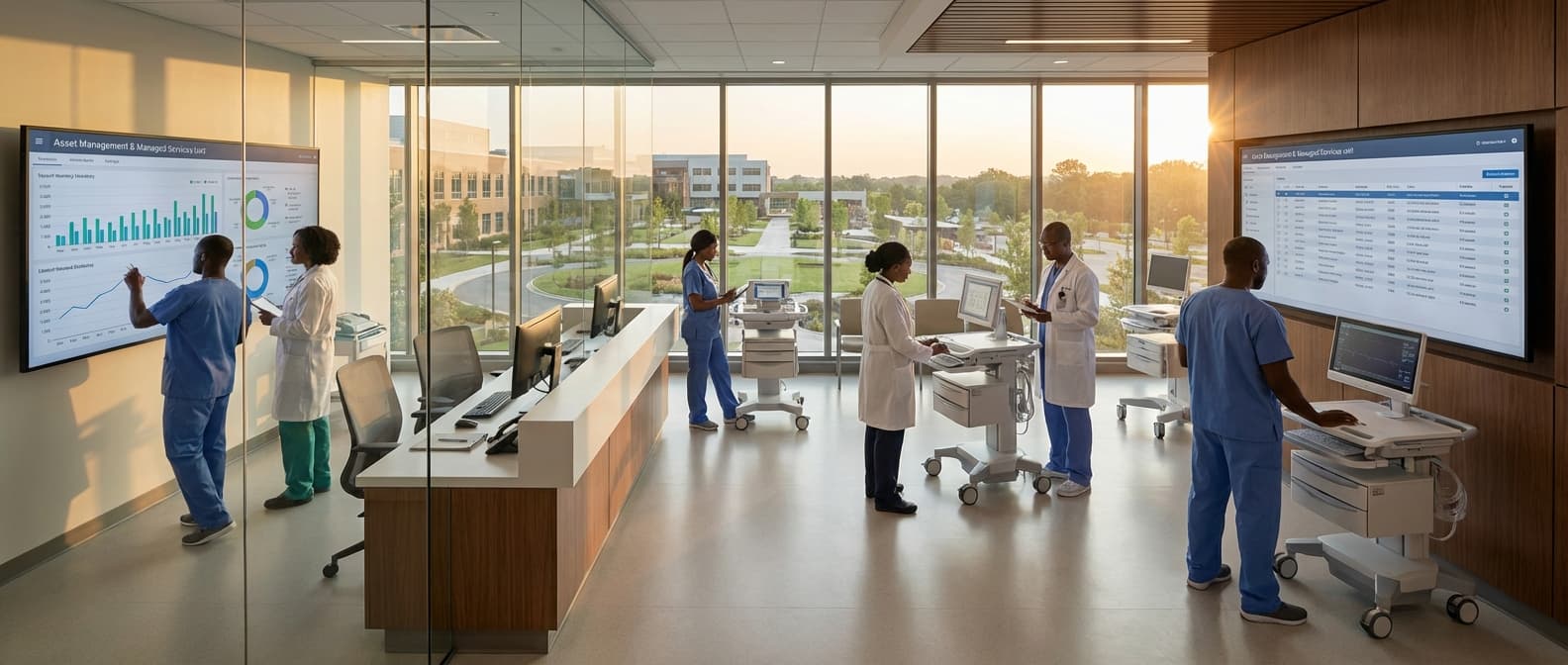
Maintenance KPI Reporting Service (Uptime/MTBF/MTTR) in Cameroon
Engineering Excellence & Technical Support
Maintenance KPI Reporting Service (Uptime/MTBF/MTTR) High-standard technical execution following OEM protocols and local regulatory frameworks.
Maximizing Uptime in Cameroon's Critical Infrastructure
Our service empowers Cameroonian organizations to achieve peak operational continuity. By providing real-time, granular data on equipment uptime, we enable proactive identification of bottlenecks and immediate remediation, ensuring your critical assets are always performing at their best, minimizing costly disruptions.
Driving Predictive Maintenance for Enhanced Reliability
Leverage our advanced MTBF (Mean Time Between Failures) insights to understand equipment lifecycles and predict potential failures. This allows Cameroonian businesses to transition from reactive to predictive maintenance, reducing unexpected breakdowns and extending the operational life of your valuable machinery.
Accelerating Repair Cycles with Data-Driven MTTR
Our comprehensive reporting service delivers actionable MTTR (Mean Time To Repair) data. We help Cameroonian teams pinpoint the root causes of repair delays and streamline maintenance workflows, leading to faster resolution times and a significant reduction in downtime when incidents do occur.
What Is Maintenance Kpi Reporting Service (Uptime/mtbf/mttr) In Cameroon?
The Maintenance KPI Reporting Service (Uptime/MTBF/MTTR) in Cameroon refers to a specialized offering that provides organizations with the systematic collection, analysis, and presentation of key performance indicators (KPIs) related to the reliability and maintainability of their assets and systems. This service focuses on quantifying operational availability (Uptime), the average time between failures (Mean Time Between Failures - MTBF), and the average time to repair (Mean Time To Repair - MTTR). The objective is to translate raw operational and maintenance data into actionable insights, enabling data-driven decision-making for optimizing maintenance strategies, reducing downtime, and enhancing overall asset performance within the Cameroonian operational context.
| Who Needs Maintenance KPI Reporting Service? | Typical Use Cases |
|---|---|
| Industries with critical infrastructure: Power generation and distribution, oil and gas, mining, manufacturing, telecommunications, water treatment plants, and transportation. These sectors rely heavily on continuous operational availability. | Optimizing asset lifecycle management by identifying assets nearing end-of-life based on failure trends. |
| Organizations with high capital expenditures on machinery and equipment: Businesses that invest significantly in physical assets need to maximize their return on investment through efficient operation and maintenance. | Improving preventive maintenance effectiveness by identifying optimal intervals based on MTBF data, thereby reducing unplanned downtime. |
| Companies seeking to reduce operational costs and improve profitability: Downtime directly translates to lost revenue and increased repair expenses. Accurate KPI reporting helps in cost control. | Enhancing spare parts inventory management by predicting demand and criticality based on failure rates (MTBF) and repair times (MTTR). |
| Businesses aiming for regulatory compliance and safety standards: Many industries have stringent uptime and reliability requirements that can be monitored and demonstrated through KPI reporting. | Diagnosing and resolving recurring equipment failures by analyzing MTTR and MTBF trends to identify root causes. |
| Organizations undergoing digital transformation initiatives: Integrating maintenance data into broader business intelligence platforms requires structured and reliable KPI reporting. | Developing predictive maintenance strategies by analyzing failure patterns and lead times to anticipate future breakdowns. |
| Service providers responsible for maintaining client assets: Companies offering maintenance services need to demonstrate their performance and value to clients. | Improving workforce allocation and training by identifying areas where technicians spend excessive time on repairs (high MTTR) or where failures are frequent. |
What is involved in Maintenance KPI Reporting Service (Uptime/MTBF/MTTR)?
- Data Acquisition and Integration: Establishing robust mechanisms to collect raw maintenance and operational data from various sources, including Computerized Maintenance Management Systems (CMMS), Supervisory Control and Data Acquisition (SCADA) systems, sensor logs, and manual operator inputs. Integration of disparate data sources is crucial for a holistic view.
- KPI Calculation and Validation: Implementing standardized methodologies for calculating Uptime (e.g., percentage of operational time), MTBF (total operational time / number of failures), and MTTR (total repair time / number of repairs). This includes data cleansing and validation to ensure accuracy and reliability of calculated metrics.
- Reporting and Visualization: Developing clear, concise, and visually intuitive reports and dashboards that present the calculated KPIs. This often involves graphical representations, trend analysis, and comparative metrics to facilitate understanding and identification of patterns.
- Performance Analysis and Diagnostics: Moving beyond mere reporting to analyze the root causes of failures, identify recurring issues, and pinpoint underperforming assets or systems. This phase leverages the KPI data to diagnose operational inefficiencies.
- Actionable Recommendations and Optimization: Providing data-backed recommendations for improving maintenance strategies, such as optimizing preventive maintenance schedules, enhancing spare parts management, refining troubleshooting procedures, and identifying training needs.
- Benchmarking and Trend Monitoring: Enabling organizations to benchmark their performance against industry standards or historical data, and to monitor trends over time to assess the impact of implemented changes.
- Contextualization for Cameroon: Adapting methodologies and data interpretation to the specific operational environments, regulatory frameworks, and prevalent industrial sectors within Cameroon. This may involve accounting for local supply chain challenges or common failure modes specific to the region.
Who Needs Maintenance Kpi Reporting Service (Uptime/mtbf/mttr) In Cameroon?
In Cameroon's growing industrial and service sectors, ensuring the reliable operation of critical assets is paramount. Maintenance KPI Reporting Services, specifically focusing on Uptime, Mean Time Between Failures (MTBF), and Mean Time To Repair (MTTR), are crucial for organizations aiming to optimize their operational efficiency, minimize downtime, and reduce maintenance costs. These services provide actionable insights derived from data analysis, enabling proactive maintenance strategies and improved asset management. The target customers are diverse, ranging from large-scale industrial manufacturers to essential service providers and even government infrastructure operators.
| Customer Type | Typical Departments Involved | Key Needs & Benefits |
|---|---|---|
| Manufacturing Companies | Production, Maintenance, Operations, Engineering, Quality Control | Maximizing production uptime, reducing product spoilage due to equipment failure, optimizing spare parts inventory, identifying recurring equipment issues for root cause analysis. |
| Telecommunications Providers | Network Operations Center (NOC), Field Service, Engineering, IT Operations | Ensuring network availability and service continuity, minimizing customer impact from outages, optimizing field technician dispatch and repair times, improving subscriber satisfaction. |
| Energy and Utilities | Operations, Maintenance, Engineering, Grid Management | Preventing power outages, ensuring continuous water supply, optimizing the lifespan of generation equipment, reducing unplanned downtime and associated revenue loss. |
| Transportation and Logistics | Fleet Management, Operations, Maintenance, Safety | Ensuring vehicle and equipment availability, minimizing delays due to breakdowns, optimizing maintenance schedules, reducing operational costs through efficient repairs. |
| Healthcare Institutions | Biomedical Engineering, Facilities Management, Hospital Administration | Guaranteeing the uptime of critical medical equipment (MRI, CT scanners, ventilators), minimizing patient care disruption, ensuring compliance with safety regulations, reducing repair costs. |
| Construction and Heavy Equipment Rental | Fleet Management, Operations, Maintenance | Maximizing equipment availability for projects, minimizing rental downtime and lost revenue, optimizing repair turnaround times, ensuring client satisfaction. |
| Public Sector/Government Agencies | Public Works, Transportation Departments, Fleet Management | Ensuring the reliability of public infrastructure (roads, bridges, water systems), optimizing the maintenance of government vehicle fleets, improving service delivery to citizens. |
Target Customers and Departments in Cameroon Requiring Maintenance KPI Reporting Services
- Manufacturing Companies (Food & Beverage, Textiles, Pharmaceuticals, Cement, Oil & Gas, Mining)
- Telecommunications Providers
- Energy and Utilities (Electricity Generation, Water Treatment)
- Transportation and Logistics (Airlines, Ports, Railways)
- Healthcare Institutions (Hospitals, Clinics with critical medical equipment)
- Construction and Heavy Equipment Rental Companies
- Agricultural and Agro-processing Businesses
- Public Sector/Government Agencies (Infrastructure management, fleet maintenance)
- Large Commercial Real Estate and Facility Management
Maintenance Kpi Reporting Service (Uptime/mtbf/mttr) Process In Cameroon
This document outlines the workflow for the Maintenance KPI Reporting Service (Uptime/MTBF/MTTR) provided in Cameroon. This service aims to help organizations track, analyze, and improve their maintenance performance by providing clear and actionable insights into key performance indicators like Uptime, Mean Time Between Failures (MTBF), and Mean Time To Repair (MTTR).
| Phase | Activity | Description | Key Output/Deliverable |
|---|---|---|---|
| Inquiry & Assessment | Initial Inquiry | Client expresses interest in Maintenance KPI Reporting Service. | Service Interest Confirmation |
| Inquiry & Assessment | Consultation & Needs Analysis | Understanding client's current maintenance practices, data, and goals. | Needs Assessment Report |
| Proposal & Agreement | Service Proposal Development | Creating a tailored plan with scope, methodology, and pricing. | Service Proposal Document |
| Proposal & Agreement | Contract Negotiation & Signing | Formalizing the service agreement between the provider and client. | Signed Service Agreement |
| Execution - Data Management | Project Kickoff | Initiating the project with a clear understanding of roles and communication. | Project Kickoff Meeting Minutes |
| Execution - Data Management | Data Collection Strategy Design | Defining methods for gathering maintenance data (CMMS integration, manual, etc.). | Data Collection Plan |
| Execution - Data Management | Data Collection | Gathering relevant maintenance data from client systems and operations. | Raw Maintenance Data Set |
| Execution - Data Management | Data Validation & Cleaning | Ensuring the accuracy, completeness, and consistency of collected data. | Validated & Cleaned Data Set |
| Execution - Analysis & Reporting | KPI Calculation | Computing Uptime, MTBF, and MTTR based on validated data. | Calculated KPI Values |
| Execution - Analysis & Reporting | Report Generation | Creating visual and textual reports summarizing KPI performance. | Draft Maintenance KPI Report |
| Execution - Analysis & Reporting | Internal Quality Assurance | Reviewing reports for accuracy and clarity before client submission. | Finalized Maintenance KPI Report |
| Client Interaction & Improvement | Report Presentation | Discussing findings, trends, and insights with the client. | KPI Performance Presentation |
| Client Interaction & Improvement | Recommendations & Action Planning | Providing actionable advice for maintenance improvement. | Actionable Recommendations Document |
| Client Interaction & Improvement | Ongoing Support & Reviews | Providing continuous assistance and periodic performance assessments. | Support Logs & Review Summaries |
| Client Interaction & Improvement | Client Feedback Collection | Gathering client input to enhance service delivery. | Client Feedback Forms/Discussions |
Maintenance KPI Reporting Service Workflow (Cameroon)
- The process begins with an initial inquiry from a client in Cameroon seeking to establish or improve their maintenance KPI reporting.
- A detailed consultation is conducted to understand the client's specific needs, existing maintenance processes, data availability, and reporting objectives.
- Based on the consultation, a tailored service proposal is developed, outlining the scope of work, methodologies, reporting frequency, and associated costs.
- Upon agreement and contract signing, a project kickoff meeting is held to finalize details, assign responsibilities, and establish communication protocols.
- Data collection strategies are designed, which may involve integrating with the client's existing CMMS, manual data entry procedures, or on-site data gathering.
- Data is collected from various sources (e.g., work orders, equipment logs, sensor data) and validated for accuracy and completeness.
- The collected data is analyzed to calculate Uptime, MTBF, and MTTR. This often involves statistical analysis and trend identification.
- Comprehensive reports are generated, visualizing the calculated KPIs through charts, graphs, and summary tables.
- Reports are reviewed internally for quality assurance before being presented to the client.
- A formal report presentation meeting is scheduled with the client to discuss findings, highlight key performance areas, and identify areas for improvement.
- Actionable recommendations are provided based on the KPI analysis, guiding the client on how to optimize maintenance strategies and resource allocation.
- Ongoing support and periodic reviews are offered to ensure continuous improvement and adapt reporting as the client's needs evolve.
- Feedback is solicited from the client after each reporting cycle to refine the service and ensure client satisfaction.
Maintenance Kpi Reporting Service (Uptime/mtbf/mttr) Cost In Cameroon
Determining the precise cost for a Maintenance KPI Reporting Service (Uptime, MTBF, MTTR) in Cameroon requires an understanding of various influencing factors. These services are crucial for businesses seeking to optimize their operations, minimize downtime, and enhance equipment reliability. The pricing is not a fixed figure but rather a spectrum that adjusts based on the complexity of the implementation, the scope of services provided, and the specific needs of the client. Local currency pricing (CFA Franc, XAF) will be influenced by the provider's operational costs, expertise, and the perceived value delivered. Several key elements contribute to the overall cost of such a service in Cameroon.
| Service Level / Complexity | Estimated Monthly Cost (XAF) | Typical Features Included |
|---|---|---|
| Basic Uptime Reporting (Single/Few Assets) | 80,000 - 250,000 XAF | Standard Uptime percentage calculation, basic dashboards, monthly PDF reports. |
| Standard MTBF & MTTR Reporting (Moderate Assets/Locations) | 250,000 - 700,000 XAF | MTBF and MTTR calculations, trend analysis, customizable dashboards, incident logging integration. |
| Advanced Predictive & Proactive Maintenance Reporting (Large Scale/Complex Systems) | 700,000 - 2,000,000+ XAF | Real-time monitoring, predictive analytics, root cause analysis, anomaly detection, advanced integration with CMMS/ERP, predictive maintenance alerts, dedicated analyst support. |
| One-Time Implementation & Setup Fees | 500,000 - 3,000,000+ XAF | Varies greatly based on integration complexity, data migration, and custom configuration. May be spread over initial months. |
Key Pricing Factors for Maintenance KPI Reporting Services in Cameroon
- Scope of Reporting: The breadth and depth of the reporting are primary drivers. Do you need basic Uptime reports, or complex analysis including Mean Time Between Failures (MTBF) and Mean Time To Repair (MTTR) with root cause analysis and predictive maintenance insights?
- Data Sources & Integration: The number and type of data sources (e.g., SCADA systems, CMMS, IoT sensors, manual logs) and the complexity of integrating them into the reporting platform significantly impact cost. API development or custom connectors add to the expense.
- Software & Platform Costs: This includes licensing fees for reporting software, cloud hosting (if applicable), and any specialized analytics tools. Some providers may offer a proprietary platform, while others leverage existing solutions.
- Implementation & Setup Fees: Initial setup, configuration of the reporting system, user training, and data migration usually incur one-time implementation charges.
- Level of Support & Customization: The availability of dedicated support teams, response times for issues, and the extent to which reports and dashboards can be customized to specific business needs will affect pricing.
- Number of Assets/Locations: Reporting on a larger fleet of machinery or multiple geographically dispersed sites will generally be more expensive than for a single, smaller operation.
- Data Volume & Frequency: The sheer volume of data to be processed and the frequency of reporting (e.g., daily, weekly, monthly) can influence computational and storage costs.
- Provider Expertise & Reputation: Established providers with a proven track record and specialized expertise in maintenance analytics may command higher fees.
- On-site vs. Remote Services: While many services are delivered remotely, any requirement for on-site consultation, installation, or training will add travel and accommodation costs.
- Contract Duration & Commitment: Longer-term contracts might offer discounted rates compared to short-term engagements.
Affordable Maintenance Kpi Reporting Service (Uptime/mtbf/mttr) Options
This document outlines affordable options for Maintenance KPI reporting services, focusing on Uptime, Mean Time Between Failures (MTBF), and Mean Time To Repair (MTTR). We'll explore value bundles and cost-saving strategies to help your organization optimize maintenance operations without breaking the budget.
| Value Bundle | Included Services | Target Audience | Typical Cost Range (Monthly/Annual) | Cost-Saving Strategies | |||||||||||||||
|---|---|---|---|---|---|---|---|---|---|---|---|---|---|---|---|---|---|---|---|
| Essentials Package | Basic Uptime tracking, historical MTBF & MTTR data aggregation, standard reporting dashboards (e.g., Excel, CSV exports). | Small to medium-sized businesses with limited maintenance complexity and budget. | $50 - $250 / month | Leverage existing spreadsheet software, focus on manual data entry and periodic analysis, utilize free/open-source reporting tools. | Standard Package | Automated data collection from basic sensors (e.g., PLC data), customizable Uptime dashboards, weekly/monthly MTBF & MTTR trend reports, basic alert notifications. | Growing businesses needing more insight into maintenance performance without extensive integration costs. | $250 - $750 / month | Phased implementation of automation, focus on cloud-based solutions for scalability, explore tiered pricing models from vendors. | Pro Package | Real-time Uptime monitoring, predictive analytics for MTBF forecasting, advanced MTTR analysis (root cause identification), integration with CMMS/ERP systems, custom alert workflows. | Medium to large enterprises with complex machinery and a need for proactive maintenance strategies. | $750 - $2500+ / month | Negotiate long-term contracts, bundle reporting with other IT services, utilize open APIs for integration instead of custom connectors, train internal staff for data analysis. | Custom/Enterprise Solution | Fully tailored KPI framework, integration with all relevant systems (IoT, SCADA, ERP, CMMS), advanced AI-driven insights, dedicated support and consulting. | Large enterprises with unique operational needs and a strategic focus on asset performance management. | Customized pricing based on scope and complexity | Consider Proof of Concepts (POCs) before full rollout, explore partnerships with specialized analytics firms, focus on ROI justification for investment. |
Key Maintenance KPIs Explained
- Uptime: The percentage of time a piece of equipment or system is operational and available for use. Higher uptime signifies better reliability and less disruption.
- Mean Time Between Failures (MTBF): The average time a repairable system operates between breakdowns. A higher MTBF indicates greater reliability.
- Mean Time To Repair (MTTR): The average time it takes to repair a failed piece of equipment or system. A lower MTTR signifies efficient maintenance and quicker recovery.
Verified Providers In Cameroon
In Cameroon, identifying reliable healthcare providers is crucial for ensuring quality care. This is where verified providers and organizations like Franance Health become indispensable. Their stringent credentialing process not only validates the expertise and qualifications of healthcare professionals and facilities but also signifies a commitment to ethical practices and patient safety. Choosing a provider with verified credentials, especially those endorsed by reputable organizations like Franance Health, offers peace of mind and assurance of a higher standard of medical service.
| Credential Aspect | Franance Health Verification Standard | Benefit to Patient |
|---|---|---|
| Medical Education & Training | Verification of accredited institutions, degrees, and specialized training. | Ensures foundational knowledge and specialized skills. |
| Professional Licenses & Certifications | Confirmation of valid, unexpired licenses and relevant certifications. | Guarantees legal authorization to practice and recognized competency. |
| Clinical Experience & Competency | Review of past performance, surgical outcomes (where applicable), and peer endorsements. | Indicates practical application of knowledge and proven track record. |
| Ethical Conduct & Disciplinary History | Background checks for any disciplinary actions or malpractice claims. | Provides assurance of professional integrity and patient protection. |
| Facility Standards (for clinics/hospitals) | Assessment of infrastructure, equipment, and adherence to health regulations. | Ensures a safe and well-equipped environment for treatment. |
Why Franance Health Credentials Represent the Best Choice:
- Rigorous Vetting Process: Franance Health employs a multi-stage verification system that meticulously examines educational backgrounds, licenses, certifications, and professional experience of healthcare providers.
- Commitment to Patient Safety: Verified providers adhere to established safety protocols and quality standards, minimizing risks and ensuring a secure healthcare environment for all.
- Access to Qualified Professionals: The credentialing process ensures that you are connecting with doctors, specialists, and facilities that possess the necessary expertise and up-to-date knowledge in their respective fields.
- Ethical Practice Assurance: Franance Health's verification includes checks for ethical conduct and adherence to professional codes of conduct, safeguarding patients from malpractice and substandard care.
- Enhanced Trust and Transparency: Displaying Franance Health credentials builds immediate trust with patients, offering transparency about the provider's qualifications and a benchmark for quality.
- Streamlined Healthcare Navigation: For individuals seeking care, verified provider lists simplify the decision-making process, allowing them to focus on their health rather than worrying about provider legitimacy.
- Continuous Monitoring and Re-evaluation: Franance Health often implements ongoing monitoring to ensure that providers consistently meet their high standards, providing sustained assurance of quality.
Scope Of Work For Maintenance Kpi Reporting Service (Uptime/mtbf/mttr)
This Scope of Work (SOW) outlines the services to be provided for the Maintenance Key Performance Indicator (KPI) Reporting Service, specifically focusing on Uptime, Mean Time Between Failures (MTBF), and Mean Time To Repair (MTTR). The service aims to establish and maintain a robust reporting framework to track and analyze the reliability and maintainability of specified assets. This document details the technical deliverables and standard specifications required for successful execution.
| Deliverable | Description | Standard Specifications / Format |
|---|---|---|
| KPI Reporting Dashboard | An interactive dashboard providing real-time and historical views of Uptime, MTBF, and MTTR. Should allow filtering by asset type, location, date range, etc. | Web-based application. Data refresh rate: daily (minimum). Visualizations: line charts, bar charts, gauges. Exportable to PDF and CSV. |
| Monthly KPI Report | A comprehensive report summarizing the performance for Uptime, MTBF, and MTTR for the preceding month. Includes trend analysis and actionable insights. | PDF format. Content includes: Executive Summary, KPI trends, comparison to targets, identification of key issues, recommendations for improvement. Includes raw data export option (CSV). |
| Data Integration Module | A mechanism for integrating maintenance and operational data from various sources (e.g., CMMS, SCADA, IoT sensors) into the reporting system. | API-based integration, file import (CSV, Excel), or direct database connection. Data validation and cleansing processes. Documentation of integration points and data mappings. |
| Data Model & Schema | Definition of the data structure and relationships for storing and managing maintenance and operational data relevant to KPIs. | Relational database schema. Documentation of tables, fields, data types, and relationships. Adherence to industry best practices for data normalization. |
| Calculation Logic Documentation | Detailed documentation of the formulas and methodologies used to calculate Uptime, MTBF, and MTTR. | Technical document outlining algorithms, data inputs, assumptions, and any specific business rules applied. Reviewed and approved by client. |
| User Training Materials | Documentation and resources to train end-users on how to access, interpret, and utilize the KPI reporting dashboard and reports. | User manuals, video tutorials, quick reference guides. Covering dashboard navigation, report generation, and data interpretation. |
| KPI Threshold & Alerting Configuration | Configuration of predefined thresholds for KPIs and an alerting mechanism for deviations. | Configurable thresholds within the dashboard. Email or SMS alerts to designated personnel upon breaching thresholds. Defined alert escalation procedures. |
Key Performance Indicators (KPIs) to be Reported
- Uptime: The percentage of time a system or component is operational and available for use.
- Mean Time Between Failures (MTBF): The average time elapsed between inherent failures of a repairable system or component during normal operation.
- Mean Time To Repair (MTTR): The average time taken to repair a system or component after a failure, including diagnosis, parts acquisition, and repair execution.
Service Level Agreement For Maintenance Kpi Reporting Service (Uptime/mtbf/mttr)
This Service Level Agreement (SLA) outlines the performance metrics and guarantees for the Maintenance KPI Reporting Service, specifically focusing on Uptime, Mean Time Between Failures (MTBF), and Mean Time To Repair (MTTR). This agreement defines the expected levels of service availability, the expected reliability of the service, and the maximum acceptable time for service restoration in case of any degradation or outage.
| KPI | Target | Measurement Frequency | Definition | Reporting |
|---|---|---|---|---|
| Uptime | 99.9% | Monthly | Percentage of time the service is operational and accessible, excluding scheduled maintenance. | Monthly performance report, detailing actual uptime achieved and any deviations. |
| MTBF | = 30 days | Quarterly | Average time between consecutive system failures that require unscheduled downtime. | Quarterly report summarizing MTBF trends and analysis. |
| MTTR | <= 4 hours | Per Incident and Monthly Average | Average time taken to resolve a service incident and restore full functionality. | Incident logs detailing each outage and repair time; monthly report aggregating MTTR. |
Key Performance Indicators (KPIs) and Guarantees
- {"title":"Uptime Guarantee","description":"The service will be available and operational for a minimum of 99.9% of the time, measured monthly, excluding scheduled maintenance windows. This translates to a maximum of approximately 43.2 minutes of unscheduled downtime per month."}
- {"title":"Mean Time Between Failures (MTBF)","description":"The service is expected to have a Mean Time Between Failures (MTBF) of at least 30 days. This metric indicates the average time the service operates without experiencing a critical failure. A higher MTBF signifies greater service reliability."}
- {"title":"Mean Time To Repair (MTTR)","description":"In the event of a service outage or degradation, the Mean Time To Repair (MTTR) will not exceed 4 hours. This represents the average time it takes to restore the service to its normal operational state after a failure has been detected and diagnosed."}
Frequently Asked Questions

Ready when you are
Let's scope your Maintenance KPI Reporting Service (Uptime/MTBF/MTTR) in Cameroon project in Cameroon.

Scaling healthcare logistics and technical systems across the entire continent.