
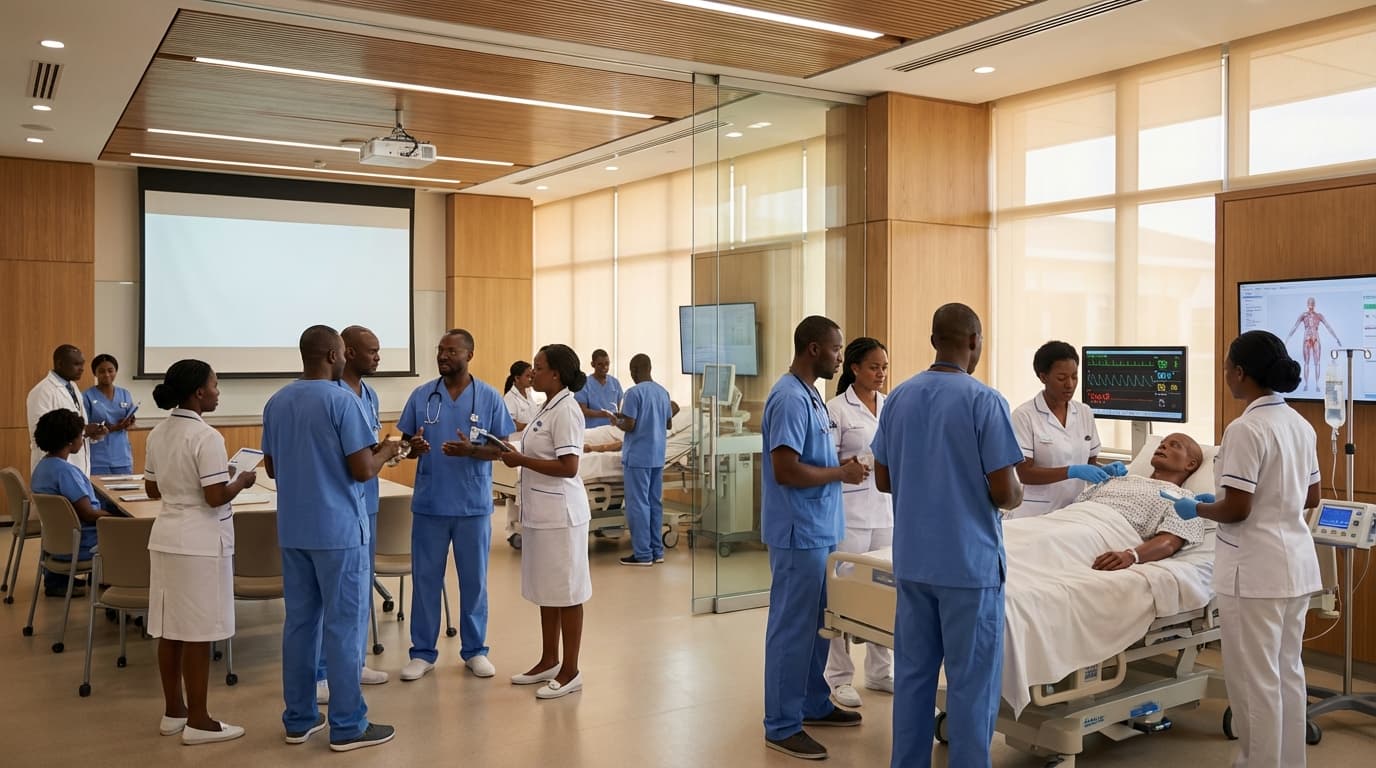
Equipment Training & Education in Cabo Verde
Engineering Excellence & Technical Support
Comprehensive equipment training and certification programs High-standard technical execution following OEM protocols and local regulatory frameworks.
Maritime Equipment Proficiency Program
Specialized training modules covering the operation, maintenance, and safety protocols for essential maritime equipment, including navigation systems, fishing gear, and vessel machinery. Designed to enhance operational efficiency and safety for Cabo Verde's vital fishing and shipping sectors.
Renewable Energy Technology Certification
Hands-on training and certification in the installation, troubleshooting, and maintenance of solar photovoltaic (PV) systems and other renewable energy technologies. Empowering local technicians to support Cabo Verde's transition to sustainable energy.
Industrial Machinery & Agricultural Equipment Skills
Comprehensive training programs focused on the safe and efficient operation of various industrial machinery and agricultural equipment. Aimed at boosting productivity and modernizing key economic sectors in Cabo Verde through skilled workforce development.
What Is Equipment Training & Education In Cabo Verde?
Equipment training and education in Cabo Verde refers to the structured process of imparting knowledge and practical skills necessary for the safe, efficient, and compliant operation, maintenance, and troubleshooting of various types of equipment. This encompasses theoretical instruction, hands-on practical sessions, and ongoing support, tailored to the specific machinery and the operational context within Cabo Verde. The objective is to enhance workforce competency, minimize operational risks, extend equipment lifespan, and ensure adherence to industry standards and regulatory requirements.
| Who Needs Equipment Training & Education? | Typical Use Cases in Cabo Verde | |
|---|---|---|
| Industrial Workers: Operating machinery in manufacturing, processing, or production facilities. | Agricultural Workers: Utilizing tractors, harvesters, irrigation systems, and other farm equipment. | |
| Construction Personnel: Operating heavy machinery such as excavators, bulldozers, cranes, and concrete mixers. | Maritime & Port Operations Staff: Handling cargo loading/unloading equipment (cranes, forklifts), vessel maintenance machinery. | Hospitality & Tourism Sector Staff: Operating kitchen equipment, HVAC systems, laundry machinery, and maintenance tools in resorts and hotels. |
| Fishery & Aquaculture Personnel: Using boat engines, fishing gear, processing equipment, and aquaculture infrastructure. | Energy Sector Technicians: Maintaining and operating power generation equipment, solar panel installation tools, and related infrastructure. | Logistics & Transportation Drivers: Operating specialized vehicles, warehousing equipment (e.g., forklifts, pallet jacks). |
| Healthcare Professionals: Operating medical imaging equipment, laboratory instruments, and life-support systems. | Government & Municipal Workers: Operating public works equipment, waste management machinery, and public transport vehicles. |
Key Components of Equipment Training & Education
- Operator Training: Focuses on the fundamental principles of operating specific equipment, including pre-operational checks, normal operating procedures, emergency shutdown protocols, and basic troubleshooting.
- Maintenance Training: Covers preventative maintenance schedules, routine servicing, component identification, diagnostic procedures, and basic repair techniques for designated equipment.
- Safety Training: Emphasizes hazard identification, risk assessment, the use of personal protective equipment (PPE), safe work practices, and emergency response procedures related to equipment operation.
- Specialized/Advanced Training: Addresses more complex functionalities, calibration, advanced diagnostics, repair of specific sub-systems, or training on newly acquired or upgraded equipment.
- Refresher Courses/Continuing Education: Designed to reinforce existing knowledge, update personnel on new procedures or equipment modifications, and maintain skill proficiency over time.
- Train-the-Trainer Programs: Equips experienced personnel with the pedagogical skills to conduct in-house training, fostering a sustainable internal knowledge transfer system.
Who Needs Equipment Training & Education In Cabo Verde?
In Cabo Verde, the need for equipment training and education spans across various sectors and departments, crucial for enhancing productivity, ensuring safety, and fostering economic growth. From basic operational skills to advanced maintenance and specialized applications, a skilled workforce is paramount for businesses and public services to thrive in the islands' developing industries.
| Sector/Industry | Key Departments/Roles | Types of Equipment Requiring Training | Benefits of Training |
|---|---|---|---|
| Tourism & Hospitality | Hotel Management, Kitchen Staff, Maintenance, Activity Centers | Commercial Kitchen Appliances, Laundry Machines, AV Equipment, Water Sports Gear | Enhanced Service Quality, Guest Satisfaction, Operational Efficiency, Safety |
| Agriculture & Fisheries | Farmers, Fishermen, Cooperative Managers, Processing Plant Operators | Tractors, Irrigation Systems, Fishing Vessels, Processing Machinery, Net Mending Tools | Increased Yields, Sustainable Practices, Reduced Waste, Improved Income |
| Construction & Infrastructure | Construction Workers, Site Supervisors, Mechanics, Public Works Crews | Excavators, Cranes, Loaders, Concrete Mixers, Power Tools, Safety Harnesses | Improved Safety, Project Timeliness, Reduced Accidents, Quality Workmanship |
| Transportation & Logistics | Port Workers, Warehouse Staff, Truck Drivers, Logistics Coordinators | Forklifts, Cranes, Conveyor Belts, Loading Dock Equipment, GPS Systems | Efficient Cargo Handling, Reduced Transit Times, Supply Chain Optimization, Safety |
| Healthcare Services | Medical Technicians, Nurses, Laboratory Staff, Biomedical Engineers | X-ray Machines, MRI Scanners, Blood Analyzers, Surgical Instruments, Ventilators | Accurate Diagnostics, Effective Treatment, Patient Safety, Improved Health Outcomes |
| Energy & Utilities | Electrical Engineers, Technicians, Maintenance Crews, Water Treatment Operators | Generators, Turbines, Water Pumps, Switchgear, Telecommunication Equipment | Reliable Service Delivery, Reduced Downtime, Operational Efficiency, System Integrity |
| Manufacturing & Small Businesses | Production Staff, Quality Control Inspectors, Machine Operators | Assembly Lines, Packaging Machines, CNC Machines, Welding Equipment | Increased Productivity, Product Quality, Cost Reduction, Market Competitiveness |
Target Customers and Departments for Equipment Training & Education in Cabo Verde
- Tourism & Hospitality Sector: Hotels, resorts, restaurants, and tour operators often require training on specialized equipment like kitchen appliances, laundry machinery, sound systems, and water sports equipment. This ensures quality service delivery and guest satisfaction.
- Agriculture & Fisheries: Farmers, fishermen, and agricultural cooperatives benefit from training on machinery such as tractors, irrigation systems, processing equipment, and fishing gear. This improves efficiency in food production and sustainability.
- Construction & Infrastructure: Construction companies, public works departments, and maintenance crews need training on heavy machinery (excavators, cranes, bulldozers), tools, and safety protocols. This is vital for building and maintaining the nation's infrastructure.
- Transportation & Logistics: Ports, airports, shipping companies, and logistics providers require trained personnel for operating cargo handling equipment, forklifts, vehicles, and for logistics management systems. This ensures efficient movement of goods and people.
- Healthcare Services: Hospitals, clinics, and medical laboratories need trained technicians and staff to operate sophisticated medical equipment, diagnostic tools, and laboratory instruments, ensuring accurate patient care and research.
- Energy & Utilities: Power generation facilities, water treatment plants, and telecommunications companies require skilled technicians for operating and maintaining complex machinery, ensuring reliable service delivery.
- Manufacturing & Small Businesses: Local manufacturers and small-scale enterprises often need training on production machinery, quality control equipment, and specialized tools to improve output and competitiveness.
- Government & Public Administration: Various government departments, including those responsible for disaster management, environmental protection, and public safety, may require training on specialized equipment for their operations.
- Educational Institutions: Vocational schools and technical colleges play a crucial role in providing foundational equipment training and education to students, preparing them for the workforce.
Equipment Training & Education Process In Cabo Verde
The Equipment Training & Education Process in Cabo Verde encompasses a structured workflow designed to equip individuals and organizations with the necessary knowledge and skills to operate and maintain specific equipment safely and efficiently. This process is crucial for industries reliant on machinery, from tourism and hospitality to construction and fishing, ensuring compliance with safety standards and maximizing operational effectiveness. The workflow typically begins with an initial inquiry and culminates in the successful execution of training and ongoing education.
| Stage | Description | Key Activities | Deliverables | Responsible Parties |
|---|---|---|---|---|
| Inquiry & Needs Assessment | The initial phase where potential clients express interest and the training provider identifies specific equipment and skill gaps. | Initial contact, discussion of training needs, identification of target equipment, understanding of existing skill levels, defining training objectives. | Needs assessment report, preliminary training scope. | Client, Training Provider |
| Proposal & Agreement | A formal proposal is submitted outlining the training plan, costs, and terms, followed by negotiation and agreement. | Developing a detailed training proposal, cost estimation, contract negotiation, defining service level agreements (SLAs). | Formal training proposal, signed contract/agreement. | Training Provider, Client |
| Curriculum Development & Customization | Designing or adapting training materials to meet the specific requirements of the equipment and the client's operational context. | Reviewing equipment manuals, identifying critical operational procedures, developing training modules (theory & practical), creating assessment tools. | Training curriculum, lesson plans, training manuals, assessment questionnaires. | Training Provider (Subject Matter Experts) |
| Logistics & Scheduling | Arranging the practical aspects of the training, including venue, equipment availability, trainers, and participant schedules. | Securing training venue (on-site or off-site), confirming equipment availability for practical sessions, assigning qualified trainers, coordinating participant schedules, travel and accommodation arrangements (if applicable). | Training schedule, confirmed venue and equipment, assigned trainers. | Training Provider, Client |
| Training Delivery & Execution | The core phase where training is conducted, involving theoretical instruction and hands-on practice. | Delivering theoretical sessions (lectures, presentations, discussions), conducting practical demonstrations, supervised hands-on exercises, troubleshooting common issues. | Completed training sessions, participant engagement records. | Trainers, Participants |
| Assessment & Certification | Evaluating the participants' understanding and competency to ensure they have met the training objectives. | Administering written/oral tests, practical skill assessments, observation of performance, providing feedback, issuing certificates upon successful completion. | Assessment results, training certificates. | Trainers, Participants |
| Post-Training Support & Continuous Education | Providing ongoing assistance and opportunities for further learning to reinforce skills and adapt to new equipment or procedures. | Follow-up support, refresher courses, advanced training modules, access to updated training materials, performance monitoring, feedback collection. | Post-training support reports, ongoing training plans, client satisfaction feedback. | Training Provider, Client |
Key Stages of the Equipment Training & Education Process
- Inquiry & Needs Assessment
- Proposal & Agreement
- Curriculum Development & Customization
- Logistics & Scheduling
- Training Delivery & Execution
- Assessment & Certification
- Post-Training Support & Continuous Education
Equipment Training & Education Cost In Cabo Verde
Understanding the cost of equipment training and education in Cabo Verde requires an analysis of several influencing factors. These include the complexity and type of equipment, the duration and intensity of the training program, the qualifications and reputation of the training provider, and the location within Cabo Verde. Specialized industrial machinery training will naturally command higher prices than general software or administrative skills development. Furthermore, the need for hands-on practical sessions versus theoretical instruction, as well as the inclusion of certification or assessment, can significantly impact the overall cost. Training delivered in more remote islands or requiring specialized travel and accommodation for instructors will also see price increases. Local currency, the Cabo Verdean Escudo (CVE), is the primary medium of exchange, and prices are typically quoted in CVE. However, for international providers or specialized certifications, USD or EUR might be used, with conversion rates applied.
| Training Category | Estimated Price Range (CVE) | Estimated Price Range (USD Equivalent - approx.) | Notes |
|---|---|---|---|
| Basic Software Training (e.g., MS Office, basic CRM) | 5,000 - 15,000 CVE | $45 - $135 | Per person for a 1-2 day course. Can be group rates. |
| Intermediate Software/IT Training (e.g., project management software, basic coding) | 15,000 - 40,000 CVE | $135 - $360 | Per person for a 2-3 day course. |
| General Machinery Operation (e.g., forklift, basic construction equipment) | 20,000 - 60,000 CVE | $180 - $540 | Per person, including practical sessions and basic certification. |
| Specialized Technical/Industrial Training (e.g., specific manufacturing equipment, marine mechanics) | 50,000 - 150,000+ CVE | $450 - $1,350+ | Per person, highly dependent on equipment complexity and duration. May include international certification. |
| Safety & Compliance Training (e.g., OHS, hazardous materials) | 10,000 - 30,000 CVE | $90 - $270 | Per person for standard courses. Specialized or site-specific training can be higher. |
| Customized Corporate Training Programs | Variable (Quote-based) | Variable (Quote-based) | Depends on scope, duration, number of participants, and customization level. Can range from a few thousand to tens of thousands of USD. |
Key Pricing Factors for Equipment Training & Education in Cabo Verde
- Equipment Complexity & Type: Training on sophisticated industrial machinery, heavy-duty vehicles, or specialized scientific equipment is generally more expensive than on basic office equipment or software.
- Training Duration & Intensity: Longer courses with more contact hours, practical exercises, and in-depth modules will cost more.
- Provider Reputation & Qualifications: Established training institutions or certified instructors with a strong track record often charge higher fees.
- Location within Cabo Verde: Training delivered in major commercial centers (e.g., Praia, Mindelo) might be more competitively priced than in more remote or less accessible areas.
- Training Methodology: Practical, hands-on training often incurs higher costs due to the need for operational equipment, consumables, and skilled trainers.
- Certification & Assessment: Programs leading to recognized certifications will usually have a higher price point.
- Travel & Accommodation: If training requires instructors to travel to different islands or if trainees need accommodation, these costs will be factored in.
- Customization: Tailored training programs designed to meet specific organizational needs can be more expensive than standard offerings.
- Materials & Resources: The provision of training manuals, software licenses, or specific learning materials contributes to the overall cost.
Affordable Equipment Training & Education Options
Acquiring and maintaining specialized equipment can be a significant investment. To maximize your ROI, it's crucial to explore affordable training and education options. This often involves leveraging value bundles and implementing smart cost-saving strategies. Value bundles typically package essential training components together, offering a reduced price compared to purchasing them individually. Cost-saving strategies focus on optimizing resource utilization, exploring alternative learning formats, and taking advantage of available discounts.
| Training Option | Description | Potential Cost Savings |
|---|---|---|
| Value Bundles | Packages of related courses, workshops, or certifications offered at a reduced price. | Lower per-course cost, comprehensive skill development. |
| Online Courses/Webinars | Self-paced or live virtual training sessions delivered via the internet. | Reduced travel and accommodation costs, flexible scheduling. |
| Blended Learning | A mix of online modules and in-person practical sessions. | Balances cost-effectiveness with essential hands-on experience. |
| Train-the-Trainer | Educating internal staff who then impart knowledge to colleagues. | Scalable and cost-effective for long-term internal training needs. |
| Manufacturer Resources | Manuals, online tutorials, and basic training provided by equipment makers. | Often free or low-cost, foundational knowledge. |
Key Cost-Saving Strategies for Equipment Training
- Leverage Value Bundles: Seek training packages that combine multiple courses, modules, or certifications at a discounted rate. This is ideal for comprehensive skill development.
- Online & Blended Learning: Opt for online courses, webinars, or blended learning approaches (combining online and in-person instruction) which are often more cost-effective and flexible than fully in-person programs.
- Group Training Discounts: Inquire about discounts for training multiple employees from the same organization. This can significantly reduce the per-person cost.
- Train-the-Trainer Programs: Invest in training a few key individuals who can then train others within your organization, creating an internal knowledge base and reducing external training dependency.
- Manufacturer-Provided Resources: Explore free or low-cost training materials, manuals, and online resources offered directly by the equipment manufacturers.
- Government & Industry Grants/Subsidies: Research if there are any government programs, industry associations, or grants available to help offset the cost of vocational training.
- Used Training Equipment: If hands-on practice with specific equipment is essential, consider acquiring refurbished or used training units rather than the latest models.
- Subscription Models: Some training platforms offer subscription-based access to a library of courses, which can be cost-effective for ongoing learning and development.
- Prioritize Essential Skills: Focus training on the most critical skills needed for your team to operate and maintain the equipment safely and efficiently, avoiding unnecessary or redundant modules.
- Certification Value Assessment: Carefully evaluate the necessity and ROI of specific certifications. Sometimes, practical proficiency without a formal certification is sufficient.
Verified Providers In Cabo Verde
Finding reliable and qualified healthcare providers is paramount for anyone seeking medical services, especially in a foreign country. In Cabo Verde, discerning patients can rely on a growing network of verified providers, with Franance Health standing out as a premier choice. Their commitment to stringent credentialing and exceptional patient care makes them a trusted partner for your health and well-being.
| Provider Type | Key Credentials to Look For | Franance Health's Assurance |
|---|---|---|
| Doctors (General & Specialists) | Medical Degree from accredited institution, board certification in their specialty, relevant experience, language proficiency (if applicable). | Franance Health verifies medical licenses, specialist certifications, and background checks. They also assess communication skills and patient feedback. |
| Hospitals & Clinics | Accreditation by recognized national or international bodies (e.g., Joint Commission International), advanced medical technology, stringent hygiene and safety protocols, qualified nursing staff. | Franance Health partners with facilities that meet or exceed international standards for quality, safety, and patient care. They assess operational efficiency and emergency preparedness. |
| Diagnostic Centers | State-of-the-art equipment, experienced technicians, adherence to quality control standards for accurate results. | Franance Health collaborates with centers equipped with advanced diagnostic tools and staffed by skilled professionals, ensuring reliable and timely results. |
| Dental Professionals | Dental degree, specialized training (e.g., orthodontics, periodontics), use of modern dental technology, sterile practice environments. | Franance Health verifies dental licenses and affiliations with reputable dental associations. They prioritize providers with a strong track record of patient satisfaction. |
Why Franance Health is the Best Choice:
- Rigorous Vetting Process: Franance Health meticulously vets all their partner providers, ensuring they meet the highest international standards for qualifications, experience, and ethical practice. This goes beyond basic licensing, encompassing a comprehensive review of medical education, specialized training, and peer endorsements.
- Focus on Patient Experience: Beyond clinical excellence, Franance Health prioritizes a seamless and supportive patient journey. This includes clear communication, accessible appointments, and a focus on compassionate care, ensuring patients feel informed and comfortable throughout their treatment.
- Comprehensive Service Network: Franance Health collaborates with a wide range of specialists and facilities across Cabo Verde, offering a broad spectrum of medical services. Whether you require general medical care, specialized diagnostics, or surgical procedures, they can connect you with the right expert.
- Transparency and Trust: Franance Health operates with a commitment to transparency. They provide clear information about their providers' credentials, treatment options, and associated costs, fostering an environment of trust and empowering patients to make informed decisions.
- Advocacy for Quality Care: By partnering with Franance Health, you are engaging with a network dedicated to upholding the highest standards of healthcare in Cabo Verde. They actively work to elevate the quality of medical services available, benefiting both local residents and international visitors.
Scope Of Work For Equipment Training & Education
This Scope of Work (SOW) outlines the requirements for comprehensive training and educational services for the operation, maintenance, and troubleshooting of newly acquired [Specify Equipment Name/Type] equipment. The objective is to ensure that authorized personnel are proficient in utilizing and maintaining the equipment to maximize its performance, lifespan, and safety.
| Phase/Activity | Description | Deliverables | Standard Specifications/Requirements | Timeline (Est.) |
|---|---|---|---|---|
| Phase 1: Training Needs Analysis | Conduct a thorough assessment of existing skill sets, identify knowledge gaps, and define specific training needs for different user groups (e.g., operators, maintenance technicians). | Training needs assessment report, identification of target audience and their current proficiency levels. | Clear definition of skill gaps and required competencies for each role. Input from stakeholders. | 1 Week |
| Phase 2: Curriculum Development | Design and develop a comprehensive training curriculum, including training materials, lesson plans, and practical exercises tailored to the [Specify Equipment Name/Type] and identified needs. | Training curriculum outline, detailed lesson plans, presentation slides, participant workbooks, facilitator guides, practical exercise scenarios. | Curriculum must cover theoretical principles, operational procedures, safety guidelines, maintenance schedules, and troubleshooting techniques. Content to be reviewed and approved by [Client Representative Name]. | 3 Weeks |
| Phase 3: Training Delivery (On-site/Remote) | Conduct training sessions for designated personnel. This may include classroom-based instruction, hands-on practical training, simulations, and on-the-job training. | Completed training sessions, attendance records, participant evaluations, trainer observations. | Training to be delivered by certified/experienced instructors with in-depth knowledge of the [Specify Equipment Name/Type]. Minimum number of training hours as specified in Appendix A. Practical sessions to be conducted on actual or simulated equipment. | 2 Weeks per group (depending on size) |
| Phase 4: Assessment & Certification | Evaluate participant understanding and proficiency through written tests, practical assessments, and observation. Issue certificates of completion to successful candidates. | Assessment question banks, practical assessment checklists, test results, certificates of completion. | Assessment methods to be clearly defined and validated. Passing score for theoretical and practical assessments to be mutually agreed upon. Certification to be recognized by [Relevant Authority/Internal Standard]. | 1 Week |
| Phase 5: Post-Training Support & Documentation | Provide ongoing support through Q&A sessions, access to training materials, and a comprehensive user/maintenance manual. Develop a knowledge base or FAQ for common issues. | Post-training support plan, access to digital/physical training materials, user manual, maintenance manual, FAQ document. | Training materials to be provided in [Specify Language] and in [Specify Format - e.g., PDF, online portal]. User/maintenance manuals to be comprehensive, accurate, and easily navigable. Support to be available for [Specify Duration - e.g., 3 months] post-training. | Ongoing |
| Phase 6: Train-the-Trainer Program (Optional) | If required, train key personnel within the client organization to become internal trainers, enabling them to deliver future training sessions. | Certified internal trainers, train-the-trainer materials, ongoing mentoring for new trainers. | Participants to demonstrate a high level of proficiency and aptitude for teaching. Curriculum for train-the-trainer program to be a subset of the main curriculum with an added focus on instructional techniques. | 2 Weeks |
Key Objectives
- To impart theoretical knowledge and practical skills related to the operation of the [Specify Equipment Name/Type].
- To train personnel on routine maintenance procedures, preventative measures, and troubleshooting common issues.
- To ensure adherence to safety protocols and best practices during equipment operation and maintenance.
- To provide documentation and resources for ongoing learning and reference.
- To foster a proactive approach to equipment management and problem-solving.
Service Level Agreement For Equipment Training & Education
This Service Level Agreement (SLA) outlines the agreed-upon response times for support requests and uptime guarantees for the equipment training and education services provided by [Your Company Name] (hereinafter referred to as "Provider") to [Client Company Name] (hereinafter referred to as "Client"). This SLA is an addendum to the Master Services Agreement (MSA) between the Provider and the Client.
| Service Tier/Issue Severity | Response Time Commitment (during Service Hours) | Target Resolution Time (during Service Hours) | Uptime Guarantee |
|---|---|---|---|
Key Definitions
- {"title":"Service Hours","description":"The hours during which the Provider offers support and services, typically Monday to Friday, 9:00 AM to 5:00 PM [Time Zone], excluding public holidays."}
- {"title":"Downtime","description":"Any period during Service Hours when the training platform or essential educational resources are unavailable and unusable by the Client."}
- {"title":"Response Time","description":"The maximum time allowed for the Provider to acknowledge a support request from the Client."}
- {"title":"Resolution Time","description":"The maximum time allowed for the Provider to resolve a support request. This is an aspirational target and may vary based on the complexity of the issue."}
- {"title":"Support Channels","description":"The designated methods through which the Client can submit support requests, e.g., email, dedicated support portal, phone."}
Frequently Asked Questions

Ready when you are
Let's scope your Equipment Training & Education in Cabo Verde project in Cabo Verde.

Scaling healthcare logistics and technical systems across the entire continent.