
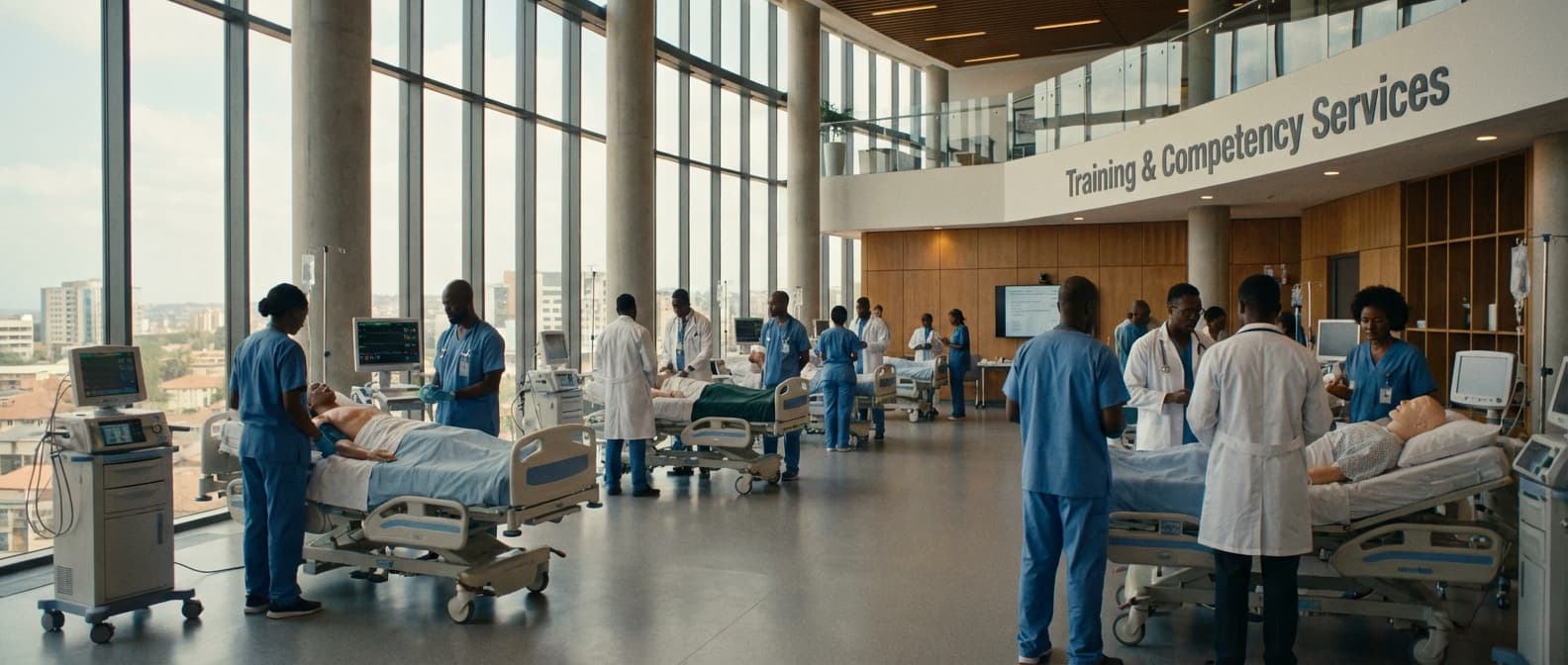
Ventilator User Training Service (Nurses) in Cabo Verde
Engineering Excellence & Technical Support
Ventilator User Training Service (Nurses) High-standard technical execution following OEM protocols and local regulatory frameworks.
Advanced Ventilation Modes Mastery
Gain in-depth understanding and practical skills in operating advanced ventilator modes (e.g., Pressure Support Ventilation, Volume Control Plus) tailored to diverse patient respiratory needs, ensuring optimal support and reduced weaning time.
Real-time Waveform Analysis & Interpretation
Develop proficiency in analyzing and interpreting critical ventilator waveforms (pressure-time, flow-time) to proactively identify patient-ventilator asynchrony, optimize settings, and respond effectively to changes in respiratory mechanics.
Troubleshooting & Alarm Management
Acquire essential skills for rapid identification, troubleshooting, and resolution of common ventilator alarms and technical issues, minimizing patient risk and ensuring continuous, safe mechanical ventilation.
What Is Ventilator User Training Service (Nurses) In Cabo Verde?
Ventilator User Training Service (Nurses) in Cabo Verde refers to specialized educational programs designed to equip registered nurses with the knowledge and practical skills necessary for the safe and effective operation of mechanical ventilators within the healthcare system of Cabo Verde. This service is crucial for ensuring optimal patient outcomes in respiratory failure management and addresses the specific regulatory and clinical environment of the nation.
| Who Needs This Service? | Typical Use Cases | |||||
|---|---|---|---|---|---|---|
| Registered Nurses (RNs) working in critical care units (ICUs), emergency departments, operating rooms, and potentially specialized respiratory care wards within hospitals and clinics in Cabo Verde. | Management of patients experiencing acute respiratory failure due to conditions such as pneumonia, acute respiratory distress syndrome (ARDS), exacerbations of chronic obstructive pulmonary disease (COPD), asthma, sepsis, and post-operative respiratory compromise. | Initial setup and initiation of mechanical ventilation. | Ongoing monitoring, adjustment of ventilator settings, and troubleshooting during the patient's course of ventilation. | Facilitating weaning from mechanical ventilation and extubation. | Responding to and managing ventilator-related complications and alarms. | Ensuring adherence to national and international best practices for mechanical ventilation. |
Key Components of Ventilator User Training Service for Nurses in Cabo Verde:
- Foundational Principles of Mechanical Ventilation: Understanding the pathophysiology of respiratory failure, gas exchange, and the physiological effects of positive pressure ventilation.
- Ventilator Hardware and Software Familiarization: In-depth knowledge of specific ventilator models commonly used in Cabo Verde, including their user interfaces, control panels, alarm systems, and maintenance procedures.
- Modes of Ventilation: Comprehensive training on various ventilation modes (e.g., volume-controlled, pressure-controlled, pressure support, synchronized intermittent mandatory ventilation), including their indications, contraindications, and optimal settings.
- Patient Interface Management: Techniques for selecting, fitting, and managing endotracheal tubes, tracheostomy tubes, and non-invasive ventilation interfaces (e.g., masks).
- Ventilator Circuit Management: Procedures for sterile handling, troubleshooting, and maintenance of ventilator circuits.
- Monitoring and Interpretation of Ventilator Parameters: Ability to interpret waveforms, numerical data (e.g., tidal volume, respiratory rate, PEEP, FiO2, EtCO2), and blood gas analysis in relation to ventilator settings.
- Alarm Management and Troubleshooting: Recognition of common ventilator alarms, understanding their causes, and implementing appropriate interventions to resolve them.
- Weaning from Mechanical Ventilation: Principles and strategies for assessing patient readiness for liberation from mechanical ventilation and executing the weaning process.
- Infection Prevention and Control: Protocols for preventing ventilator-associated pneumonia (VAP) and other healthcare-associated infections.
- Emergency Procedures: Response protocols for ventilator malfunctions and critical patient events.
- Ethical and Legal Considerations: Awareness of ethical dilemmas and legal responsibilities associated with mechanical ventilation in Cabo Verde.
- Hands-on Simulation and Practical Application: Extensive use of manikins and simulators for realistic practice of ventilator management in a controlled environment.
Who Needs Ventilator User Training Service (Nurses) In Cabo Verde?
This service is designed to equip nurses in Cabo Verde with the essential knowledge and practical skills required to safely and effectively operate mechanical ventilators. Recognizing the critical role of respiratory support in patient care, particularly in critical and emergency situations, this training addresses the growing need for skilled healthcare professionals in managing advanced medical equipment. The program focuses on understanding ventilator principles, patient assessment, setting appropriate parameters, monitoring, troubleshooting common issues, and managing patients requiring mechanical ventilation.
| Department/Setting | Specific Roles/Focus | Rationale for Training |
|---|---|---|
| Intensive Care Units (ICUs) | ICU Nurses, Critical Care Nurses | Direct management of mechanically ventilated patients, requiring in-depth knowledge of complex ventilator settings and monitoring. |
| Emergency Departments (EDs) | Emergency Nurses | Initial stabilization and management of patients requiring immediate ventilatory support, often with limited information. |
| Surgical Wards (Post-Anesthesia Care Units - PACUs) | PACU Nurses | Post-operative patients who may require temporary mechanical ventilation or close monitoring of respiratory status. |
| Pulmonology Departments | Pulmonology Nurses | Nurses specializing in respiratory conditions who may manage patients with chronic respiratory failure or acute exacerbations requiring ventilation. |
| Maternal and Child Health Departments (Neonatal ICUs - NICUs) | Neonatal Nurses | Nurses caring for premature infants and newborns requiring specialized ventilatory support. |
| General Wards (with critical care capabilities) | Ward Nurses | Nurses on general wards who may encounter patients requiring respiratory support, especially in facilities with limited specialized units. |
| Public Health Clinics/Hospitals (with acute care capacity) | General Duty Nurses | Healthcare professionals in more remote or general facilities who may be the first responders for patients needing ventilatory assistance. |
Target Customers & Departments in Cabo Verde
- Primary Target Customers: Registered Nurses (RNs) and Licensed Practical Nurses (LPNs) working in healthcare facilities across Cabo Verde.
- Secondary Target Customers: Nursing students nearing graduation who will be entering critical care or emergency departments, and potentially other healthcare professionals involved in patient respiratory management (e.g., Respiratory Therapists, if applicable and if training scope allows).
Ventilator User Training Service (Nurses) Process In Cabo Verde
This document outlines the workflow for the Ventilator User Training Service (Nurses) in Cabo Verde, from initial inquiry to the successful execution of the training. The service aims to equip nurses with the necessary knowledge and skills to safely and effectively operate and manage ventilators in clinical settings.
| Step | Description | Key Activities | Responsible Parties |
|---|---|---|---|
| Initial contact expressing interest in the training. | Contacting the service provider, requesting information. | Healthcare Facility/Nurse |
| Providing details of the training and a cost estimate. | Distributing brochures/curriculum, providing pricing. | Service Provider |
| Formalizing the training contract and setting dates. | Signing agreement, confirming dates and location. | Healthcare Facility/Nurse & Service Provider |
| Preparing participants and logistics for the training. | Distributing materials, arranging venue & equipment. | Service Provider (primarily), Participant (reviewing materials) |
| Delivering the theoretical and practical training. | Lectures, demonstrations, hands-on practice, case studies. | Service Provider (Instructors), Participant (Active learning) |
| Measuring participant learning and gathering feedback. | Tests, practical exams, feedback forms. | Service Provider (Assessment), Participant (Performance & Feedback) |
| Issuing certificates and offering ongoing assistance. | Awarding certificates, providing resources/consultations. | Service Provider |
| Using feedback to enhance future training. | Analyzing feedback, updating curriculum/methodology. | Service Provider |
Ventilator User Training Service Workflow (Nurses)
- Inquiry and Needs Assessment: The process begins when a healthcare facility or individual nurse expresses interest in the training.
- Information Provision and Quotation: Upon receiving an inquiry, the service provider disseminates detailed information about the training program, including curriculum, duration, prerequisites, and costs. A formal quotation is then provided.
- Agreement and Scheduling: Once the quotation is accepted, a training agreement is signed. This agreement outlines the terms, conditions, and responsibilities of both parties. Dates and venues for the training are collaboratively scheduled.
- Pre-Training Preparation: Participants receive pre-training materials, which may include theoretical modules, reading resources, and any necessary software downloads. Logistical arrangements for the training (e.g., booking rooms, preparing equipment) are finalized.
- Training Execution: The training program is delivered by qualified instructors. It typically includes a combination of theoretical lectures, practical demonstrations, hands-on exercises with ventilators, and case studies.
- Assessment and Evaluation: Participants are assessed through various methods, such as written tests, practical skill evaluations, and case study analysis, to gauge their understanding and competency. Feedback is collected from participants on the training delivery and content.
- Certification and Post-Training Support: Upon successful completion of the training and assessments, participants receive a certificate of completion. Post-training support may be offered, including access to resources, follow-up consultations, or refresher courses.
- Feedback and Service Improvement: The service provider analyzes participant feedback and evaluation results to identify areas for improvement in future training programs.
Ventilator User Training Service (Nurses) Cost In Cabo Verde
Estimating the precise cost of ventilator user training services for nurses in Cabo Verde requires an understanding of several key factors that influence pricing. These include the experience and reputation of the training provider, the duration and depth of the training program, the number of nurses being trained, the inclusion of specialized equipment or simulations, and the location or format of the training (e.g., on-site at a hospital or a dedicated training facility). Given the developing nature of healthcare infrastructure and the limited number of specialized training providers in Cabo Verde, costs can vary significantly. It's common for training to be bundled with equipment purchase or for larger institutions to negotiate bespoke packages.
| Training Scope/Type | Estimated Price Range (CVE - Cape Verdean Escudo) |
|---|---|
| Basic Ventilator Operation & Monitoring (Short Course, e.g., 1-2 days) | 80,000 - 150,000 CVE |
| Comprehensive Ventilator Management & Troubleshooting (Multi-day Course) | 150,000 - 300,000 CVE |
| Advanced Ventilator Techniques & Weaning Strategies (Specialized Modules) | 200,000 - 400,000+ CVE |
| Training with High-Fidelity Simulation Equipment (Per participant or group) | 100,000 - 250,000+ CVE (in addition to base course cost) |
| On-site Training (Additional costs for travel, accommodation, per diem) | Variable, can add 50,000 - 150,000+ CVE to the overall package |
| Customized Training Packages (Negotiated) | Highly Variable |
Factors Influencing Ventilator User Training Costs for Nurses in Cabo Verde
- Provider Reputation and Expertise: Highly experienced and specialized training organizations often command higher fees.
- Training Program Duration and Content: Longer, more comprehensive courses with advanced modules will be more expensive.
- Number of Participants: Group discounts are common, but larger groups might require more instructors or resources.
- Inclusion of Simulation Equipment: Hands-on training with high-fidelity simulators significantly increases costs.
- Training Location and Format: On-site training at a healthcare facility might involve travel and accommodation costs for trainers.
- Customization of Curriculum: Tailoring the training to specific ventilator models or clinical scenarios will impact price.
- Certification and Assessment: Costs may include formal certification exams or assessments.
- Materials and Resources: Provision of training manuals, handouts, and online resources.
- Language of Instruction: While Portuguese is the official language, if specialized trainers are brought in, English or other languages might be used, potentially affecting costs.
- Market Demand and Availability: Limited local providers can lead to higher prices.
Affordable Ventilator User Training Service (Nurses) Options
This document outlines affordable ventilator user training service options specifically tailored for nurses. We will explore value bundles that combine essential training components and discuss cost-saving strategies to ensure accessible and high-quality education for your nursing staff. Investing in comprehensive ventilator training empowers your nurses to provide safe and effective patient care, optimize ventilator utilization, and reduce potential complications and associated costs.
| Cost-Saving Strategy | Description | Impact on Training Cost |
|---|---|---|
| Group Training Discounts | Offering discounted rates for larger groups of nurses from the same facility. | Significantly reduces per-nurse cost. |
| Blended Learning Approach | Combining online modules for theoretical content with in-person simulation for practical skills. Reduces travel and facility rental costs for trainers. | Lowers overall training delivery expenses. |
| Train-the-Trainer Programs | Empowering experienced nurses within your facility to deliver training, reducing reliance on external instructors for ongoing needs. | Long-term cost reduction and capacity building. |
| Online Resource Library Access | Providing access to a library of updated protocols, videos, and interactive tools that nurses can access on-demand for continued learning. | Enhances learning retention and reduces need for repeated formal training sessions. |
| Competency-Based Assessment | Focusing training on demonstrating proficiency rather than a set number of hours, potentially shortening training duration for highly skilled individuals. | Optimizes training time and resources. |
| Modular Training Packages | Allowing facilities to select only the modules they need, avoiding payment for redundant or irrelevant content. | Ensures payment for value, preventing overspending. |
| Partnerships with Educational Institutions | Collaborating with local nursing schools or universities for joint training programs or shared resources. | Leverages existing infrastructure and expertise. |
Key Training Components & Value Bundle Options
- {"title":"Core Ventilation Principles","description":"Understanding the physiology of breathing, mechanics of ventilation, and common ventilator modes (e.g., AC/VC, AC/PC, SIMV, PSV).","value_proposition":"Foundation for safe and effective ventilator management."}
- {"title":"Ventilator Interface Management","description":"Proper selection, placement, and monitoring of endotracheal tubes, tracheostomy tubes, and non-invasive ventilation interfaces (e.g., nasal masks, full-face masks).","value_proposition":"Minimizes complications like dislodgement, airway trauma, and air leaks."}
- {"title":"Parameter Setting & Adjustment","description":"Skills in setting initial ventilator parameters based on patient condition and making appropriate adjustments in response to changes in patient status and lung mechanics.","value_proposition":"Optimizes patient comfort, ventilation, and oxygenation."}
- {"title":"Monitoring & Interpretation","description":"Effective use of ventilator graphics (flow, volume, pressure waveforms) and patient monitoring parameters (SpO2, EtCO2, ABGs) to assess patient response.","value_proposition":"Enables timely identification of issues and proactive interventions."}
- {"title":"Alarms & Troubleshooting","description":"Understanding common ventilator alarms, their causes, and appropriate nursing interventions.","value_proposition":"Ensures prompt response to critical events and prevents patient harm."}
- {"title":"Weaning & Extubation","description":"Principles and protocols for initiating and managing the ventilator weaning process, and safe extubation procedures.","value_proposition":"Facilitates timely liberation from mechanical ventilation and reduces length of stay."}
- {"title":"Special Populations","description":"Ventilator management considerations for specific patient groups (e.g., pediatrics, geriatrics, patients with ARDS, COPD exacerbations).","value_proposition":"Tailors care to diverse patient needs and improves outcomes."}
- {"title":"Simulation-Based Training","description":"Hands-on practice with manikins and/or high-fidelity simulators to reinforce theoretical knowledge and develop practical skills in a safe environment.","value_proposition":"Builds confidence and competence in real-world scenarios."}
- {"title":"Value Bundle 1: Foundation (Core Principles + Interface Management + Alarms)","description":"Essential for new users or as a refresher. Covers the absolute necessities of mechanical ventilation.","cost_saving_benefit":"Cost-effective for basic competency development."}
- {"title":"Value Bundle 2: Intermediate (Foundation + Parameter Setting & Adjustment + Monitoring & Interpretation)","description":"Builds upon the foundation, enabling more independent ventilator management.","cost_saving_benefit":"Enhances critical thinking and reduces reliance on physician intervention for routine adjustments."}
- {"title":"Value Bundle 3: Advanced (Intermediate + Weaning & Extubation + Special Populations + Simulation-Based Training)","description":"Comprehensive training for experienced nurses seeking advanced skills and leadership roles in mechanical ventilation.","cost_saving_benefit":"Maximizes nurse autonomy, potentially reducing overall patient care costs through efficient management and reduced complications."}
- {"title":"Customizable Bundles","description":"Tailor training to specific unit needs, equipment, or skill gaps. Can be a combination of any of the above modules.","cost_saving_benefit":"Ensures training is relevant, avoiding unnecessary modules and maximizing ROI."}
Verified Providers In Cabo Verde
When seeking healthcare services in Cabo Verde, particularly those requiring specialized attention or international standards, identifying Verified Providers is paramount. This ensures you receive safe, effective, and ethical medical care. Franance Health stands out as a premier choice due to its rigorous credentialing process and commitment to excellence. Their verification methodology goes beyond standard licensing, focusing on the competency, experience, and ethical conduct of their network of healthcare professionals and facilities. This dedication to thorough vetting provides patients with peace of mind, knowing they are engaging with providers who meet the highest benchmarks for quality care in Cabo Verde.
| Franance Health Verification Criteria | What it Means for Patients |
|---|---|
| Medical License and Certification Verification | Ensures providers are legally qualified and hold recognized certifications in their specialties. |
| Professional Experience and Background Checks | Confirms a proven track record and ethical standing, minimizing risks associated with unqualified practitioners. |
| Specialty Competency Assessment | Guarantees that providers possess the necessary skills and knowledge for specific medical procedures and treatments. |
| Facility Accreditation and Standards Compliance | Confirms that medical facilities adhere to international safety, hygiene, and operational standards. |
| Patient Feedback and Reputation Monitoring | Incorporates real-world patient experiences to maintain a high level of service and address any concerns proactively. |
| Continuous Professional Development Assurance | Ensures providers remain up-to-date with the latest medical advancements and best practices. |
Key Benefits of Choosing Verified Providers like Franance Health:
- Enhanced Patient Safety and Quality of Care
- Access to Qualified and Experienced Medical Professionals
- Reduced Risk of Medical Errors and Malpractice
- Clear and Transparent Provider Information
- Improved Patient Outcomes and Satisfaction
- Peace of Mind and Reduced Healthcare Anxiety
Scope Of Work For Ventilator User Training Service (Nurses)
This Scope of Work (SOW) outlines the requirements for providing comprehensive Ventilator User Training services specifically tailored for nurses. The training will cover the theoretical understanding, practical application, and safe operation of specific ventilator models. The primary objective is to equip nurses with the knowledge and skills necessary to effectively manage patients requiring mechanical ventilation, ensuring patient safety and optimal therapeutic outcomes. This SOW details the technical deliverables and standard specifications for the training service.
| Category | Specification/Requirement | Description | Deliverable/Activity |
|---|---|---|---|
| Training Objectives | Clear, Measurable, Achievable, Relevant, Time-bound (SMART) | Objectives will define what nurses should know and be able to do post-training. | Training Curriculum Document |
| Target Audience | Registered Nurses (RNs), Licensed Practical Nurses (LPNs) with critical care or emergency department experience. | Defines the experience and professional level of attendees. | Training Curriculum Document |
| Ventilator Model(s) | Specific manufacturer and model number(s) to be trained on (e.g., GE Healthcare Aisys, Hamilton Medical C1, Draeger Evita Infinity V500). | Ensures training is specific to the equipment in use. | Training Curriculum Document, Practical Training Session Guide |
| Training Duration | Minimum of X hours per ventilator model, including theoretical and practical components. | Adequate time allocation for comprehensive learning. | Training Schedule |
| Training Location | On-site at healthcare facility or designated training center with access to functional ventilators. | Ensures realistic training environment. | Logistics Plan |
| Trainer Qualifications | Certified Respiratory Therapists (CRT) or Registered Nurses (RN) with advanced critical care and ventilator management experience (minimum Y years). | Ensures qualified and experienced instructors. | Trainer Resumes/Credentials |
| Theoretical Content | Ventilator principles, modes of ventilation (e.g., Volume Control, Pressure Control, SIMV, PSV), ventilator graphics interpretation, settings adjustment, alarms and troubleshooting, weaning parameters, patient interface management. | Foundation of knowledge for effective ventilator use. | Training Presentations, Handouts, Case Studies |
| Practical Skills | Setting up and connecting the ventilator, initiating ventilation, adjusting settings based on patient condition, responding to alarms, disconnecting the ventilator, basic troubleshooting procedures. | Hands-on proficiency in operating the ventilator. | Practical Training Session Guide, Competency Assessment Tools |
| Case Studies | Realistic patient scenarios requiring ventilator management, promoting critical thinking and application of learned concepts. | Reinforces theoretical knowledge with practical application. | Training Materials, Case Studies |
| Competency Assessment | Combination of written/oral quizzes and practical skills demonstration with a checklist. | Verifies that trainees have achieved the learning objectives. | Competency Assessment Tools |
| Training Materials | High-quality, up-to-date, and easily understandable materials in English. | Supports learning and provides a reference for trainees. | Training Materials (Digital/Print) |
| Feedback Mechanism | Anonymous training evaluation forms for participants to provide feedback on content, delivery, and trainer. | Facilitates continuous improvement of the training program. | Training Evaluation Forms |
| Certification | Formal certificate of completion for participants who successfully meet competency requirements. | Validates successful completion of the training. | Certificate of Completion |
| Reporting | Comprehensive report detailing training dates, attendees, assessment results, and feedback summary. | Provides accountability and documentation of training activities. | Final Training Report |
Technical Deliverables
- Detailed Training Curriculum Document
- Training Materials (Presentations, Handouts, Case Studies)
- Hands-on Practical Training Session Guide
- Competency Assessment Tools (Written/Oral Quizzes, Practical Skills Checklist)
- Training Attendance Records
- Training Evaluation Forms
- Certificate of Completion (Digital/Physical)
- Post-Training Support Plan (Optional, but recommended)
- Final Training Report
Service Level Agreement For Ventilator User Training Service (Nurses)
This Service Level Agreement (SLA) outlines the agreed-upon response times and uptime guarantees for the Ventilator User Training Service specifically tailored for nursing staff. It aims to ensure timely and reliable access to training resources and support, critical for proficient ventilator management.
| Service Component | Definition | Target | Measurement Method | Remedy/Credit |
|---|---|---|---|---|
| Urgent Support Requests | Requests related to immediate clinical concerns or critical system failures impacting training access, requiring immediate attention. | Within 1 hour during business hours (08:00 - 18:00, Monday-Friday, excluding public holidays) | Timestamp of ticket creation vs. timestamp of initial response from support team. | For each instance exceeding the target, a 5% discount on the next training module subscription. |
| General Inquiries | Requests for information on training schedules, course content, technical assistance not critical to immediate clinical care, or administrative queries. | Within 24 business hours (08:00 - 18:00, Monday-Friday, excluding public holidays) | Timestamp of ticket creation vs. timestamp of initial response from support team. | For each instance exceeding the target, a 2% discount on the next training module subscription. |
| Online Training Platform Uptime | The percentage of time the online training platform is accessible and functional for registered users. | 99.5% uptime, measured monthly. | System monitoring tools tracking platform availability. Downtime is defined as periods where the platform is inaccessible or non-functional for more than 5 minutes. | For each full percentage point below 99.5% (e.g., 99.4% to 98.5%), a 10% credit on monthly subscription fees. For each full percentage point below 98.5% (e.g., 98.4% to 97.5%), a 20% credit. Credits are capped at 50% of monthly fees. |
| Scheduled Training Session Availability | The reliability of scheduled in-person or virtual training sessions to commence at their designated times without significant delay or cancellation. | 98% availability of scheduled sessions. | Tracking of scheduled session start times vs. actual start times. Cancellations or significant delays (over 30 minutes) without prior notification are considered unavailable. | For each instance of unavailability, a complimentary rescheduled session or a 5% discount on future training bookings for the affected group. |
Key Performance Indicators (KPIs)
- Response Time for Urgent Support Requests
- Response Time for General Inquiries
- Uptime Guarantee for Online Training Platform
- Availability of Scheduled Training Sessions
Frequently Asked Questions

Ready when you are
Let's scope your Ventilator User Training Service (Nurses) in Cabo Verde project in Cabo Verde.

Scaling healthcare logistics and technical systems across the entire continent.