
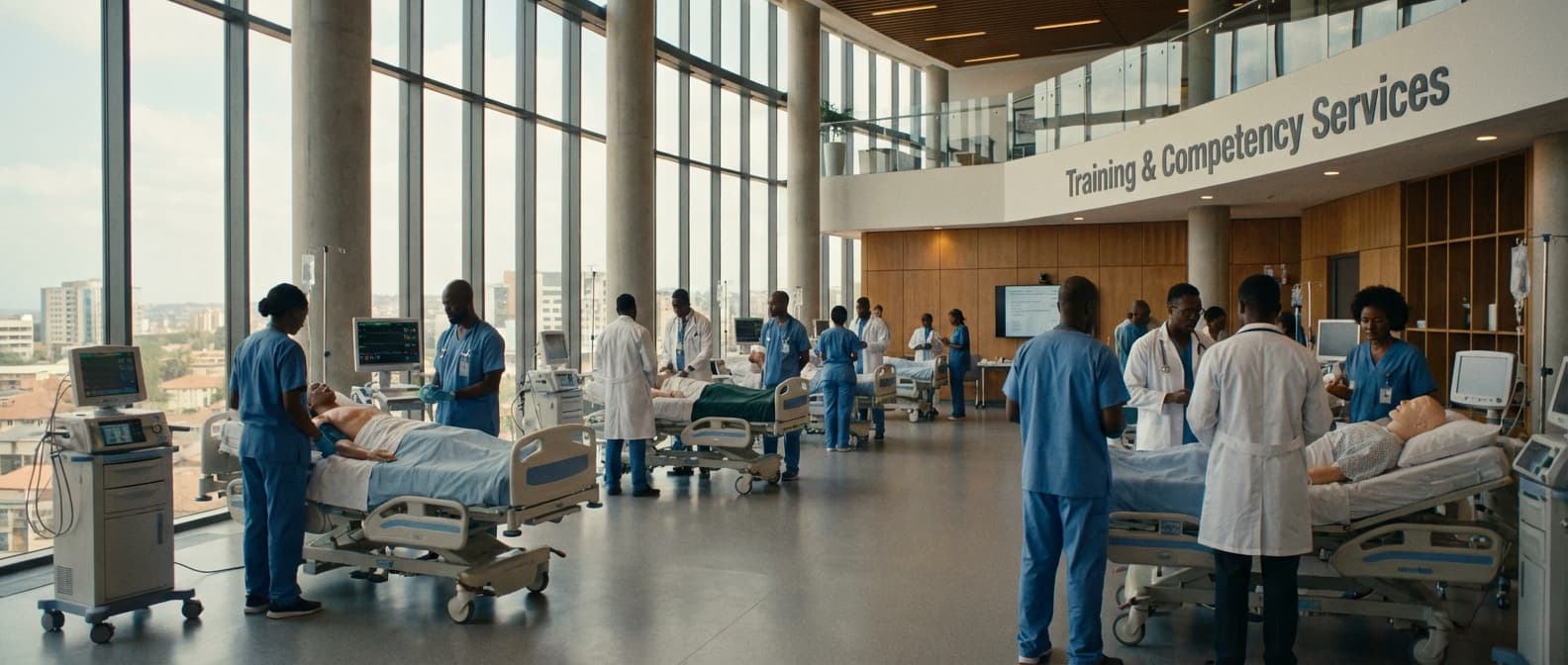
Ultrasound Application Training Service (Protocol-Based) in Cabo Verde
Engineering Excellence & Technical Support
Ultrasound Application Training Service (Protocol-Based) High-standard technical execution following OEM protocols and local regulatory frameworks.
Standardized Protocol Mastery
Gain unparalleled expertise in Cabo Verde's specific ultrasound protocols. Our training ensures consistent, high-quality diagnostic imaging, reducing variability and enhancing diagnostic accuracy for all practitioners.
Regionally Adapted Curriculum
Experience training meticulously tailored to the unique healthcare landscape and common pathologies prevalent in Cabo Verde, ensuring immediate applicability and relevance to your daily practice.
Practical Skill Development & Certification
Benefit from intensive hands-on sessions with state-of-the-art equipment. Our protocol-based approach leads to validated proficiency and certification, empowering you to confidently perform and interpret ultrasound examinations.
What Is Ultrasound Application Training Service (Protocol-based) In Cabo Verde?
Ultrasound Application Training Service (Protocol-Based) in Cabo Verde refers to a specialized educational program designed to impart proficiency in the utilization of ultrasound technology for diagnostic and therapeutic purposes. This service adheres to established medical protocols, ensuring standardized and evidence-based practices are taught. The training encompasses theoretical knowledge, practical scanning techniques, image interpretation, and the integration of ultrasound findings into clinical decision-making. The protocol-based approach emphasizes the systematic application of ultrasound examinations, following predetermined sequences and guidelines for specific anatomical regions or clinical conditions. This ensures comprehensive coverage, reproducibility, and optimal diagnostic yield. The service aims to equip healthcare professionals with the necessary skills to safely and effectively employ ultrasound in their clinical practice within the Cabo Verdean healthcare landscape, considering local resources and prevalent pathologies.
| Target Audience | Rationale for Need | Typical Use Cases |
|---|---|---|
| Physicians (Radiologists, Obstetricians/Gynecologists, Internists, Surgeons, Pediatricians, Emergency Medicine Physicians): | To enhance diagnostic accuracy, improve patient outcomes, and broaden the scope of point-of-care ultrasound (POCUS) within their specialties. Compliance with evolving medical guidelines and the need for specialized skill acquisition. | Obstetrics: Fetal biometry, anomaly scan, fetal well-being assessment, placental evaluation. Gynecology: Pelvic organ assessment, adnexal mass evaluation, IUD localization. Abdominal: Liver, gallbladder, spleen, kidney, pancreas assessment. Vascular: Deep vein thrombosis (DVT) screening, carotid artery assessment. Emergency Medicine: FAST (Focused Assessment with Sonography for Trauma) exam, pleural effusion detection, basic cardiac assessment. Musculoskeletal: Tendon and joint evaluation, fluid collection identification. |
| Medical Imaging Technologists/Sonographers: | To acquire advanced skills in specific ultrasound applications, achieve professional certification, and provide high-quality diagnostic imaging services. Standardization of practice and adherence to best practices. | Specialized Echocardiography: Assessment of cardiac structure and function. Interventional Ultrasound: Guidance for biopsies, aspirations, and drainages. Pediatric Ultrasound: Neonatal cranial ultrasound, pediatric abdominal and pelvic imaging. Thyroid and Breast Ultrasound: Detection and characterization of nodules and masses. |
| Healthcare Administrators and Policy Makers: | To understand the capabilities and resource requirements for implementing and expanding ultrasound services. Informing investment decisions and workforce planning for improved healthcare delivery in Cabo Verde. | Needs Assessment: Evaluating the demand for specific ultrasound services and training programs. Resource Allocation: Planning for equipment procurement, infrastructure development, and personnel training. Quality Improvement Initiatives: Establishing benchmarks for ultrasound service delivery and monitoring performance. |
Key Components of Ultrasound Application Training Service (Protocol-Based)
- Protocol-Driven Curriculum: Training modules are structured around established ultrasound protocols for various specialties (e.g., obstetrics, gynecology, abdominal, vascular, musculoskeletal).
- Theoretical Foundations: Covers ultrasound physics, instrumentation, image optimization, artifact recognition, and relevant anatomy and physiology.
- Hands-on Skill Development: Intensive practical sessions on phantom models and/or simulated patients, focusing on transducer manipulation, probe positioning, and efficient scanning techniques.
- Image Interpretation & Reporting: Training in the recognition of normal and abnormal sonographic findings, differential diagnosis, and the generation of structured ultrasound reports.
- Clinical Integration: Emphasis on how ultrasound findings correlate with clinical presentation and impact patient management strategies.
- Quality Assurance: Instruction on maintaining image quality, adhering to safety standards, and understanding ethical considerations.
- Local Contextualization: Adaptation of protocols and case examples to address health priorities and common conditions relevant to Cabo Verde.
Who Needs Ultrasound Application Training Service (Protocol-based) In Cabo Verde?
The Ultrasound Application Training Service (Protocol-Based) is designed to equip healthcare professionals in Cabo Verde with the essential knowledge and practical skills to effectively utilize ultrasound technology for diagnostic purposes. This service focuses on standardized protocols to ensure consistency, accuracy, and optimal patient care. The training aims to bridge any existing knowledge gaps and elevate the competency of ultrasound practitioners across various medical specialties.
| Customer Type | Primary Need Addressed | Key Departments for Engagement |
|---|---|---|
| Existing Ultrasound Practitioners | Standardizing protocols, improving image interpretation, learning new applications. | Radiology, OB/GYN, Cardiology, Emergency |
| Healthcare Professionals New to Ultrasound | Foundational knowledge, hands-on skills, protocol adherence. | Primary Healthcare Centers, Internal Medicine, Surgical Depts. |
| Hospitals and Clinics Seeking to Enhance Services | Improving diagnostic accuracy, reducing referral times, increasing service offerings. | All departments with diagnostic imaging needs |
| Government Health Initiatives | Raising the general standard of diagnostic imaging, ensuring equitable access to trained personnel. | Ministry of Health, National Hospitals, Regional Health Directorates |
| Medical Training Institutions | Integrating comprehensive ultrasound training into their curriculum. | Medical Schools, Nursing Schools, Allied Health Programs |
Target Customers and Departments in Cabo Verde
- {"items":["Radiologists","Sonographers","General Practitioners with interest in point-of-care ultrasound","Obstetricians and Gynecologists","Cardiologists","Emergency Medicine Physicians","Anesthesiologists","Critical Care Physicians","Medical Residents and Interns","Nurses and Physician Assistants involved in diagnostic imaging"],"title":"Target Customers"}
- {"items":["Radiology Departments","Obstetrics & Gynecology Departments","Cardiology Departments","Emergency Departments","Intensive Care Units (ICUs)","Surgical Departments","Internal Medicine Departments","Primary Healthcare Centers (Clinics)","Maternal and Child Health Centers"],"title":"Target Departments"}
Ultrasound Application Training Service (Protocol-based) Process In Cabo Verde
This document outlines the typical workflow for an Ultrasound Application Training Service (Protocol-Based) offered in Cabo Verde. This process is designed to be comprehensive, ensuring that clients receive tailored training that aligns with established protocols and their specific needs. The service focuses on equipping healthcare professionals with the knowledge and practical skills to perform ultrasound examinations accurately and efficiently, adhering to international standards and local healthcare requirements.
| Stage | Description | Key Activities | Responsible Party | Deliverables/Outcomes |
|---|---|---|---|---|
| Inquiry and Needs Assessment | The initial stage where potential clients express interest and their training requirements are understood. | Initial contact (phone, email, website form); Discussion of training needs, target audience, specific ultrasound applications (e.g., OB/GYN, General, Vascular), existing knowledge base, preferred dates, and location.<br>Identification of specific protocols to be covered. | Client, Training Provider | Clear understanding of client needs and training scope; Identification of relevant protocols; Preliminary service scope. |
| Proposal Development and Agreement | Formalizing the training offer based on the assessed needs. | Developing a detailed proposal outlining training objectives, curriculum, duration, venue, trainers, required equipment, pricing, and schedule.<br>Negotiation and finalization of terms.<br>Signing of a service agreement. | Training Provider, Client | Comprehensive training proposal; Signed service agreement; Defined project timeline and budget. |
| Pre-Training Preparation | Setting up all necessary logistics and resources for the training. | Confirming training dates and venue.<br>Arranging for trainers and their travel/accommodation (if applicable).<br>Preparing training materials (presentations, manuals, case studies, protocol guides).<br>Ensuring availability of ultrasound equipment, phantoms, and consumables.<br>Communicating pre-course information to participants (e.g., agenda, prerequisites, location details). | Training Provider, Client (for venue/participant coordination) | Confirmed logistics; Prepared training materials; Accessible training environment; Informed participants. |
| Training Execution | The core phase where the training is delivered to participants. | Theoretical sessions covering ultrasound physics, principles, and the specific protocols.<br>Practical hands-on sessions with ultrasound equipment and phantoms.<br>Demonstrations by experienced trainers.<br>Interactive case study reviews and problem-solving.<br>Q&A sessions and feedback integration.<br>Real-time observation and feedback on participant scanning techniques. | Training Provider (Trainers) | Enhanced knowledge and practical skills in ultrasound applications; Proficiency in protocol adherence; Improved diagnostic accuracy. |
| Post-Training Support and Evaluation | Providing ongoing assistance and assessing the effectiveness of the training. | Collecting participant feedback through evaluation forms.<br>Conducting post-training assessments (e.g., quizzes, practical evaluations).<br>Providing access to online resources or follow-up Q&A sessions.<br>Reviewing training outcomes against objectives. | Training Provider, Client | Training evaluation reports; Participant feedback analysis; Identification of areas for improvement in future training. |
| Certification and Follow-up | Formalizing the completion of training and planning for continued development. | Issuing certificates of completion to participants who meet the required standards.<br>Discussing potential for advanced training or refresher courses.<br>Maintaining a record of trained personnel.<br>Potential for remote support for specific clinical challenges. | Training Provider, Client | Certificates of attendance/completion; Future training recommendations; Strengthened client relationship; Enhanced capability within the client's organization. |
Ultrasound Application Training Service (Protocol-Based) Workflow in Cabo Verde
- Inquiry and Needs Assessment
- Proposal Development and Agreement
- Pre-Training Preparation
- Training Execution
- Post-Training Support and Evaluation
- Certification and Follow-up
Ultrasound Application Training Service (Protocol-based) Cost In Cabo Verde
This document outlines the cost of Ultrasound Application Training Services (Protocol-Based) in Cabo Verde, considering various pricing factors and providing estimated cost ranges in the local currency, the Cape Verdean Escudo (CVE). The training focuses on standardized protocols for specific ultrasound applications, ensuring consistency and quality in diagnostic procedures. Pricing is influenced by the complexity of the protocol, the duration of the training, the expertise of the trainers, the number of participants, and the location within Cabo Verde. The goal is to provide a comprehensive understanding of the investment required for such specialized training.
| Training Type/Scope | Estimated Duration | Estimated Cost Range (CVE) | Notes |
|---|---|---|---|
| Basic Abdominal/Obstetric Ultrasound Protocols | 2-3 Days | 40.000 - 75.000 CVE | Covers fundamental scanning techniques and common protocol variations. |
| Advanced Doppler Techniques (e.g., Vascular) | 3-4 Days | 60.000 - 100.000 CVE | Focuses on specialized Doppler applications and interpretation. |
| Specialized Application (e.g., Musculoskeletal, Small Parts) | 2-3 Days | 50.000 - 90.000 CVE | Tailored to specific anatomical regions and pathologies. |
| Comprehensive Fetal Echocardiography Protocol | 4-5 Days | 80.000 - 150.000 CVE | Requires highly specialized knowledge and often includes simulation. |
| Interventional Ultrasound Techniques | 3-4 Days | 70.000 - 120.000 CVE | Includes practical sessions and safety considerations for procedures. |
| Refresher/Update Course (Specific Protocol) | 1-2 Days | 30.000 - 60.000 CVE | For existing practitioners to update skills on a particular protocol. |
Key Factors Influencing Ultrasound Application Training Costs in Cabo Verde
- Complexity of Ultrasound Protocol: Training on more specialized or advanced ultrasound applications (e.g., advanced fetal echocardiography, interventional ultrasound) will inherently be more expensive than basic abdominal or obstetric protocols due to the specialized knowledge and equipment required.
- Training Duration: The length of the training program directly impacts the cost. Shorter, introductory courses will be less expensive than comprehensive, multi-day workshops.
- Trainer Expertise and Credentials: Highly experienced sonographers or radiologists with specialized certifications and a proven track record in teaching will command higher fees.
- Number of Participants: Group training is generally more cost-effective per participant than one-on-one sessions. However, very large groups might require additional trainers or resources, potentially increasing the overall cost.
- Training Format (On-site vs. Remote/Hybrid): On-site training in specific clinics or hospitals in Cabo Verde might incur travel and accommodation costs for trainers, making it more expensive. Remote or hybrid models can reduce these overheads.
- Equipment and Simulation Needs: If the training requires specialized phantom models or access to specific ultrasound machines, these costs will be factored into the overall price.
- Certification and Assessment: Training programs that include formal certification exams or rigorous assessments will often have a higher price point to cover the administrative and evaluation processes.
- Location within Cabo Verde: While Cabo Verde is a relatively small nation, the cost of delivering services in more remote islands or specific urban centers might differ due to logistical considerations.
- Customization and Tailoring: Bespoke training programs designed to meet the unique needs of a specific healthcare institution will likely be priced higher than standardized offerings.
Affordable Ultrasound Application Training Service (Protocol-based) Options
Our Affordable Ultrasound Application Training Service offers a comprehensive, protocol-based approach to equip healthcare professionals with essential ultrasound skills. We focus on practical, hands-on training tailored to specific clinical applications. Our training emphasizes adherence to established protocols, ensuring standardized and high-quality ultrasound examinations. This service is designed to be cost-effective, making advanced ultrasound proficiency accessible to a wider range of practitioners and institutions.
| Value Bundle | Included Services | Target Audience | Estimated Cost Savings | Price Range (Indicative) |
|---|---|---|---|---|
| Foundational Essentials Bundle | Core ultrasound physics, knobology, basic protocol introduction (e.g., Abdominal or OBGYN), simulator practice. | Entry-level sonographers, residents, physicians new to ultrasound. | Up to 20% vs. individual module purchase; reduces need for extensive on-the-job trial-and-error. | $500 - $1,500 |
| Specialty Application Mastery Bundle | In-depth training on 2-3 specialized protocols (e.g., Fetal Echocardiography, Point-of-Care Ultrasound (POCUS) for ER, Carotid Doppler), advanced techniques, case review. | Experienced sonographers, specialists seeking to expand their scope, POCUS practitioners. | Up to 25% vs. separate specialty courses; improved diagnostic accuracy and workflow efficiency. | $1,200 - $3,500 |
| Comprehensive Institutional Package | Customized curriculum for multiple applications, on-site or dedicated remote training, instructor support, competency assessment for groups. | Hospitals, clinics, medical schools, large practices. | Significant savings (30%+) for bulk training; enhanced team skill standardization and patient care. | Contact for Quote (Tiered pricing based on group size and training scope) |
| E-Learning & Live Q&A Subscription | Access to a library of recorded protocol-based modules, monthly live Q&A sessions with experts, online practice modules. | Professionals seeking continuous learning and affordable refreshers, remote learners. | Highly cost-effective for ongoing professional development; accessible anytime, anywhere. | $100 - $300 per month/year |
Our Value Bundles & Cost-Saving Strategies
- Protocol-Driven Curriculum: Training is structured around industry-standard protocols for various applications (e.g., OB/GYN, Abdominal, Vascular, MSK), ensuring relevance and immediate applicability.
- Hands-On Practice: Significant emphasis on practical scanning sessions with experienced sonographers and radiologists, utilizing high-fidelity simulators and/or real patient scenarios (where applicable and ethical).
- Flexible Learning Formats: Offering a mix of in-person workshops, remote live-streamed sessions, and self-paced online modules to accommodate diverse schedules and learning preferences.
- Instructor-Led Support: Direct access to qualified instructors for questions, feedback, and personalized guidance throughout the training period.
- Certification/Competency Assessment: Upon successful completion, participants may receive a certificate of completion or undergo competency assessments, adding value to their professional profile.
- Institutional Partnerships: Discounted rates for group bookings and customized training programs for healthcare facilities seeking to upskill their entire team.
Verified Providers In Cabo Verde
Choosing a healthcare provider is a crucial decision, especially when traveling or residing in a foreign country. In Cabo Verde, identifying verified and reputable healthcare services ensures peace of mind and access to quality medical care. Franance Health stands out as a leading name, offering a network of trusted medical professionals and facilities that meet stringent international standards. Their commitment to verification and patient well-being makes them the optimal choice for anyone seeking healthcare in Cabo Verde.
| Provider Type | Franance Health Verification Criteria | Benefits for Patients |
|---|---|---|
| Hospitals | Accreditation by recognized health organizations, advanced medical equipment, adherence to safety protocols, qualified medical staff. | Access to comprehensive medical and surgical services, emergency care, specialized departments, and inpatient facilities. |
| Clinics & Medical Centers | Licensed practitioners, up-to-date medical practices, availability of diagnostic services, patient complaint resolution procedures. | Convenient access to primary care, specialist consultations, minor procedures, and preventative health services. |
| Specialist Doctors (e.g., Dentists, Ophthalmologists, Cardiologists) | Professional board certification, continuous medical education, positive peer reviews, patient testimonials. | Expert diagnosis and treatment for specific health conditions, personalized care plans, and access to cutting-edge medical knowledge. |
| Emergency Services (Ambulance & ER) | Certified medical personnel, well-equipped emergency vehicles, rapid response times, established protocols for critical care. | Swift and effective response to medical emergencies, ensuring timely and appropriate life-saving interventions. |
Why Franance Health Credentials Matter
- Rigorous Verification Process: Franance Health meticulously vets all affiliated providers, ensuring they possess the necessary licenses, certifications, and a proven track record of excellent patient care.
- International Standards Compliance: Their network adheres to high international healthcare benchmarks, guaranteeing that patients receive care equivalent to what they would expect in developed countries.
- Multilingual Staff and Services: Franance Health prioritizes clear communication by ensuring many of their partner facilities offer services in multiple languages, including English and French, facilitating a more comfortable experience for international patients.
- Comprehensive Network: From general practitioners to specialists and emergency services, Franance Health provides access to a wide spectrum of medical expertise and facilities across Cabo Verde.
- Patient-Centric Approach: The emphasis is always on the patient's needs, with a focus on providing personalized, compassionate, and efficient healthcare solutions.
- Quality Assurance: Ongoing monitoring and patient feedback mechanisms are in place to maintain the highest levels of service quality and patient satisfaction.
Scope Of Work For Ultrasound Application Training Service (Protocol-based)
This Scope of Work (SOW) outlines the requirements for a Protocol-Based Ultrasound Application Training Service. The objective is to provide comprehensive training to [Client Name] personnel on the effective and efficient use of ultrasound applications, adhering to established clinical protocols. The training will cover theoretical knowledge, practical scanning techniques, image optimization, and interpretation relevant to specific ultrasound modalities and clinical scenarios.
| Phase | Description | Key Activities | Deliverables | Standard Specifications/Requirements |
|---|---|---|---|---|
| Phase 1: Needs Assessment & Protocol Review | Understanding client's current ultrasound infrastructure, existing protocols, and specific training needs. | Review of existing clinical protocols, identification of target audience, assessment of current skill levels, discussion of specific learning objectives. | Needs Assessment Report, Agreed-upon Training Curriculum Outline. | Access to client's existing ultrasound protocols, equipment manuals, and a designated point of contact for clarification. |
| Phase 2: Theoretical Training | Delivery of foundational knowledge related to ultrasound physics, instrumentation, and the specific clinical applications. | Lectures, presentations, case study discussions, Q&A sessions. | Training Manuals (digital or hard copy), Presentation Slides, Glossary of Terms. | Training content must be accurate, up-to-date, and delivered by certified/experienced sonographers or relevant medical professionals. Minimum passing score on theoretical assessment. |
| Phase 3: Practical Scanning Training (Hands-on) | Development of practical scanning skills using ultrasound equipment and phantoms/volunteers, adhering to established protocols. | Demonstrations, supervised scanning sessions, progressive skill development exercises, feedback on scanning technique and image acquisition. | Image Acquisition Log, Performance Checklist (for each trainee). | Training conducted on client's own ultrasound equipment (if feasible) or equivalent, using standardized phantoms and/or consenting volunteers. Trainee-to-instructor ratio not exceeding [Specify Ratio, e.g., 3:1]. Focus on adherence to protocol for probe selection, patient positioning, scan planes, and documentation. |
| Phase 4: Image Optimization & Interpretation Training | Training on achieving optimal image quality and initial interpretation of findings within the protocol's scope. | Image optimization techniques (gain, depth, focus, TGC), identifying artifacts, basic recognition of normal anatomy and common abnormalities. | Optimized Image Examples, Case Study Analysis Reports. | Emphasis on understanding the visual cues for quality and the limitations of interpretation within the trained scope. Trainees to demonstrate proficiency in adjusting parameters for image enhancement. |
| Phase 5: Assessment & Evaluation | Formal assessment of trainee knowledge and practical skills to ensure competency. | Written/online examinations, practical scanning competency assessment (video or live), review of acquired images. | Trainee Competency Reports, Final Assessment Scores, Certificate of Completion. | Assessment methods must be objective and directly measure the attainment of learning objectives. Competency assessment to include the ability to follow protocol independently. Minimum passing score for certification. |
| Phase 6: Post-Training Support & Reporting | Providing follow-up support and submitting comprehensive reports on the training delivery. | Q&A sessions post-training, provision of additional resources, final training report submission. | Final Training Report (including attendance, performance metrics, recommendations). | Report to be submitted within [Specify Timeframe, e.g., 5 business days] of training completion. Report should include individual trainee progress and any identified areas for further development. |
Training Service Objectives
- To equip trainees with the theoretical understanding of ultrasound physics and instrumentation relevant to the application.
- To develop proficiency in performing ultrasound examinations according to standardized protocols for specified clinical applications.
- To enhance the ability to acquire high-quality ultrasound images and optimize scanning parameters.
- To foster the understanding of normal anatomical variations and common pathological findings within the scope of the training.
- To ensure compliance with all relevant safety and infection control guidelines.
- To provide a foundational understanding for trainees to progress to more advanced ultrasound techniques or specializations.
Service Level Agreement For Ultrasound Application Training Service (Protocol-based)
This Service Level Agreement (SLA) outlines the guaranteed response times and uptime for the Ultrasound Application Training Service (Protocol-Based). It is designed to ensure the availability and timely support for users accessing our training materials and platform.
| Service Component | Response Time Guarantee | Uptime Guarantee | Notes |
|---|---|---|---|
| Platform Access Availability | N/A (Continuous) | 99.5% (Monthly Average) | Excludes scheduled maintenance windows. |
| Technical Support (Non-critical Issues) | Within 4 business hours | N/A | Issues that do not prevent access to training materials or core functionality. |
| Technical Support (Critical Issues) | Within 1 business hour | N/A | Issues that prevent access to the training platform or critical training modules. |
| New Protocol/Module Availability | Within 5 business days of release announcement | N/A | Applies to major protocol updates or new application modules. |
| Scheduled Maintenance Notifications | Minimum 24 hours in advance | N/A | Will be communicated via email and platform announcements. |
Scope of Service
- Access to the Ultrasound Application Training Platform, including all protocol-based training modules.
- Technical support for issues encountered while accessing or using the training platform.
- Updates and maintenance of the training content and platform.
Frequently Asked Questions

Ready when you are
Let's scope your Ultrasound Application Training Service (Protocol-Based) in Cabo Verde project in Cabo Verde.

Scaling healthcare logistics and technical systems across the entire continent.