
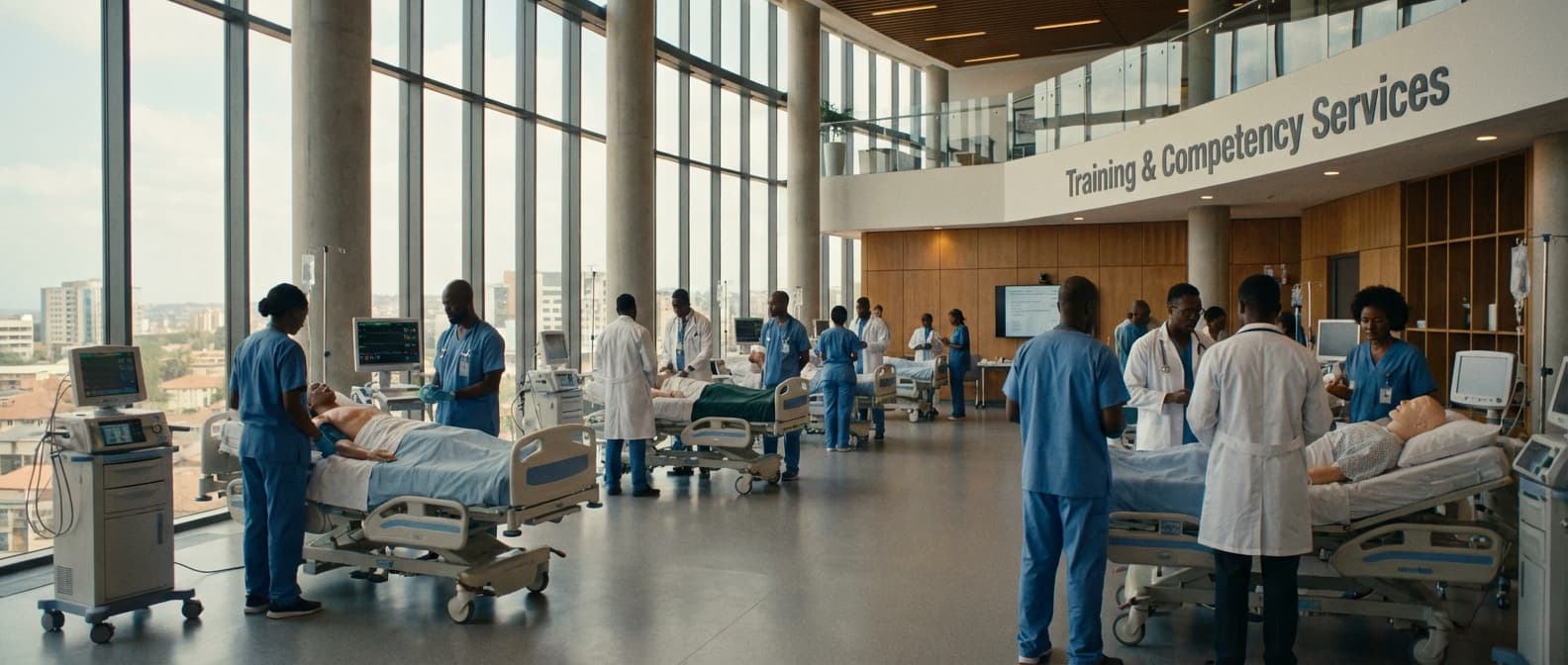
Biomedical Engineering First-Line Support Training Service in Cabo Verde
Engineering Excellence & Technical Support
Biomedical Engineering First-Line Support Training Service High-standard technical execution following OEM protocols and local regulatory frameworks.
Regulatory Compliance Assurance
Empower your team with in-depth training on Cabo Verde's specific medical device regulations and certification requirements. Ensure seamless compliance for all biomedical equipment, minimizing risks and operational disruptions.
Advanced Equipment Diagnostics & Repair
Master the latest diagnostic tools and troubleshooting methodologies for a wide range of biomedical devices. Equip your first-line support with the skills to perform efficient and accurate repairs, maximizing uptime and patient safety.
Cross-Cultural & Multilingual Support Proficiency
Develop effective communication strategies and culturally sensitive approaches for interacting with diverse healthcare professionals and patients in Cabo Verde. Our training ensures your support staff can build trust and provide exceptional service across language barriers.
What Is Biomedical Engineering First-line Support Training Service In Cabo Verde?
Biomedical Engineering First-Line Support Training Service in Cabo Verde refers to a specialized training program designed to equip personnel with the foundational knowledge and practical skills necessary for initial troubleshooting, basic maintenance, and incident reporting of medical equipment within healthcare facilities in the archipelago. This service aims to enhance the operational readiness and reduce downtime of critical medical devices by empowering local technicians and biomedical staff to address common technical issues before they necessitate escalation to more specialized external support. The training emphasizes safety protocols, diagnostic methodologies, and documentation best practices, aligning with international standards for medical device management.
| Who Needs the Training | Typical Use Cases | Benefits to Cabo Verde | |||||||||||
|---|---|---|---|---|---|---|---|---|---|---|---|---|---|
| Biomedical Technicians/Engineers: Newly hired or existing personnel responsible for medical equipment maintenance. | Healthcare Facility IT/Technical Staff: Individuals tasked with supporting the IT infrastructure of hospitals and clinics, who may also be involved in initial device checks. | Clinical Staff (e.g., Nurses, Doctors): To enable basic user checks and reporting of equipment malfunctions, improving communication with biomedical support. | Administrative Personnel in Healthcare Facilities: For understanding equipment lifecycle and basic maintenance needs. | New Medical Equipment Installations: Ensuring local teams are prepared to manage and maintain newly acquired devices. | Routine Equipment Checks and Calibration: Performing scheduled preventive maintenance to ensure accuracy and reliability. | Responding to Common Alarms and Error Messages: Quickly diagnosing and resolving basic issues with medical devices. | Replacing Consumables and Basic Parts: Swapping out batteries, power cords, or other easily replaceable components. | Reporting and Escalating Complex Issues: Accurately documenting problems for efficient resolution by specialized external support. | Reducing Equipment Downtime: Minimizing the impact of device failures on patient care. | Improving Patient Safety: Ensuring medical devices are functioning correctly and safely. | Cost Savings: Decreasing reliance on expensive external repair services for minor issues. | Enhancing Local Expertise: Building a sustainable biomedical engineering support ecosystem within Cabo Verde. | Compliance with Healthcare Standards: Meeting national and international requirements for medical device management. |
Key Components of Biomedical Engineering First-Line Support Training:
- Equipment Fundamentals: Understanding the basic principles of operation, anatomy, and physiology of common medical devices (e.g., vital signs monitors, infusion pumps, ECG machines, basic diagnostic imaging equipment).
- Preventive Maintenance (PM): Training on scheduled checks, cleaning, calibration, and basic functional testing to identify and prevent potential failures.
- Troubleshooting and Diagnostics: Developing systematic approaches to identify the root cause of common equipment malfunctions using logical deduction and available diagnostic tools.
- Basic Repair and Replacement: Instruction on performing simple repairs, such as replacing fuses, batteries, or external connectors, following manufacturer guidelines.
- Safety Procedures: Comprehensive training on electrical safety, infection control, and safe handling of medical devices to protect both patients and personnel.
- Documentation and Reporting: Establishing protocols for recording maintenance activities, repair attempts, incident reports, and equipment status.
- Asset Management Fundamentals: Introduction to inventory management, equipment registration, and lifecycle tracking.
- Regulatory Compliance Awareness: Basic understanding of relevant national and international regulations pertaining to medical device maintenance and safety.
Who Needs Biomedical Engineering First-line Support Training Service In Cabo Verde?
The first-line support training service in Biomedical Engineering in Cabo Verde is designed to empower individuals and institutions to effectively manage and maintain vital medical equipment. This specialized training is crucial for ensuring the operational reliability and safety of healthcare technology, directly impacting patient care and the efficiency of healthcare facilities.
| Target Customer/Institution | Key Departments Requiring Training | Rationale for Training |
|---|---|---|
| Public Hospitals (e.g., Hospital Agostinho Neto, Hospital do Praia) | Biomedical Engineering Department, Clinical Engineering Department, Maintenance Department, IT Department (for networked devices), Nursing and Medical Staff (basic troubleshooting) | To ensure continuous operation of critical medical equipment, reduce downtime, improve patient safety, and extend equipment lifespan. Enables local staff to handle routine maintenance and basic repairs, reducing reliance on external services. |
| Private Clinics and Health Centers | Technical Staff, Facility Managers, Department Heads | To maintain high standards of care, comply with regulations, and optimize the use of their medical technology investments. Cost-effective in-house expertise. |
| Ministry of Health (Cabo Verde) | Planning and Infrastructure Department, Health Technology Assessment Unit, Human Resources Department | To establish and enforce national standards for medical equipment maintenance, develop training strategies, and ensure a skilled workforce for the public healthcare system. |
| Medical Equipment Suppliers (Local Branches/Representatives) | Technical Support Teams, Field Service Engineers, Sales Representatives (product familiarization) | To provide prompt and efficient first-line support to their clients, enhance customer satisfaction, and maintain their reputation. Essential for warranty and post-warranty service. |
| NGOs and International Organizations (e.g., WHO, Doctors Without Borders) | Logistics and Maintenance Officers, Project Managers, Local Healthcare Staff | To ensure the sustainability and effective use of donated or deployed medical equipment in their projects. Enables local capacity building for long-term impact. |
| Technical and Vocational Training Institutes | Instructors of Biomedical Technology Programs, Curriculum Developers | To integrate practical, up-to-date first-line support skills into their educational offerings, producing graduates ready for the demands of the healthcare sector in Cabo Verde. |
Target Customers and Departments for Biomedical Engineering First-Line Support Training Service in Cabo Verde
- Hospitals and Clinics: The primary beneficiaries, encompassing both public and private healthcare institutions across the archipelago.
- Government Health Agencies: Ministry of Health and other relevant bodies responsible for national healthcare infrastructure and standards.
- Medical Equipment Suppliers and Distributors: Companies that import, sell, and service medical devices in Cabo Verde.
- Non-Governmental Organizations (NGOs) and International Aid Organizations: Those involved in healthcare provision and development projects in Cabo Verde.
- Educational and Research Institutions: Universities and technical schools offering healthcare-related programs.
Biomedical Engineering First-line Support Training Service Process In Cabo Verde
The Biomedical Engineering First-Line Support Training Service Process in Cabo Verde is designed to equip healthcare professionals with the foundational skills necessary to perform basic maintenance, troubleshooting, and user support for biomedical equipment. This process ensures the continued functionality and safe operation of critical medical devices within healthcare facilities. The workflow is structured to be efficient and accessible, covering the entire journey from an initial inquiry to the successful execution of the training program.
| Step | Description | Key Activities | Responsible Parties | Deliverables/Outcomes |
|---|---|---|---|---|
| The process begins when a healthcare facility or individual expresses interest in the first-line support training. This stage involves understanding the specific needs and equipment types for which training is required. | Initial contact (email, phone, website form), discussion of training objectives, identification of target audience (technicians, nurses, engineers), assessment of existing skill levels, and identification of specific equipment models. | Prospective Client (Healthcare Facility/Individual), Training Provider Representative | Clear understanding of training requirements, documented needs assessment report. |
| Based on the needs assessment, a tailored training proposal is developed and presented to the client. This includes details on curriculum, duration, methodology, trainer qualifications, and cost. | Drafting training curriculum and modules, specifying learning outcomes, defining training duration and schedule, calculating costs, presenting proposal to client, negotiating terms and conditions, addressing client queries. | Training Provider (Curriculum Developers, Sales/Business Development Team), Prospective Client | Detailed training proposal, mutually agreed-upon scope of work, finalized pricing. |
| Once the proposal is accepted, a formal agreement (contract or service level agreement) is established. This step also involves finalizing the training schedule. | Drafting and signing of the service agreement, defining payment terms, confirming training dates and times, securing venue (if applicable) or confirming on-site logistics. | Training Provider (Legal/Contracts Team, Operations Manager), Prospective Client (Legal/Procurement Team) | Signed service agreement, confirmed training schedule and logistics. |
| The training provider prepares all necessary materials, including presentations, manuals, practical exercises, and assessment tools, specific to the agreed-upon curriculum and equipment. | Developing training presentations, creating participant manuals, designing hands-on practical exercises, preparing pre- and post-training assessments, ensuring availability of training equipment (if applicable). | Training Provider (Instructional Designers, Subject Matter Experts) | Comprehensive training package (digital and/or printed materials), functional training equipment. |
| The core of the service involves the delivery of the training program by qualified instructors at the client's facility or a designated training center. | Conducting theoretical sessions, facilitating practical demonstrations and hands-on practice, guiding participants through troubleshooting scenarios, answering questions, managing group dynamics. | Training Provider (Certified Trainers), Trainees (Healthcare Professionals) | Delivered training sessions, active participant engagement, practical skill development. |
| After the training, participants and the client are invited to provide feedback to assess the effectiveness of the training and identify areas for improvement. | Administering post-training evaluation forms, conducting debriefing sessions with participants, collecting feedback from facility management, analyzing evaluation data. | Training Provider (Trainers, Quality Assurance Team), Trainees, Client Management | Completed evaluation forms, summary of feedback, training effectiveness report. |
| Upon successful completion of the training and assessments, participants receive certificates. The provider may also offer post-training support or refresher courses. | Issuing certificates of completion to successful trainees, providing a summary report to the client, offering follow-up technical support (if agreed upon), scheduling future training needs. | Training Provider (Administration, Quality Assurance Team), Trainees, Client Management | Certificates of competence, final training report, ongoing client relationship. |
Biomedical Engineering First-Line Support Training Service Process Workflow
- Inquiry and Needs Assessment
- Proposal Development and Negotiation
- Agreement and Scheduling
- Training Material Preparation
- On-site Training Delivery
- Post-Training Evaluation and Feedback
- Certification and Follow-up
Biomedical Engineering First-line Support Training Service Cost In Cabo Verde
Determining the precise cost of Biomedical Engineering First-Line Support Training services in Cabo Verde requires an understanding of various contributing factors. These factors influence the overall pricing, leading to a range rather than a fixed cost. The complexity of the training, the specific equipment and technologies covered, the qualifications and experience of the trainers, the duration of the program, and the provider's overhead all play a significant role. Additionally, the number of participants, the need for specialized materials, and whether the training is conducted on-site or at the provider's facility in Cabo Verde will impact the final price. Pricing is typically quoted in the local currency, the Cabo Verdean Escudo (CVE), or sometimes in Euros (EUR) due to strong historical ties and economic considerations, with conversion rates needing to be considered.
| Training Scope | Typical Duration (Hours) | Estimated Range (CVE) | Estimated Range (EUR, approx.) |
|---|---|---|---|
| Basic Biomedical Equipment Maintenance & Troubleshooting | 16 - 32 | 40.000 - 80.000 | 360 - 720 |
| Intermediate Biomedical Equipment Support (Specific Modalities) | 32 - 60 | 70.000 - 150.000 | 630 - 1350 |
| Advanced Biomedical Equipment Training (Complex Systems) | 60 - 120+ | 120.000 - 300.000+ | 1080 - 2700+ |
| On-Site Training (Additional per day/travel) | Varies | Add 10.000 - 30.000+ | Add 90 - 270+ |
Key Pricing Factors for Biomedical Engineering First-Line Support Training in Cabo Verde
- Training Scope and Complexity: Basic troubleshooting and maintenance training will be less expensive than advanced diagnostics and repair of specialized medical devices.
- Equipment Covered: Training focused on a broad range of medical equipment or highly sophisticated machinery will command higher prices.
- Trainer Expertise and Qualifications: Highly experienced and certified biomedical engineers with specialized knowledge will charge more for their services.
- Program Duration: Longer training programs requiring more hours of instruction and practice will naturally be more costly.
- Provider Overhead and Reputation: Established training providers with well-equipped facilities and a strong reputation may have higher operating costs, reflected in their pricing.
- Number of Participants: Group discounts are common. Larger groups generally lead to a lower per-participant cost.
- Training Materials: The cost of manuals, simulations, software licenses, and any physical components used for practical training.
- Location of Training: On-site training at a client's facility may incur additional travel and accommodation costs for the trainers, while off-site training at the provider's location might have facility usage fees.
- Customization Requirements: Tailoring the training content to specific institutional needs or existing equipment inventories can increase development costs.
- Certification and Assessment: Including formal certification exams or assessments will add to the overall cost.
Affordable Biomedical Engineering First-line Support Training Service Options
Providing effective first-line support for biomedical equipment is crucial for maintaining patient care and operational efficiency. Our affordable training service options are designed to equip your technical staff with the essential skills to diagnose and resolve common issues, escalate complex problems appropriately, and ensure basic equipment functionality. We understand budget constraints, so our programs focus on maximizing return on investment through value bundles and strategic cost-saving measures.
| Value Bundle Option | Description | Target Audience | Key Benefits | Estimated Cost Savings (vs. individual modules) |
|---|---|---|---|---|
| Foundation Package | Covers essential safety, basic troubleshooting, and preventive maintenance for a core set of common medical devices. | Entry-level technicians, facilities staff, nursing units responsible for basic checks. | Establishes a baseline of competence, reduces downtime for minor issues, empowers staff. | 15-20% |
| Specialized Role Package (e.g., Imaging Support, Patient Monitoring) | Focuses on specific equipment types, common failure modes, and specialized diagnostic tools relevant to a particular department. | Technicians assigned to specific departments or equipment specialties. | Faster resolution of department-specific issues, improved user satisfaction, reduced reliance on external support. | 20-25% |
| Comprehensive Skills Package | Combines foundational knowledge with advanced troubleshooting, data analysis, and basic repair techniques for a wider range of equipment. | Junior biomedical engineers, aspiring senior technicians. | Broadens skill sets, increases in-house resolution capabilities, develops future leaders. | 25-30% |
| On-Demand Learning Subscription | Access to a library of micro-learning modules, video tutorials, and interactive simulations, allowing staff to train at their own pace. | All technical staff, for continuous learning and refresher courses. | Flexibility, cost-effective for ongoing training needs, keeps skills current. | Variable, based on usage, but generally 30-40% reduction in training delivery costs. |
Key Components of Our Training Service
- Core Biomedical Principles & Safety Protocols
- Common Equipment Troubleshooting Techniques (e.g., power, connectivity, basic calibration)
- Preventive Maintenance Fundamentals
- Proper Documentation & Reporting
- Safe Equipment Handling & Decontamination
- Introduction to Biomedical Equipment Classification & Functionality
- Effective Communication & User Support Skills
- Escalation Procedures & Vendor Liaison Best Practices
Verified Providers In Cabo Verde
Navigating healthcare options in Cabo Verde can be a complex undertaking, especially when prioritizing quality and reliability. For those seeking verified providers, particularly in the realm of specialized medical services, understanding credentialing bodies and their significance is crucial. Franance Health has emerged as a leading name, distinguished by its rigorous vetting process and commitment to upholding the highest standards in healthcare delivery. This dedication to excellence makes Franance Health a compelling choice for individuals and organizations requiring trusted medical partners in Cabo Verde.
| Franance Health Credentialing Aspect | Significance for Patients | Why it Represents the Best Choice |
|---|---|---|
| Independent Verification of Licenses and Certifications | Ensures all medical professionals hold valid and current qualifications from recognized bodies. | Eliminates the risk of engaging with unqualified practitioners, guaranteeing a baseline of medical competence. |
| Background Checks and Professional History Review | Assesses the practitioner's professional conduct and any past disciplinary actions. | Provides an extra layer of security and trust, mitigating potential risks associated with malpractice or ethical breaches. |
| Peer Review and Reputation Assessment | Gathers feedback from other healthcare professionals and patients. | Highlights practitioners known for excellence, good bedside manner, and positive patient outcomes, contributing to superior care. |
| Adherence to International Healthcare Standards | Confirms that providers meet or exceed globally recognized benchmarks for quality and safety. | Ensures that patients receive care aligned with the best practices in the international medical community, promoting optimal health outcomes. |
| Ongoing Monitoring and Re-credentialing | Regularly re-evaluates provider credentials and performance. | Guarantees that the high standards are maintained over time, providing sustained confidence in the quality of care received. |
Why Franance Health is the Best Choice for Verified Providers in Cabo Verde:
- Rigorous credentialing and verification processes.
- Focus on ethical practices and patient-centered care.
- Access to a network of highly qualified and experienced medical professionals.
- Commitment to continuous improvement and adherence to international standards.
- Streamlined access to specialized medical services.
Scope Of Work For Biomedical Engineering First-line Support Training Service
This Scope of Work (SOW) outlines the requirements for a Biomedical Engineering First-Line Support Training Service. The service aims to equip newly hired or existing biomedical engineering technicians with the fundamental skills and knowledge necessary to perform effective first-line support for medical devices. This includes troubleshooting, basic maintenance, and understanding of essential safety protocols. The training will focus on practical application, theoretical understanding, and adherence to regulatory guidelines. Technical deliverables will include training materials, assessment tools, and a certification program. Standard specifications will ensure the quality and consistency of the training provided.
| Deliverable | Description | Standard Specification/Requirement | Format |
|---|---|---|---|
| Training Curriculum Document | Comprehensive outline of all training modules, learning objectives, and content. | Aligned with industry best practices and regulatory requirements. Clearly defined learning outcomes for each module. | |
| Training Materials (Presentations, Handouts) | Visual aids and supporting documents for each training module. | Clear, concise, and visually engaging. Includes diagrams, schematics, and practical examples. Content accuracy verified by subject matter experts. | PDF, PPTX |
| Practical Training Scenarios/Simulations | Real-world scenarios designed to test troubleshooting and problem-solving skills. | Realistic case studies mirroring common first-line support issues. Includes expected outcomes and troubleshooting pathways. | Document (PDF/Word), Interactive Simulation Software (if applicable) |
| Assessment Tools (Quizzes, Practical Exams) | Tools to evaluate trainee comprehension and skill proficiency. | Validated assessments with clear grading rubrics. Assessments should cover theoretical knowledge and practical application. | PDF, Online Assessment Platform compatible format |
| Certification Program | Formal recognition of trainees who successfully complete the training and assessments. | Clearly defined criteria for certification. Digital or physical certificate with unique identifier. | Digital Certificate (PDF/Image), Printed Certificate |
| Trainer Qualification Criteria | Requirements for individuals delivering the training. | Minimum of X years of experience in biomedical engineering with proven training experience. Relevant certifications or degrees. | Document (PDF/Word) |
| Post-Training Support Plan (Optional) | Guidance for ongoing learning and support after formal training. | Recommendations for resources, mentorship, or follow-up sessions. Outline of a feedback mechanism. | Document (PDF/Word) |
Key Training Modules
- Introduction to Biomedical Engineering and Healthcare Environments
- Fundamentals of Medical Device Operation and Principles
- Basic Electrical and Mechanical Troubleshooting Techniques
- Safety Protocols and Risk Management in Healthcare Settings
- Introduction to Medical Device Regulations and Compliance (e.g., FDA, MDR)
- Documentation and Reporting Procedures
- Customer Service and Communication Skills for Support Technicians
- Hands-on Practice with Common Medical Devices (e.g., vital signs monitors, infusion pumps)
Service Level Agreement For Biomedical Engineering First-line Support Training Service
This Service Level Agreement (SLA) outlines the response times and uptime guarantees for the Biomedical Engineering First-Line Support Training Service. This SLA is effective as of [Start Date] and will remain in effect until terminated by either party in accordance with the terms of the Master Service Agreement.
| Service Component | Response Time (Business Hours) | Uptime Guarantee (Training Platform) | Notes |
|---|---|---|---|
| Initial Inquiry/Request for Training | 4 Business Hours | N/A | Acknowledgement of request and scheduling of initial consultation. |
| Provision of Standard Training Modules | Within 5 Business Days of Confirmation | N/A | Availability of core training materials and schedule. |
| Access to Online Training Portal | N/A | 99.5% Uptime | Excludes scheduled maintenance (notices provided 48 hours in advance). |
| Support for Training Platform Issues | 8 Business Hours | N/A | Assistance with accessing or navigating the online training portal. |
| Escalation of Training-Related Technical Issues | 24 Business Hours | N/A | For issues preventing the completion of essential training modules. |
Scope of Service
- Provision of initial training for biomedical engineering personnel on common first-line support procedures for medical devices.
- Development and delivery of standardized training modules.
- Access to online training resources and documentation.
- Basic troubleshooting guidance for common equipment issues.
- Escalation protocols for complex or critical incidents.
Frequently Asked Questions

Ready when you are
Let's scope your Biomedical Engineering First-Line Support Training Service in Cabo Verde project in Cabo Verde.

Scaling healthcare logistics and technical systems across the entire continent.