
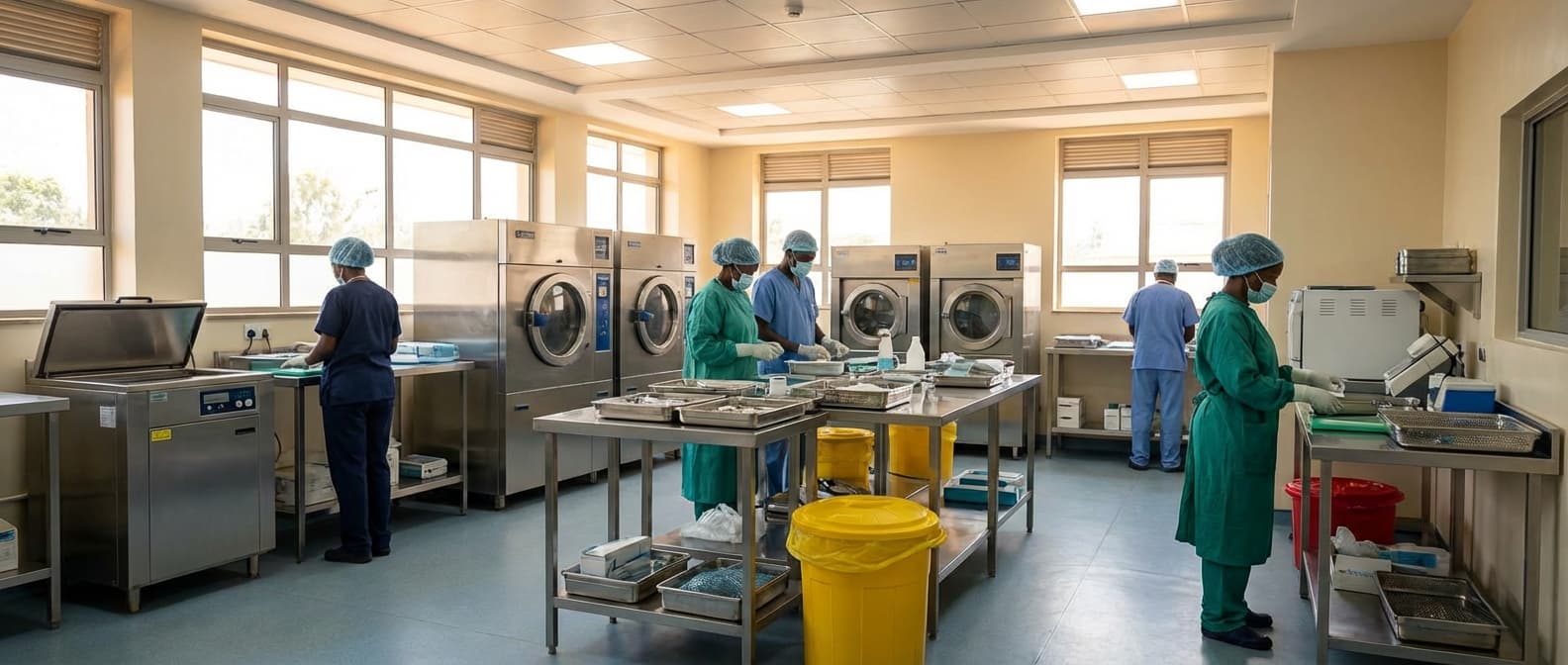
Infection-Control Readiness Support Service for Reusable Equipment in Cabo Verde
Engineering Excellence & Technical Support
Infection-Control Readiness Support Service for Reusable Equipment High-standard technical execution following OEM protocols and local regulatory frameworks.
Advanced Sterilization & Validation
Our service ensures critical reusable medical equipment in Cabo Verde undergoes state-of-the-art sterilization processes, including steam, chemical, and potentially novel technologies. We implement rigorous validation protocols and bioburden monitoring to guarantee the absence of infectious agents and meet international infection control standards.
Expert Training & Capacity Building
We provide comprehensive, hands-on training programs for healthcare personnel in Cabo Verde on proper cleaning, disinfection, sterilization, and sterile storage of reusable medical devices. Our curriculum is tailored to local needs and resources, empowering staff to maintain high infection control readiness.
Robust Traceability & Inventory Management
Leveraging digital solutions, our service establishes a comprehensive traceability system for all reusable equipment. This includes tracking sterilization cycles, maintenance history, and user, ensuring accountability, identifying potential breaches in the sterilization process, and optimizing inventory for uninterrupted patient care.
What Is Infection-control Readiness Support Service For Reusable Equipment In Cabo Verde?
Infection-Control Readiness Support Service for Reusable Equipment in Cabo Verde refers to a comprehensive program designed to ensure that healthcare facilities in Cabo Verde possess the necessary infrastructure, trained personnel, validated processes, and available resources to effectively and safely manage the sterilization and disinfection of reusable medical equipment. This service addresses the critical need for robust infection prevention and control (IPC) practices to mitigate the risk of healthcare-associated infections (HAAs) transmitted through improperly processed reusable medical devices, thereby safeguarding patient safety and public health.
| Who Needs the Service? | Typical Use Cases | |||||
|---|---|---|---|---|---|---|
| Hospitals and Clinics: All healthcare facilities that utilize reusable medical instruments, devices, and equipment for patient care, ranging from primary care clinics to tertiary care hospitals. | Surgical Centers: Facilities performing surgical procedures where reusable surgical instruments are extensively used and require stringent sterilization. | Dental Practices: Dental clinics that employ reusable instruments like probes, scalers, and handpieces. | Maternity Wards and Obstetric Units: For the reprocessing of instruments used during childbirth and gynecological procedures. | Laboratories and Diagnostic Centers: When reusable glassware, instruments, or other equipment are utilized. | Rehabilitation Centers: For reusable therapy equipment that comes into contact with patients. | |
| Post-Construction or Renovation: After installing new sterilization equipment or renovating existing facilities to ensure readiness and compliance. | Introduction of New Reusable Equipment: When a facility adopts new types of reusable medical devices that require specific reprocessing protocols. | Addressing Identified IPC Deficiencies: In response to audits or reported outbreaks of HAAs linked to equipment reprocessing. | Routine Readiness Assessment: As part of a proactive quality improvement initiative to maintain high IPC standards. | Training Gaps Identified: When staff turnover or lack of specialized knowledge necessitates comprehensive training programs. | Compliance with New Regulations: To align practices with evolving national or international IPC guidelines. | Emergency Preparedness: Ensuring that sterilization capacity and protocols are robust enough to handle increased demand during health emergencies. |
Key Components of the Service:
- Infrastructure Assessment and Enhancement: Evaluating existing sterilization and disinfection units for adequacy of space, ventilation, water supply, power, and waste management. This may involve recommendations for upgrades or new construction to meet international standards.
- Equipment Evaluation and Maintenance: Assessing the functionality and calibration status of sterilization and disinfection equipment (e.g., autoclaves, washer-disinfectors, ultrasonic cleaners). This includes establishing or reinforcing preventive maintenance schedules and repair protocols.
- Process Development and Standardization: Establishing, reviewing, and documenting Standard Operating Procedures (SOPs) for the entire lifecycle of reusable equipment processing, from cleaning and disinfection to sterilization, packaging, storage, and transport. This ensures consistency and adherence to best practices.
- Training and Capacity Building: Providing comprehensive training to healthcare personnel involved in the reprocessing of reusable medical equipment. This includes training on IPC principles, specific equipment operation, proper cleaning techniques, sterilization parameters, biological and chemical monitoring, and documentation.
- Supplies and Consumables Management: Ensuring the availability and appropriate utilization of necessary supplies, including detergents, disinfectants, sterilization wraps, chemical indicators, and biological indicators. This includes inventory management and quality assurance of procured items.
- Monitoring and Auditing: Implementing robust systems for monitoring the effectiveness of sterilization processes through chemical and biological indicators. Conducting regular internal and external audits of IPC practices and equipment performance to identify areas for improvement.
- Documentation and Record-Keeping: Establishing and maintaining accurate and comprehensive records of all reprocessing activities, including equipment maintenance logs, sterilization cycle parameters, indicator results, and staff training records.
- Regulatory Compliance Assistance: Guiding healthcare facilities in adhering to national and international guidelines and regulations pertaining to the reprocessing of reusable medical equipment.
Who Needs Infection-control Readiness Support Service For Reusable Equipment In Cabo Verde?
This document outlines the critical need for infection-control readiness support services specifically for reusable medical equipment in Cabo Verde. The focus is on ensuring the safe and effective reprocessing of instruments, leading to reduced healthcare-associated infections (HAIs) and improved patient outcomes. The services provided aim to equip healthcare facilities with the knowledge, protocols, and potentially the infrastructure necessary to meet international standards for sterilization and disinfection.
| Target Customer Type | Specific Departments/Units Requiring Support | Primary Needs Addressed | Key Reusable Equipment Examples |
|---|---|---|---|
| Hospitals (General & Referral) | Central Sterile Supply Department (CSSD)/Sterilization Unit, Operating Theatres, Intensive Care Units (ICUs), Emergency Departments, Maternity Wards, Outpatient Clinics, Dialysis Units, Endoscopy Units | Protocol development & implementation, staff training on cleaning, disinfection, sterilization, validation of processes, equipment maintenance, waste management, audit & compliance checks, supply chain for consumables. | Surgical instruments (scalpels, forceps, retractors), anesthetic equipment (laryngoscopes, breathing circuits), endoscopes, ventilators, dialysis machines, biopsy forceps, catheters, diagnostic equipment. |
| Health Centers & Outpatient Facilities | Minor Procedure Rooms, Treatment Rooms, Nursing Stations | Basic disinfection and sterilization procedures, staff training on safe handling of limited reusable items, appropriate storage, outbreak preparedness. | Syringes, needles, thermometers, examination instruments, minor surgical kits. |
| Surgical Centers | Operating Rooms, Pre-operative/Post-operative Areas, CSSD | Specialized surgical instrument reprocessing, strict adherence to sterilization cycles, staff expertise in handling high-risk reusable devices, workflow optimization. | Complex surgical sets, laparoscopic instruments, arthroscopic instruments, specialized orthopedic instruments. |
| Dental Clinics | Treatment Chairs, Sterilization Area, Laboratory | Dental instrument reprocessing (handpieces, burs, mirrors), disinfection of operatory surfaces, waste segregation, staff training on dental-specific protocols. | Dental handpieces, explorers, probes, elevators, mirrors, extraction forceps, scalers. |
| Specialty Clinics | Procedure Rooms, Consultation Rooms | Specific reprocessing needs for specialized equipment, adherence to manufacturer guidelines, infection prevention for patient-specific reusable items. | Ophthalmic instruments (slits lamps, surgical blades), dermatological tools (curettes, dermatomes), biopsy punches. |
| Medical Training Institutions | Simulations Labs, Practical Training Areas, Laboratories | Training students and professionals on infection control best practices for reusable equipment, establishing exemplary reprocessing standards. | Mannequins, training surgical kits, laboratory glassware, simulation equipment. |
Target Customers & Departments for Reusable Equipment Infection-Control Readiness Support Service in Cabo Verde
- Hospitals and Clinics (Public and Private)
- Health Centers and Outpatient Facilities
- Surgical Centers
- Dental Clinics
- Specialty Clinics (e.g., Ophthalmology, Dermatology)
- Medical Training Institutions
Infection-control Readiness Support Service For Reusable Equipment Process In Cabo Verde
This document outlines the workflow for the Infection-Control Readiness Support Service for Reusable Equipment Processing in Cabo Verde. This service aims to enhance the capacity of healthcare facilities in Cabo Verde to safely and effectively process reusable medical equipment, thereby preventing healthcare-associated infections (HAIs). The workflow encompasses the entire process from initial inquiry to the final execution and reporting of the support service.
| Stage | Description | Key Activities | Responsible Parties | Deliverables/Outcomes |
|---|---|---|---|---|
| Inquiry and Initial Contact | The process begins when a healthcare facility or relevant Ministry of Health department in Cabo Verde expresses interest in improving their reusable equipment processing and infection control practices. | Formal/informal inquiry, initial discussion of needs, introduction to the service. | Healthcare Facility/Ministry of Health, Service Provider (e.g., NGO, International Organization, Consultancy Firm). | Acknowledgement of inquiry, understanding of preliminary needs. |
| Needs Assessment and Scoping | A thorough assessment of the current state of reusable equipment processing, infection control infrastructure, and staff capacity at the requesting facility. | Site visits, interviews with staff (nurses, technicians, administrators), review of existing protocols and equipment, identification of gaps and challenges. | Service Provider (technical experts), Facility Staff (management, relevant departments). | Detailed needs assessment report, identification of specific areas for support, defined scope of work. |
| Proposal Development and Agreement | Based on the needs assessment, a tailored proposal is developed outlining the objectives, activities, timeline, resources, and budget for the support service. | Development of a detailed proposal, budget justification, negotiation with the facility/ministry, formal agreement/Memorandum of Understanding (MOU). | Service Provider, Healthcare Facility/Ministry of Health. | Signed proposal/MOU, clear understanding of service scope, agreed-upon timeline and budget. |
| Planning and Preparation | Detailed planning for the on-site implementation, including logistics, training materials development, and procurement of any necessary supplies or equipment. | Developing training modules, scheduling visits, coordinating with facility staff, preparing assessment tools, procuring consumables/minor equipment if applicable. | Service Provider (project manager, technical experts), Facility Coordinator. | Detailed implementation plan, finalized training materials, confirmed logistics, prepared assessment tools. |
| On-site Implementation and Training | The core of the service, involving direct support to facilities to improve their reusable equipment processing and infection control practices. | Conducting hands-on training for staff on disinfection and sterilization procedures, equipment maintenance, waste management, establishing or reinforcing Standard Operating Procedures (SOPs), providing technical guidance, troubleshooting. | Service Provider (trainers, technical experts), Facility Staff (all relevant personnel). | Trained staff, improved adherence to infection control protocols, functional processing systems, enhanced understanding of best practices. |
| Monitoring and Mentorship | Ongoing support and guidance to ensure the sustainability of implemented changes and address any emerging challenges. | Periodic follow-up visits, remote support (phone, email), mentorship for key facility personnel, performance monitoring. | Service Provider (technical experts), Facility Staff (designated focal points). | Sustained implementation of improved practices, capacity building of local staff, identification and resolution of ongoing issues. |
| Evaluation and Reporting | Assessing the impact and effectiveness of the support service and documenting the outcomes. | Collecting data on key performance indicators (e.g., reduction in HAIs related to reusable equipment, improved compliance rates), post-intervention assessments, final project report, dissemination of findings. | Service Provider, Ministry of Health (for review and approval). | Comprehensive evaluation report, documented impact and lessons learned, recommendations for future interventions. |
| Follow-up and Sustainability | Ensuring that the improvements are maintained in the long term and that the facility can continue to operate effectively without continuous external support. | Developing sustainability plans, identifying local champions, facilitating linkages with national/regional resources, advocating for policy changes if needed. | Service Provider, Ministry of Health, Facility Management. | Self-sufficient infection control practices, long-term reduction in HAIs, embedded capacity within the healthcare system. |
Workflow Stages
- Inquiry and Initial Contact
- Needs Assessment and Scoping
- Proposal Development and Agreement
- Planning and Preparation
- On-site Implementation and Training
- Monitoring and Mentorship
- Evaluation and Reporting
- Follow-up and Sustainability
Infection-control Readiness Support Service For Reusable Equipment Cost In Cabo Verde
The Infection-Control Readiness Support Service for Reusable Equipment in Cabo Verde is a crucial offering aimed at ensuring healthcare facilities maintain the highest standards of hygiene for reusable medical devices. This service is designed to be adaptable to various healthcare settings, from small clinics to larger hospitals, and considers the unique economic landscape of Cabo Verde. Pricing is influenced by a range of factors, including the scope of services, the complexity and volume of reusable equipment requiring support, the frequency of service visits, and the specific training requirements for local staff. A key consideration is the sourcing and availability of specialized cleaning and sterilization agents and consumables within Cabo Verde, which can impact overall costs. Furthermore, the expertise and qualifications of the support personnel, along with travel and logistical expenses within the archipelago, also contribute to the final pricing structure. The service aims to provide cost-effective solutions while prioritizing patient safety and regulatory compliance.
| Service Component/Level | Estimated Monthly Range (CVE) | Notes |
|---|---|---|
| Basic Readiness Assessment & Consultation (Monthly) | 15,000 - 30,000 | Covers initial assessment of protocols and basic recommendations for small clinics. |
| Standard Readiness Support (Monthly) | 35,000 - 75,000 | Includes periodic checks, basic training, and minor supply recommendations for mid-sized facilities. |
| Comprehensive Readiness Support (Monthly) | 80,000 - 150,000+ | For larger hospitals, this includes in-depth training, equipment calibration support, advanced protocol development, and regular on-site supervision. Price is highly variable based on equipment volume and complexity. |
| Specialized Training Module (Per Module) | 20,000 - 50,000 | Focuses on specific equipment types (e.g., endoscopes, surgical instruments) or sterilization techniques. Priced per session or module. |
| On-Demand Technical Support (Per Hour) | 3,000 - 7,000 | For urgent technical issues or troubleshooting outside of scheduled visits. |
| Consumables and Disinfectant Sourcing Assistance (Add-on) | Negotiable (percentage of supply cost or fixed fee) | Service to identify and vet local suppliers or manage procurement of specialized items. |
Key Pricing Factors:
- Scope of Services (e.g., assessment, training, equipment maintenance, supply chain management)
- Volume and Type of Reusable Equipment
- Frequency of Support Visits
- Staff Training Requirements (duration, specialization)
- Cost of Consumables and Disinfectants
- Logistics and Travel Expenses (inter-island if applicable)
- Expertise and Qualifications of Support Personnel
- Facility Size and Infrastructure Assessment Needs
- Regulatory Compliance Requirements
Affordable Infection-control Readiness Support Service For Reusable Equipment Options
Our Affordable Infection-Control Readiness Support Service provides comprehensive solutions for organizations relying on reusable medical equipment. We understand the critical need for robust infection control to ensure patient safety and operational efficiency. This service focuses on proactive measures, education, and access to cost-effective resources, empowering your staff to maintain the highest standards of cleanliness and compliance. Our approach emphasizes value-driven strategies to minimize expenses while maximizing readiness.
| Cost-Saving Strategy | Description | Example Application |
|---|---|---|
| Preventative Maintenance Programs: | Regular, scheduled maintenance of sterilization and cleaning equipment reduces the likelihood of costly breakdowns and extends equipment lifespan. | Implementing a quarterly maintenance schedule for autoclaves and washer-disinfectors. |
| Bulk Purchasing & Preferred Vendor Agreements: | Negotiating discounted pricing on cleaning supplies, disinfectants, and consumables through bulk orders or established partnerships with trusted suppliers. | Establishing a contract with a chemical supplier for a 15% discount on all disinfectants purchased quarterly. |
| Staff Training & Skill Development: | Investing in well-trained staff minimizes errors, rework, and potential equipment damage, directly impacting operational costs. | Providing comprehensive online training modules that reduce the need for expensive in-person sessions and reduce training downtime. |
| Standardized Protocols & Workflow Optimization: | Developing clear, standardized procedures for cleaning and reprocessing reduces variability, waste, and the need for corrections. | Implementing a visual guide and checklist for instrument cleaning and assembly to ensure consistent adherence. |
| Leveraging Technology for Monitoring: | Utilizing affordable tracking systems or digital checklists can improve efficiency and reduce the risk of lost or improperly processed items. | Using barcode scanning for instrument tracking to improve accountability and reduce manual data entry errors. |
| Reprocessing Guidance & Best Practices: | Providing up-to-date guidance on efficient and effective reprocessing techniques for various reusable equipment types to optimize resource utilization. | Offering webinars on best practices for flexible endoscope reprocessing, reducing the risk of damage and extending instrument life. |
Value Bundles Offered
- Core Readiness Bundle: Includes foundational training modules on sterilization techniques, instrument reprocessing, and regulatory compliance, along with initial risk assessment and policy development support.
- Enhanced Compliance Bundle: Builds upon the Core bundle by adding regular audit support, customized training refreshers, and access to a knowledge base of best practices and emerging infection control trends.
- Comprehensive Equipment Management Bundle: Encompasses all elements of the Enhanced bundle, plus guidance on equipment lifecycle management, optimal cleaning and disinfection protocols for specific reusable items, and vendor-neutral advice on acquisition and maintenance.
- On-Demand Expert Consultation: A flexible option providing access to certified infection control specialists for urgent questions, troubleshooting, or specific project support.
Verified Providers In Cabo Verde
Finding reliable healthcare providers is paramount when traveling or residing in a foreign country. In Cabo Verde, ensuring you're accessing verified and reputable medical services can offer significant peace of mind. This is where Franance Health credentials come into play, signifying a commitment to quality, patient safety, and adherence to international standards. Understanding these credentials helps to identify providers who are not just practicing medicine, but are doing so with a demonstrably high level of professionalism and competence. Choosing providers with recognized certifications and accreditations, like those often associated with Franance Health, translates to a safer, more effective, and ultimately better healthcare experience in Cabo Verde.
| Benefit of Choosing Franance Health Verified Providers | Explanation |
|---|---|
| Enhanced Patient Safety | Accreditation and strict protocols minimize risks and ensure a secure healthcare environment. |
| Higher Quality of Care | Adherence to international standards and certified professionals guarantee a superior level of medical expertise and service. |
| Increased Trust and Confidence | Verified credentials and transparency build confidence in the healthcare provider's capabilities and ethical standing. |
| Access to Advanced Medical Practices | Providers often employ up-to-date medical knowledge and technologies, aligning with global best practices. |
| Reduced Risk of Mismanagement | Rigorous verification processes reduce the likelihood of encountering unqualified or unethical practitioners. |
Key Franance Health Credentials and What They Mean:
- International Accreditation Standards: Franance Health often aligns with or adheres to internationally recognized healthcare accreditation standards. This signifies that the facilities and practitioners meet rigorous benchmarks for quality, safety, and operational efficiency, comparable to those found in developed healthcare systems.
- Certified Medical Professionals: Providers associated with Franance Health credentials are typically required to have their medical licenses and certifications verified from reputable medical boards and institutions. This ensures they possess the necessary qualifications, ongoing training, and ethical standing to practice medicine.
- Quality Management Systems: A commitment to quality is often demonstrated through the implementation of robust quality management systems. This includes protocols for patient care, infection control, risk management, and continuous improvement, all of which contribute to a higher standard of service.
- Patient Safety Protocols: Franance Health credentials often imply a strong emphasis on patient safety. This means established protocols are in place to minimize medical errors, ensure proper medication management, and provide a secure environment for patients.
- Transparency and Accountability: Verified providers generally operate with a higher degree of transparency regarding their services, pricing, and operational procedures. This also implies a commitment to accountability, meaning they are answerable for the quality of care they provide.
- Adherence to Ethical Practices: The credentials suggest a commitment to ethical medical practices, including patient confidentiality, informed consent, and non-discriminatory treatment. This fosters trust between patients and healthcare providers.
Scope Of Work For Infection-control Readiness Support Service For Reusable Equipment
This Scope of Work (SOW) outlines the requirements for Infection-Control Readiness Support Services specifically for reusable medical equipment. The objective is to ensure that healthcare facilities have robust and effective processes in place for the safe cleaning, disinfection, and sterilization of reusable medical devices, minimizing the risk of healthcare-associated infections (HAIs). This SOW details the expected technical deliverables and their associated standard specifications.
| Technical Deliverable | Description | Standard Specifications/Key Requirements |
|---|---|---|
| Current State Assessment Report | A comprehensive report detailing the existing processes, equipment, staffing, and documentation related to reusable equipment reprocessing. Includes identification of gaps and areas for improvement. | Includes a SWOT analysis, flowcharts of current processes, inventory of existing equipment and supplies, review of existing SOPs, and initial risk assessment. Benchmarking against relevant industry standards (e.g., AAMI, CDC, ISO, local regulations). |
| Revised/New Standard Operating Procedures (SOPs) | Detailed, step-by-step procedures for the entire reprocessing lifecycle of various categories of reusable equipment. | SOPs must cover: pre-cleaning, manual cleaning, automated cleaning, disinfection (high-level and intermediate), sterilization (steam, ethylene oxide, low-temperature, etc.), drying, inspection, packaging, storage, and transport. Must include specific instructions for different equipment types. Must adhere to manufacturer's instructions for use (IFUs) and relevant regulatory guidelines. Must include quality control steps and troubleshooting guidance. Format: Clear, concise language, visual aids where appropriate, version control. |
| Staff Training and Competency Assessment Program | A structured program for training and assessing the competence of all personnel involved in reprocessing reusable equipment. | Program includes: curriculum development (covering principles of infection control, specific reprocessing techniques, equipment operation, safety protocols, documentation), training delivery methods (lectures, hands-on demonstrations, simulation), competency assessment tools (written tests, practical evaluations, direct observation), and a system for ongoing training and retraining. Competency assessment criteria must be measurable and objective. Training records must be maintained. |
| Equipment and Supplies Recommendation Report | A report evaluating existing reprocessing equipment and supplies, and providing recommendations for upgrades or new acquisitions based on identified needs and best practices. | Includes: detailed evaluation of current equipment performance and maintenance status, assessment of supply efficacy and cost-effectiveness, recommendations for new equipment (e.g., washers, disinfectors, sterilizers, ultrasonic cleaners, drying cabinets, packaging systems) and supplies (e.g., detergents, disinfectants, sterilants, packaging materials), justification for recommendations based on efficiency, safety, compliance, and cost. Specifications for recommended equipment must be clearly defined. |
| Quality Monitoring and Compliance System Framework | A framework and recommended tools for establishing a system to monitor the effectiveness of reprocessing processes and ensure ongoing compliance with SOPs and regulations. | Includes: development of key performance indicators (KPIs) for reprocessing (e.g., adherence to IFUs, successful sterilization cycles, documentation accuracy), recommended monitoring techniques (e.g., process challenge devices, biological indicators, chemical indicators, direct observation audits, documentation reviews), a system for data collection, analysis, and reporting, and a feedback loop for continuous improvement. Framework for incident reporting and root cause analysis. |
| Regulatory Compliance Checklist and Gap Analysis | A comprehensive checklist of relevant national and international regulatory requirements and accreditation standards applicable to reusable equipment reprocessing, along with an analysis of the facility's current compliance status. | Checklist to include: FDA (if applicable), national health regulations, local public health requirements, relevant ISO standards (e.g., ISO 13485, ISO 17665, ISO 11135), AAMI standards, accreditation body requirements (e.g., Joint Commission). Gap analysis identifies discrepancies between current practices and mandated requirements. Recommendations for achieving full compliance. |
| Documentation and Record-Keeping Guidelines | Guidelines and templates for maintaining accurate and complete documentation and records related to all aspects of reusable equipment reprocessing. | Guidelines cover: equipment logs, maintenance records, sterilization cycle records, biological and chemical indicator results, staff training and competency records, incident reports, and audit findings. Templates for standardized record-keeping. Emphasis on data integrity, accessibility, and retention periods as per regulatory requirements. |
Key Areas of Support
- Assessment of current infection control practices for reusable equipment.
- Development or refinement of Standard Operating Procedures (SOPs) for cleaning, disinfection, and sterilization.
- Training and competency assessment for staff involved in reprocessing reusable equipment.
- Evaluation and recommendation of appropriate reprocessing equipment and supplies.
- Development of a system for monitoring reprocessing effectiveness and compliance.
- Guidance on regulatory compliance and accreditation standards related to reusable equipment reprocessing.
Service Level Agreement For Infection-control Readiness Support Service For Reusable Equipment
This Service Level Agreement (SLA) outlines the response times and uptime guarantees for the Infection-Control Readiness Support Service for Reusable Equipment. This service is designed to ensure prompt assistance and continuous availability of resources to maintain the highest standards of infection control for all reusable medical equipment within the client's facilities.
| Service Level | Description | Response Time Guarantee | Uptime Guarantee |
|---|---|---|---|
| Critical Support Request | Issues impacting patient safety or posing an immediate risk of infection transmission from reusable equipment. | Within 1 hour of notification. | N/A (Focus on immediate resolution) |
| High Priority Support Request | Issues requiring prompt attention to prevent potential breaches in infection control or significant operational disruption for reusable equipment. | Within 4 business hours of notification. | 99.5% availability of support personnel during business hours. |
| Standard Support Request | General inquiries, requests for information, or non-urgent issues related to infection control for reusable equipment. | Within 24 business hours of notification. | 99.0% availability of support resources (knowledge base, documentation) during business hours. |
| System/Database Uptime | Availability of the infection control readiness support portal/system for logging requests and accessing resources. | N/A | 99.9% uptime for the support portal/system, excluding scheduled maintenance. |
Service Objectives
- To provide timely and effective support for infection-control related issues concerning reusable equipment.
- To minimize downtime of critical reusable equipment due to infection-control concerns.
- To ensure the availability of expert advice and resources for maintaining compliance with infection control protocols.
Frequently Asked Questions

Ready when you are
Let's scope your Infection-Control Readiness Support Service for Reusable Equipment in Cabo Verde project in Cabo Verde.

Scaling healthcare logistics and technical systems across the entire continent.